Changing a Battery in a Smoke Alarm

Smoke alarms are essential life-saving devices that warn us of fire, but they can only do their job if they have power. 

You are around 8 times more likely to die in a fire if you do not have a working smoke alarm. 

Many fatal home fires occur in houses that had smoke alarms installed but the alarms failed to go off, often due to missing or dead batteries. 

But how does changing a battery in a smoke alarm work?

Whether your smoke alarm is a standalone battery-powered unit or a mains-wired alarm with a backup battery, checking and changing the battery regularly is critical. 

This ensures the alarm will function when it’s needed most..

How to Change a Battery in a Smoke Alarm?

how to change a battery in a smoke alarm

Changing the battery in a smoke alarm is a straightforward task, but it’s important to do it correctly for the alarm to work. 

If you have a battery-powered smoke detector, the process involves opening the device, swapping the old battery for a new one. 

Here is a simple step-by-step guide for typical battery replacement:

Open the Alarm Cover

Most alarms either have a cover that twists or lifts off. 

Gently remove or twist the cover or the body of the alarm to expose the battery compartment. 

Remove the Old Battery

Unclip or slide out the old battery from its holder. 

It may be connected by a snap-on connector or simply held in a slot. 

Take note of how it was oriented.

Insert the New Battery

Put the new battery in the same way the old one was. 

Match the + and – terminals correctly so the markings on the battery align with those on the alarm’s battery contacts. 

Push the new battery firmly into place or reconnect the snap-on connector if there is one. 

Use the type of battery recommended by the alarm manufacturer.

Close the Alarm

Fit the cover or alarm unit back into place and make sure it clicks or twists closed securely. 

Finally, press and hold the test button on the smoke alarm until the alarm sounds a loud beep. 

This confirms that the new battery is working and the alarm is functioning.

What Types of Batteries are in Smoke Alarms?

what types of batteries in smoke alarm

Smoke alarms can use a few different types of batteries, and it’s important to use the right kind. 

9-Volt / AA

Most standard smoke alarms use either a 9-volt battery or AA batteries as their power source. 

Traditionally, many alarms took a single rectangular 9V battery (often called a PP3 battery). 

In newer models, it’s common to find replaceable AA batteries (usually 2 or 3 AA cells) instead of a 9V. 

These AA batteries together provide the required power and often have a higher combined capacity, meaning they can keep the alarm running longer.

Always check your alarm’s manual or look at the existing battery to know what type to use as a replacement. 

Long Life Lithium

There are also long-life lithium batteries available for smoke alarms. 

Some modern alarms come with 10-year sealed lithium batteries built in. 

These batteries are not removable; instead, the entire alarm is designed to operate for ten years on that sealed battery, after which you replace the whole alarm unit. 

Ten-year sealed battery alarms are popular because you don’t have to change the battery every year.

They give continuous power for the life of the alarm, and then you dispose of the unit once the battery is exhausted.

Mains

For mains-powered smoke alarms, the primary power comes from your house’s electrical supply, but they almost always have a backup battery. 

This backup is usually a 9V battery or sometimes a couple of AA batteries, depending on the model. 

The backup battery is there to ensure the alarm will still work if there’s a power cut. 

Mains-powered alarms still need their batteries replaced periodically, just like battery-only alarms. 

The difference is that a mains-wired unit will draw its daily power from the mains electricity.

However, if that backup battery is dead or missing, the alarm won’t sound. 

So keep the backup battery fresh.

Coin Cell

Occasionally, some compact smoke detectors use other battery types like built-in coin cell batteries or special long-life batteries. 

For example, a few small-form smoke alarms might use a lithium coin cell or a specialised lithium pack. 

These are less common, but the key point is to always use the exact type of battery recommended by the alarm’s manufacturer. 

Using an incorrect battery type (for instance, the wrong voltage or chemistry) could either prevent the alarm from working or cause it to underperform.

What to Avoid When Changing a Battery in a Smoke Alarm?

While changing a smoke alarm battery is simple, there are some important things to avoid to ensure your alarm remains effective and safe:

Not Replacing Battery

Do NOT leave the alarm without a battery. 

One of the biggest mistakes is removing the old battery and then forgetting to insert a new one immediately. 

Even leaving a smoke alarm without a battery for a short time is risky.

You might get distracted and not return to it. 

Always have a new battery on hand before you take the old one out. 

If an alarm is beeping in the middle of the night due to low battery, resist the temptation to just take the battery out to silence it and then go back to sleep. 

Unfortunately, some people do this and then neglect to put a new battery in later, leaving them unprotected. 

Never disable or remove the battery to quiet a ‘nuisance alarm’, instead fan out the smoke or use a hush button if your alarm has one. 

An alarm with no power won’t save your life in an emergency.

Wrong Battery Type

Avoid using the wrong type or a poor-quality battery. 

Smoke alarms are designed to use a specific battery type. 

Don’t try to fit a physically incompatible battery or one with incorrect voltage. 

For instance, do not try to power a 9V-only alarm with some makeshift combination of other batteries. 

Also, it’s best to use good quality batteries from reputable brands for smoke detectors. 

Cheap or old batteries may not last as long or could leak. 

Follow any guidance in your alarm’s manual about which batteries are recommended. 

Using the exact type (alkaline vs lithium, etc.) that’s advised will ensure the alarm functions correctly. 

If your alarm uses multiple cells (like 2×AA), always replace all of them at the same time with new batteries from the same pack.

Never mix old and new batteries together in the alarm, as this can cause leakage or reduced performance.

Recharge Batteries

Do not use rechargeable batteries in smoke alarms (unless the manufacturer specifically allows it). 

Rechargeable batteries are generally not recommended for smoke alarms. 

This is because rechargeables (like NiMH 9V or NiMH AA cells) have a slightly lower voltage and they self-discharge over time. 

They can run down much faster than normal alkaline batteries, even if you don’t use the alarm often. 

For example, some rechargeable 9V batteries might lose their charge in a matter of weeks or a couple of months, which is not reliable for a device that needs to work 24/7. 

Most smoke alarm manufacturers and fire safety experts advise against using rechargeable cells, as they may not meet the required backup time and reliability standards for an alarm. 

Stick to standard alkaline or lithium batteries as recommended.

Damage

Avoid damaging the alarm or its parts during battery replacement. 

When opening the alarm and handling the battery, be careful. 

Do not force the battery in or bend the contacts excessively.. 

If you accidentally pull a wire or break the battery clip, the alarm could malfunction. 

In such cases it would be better to replace the entire alarm. 

So take your time and handle everything gently. 

If the battery has a little plastic ribbon or tab designed to help pop it out, use that to remove it rather than prying roughly with tools.

When to Change a Battery in a Smoke Alarm?

when to change a battery in a smoke alarm

Knowing when to replace your smoke alarm’s battery is just as important as knowing how. 

Batteries don’t last forever, and a smoke alarm will give you warnings when its battery is weak, but you shouldn’t rely solely on the alarm’s chirp. 

Here are the key guidelines on when to change the battery:

At Least Once Every Year

For typical smoke alarms with replaceable batteries, the standard recommendation is to replace the battery annually. 

Many fire services advise changing the battery every 12 months, even if the alarm hasn’t started chirping yet. 

This pre-emptive change ensures the alarm will not run low at an inconvenient or dangerous time. 

Choosing a date you’ll remember, like your birthday or New Year’s Day, is a good way to make it part of your yearly routine. 

If your alarm uses standard alkaline batteries, they are inexpensive, and it’s worth the small cost for peace of mind.

Low Battery Warning

Your alarm will alert you when its battery is getting weak by emitting a regular ‘beep’ or ‘chirp’ sound. 

When you hear this, replace the battery immediately. 

The alarm is telling you it doesn’t have much power left. 

Don’t ignore it. 

Once chirping starts, install a fresh battery right away. 

This should stop the beeping and restore full function. 

If the alarm continues to chirp after a battery change, it could indicate a different issue, such as a fault in the alarm or that the unit is at the end of its life.

If it Fails a Test

You should be testing your smoke alarms regularly. 

If you press the test button and it doesn’t sound, it could mean the battery is dead. 

First, check if the battery is properly fitted. 

If the alarm still doesn’t sound, try a fresh battery. 

If that doesn’t solve the issue, the alarm itself may be faulty or too old and should be replaced.

Key Takeaways

You should now have an understanding of changing a battery in a smoke alarm.

Maintaining your smoke alarm’s battery is a small chore that carries a huge reward.

it could save your life and the lives of your loved ones. 

Many fire fatalities happen in homes where smoke alarms were present but had failed, often due to flat or missing batteries. 

This is a tragic statistic because it’s preventable with simple maintenance.

The bottom line is that a few minutes of simple maintenance can provide around-the-clock protection. 

Keep your smoke alarms powered, tested, and in good shape.

This way, if a fire ever breaks out, the alarm will reliably give you that urgent warning to get out safely. 

Stay safe!

Where to Install a Carbon Monoxide Detector in Your Home

Carbon monoxide (CO) is often called the ‘silent killer’ because it is an invisible, odourless gas that can be deadly. 

CO poisoning causes dozens of accidental deaths each year and many more illnesses. 

The best protection against this danger is a carbon monoxide detector.

A carbon monoxide detector is a small alarm device that can alert you to CO gas in the air before it harms you. 

However, installing the detector in the right place is crucial. 

What is a Carbon Monoxide Detector?

what is carbon monoxide detector

A carbon monoxide detector (also known as a CO alarm) is a safety device designed to detect the presence of carbon monoxide gas.

It serves a similar role to smoke detectors, but instead of sensing smoke, it monitors for carbon monoxide. 

Because carbon monoxide is impossible for us to detect on our own, a detector is often the only way to know if this gas is building up in your home. 

Carbon monoxide detectors are typically small, battery-powered or mains-powered units that can be mounted on a wall or ceiling. 

They continuously sample the air for CO. 

If the device senses a dangerous concentration of carbon monoxide, it will emit a loud, high-pitched alarm to warn everyone in the vicinity. 

Many modern CO alarms also have test buttons and indicator lights, and some models include digital displays to show CO levels.

Basically, a carbon monoxide detector acts as an early warning system .

It will alert you as soon as CO is present at hazardous levels, giving you time to ventilate the area or evacuate. 

By installing CO detectors in your home, you can be warned of a carbon monoxide leak before it reaches life-threatening levels. 

Where to Install a Carbon Monoxide Detector in Your Home

where to install a carbon monoxide detector

Knowing where to install your carbon monoxide detectors is just as important as having them. 

To provide effective protection, detectors should be placed in locations where they can detect CO quickly and alert people throughout the home. 

The general rule is to install CO alarms near any potential source of carbon monoxide, and near areas where people sleep. 

This ensures that if a dangerous CO leak occurs, the alarm will pick it up early and wake you up if you’re sleeping.

Here are some guidelines for positioning CO detectors in your home:

In Rooms With Fuel-burning Appliances

Place a detector in each room that contains a potential CO source, such as a gas boiler, gas fire, wood-burning stove, or gas cooker. 

For example, if you have a gas boiler in the kitchen or a fireplace in the living room, install a CO alarm in those rooms. 

It should be installed at a distance of 1–3 metres from the appliance, if possible, rather than right next to it. 

This distance helps the detector sample the air in the room effectively without being immediately exposed to small transient puffs of exhaust from the appliance. 

Avoid placing it directly above a cooking appliance or fire, to prevent false alarms from normal fumes or steam.

Near Bedrooms and Living Areas

It’s crucial to have a carbon monoxide detector where it can be heard if you are sleeping. 

CO alarms should be located close to where you sleep.

This includes in each bedroom or in the hallway just outside sleeping areas. 

If carbon monoxide leaks at night, an alarm near the bedrooms will sound and wake people up. 

In living spaces like lounges or any room you spend a lot of time in, position a CO detector at roughly head height.

On Each Level of a Home

Ideally, have at least one CO detector on every floor of your house. 

For a two-storey house, that means one upstairs and one downstairs. 

In a single-storey property or apartment, make sure the one alarm you have is located centrally where its alarm can be heard throughout, and not too far from the main bedroom.

Height and Positioning

Carbon monoxide detectors can be installed on the ceiling or high up on a wall. 

Carbon monoxide has roughly the same density as air and also tends to mix with warm air rising from appliances. 

Therefore, you should place the detector at a height where it will detect the gas in the room’s air column. 

If wall-mounting, put it at least as high as any door or window in that room and about 1.5 metres from the floor. 

If ceiling-mounting, it should be at least 30 cm away from the nearest wall, since corners or edges of the ceiling can create dead air space. 

Always follow the manufacturer’s mounting instructions specific to your detector model, as some detectors are designed to be wall-mounted and others on the ceiling.

Garages

If your home has an attached garage, it is wise to install a CO alarm in the room adjacent to the garage door. 

Car exhaust is a common source of carbon monoxide, and fumes can seep into the house from the garage. 

By placing a detector near the internal door to the garage, you’ll be warned if a car left running or any petrol tools in the garage are causing CO to enter your home.

How Does a Carbon Monoxide Detector Work?

how carbon monoxide detector works

A carbon monoxide detector works continuously to sniff out any CO gas. 

Most modern CO detectors use an electrochemical sensor to detect carbon monoxide. 

This sensor reacts with CO gas and generates an electrical signal proportional to the concentration of CO present. 

In simple terms, the detector is constantly measuring the parts-per-million (ppm) level of carbon monoxide in the surrounding air.

When the CO level climbs too high, the detector’s built-in alarm is triggered. 

Carbon monoxide detectors are designed to activate before healthy adults start feeling symptoms of poisoning. 

They often operate on a concentration-time function.

Even relatively low CO concentrations will set off the alarm if they persist for several hours, while higher concentrations trigger the alarm much faster. 

This ensures you are warned in time to take action.

Power Supply

Most CO alarms on the market are battery-powered, though some plug into mains outlets or are hard-wired into a home’s electrical system. 

Regardless of power source, they all function similarly. 

Alarm

The alarm sound is distinct and piercing (often an intermittent series of loud beeps). 

It is designed to be audible enough to wake people from sleep and alert everyone in the house. 

Where Not to Install a Carbon Monoxide Detector

where not to install a carbon monoxide detector

Installing your carbon monoxide detector in the wrong place can undermine its ability to protect you. 

It may lead to false alarms or, worse, failing to alarm when it should. 

To ensure your CO alarm works effectively, you need to avoid certain bad locations and placement mistakes. 

Let’s look at where not to install a carbon monoxide detector:

Blocked or Enclosed Spaces

Never install a CO detector inside a cupboard, behind heavy furniture, or in any enclosed space. 

The sensor needs access to circulating air to detect CO. 

If it’s obstructed or hidden, it may not sense the carbon monoxide until it’s too late. 

Similarly, don’t put it in a narrow corner or at floor level behind curtains. 

Keep it out in the open where air flows freely around it.

Too Close to Appliances

While you want the detector in the same room as a fuel-burning appliance, placing it right next to or above the appliance can be problematic. 

For instance, mounting a CO alarm directly above a gas cooker or very close to a boiler could lead to nuisance alarms. 

If the detector is too close, it might alarm unnecessarily. 

These frequent false alarms can cause people to become desensitised or to disable the alarm. 

For that reason, a minimum distance (often about 1–3 metres or roughly 10 feet) is recommended between the alarm and the appliance. 

This way the detector monitors the general air in the room, not just the immediate vicinity of the appliance’s exhaust.

Near Windows, Vents, or Fans

Avoid installing a carbon monoxide detector right next to a window, exterior door, air vent, or ventilation fan. 

Draughts and fresh air from outdoors can dilute the carbon monoxide in that area, so the detector might not register the gas even if CO is present elsewhere in the room. 

CO could be building up in a different part of the room while fresh air near the detector keeps it low at that spot. 

Likewise, being next to a heating or air conditioning vent can blow air on the sensor and potentially prevent it from detecting CO. 

Always place detectors at least a few feet away from any sources of strong drafts or ventilation.

High Humidity

Do not install CO alarms in bathrooms or above cookers and kettles where they will be exposed to a lot of steam and humidity. 

Excess moisture in the air can interfere with the sensor and lead to false alarms or corrosion over time. 

A hot steamy shower could trigger a nearby CO alarm falsely, or constant humidity might damage its electronic components. 

Keep detectors out of very damp areas like bathrooms, laundry rooms, or right next to humidifiers. 

The same goes for areas with grease or smoke from cooking. 

Grease buildup can clog the sensor opening. 

It’s best to have the kitchen CO detector at least a few metres away from the hob or oven.

Extreme Temperatures

CO detectors generally should be used in living spaces. 

Placing one in an environment that is extremely cold or hot (outside the typical range of about -10°C to 40°C) can cause it to malfunction. 

If you put a detector in an unheated garage or attic that freezes in winter, its battery or sensor might not work properly. 

Instead of mounting an alarm inside a potentially extreme environment like a loft or garage, mount it in the adjacent room where it will still detect CO. 

Always check the manual as it will specify the acceptable temperature and humidity range for the unit.

Out of Earshot

An often-overlooked ‘wrong place’ is any location where you would not hear the alarm. 

Remember that the purpose of a CO detector is to wake you or alert you to danger. 

If you install one in a far corner of the basement but you sleep two floors up, that’s not going to be very useful unless the alarms are interconnected. 

Make sure at least one alarm is close enough to sleeping areas that it would wake everyone up. 

If you have a large home, consider interconnected alarms that all sound if one detects CO, so you can hear the alert everywhere. 

For a standard standalone detector, place it within hearing range of bedrooms.

Carbon Monoxide Sources in Your Home

carbon monoxide sources

We’ve talked about where to put CO detectors, but what are the common sources of carbon monoxide inside a home? 

Carbon monoxide is produced by the incomplete burning of carbon-based fuels. 

This means any appliance or equipment that burns gas, coal, wood, oil, petrol, charcoal, or other fossil fuels can potentially produce carbon monoxide.

In a household setting, several sources can create CO gas:

Gas-fired Appliances

This includes gas boilers (central heating systems), gas water heaters, gas fires in fireplaces, and gas cookers/ovens. 

When working correctly, these appliances burn gas (natural gas or LPG) cleanly to produce heat. 

However, if they are faulty, poorly ventilated, or not properly adjusted, they can produce carbon monoxide. 

For example, a boiler with a blocked flue or a cooker with a yellow, inefficient flame can release CO into your kitchen or utility room. 

It’s one reason regular servicing of gas appliances is so important.

Solid Fuel and Wood Burning Appliances

Wood stoves, coal stoves, open fireplaces, and pellet burners can all emit carbon monoxide. 

Solid fuels naturally create CO as they smoulder and burn. 

If you have a chimney or flue that’s partially blocked or a stove that isn’t drawing properly, CO can spill back into the room. 

Even dying embers in a fireplace overnight can produce CO. 

Always ensure chimneys are clear and well-maintained, and have a CO detector in any room with a fireplace or wood-burning stove.

Vehicle Exhaust

If you have an attached garage, a prime source of carbon monoxide is a car engine. 

Running a car in a garage can build up CO. 

If the garage is attached to the house, the gas can seep through doorways or any small gaps into the home. 

This is why it’s essential to have detectors near the door to an attached garage and of course. 

Never leave vehicles running inside the garage with the door closed. 

Even with the garage door open, CO can accumulate in the garage and drift indoors. 

Some people warm up cars in winter or leave engines running unwittingly and a CO alarm can pick up the danger if those fumes begin entering the home.

Key Takeaways

You should now have more of an understanding of where to install a carbon monoxide detector in your home.

Carbon monoxide detectors are a simple but vital addition to any home that has a fuel-burning appliance. 

They provide an early warning of a deadly gas that you cannot see or smell.

By following the placement guidelines outlined above, you and your family will be alerted in time to act.

Always remember to maintain your detectors: test them regularly and replace the batteries as needed. 

Additionally, maintain your fuel-burning appliances with regular servicing to prevent CO problems at the source.

In a house equipped with properly placed carbon monoxide detectors, you can rest easier knowing you have a watchdog against this silent hazard. 

The shrill beeping of a CO alarm at 3 AM might be jarring, but it could save your life. 

It’s far better than the alternative of not knowing about a carbon monoxide leak.

How to Create a Fire Emergency Evacuation Plan

A fire can break out with little warning, whether you are at home, at work, or in a public place. 

In those critical moments, having a clear fire emergency evacuation plan can save lives by telling everyone exactly how to escape quickly and safely. 

This article will explain what a fire emergency evacuation plan is, when to use it, how to create one step by step, and key tips for making it effective. 

By planning ahead and practising, you can help ensure that if a fire ever happens, you and the people around you can get to safety without panic.

What is a Fire Emergency Evacuation Plan?

what is fire emergency evacuation plan

A fire emergency evacuation plan is a written document or set of instructions that outlines how to get everyone out of a building safely if there is a fire. 

In short, it’s a guide for a quick and orderly escape during a fire emergency. 

A good plan will typically detail the designated escape routes and emergency exits, where people should assemble outside (a safe meeting point), and how to raise the alarm (for example, activating the fire alarm or shouting to alert others), as well as who will contact the fire service. 

It may also assign special roles or responsibilities – for instance, a fire marshal in a workplace might check that everyone is evacuated, or one family member might be in charge of calling the fire service. 

The purpose of a fire emergency evacuation plan is to ensure everyone knows what to do immediately if a fire breaks out, so there’s no confusion or delay when every second counts.

When is a Fire Emergency Evacuation Plan Used?

what is fire emergency evacuation plan used for

A fire emergency evacuation plan is used whenever there is a fire emergency that requires people to evacuate. 

The moment someone discovers a fire or the fire alarm sounds, everyone should follow the plan and start leaving the building to reach safety. 

This applies in all settings, workplaces, schools, shops, healthcare, and even in your own home. 

In an office or school, for example, the plan is often practised during regular fire drills so that if a real fire happens, people are prepared to act quickly and calmly. 

Essentially, any time you need to get out of a building due to a fire (or suspected fire, such as smelling smoke), you will be using your fire emergency evacuation plan. 

It’s the procedure that guides occupants to safety during those critical moments.

How to Create a Fire Emergency Evacuation Plan

Creating a fire emergency evacuation plan involves carefully thinking through how people will escape a fire safely and writing down the procedure. 

Here are the key things your plan should include and consider:

What Should Your Fire Emergency Evacuation Plan Cover?

Your fire evacuation plan should cover all the essential elements needed for a safe escape. 

Important points to include are:

Fire Detection and Alarm

Clearly state the fire detection and how people will be alerted. 

For example, note that there are smoke alarms or a fire alarm system in place and explain how to trigger the alarm (or yell “Fire!”) if someone discovers a fire. 

Also specify who will call the fire service to ensure help is on the way.

Escape Routes and Exits

Identify all the safe ways out and keep them unobstructed. 

Emergency exits should open easily. 

Provide exit signs and, if needed, emergency lighting so people can find their way even in the dark.

Assembly Point

Choose a safe spot outside (such as the far end of the car park or across the street) where everyone will meet. 

Make sure everyone knows where this assembly point is.

Training and Information

Make sure everyone in the building knows what to do. 

Employees should have training on the plan, and household members or roommates should talk through the escape steps. 

People need to be familiar with the plan ahead of time rather than trying to figure it out during an emergency.

Special Assistance

Include provisions for anyone who might need help during evacuation. 

For example, assign someone to assist individuals with limited mobility (such as using an evacuation chair for a wheelchair user), plan how to alert anyone with hearing or vision impairments, and decide who will help young children or the elderly. 

The plan should ensure no one is forgotten or left behind.

What Else Should You Consider?

Beyond the basics above, consider these additional factors to make your evacuation plan as effective as possible:

Action on Discovering a Fire

The plan should state that if anyone discovers a fire, they must immediately raise the alarm and start the evacuation. 

If the fire is very small and a person is trained to use a fire extinguisher, they can attempt to put it out only if it is safe to do so – otherwise, evacuate immediately. 

Remember that getting everyone out safely is the top priority.

Roll Call and Headcount

Your plan should include taking a headcount once everyone is at the assembly point. 

Use a staff register or headcount list to quickly see if everyone is out or if someone might still be inside. 

If anyone is unaccounted for, that information must be given to the fire service immediately when they arrive.

Liaison and Responsibilities

Assign one person to meet the firefighters when they arrive and inform them of crucial details (like if anyone is missing or where the fire is). 

Also, make sure all key roles are decided in advance – for example, who calls 911, who checks various areas, who assists people in need, and who takes the roll call. 

These clear assignments prevent confusion during an evacuation.

Fire Emergency Evacuation Plan Template

While each evacuation plan will be tailored to its location, most plans cover similar ground. 

Here is a simple outline of what a fire emergency evacuation plan document might include:

  • Introduction:  A brief description of the premises and the purpose of the plan (to ensure everyone’s safety during a fire).
  • Alarm and Emergency Contacts: How to raise the alarm and who to call in an emergency (include the fire service number and any key internal contacts).
  • Evacuation Procedures: Step-by-step instructions of what to do when the alarm sounds or a fire is discovered (for example: leave immediately by the nearest exit, do not use lifts, and close doors behind you).
  • Escape Routes and Exits: Details of primary and secondary escape routes for the building (and where maps or exit signs are posted, if applicable).
  • Assembly Point: The specific safe location outside where everyone will gather after evacuating.
  • Roles and Responsibilities: Who does what during the evacuation (for example, who calls 911, who guides people out, who takes attendance at the assembly point).
  • Assisting Vulnerable Persons: How to assist anyone who needs extra help (e.g. people with disabilities, children).
  • Post-Evacuation Actions: For example, note that a roll call will be done at the assembly point and any missing persons will be reported to the fire brigade.

How Often Should You Review Your Fire Emergency Evacuation Plan?

how often review fire emergency evacuation plan

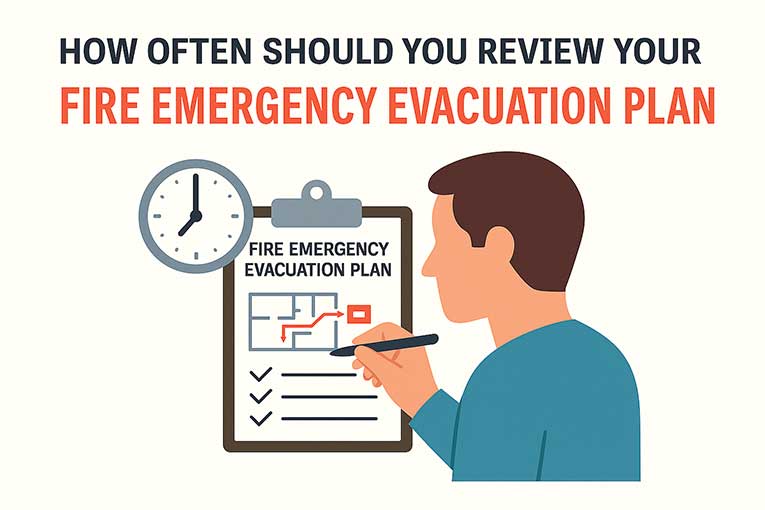
You should review your fire emergency evacuation plan regularly to keep it up to date – at least once a year is a good guideline. 

Over time, things can change that might affect your plan. 

For example, you might renovate or rearrange the space, or new people might join (employees, residents, etc.) who have different needs. 

After any such changes, update the evacuation plan accordingly. 

It’s also wise to review the plan after any fire drill or actual emergency. 

If a drill showed confusion about a particular exit or if an alarm wasn’t heard in some area, you should fix those issues and adjust the plan. 

Regular reviews ensure that escape routes are still clear, contact information is current, and everyone remains familiar with what to do if a fire occurs.

Is a Fire Emergency Evacuation Plan a Legal Requirement?

is fire emergency evacuation plan legal requirement

Yes, in most workplaces and public buildings a fire emergency evacuation plan is a legal requirement. 

Employers and building owners are legally obliged to implement and communicate these plans. 

If you have five or more employees, you are typically expected to have the plan written down as part of your fire risk assessment duties. 

Failing to do so can lead to enforcement actions or fines because it puts people at risk. 

For private homes, a written fire evacuation plan is not required by law, but it’s strongly recommended for your safety.

Fire authorities often encourage families to discuss and practise a home escape plan because it greatly increases the chance of everyone getting out safely. 

So, while you might not be legally required to have a formal fire plan in your house, the law does mandate it for most other settings where people live or work. 

Ultimately, beyond legal compliance, having a fire emergency evacuation plan is a responsible step that protects lives.

Conclusion

You should now have an understanding of how to create a fire emergency evacuation plan

A fire emergency evacuation plan is an essential part of keeping people safe from fire. 

In an emergency, a well-prepared plan can make the difference between a quick, orderly evacuation and dangerous chaos. 

By clearly outlining how to raise the alarm, the nearest exits to use, where to assemble, and who will call for help, it removes uncertainty and panic. 

Remember that for a plan to be effective, everyone needs to know it and it should be kept up to date. 

Whether at your workplace or in your home, taking the time to create and practise a fire evacuation plan can save lives. 

Fires are unpredictable and frightening, but when everyone knows what to do and where to go, the situation becomes much more manageable. 

Being prepared is not only a legal or moral responsibility – it’s also a practical way to protect yourself and others from harm.

10 Most Common Flammable Solids

Flammable solids are materials that ignite easily and burn quickly when they come into contact with heat, sparks, or open flames. 

These materials pose a significant fire hazard because once they catch fire, the flames can spread rapidly and be difficult to control. 

From everyday items like matches and firelighters to more industrial materials like metal powders and phosphorus, these solids are present in many aspects of life. 

That’s why it is essential to understand how they behave, how to store them safely, and what to do in an emergency.

This article explores the definition of a flammable solid, introduces ten of the most common examples, and offers practical safety tips to help reduce fire risks at home and in the workplace.

What is a Flammable Solid?

A flammable solid is a material that can easily catch fire and burn rapidly when exposed to heat, sparks, friction, or an open flame. 

These substances are classified as Class 4 hazardous materials under international transport and safety guidelines because of their high risk of ignition and fire spread.

Flammable solids can be found in many forms, powders, granules, sheets, or even everyday products like matches and firelighters. 

Some are naturally combustible, while others become dangerous when exposed to air, moisture, or certain chemicals. 

They are often used in industrial processes, laboratories, manufacturing, and even in household products, making them more common than many people realise.

The main danger with flammable solids lies in how quickly they can ignite and how fiercely they can burn. 

For example, powdered metals like aluminium or magnesium can burn extremely fast and even explode when airborne. 

Others, like phosphorus or alkali metals, can self-ignite when exposed to air or water.

Flammable solids are grouped into three categories for safety purposes:

  • Division 4.1: Flammable solids (e.g. matches, sulphur)
  • Division 4.2: Substances liable to spontaneous combustion (e.g. phosphorus)
  • Division 4.3: Substances that emit flammable gas when in contact with water (e.g. sodium)

Because of their fire risk, these materials must be stored, handled, and transported with extreme care. 

Understanding what flammable solids are, and how they behave, is key to preventing dangerous fires and accidents.

10 Most Common Flammable Solids

Flammable solids are materials that catch fire easily and burn rapidly. 

They are found in homes, workplaces, and industries, and can become extremely dangerous if handled carelessly. 

Below are ten of the most common flammable solids, including how they behave and why they require careful attention.

Alkali Metals

sodium alkali metal
Source: Wikipedia

Alkali metals include elements such as lithium, sodium, potassium, and rubidium. 

These metals are highly reactive and are known to ignite spontaneously in air or explode on contact with water.

When exposed to moisture, alkali metals produce hydrogen gas and heat, which can cause immediate ignition. 

For example, a small piece of sodium dropped into water will fizz, spark, and potentially explode. 

These reactions are not just spectacular, they are highly dangerous.

Alkali metals are used in batteries, research labs, and chemical manufacturing. 

Because of their reactivity, they are stored under oil or in sealed containers to prevent exposure to air or water.

Celluloid

celluloid film
Source: Wikipedia

Celluloid is one of the earliest types of plastic, made by combining nitrocellulose with camphor. 

It was once used widely in film reels, combs, toys, and even dentures. 

However, celluloid is highly flammable and can ignite from just a small amount of heat or friction.

When it burns, it produces a fast, intense flame that is difficult to control. 

Early cinema fires were often caused by celluloid film catching fire under the heat of a projector bulb.

Today, celluloid has been largely replaced by safer materials, but it still appears in some vintage items. 

It should always be kept away from heat and stored in well-ventilated areas.

Coal

coal

Coal is a black or brownish-black rock made of carbon-rich material. 

It has been used as a fuel source for centuries, particularly in power stations, homes, and industrial processes.

Although solid coal is relatively stable, coal dust is extremely flammable. 

Fine coal particles suspended in air can create explosive mixtures, especially in enclosed spaces like mines or silos.

Fires involving coal are hard to extinguish once started. 

They can smoulder deep within coal piles for days or weeks. 

Good ventilation and dust control are essential in environments where coal is stored or used.

Firelighters

firelighter
Source: Wikipedia

Firelighters are small blocks or cubes made from flammable substances such as paraffin wax, kerosene, or compressed wood and oil. 

They are designed to catch fire easily and help light barbecues, wood burners, or campfires.

While firelighters are very useful, they must be handled with care. 

Storing them near open flames or in high temperatures can lead to accidental fires. 

Some types release flammable vapours that can ignite suddenly.

Always store firelighters in a cool, dry place and use them as instructed. 

Keep them out of reach of children and never use them to revive a dying fire, they can flash back dangerously.

Matches

burning match
Source: Wikipedia

Matches are perhaps the most familiar flammable solid. 

They consist of a small wooden or cardboard stick tipped with chemicals that ignite when struck.

The match head typically contains potassium chlorate, sulphur, and other substances. 

When struck against the matchbox surface, friction produces enough heat to ignite the chemicals and start a flame.

Because they are so easy to light, matches are considered hazardous goods. 

They should be kept in their original packaging, stored away from heat, and handled responsibly. 

Used matches should be fully extinguished and disposed of safely.

Metal Powders

metal powder

Fine metal powders such as aluminium, magnesium, titanium, and zirconium are highly flammable, especially when dispersed in air.

These powders are used in fireworks, pyrotechnics, welding, and metal finishing. 

When airborne, they can form explosive mixtures that ignite with a single spark. 

Magnesium powder, for example, burns at extremely high temperatures and can cause severe burns or fires.

To reduce the risk of explosions, metal powders must be stored in tightly sealed containers in non-sparking environments. 

Dust should be cleaned using specialised vacuum systems, and equipment should be grounded to prevent static electricity.

Phosphorus

black phosphorus
Source: Wikipedia

Phosphorus exists in several forms, but white phosphorus is the most flammable. 

It ignites spontaneously in air and burns with a bright, white flame. 

Because of this, white phosphorus is stored underwater or in sealed containers to prevent exposure to oxygen.

Phosphorus is used in military applications, chemical manufacturing, and fertilisers. 

It’s also found in small amounts in some matches and fireworks.

Even brief contact with white phosphorus can cause serious burns. 

It also releases toxic fumes when it burns, making it dangerous to inhale. 

Red phosphorus is more stable but can still ignite under friction or heat.

Seed Cake

seed cake
Source: Wikipedia

Seed cake is the solid by-product left after oil is extracted from oil-rich seeds, such as linseed, sunflower, or cottonseed. 

Although it may look harmless, seed cake can catch fire spontaneously during storage.

Residual oils within the cake can oxidise over time, generating heat. 

If the heat isn’t allowed to escape, due to poor ventilation or compact storage, it can build up until the seed cake catches fire on its own.

Seed cake is often used as animal feed or fertiliser. 

It must be stored in cool, dry conditions and checked regularly for signs of heating or smoke. 

Fires in seed cake storage can spread quickly once started.

Sodium Batteries

sodium batteries
Source: Wikipedia

Sodium batteries are known for high energy storage but also come with fire risks. 

They contain sodium metal, which reacts violently with water and moisture.

If the battery casing is damaged or the battery overheats, the sodium can ignite, causing intense fires. 

In worst cases, the battery may explode or leak hot, flammable materials.

Sodium batteries are used in large-scale energy storage and some newer electric vehicle concepts. 

Because of their high energy and fire potential, they require robust safety systems, temperature controls, and fire-resistant housing.

Sulphur

sulphur
Source: Wikipedia

Sulphur is a yellow, non-metallic element found in nature and used in many industrial processes, including the production of sulphuric acid, fertilisers, and matches.

When heated, sulphur melts into a reddish liquid and eventually ignites, burning with a blue flame and producing sulphur dioxide gas. 

This gas is toxic and irritating to the eyes, nose, and throat.

Sulphur fires can be difficult to put out and produce large amounts of smoke. 

In powder form, it poses an even greater fire risk, as it can ignite easily and burn rapidly.

To handle sulphur safely, store it in well-ventilated areas away from heat or open flames, and avoid creating dust clouds when moving or processing the material.

How to Protect Yourself from Common Flammable Solids

Flammable solids can pose serious fire hazards if not handled with care. 

Whether you’re working with these materials in an industrial setting or storing them at home, following simple safety steps can reduce the risk of accidents.

Store Properly

Keep flammable solids in cool, dry, and well-ventilated areas. 

Avoid places with direct sunlight, heat sources, or open flames. 

Always store materials in containers specifically designed for hazardous goods, and ensure lids are sealed tightly to prevent spills and contamination.

Use the Right Equipment

When handling flammable solids, wear appropriate personal protective equipment (PPE)

This includes gloves, eye protection, flame-resistant clothing, and sometimes respirators if there is dust or fumes. 

Using the right tools, such as non-sparking scoops or containers, can also help prevent accidental ignition.

Separate Incompatible Materials

Some flammable solids react dangerously with other substances, including water or certain chemicals. 

Keep incompatible materials stored separately and clearly label all containers. 

Consult safety data sheets (SDS) for guidance on proper segregation.

Prevent Dust Buildup

Fine powders like metal dust or coal can ignite easily when dispersed in air. 

Regularly clean work areas to prevent dust accumulation, and avoid sweeping, which can stir up particles – use a vacuum with a HEPA filter instead.

Train and Educate

Make sure everyone handling these materials receives proper training

Staff should know how to store, handle, and dispose of flammable solids safely. 

Emergency procedures should be clearly displayed, and fire extinguishers or other firefighting tools should be easily accessible.

Conclusion

You should now have more of an understanding of common flammable solids. 

Flammable solids present serious fire risks, especially when they are mishandled, stored incorrectly, or exposed to heat, sparks, or open flames. 

Each flammable solid has unique properties, ignition points, and hazards. 

Some, like celluloid or metal powders, can ignite with friction or static discharge. 

Others, such as seed cake or coal, may combust spontaneously under the right conditions. 

Being aware of these differences helps individuals and businesses store and handle these substances more responsibly.

By respecting the dangers and taking the right precautions, we can use these materials safely and avoid potentially life-threatening incidents.

10 Most Common Flammable Materials

Flammable materials are everywhere in our daily lives, both at home and work. 

Understanding what they are and how to handle them safely is essential for preventing accidents. 

They can be found in nearly every environment, from our homes to workplaces, factories, and vehicles. 

Everyday products, such as cleaning agents, fuels, and textiles, can all be flammable.

In this article, we will explore what flammable materials are, why they are dangerous, and how to stay safe around them. 

We will also look at 10 of the most common flammable materials that you might encounter regularly. 

By learning to identify these materials and how to handle them correctly, you can help prevent fires and keep your surroundings secure. 

What Are Flammable Materials?

Flammable materials are substances that can easily ignite and catch fire when exposed to heat, flame, or sparks. 

These materials have a low flashpoint, which is the temperature at which they release enough vapor to catch fire.

Materials with a flashpoint under 100°F (37.8°C) are generally considered flammable.

Flammable materials can be found in solids, liquids, or gases and can be natural or man-made.

It’s important to handle flammable materials with care, store them properly, and use them in safe conditions. 

Recognising and understanding flammable substances in your environment is crucial for preventing fires and ensuring safety in both homes and workplaces. 

Proper knowledge and caution can minimise the risk of accidents.

10 Most Common Flammable Materials

Flammable materials are substances that can catch fire easily when exposed to heat, sparks, or open flames. 

Many of these materials are found in our homes, workplaces, and public areas. 

Being aware of these materials and how to handle them safely is crucial in preventing accidents and ensuring fire safety. 

Here are 10 common flammable materials, explaining their characteristics and risks.

Acetone

flammable materials acetone
Source: Wikipedia

Acetone is a colorless, flammable liquid commonly used as a solvent in nail polish removers, paint thinners, and some cleaning products. 

Acetone is highly volatile and evaporates quickly, forming flammable vapours. 

Its flashpoint – the lowest temperature at which it can vaporize and ignite – is -4°F (-20°C), making it one of the most flammable substances in households.

Store acetone in a cool, dry, and well-ventilated area, away from heat and open flames and always use acetone in well-ventilated spaces, as the vapours can be hazardous to your health.

Alcohol Spirits

flammable materials alcohol spirits

Alcoholic spirits, such as vodka, whiskey, and rum, are commonly found in homes, bars, and restaurants. 

These beverages are made by fermenting and distilling various grains, fruits, and other ingredients. 

Due to their high alcohol content (usually above 20%), they are highly flammable and can ignite easily when exposed to heat, sparks, or open flames.

Make sure to store alcoholic spirits in tightly sealed containers, away from heat sources and open flames.

Deodorant

flammable materials deodorant
Source: Wikipedia

Aerosol deodorants contain flammable propellants such as butane or propane, which are highly volatile gases. 

These gases make deodorants easy to spray but also pose a significant fire hazard. 

If exposed to heat or flames, deodorant cans can explode, leading to serious injuries or property damage.

Store aerosol deodorants in cool, dry places and away from direct sunlight and always follow the manufacturer’s instructions on proper usage and storage.

Flour

flammable materials flour

Flour is a common ingredient in kitchens, but it can pose a significant fire risk. 

While flour itself doesn’t ignite easily, the fine flour particles can create a dust cloud that is highly combustible. 

If this dust comes into contact with a spark or flame, it can ignite and cause a dust explosion. 

This is particularly a concern in industrial environments like flour mills, but it is still important to be cautious in the home.

Clean up flour spills immediately, and avoid sweeping or vacuuming to prevent dust clouds.

Furniture Polish

flammable materials furnture polish

Furniture polish contains flammable chemicals, including solvents and oils that can easily ignite. 

These products are designed to clean and shine surfaces, but they often contain petroleum-based ingredients that make them highly flammable. 

Furniture polish is commonly used in homes and offices, so proper storage and handling are essential to avoid accidents.

Store furniture polish in a cool place, away from direct sunlight and heat sources.

Hair Spray

flammable materials hair spray
Source: Wikipedia

Hair sprays, like deodorants, are often contained in aerosol cans and contain flammable propellants such as butane, propane, or ethanol. 

These chemicals allow the product to spray evenly, but they also make the product highly flammable. 

When applied to the hair, hair spray can ignite if exposed to a flame or excessive heat, especially if used near a stove, cigarette, or open flame.

Always follow the manufacturer’s safety instructions on the label.

Hand Sanitiser

flammable materials hand sanitiser
Source: Wikipedia

Hand sanitisers, which contain high amounts of alcohol, are highly flammable and should be handled with care. 

Most hand sanitisers contain between 60% to 95% ethanol or isopropyl alcohol, both of which have low flashpoints. 

As these alcohol-based products have become increasingly popular, and not just found in the healthcare industry, it’s essential to be aware of the fire risks associated with improper use and storage.

Never use hand sanitiser near open flames or high-temperature surfaces.

Permanent Markers

flammable materials permanent markers
Source: Wikipedia

Permanent markers often contain flammable solvents such as toluene or xylene. 

These chemicals help the ink dry quickly and provide long-lasting marks. 

The solvents are highly volatile and can easily catch fire when exposed to heat or flames. 

Though the risk may seem small, using permanent markers around heat sources can be dangerous.

Avoid using permanent markers near candles, stoves, or any equipment that could generate sparks.

Petrol (Gasoline)

flammable materials petrol gasoline

Petrol, or gasoline, is one of the most well-known flammable substances. 

It is commonly used as fuel for vehicles, lawnmowers, and generators. 

Petrol has a low flashpoint, which means it can ignite easily when exposed to a heat source or spark. 

Petrol vapours are also highly flammable, making it dangerous to handle, especially when fueling up vehicles.

Always store petrol in approved containers and keep it away from living spaces and never refuel a vehicle or machine near an open flame, heat source, or while the engine is running.

Turpentine

flammable materials turpentine
Source: Wikipedia

Turpentine is a solvent derived from pine trees and is commonly used in paint thinners and cleaning products. 

It has a low flashpoint, making it highly flammable, and can ignite easily when exposed to heat, sparks, or open flames. 

Turpentine is used in various artistic and industrial applications but must be handled with care due to its volatile nature.

Make sure to store turpentine in airtight containers and away from heat sources or flames and use turpentine in well-ventilated areas to avoid inhaling harmful fumes.

How Can You Stay Safe Around Flammable Materials?

Ensuring safety around flammable materials is crucial to prevent accidents and ensure both personal and property safety. 

Here are some important steps to take:

Proper Storage

Always store flammable materials in well-ventilated areas away from heat sources, flames, or sparks. 

Use approved containers to hold liquids and keep them tightly sealed. 

Ensure that containers are labeled clearly to identify the material inside.

Keep Away from Flames

Avoid using flammable substances near open flames, heat sources, or electrical equipment. 

In areas where flammable materials are used, make sure there are no exposed wires or sparks that could ignite vapors.

Use Materials Carefully

When using flammable substances such as cleaning agents, paints, or aerosols, follow the manufacturer’s instructions carefully. 

Use them in well-ventilated spaces, and never leave them unattended while in use.

Proper Disposal

Dispose of flammable materials, such as rags soaked with oil or paint, in designated fire-resistant containers. 

Do not throw them in regular trash bins, as they could ignite from friction or heat.

Install Smoke Detectors

Ensure working fire detection, such as smoke detectors, are installed in areas where flammable materials are stored or used, such as kitchens or workshops. 

This can provide an early warning in case of a fire.

Keep Extinguishers Nearby

Keep fire suppression equipment such as fire extinguishers in places where flammable materials are stored or used. 

Be sure to have one suitable for the type of fire that could occur.

How is Flammable Different to Combustible?

Flammable and combustible are both terms used to describe materials that can catch fire, but they are not the same. 

The main difference lies in the temperature at which each type of material ignites.

Flammable materials are substances that ignite easily at relatively low temperatures, usually below 100°F (37.8°C). 

These materials are highly volatile, meaning they can catch fire quickly when exposed to heat, sparks, or flames. 

Flammable substances are particularly dangerous because they can release vapors that catch fire even without direct contact with a flame.

Combustible materials, on the other hand, require higher temperatures to catch fire, typically above 100°F (37.8°C). 

While combustible materials are still capable of burning, they are less likely to ignite quickly compared to flammable materials. 

Although they can burn, they are generally less hazardous than flammable materials in terms of ignition risks.

Conclusion

You should now have an understanding of 10 of the most common flammable materials.

Flammable materials are part of everyday life and require careful handling to ensure safety. 

Understanding their properties, risks, and differences from combustibles can help prevent accidents. 

By staying informed and following safety precautions, you can minimise the risks associated with these common materials. 

Always prioritise safety and treat flammable substances with caution.

11 Most Common Flammable Gasses

Flammable gases are an integral part of our everyday lives. 

From household uses like cooking and heating to industrial applications, these gases are both useful and potentially dangerous. 

If not handled properly, flammable gases can lead to fires, explosions, or health hazards. 

This article will explore what flammable gases are, introduce 11 common examples, and provide essential safety tips for handling them.

What are Flammable Gasses?

Flammable gases are substances that can easily ignite and burn when mixed with air and exposed to an ignition source. 

These gases typically have a low flashpoint, meaning they ignite at relatively low temperatures, making them highly dangerous in certain conditions.

Flammable gases are used in many industries and everyday applications. 

Common examples include cooking fuel, industrial processes, chemical production, and energy generation. 

While they are incredibly useful, improper handling can lead to fires, explosions, or toxic exposure.

A flammable gas becomes hazardous when its concentration in the air reaches its flammability limits, creating an environment ripe for ignition. 

These limits are the lower explosive limit (LEL) and the upper explosive limit (UEL). 

Outside these ranges, the gas may not ignite, but within them, a spark or flame can cause severe damage.

11 Most Common Flammable Gasses

Acetylene

flammable gasses acetylene

Acetylene is a hydrocarbon gas used primarily in the welding and cutting industry. 

Composed of carbon and hydrogen, this gas is known for its ability to produce an extremely high-temperature flame. 

It plays a vital role in the metalworking industry for processes like oxyacetylene welding and cutting. 

Additionally, acetylene is a critical raw material in the production of certain plastics and chemicals. 

However, acetylene is highly unstable and flammable. 

It can ignite at very low temperatures and is prone to explosive reactions when stored or handled improperly, particularly under high pressure.

Ammonia

flammable gasses ammonia

Ammonia is a pungent gas widely used in agriculture and refrigeration. 

It is crucial in the production of fertilisers, helping boost crop yields. 

Ammonia also serves as a refrigerant in industrial cooling systems and is a component in certain cleaning agents. 

Although it is not as flammable as some other gases on this list, it can ignite under specific conditions, particularly in the presence of high heat. 

Ammonia is also highly toxic, and exposure can lead to respiratory distress, skin irritation, and even death at high concentrations.

Butane

flammable gasses butane

Butane is a highly flammable gas that is colorless and odourless in its natural state. 

It is widely used as a fuel in lighters and portable stoves and as a propellant in aerosol sprays. 

Butane is also a common component in liquefied petroleum gas (LPG), used for heating and cooking. 

The dangers of butane lie in its ability to ignite easily, even with minimal exposure to a spark or flame. 

In confined spaces, butane can accumulate and cause explosive reactions. 

Its high flammability requires careful storage and handling to prevent accidents.

Carbon Monoxide

flammable gasses carbon monoxide

Carbon monoxide is a flammable and highly toxic gas that is colorless, odourless, and tasteless. 

It is produced by incomplete combustion of carbon-containing fuels such as wood, coal, and gasoline. 

Carbon monoxide is used in industrial processes, including the production of certain chemicals and fuels. 

Its dangers, however, are immense. 

Inhalation of carbon monoxide can result in poisoning, as it binds to hemoglobin in the blood, reducing oxygen delivery to vital organs. 

Additionally, its flammability makes it a fire and explosion hazard, especially in poorly ventilated spaces.

Ethane

flammable gasses ethane

Ethane is a colorless and odorless hydrocarbon gas that serves as a vital component in the petrochemical industry. 

It is used primarily as a feedstock for ethylene production, which in turn is used to manufacture plastics, antifreeze, and other chemicals. 

Ethane is also found in natural gas and is used as a fuel for heating. 

The primary risk associated with ethane is its high flammability. 

It forms explosive mixtures with air and requires careful storage and monitoring to prevent leaks that could lead to fires or explosions.

Ethylene

flammable gasses ethylene

Ethylene is another hydrocarbon gas that plays a significant role in agriculture and industry. 

It is used as a plant hormone to accelerate the ripening of fruits and as a feedstock for producing polyethylene, the most common plastic. 

Ethylene is also used in the automotive industry for antifreeze production. 

Despite its widespread use, ethylene is highly flammable and can ignite easily. 

In industrial settings, it poses a risk of fire and explosion, particularly in enclosed spaces without adequate ventilation.

Hydrogen

flammable gasses hydrogen

Hydrogen is the lightest and most abundant element in the universe. 

It is a versatile gas used in various industries, including energy production, chemical manufacturing, and aerospace. 

Hydrogen is a key component in fuel cells, which produce clean energy, and is also used in refining petroleum and producing ammonia. 

However, hydrogen’s flammability and small molecular size make it highly dangerous. 

It burns with an invisible flame, making fires difficult to detect, and is prone to leaks, which can lead to explosions in confined areas.

Hydrogen Sulfide

flammable gasses hydrogen sulfide

Hydrogen sulfide is a flammable and highly toxic gas with a distinct smell of rotten eggs. 

It is commonly found in crude oil, natural gas, and sewage systems. 

Hydrogen sulfide is used in the production of sulfuric acid and other chemicals. 

Despite its usefulness, this gas is extremely hazardous. 

It can cause respiratory failure and death at high concentrations and is flammable, forming explosive mixtures with air. 

Proper monitoring and ventilation are essential to ensure safety when working with hydrogen sulfide.

Methane

flammable gasses methane

Methane is the primary component of natural gas and one of the most abundant flammable gases on Earth. 

It is used as a fuel for heating, electricity generation, and as a feedstock for producing hydrogen and other chemicals. 

Methane is also a significant contributor to greenhouse gas emissions when released into the atmosphere. 

The dangers of methane lie in its flammability and potential to cause explosions. 

It is odourless in its natural state, making gas detectors crucial for leak detection.

Propane

flammable gasses propane

Propane is a widely used fuel in residential, commercial, and industrial settings. 

It is a component of LPG and is used for heating, cooking, and powering vehicles. 

Propane is stored as a liquid under pressure and vaporizes when released, making it easy to transport and use. 

However, propane is highly flammable and can cause explosions if leaks occur in confined spaces. 

Its use requires proper storage, regular inspections, and adherence to safety guidelines.

Silane

flammable gasses silane

Silane is a silicon-based gas used primarily in the electronics and renewable energy industries. 

It is essential in the production of semiconductors, solar panels, and silicon-based materials. 

Silane is highly reactive and ignites spontaneously upon contact with air, making it one of the most dangerous gases on this list. 

Its handling requires specialized storage and strict safety protocols to prevent accidental ignition or explosions.

How to Stay Safe Around Flammable Gasses

Flammable gases can pose serious risks if not handled correctly. 

Proper safety measures are crucial to prevent fires, explosions, and exposure-related hazards.

Store Gases Safely

Always store flammable gases in approved, clearly labeled containers. 

Keep them in well-ventilated areas, away from heat sources, sparks, or open flames. 

Ensure storage areas are cool and dry to prevent leaks or pressure buildup.

Leak Detection

Regularly inspect gas containers, pipelines, and connections for leaks. 

Gas detectors are highly recommended in storage or usage areas to identify leaks early.

Fire detection systems should also be used in case due to their flammability. 

Maintain Proper Ventilation

Work with flammable gases in areas with good airflow. 

Ventilation helps disperse gas buildup, reducing the risk of accidental ignition.

Avoid Ignition Sources

Keep flammable gases away from open flames, smoking, electrical equipment, and other potential ignition sources.

Follow Manufacturer Guidelines

Always follow the safety instructions provided for storing and using specific gases.

Wear Protective Gear

Use appropriate personal protective equipment (PPE), such as gloves, goggles, and flame-resistant clothing, when handling flammable gases.

Provide Training

Ensure all workers handling gases are trained in safety protocols and emergency response procedures.

Conclusion

You should now have an understanding of 11 of the most common flammable gasses. 

Flammable gases are essential in various applications but pose significant risks if mishandled. 

Understanding their characteristics and following safety guidelines can reduce the risk of accidents and create a safer environment. 

Stay informed, stay vigilant, and always prioritize safety when working with flammable gases.

10 Most Common Combustible Materials

Combustible materials are an essential part of daily life, present in homes, workplaces, and industrial settings. 

From everyday items like paper and cloth to industrial fuels like diesel and kerosene, combustible materials are both useful and hazardous.

Understanding the nature of these materials is crucial for maintaining safety and preventing accidents. 

Knowing how and why they ignite, the risks they pose, and the precautions needed to handle them can help reduce the chances of dangerous situations. 

In this article, we’ll delve into the most common combustible materials and discuss their characteristics, risks, and practical safety measures. 

By the end, you’ll have a clear understanding of how to use and store these materials responsibly, ensuring a safer environment for everyone.

What are Combustible Materials?

what are combustible materials

Combustible materials are substances that can catch fire and burn when exposed to sufficient heat, oxygen, or an ignition source. 

Combustible materials are often used in everyday life, from cooking and heating to construction and manufacturing. 

However, their potential to burn poses safety risks if not handled correctly. 

Proper storage, ventilation, and adherence to safety guidelines are essential to prevent accidents and ensure that combustible materials are used responsibly in homes and workplaces.

How Dangerous are Combustible Materials?

Combustible materials can pose significant risks if not handled or stored properly. 

These substances can catch fire when exposed to heat, sparks, or open flames, leading to potentially devastating consequences. 

Fires fueled by combustibles can spread rapidly, causing property damage, injuries, or loss of life. 

Additionally, improper storage or disposal of these materials increases the likelihood of accidental ignition. 

Awareness of their dangers, along with proper safety measures is crucial to minimising risks and ensuring safety in homes and workplaces.

10 Most Common Combustible Materials

Here are the most common combustible materials, their uses, and associated risks:

Paper

combustible materials paper

Paper is a highly combustible material, primarily due to its thin structure and cellulose content. 

The cellulose fibers in paper make it easy to ignite, and once set on fire, it burns rapidly. 

Paper is one of the most common fire starters found in homes and offices. 

It’s often accumulated as waste in the form of newspapers, magazines, cardboard, and office documents, making it a significant fire risk when exposed to heat sources. 

Paper can easily catch fire if it comes into contact with flames from candles, faulty wiring, or overheated electronics. 

In offices or homes, paper products are typically stacked or stored in areas that could become fire hazards if not carefully managed. 

Straw

Straw, often used in farming as bedding for animals or as feed, is another highly combustible material. 

This dry, fibrous material ignites quickly when exposed to a heat source, which makes it a significant fire hazard. 

Straw is especially dangerous in barns or storage areas, as the dense bundles can create the perfect environment for rapid fire spread. 

A fire starting in a haystack or straw-filled barn can quickly escalate and spread through entire buildings, leading to catastrophic damage. 

In fact, straw is a common cause of barn fires, and these fires often occur when straw is improperly stored or when there is a buildup of heat within large quantities of straw. 

Wood

Wood is one of the most widely used combustible materials, both for construction and as a source of fuel for heating and cooking. 

It burns at high temperatures, and dry wood is especially prone to ignition. 

Wood is commonly used for furniture, flooring, and building materials, but it is also a major fuel source in fireplaces, wood stoves, and campfires. 

Storing wood in dry, well-ventilated areas is critical to prevent unintentional fires. 

For homes that use wood-burning stoves, it is essential to maintain a safe distance between firewood and any other flammable materials, as well as ensuring that the chimney is regularly cleaned to prevent buildup of highly combustible creosote.

Cloth

Cloth, particularly natural fibers like cotton and wool, is another common combustible material found in homes and businesses. 

While cloth generally burns slower than paper, it still poses a fire hazard once it catches fire. 

Cloth is a key component in items like clothing, curtains, bed linens, and upholstery. 

In a fire, clothing can act as fuel, spreading flames across a room rapidly. 

To mitigate the risks associated with cloth, it is essential to keep fabric items away from open flames such as candles, space heaters, or cooking appliances. 

Coal / Charcoal

Coal and charcoal are fuels commonly used in barbecues, fireplaces, and industrial applications due to their ability to burn steadily and produce significant heat. 

However, both coal and charcoal are highly combustible materials. 

They require proper handling and storage to avoid spontaneous combustion, which can occur when stored improperly. 

When coal or charcoal is exposed to heat, it can begin to smolder and eventually catch fire. 

To prevent this, coal or charcoal should always be stored in cool, dry areas away from flammable liquids or materials.

Cooking Oil

combustible materials cooking oil

Cooking oil is commonly used in cooking and is a combustible liquid. 

While it may not ignite as easily as some flammable liquids like petrol, oil can still catch fire if it reaches its flash point or is exposed to high heat. 

When cooking oil is overheated, it can ignite and burn rapidly, making it difficult to extinguish with water. 

It is important to monitor oil temperatures and avoid overfilling cooking appliances. 

If cooking oil begins to smoke heavily, it should be removed from heat immediately.

Grease

Grease, a byproduct of cooking oil, is another highly combustible material, often found in kitchens and machinery. 

Grease fires are especially hazardous because water can exacerbate the flames and spread the fire. 

In kitchens, grease can accumulate in stove hoods, exhaust fans, and cooking appliances, creating fire risks if not cleaned regularly. 

In industrial settings, grease is often used in machinery and can ignite if exposed to heat or sparks. 

Lubricants

Lubricants like motor oil and industrial greases are essential for reducing friction in machinery, but they are also combustible. 

Improper storage or exposure to heat can cause lubricants to catch fire, particularly in industrial or mechanical environments where sparks or high temperatures are common. 

To safely store lubricants, they should be kept in sealed containers and away from heat or open flames. 

It’s also important to keep storage areas well-ventilated and to follow manufacturer recommendations for handling and disposal to reduce fire risks.

Kerosene

Kerosene, used as a liquid fuel for heating, lighting, and in aviation, is a highly combustible material. 

While it is less volatile than petrol, it can still cause significant fire hazards. 

Kerosene should always be stored in approved containers designed for flammable liquids. 

In homes, kerosene lamps and heaters must be handled with care, and the fuel should never be stored near heat sources. 

Diesel

Diesel is another commonly used combustible liquid, found in transportation and heavy machinery. 

While it is less flammable than petrol, it can still cause significant fires if not handled properly. 

Diesel fires can escalate quickly if fuel spills or leaks occur near heat sources. 

Diesel should always be stored in proper containers and kept away from sparks or open flames. 

How Can Combustible Materials Be Used or Stored Safely?

storing combustible materials safely

Proper handling and storage of combustible materials are essential to prevent fires and ensure safety. 

Here are some practical tips for their safe use and storage:

Use Approved Containers

Store combustible liquids in containers specifically designed for flammable substances. 

These containers should be leak-proof, clearly labeled, and kept sealed when not in use.

Maintain Proper Ventilation

Store materials like coal, charcoal, and lubricants in well-ventilated areas to prevent heat buildup. 

This reduces the risk of spontaneous combustion.

Keep Away from Heat Sources

Ensure combustible items are stored far from open flames, heaters, or electrical appliances. 

Even indirect heat can cause materials like straw or cloth to ignite.

Avoid Overloading Storage Areas

Avoid piling materials too high, as this can trap heat and increase fire risks.

Regular Inspections

Check for leaks, damage, or signs of overheating in storage areas. 

Repair or replace damaged containers promptly.

Have Fire Extinguishers Nearby

Place appropriate fire extinguishers, and other fire suppression equipment near storage areas.

What is the Difference Between Flammable and Combustible Materials?

The primary difference between flammable and combustible materials lies in their ignition temperature. 

This determines how easily they catch fire under certain conditions.

Flammable Materials

Flammable materials ignite easily at lower temperatures, typically below 37.8°C (100°F). 

These materials can catch fire with minimal heat or a small spark, making them more hazardous. 

Due to their high volatility, flammable materials require stringent handling and storage conditions, such as being stored in sealed containers away from heat sources.

Combustible Materials

Combustible materials require higher temperatures, typically above 37.8°C, to ignite. 

Although they are less volatile than flammable materials, they still pose significant fire risks if improperly handled. 

While not as easily ignited, combustible materials can fuel large fires once they start.

Both flammable and combustible materials can be hazardous, but understanding their differences helps ensure proper storage, handling, and fire safety precautions.

What are Non-Combustible Materials?

non combustible materials

Non-combustible materials are substances that do not ignite, burn, or support combustion under normal conditions. 

These materials are often used in construction, manufacturing, and safety applications due to their fire-resistant properties.

Characteristics of Non-Combustible Materials

Non-combustible materials can withstand high temperatures without catching fire or emitting toxic gases. 

They do not contribute to the spread of fire and are considered safe for use in environments where fire risk is a concern.

Examples of Non-Combustible Materials

Metal

Steel and aluminum are widely used in construction due to their durability and fire resistance.

Concrete

A common choice for buildings, it resists heat and provides structural integrity during fires.

Glass

Certain types, like tempered or fire-rated glass, can endure high heat without breaking.

Brick and Stone

These materials are naturally resistant to fire and commonly used in construction.

Conclusion

You should now have more of an understanding of the most common combustible materials.

Understanding combustible materials and their risks is essential for safety. 

By following safety protocols and training, using appropriate fire extinguishers, and ensuring proper storage, the dangers of combustion can be minimised. 

Awareness and preparedness are key to preventing fires and protecting lives and property.

Fire Risk Assessment – A Guide for Workplaces

A Fire risk assessment is crucial in ensuring the safety of a workplace. 

They help identify potential fire hazards and create a plan to reduce risks. 

Having an effective fire risk assessment can prevent serious incidents and save lives.

In this article, we will explore what a fire risk assessment is, why it’s necessary, who needs it, how to conduct one, and how often it should be done.

What is a Fire Risk Assessment?

what is fire risk assessment

A fire risk assessment is a process that identifies potential fire hazards in a workplace and evaluates the risk they pose. 

The goal is to prevent fires from starting and to ensure that people can safely evacuate if one occurs. 

The assessment involves looking for sources of ignition, flammable materials, and any risks that could make a fire worse.

It also includes checking if there are enough fire safety measures in place, such as fire alarms, extinguishers, and emergency exits. 

The findings help create an action plan to reduce risks, ensuring the workplace complies with fire safety regulations.

A fire risk assessment isn’t just a one-time task. 

It needs to be reviewed regularly, especially if there are changes in the workplace, like new equipment or staff. 

By conducting regular fire risk assessments, workplaces can minimise the chance of fires, protect lives, and avoid costly damages. 

They’re a legal requirement for most businesses, but more importantly, they ensure a safe environment for everyone in the building.

Why is a Fire Risk Assessment Needed?

why fire risk assessment needed

A fire risk assessment is essential for several reasons. 

Legal Requirements

It ensures that workplaces comply with legal requirements. 

Many countries have laws that mandate regular fire risk assessments for businesses.

Accident Prevention

Fire risk assessments help prevent accidents and injuries. 

Fires can spread quickly, and without proper precautions, they can cause serious damage or even fatalities. 

Identifying fire hazards early allows businesses to put in place measures to prevent fires.

Property Protection

A fire risk assessment helps protect property. 

Fires can cause significant financial losses by damaging buildings, equipment, and inventory. 

By reducing fire risks, businesses can protect their investments and ensure continuity.

Safe Working Environment

Finally, fire risk assessments promote a safe working environment. 

Employees will feel safer knowing that their workplace has taken steps to protect them from potential fire risks. 

This can boost morale and increase productivity.

Who Needs a Fire Risk Assessment?

who needs fire risk assessment

A fire risk assessment is essential for almost all businesses and organisations. 

It is a legal requirement in most countries for any workplace that has more than five employees. 

Whether it’s a small office, a large factory, or a retail store, fire risks exist, and conducting regular fire risk assessments helps minimise them.

Businesses and Offices

Any business, regardless of size or industry, needs a fire risk assessment. 

This includes offices, retail stores, restaurants, and warehouses. 

Even low-risk environments, like small offices, should assess potential fire hazards, such as electrical equipment or paper storage.

Industrial Facilities

Factories and warehouses deal with larger risks, especially when handling hazardous materials, machinery, or chemicals. 

Regular assessments help manage these risks and ensure that proper safety measures, like fire suppression systems and clear evacuation routes, are in place.

Public Buildings

Public spaces, such as schools, healthcare buildings such as hospitals, and care homes, need fire risk assessments to protect large groups of people. 

These places often have vulnerable individuals, such as children, the elderly, or people with disabilities, who require extra safety considerations during evacuation.

Landlords and Property Owners

Landlords and property managers are responsible for ensuring that their properties, particularly multi-occupancy buildings like apartment complexes, are fire-safe. 

Regular fire risk assessments ensure that residents have adequate fire alarms, clear escape routes, and functioning fire doors.

What to do For a Fire Risk Assessment

fire risk assessment what to do

Conducting a fire risk assessment is essential for maintaining workplace safety. 

It involves identifying potential fire hazards, assessing risks, and implementing measures to reduce those risks. 

Below is a step-by-step guide on what to do for a fire risk assessment.

Identify Fire Hazards

The first step in a fire risk assessment is identifying potential fire hazards in the workplace. 

Hazards can include sources of ignition, such as electrical equipment, heaters, or machinery, and combustible materials like paper, fabric, or chemicals. 

Look for areas where heat or sparks could come into contact with flammable items. 

This can be anything from overloaded power outlets to improper chemical storage.

Identify People at Risk

Next, identify who might be at risk in the event of a fire. 

This includes not only employees but also visitors, contractors, or members of the public. 

Consider specific groups that may be more vulnerable, such as the elderly, disabled, or those with mobility issues. 

Make sure that emergency exits and lighting, and evacuation procedures are suitable for everyone, including those who may need assistance during an evacuation.

Evaluate the Risks and Take Action

Once you’ve identified hazards and people at risk, evaluate the level of risk associated with each hazard. 

Ask yourself: How likely is it that a fire could start, and how severe would the consequences be? 

After evaluating the risks, take appropriate actions to eliminate or reduce them. 

This could involve:

  • Removing or reducing fire hazards (e.g., properly storing flammable materials).
  • Installing or improving fire detection systems, such as smoke alarms.
  • Ensuring that fire extinguishers are accessible and maintained.
  • Implementing clear fire safety protocols and ensuring exits are unobstructed.

Record Your Findings and Implement Changes

In businesses with more than five employees, it is a legal requirement to document your findings. 

This documentation should include the hazards identified, the people at risk, and the actions taken to reduce or eliminate risks. 

Keep a detailed log of all fire safety measures in place, such as fire extinguishers, fire exits, and alarms.

Once you have recorded the findings, make sure the necessary changes are implemented. 

Assign responsibilities to individuals, such as fire wardens or fire marshals, who can oversee the implementation of safety measures.

Review and Update Regularly

Fire risk assessments are not a one-time task and should be reviewed regularly.

By keeping your assessment up to date, you ensure that new risks are addressed, and fire safety measures remain effective.

Who Can Do a Fire Risk Assessment?

who can do fire risk assessment

A fire risk assessment can be conducted by a competent person within the workplace. 

This person must have adequate knowledge of fire safety regulations and an understanding of fire hazards. 

Often, businesses will appoint a fire warden or safety officer to conduct these assessments.

For complex buildings or high-risk environments, it may be necessary to hire a professional fire risk assessor. 

A professional will have the expertise and experience to identify risks that might be overlooked by someone with less training.

Some businesses choose to outsource their fire risk assessment entirely to certified professionals. 

This ensures that the assessment is thorough and compliant with legal standards. 

However, even if you hire a professional, the employer is still responsible for ensuring the assessment is carried out properly.

How Often Should a Fire Risk Assessment be Done?

how often fire risk assessment

A fire risk assessment should be conducted regularly to ensure the safety of a workplace and its occupants. 

The frequency of these assessments depends on various factors, such as the type of business, the size of the premises, and the level of fire risk involved.

Annual Reviews

As a general rule, businesses should review their fire risk assessments at least once a year. 

This ensures that any changes in the workplace, such as new equipment or changes in staff, are considered and any new risks are identified and addressed.

After Significant Changes

If there are significant changes in the workplace, such as renovations, new machinery, or changes in the number of employees, a new fire risk assessment should be done immediately. 

These changes can introduce new fire hazards or affect existing safety measures, such as fire exits or alarm systems.

High-Risk Environments

Workplaces with higher fire risks, such as factories, chemical plants, or places that handle flammable materials, may need more frequent fire risk assessments. 

Depending on the level of risk, reviews might be necessary every six months or even quarterly.

After a Fire Incident

If a fire has occurred, an immediate review and reassessment should be conducted. 

This helps identify what went wrong and ensures that additional safety measures are put in place to prevent future incidents.

Conclusion

You should now have the knowledge on exactly what a fire risk assessment is. 

A Fire risk assessment is vital for ensuring workplace safety and preventing devastating incidents. 

They help identify potential hazards, protect employees, and ensure compliance with fire safety regulations. 

Conducting regular fire risk assessments, documenting findings, and acting on identified risks will create a safer environment for everyone. 

Remember, whether your workplace is an office, a factory, or a care home, fire safety is a responsibility that should never be overlooked. 

By following the steps outlined in this guide, you can ensure that your fire risk assessment is thorough, effective, and up to date.

What is a Dual Sensing Smoke Alarm?

A smoke alarm is an essential safety device that can save lives. 

It detects smoke, alerting occupants to a fire, giving them time to escape. 

While there are different types of smoke alarms, a dual sensing smoke alarm is known for its enhanced detection abilities. 

This article will explore what a dual sensing smoke alarm is, its types, advantages, disadvantages, and other smoke alarm options.

What is a Dual Sensing Smoke Alarm?

dual sensing smoke alarm image

A dual sensing smoke alarm is a type of fire detection device designed to improve fire detection by using two different sensors: ionisation and photoelectric.

Ionisation Sensors

These are more responsive to fast-flaming fires, such as those caused by paper. 

They detect small particles of smoke that are typically produced in these types of fires.

Photoelectric Sensors

These are better at detecting slow, smouldering fires, like those caused by cigarettes. 

They work by sensing larger smoke particles that scatter light.

Why Dual Sensing is Safer

By combining these two sensors, dual sensing smoke alarms offer more comprehensive coverage, ensuring faster and more accurate detection of different types of fires. 

This dual approach minimises the chances of false alarms while maximising the likelihood of detecting a real fire.

These alarms are recommended by safety experts and are ideal for providing enhanced protection in homes, giving occupants crucial time to respond in case of a fire. 

Despite being slightly more expensive than single-sensor alarms, the added safety they provide makes them a valuable investment for any household.

What are the Different Types of Dual Sensing Smoke Alarm?

dual sensing smoke alarm types

Dual sensing smoke alarms come in several types, categorised by their power source, connectivity, and additional features. 

Understanding these types can help you choose the best option for your home.

Battery-Powered Dual Sensing Smoke Alarms

Battery-powered dual sensing smoke alarms are standalone units that rely on batteries for operation. 

These alarms are easy to install and can be placed anywhere in the home. 

They are especially useful in homes without hardwired smoke alarm systems. 

However, they require regular battery checks and replacements to ensure they function properly. 

Some models come with long-life lithium batteries, reducing the frequency of battery changes.

Hardwired Dual Sensing Smoke Alarms

Hardwired dual sensing smoke alarms are connected directly to your home’s electrical system, ensuring continuous power. 

These alarms usually include a battery backup to maintain functionality during power outages. 

Hardwired alarms are often interconnected, meaning that if one alarm is triggered, all alarms in the system will sound. 

This feature enhances safety by ensuring that the alarm is heard throughout the home.

Smart Dual Sensing Smoke Alarms

Smart dual sensing smoke alarms are equipped with wireless connectivity, allowing them to be monitored and controlled via a smartphone app. 

These alarms can send alerts to your phone if smoke is detected, even when you’re not home. 

Some models integrate with other smart home devices, such as lights or thermostats, to enhance safety. 

For example, if smoke is detected, a smart alarm could automatically shut off the HVAC system to prevent the spread of smoke.

Combination Alarms

Combination alarms are dual sensing smoke alarms that also detect other hazards, such as carbon monoxide (CO). 

These alarms provide comprehensive protection by combining smoke and CO detection in a single device. 

They are ideal for areas like bedrooms, where both fire and CO risks may be present.

What are the Advantages of a Dual Sensing Smoke Alarm?

dual sensing smoke alarm advantages

Dual sensing has a wide array of advantages over single-sensing alternatives.

The main benefits are: 

Comprehensive Fire Detection

Dual sensing smoke alarms combine two types of sensors: ionisation and photoelectric. 

This dual approach allows them to detect both fast-flaming fires and slow, smouldering fires. 

Ionisation sensors are more responsive to fires that spread quickly, like those involving paper or grease. 

Photoelectric sensors, on the other hand, are better at detecting smouldering fires, which may start from something like a cigarette or an electrical fault. 

By covering both types of fires, dual sensing alarms offer more reliable and comprehensive protection.

Reduced False Alarms

One of the significant advantages of dual sensing smoke alarms is their ability to reduce false alarms. 

Single-sensor alarms, like those with only ionisation or only photoelectric sensors, may trigger false alarms due to non-fire-related activities like cooking or steam from a shower. 

The dual sensors in a dual sensing smoke alarm work together to provide a more accurate response to actual fire threats, reducing the chances of unnecessary alarms.

Enhanced Safety and Peace of Mind

Dual sensing smoke alarms increase safety by providing earlier and more accurate fire detection. 

Early detection is critical in preventing injury or loss of life, giving occupants valuable time to escape in the event of a fire. 

Knowing that your smoke alarm can detect different types of fires effectively gives you peace of mind, especially when it comes to protecting your family and property.

Compliance with Safety Recommendations

Many fire safety organisations recommend the use of dual sensing smoke alarms due to their enhanced detection capabilities. 

Installing these alarms can help ensure that your home meets current safety standards and regulations, providing an extra layer of security and compliance.

Cost-Effective Protection

While dual sensing smoke alarms may be slightly more expensive upfront, they offer cost-effective protection in the long run. 

By combining the functions of two alarms into one, they eliminate the need to install multiple devices, reducing overall costs and maintenance efforts.

What are the Disadvantages of a Dual Sensing Smoke Alarm?

dual sensing smoke alarm disadvantages

While dual sensing smoke alarms have many benefits, they are not without their drawbacks. 

The main ones are: 

Higher Initial Cost

One of the main disadvantages of dual sensing smoke alarms is their higher initial cost compared to single-sensor alarms. 

Because they incorporate both ionisation and photoelectric sensors, dual sensing alarms are generally more expensive to purchase. 

For homeowners on a tight budget, the upfront cost may be a deterrent, especially when multiple units are required for comprehensive home coverage.

Maintenance and Battery Replacement

Dual sensing smoke alarms require regular maintenance, including battery checks and replacements. 

Although this is true for most smoke alarms, the complexity of dual sensing alarms can sometimes make maintenance slightly more cumbersome. 

Homeowners may also need to familiarise themselves with the specific maintenance needs of both types of sensors. 

In addition, if the alarm includes a battery backup for a hardwired system, maintaining both the electrical and battery components can be a hassle.

Potential for Over-Detection

While dual sensing smoke alarms are designed to reduce false alarms, their heightened sensitivity to different types of fires can sometimes lead to over-detection. 

For example, activities like cooking or using a fireplace may trigger the alarm more frequently, which could become annoying and lead to complacency. 

If the alarm goes off too often for non-emergencies, occupants may start ignoring it, which defeats the purpose of having an advanced detection system.

Installation Complexity

Dual sensing smoke alarms, particularly hardwired or interconnected models, can be more complicated to install than basic single-sensor alarms. 

Homeowners who are not comfortable with electrical work might need to hire a professional, adding to the overall cost. 

The complexity of installation might also make it more difficult to troubleshoot issues if the alarm malfunctions or needs to be replaced.

Limited Availability in Some Markets

In some areas, dual sensing smoke alarms might not be as readily available as single-sensor models. 

This limited availability can make it harder for homeowners to find and purchase the right alarm, especially if they live in remote or less densely populated regions.

What Other Types of Smoke Alarms are There?

other types of smoke alarms

Aside from dual sensing smoke alarms, there are other types of smoke alarms available, each with its own advantages and disadvantages.

Ionisation Smoke Alarms

Ionisation smoke detectors are designed to detect fast-flaming fires. 

They contain a small amount of radioactive material between two electrically charged plates, which ionises the air and creates a flow of current between the plates. 

When smoke enters the chamber, it disrupts this current, triggering the alarm. 

These alarms are particularly effective at detecting fires that produce little visible smoke but spread quickly, such as those involving paper or flammable liquids. 

However, they are more prone to false alarms from cooking or steam.

Photoelectric Smoke Alarms

Photoelectric smoke detectors are more sensitive to slow, smouldering fires that produce a lot of smoke before they burst into flames. 

These alarms use a light beam and a sensor inside the chamber. 

When smoke enters the chamber, it scatters the light beam, directing it towards the sensor and triggering the alarm. 

Photoelectric alarms are less likely to be triggered by cooking fumes, making them ideal for installation near kitchens. 

They provide earlier warning for smouldering fires, such as those caused by unattended candles or cigarettes.

Heat Alarms

Heat alarms are designed to detect a rapid rise in temperature rather than smoke. 

They are particularly useful in environments where smoke alarms might give false alarms, like kitchens or garages. 

Heat alarms are ideal for detecting fires in areas prone to dust, smoke, or fumes. 

However, because they don’t detect smoke, they are often used in conjunction with smoke alarms to provide comprehensive fire detection.

Conclusion

You should now have more of an understanding of dual sensing smoke alarms. 

A dual sensing smoke alarm is a critical safety device that enhances fire detection in your home. 

By combining ionisation and photoelectric sensors, these alarms provide comprehensive coverage for various types of fires. 

While they come with higher costs and some maintenance needs, the added protection they offer can be invaluable. 

Understanding the different types of dual sensing smoke alarms, their advantages, and disadvantages helps you make an informed decision when safeguarding your home. 

Remember, no matter which type of smoke alarm you choose, regular maintenance and testing are key to ensuring it functions correctly and provides the protection you need.

8 Types of Fire Alarm Systems

Fire alarm systems play a crucial role in keeping buildings safe. 

They detect smoke, heat, or flames and alert occupants to evacuate. 

There are various types of fire alarm systems, each designed for different needs and building types. 

Understanding these systems helps in choosing the right one for effective fire protection. 

This article explores nine types of fire alarm systems, classified into different categories.

Why Different Types of Fire Alarm System Exist

different types of fire alarm

Different types of fire alarm systems exist to address the unique safety needs of various buildings and environments. 

Fire risks can vary significantly depending on factors like building size, occupancy, use, and potential fire hazards. Here’s why diverse systems are necessary:

Varying Levels of Risk

Buildings have different levels of risk associated with fire. 

High-risk environments, such as hospitals or chemical factories, require advanced systems for early fire detection

Lower-risk settings, like small offices, might need less comprehensive coverage.

Building Complexity

The complexity and layout of a building affect the type of fire alarm system needed. 

Large or multi-story buildings may require intricate systems with multiple detectors and alarms. 

Smaller or simpler structures might only need basic systems.

Specific Needs

Certain buildings have unique requirements based on their use. 

For instance, museums may need systems that avoid false alarms while protecting valuable artefacts. 

Laboratories might need detectors sensitive to specific types of chemicals.

Compliance and Regulations

Different types of fire alarm systems help meet specific legal and safety regulations. 

Compliance with these regulations ensures that buildings adhere to fire safety standards, protecting both occupants and property.

9 Types of Fire Alarm Systems

M Category

m category fire alarm

The M category focuses on manual fire alarm systems. 

These systems require human intervention to activate the alarm and alert occupants to a fire. 

They are designed for situations where manual activation is practical and effective.

Manual Call Points

Manual call points are a primary component of M category systems. 

These devices are typically mounted on walls throughout a building. In the event of a fire, someone pulls the handle to trigger the alarm. 

This action sends a signal to the fire alarm system, initiating an alert. 

Manual call points are commonly found in schools, offices, and public buildings where manual intervention is feasible.

Manual Alarm Bells

Manual alarm bells are another form of M category systems. 

These bells emit a loud sound when activated. 

They are often used in smaller buildings or areas where manual activation is practical. 

Manual alarm bells alert everyone in the vicinity to evacuate immediately.

L Category

The L category of fire alarm systems refers to automatic fire detection systems designed to provide early warning and minimise the risk of fire spreading. 

These systems are crucial in safeguarding lives and property by detecting fires before they become uncontrollable. 

The L category is subdivided into several classes based on the level of protection provided and the specific needs of the building.

L1 Category

l1 category fire alarm

L1 systems offer the highest level of protection and are designed for buildings where early detection is crucial. 

They provide comprehensive coverage by installing detectors throughout the entire building. This includes smoke detectors, heat detectors, and manual call points in every area.

L1 systems cover all areas of the building, including all rooms, corridors, and staircases.

These systems use a combination of smoke, heat, and sometimes flame detectors to ensure early and accurate detection.

L1 systems are equipped with alarms that provide immediate notifications to occupants, giving them more time to evacuate safely.

L1 systems are typically used in high-risk buildings such as hospitals, high-rise buildings, and large commercial properties. 

In these environments, the prompt detection of a fire can prevent significant damage and save lives.

L2 Category

l2 category fire alarm

L2 systems offer a slightly less extensive level of coverage compared to L1 systems. 

They focus on protecting specific high-risk areas within a building while providing basic coverage for other parts.

L2 systems include detectors in high-risk areas such as kitchens, laboratories, and electrical rooms. 

These areas are more likely to experience fires due to the nature of their activities.

While L2 systems provide detection in high-risk areas, they do not cover every room or corridor. 

The coverage is focused on areas where fires are more likely to start.

L2 systems often include manual call points in other areas of the building, allowing occupants to manually activate the alarm if necessary.

L2 systems are suitable for buildings where specific areas pose a higher fire risk but where full L1 coverage is not required. 

L3 Category

l3 category fire alarm

L3 systems provide protection primarily for escape routes such as corridors and stairwells. 

These systems ensure that people can safely evacuate in the event of a fire by detecting smoke or heat along these critical paths.

L3 systems focus on protecting escape routes, ensuring that these paths are clear of smoke and allowing for safe evacuation.

Detection is typically limited to areas along escape routes. 

The system may not include detectors in other parts of the building.

Manual call points may be included near escape routes, enabling occupants to trigger the alarm if they notice a fire.

L3 systems are used in buildings where ensuring safe evacuation is the primary concern. 

They are commonly found in residential buildings, small commercial properties, and places where escape routes are crucial for safety.

L4 Category

l4 category fire alarm

L4 systems are designed for buildings with specific fire risks, such as storage areas or specialised equipment rooms. 

These systems provide detection and protection tailored to the unique needs of these areas.

L4 systems include detectors in areas with specific fire risks. 

For example, they may be used in data centres, warehouses, or areas with high-value assets.

The detection system is tailored to the types of hazards present in the protected area, such as smoke detectors in a server room or heat detectors in a storage area.

L4 systems are appropriate for buildings with unique or high-value areas that require specialised fire protection. 

They are often used in facilities with critical equipment or valuable inventory, where targeted detection is essential.

L5 Category

l5 category fire alarm

L5 systems are customised to meet specific needs and requirements based on the building’s layout and fire risks. 

These systems are highly adaptable and can be designed to address unique fire safety challenges.

L5 systems are tailored to the specific requirements of a building, including its size, use, and fire risks. 

This customization ensures that the fire alarm system meets the exact needs of the environment.

The system may include a combination of smoke, heat, and other detectors, depending on the building’s needs. 

It can also integrate with other fire safety systems for comprehensive protection.

L5 systems are used in buildings with unusual layouts or specialised fire safety needs. 

Examples include historical buildings, museums, and custom-built facilities where standard systems may not provide adequate protection.

P Category

The P category of fire alarm systems focuses on providing automatic fire detection and alerting occupants to evacuate. 

These systems are designed to ensure that a fire is detected early and that people are promptly informed. 

The P category is divided into two sub-categories based on the level of coverage and protection provided:

P1 Category

p1 category fire alarm

P1 systems offer the highest level of protection by providing comprehensive coverage throughout an entire building. 

These systems are designed to detect fires early in all areas, ensuring that any outbreak is quickly identified and addressed.

P1 systems include detectors in every area of the building, such as offices, corridors, storage rooms, and stairwells.

The system uses a variety of detectors, including smoke, heat, and sometimes flame detectors, to ensure early and accurate detection of fires.

P1 systems are equipped with alarms that notify all occupants immediately, allowing for quick evacuation and reducing the risk of injury or damage.

P1 systems are suitable for high-risk environments like shopping centres, large industrial sites, and multi-story buildings where early detection and prompt evacuation are critical for safety.

P2 Category

p2 category fire alarm

P2 systems offer a more targeted approach compared to P1 systems. 

They provide automatic fire detection in specific areas or zones within a building.

P2 systems focus on high-risk areas or zones, such as kitchens, server rooms, or laboratories, while providing basic detection in other areas.

The system can be tailored to address specific fire risks in the protected areas, using the appropriate types of detectors.

P2 systems may include alarms and notifications tailored to the specific areas being protected.

P2 systems are ideal for buildings where full P1 coverage is not necessary but where specific areas require targeted fire detection. 

Examples include schools, smaller offices, and specialised facilities.

Conclusion

The different types of fire alarm systems are essential for protecting buildings and their occupants from fire hazards. 

The different categories and subcategories of fire alarm systems provide varying levels of protection based on specific needs and risks. 

The M category includes manual systems, while the L and P categories focus on automatic detection and warning systems. 

By understanding these systems, you can choose the right fire alarm system for your building and ensure effective fire safety measures.