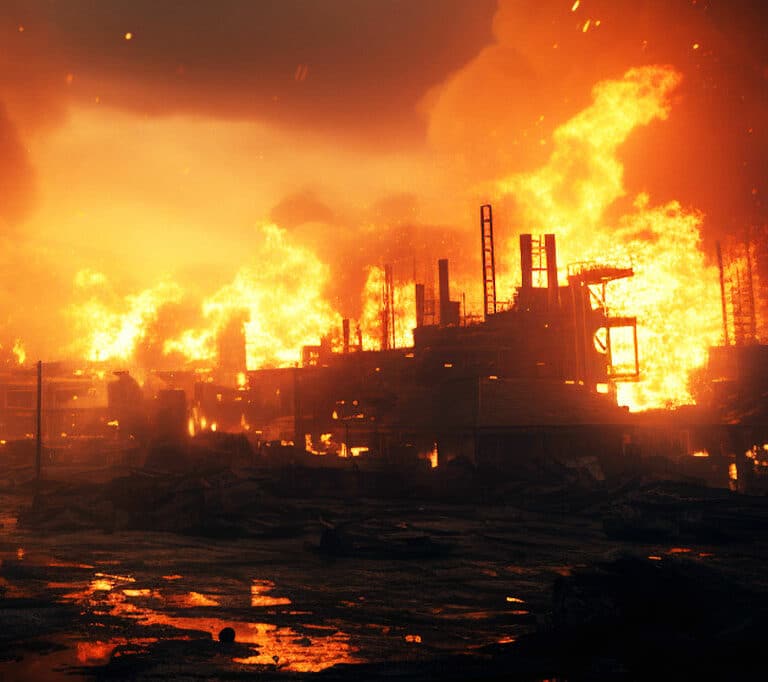
New data shows an average of 23 fire engines unavailable daily in London
In data obtained by the Fire Brigades Union, a startling revelation has emerged. So far this July, an average of 23 of London’s fire engines have been unavailable every day due to understaffing, as the source reveals here.
This figure equates to approximately one in every six of London’s 142 fire engines.
A peak of 28 fire engines were off-duty on July 16th.
London’s only fireboat, a critical asset for river rescue and firefighting efforts, has not been operational for 13 shifts this month.
These statistics only account for appliances rendered ‘off the run’ due to insufficient firefighter numbers.
Fire engine understaffing on the anniversary of 2022 wildfires
These figures come to light on the anniversary of the 2022 London wildfires.
They also coincide with the release of the London Fire Brigade’s Major Incident Review about the events of July 19th, 2022.
On that day, which marked the highest recorded temperature, London saw a total of 822 fire engine mobilisations.
A staggering 39 fire engines were unavailable due to understaffing as fires engulfed Greater London, causing the destruction of 18 homes in Wennington.
The LFB’s report acknowledges that understaffing likely led to slower response times and insufficient resources or firefighter numbers.
Since 2010, the London fire service has experienced the loss of 1,388 firefighters, including control staff, 10 fire stations, and 26 fire appliances due to cuts.
Fire Brigades Union secretary’s warning about understaffed fire engines
Fire Brigades Union general secretary, Matt Wrack, stated: “One year on from the devastation of last summer’s wildfires, cuts are still leaving the fire service unprepared.”
“This is putting lives and homes at risk,” he continued, “Londoners should be furious that in the capital city of one of the richest countries in the world, firefighter numbers have been cut so badly that more than 20 fire engines are sitting idle every day.”
Wrack describes the situation as a disaster waiting to happen again.
“We will continue to face an increasing number of wildfires and extreme weather events due to the impact of the climate emergency,” Wrack added. “We need a UK-wide wildfire strategy, but above all, we need proper investment and funding for the fire service.”
Jon Lambe, FBU London Regional Secretary, echoed Wrack’s sentiment: “London’s firefighters are protecting lives under immense, unsustainable pressure.”
“Since 2010, we’ve seen over 1,100 London frontline firefighters lost to cuts. Fire engines are left empty in stations because there are not enough firefighters to crew them,” Lambe stated.
He concluded by calling for serious investment to ensure firefighters can save people’s homes and lives across London.
IFSJ Comment
This news is significant due to the potential safety risks posed by understaffing of fire services.
This situation is particularly alarming given the increasing threat of wildfires and extreme weather events due to climate change.
Ensuring adequate staffing and resourcing for fire services is crucial for community safety and disaster resilience.
About the Fire Brigades Union
The Fire Brigades Union is a professional trade union body representing firefighters and other professionals in fire and rescue services across the United Kingdom.
Their aim is to provide a voice for firefighters and the fire and rescue service, promoting the interests of their members on matters relating to employment, health and safety, fire and rescue policy and wider issues.
Unravelling the effects of Europe’s deepening drought
A recent article published by Vallfirest has highlighted the grave implications of the severe drought currently affecting numerous regions across Europe.
This drought is causing significant water stress to vegetation and influencing fire behaviour during wildfires.
The Vallfirest article features an informative interview with Brian Verhoeven, a prominent meteorologist and researcher at the Netherlands Institute for Public Safety (NIPV), offering an in-depth analysis of this pressing issue.
Addressing the quality versus quantity conundrum in rainfall
Within the article, Verhoeven brings to light the need to focus not just on the quantity, but also the quality of rainfall.
He highlights the stark difference between steady, low-intensity rain over several hours and the same amount falling in a brief period.
The latter scenario can often lead to excessive runoff, as the soil’s infiltration capacity is exceeded, rendering the rainfall less beneficial to vegetation.
The impact of El Niño on drought conditions and wildfires
El Niño, a phenomenon associated with unusual warming of the Pacific Ocean surface, can also impact global weather patterns, including Europe’s.
The Vallfirest article underscores how increased global temperatures and reduced rainfall can heighten evaporation from soils and vegetation, intensifying dryness and facilitating the rapid spread of wildfires.
Additionally, El Niño can alter rainfall patterns, resulting in prolonged droughts in certain regions, while others may experience intensified and frequent rainfall.
Anticipating escalating wildfire threats due to climate change
However, the article also notes Verhoeven’s caution against attributing all changes in fire behaviour to El Niño alone. It’s one contributing factor in the overarching trend of rising global temperatures.
An appreciation for the climate’s complexity and an understanding of its multifaceted impacts over time is crucial. A clear consensus emerges among meteorologists, scientists, and wildland firefighters: climate changes invariably lead to ecosystem alterations, often manifested through wildfires.
Looking towards the future, the article warns of a trend towards more extreme conditions, including more intense and rapidly spreading wildfires.
Preparedness is key, with firefighters needing the right equipment for increasingly demanding suppression and prevention efforts.
IFSJ Comment
In these challenging times, companies like Vallfirest, dedicated to developing innovative firefighting solutions, play an increasingly crucial role.
Their article provides crucial insights into the escalating wildfire issue exacerbated by the ongoing European drought. An in-depth understanding of the complex relationships between droughts, rainfall patterns, global warming and wildfire spread is imperative to devising effective prevention strategies and firefighting measures.”
About Vallfirest
Vallfirest is a globally recognised company known for providing advanced solutions to fire services. Its mission is to create a safe and efficient environment for everyone involved in fighting wildfires. Vallfirest constantly adapts its solutions, harnessing the ongoing flow of information and knowledge about the evolving nature of wildfires and the growing challenges they pose.
For more information on this topic and to read the full interview with Brian Verhoeven, you can visit the article on the Vallfirest website.
Understanding the most common causes of fire is essential for prevention and safety.
By being aware of these causes, we can take proactive measures to minimise the risk of fire incidents.
This article aims to provide an overview of 23 of the most common causes of fire, ranging from everyday activities to potential hazards within our surroundings.
By exploring some of the main causes, we can enhance our knowledge and promote fire safety in our homes, workplaces, and communities.
Knowing the causes of fire can help firefighters
Cooking Equipment
Cooking equipment is one of the leading causes of residential fires.
Unattended cooking, grease buildup, and flammable objects left too close to heat sources can ignite fires.
It’s crucial to maintain a high standard of cooking safety, use timers as reminders, and keep a safe distance between flammable materials and heat sources.
Heating Equipment
Heating equipment, including space heaters and furnaces, can pose a fire hazard if not used correctly.
Overheating, lack of maintenance, and placing flammable items near heat sources can lead to fires.
Regular inspection and maintenance of heating systems, proper ventilation, and keeping flammable items away from heaters are vital safety measures.
Electrical Equipment
Electrical equipment, such as faulty wiring, overloaded circuits, and malfunctioning appliances, is one of the leading causes of fire, as well as one of the most dangerous fires to put out.
Electrical sparks, short circuits, and overheating due to loose connections or damaged cords can ignite fires.
Ensuring proper installation, regular inspection, and prompt repair of electrical systems and appliances are crucial for fire prevention.
Cigarettes, Cigars & E-Cigarettes
Careless handling and improper disposal of cigarettes, cigars, and e-cigarettes are common causes of fires.
Discarding lit cigarettes improperly or not fully extinguishing them can ignite flammable materials.
Smokers should use designated ashtrays, never smoke in bed, and ensure proper disposal of smoking materials in fire-safe containers.
Candles
Candles, while creating a pleasant ambiance, can also be a fire hazard if left unattended.
Accidental knocks, proximity to flammable objects, or forgetting to extinguish candles can result in fires.
It’s important to place candles on stable surfaces, away from flammable materials, and never leave them burning when unattended.
Children Playing with Matches
Children playing with matches or lighters out of curiosity can lead to fire incidents.
Educating children about the dangers of matches and lighters and keeping them out of their reach are essential preventive measures.
Parents should store matches and lighters in secure locations to prevent access by children.
Faulty Electrical Wiring
Electrical faults can be especially dangerous in cars
Faulty electrical wiring, due to age, poor installation, or rodent damage, can cause electrical fires.
Overheating wires, short circuits, and electrical arcing are common signs of faulty wiring.
Regular electrical inspections, prompt repairs, and the use of licensed electricians can help prevent electrical fires.
Christmas Decorations
Christmas decorations, such as lights and candles, can pose fire risks if not used safely and are a serious cause of fire around the holiday season.
Overloaded electrical sockets, damaged lights, and placing flammable decorations near heat sources can ignite fires.
Following manufacturer’s instructions, using LED lights, and keeping decorations away from flammable materials are essential for fire safety during the holiday season.
BBQs
Disposable BBQ misuse can lead to dangerous wildfires
Barbecue grills, if used incorrectly, can be some of the main causes of fire.
Improper placement near flammable structures, grease buildup, and failing to extinguish coals properly can result in fires.
Safe barbecue practices, regular cleaning of grills, and maintaining a safe distance from flammable materials are crucial for preventing accidents.
Bonfires
Bonfires, while enjoyable, require caution to prevent accidents.
Inadequate containment, excessive size, and proximity to flammable materials can lead to uncontrolled fires.
Ensuring proper construction, maintaining a safe distance from structures and vegetation, and having firefighting equipment nearby are important safety measures.
Remote Controls
Neglected or damaged remote controls can cause fires.
Malfunctioning batteries, short circuits, and overheating can lead to remote control fires.
Regularly checking and replacing batteries, keeping remote controls away from heat sources, and avoiding excessive pressure on buttons can prevent such incidents.
Batteries
Improper handling of batteries can be one of the causes of fire.
Safely storing batteries, using the correct battery type, and recycling old batteries properly are essential for fire prevention.
Tumble Dryers
Tumble dryers with clogged lint filters and vents pose a fire hazard.
Accumulated lint can ignite from the dryer’s heat, leading to fires.
Regularly cleaning lint filters, ensuring proper venting, and professional dryer maintenance can prevent such incidents.
Aerosol Cans
Aerosol cans, if exposed to heat or punctured, can explode and ignite fires.
Leaving aerosol cans near heat sources or disposing of them improperly can lead to dangerous fire situations.
Storing aerosol cans in cool, well-ventilated areas and following proper disposal guidelines are crucial for fire safety.
Arson
Arson attacks can ruin entire families
Intentional acts of arson, where fires are set deliberately, can cause significant damage.
Arson can occur due to various reasons, including vandalism, revenge, or insurance fraud.
Community awareness, neighbourhood watch programs, and reporting suspicious activities can help deter arson incidents.
Construction Materials
Construction materials, such as flammable insulation, paint, or chemicals, can contribute to causes of fire during building projects.
Mishandling, improper storage, and inadequate fire safety measures can lead to construction site fires.
Implementing proper fire prevention strategies, following safety regulations, and having fire extinguishers readily available are vital during construction activities.
Clutter
Accumulated clutter can increase the risk of fires by obstructing escape routes and providing fuel for flames.
Cluttered spaces make it challenging to control or escape fires quickly.
Regular decluttering, proper storage of items, and maintaining clear pathways can help minimise fire hazards.
Flammable Liquids, Gases & Materials
Factory fires can be absolutely devastating, especially to the environment
Improper handling, storage, or use of flammable liquids, gases, and materials can lead to fires.
Ignition sources near flammable substances, improper ventilation, and failure to follow safety guidelines are significant fire risk factors.
Proper storage, using suitable containers, and adhering to safety protocols when working with flammable materials are essential for fire prevention.
Human Error
Human error, such as forgetfulness or negligence, can contribute to fire incidents.
Leaving appliances unattended, forgetting to extinguish flames, or improperly handling flammable substances are examples of human error leading to fires.
Being vigilant, practising fire safety habits, and staying aware of potential fire hazards are crucial for preventing accidents.
Outdated Fire Risk Assessments
Outdated or inadequate fire risk assessments can fail to address emerging fire hazards, increasing the risk of fire incidents.
Regularly reviewing and updating fire risk assessments, considering changes in the environment or operations, and implementing appropriate fire safety measures are essential for effective fire prevention.
Mechanical Friction
Mechanical friction, such as faulty vehicles, machinery or equipment, can generate heat and sparks that ignite fires.
Lack of lubrication, loose parts, or worn-out components can contribute to friction-related fires.
Regular maintenance, inspection, and prompt repair of machinery are vital for preventing such incidents.
Negligence
Negligence, including careless behaviour, disregard for fire safety practices, or failure to follow regulations, can lead to fires.
Ignoring safety protocols, misusing electrical equipment, or bypassing safety measures are examples of negligent actions that increase the risk of fire incidents.
Cultivating a culture of safety, providing adequate fire prevention training, and enforcing compliance with fire safety standards can help mitigate the effects of negligence.
The low winter sunlight refracted by the jar, which was used to collect loom bands, caused the rays to be magnified and ignited blinds, resulting in the devastating fire.
This incident serves as a reminder to keep glass items away from windows and direct sunlight to prevent similar accidents.
Conclusion
Understanding the common causes of fire is crucial for promoting fire safety in our daily lives.
By being aware of the potential fire hazards associated with cooking equipment, heating devices, electrical equipment, smoking materials, candles, and various other sources, we can take preventive measures to minimise the risk of fire incidents.
Practising safe habits, ensuring regular maintenance, and adhering to fire safety guidelines can significantly reduce the likelihood of fires.
It is important to educate ourselves and others about fire prevention, promote fire safety awareness, and create a culture of responsibility and vigilance. By taking these steps, we can protect our homes, workplaces, and communities from some of the main causes of fire and its devastating effects.
Partnership ushers in enhanced wildfire response in Marin County
The International Fire & Safety Journal reports on the recent collaboration between PG&E and the Marin County Fire Department aimed at increasing wildfire safety in Marin County.
This partnership, confirmed by the Marin County Supervisors, promises to improve wildfire response capabilities, according to an official press release published on PG&E’s news page.
As part of this agreement, PG&E is to furnish the county with a modern BlackHawk UH-60 helicopter for the 2023 fire season.
The helicopter is intended to be dispatched by the fire department to any incident occurring within Marin County.
It will also be accessible by mutual aid request for deployment across PG&E’s high-fire risk area.
Fire department officials hail ‘pivotal moment’ in wildfire safety
Mark Quinlan, senior vice president of Wildfire & Emergency Operations at PG&E, said: “This partnership represents a pivotal moment in our collective efforts to address the wildfire risk that threatens our communities.
“By combining the strengths of PG&E and the Marin County Fire Department, we are determined to deliver effective solutions that will help mitigate and combat devastating wildfires.
“Our commitment is unwavering, and together, we will work tirelessly to protect our hometowns.”
Similarly, Marin County Fire Chief Jason Weber expressed the importance of this partnership: “The Marin County Fire Department is dedicated to safeguarding our community from the ever-growing wildfire threat.
“This partnership with PG&E marks a significant milestone in our ability to respond quickly and efficiently to wildfires. Together, we stand ready to confront this shared challenge and protect our residents and landscapes.”
Advanced resources mobilised for wildfire safety
The helicopter, outfitted with an internal water tank for initial firefighting operations, will be stationed in the North Bay to serve Marin County.
It will also be made available to other areas within PG&E’s high-fire risk areas.
From July 1 to October 31, this initiative will be managed by the fire department’s Emergency Command Center, which will supervise the dispatching of the helicopter to fire incidents.
PG&E’s contractor, PJ Helicopters, will oversee the aircraft’s operations and maintenance, maintaining high standards of safety and efficiency.
IFSJ Comment
This partnership as an important development in enhancing wildfire safety in Marin County and across PG&E’s high-risk areas.
The collaboration between these entities, involving the allocation of advanced resources, underscores the importance of cross-sector cooperation in combating the ever-increasing threat of wildfires.
It presents a strategic model of public-private collaboration aimed at mitigating disaster risks and enhancing community safety, making it a noteworthy news item for our readers.
Federal Aviation Administration pushed for advancement of drone technology
Legislation from both the House and the Senate in the United States has put forward a call for the Federal Aviation Administration (FAA) to make plans to develop and broaden the usage of drones in tackling wildfires.
This plan will additionally involve opening up federal lands to serve as testing sites, according to Roll Coll.
The use of drones to better inform wildland firefighters
Drone advocates have expressed that these moves will provide wildland firefighters with enhanced information on conditions, thus reducing the need for personnel to be physically present in high-risk areas.
Rep. Dina Titus, D-Nev. stated: “I’ve heard from wildland firefighters and local governments first hand about the need to better coordinate all aerial aspects of wildfire detection, prevention and suppression.”
She added that the use of drones has shown promising results in firefighting, leading her to include language in the FAA legislation to facilitate safer and more effective drone operations.
Improving regulations for drone usage in wildfire efforts
The legislation from the House FAA, inspired by bills introduced by Titus and Transportation and Infrastructure Aviation Subcommittee Chair Garret Graves, aims to enable the use of commercial drones in “beyond visual line of sight operations,” or BVLOS.
This will involve the FAA collaborating with the Forest Service to identify public areas where drones can operate safely without the operator having visual contact.
The Senate bill follows a similar course, pushing the FAA to instigate rule-making for commercial BVLOS operations and also earmarking drone test ranges for priority research areas.
The future of drones in the fight against wildfires
There are further issues beyond the FAA reauthorisation bill that advocates hope Congress and agencies will address.
These include countering Chinese dominance in the drone industry and better coordination between agencies to manage the complexities of drones and wildfires.
The use of drones in wildfire management is already in practice at the state and local levels.
This technology is employed to capture thermal images of the landscape and in some cases, carry out prescribed burns in remote areas.
As technology evolves, the need to resolve certain regulatory challenges becomes more evident.
For instance, current rules requiring drone operators to maintain visual contact with their drones at all times can be restrictive, especially in vast, remote wildfire areas.
IFSJ Comment
This demonstrates how technological advancement in drone usage can provide pivotal support in tackling wildfires.
It highlights the ongoing commitment of lawmakers to leverage technology in mitigating the risk and impact of wildfires.
About the FAA
The Federal Aviation Administration is the governing body responsible for all civil aviation in the United States. Its duties range from air traffic control, certifying personnel and aircraft, and investigating accidents. The FAA is also responsible for installing and maintaining air navigation facilities. The agency has been involved in the development and implementation of drone technologies, regulations, and policies.
London Fire Brigade faced considerable challenges during wildfires due to lack of crew
Last July, London’s response to wildfires was hindered due to a deficiency in firefighters.
A recent report disclosed that 39 fire engines could not be dispatched to tackle the wildfires, as they were not staffed.
This particularly affected Wennington, Havering where, during a fire on 19th July 2022, 16 homes were destroyed.
Report indicates improvements needed in London’s wildfire response
Following a Freedom of Information request by the BBC, a major incident review of the London Fire Brigade’s (LFB) response was released.
The review, according to a brigade spokesperson, will be utilised to enhance their future preparedness.
Deputy Commissioner Dom Ellis commented: “We know last summer was not a one-off – climate change will continue to give rise to more extreme weather events.
“That’s why we have reviewed what happened last summer to determine how we can improve and be as best-prepared to tackle this ever-growing risk head-on.”
The General Secretary of the Fire Brigades Union (FBU), Matt Wrack, argued that firefighters are not being provided “adequate resources… to do their jobs.”
On 19th July, one of LFB’s “busiest days in the modern firefighting era,” they received 2,496 calls, with 740 of them regarding wildfires, and 26 fires requiring four or more pumping appliances.
Despite these overwhelming circumstances, the report praised staff for responding with “bravery, tenacity and determination.”
However, the review found that due to insufficient staff numbers, 39 appliances were unavailable. This resulted in extended response times and challenges in managing specific incidents or providing relief for colleagues at long-lasting incidents.
Even if the extra 39 appliances had been available, the report suggested, the extraordinary demand of that day would have still posed challenges in managing the fires and providing crew relief.
LFB implements measures to improve future wildfire response
In response, the brigade has initiated a recruitment plan and incorporated new equipment for future wildfire response.
This includes a ‘holey hose’ that can create a water curtain of up to two metres high along its length.
London’s deputy mayor for Fire and Resilience, Baroness Fiona Twycross, said: “The new specialist ‘holey hose’ equipment being used by fire crews across the capital is part of the Mayor’s ongoing investment, modernisation and transformation of the brigade to build a safer London for everyone.”
The review also uncovered several areas for improvement. There was a shortage of personal protective equipment (PPE), due to improper laundry processes, which resulted in 95 instances where staff were unable to work. F
emale firefighters were significantly impacted by this PPE shortage. The LFB did not have a fully qualified Wildfire Tactical Advisor (TAW) at the time.
Additionally, the brigade must enhance the capabilities of its incident commanders to properly assess resources required for wildfires and develop better tactical plans.
A noticeable “resistance to reflection and review” was found in some areas of the brigade.
Echoing concerns, Matt Wrack of the FBU cited “a lack of national strategy and planning on issues like wildfires.”
He argued: “Wildfires have been on the government’s risk register for a decade, but they have failed to learn the lessons of last year’s wildfires. This is negligence driven by cuts and complacency.”
As a corrective measure, the brigade plans to appoint 10 wildfire officers and 30 wildfire tactical advisors, who will undergo training in the more rural parts of England where wildfires are more common.
The LFB is also learning new tactics from fire and rescue services in Europe.
Awaiting a national policy on wildfire response
The National Fire Chiefs Council (NFCC) and the UK government are expected to establish new national policy guidelines on wildfires. Meanwhile, residents of Wennington who lost their homes in last year’s fire are still waiting for reconstruction.
Havering Council mentioned that they are “working closely with affected residents to help them get their lives back on track.”
According to Reverend Elise Peterson, the rebuilding progress has been slow and the incident has resulted in a permanent change in the village.
IFSJ Comment
This news underscores the crucial importance of ensuring our fire services are adequately resourced to handle the escalating risks posed by climate change, including more frequent and severe wildfires.
The concerns raised by the Fire Brigades Union underscore the need for a national strategy on wildfires and greater support for our firefighters.
About London Fire Brigade
The London Fire Brigade is one of the largest firefighting and rescue organisations in the world. They play a crucial role in serving and safeguarding London’s population of over eight million people. The brigade not only deals with fire emergencies but also provides a wide range of services designed to make London a safer city.
In an address to the nation on 2 July, US President Joe Biden expressed his profound gratitude and support for the nation’s wildland firefighters.
This statement echoed across the nation, stirring sentiments of unity and acknowledgement.
Joe Biden pays tribute to brave wildland firefighters
“Today, on National Wildland Firefighter Day, I join Americans across the country in expressing deep gratitude for our wildland firefighters and support personnel who heroically protect our communities and natural resources from wildfires,” stated President Biden.
He went on to commemorate the Week of Remembrance, from June 30 to July 6, recognising it as a time for the nation to reinforce its commitment to wildland firefighter safety.
Pledging continued support to allies and advancing wildland firefighter safety
President Biden also highlighted the ongoing efforts of US firefighters battling the challenging wildfire season in Canada.
“We have deployed almost 1,300 Federal and State firefighters, support personnel, and significant firefighting assets, such as airtankers and advanced technology support, to help our Canadian allies,” President Biden stated.
Additionally, the address paid tribute to the fallen firefighters, like the 19 Granite Mountain Hotshot firefighters who tragically lost their lives in the Yarnell Hill Fire in Arizona ten years ago.
Enhancing firefighting resources and resilience in communities in response to climate change
Biden acknowledged the growing demands on firefighters due to climate change, leading to larger, more intense wildfires.
“Since taking office, I’ve met with firefighters working night and day to keep their communities safe, as fires get larger, more intense, and more difficult to control because of climate change,” he commented.
He expressed his administration’s dedication to supporting this workforce, outlining measures including a $7 billion funding boost through the Bipartisan Infrastructure Law and the Inflation Reduction Act for agencies such as the Department of Agriculture, the Department of the Interior, and the National Oceanic and Atmospheric Administration.
President Biden’s administration aims to increase wages, improve benefits, and invest in health and wellness for wildland firefighters.
“I have directed my Administration to do everything possible to ensure wildland firefighters receive the wages, benefits, and other investments for health and wellness that are necessary to support and grow this critical workforce,” stated President Biden.
The President urged his Administration to invest in building more resilient communities to ensure safety and reduce the burden on firefighters.
IFSJ Comment
President Biden’s recognition of the challenges faced by our wildland firefighters and his commitment to their safety and well-being is a significant step. Investment in fire services and proactive measures in response to climate change are crucial in safeguarding our communities. This is an important message that reaffirms the valuable service provided by our firefighters.
Space-age thermal intelligence company, OroraTech, has effectively established the latest thermal sensor in a commercial orbit network. By persistently tracking the temperature of the Earth, clients – including fire departments, forest services, and utility companies – can now receive real-time wildfire detection, ongoing situation updates and predictive data to better manage wildfires.
Early access programme provides real-time fire detection
OroraTech’s Early Access Programme offers immediate fire detection, capable of identifying bush-scale blazes and providing accurate fire perimeter locations within minutes. The programme also encompasses an on-demand tasking service during essential afternoon periods, thus enabling clients to keep a close eye on crisis zones. The company’s ultimate aim is to deliver uninterrupted fire monitoring and instant predictions on a global level, all in real time.
Thomas Grübler, CEO and co-founder of OroraTech, spoke on the potential impact of this technology, stating that “wildfires pose an existential threat” to our societies and economies. “We want to give our customers back control during catastrophic events,” Grübler emphasised.
A precursor sensor exceeds expectations
Having operated a preliminary sensor in orbit for over a year, OroraTech has found its technology to be exceeding expectations. Originally intended as a proof of concept, the sensor now actively serves as a wildfire monitoring tool for clients worldwide. A case in point is SOPFEU, Quebec’s provincial fire agency, which is currently using the sensor to manage over 150 active fires. Looking forward, the agency is eagerly awaiting the transition to satellite monitoring, set to improve operational efficiency, lower pilot risks, and provide enhanced situational awareness.
Complete thermal intelligence suite and diverse applications
OroraTech offers a comprehensive suite of Thermal Intelligence services, ranging from proprietary real-time data via its sensor network to AI-powered analytics and actionable insights. Clients can access these services through the existing Wildfire Solution platform, already in use on six continents, or via specific APIs.
Beyond assisting in wildfire management, the data provided by OroraTech is also applicable in a variety of sectors. The thermal data offers valuable insight for applications such as food security, drought mitigation, and insurance. This information is also available on geospatial data platforms.
The INFOCA Plan, a leading fire extinguishing force in Spain, has incorporated Vallfirest’s Tactical Unit 1 into its fleet. This significant move is part of the Regional Government of Andalusia’s broader strategy to manage and combat wildland fires, amid growing concerns about the frequency of such incidents due to extreme weather conditions.
Tactical Unit 1 is a purpose-built module for light trucks, geared to handle diverse wildfire scenarios. This inclusion enhances the INFOCA Plan’s operational capability, as the vehicle offers a compact and portable solution for moving essential firefighting tools and equipment to various locations.
The multifunctional capability of Tactical Unit 1
The Tactical Unit 1’s strength lies in its ability to transport a range of firefighting resources. Among these are the Dronster ground drone and the Heliskid, along with portable fire pumps, hand tools, and various protective equipment. The vehicle’s capacity to carry a comprehensive array of tools aids in tackling a broad spectrum of fire scenarios.
Andalusia, Spain’s fourth-largest autonomous region, boasts varied topography and vegetation, making it susceptible to different types of wildfires. Tactical Unit 1’s mobility and comprehensive toolkit offer a swift and adaptable response to the varying fires, be it on the coast influenced by sea breezes, or in the high altitudes where water availability is scarce.
Enhanced response to large scale fires
Additionally, the Tactical Unit 1 aids in managing large-scale fires, like the Jubrique fire that razed 8,401 hectares in Sierra Bermeja last year. Such fires necessitate substantial stabilisation, control, and mop-up operations. The Dronster ground drone, transported by the Tactical Unit 1, supports firefighters in creating control lines efficiently, and facilitates the transportation of firefighting equipment.
Vallfirest extended its gratitude to the Regional Government of Andalusia and the INFOCA Plan for their trust. The company remains committed to providing modern, innovative, and updated equipment to tackle the increasing complexities of today’s fires.
The Federal Emergency Management Agency (FEMA) has released guidance on mitigating the dangers posed by wildfire smoke. This noxious by-product of wildfires is a cocktail of gases and microscopic particles produced by the combustion of trees, plants, buildings, and other materials. This week has seen major cities in North America affected by smoke emitted by ongoing wildfires across Canada.
The agency warns that these pollutants can cause significant irritation to the respiratory system, particularly in individuals who are most vulnerable. This includes those suffering from asthma and Chronic Obstructive Pulmonary Disease (COPD), heart disease patients, children, pregnant individuals, seniors, and outdoor workers.
Key steps to minimise exposure to wildfire smoke
FEMA strongly advises the public to stay informed and be proactive in reducing their exposure to harmful wildfire smoke. Key steps include:
Regularly monitoring the Air Quality Index or consulting the Air Now Fire and Smoke Map for updates on air conditions.
Opting to stay indoors in cleaner air spaces if outdoor air quality is compromised.
Utilising air conditioners, heat pumps, fans, and window shades to maintain comfortable temperatures during hot days, whilst avoiding equipment that draws in air from outside.
Limiting strenuous outdoor activities when smoke levels are high, or choosing less strenuous exercises to lower smoke inhalation.
Wearing an N95 respirator to provide protection from inhaling wildfire smoke particles.
Engaging with healthcare providers to understand and implement additional protections against wildfire smoke.
Stocking up on necessary medications and supplies to limit outdoor shopping trips during smoky conditions. If available, home delivery services can be used to minimise outdoor exposure.
Essential tools to help communities brace for wildfire smoke
The Environmental Protection Agency (EPA) provides a Smoke Ready toolbox, designed to help communities better prepare for wildfire smoke. Additional resources include:
The National Oceanic and Atmospheric Administration’s smoke forecast tool, which provides Air Quality Forecast Guidance.
InciWeb, a resource for tracking the locations of active wildfires.
The guide, ‘Wildfire Smoke: A Guide for Public Health Officials’, to aid in planning for smoke events, ensuring public safety, and communicating health risks associated with wildfire smoke.
Preventing Wildfires: Collective Action Required
FEMA emphasises the importance of community involvement in reducing wildfire incidents and the subsequent harmful smoke. Simple, often low-cost measures can drastically reduce the potential for homes to ignite during a wildfire, preventing accidental ignitions and promoting safer communities.
Further information and resources
The US Fire Administration provides additional resources and information to assist communities in their efforts to become more resilient to wildfires. FEMA encourages everyone to learn more about how their communities can adapt to be more fire resistant which be found by clicking here.