FIDO: The Lightweight Lifesaver

Christophe Galan, Global Development Director at Mirola Rescue AB, presents FIDO: the innovative, compact, and efficient solution for emergency oxygen needs

Oxygen is a critical drug in emergency medicine, widely used for patients with acute breathlessness. However, traditional oxygen delivery systems pose significant challenges for Emergency Medical Services (EMS) and military operations globally.

Approximately 34% of all ambulance patients receive oxygen during transit, but the existing systems are cumbersome, heavy, and inefficient. This inefficiency necessitates multiple cylinders, which are impractical in field deployment. The recent pandemic has further strained oxygen supply chains, highlighting the need for a more resilient and efficient solution.

Rebreathing innovation

Mirola Resue AB, a Sweden-based MedTech R&D firm established in 2016, introduces FIDO, a revolutionary closed-circuit oxygen rebreathing device. FIDO, weighing only 1.5 kg, is designed to replace outdated free-flowing oxygen systems with large cylinders.

The patented Mair re-breathing technology allows FIDO to deliver 60 minutes of oxygen using just a 0.4-litre cylinder, compared to the conventional 5 to 10-litre systems. This compact and efficient device can be deployed in less than 30 seconds, making it ideal for use in-field, prior to hospital admission. FIDO is patented, medically certified (CE IIA), adheres to ISO 13485 standards, and its cylinder is approved for air transport.

FIDO is a designed to be a game-changer in pre-hospital oxygen treatment as potentially administered by fire and rescue teams in emergency scenarios, offering numerous advantages:

  1. Portability and Ease of Use: FIDO’s lightweight design and quick deployment capability make it highly suitable for use in various demanding environments.
  2. Military Application: It addresses the challenges faced in military scenarios, such as field hospitals and battlefield medic kits, by offering a lightweight and quickly deployable oxygen source.
  3. Rescue Operations: Ideal for fire, marine rescue, and mountain rescue, FIDO overcomes the limitations of carrying bulky oxygen cylinders.
  4. Medical Settings: In paramedic kits, ambulances, and emergency rooms, FIDO offers a smaller, simpler, and more reliable solution, reducing reliance on extensive oxygen supply chains.

Post-pandemic impact

The pandemic has spotlighted the need for effective solutions for acute breathlessness. With ongoing supply chain challenges and the rising costs of healthcare outpacing GDP growth, there is a growing market demand for innovative solutions like FIDO. This demand is driven by the need for operational efficiencies and the desire to move away from traditional, cumbersome oxygen delivery systems.

Christophe Galan, Global Development Director at Mirola Rescue AB discusses the development of an innovative lightweight O2 rebreather that utilises an extra-small cylinder, specifically designed for emergency and rescue scenarios.

What inspired the creation of FIDO?

FIDO was inspired by the curiosity of our inventor, a seasoned diver, who wanted to adapt the rebreathing system used in diving for emergency and rescue operations. What sets FIDO apart is its entirely mechanical design, eliminating the need for electricity or batteries. It’s lighter and more compact, offering an hour of oxygen treatment from a 0.4-litre oxygen bottle. FIDO can deliver 52% to 89% adjustable oxygen levels and produces warm, humid air (about 33 degrees Celsius and less than 95% humidity) for the patient.

FIDO uses O2 very efficiently, employing a significantly smaller oxygen bottle without compromising quality or output.

Can you explain FIDO’s benefits in various rescue scenarios?

FIDO introduces the rebreathing system, commonly utilised in the marine world, to medical applications. Prior to FIDO, no medical devices efficiently conserved oxygen. FIDO addresses this challenge by fully recycling and purifying oxygen, removing CO2 through a limestone cartridge. Certified at the highest medical device standard by CE, FIDO is versatile and dependable. Utilising oxygen very efficiently, it employs a significantly smaller oxygen bottle without compromising quality or output.

FIDO is employed in field hospitals, aircraft, battlefield conditions, emergency and rescue medic kits, as well as on naval ships and vehicles. Its reliability and efficiency have led to adoption by several European special forces units, and it is also NATO registered.

Which specialised units are using FIDO?

FIDO is extensively utilised across various prehospital emergency and rescue units with broad applications, including land-based and aerial rescues. It plays a crucial role in mountain, water, and diving rescue operations, as well as with the GRIMP (recognition and intervention group in perilous environments).

FIDO proves particularly valuable in scenarios where oxygen is not readily available or where optimising weight, space, and operational duration is crucial, such as on rescue boats or helicopters. Its lightweight and efficient design make it an ideal choice for emergency and rescue units undertaking diverse prehospital rescue missions.

How does FIDO fit into the current emergency and rescue landscape?

FIDO addresses a significant challenge in the emergency and rescue field: the impracticality of traditional oxygen bottles due to their weight and limited treatment duration. This often leads to emergency and rescue units forgoing them on many missions. FIDO, being more manageable at 1.5kg and efficient, ensures the availability of oxygen even in hard-to-access situations.

It has already been used in diverse contexts, including covering sports events in the civil sector, with applications such as helicopter extractions of injured athletes and operations on navy boats, as well as with the GRIMP (recognition and intervention group in perilous environments). Its utilisation by special forces further underscores its versatility and reliability in various emergency scenarios.

Could you share any future plans for FIDO’s development?

A recent discovery has expanded FIDO’s potential uses, revealing its effectiveness when paired with Aerogene for treating asthma patients. This development is particularly significant considering the large number of asthma cases, with over 8 million in the UK alone.

It indicates that FIDO could be a valuable asset in responding to asthma-related emergencies. Additionally, we are in the process of developing a new ventilator that will incorporate FIDO’s patented technology, further extending its applications and benefits in the medical field.

For any information, please contact Christophe Galan at christophe.galan@mirola.se
This article was originally published in the February 2024 issue of International Fire & Safety Journal. To read your FREE digital copy, click here.

Global fire protection systems market set for robust growth, industry analysis reveals

Rapid growth projected for global fire protection systems market

The global fire protection systems market, comprising a comprehensive range of advanced systems and equipment, is designed to prevent and mitigate the impact of fires.

These include sophisticated fire detection systems, efficient fire extinguishers, innovative sprinkler systems, and reliable fire suppression systems.

The significance of this market is underscored by its role in enhancing fire safety awareness and adherence to government regulations that require the installation of these systems in residential, commercial, and industrial buildings.

The increase in fire incidents, especially in developing countries, along with the need to protect lives and assets, are primary drivers for the market’s expansion.

The technology behind fire safety

Fire protection systems employ a variety of equipment and measures to detect, contain, and extinguish fires, thus reducing damage and safeguarding lives.

These systems, which include fire alarms, sprinkler systems, fire extinguishers, and fire suppression systems, work together to offer comprehensive fire safety solutions.

Fire alarms use advanced sensors to detect smoke or temperature increases, providing early warnings of fire hazards.

Sprinkler systems can automatically detect and respond to heat, helping to control the spread of fire.

Fire extinguishers, portable and versatile, allow for immediate fire suppression, while fire suppression systems use gas and chemical mixtures to extinguish fires in enclosed spaces.

Market growth and regional dominance

In 2023, the fire protection systems market was valued at approximately USD 81.79 billion, with projections indicating a compound annual growth rate (CAGR) of 8.6% from 2023 to 2032.

This growth is expected to result in a market valuation of USD 190.26 billion by 2032.

Extensive research has identified the Asia Pacific region as a significant driver of market growth, attributed to industrial and commercial development and supportive government measures for building safety.

Trends and developments in the industry

Recent developments highlight the industry’s focus on innovation and strategic acquisitions.

Honeywell International Inc. announced its acquisition of Sine Group on January 15, 2021, aiming to enhance its building safety and security offerings.

Johnson Controls International plc introduced the Tyco® ES Frangible Glass Bulb Sprinklers on September 30, 2020, designed for high-hazard environments.

Additionally, the merger between United Technologies Corporation and Raytheon Company on December 14, 2019, led to the creation of Raytheon Technologies Corporation, further strengthening the fire protection offerings in the aerospace and defense sectors.

Industry leaders and innovation

Key players in the global fire protection systems market include Johnson Controls, Siemens AG, Halma PLC, Honeywell International Inc., and United Technologies Corporation, among others.

These companies are recognised for their expertise in providing a wide range of fire protection systems and solutions tailored to various industry and sector needs, emphasizing the commitment to safeguarding human lives and assets.

IFSJ Comment

The sustained growth and innovation within the global fire protection systems market highlight the industry’s critical role in enhancing safety and security across various sectors.

With technological advancements and strategic initiatives by leading companies, the market is poised for significant expansion, reflecting a global commitment to improving fire safety standards.

This growth is particularly notable in the Asia Pacific region, driven by rapid industrialisation and stringent safety regulations.

As the market evolves, the focus on innovative solutions and strategic partnerships will continue to play a vital role in addressing the complex challenges of fire safety and protection.

Heritage Fire Protection: Ensuring the future of our past

Brad Parker, Owner and Managing Director at Charles Thomas, discusses a no compromise approach to heritage fire protection

Charles Thomas Heritage Fire Protection specialists has emerged as one of the leading installers of engineered fire protection solutions serving the heritage sector. Its clientele includes conservation building specialists, architects, consultants and owners of period property.

The company provides system consultancy, design and installation to historic and buildings of special interest, both commercial and residential estates.

Fittingly, the company has aligned the business with specialist products and services that are perfectly suited to safeguard yesterday’s treasures for future generations. One of these specialist products is Thermarestor: A predictive solution for electrical fires.

Electrical fires remain a prominent issue in heritage buildings. Though much of the mitigation solutions have understandably focused on post-ignition measures to prevent the spread of fire, Thermarestor is a device that aims to address the issue of pre-ignition at source.

Brad Parker, Owner and Managing Director at Charles Thomas, explains: “Fire is still the greatest single risk to our cultural heritage. Once established a fire has the potential to destroy the historic fabric completely, with the inevitable damage to valuable contents.

After a number of ‘headline’ fires, namely Windsor Castle, the Bailey report was commissioned to assess the adequacy of fire protection measures for the royal palaces and residencies that the Secretary of State had responsibility for.

“The investigation and subsequent report underpins the template for historic assets since its introduction in 1993. Sir Alan Bailey’s findings are well acknowledged and should be considered for all historic buildings.

“It concluded that the main lessons learnt from the fire were: the need for effective training of all staff in basic fire risk management and the actions to take in case of fire; the need for the earliest possible detection of fire by a reliable automatic fire warning system; and the need for fire separation or compartmentation to reduce the spread of fire.

“Recent large-scale fires could have been prevented or at least had the damage reduced if these protection measures were adopted.  In our case, ‘reliable automatic fire warning systems’ are at the forefront of our business vision.”

Helping to tackle the problems faced

The idea of Thermarestor emerged because there was not a low cost and accessible product on the market which could alert a third party to excessive, but pre-ignition heat in electrical locations.

Anything that uses electricity as a source of supply has the potential to cause a fire. In the UK alone there are approximately 25,000 fires of an electrical origin each year.

The major cause of fires involving fixed wire installations is localised resistive heating – loose, poorly made and oxidised electrical connections – generates excessive heat, often confined to a relatively small area.

If the heating process continues unnoticed over a period of time, Thermal Runaway can occur, whereby the heat generated cannot be dissipated, resulting in temperatures exceeding 1300˚C, hot enough to ignite any adjacent combustible materials. Prolonged electrical overload can have a similar effect, especially in relation to electrical intakes.

“The investigation to the devastating fire at Clandon Park in 2015, a Grade I National Trust property built in the 1720’s, reported the cause of fire to have started within a faulty distribution unit,” Parker tells. “The restoration project is reported to cost tens of millions of pounds.”

The importance of Heritage to our Economy shouldn’t be underestimated. Historic England’s study ‘Heritage and The Economy 2020’ value the heritage sector to an equivalent to approximately 2% of national gross value added (GVA) to the economy. In 2020 this was £36.6bn. The historic sector employs over 563,509 people.

Our Heritage attracts millions of domestic and international tourists each year. The number of visits to heritage sites in 2019 was 215m with these tourists spending £18.4bn. “These are large number with big consequences if we don’t protect our historic buildings,” Parker warns.

Unfortunately, existing circuit devices such as MCBs and RCDs offer no protection, as they are unable to detect heat generated at the points of connection.

Similarly, regularly inspecting and testing the electrical installation (an EICR in the UK) does not necessarily provide protection, because it is primarily concerned with determining if the installation is electrically safe for continued use, rather than focusing upon the risk of an electrical fire.

Given the recommended interval between inspections – and the fact that only a sample of the connected accessories, such as sockets, are routinely inspected – a resistive heating fault can easily develop unnoticed.

Thermal imaging using infrared cameras to detect ‘hotspots’ is another means of assessing the health of an electrical installation.

However, the usefulness of such a survey is dependent upon all electrical loads being present at the time of inspection, as the survey only records a snapshot at that moment in time when the camera passes over the connection point.

A case in point – Chester Cathedral

Charles Thomas has recently completed on a project installing Thermarestor in Chester Cathedral. “The vast majority of fire safety measures are post-ignition and seek to contain the effects of a fire,” says Parker.

“Thermarestor can possibly prevent such fires from happening in the first place. As a pre-ignition solution to the problem of fire, it represents a step change in fire safety.

“We have all read of devastating fires where the Fire Report carried out highlighted the ‘Resistance Heating Fault’ within a distribution board as the possible cause. Thermarestor sends a notification text to any number of ‘users’ when things are ‘warming up’ in the distribution board.

“As such Thermarestor will strengthen the fire prevention dynamic at Chester Cathedral, thereby reducing the fire risk to this important heritage structure.”

Key features of Thermarestor

As a pre-ignition solution to the problem, Thermarestor represents a step change in fire safety. The majority of fire safety measures are post-ignition and seek to contain the effects of a fire. Thermarestor prevents such fires from happening in the first place.

Key features of the system are as follows: continuous monitoring of the circuit for signs of excessive heat; if excessive heat is spotted, notifications can be sent to registered users as a maintenance issue warning which needs investigating – the fault causing overheating can then be rectified; notifications can be sent via an existing fire alarm or building management system, or as a standalone notification via text messages or email alerts; installation is straightforward and can be installed new or retro-fitted.

Predictive function

Thermarestor is important because it facilitates the sending of an alert to a third party prior to ignition, whereas most detection systems are post ignition.

That is not to say that post ignition measures lack credibility, but if there is an opportunity to turn a potential fire into a maintenance issue, then this must be a good path to tread.

The device thereby builds further fire safety into the whole dynamic by providing this predictive function.

“Our mission,” says Parker, “is to deliver fire protection solutions for the preservation of period buildings of special interest.

“As a society, with our country being home to some of the most outstanding and iconic historic architectural buildings of interest in the World, we believe it is all our responsibility and obligation to protect the very fabric of British heritage.

“We provide commercially graded consultancy system design and installation as we appreciate the importance of historic buildings and possess the knowledge and experience to overcome the modern-day fire engineering challenges they present. 

“Our company’s array of solutions includes the knowledge, qualifications and experience to assist in the design of fire protection requirements for any size project.

“As well as this, cost effective engineered installations will guarantee that new installation works or modifications to existing systems are certified in accordance with current regulatory standards.

“With Thermarestor in our armoury we believe we can provide a turnkey solution to any fire detection problem.”

This article was originally published in the January 2024 issue of International Fire & Safety Journal. To read your FREE digital copy, click here.

ROCKWOOL launches new e-learning platform to aid construction professionals

Introducing ROCKWOOL Learning: simplifying continuous professional development

The stone wool insulation manufacturer, ROCKWOOL, has unveiled ROCKWOOL Learning.

This is a newly developed e-learning platform designed to make it more accessible for construction professionals to access learning resources and monitor personal progression.

Full details of the initiative can be found on ROCKWOOL’s website.

The platform is tailored for autonomous learning.

It enables registered users to access suitable content and undertake self-chosen modules at their preferred speed.

Moreover, ROCKWOOL Learning monitors the learning progress automatically, which provides users with an accurate continuous professional development (CPD) record.

This eliminates the necessity to manually log the completion of qualifying activities.

ROCKWOOL Learning has streamlined the company’s learning and development resources by consolidating them into a single hub. This has made these resources accessible at any given time.

While the platform currently provides instructional and informational content for architects and contractors, ROCKWOOL has expressed plans to widen its offering over the upcoming months.

This will include other construction stakeholders like housebuilders, self-builders, and fire or HVAC specialists.

Paul Barrett, the Head of Product Management at ROCKWOOL, shared his thoughts on the new platform: “Best practices and legislation in the construction industry are always evolving.

“Thus, it’s essential for specifiers and contractors to have access to up-to-date development and training opportunities.

“ROCKWOOL Learning is our latest investment to help enhance the skills and knowledge of those in the industry.”

Empowering industry professionals: additional courses on the horizon for ROCKWOOL Learning

Barrett also hinted at future developments for the platform: “We want to empower industry professionals with the knowledge they need to make informed decisions when it comes to selecting insulation solutions.

“In the coming months, we will develop the platform with additional courses and training to assist with personal development across an even wider variety of building topics.”

For those eager to start their journey with ROCKWOOL Learning, they can visit the website today.

IFSJ Comment

As a journal committed to the continuous development of fire safety and construction professionals, this move by ROCKWOOL provides a valuable resource for industry professionals.

ROCKWOOL Learning represents a significant step in making crucial training materials and courses more accessible and streamlined, fostering growth and knowledge within the industry.

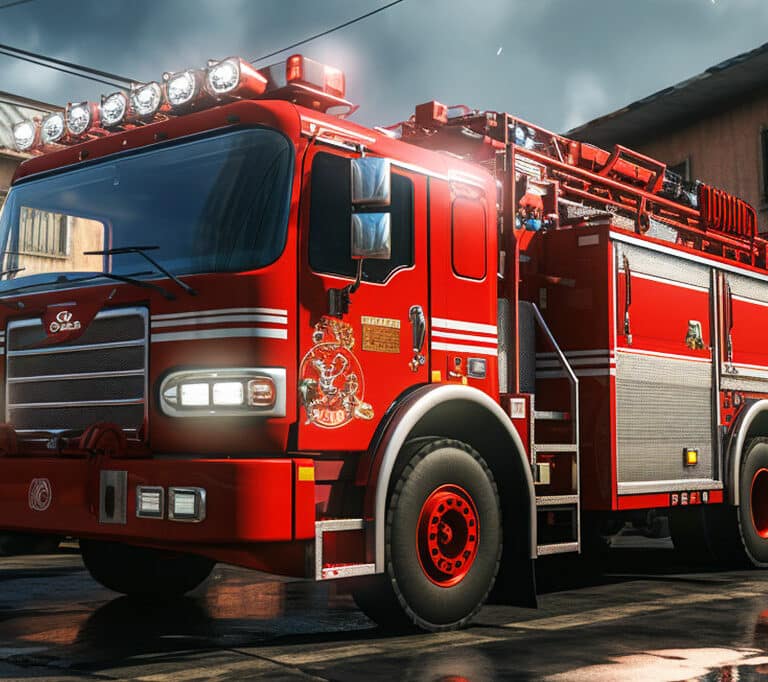
How Much Does a Fire Truck Weigh?

How much does a fire truck weigh is one of the most common questions asked by school kids whenever the fire service comes to visit. 

Fire trucks, with their red flashing lights and blaring sirens, are a symbol of emergency response and safety in communities around the world. 

These impressive vehicles are equipped with specialised tools and equipment to combat fires and save lives. 

But have you ever wondered as an adult, not just how much does a fire truck weigh, but what equipment does it carry or even what types of fire truck are there? 

In this article, we will answer these common questions and provide insights into the fascinating world of fire trucks.

How Much Does a Fire Truck Weigh?

The weight of a fire truck is a critical factor in its design and functionality. 

The range in weight is primarily due to the size and capacity of the vehicle. 

To answer the question of how much does a fire truck weigh, the simplest answer is that a standard fire engine, which is commonly used for responding to fires and emergencies, typically falls within the 20,000 to 40,000-pound range. 

These trucks are equipped with essential firefighting equipment which add to their overall weight.

On the other hand, larger aerial ladder trucks, often used for rescuing people from tall buildings and providing elevated water streams, can be significantly heavier. 

These trucks feature an extendable ladder, which requires additional structural support and hydraulic systems, contributing to their weight of up to 70,000 pounds.

A fire truck can weigh up to 70,000 pounds

The total weight of a fire truck includes various components. 

The chassis, which serves as the foundation of the vehicle, contributes a significant portion to the overall weight. 

The body of the fire truck, made of steel or aluminium, houses the equipment and water tanks. 

Additionally, the equipment carried on the truck, such as ladders, firefighting tools, and medical supplies, further adds to the weight. 

All these factors are carefully considered during the design and construction of fire trucks to ensure they are efficient, durable, and capable of responding effectively to emergencies.

How Much Does a Fire Truck Weigh When Full of Water?

Probably the second most asked question in relation to how much does a fire truck weigh, is how much does it weigh when full of water. 

When a fire truck is filled with water, its weight can increase significantly due to the large water tank it carries. 

On average, a fire engine can hold between 500 to 1,500 gallons (1,893 to 5,678 litres) of water. 

Since each gallon of water weighs around 8.3 pounds (3.8 kilograms), a full tank can add an extra 4,150 to 12,450 pounds (1,882 to 5,647 kilograms) to the vehicle’s weight. 

This added weight is a crucial consideration for firefighters and drivers, as it affects the truck’s handling and performance during emergency responses. 

Properly managing the water supply is essential to ensure the fire truck can manoeuvre effectively and safely while combating fires and providing vital support to emergency situations.

How Long is a Fire Truck?

The length of a fire truck varies based on its type and model. 

Standard fire engines typically measure around 25 to 35 feet (7.6 to 10.7 metres) in length. 

However, aerial ladder trucks, equipped with extendable ladders, can reach impressive lengths of 75 to 100 feet (22.9 to 30.5 metres). 

These longer fire trucks are often employed in high-rise firefighting and rescue operations, where their extended reach is essential for accessing upper floors and providing a safe evacuation route. 

The varying lengths of fire trucks allow firefighting teams to choose the most suitable vehicle for specific emergency scenarios, ensuring an effective response to fires and other critical incidents.

How Wide is a Fire Truck?

The typical width of a fire truck ranges from 8 to 10 feet (2.4 to 3 metres). 

This dimension is carefully designed to ensure that the vehicle can manoeuvre through narrow streets and tight spaces in urban areas without encountering difficulties or causing damage to buildings and obstacles. 

A fire truck can be up to 3 meters wide

The compact width enables fire crews to quickly reach emergency scenes and provide timely assistance, even in congested environments.

What Types of Fire Trucks Are There?

Fire trucks come in various types, each designed for specific firefighting tasks, depending on the cause and type of fire. The most common ones include:

Fire Engines 

Standard fire trucks equipped with water tanks, hoses, and firefighting equipment. They respond to most fire emergencies and carry a crew of firefighters. Recently, electric fire trucks have also been rolled out.

Aerial Ladder Trucks 

Also known as ladder trucks or hook-and-ladder trucks, these vehicles feature extendable ladders and platforms for rescue operations in tall buildings.

Rescue Trucks

Rescue trucks are equipped with specialised equipment for rescuing people from hazardous situations, such as vehicle accidents or collapsed buildings.

Wildland Fire Engines

Designed for fighting wildfires in rural and forested areas, these trucks have off-road capabilities and carry water to extinguish smaller fires.

Airport Crash Trucks

Specialised fire trucks used at airports to respond to aircraft emergencies, such as fires or crashes.

Foam Trucks

Equipped with foam-generating systems to fight fires involving flammable liquids.

Each type of fire safety vehicle is carefully designed to address specific fire scenarios, ensuring that firefighters have the right tools and resources to combat various emergencies effectively. 

The diversity of fire truck types enables firefighting teams to be prepared for a wide range of incidents, from standard structural fires to specialised hazardous material incidents. 

These versatile vehicles play a crucial role in ensuring the safety of communities and protecting lives and property during emergencies.

What Equipment is on a Fire Truck?

Fire trucks are equipped with a wide range of tools and equipment to handle various emergency situations. 

Some common equipment found on a fire truck includes hoses, nozzles, axes, saws, ladders, breathing apparatus such as oxygen masks, medical supplies, and thermal imaging cameras. 

The exact equipment may vary depending on the specific type and purpose of the fire truck. 

For example, ladder trucks will have extendable ladders and platforms for tall building rescues, while hazmat trucks will carry specialised gear for handling hazardous materials incidents. 

The availability of this diverse firefighting equipment ensures that firefighters have the necessary tools to effectively and safely respond to different emergencies they may encounter.

How Long is a Fire Truck Hose?

The length of a fire truck hose varies based on the truck’s size and intended use. 

Standard fire hoses used for firefighting operations are typically 50 feet (15 metres) long. 

Aerial ladder trucks may carry longer hoses, up to 100 feet (30 metres), to reach higher floors in tall buildings. 

The length of the hose is crucial in ensuring firefighters can effectively deliver water to the source of the fire, regardless of the building’s height or accessibility.

How Much Water Does a Fire Truck Hose Deliver?

The amount of water a fire truck hose can produce is determined by its diameter and water pressure. 

Most fire hoses have a diameter of 1.5 to 2.5 inches (3.8 to 6.4 centimetres) and can deliver water at pressures ranging from 50 to 150 pounds per square inch (psi). 

At an average flow rate of 100 psi, a fire hose can deliver around 50 to 125 gallons (189 to 473 litres) of water per minute. 

This water flow is critical for effectively extinguishing fires and controlling their spread, especially in larger and more intense fire incidents. 

Firefighters must skillfully operate the hoses to direct the water precisely and efficiently, making the most of their water supply to combat the flames and protect lives and property.

What Licence Do You Need to Drive a Fire Truck?

Driving a fire truck requires a specific commercial driver’s licence (CDL) with appropriate endorsements. 

Firefighters need a special licence to drive a fire truck

The exact licence requirements vary depending on the fire truck’s weight, size, and type. For instance, a firefighter operating a standard fire engine may need a different endorsement than one operating an aerial ladder truck. 

To obtain the necessary CDL and endorsements, firefighters must undergo specialised training to operate these vehicles safely and effectively. 

This training includes learning how to handle the larger dimensions of fire trucks, understanding the unique challenges of emergency driving, and practising manoeuvres such as backing up, turning, and navigating tight spaces. 

Firefighters also receive instruction on vehicle maintenance and safety protocols to ensure the proper functioning of the fire truck during emergencies.

Conclusion

Hopefully this article provided a clear and concise answer to how much does a fire truck weigh, and some of the most common questions to do with fire trucks.

Fire trucks are essential vehicles in emergency response and play a crucial role in safeguarding communities. 

Their size, weight, and equipment are carefully designed to handle various firefighting and rescue tasks effectively. 

The training and expertise of firefighters who operate these machines are vital in ensuring their efficient use during emergencies. 

From carrying large amounts of water to navigating through tight spaces, fire trucks are equipped to tackle a wide range of challenges. 

Understanding the capabilities of these vehicles helps us appreciate the dedication and skill of firefighters who work tirelessly to protect lives and property in times of crisis.

IFSJ Exclusive: Working together to provide protection

Faheemuddin Mohammed, Specialist of Electrical Certification at Dubai Civil Defense’s Emirates Safety Lab talks passive and active fire protection

What is fire safety, and why is it a critical subject? Fire safety is the set of practices and procedures intended to reduce the life safety risk and property damage or destruction caused by fire.

Active and passive fire protection systems protect buildings and occupants from fire incidents. Both systems symbiotically play various roles in preventing, detecting, containing, limiting, and extinguishing fires.

Passive vs Active Protection Systems

Passive Fire Protection Systems are designed to control the spread of fire and smoke for a predefined period of time within the room (fire origin) in a building and to prevent it from spreading to adjacent areas (other compartments).

Active Fire Protection Systems are designed to detect, control, and extinguish fires which requires special stimulation or a command signal to operate. These systems are activated in the event of a fire, either automatically or manually, to help suppress the fire containing it until firefighting crews arrive at the incident and limit the damage.

Working together

Every building should have fire systems designed and installed. Considering a fire in the building, detectors are regarded by the general public as first defenders. These can be a smoke, heat, or combined detector, which, when activated, transfers the information (detection) of the fire incident location to the control panel. Suppose the fire is in its early stages before automatic detection. Anyone discovering the fire can trigger the system using the fire alarm manual call point/pull station. Immediately after fire detection, the fire alarm control panel (FACP) initiates actions per the facility’s designed “cause and effect matrix”.

During a fire emergency, the immediate activation of various systems and devices is essential to ensure the safety of the occupants and minimise damage to the building. One of the most critical components of a fire safety system is the Fire Alarm Control Panel (FACP), which is responsible for coordinating the activation of various systems and devices to facilitate safe and efficient evacuation.

The first system to be activated is the fire sounder and visual alarm devices, which provide an audible and visible warning to alert occupants to the emergency. If a voice evacuation system is installed in the building, the FACP will activate the system to start announcing the automatic evacuation plan, providing occupants with clear instructions on how to evacuate the building safely. If needed, a manual evacuation will be initiated.

The FACP will also initiate the emergency lighting system, illuminating the exit signage to guide occupants towards the direction of egress. Additionally, the smoke management system will be activated to contain or extract smoke from the building, with automatic extract fans being activated to extract the smoke.

In terms of the HVAC system, the FACP will switch from regular operation to emergency operation, including the air handling units (AHUs). If the fire strategy approach includes functionality for pressurisation, smoke management/extraction, etc., the HVAC will be turned off to provide proper ventilation and cut the airflow in designated areas of the building.

The Access Control System (ACS) will also be prompted to open the egress and release electric door locks for occupants’ easy evacuation. If required, fire doors will open or close to provide a suitable egress path or to compartmentalise the fire.

The sprinklers will be activated via self-contained detection (glass bulb or fusible link) for automatic fire extinguishing, while the fire and smoke dampers will be activated to stop the flow of smoke/fire to other areas.

At the same time, a series of fixed physical barriers, passive fire protection systems, are used to compartmentalise a building to withstand fire and smoke, hold fire in its original location, and prevent it from spreading to other parts of the building.

These systems will provide and reinstate the compartmentation and include various applications for fire and smoke barriers. In addition to the main structure of the building and building envelope such as the curtain wall, cladding systems and applied insulation to the outside of the building.

Awareness and quality of products/systems

It is generally understood that active fire systems detect and make sounds for evacuation; hence, it is a familiar system, and people have an idea about these. Building owners should know how vital fire systems and their maintenance are. The authorities and regulatory bodies should ensure these fire systems are mandated and provide guidance and governance for fire systems maintenance and ongoing testing throughout the building’s life cycle following the geographical areas’ requirements.

It is crucial to ensure that active and passive fire protection systems are installed and working together effectively to provide the best protection against fire risk.

All active and passive fire systems installed in a building should be tested by a recognised accredited laboratory and certified by an accredited certification body to ensure the quality of the product/system. Emirates Safety Laboratory (ESL) is accredited to per the ISO 17025 and ISO 17065 standards. It is a recognised laboratory and certification body that provides testing and certification to over 600 methods and standards for many fire products/systems.

This exclusive article was originally published in the May 2023 issue of International Fire & Safety Journal. To read your FREE digital copy, click here.

Fire Protection Roadshow heads for Birmingham

On Tuesday 25th April, the Fire Industry Association (FIA) and British Automatic Fire Sprinkler Association (BAFSA) will host the third edition of their Fire Protection Roadshows.

The event will feature a series of seminars led by industry experts on topics such as gaseous extinguishing, Watermist, sprinklers, environmental challenges, and the risks associated with Li-Ion batteries. The afternoon’s agenda will follow the format of the previous two events, providing attendees with a valuable learning experience.

The event offers an opportunity to earn valuable Continuing Professional Development (CPD) hours for free and network with industry leaders. Participants are encouraged to sign up and join in for an excellent afternoon of learning and professional development.

Speakers at the roadshow include: Stewart Kidd, BAFSA, Dr Simon Bird, Consultant, Alan Brinson, EFSN, Executive Director of the European Fire Sprinkler Network, Dr Tim Nichols, Consultant, Alan Elder, JCI,Dr Wojciech Mrozik, Newcastle University, Yusef Muhammed, Plumis, and Robert Thilthorpe, FIA.

FPA responds to DLUHC consultation on sprinklers in care homes

The Fire Protection Association has submitted its response to the DLUHC consultation on sprinklers in care homes, the removal of national classes, and staircases in residential buildings.

In its response, the FPA restated its position that health and life safety should be realised alongside the consideration of property protection. The FPA’s response calls on those responsible not to design and build solely to the ‘life safety before collapse’ objective, and for the application of the LPC Sprinkler Rules.

The FPA said: ““We encourage DLUHC to recognise that the protection of care home buildings as an asset and place of healthcare that provides a vital service to residents and their families in the wider community warrants a commitment to the LPC Sprinkler Rules. Other systems providing suppression or extinguishment for health and life safety only are not sufficient to protect the asset.”

The Association said it opposes a 10-bed threshold as an arbitrary threshold will simply encourage 9 bed facilities, and the proposal to limit the sprinkler requirement to new care homes only:“Most care homes already exist, and this DLUHC proposal limited to new care homes does not retrofit the existing stock as it should.”

On the removal of national classifications, the FPA said it broadly agrees with the DLUHC proposal, but noted the issues surrounding the historic problems arising from the Class 0/B transposition in Approved Document B. 

And on staircases in residential buildings, the FPA said that that the question of evacuation and intervention should be addressed for all buildings regardless of height or occupancy, rather than there being a maximum threshold for the provision of a single staircase in multioccupancy residential buildings.

It noted, however, that the: “Call for two stairs is simplistic. It ignores the combination of measures that may be considered to provide for evacuation and intervention” as even in lower rise buildings that have other fire safety inadequacies, single stairs can become impassable. The provision of stairs is just one factor, and the FPA believe it is important not to leap to the conclusion that all single stair buildings are dangerous.

The FPA’s full submitted response to the consultation can be found here.

Otego protects art against fire with latest Fireguard

Otego has announced the launch of Fireguard, a next-generation protective cover designed to shield works of art, valuables and antiquities against the effects of intense heat, soot, smoke and water.

Intended for museums, religious spaces, auction rooms and private collectors, Fireguard is the result of decades of research and collaboration with firefighters and major cultural and religious establishments. Its development was given even greater momentum following the catastrophic fire at Notre Dame.

The textile, comprising a mineral fibre layer and a metallised outer layer, is already helping to protect the treasures of cultural institutions across France, including The Louvre Museum in Paris. 

Ready for deployment

Fireguard is stored at site, ready to be deployed by firefighters in accordance with the gallery, museum or cathedral’s emergency plan. When called upon, the extremely thin, flexible and adaptable construction makes it easy to quickly wrap or tuck Fireguard around sculptures and artwork. 

Grégoire Bernand, Fireguard Product Manager at Otego outlined the situations in which Fireguard can prove indispensable: “All museums, art galleries and other cultural and religious spaces are recommended to have a list of priority works which, in the event of flood or fire, would be saved as a priority.

“Ideally, such works would be extracted from the building but often, because of weight, size, accessibility or value, these artworks have to be protected in situ. These situations are where Fireguard can prove as priceless as the pieces it protects.”

Effective against the elements

When fire breaks out, the threat to artwork and antiquities comes from both heat and smoke, and also from the water used to extinguish the fire and the time taken to deploy protective countermeasures.

Fireguard offers protection against radiant heat (C4 classification to ISO 11612), soot and smoke. It is fully waterproof, offering protection against sprinkler systems and hose water as well as flame.

A range of six standard sizes together with ‘custom’ options and the ability to combine covers enables Fireguard to be tailored to protect artwork of almost any size.

A weight 100g / m2 (4x – 5x less than most competing products) makes Fireguard easy to manoeuvre and quicker to deploy than alternatives. It also places less weight and stress on the items it protects.

Additionally, Fireguard is designed to be the ideal everyday storage solution for works of art and valuables, protecting them against the external factors that can lead to damage and deterioration.

Thierry Mosa, President of Otego said: “Our covers allow on-site protection of any type of artwork and has received acclaim from numerous fire and rescue services in France and overseas. Effective and versatile, Fireguard’s lightweight compactness, combined with its powerfully effective heat-protecting metallised layer, distinguishes it from any similar product on the market, making it not only more effective against heat, smoke and water, but also easier and faster to deploy.”

Acclaimed by customers

Fireguard has received positive response in Paris, Bordeaux and beyond. Thierry Mosa said Otego does not intend to stop there: “We are talking to museums and galleries across France and the rest of the world, but Fireguard’s potential extends to collectors, auction houses and all art professionals who wish to protect their treasures. We look forward to working with all organisations and individuals who wish to explore the wider protective applications of Fireguard.”

Dräger calls for increased use of fire escape hoods in evacuation safety.

Dräger, an international leader in the fields of medical and safety technology, is calling for fire escape hoods to become part of any fire safety plan where evacuation takes more than a couple of minutes – including educational facilities, hospitals, hotels and high-rise buildings.

Fire escape hoods are designed to provide wearers with crucial minutes of protection from fire-related vapours, particles and gases, including carbon-monoxide. Dräger’s PARAT smoke hood range provide wearers with up to 15 minutes of protection.  According to the UK Government, nearly one in three (30%) of fire-related fatalities are the result of being ‘overcome by gas or smoke’[1], which makes fumes a fire’s most deadly killer.

Dräger therefore believes it is essential that fire escape hoods are used as a supplementary support to other fire safety evacuation measures, e.g., fire doors and disabled refuge areas.

Indeed, the Fire Door Inspection Scheme (FDIS) recently found in a study of more than 100,000 fire door inspections that three in four, or 75% of all fire doors failed to meet required standards[2]. Buildings that had the highest number of fire door inspection failures included healthcare buildings, local authorities and housing associations, and private housing, but across the board the research supports the need for supplementary fire safety measures.

Ian Gil-Rodriguez of Dräger Safety UK says the Industry has a responsibility to promote the increased use of fire escape hoods “The fact that Fire and Rescue Services globally and in the UK are now using fire escape hoods is evidence of their critical importance,” he says. “Our Industry needs to come together and join forces to push this change, for the good of public safety. Fire Escape Hoods should be a standard component of evacuation plans, a complementary part of the complicated puzzle, as opposed to a standalone solution.”

For more information on Dräger or its product offering, please visit www.draeger.com  

[1] https://www.gov.uk/government/statistics/detailed-analysis-of-fires-attended-by-fire-and-rescue-services-england-april-2021-to-march-2022/detailed-analysis-of-fires-attended-by-fire-and-rescue-services-england-april-2021-to-march-2022#:~:text=2.4%20Causes%20of%20deaths%20and%20injuries&text=In%20the%20year%20ending%20March%202022%2C%20where%20known%2C%20the%20most,of%20fire%2Drelated%20fatalities).

[2] https://www.ifsecglobal.com/fire-news/three-quarters-of-fire-doors-fail-inspections-according-to-fdis/