Jason Traynor, general manager, Global Fire Service and integration leader for MSA Bristol took some time out to discuss the importance of the Middle East market for the business.
Traynor also talked about the company’s strategic partnership with Fotokite, and the company’s forecasts for 2022.
Luminite has appointed Laura Grainger as Director of Sales and Marketing. Laura has earned a promotion from within the company after she joined nine years ago and has played a key role in building relationships with distributors and end users, contributing to the wider growth of the business.
Graham Creek MD said “Laura is a vital member of the team and has proven to be a strategic Sales and Marketing Manager. Our future plans for growth with the addition and development of our wireless security range will entail a larger team which Laura will head and oversee.”
Commenting on the new appointment, Laura said “This opportunity comes at an exciting time for Luminite. Our increasingly diverse product range is opening up new and challenging avenues for the Company and I look forward to driving our sales and marketing plans forward.
Luminite manufactures PIR detection, wireless switching, IP connectivity and wireless alert systems. The North London based company has been around for more than 37 years operating in both the security and home automation markets.
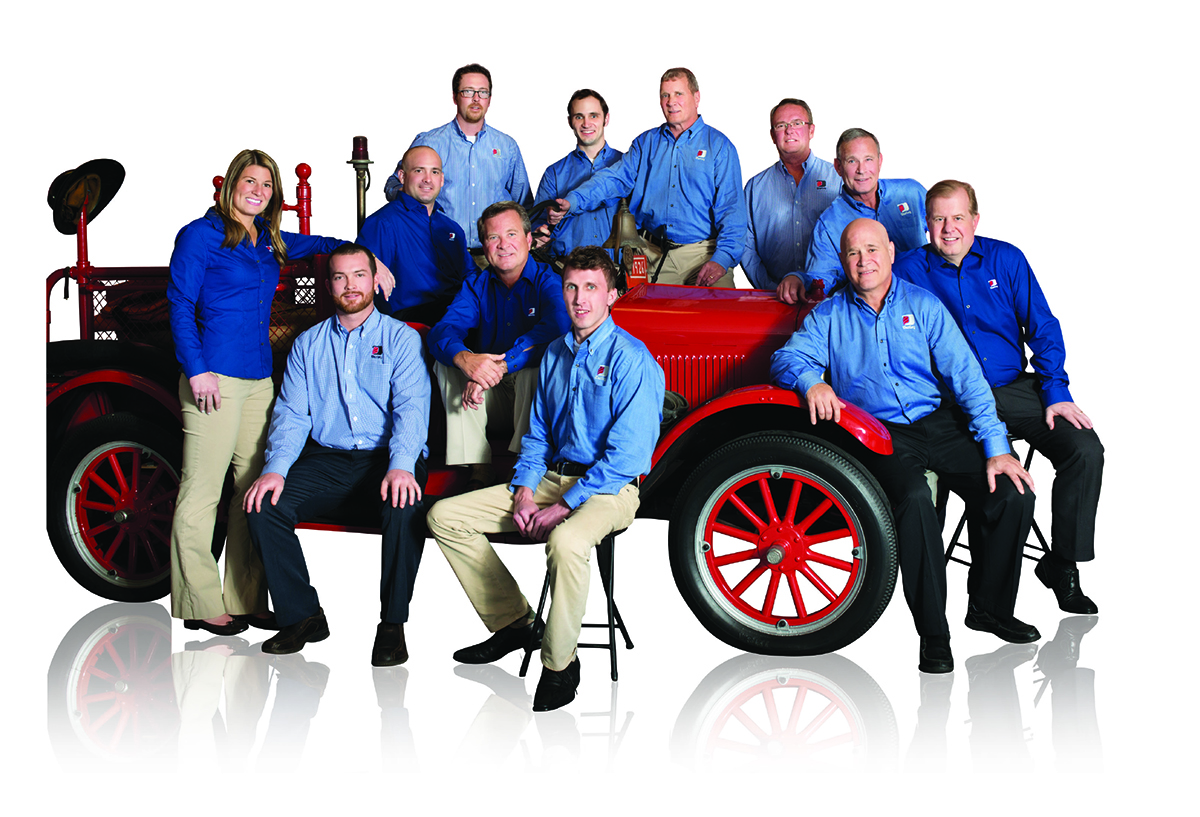
Entering the Darley stand at Intersec 2022, we are greeted by a wide smile, and a warm handshake. It’s Ryan Darley. It was his great grandfather who founded the company 114 years ago. Darley is there to greet the International Fire and Safety Journal team. We sit at a table, and engage in conversation about the grey Dubai skies, an anomaly for the Gulf state. Just then he is visited by another gentleman. “They are one of our customers from Saudi Arabia,” Ryan says to me after they leave. The Kingdom is one of the 100-odd countries Darley operates in.
Ryan has been heading the international sales unit for more than 11 years. Business is in his blood; Ryan has been connected to Darley since he was a young boy playing baseball in the parks. “My father would pick me up from a ball game and we would drive to the office where he continued work late into the night. I would mow the lawn, sweep the floors, or do other odd jobs around the factory,” he recalls.
Through his college years, Ryan spent his summer breaks assembling pumps and working in different parts of the business. “From assembly to crating, I spent a lot of time in the factory and understood what it took to make fire pumps.”
As a company policy, a Darley family member usually spends some time outside of the company, to gain valuable work experience in different working environments before they begin working at Darley. For Ryan, it was a three-year stint after finishing his education before he returned to the family business.
The roots
“My great grandfather was an inventor. He developed quite a few products which he sold to the fire and the oil and gas industry. He then went on to build fire trucks and fire pumps, 100 years later we are still owned and operated by the Darley family.”
The Darley family is in its fourth generation of business.
Now in its fourth generation, Ryan says the family has done a lot of due diligence and created a company culture that has kept them successful. The company is part of different family business groups, and works closely with a university in Chicago, Illinois that is dedicated to studying family-run businesses.
“We are involved in, and constantly looking into succession planning, equipping the next generation to take the business to the next level. If you are not growing, you are dying. We want to make sure we are ready (for changes in the market). It’s important to gauge whether the next generation can take over the business. It’s a constant process of looking inwards and aligning with best practices, and what can be done to improve.
Corporate governance and IPO
The company has been operating under an outside board of directors for over 25 years. “One member has been on the board for almost 20 years.”
As the company grew, Darley has incorporated different board structures within the company that have helped it scale – fire advisory board, military division board, and the latest is a cyber security unit. “These boards have industry experts from their fields. They advise us on best practices and future trends. The board helps us better serve different industries.”
I naturally had to ask Darley whether an IPO has crossed their minds.
From the outside looking in, it seems like a natural progression. Right? “No,” Darley says, as he smiles and explains the group’s rationale.
“We take pride in being family owned and operated. It (an IPO) doesn’t even come up. We have seen how things can dramatically change when family businesses go public. We like the family ownership model; it’s what we take forward as a philosophy. The Darley family is not just the bloodline; it’s our employees and our customers. We have no plans for an IPO, that’s for sure.”
Ryan Darley, International Sales Manager, Darley
Investment and market segment diversification
“We invest almost all our profits back into the company. If we have a good year, they have a good year, and so does our research and development division. We need to diversify, change, and be the leader or we will be the dinosaur that goes extinct,” he says.
Over the last 20 years, a major share of Darley’s business came from the fire market. Today fire accounts for 20% or less of its total business. “The military division has taken over as the largest in our company. In addition, we are experimenting with different technologies and trialing them in the market.
“Kyle Darley is currently working on an electrification project where our fire pumps will be driven with electric motors,” Darley notes. “Around 12 years ago, we introduced drones to the fire service industry and showcased it to the industry at our stand in a tradeshow. People laughed at us for having a helicopter in our stand. ‘There is no place for drones in the fire service,’ was the popular myth then. Today, every major fire service has a drone in their armory.”
Darley also introduced a water purification system to the fire service market which has been integrated into fire trucks. “The fire pump enables a fire truck to have an on-board water purification system. If there is a natural disaster, for example, and people are scarce of drinking water these trucks can plug the gap. Alternately, it is also capable of drawing groundwater, purify it, and supply it to the public,” he informs.
The innovations do not end there, Darley says. Ten years ago, the company offered decontamination units using reverse osmosis and ozone technology. “We were way ahead of our time… Today, there are different systems that have come up to clean fire trucks, gear, and cabins. Cancer within the fire industry has also gained widespread attention, everyone is looking at decontamination and proper hygiene methods. It used to be cool to have a dirty helmet and coat, but that’s simply not acceptable today.”
“Software and technology will dictate the future of the fire industry. We are not too far from running a fire truck via our smartphones that will be able to control pumps, aerial devices, and so forth. We are already looking at those technologies to stay ahead of the curve.”
Robotics and future technology
Darley started making its own drones a decade ago before it realized that the task was best left to specialized companies. “We decided to partner with drone specialists while adding fire technologies on its framework, like a thermal imagining camera that could help in search and rescue operations. The goal is to use their expertise, research, and development in drone technology, and kit it out with our products. There isn’t a purpose-built drone for the fire industry just yet,” he notes.
Darley is pioneering new technologies, and pushing boundaries of the norms within the fire and rescue service industry.
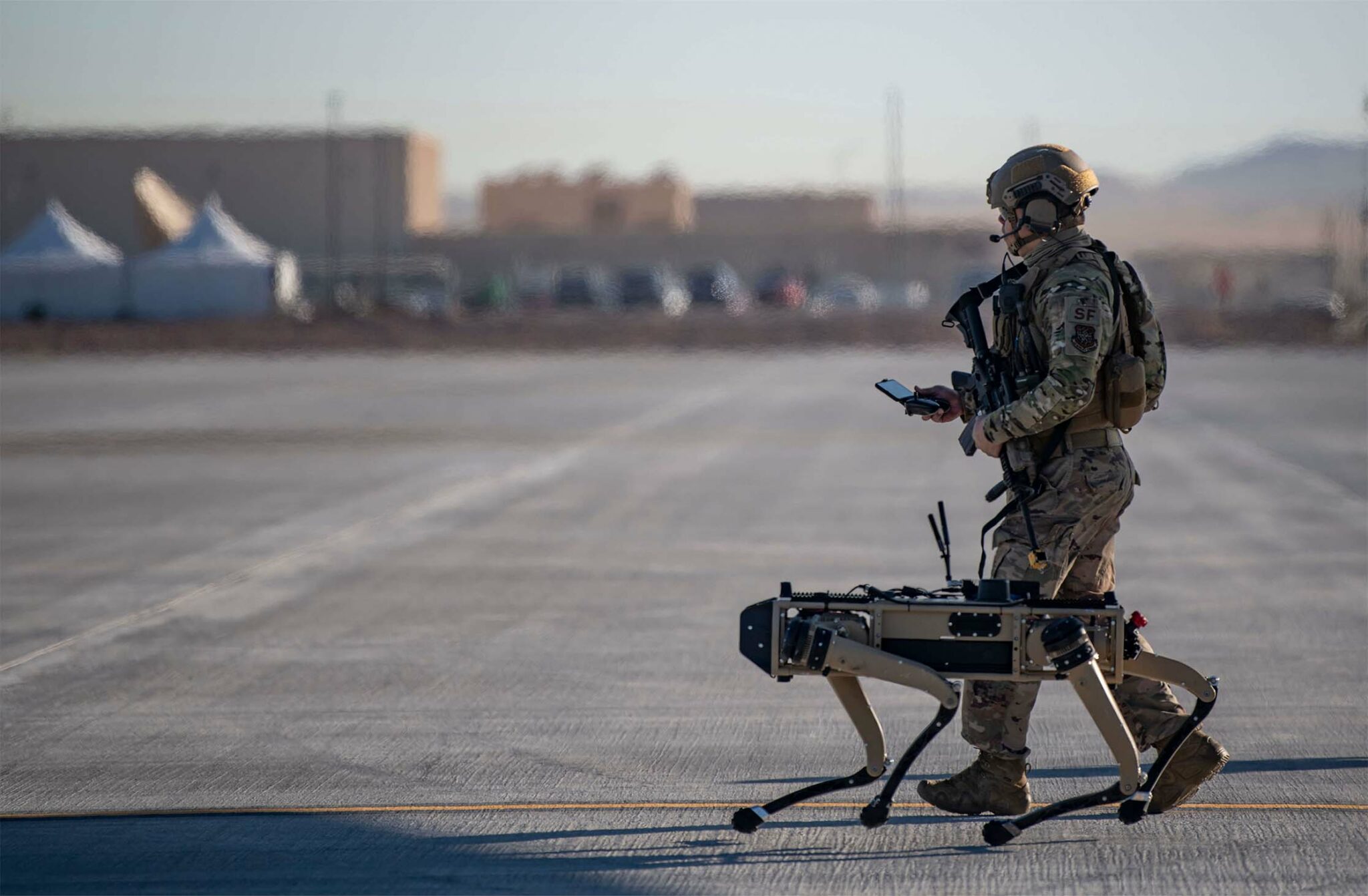
The company is also testing the waters with decontamination robots which will substitute fire fighters to go into hot zones to decontaminate other fire fighters. “It’s better to expose a mechanical robot to the carcinogens.”
All these developments are tied into Darley’s new division that will investigate future technologies. “This division is set to play a crucial role in the future of Darley… drones and UAVs are going to be part of everyday life.
“We are researching electric car fires as well. A typical gasoline vehicle that catches fire is easy to put out, however, it’s not the same with electric vehicles. We are currently researching whether the addition of a chemical to car battery packs can help put out the fire sooner. Our R&D team is also constantly researching with different materials and components across all our business divisions. We are working on driving efficiencies, increasing safety, and improving the lifecycle of our products.
Markets
In terms of markets and global presence the company is well stacked. Ryan says the United States accounts for 90% of its business “including the work we do with the US military”. Although it has been difficult to crack into foreign militaries, it remains a key focus for the future.
“40% of our fire business comes from export sales. Following the Second World War a market opportunity developed to service pumps that were left behind by the US military. Back then, we used to get contacted from France or Germany asking for parts and service support. That’s how it started”
Ryan Darley, International Sales Manager, Darley
Business took a slight dip during the pandemic, sales were down 20%, whereas profits fell below that, Ryan tells IFSJ poignantly. “2021 was a difficult year but we improvised and sold Covid-related equipment such as gloves, face masks, and trailers to the military.
“We will bounce back but we must remember that budgets were re-allocated to make room to fight the virus. Medical equipment was prioritized over fire, emergency response, military. We are on track to make up for last year’s dip. We had plenty of momentum going into the pandemic, and it seems to be returning. Prior to the pandemic, we kept registering record sales and profits every year.
Although an IPO is not on the cards Ryan says the company is constantly assessing the possibilities of mergers, acquisitions, and partnerships. The group currently manufactures 10% of its sales volumes, a number it wants to significantly improve.
“We look at four or five different companies every week, but there aren’t any immediate acquisition plans. We bought Fire Boy seven years ago but sold it last year because we weren’t adding as much value as we envisaged. The company grew under our ownership, and we found some suitable partners who we were comfortable selling it to. We knew the buyers, they were going to sustain the staff, which reassured us,” Darley says stating that the welfare and security of all its employees is of paramount importance, all 270 of them.
Looking ahead, the groundwork to keep the business successful for the next 100 years is being put in place today. “If the fire market goes away, we have the military market. Maybe a few decades down the line we will be known as a major player in robotics or drones. We are a forward-thinking family business, and we want to keep pushing the envelope of innovation just as our founder did over 100 years ago,” Ryan concludes.
Faelsafe Life Safety, a UK-based fire and life safety company, has transformed its business using BigChange Field Service Management Software. Since implementing the cloud-based platform, Faelsafe has reduced its administrative resource, eliminated paper from its mobile operation and improved the efficiency of engineers working across mainland UK.
Insightful contributions on a range of key, topical issues facing the security systems and security services sectors were shared at last month’s Thought Leadership Summit, held at the Royal Lancaster London after a two-year break following the pandemic. Organised by the Outstanding Security Performance Awards (OSPAs) in association with NSI, the annual event attracted a wide range of senior leaders from across the industry.
The 2022 conference programme reflected a variety of current themes affecting buyers of security and industry providers alike, including upcoming legislation covering protection of most public spaces – the Protect Duty proposals. These implications and opportunities were debated by three speakers: Andrew Donaldson, head of security at Real Estate Management UK Ltd; John Frost, Group head of business continuity at Marks & Spencer and chairperson of the Retail Business Continuity Association; and Stuart Toal, head of non-motor commercial insurance, Allianz UK.
The speakers’ contributions on the Protect Duty consultation reflected a wider, common thread: the value of collaborative working, regardless of commercial considerations. As one delegate put it, in a contribution ‘from the floor’: we have to work collaboratively to make the most of this once in a moment opportunity and explain to all parties how improved protection of public spaces will impact them in the future.
Those attending the Thought Leadership Summit also gained an insight into the current thinking guiding licensing body the Security Industry Authority, from CEO Michelle Russell. Michelle outlined a plan of actions including improvements to the SIA’s core licensing systems and processes, alongside a more proactive approach to compliance, inspection and enforcement.
The impact of the pandemic on the security sector was discussed by two speakers in a session addressing the topic ‘Who are the winners and losers amongst security suppliers? What the bosses say.’ Paul Evans, CEO of Carlisle Support Services and Christian Watts, MD, Fire and Security Systems at Mitie agreed that key worker status has raised the public perception and status of officers with a welcome increase in pay across the sector.
In contrast, there have been increases in violence, including serious assaults, along with a significant rise in abuse towards guards, and Paul argued for a “meaningful employee value proposition” to attract candidates and counter labour shortages.
Christian added that other “headwinds and challenges” include rising crime statistics, increases in the cost of living, supply chain disruption, tightening compliance, changing workplaces and technology evolution.
Richard Jenkins, NSI’s chief executive, provided Thought Leadership Summit delegates with an overview of the positive ways in which third party certification raises standards, reduces risks and independently demonstrates key competencies across the sector. He said: “Following NSI’s inaugural involvement with this prestigious event in 2020, the environment in which companies operate has changed and the 2022 Thought Leadership Summit provided challenging first-hand perspectives from practitioners on the key issues driving the direction of travel in both security systems and security guarding services deployment and operations.”
Professor Martin Gill, founder and director, Thought Leadership Summit commented: “Thought Leadership Summits are designed to inspire new thinking, provide a critique of what is happening and generate insights on where security should be heading, it once again achieved that. The presentations and debates remind us of the passion for those who work in security to want to improve it.”
Technology is integral in every walk of life, Ed Chivers, global product and certifications director, Reacton talks about electrical fire supression
Almost everything we do relies on technology. From how we communicate, to how we are entertained and find answers to problems, technology plays an integral part. And behind the scenes, powering our ability to connect the devices in our hands and the computers on our desks with the world, is a complex network of control panels, data cabinets, switches and servers, that all rely on electricity. And if these fail, the consequences can be devastating, especially if the cause of the downtime is fire.
Electrical fires are incredibly challenging to predict and once started, if left to burn undetected, their effects can destroy equipment beyond repair and spread quickly to nearby equipment or structures. Outdated infrastructure, faulty wires, poor maintenance and overloaded circuits are all risk factors for fire.
Reacton Fire Suppression’s electrical equipment systems are designed for use in small enclosures to protect people, assets and critical infrastructure from fire. Not only will our Direct systems deliver protection right where the fire originates, but they are also compact and sized for the electrical enclosure or cabinet being protected.
This will result in a significantly reduced cost of ownership as only a few kilograms of Clean Agent are being used and therefore need replacing in any fire conditions. Compared to that of a large total flood application where the system sizes are much higher, so every discharge will come with a bigger price tag to replace or refill, not to mention the logistics and downtime.
The Reacton Direct system utilises our CT Direct valve technology and tubing to automatically detect the fire and actuate the system. The pressurised tubing is installed in and around the fire risks within the protected areas, always in communication with the system contents. When a fire occurs, the tubing will burst at the point of highest heat. As the contents of the systems are directly in communication with the detection tube, immediate discharge of the extinguishing agent is started at the point of detection.
Reacton’s Clean Agent range consists of 3M Novec 1230 Fire Protection Fluid and FM-200 waterless fire suppressant from Chemours™. These Clean Agents are the most trusted and tested liquefiable gases on the market with all supply being solely through the biggest names in the industry when it comes to Clean Agents.
These Clean Agents are the leading choice for fire suppression when rapid protection and zero clean-up is essential for sensitive electrical equipment.
Euralarm president Jon Könz has been selected as a member of the CEN-CENELEC Industry Advisory Forum. The Industry Advisory Forum consists of 18 members who were selected, based on their specific experiences and knowledge in the identified CEN-CENELEC Strategy 2030 areas and European Industrial Ecosystems.
Via the Industry Advisory Forum (IAF) high-level European industry representatives and CEN and CENELEC can have an open exchange on current standardisation issues and identify and advise on standardisation priority topics for the European industry. Besides the Forum can express suggestions, expectations, and concerns to identify common solutions.
By providing advice to the CEN and CENELEC corporate governing and advisory bodies and proposing medium- and long-term industry-driven standardisation objectives for CEN and CENELEC, the Industry Advisory Forum (IAF) contributes to reaching and successfully implementing the CEN and CENELEC strategic objectives. These objectives support European industry’s priorities, challenges and expectations from standardisation.
Könz said: “We are living in exciting times, with digitalisation and sustainability as both opportunities and challenges. I’m proud that on behalf of Euralarm I can contribute to the synergies between policy and standardisation and the green and digital transition.”
The IAF members are appointed for a 3-year term and are selected based on their high managerial level, relevant know-how on standardisation, expertise in one of the identified priority areas, sectorial balance across CEN and CENELEC, representing both SMEs as well as large industries and adequate geographical and gender balance.
Fire services across the UK are donating thousands of items of kit and equipment to their counterparts in Ukraine.
UK charity, FIRE AID and International Development (FIRE AID), and the National Fire Chiefs Council (NFCC) are coordinating donations of more than 5,000 items of fire and rescue equipment and PPE which will be sent in convoy to Ukraine.
Eighteen fire engines, thermal imaging cameras for finding victims, generators, lighting, hoses, rescue equipment, and thousands of sets of PPE are among the items being donated. Every fire service across the UK has stepped in to support these efforts.
The deployment of these donations is being supported by funding from the Home Office, Foreign, Commonwealth & Development Office, and the FIA Foundation, as well as through a public appeal via JustGiving – https://www.justgiving.com/campaign/KeepUkraineFireFightersSafe
Following a successful scoping visit to Poland conducted by FIRE AID volunteers this week, an initial convoy of three fire engines and a lorry of PPE and rescue equipment will depart the UK today, led by the Scottish Emergency Rescue Association (SERA).
FIRE AID is then coordinating a subsequent convoy consisting of 15 fire engines and two lorries of equipment, donated by fire services across the UK, which will depart on 19th March. 40 UK firefighters will join FIRE AID volunteers as part of the team driving the vehicles across Europe, where it will be received by the Polish State Fire Service and transferred to Ukraine.
When it reaches Ukraine, the equipment will be used to support firefighters, emergency services and volunteers who are battling together on the front line, often using old or worn equipment. They are dealing daily with fires and other emergencies to protect lives, people and property as the invasion devastates the country.
Claire Hoyland, project manager, FIRE AID said: “FIRE AID and its members have over 25 years of experience responding to requests for aid and support for emergency services in over 50 countries. Following the invasion of Ukraine, our members immediately mobilised to gather equipment and aid to donate to their Ukrainian counterparts. FIRE AID members have been working in partnership with the Ukrainian emergency services since 2012 and we are proud to be coordinating this unprecedented emergency response on behalf of the UK Fire Sector.”
Priti Patel, Home Secretary, said: “The British Government and British people are standing shoulder to shoulder with Ukraine and its citizens during this barbaric invasion.
“I have been speaking regularly to my counterpart at Ukraine’s Interior Ministry and the Ukrainian Ambassador in London to understand what practical help we can offer.
“We are helping to ensure that crucial fire and rescue equipment and PPE donated by Fire and Rescue Services will get to where it can directly provide succour to those brave firefighters, emergency services and volunteers on the front line in Ukraine.”
Mark Hardingham, chair, National Fire Chiefs Council said: “As the terrible scenes unfold in Ukraine, the UK fire and rescue service is once again doing all it can to support those who urgently need help. The response has been incredible and it is testament to the public, private and voluntary sectors combining resources, enthusiasm and skills in response to the crisis. Thousands of items of kit and equipment – along with fire engines – have been donated to help the Ukrainian emergency services, battling together on the front line, as they strive to save lives and protect people and property.
“I cannot express how proud I am of everyone who has come together to support this; from getting the equipment together, the hard work which has gone into ensuring the logistics of one of the largest convoys we have seen, to volunteering to be part of the journey itself. This is our sector at its very best – selflessly working together and supporting one other – ultimately helping and hoping to save lives.”
The wider fire sector – including the MSA Safety, Fire Sector Federation (FSF), the Fire and Rescue Suppliers [FIRESA] Council and the Fire Industry Association (FIA) – are also key partners in supporting and making the deployment.
More than 125 firefighters locked horns with a blaze in East London as they successfully evacuated 60 people were from a tower block as a large fire broke out.
A fire broke out in the tower block of flats and offices on Whitechapel High Street in Aldgate East on Monday afternoon with large flames could be seen fanning out of the 17th floor of the building. Dramatic footage from onlookers showed falling burning had fallen to the ground.
In its aid firefighters deployed a 64m (210ft) ladder, which is being touted as Europe’s largest. The London Fire Brigade (LFB) said a woman had to be given ‘fire survival advice’ until firefighters got to her as she was trapped on the 17th floor.
Chris Jenner, station commander, told the BBC: “Fire crews used a fire escape hood to help lead the woman to safety via the internal staircase.”
A fire escape hood offers up to 15 minutes protection from fire gases such as carbon monoxide, hydrogen cyanide, hydrogen chloride and acrolein. They do not provide oxygen but temporarily filter toxic smoke to make breathing easier, LFB said.
London Ambulance Service said two patients were taken to hospital while two others were checked over at the scene.
We're dealing with this fire on #WhiteChapel High Street. Ten fire engines & 70 firefighters are at the scene. Please avoid the area if possible. https://t.co/KM59RSlaK4