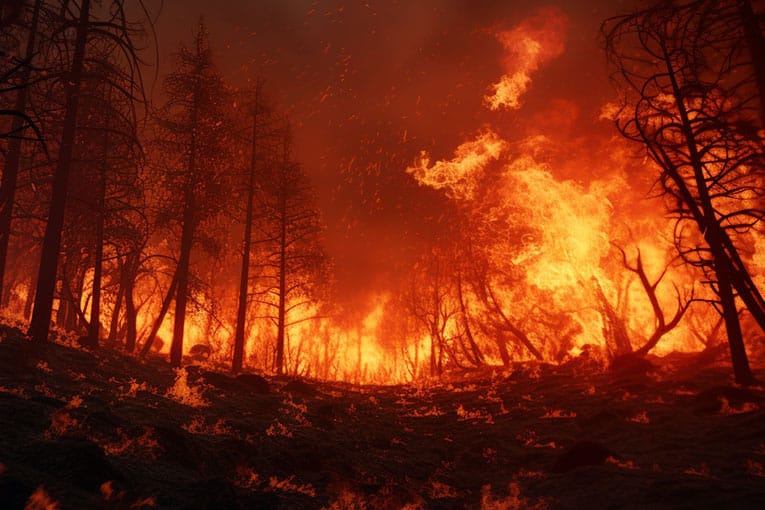
Forest conditions and extreme weather are amplifying wildfire risk, says WMO

Hotter weather and drier forests are driving bigger wildfires

Wildfires are increasingly affecting air quality and atmospheric composition across multiple regions as fire seasons lengthen.

The assessment was set out in a statement delivered to the World Economic Forum in Davos on 22 January 2026 by Celeste Saulo, Secretary-General of the World Meteorological Organization (WMO).

Observations coordinated by the WMO show that large fires release substantial amounts of fine particulate matter and trace gases detected by Global Atmosphere Watch stations operated by National Meteorological and Hydrological Services and partners.

These emissions include carbon monoxide (CO) and carbon dioxide (CO₂).

Rising fire emissions are associated with record increases in atmospheric CO₂.

Repeated burning is reducing a forest’s capacity to absorb carbon, linking warming, more fires and poorer air quality in a reinforcing cycle.

The statement expressed concern that the Amazon rainforest could be shifting from a major carbon sink towards a net source of emissions.

In 2024, wildfire smoke from the Amazon river basin combined with fires in Chile to affect many countries and densely populated urban areas across Latin America.

Mexico recorded its most active fire season on record in 2024.

Canada burned more than twice its long-term average in 2024 and experienced its second costliest wildfire in history.

US fire activity in 2024 ran around 20% above the 2001 to 2020 average.

Wildfire activity in 2024 coincided with above-average PM2.5 levels in Canada, Siberia and central Africa, with the largest anomaly recorded in the Amazon basin in the WMO Air Quality and Climate Bulletin.

Copernicus Atmosphere Monitoring Service data indicate that Europe experienced its highest annual total fire emissions since records began in 2003 during 2025, with Canada registering its second-highest yearly emissions in the same period.

Weather, satellites and early warning

Saulo outlined how climate and weather extremes are changing fire behaviour and management needs.

Hotter temperatures, prolonged droughts and more frequent heatwaves are drying vegetation and extending fire seasons.

Stronger and more erratic winds are allowing fires to spread faster and cross natural barriers.

Risk varies by region, particularly where forests meet large populations, making practices such as thinning and prescribed burning central to risk reduction.

In remote areas where fires are often ignited by lightning and ground access is limited, satellite monitoring is central to response.

Real-time and long-term fire detection depends on the rapid exchange of satellite data, which the WMO has supported.

In northern Australia, land managers use a satellite-based fire information system developed with the Bureau of Meteorology to track burned areas across vast and inaccessible terrain and to plan fuel management and resource deployment.

After Cyclone Chido in Mayotte in 2024, meteorological analysis identified that dead vegetation would become highly flammable once dry, allowing fire agencies to adjust preparedness in advance.

Seasonal forecasts now provide probabilistic guidance in places such as Réunion and northern Australia, informing decisions on when to conduct prescribed burns, reduce fuel loads and prepare for more intense firefighting.

In France, Météo-France produces a daily meteorological danger map that is translated into a five-level wildfire risk map for each forest area to guide operational decisions.

Regional smoke forecasting centres operate under the WMO Vegetation Fire and Smoke Pollution Warning and Advisory System, including a North American hub hosted by Environment and Climate Change Canada and a Southeast Asian centre in Singapore, providing cross-border smoke forecasts during severe fire seasons.

Saulo said: “In the next five years, we must stop treating wildfires as surprises and start managing forests as critical infrastructure, using science, early warning, AI and strong partnerships to act early, protect people from smoke and heat, and ensure forests reduce risk rather than fuel the next crisis.”

New bill targets wildfire smoke contamination rules for reoccupying homes

Wildfire smoke standard proposed for home reoccupancy

A California lawmaker has introduced a bill that would set statewide, science-based standards for deciding when a home is safe to live in after a wildfire.

The New York Times reported that Assemblymember John Harabedian, whose district includes Altadena, introduced Assembly Bill 1642 on Tuesday.

The bill calls for new health-based guidelines for testing and cleaning homes contaminated by toxic smoke, along with criteria for when a home is safe to reoccupy.

It would assign the California Department of Toxic Substances Control responsibility for developing and specifying the standards.

It would also shift post-fire safety decisions away from insurance companies and towards a public-health agency.

Investigations and background cited by the Times

California has no agreed-upon standards for how to test or clean homes affected by toxic smoke contamination.

The Times said this has allowed insurance companies to dictate what substances to test for and how to address contamination.

Harabedian said: “A lot of families are in this unfortunate and uncertain position of not knowing whether it’s safe to move back.”

“And that’s because there isn’t a statewide standard that is based on science.”

He added: “You would think that we would have a uniform post-fire safety standard and some sort of, you know, objective way of determining that.”

“Unfortunately, what we see is that there isn’t one.”

The Times said the bill was inspired by its earlier investigation into one family’s return to a contaminated home in Altadena.

For that earlier reporting, hair samples from each family member were analysed by a professor at the Icahn School of Medicine at Mount Sinai in New York.

The Times reported the tests found the couple and their two children had been exposed to a surge of heavy metals as soon as they returned home.

The article said smoke from modern fires can include gases containing neurotoxins and carcinogens when homes, cars, electronics and consumer goods burn.

It reported that, in Los Angeles County, State Farm and the California FAIR Plan have been placed under investigation in part for their handling of smoke claims.

It said that, in July, the California Department of Insurance created a task force intended to create post-fire remediation standards.

Senator Adam Schiff called for an investigation based on the Times’s findings about insurers’ use of science in smoke-related decisions.

Schiff wrote in an email to The Times: “As families impacted by the Los Angeles wildfires continue to recover and rebuild, it’s critical that insurance companies follow the science and the facts to ensure that families can safely return home, and any allegations of potential manipulation or misleading science should be investigated.”

At least 19 dead as Chile wildfires destroy hundreds of homes

Chile wildfires leave at least 19 dead and force mass evacuations

Wildfires in central and southern Chile have left at least 19 people dead, forced 50,000 people to evacuate and destroyed hundreds of homes.

AP News reported the toll and evacuations as Chile sweltered under a heat wave and firefighters struggled to contain more than two dozen active wildfires.

Chilean President Gabriel Boric declared a state of catastrophe in the central Biobio region and the neighbouring Ñuble region, around 500 kilometres south of Santiago.

The emergency designation allows greater coordination with the military to rein in the fires.

The national forestry agency said the wildfires had burned through 8,500 hectares.

Boric said initial reports of 19 people killed and 300 houses destroyed were expected to rise as the extent of the losses came into focus.

He estimated the total number of affected homes in the Biobio region alone to be “certainly more than a thousand, just so far.”

Boric said: “The first priority, as you know, in these emergencies is always to fight and extinguish the fire.

“But we cannot forget, at any time, that there are human tragedies here, families who are suffering.

“These are difficult times.”

Firefighters faced heat and strong winds as temperatures topped 38C on Sunday and the scorching weather was expected to persist through Monday.

Interior Minister Álvaro Elizalde said: “Weather conditions for coming hours are not good and indicate extreme temperatures.”

Residents in Penco said the fires took them by surprise after midnight and some people stayed in their houses because they thought the fire would stop at the edge of the forest.

John Guzmán said: “Many people didn’t evacuate.

“They stayed in their houses because they thought the fire would stop at the edge of the forest.

“It was completely out of control.

“No one expected it.”

Residents described fleeing in the dark and scrambling for makeshift emergency shelters as the fire engulfed most of Penco, burning cars, a school and a church.

Juan Lagos said: “We fled running, with the kids, in the dark.”

A nighttime curfew was imposed in the area.

Rodrigo Vera, the mayor of Penco, said: “Dear President Boric, from the bottom of my heart, I have been here for four hours, a community is burning and there is no (government) presence.

“How can a minister do nothing but call me to tell me that the military is going to arrive at some point?”

Chile wildfires reported as 19 dead and 15 fires still active

The latest AP News report put the death toll at at least 19 people, with 15 wildfires still active on Monday after fires started on Sunday.

The National Service for the Prevention of Disasters said the wildfires have destroyed homes, vehicles, infrastructure and forests.

Boric said the wildfires have blazed through at least 30,000 hectares, an area he described as roughly five times the size of Manhattan Island.

Boric said: “Controlling fires of this magnitude, with unfavorable weather conditions like high temperature, wind, and a lack of humidity is a tremendously difficult job,”

He thanked nations that have sent firefighters and supplies to Chile, including Mexico, Argentina and Brazil.

Chilean officials said 325 homes have been destroyed and another 1,140 homes have been damaged.

Police are investigating the causes of the current spate of wildfires.

Boric said that in “99% of cases” wildfires in Chile are the result of human behavior.

Wildfires are common in Chile during the summer due to high temperatures and dry weather.

In 2024, fires across Chile’s central coastline killed at least 130 people, which AP News described as the nation’s deadliest natural disaster since the 2010 earthquake.

Climate risks prompt fire and rescue funding demands from FBU and NGOs

Climate groups back FBU call ahead Budget

The Fire Brigades Union (FBU) has coordinated a joint letter urging the UK government to increase funding for the fire and rescue service in response to climate-related risks.

The union said the intervention comes as Chancellor Rachel Reeves prepares to deliver the Budget and follows discussions at COP30 on the global response to the climate crisis.

According to the letter, addressed to the Chancellor and Environment Secretary Ed Miliband, environmental and tax justice organisations including Greenpeace, Tax Justice UK, Friends of the Earth, Tipping Point UK and Global Justice Now have joined the call.

The signatories stated that the UK is “dangerously under-prepared” for the growing threat of wildfires, flooding and the wider impacts of climate change and that current arrangements do not match the risk profile set out in government assessments.

The letter asks the government to commit to substantial, long-term investment in fire and rescue provision across the UK as part of wider climate adaptation measures.

The signatories of the joint letter said: “But we also need to adapt.

“There is stark evidence that the UK is dangerously under-prepared for the growing threat of wildfires, flooding, and the wider impacts of the climate crisis.”

Wildfire and flooding risks set out for UK

The letter cites data from the Global Wildfire Information System indicating that by November 2025, wildfires had burned 47,026 hectares in the UK, the largest area recorded since monitoring began in 2012.

According to the signatories, this figure is more than double the area affected during the record-breaking summer of 2022.

Scientific projections referenced in the letter state that the number of days with “very high” fire danger is expected to triple by the 2050s and increase more than five-fold by the 2080s.

The projected rise in fire danger is described as a threat to public safety across the UK, with a particular concentration in southern and eastern England.

The signatories also reference the Met Office’s UK Climate Projections, which indicate that the risk of intense rainfall is increasing sharply.

Evidence from the Committee on Climate Change and the Department for Environment, Food and Rural Affairs (DEFRA) is cited as pointing to higher flood risk across the UK, including from seas, rivers and surface water.

The letter notes that the government’s National Risk Register already lists both wildfires and severe flooding as major national threats capable of causing prolonged disruption to infrastructure, utilities, transport networks and public health.

The signatories argue that, despite this assessment, there is currently no UK-wide strategy to prepare fire and rescue services for climate impacts and no dedicated investment programme aimed at building resilience.

Funding model for fire and rescue challenged

The FBU and co-signatories state that the fire and rescue service has lost nearly 12,000 firefighters since 2010, which they describe as one in five posts.

According to the letter, central government funding for the service has fallen by 30% in cash terms over the same period, with a steeper reduction once inflation is taken into account.

The signatories argue that these trends have contributed to equipment shortages, under-staffed control rooms and gaps in protective gear, with off-duty firefighters frequently recalled during extreme incidents.

The letter references a wildfire in Holt Heath, Dorset, in August 2025, where 17 fire and rescue services were mobilised, including crews from Greater Manchester and Merseyside.

It states that many firefighters attending that incident did not have specialist wildfire personal protective equipment (PPE), which the signatories say exposed crews to increased risks of heat stroke, exhaustion and burns.

The signatories also highlight the 2022 heatwave in London, when temperatures reached 40°C and 39 fire engines reportedly remained uncrewed due to firefighter shortages.

The letter states that this year’s Local Government Settlement from the Treasury has put fire and rescue services on a path towards further cuts.

Modelling by the National Fire Chiefs Council (NFCC), as cited in the letter, indicates that up to £102 million could be removed from fire and rescue budgets to address funding shortfalls, which the signatories say would further weaken major incident response.

The signatories concluded that this approach “is not a sustainable or safe model for climate resilience.”

They are calling for new central government funding to ensure sufficient firefighters, emergency fire control staff and specialist resources to meet wildfire and flooding risks.

They also want a statutory duty for fire and rescue services in England to respond to flooding, in line with existing arrangements in Scotland, Northern Ireland and Wales.

The letter further calls for a UK-wide wildfire resilience strategy developed with the FBU and other stakeholders, with the aim of establishing consistent standards for planning, training and operational response.

The signatories said: “We urge you to act decisively to provide the investment, strategy and leadership that firefighters and the communities they protect urgently need to tackle the realities of climate change.”

Climate funding call and its impact on UK services

Fire and rescue chiefs and senior officers may need to review staffing models, resource allocation and specialist capability if the government responds positively to the funding proposals set out in the letter.

Emergency and disaster response managers could face changes in planning assumptions if projections about increased wildfire danger and intense rainfall are used to reshape national risk and resilience frameworks.

Procurement officers and equipment specifiers may see greater focus on specialist wildfire PPE and flood response capability if new investment is directed towards addressing the gaps described for incidents such as the Holt Heath wildfire.

Government departments responsible for local government finance and climate adaptation could have to balance NFCC modelling on potential £102 million cuts against the call from the FBU and partner organisations for expanded climate-related duties.

Training officers and instructors might need to adapt programmes to align with any UK-wide wildfire resilience strategy that sets new standards for planning, training and operational response across services.

Risk assessors and fire engineering consultants could use the combination of Met Office, Committee on Climate Change and DEFRA evidence cited in the letter to inform advice on community risk management plans and infrastructure resilience.

How Do Wildfires Start?

Wildfires are one of the most powerful and destructive natural events on Earth. 

They can sweep through forests, grasslands, and even towns with alarming speed, leaving devastation behind. 

While wildfires are often seen in news headlines, many people don’t fully understand how they begin or why they spread so quickly. 

So how do wildfires start?

Some start naturally, while others are caused by human activity. 

In recent years, rising global temperatures and longer dry seasons have made these fires more frequent and harder to control. 

This article will explain what wildfires are, how they start, why they’re so dangerous, and how we can help prevent them.

What is a Wildfire?

what are wildfires

In simple terms, a wildfire is an out-of-control fire in forests, grasslands, brush or moorland. 

Depending on where they happen, they might also be called forest fires or bushfires. 

Unlike a campfire or a planned garden bonfire, a wildfire spreads through natural landscapes without deliberate management. 

Once ignited, a wildfire can quickly burn trees, shrubs, grass and the organic litter on the forest floor if dry fuel and wind are present. 

While the word ‘wildfire’ sounds threatening, it’s important to know that fires can be a natural part of many ecosystems. 

In small doses, fires can clear away old vegetation, kill disease-carrying insects, and help new plants grow. 

In fact, some forests and grasslands rely on occasional fires to stay healthy. 

However, today’s major wildfires are often larger and faster-spreading than the fires of the past. 

They can burn over huge areas of land before they finally stop. 

Such large fires can cause severe damage to wildlife and habitats and take decades for the land to recover.

How Do Wildfires Start?

Wildfires can be started by either natural or human causes:

Natural Causes

how do natural wildfires start

Natural events can trigger wildfires. 

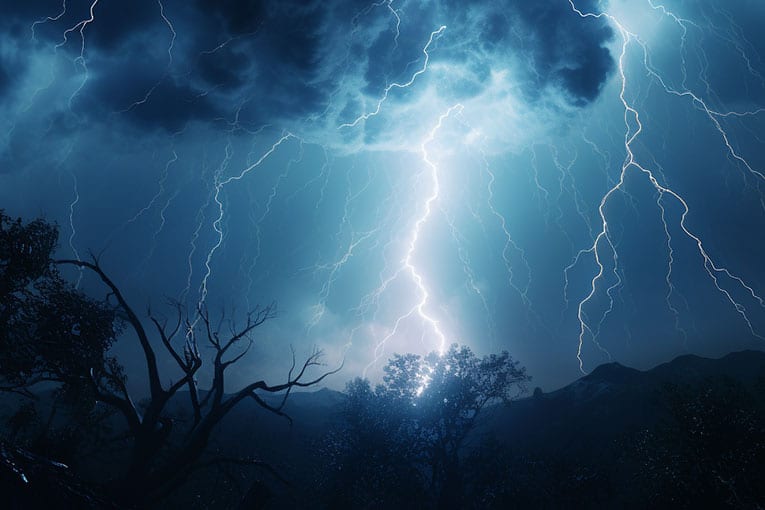
The most common natural cause is lightning strikes. 

When a lightning bolt hits a tree, dry grass or the ground, it can instantly ignite a fire.

For example, during a single week in August 2020, more than 12,000 lightning strikes caused over 650 separate wildfires in California, burning more than 1.5 million acres. 

Other natural ignitions are less common but still possible. 

Volcanic eruptions can start wildfires: when lava flows over forested land, it sets vegetation alight. 

Another rare cause is spontaneous combustion in piles of dry leaves or compost. 

As rotting plant material breaks down, it can heat up and if a pile of leaves or manure gets hot enough, it can burst into flames without any spark. 

These natural causes do happen, but compared to human-related starts they account for only a small fraction of wildfires.

Human Causes

how do man made wildfires start

Humans are responsible for most wildfires. 

Careless or malicious actions can provide the spark that ignites dry vegetation. 

Key human causes include:

Arson

Sadly, some fires are set on purpose. 

People may set fires for various motives, such as land clearing or vandalism. 

In the United States alone, a study found over 52,000 intentional wildfires between 2014 and 2018

These arson fires led to an estimated 400 deaths, 950 injuries and about $815 million in damage every year.

Campfires and Barbecues

An unattended or poorly extinguished fire at a campsite or picnic can easily grow into a wildfire. 

For example, the 2007 Ham Lake fire in Minnesota (USA) was traced to a campfire left burning on the Gunflint Trail. 

It ended up burning 75,000 acres of forest and destroying hundreds of properties. 

Always make sure any outdoor fire is completely out before you leave it.

Burning Debris

People sometimes burn garden waste or bonfire piles. 

If conditions are windy or dry, the fire can escape. 

Sparks or embers from a debris burn may drift into nearby fields or forests and ignite new fires. 

Even if a fire looks like it’s out, smoldering embers can be carried by wind to start a new blaze.

Equipment and Machinery

Sparks from equipment can start fires. 

Faulty power lines cause many wildfires. 

In California, broken power wires are linked to about 10% of wildfires each year

Farm machines, chain saws or car brakes can also throw off sparks. 

For instance, the 2007 Zaca Fire (California) began when a metal grinder hit a rock and sent a spark into dry grass. 

Discarded Cigarettes and Matches

A lit cigarette butt tossed from a car window or from a building can land on dry grass and start a fire. 

Even small careless acts like this add up.

Other Causes

Fireworks, sky lanterns, or even broken glass bottles can focus sunlight and ignite grass. 

Anything that produces heat or sparks in a dry environment can become the start of a wildfire.

Why are Wildfires so Dangerous?

why are wildfires dangerous

Wildfires can grow extremely fast and spread over wide areas, making them very dangerous to people and nature. 

Even trained firefighters can be overwhelmed by the speed of a wildfire. 

Such fires can force evacuations of whole villages and towns, destroying homes and property in their path. 

Environment

Wildfires also have terrible effects on the environment. 

They can kill animals and destroy habitats. 

Entire forests can be turned to ash, and recovering from this damage can take decades. 

Many plants and animals lose their homes and food sources. 

Fires also release pollution and carbon dioxide. 

Trees normally store carbon from the air, but when they burn that carbon goes back into the atmosphere. 

A single large fire can emit as much carbon as many years of a city’s car traffic. 

In fact, studies have shown wildfires can release huge amounts of greenhouse gases, making climate change worse. 

This creates a feedback loop: hotter climate increases fire risk, and fires in turn boost the climate problem. 

Smoke

One of the most serious dangers is wildfire smoke. 

Smoke carries tiny particles of ash and chemicals that can travel long distances on the wind. 

It can make the air unsafe to breathe, even in places far from the fire itself. 

For example, smoke from North American wildfires in 2024 drifted across the Atlantic and reddened skies in the UK

Locally, smoke causes serious health problems: it aggravates asthma, heart disease and other conditions, and can trigger hospital admissions. 

Economy

Wildfires also have a large economic cost. 

The effort of firefighting can run into the hundreds of millions. 

Rebuilding after a fire, repairing homes, clearing burnt trees, restoring utilities, costs even more. 

Worldwide, the annual economic losses due to wildfires are in the tens of billions of pounds. 

Flooding and Landslides

Finally, wildfires can increase risk of flooding and landslides after they are out. 

The heat often soaks into soil and makes it hard for rain to seep in. 

Then heavy rains can wash ash, mud and debris downhill very quickly, causing flash floods or landslides. 

In this way, wildfires can trigger new hazards even after the flames are gone.

Can Weather Affect Wildfires?

Weather and climate have a huge impact on wildfires. 

Droughts & Heatwaves

In general, hot, dry and windy conditions make wildfires more likely and more severe. 

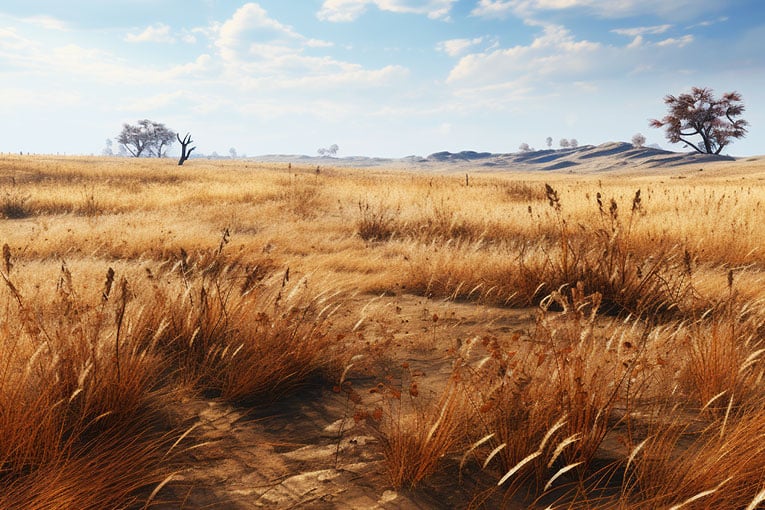
Droughts and heat waves dry out trees, grass and soil, turning once-green vegetation into brown tinder. 

Heatwaves in Europe or North America have repeatedly led to record-breaking fires. 

Scientists have linked this to climate change: by making heatwaves hotter and droughts longer, climate change is lengthening the fire season. 

On the other hand, cold or rainy weather helps to prevent fires; a period of heavy rain will soak vegetation and greatly reduce fire risk. 

Wind

Wind deserves special mention. 

Strong winds can carry burning embers miles ahead of the main fire, starting spot-fires that are very hard to contain. 

Winds also fan flames, supplying them with oxygen and pushing the fire front forward rapidly. 

Even gentle breezes on a very dry day can make a fire spread much faster. 

By contrast, still, humid air is much less favourable to fire growth. 

Recent weather patterns have already increased wildfire risk. 

How to Help Prevent Wildfires

how to prevent wildfires

Preventing wildfires is something everyone can help with. 

Most wildfires could be avoided if people behaved responsibly when using fire outdoors. 

The key is to avoid providing sparks or flames when conditions are dry. 

For example:

Be Careful With Open Flames

Never leave a campfire, bonfire or barbecue unattended. 

Keep them small, use a proper fire ring or container if available, and always have a bucket of water or a hose nearby. 

When you’re done, douse the fire completely with water and stir the ashes until no smoke or heat remains. 

This ensures hidden embers don’t flare up later.

Dispose of Smoking Materials Safely

Do not drop cigarette butts, matches or lighters onto the ground. 

A lit cigarette can smoulder unseen and ignite dry grass. 

Always put out cigarettes fully in a stubber or an ashtray, and never throw them out of car windows.

Avoid Fire in High Risk Areas

In hot, dry weather do not light any kind of flame in parks, forests or open countryside. 

That includes barbecues, as they can easily start grass fires. 

Equally, say no to fireworks or sky lanterns on dry days. 

These may seem harmless, but any spark they produce in a dry field can ignite a wildfire.

Position Equipment Safely 

If you barbecue, place the grill on a flat non-flammable surface (not on grass or decking). 

Keep it well away from hedges, fences or trees, and have water handy. 

Never use petrol or other flammable accelerants. 

When you finish cooking, make sure the fire is fully out and cool before disposing of ashes.

Follow Local Guidance

Many areas issue fire danger warnings or total fire bans during very dry spells. 

Check local advice and follow any restrictions. 

If a ban is in place, do not light even a small fire. 

Also clear leaf litter and long grass from around homes and outbuildings to create a safety zone – this ‘defensible space’ can stop fires from reaching buildings.

In forest areas, leaving dead wood on the ground or allowing undergrowth to build up can turn small sparks into major fires, so controlled clearing can help. 

Report Fires Quickly

If you see a fire starting, do not assume someone else will call for help. 

Call the emergency services immediately with the location. 

Give clear information about where the fire is, what it looks like, and if it is spreading. 

Early reporting allows firefighters to respond fast before the fire grows out of control.

Conclusion 

You should now have more of an understanding of how wildfires start.

Wildfires are complex natural disasters with many causes, but with awareness and care we can reduce their impact. 

We have seen that wildfires can start from nature or human actions. 

Weather and climate play a key role with hot, dry, windy conditions making fires far more likely. 

However, each of us can help prevent them. 

By following simple precautions – never leaving fires unattended, disposing of cigarettes safely, heeding fire bans and clearing dry vegetation.

Understanding wildfires helps us live more safely with them. 

Although wildfires will never disappear entirely, training people to act responsibly and learning about wildfire causes and fire weather can greatly reduce the risk. 

After all, it only takes one spark to start a wildfire, but many small actions to prevent one.

Wildfires in Greece and France prompt EU firefighter deployment

EU fire teams support Greek and French wildfire operations

The Directorate-General for European Civil Protection and Humanitarian Aid Operations (ECHO) has reported that EU-coordinated firefighters are supporting local response teams in Greece and France following the outbreak of wildfires.

Firefighters from Bulgaria have been working alongside Greek personnel to control a wildfire in Halkidiki.

In southern France, Romanian firefighters have joined French teams to assist in tackling a blaze near Perpignan.

These deployments are part of the European Union’s summer wildfire preparedness plan.

Nearly 650 firefighters from 14 countries have been prepositioned in high-risk areas of France, Greece, Portugal and Spain.

Strategic deployment of EU assets in wildfire season

ECHO confirmed that the prepositioning of teams was planned in advance to strengthen capacity in countries most vulnerable to seasonal wildfires.

The initiative is managed under the EU Civil Protection Mechanism and covers both personnel and aerial firefighting assets.

In total, 22 firefighting aircraft and four helicopters have been stationed in 10 EU Member States to allow rapid response when needed.

The aircraft and helicopters supplement national emergency assets and are intended to improve the speed and scale of response.

The European Commission stated that all the personnel and equipment have been co-financed through the Civil Protection Mechanism.

It said the plan aims to reduce pressure on national services and prevent the spread of major incidents during peak risk periods.

Emergency centre monitoring situation and coordinating support

According to ECHO, the EU Emergency Response Coordination Centre is continuing to monitor the wildfire situation across Europe.

It confirmed that the centre is ready to provide additional support if requested by national authorities.

Coordination through the Civil Protection Mechanism allows for a joint response between Member States.

The centre also facilitates the sharing of situational awareness and supports the deployment of further assistance based on need.

ECHO said the system is designed to ensure fast mobilisation of resources to support Member States facing emergencies.

Wildfires in Greece and France prompt EU firefighter deployment: Summary

Firefighters from Bulgaria have been deployed to support wildfire response in Greece.

Romanian firefighters have joined French teams in responding to a wildfire in Perpignan.

These actions are part of the EU’s summer wildfire preparedness strategy.

Nearly 650 firefighters from 14 countries have been positioned in France, Greece, Portugal and Spain.

A total of 22 firefighting aircraft and four helicopters have been prepositioned across 10 EU countries.

All resources are coordinated and co-financed through the EU Civil Protection Mechanism.

The assets are designed to supplement national capabilities and enable faster response.

The EU Emergency Response Coordination Centre is monitoring the wildfire situation.

It remains ready to provide further support if requested by Member States.

NFCC says the UK is not fully prepared for impacts of climate change

The National Fire Chiefs Council (NFCC) has said that it believes the UK is not yet adequately prepared to tackle the growing impact of climate change.

Publishing a new set of recommendations on the strategies the UK needs to adopt to be prepared to withstand current and future impacts of climate change, the NFCC has called on the UK and devolved governments to take urgent action to help protect communities, infrastructure and the economy as extreme weather events look set to increase.

UK fire and rescue services current role

UK fire and rescue services already play a crucial role in responding to climate change-related emergencies but responding to these events requires significant fire and rescue service resource, often over prolonged periods of time.

This results in a challenge in being able to maintain their ‘business as usual’ service whilst managing the significant resource and staffing pressures that the response to such incidents creates.

Limited resources and a lack of access to longer-term forecasting mechanisms is posing challenges for the sector to prepare adequately for the expected challenges ahead.

Longer term planning and investment is needed to ensure fire and rescue services, who are often at the frontline of responding to the impacts of climate change, including wildfires, storms, high temperatures and heatwaves, low temperatures and snow, flooding and drought, are prepared.

Met Office report

Met Office data shows that by 2070, winters are projected to be up to 4.5°C warmer and 30% wetter than they were in 1990, while summers may be up to 6°C warmer and 60% drier.

Weather extremes are expected to become more likely, with regions in the south of England projected to experience temperatures reaching 40°C and increased rainfall by up to 25%.

Data set out in NFCC’s research and recommendations on extreme weather events, published in August 2024, shows that:

  • The intense heatwave the UK experienced over the summer in 2022 resulted in a total of 983 wildfires being recorded in England and Wales. This was an increase from 247 wildfires in 2021 and 146 wildfires in 2020, an increase of 315% and 573% respectively.
  • From 2020/21 to 2021/22, the number of flooding incidents attended by fire and rescue services in England rose by 7% and another 12% from 2021/22 to 2022/23.

Mark Hardingham, National Fire Chiefs Council statement

National Fire Chiefs Council Chair, Mark Hardingham said: “Watching the devastation caused by the wildfires in Los Angeles and the number of recent flooding incidents we have seen in the UK, it is impossible not to be concerned about the very real and immediate threat climate change poses to our planet and what that will mean for our communities in the future.

“Fire and rescue services are on the frontline of responding to extreme weather events and we see firefighters, Control officers and other emergency service partners repeatedly going above and beyond to protect their communities.

But we are seeing the risks around extreme weather increasing and, without adequate investment and further action from government, our capacity to keep communities safe and protect infrastructure is at risk”.

Ben Brook, Chief Fire Officer for Warwickshire and NFCC Lead on Environment and Climate Change statement

Chief Fire Officer for Warwickshire and NFCC Lead on Environment and Climate Change said: “Fire and rescue services form part of local resilience forums and work collaboratively with partners to plan for and respond to extreme weather events.

“However, we are concerned that fire and rescue services and local resilience forums do not have access to accurate data analysis mechanisms and the expertise to use this for predictive modelling which would allow for longer-term forecasting and risk management planning. We have also found that local resilience forums are under-resourced and lack clarity when it comes to their climate change resilience role”.

What Causes Wildfires – 11 Common Reasons

What causes wildfires is a commonly asked question, with wildfires during the summer months being shown almost every day in the news.

Fire only needs three components to thrive: fuel, oxygen, and heat. This is commonly referred to as the fire triangle.

During hot summer days when drought conditions are at their peak, even the tiniest spark can set off a wildfire. 

In certain instances, fires occur naturally, sparked by the intense heat of the sun or from lightning strikes.

Unfortunately, similarly to the main causes of fires in general, the majority of wildfires stem from human negligence. 

A large wildfire
Wildfires can be incredibly destructive

Events such as arson, poorly managed campfires, careless littering of lit cigarettes, improper burning of debris, and playing with matches or fireworks are often held responsible for igniting these devastating blazes.

This article aims to explore what causes wildfires, ranging from natural occurrences to human activities. 

By delving into these causes, we can enhance our knowledge and promote responsible behaviour to mitigate the future risks of devastating consequences of wildfires.

What is a Wildfire?

Wildfires are powerful and destructive forces of nature that can cause extensive damage to forests, natural habitats, and communities. 

Understanding the common causes of wildfires is crucial for prevention and effective fire management. 

By identifying the main causes of wildland fires, we can take proactive measures to reduce the risk of wildfires and protect our natural environment. 

What Causes Wildfires?

Wildfires start due to a number of reasons, with 11 of the most common causes being:

Lightning

Lightning is a natural cause of wildfires. 

Lightning strikes can ignite dry vegetation, particularly during periods of drought. The heat from a lightning strike can spark flames that spread through the surrounding landscape. 

A lightning storm
Lightning is one of the main natural causes of wildfires

This can lead to large-scale wildfires, especially in areas with dry and combustible vegetation. 

Climate conditions and the frequency of thunderstorms can contribute to wildfires.

Campfires

Improperly managed campfires are a significant cause of wildfires. 

Unattended or poorly extinguished campfires can spread to surrounding vegetation and ignite a fire. 

Campers should always follow fire safety guidelines, including keeping fires small, using designated fire rings or pits, and ensuring that the fire is completely extinguished before leaving the site. 

It is crucial to douse the fire with water, stir the ashes, and repeat the process until the fire is cold to the touch.

Burning Vegetation

Whether intentional or not, burning of vegetation like agricultural burning or land clearing, can lead to wildfires. 

When uncontrolled, the spread of fires during vegetation burning can quickly escalate, especially in dry and windy conditions. 

Proper permits, monitoring weather conditions, and employing trained workers are essential for safe and controlled burning practices. 

It is important to follow local regulations and guidelines to prevent wildfires when conducting any form of vegetation burning.

Fallen Power Lines

Fallen power lines can be a significant cause of wildfires, particularly during windy conditions. 

Strong winds can cause power lines to break or come into contact with trees or dry vegetation, resulting in sparks and fires. 

Regular maintenance and inspection of power lines, timely tree trimming around power lines, and prompt repair of damaged infrastructure are essential for reducing the risk of wildfires caused by fallen power lines.

Cigarettes

Carelessly discarded cigarette butts can accidently start wildfires

Smokers should always use designated ashtrays or fire-safe containers to dispose of cigarette butts. 

It is crucial to fully extinguish cigarettes before discarding them and avoid smoking in fire-prone areas, particularly during dry and windy conditions.

Equipment Malfunctions

Equipment malfunctions, such as power tools, chainsaws, or machinery, can lead to wildfires if they generate sparks or excessive heat. 

Proper maintenance, regular inspection, and safe equipment operation are essential to prevent equipment-related wildfires. 

It is crucial to follow manufacturer guidelines, conduct routine maintenance checks, and promptly address any issues with equipment.

Vehicle Crashes

Vehicle crashes can cause wildfires when sparks or friction from the collision ignite. 

The heat generated from the impact, particularly with metal components, can also lead to fire ignition. 

Safe driving practices, proper vehicle maintenance, and avoiding off-road driving in fire-prone areas can help minimise the risk of wildfires caused by vehicle crashes.

Arson

Intentional acts of arson, where fires are intentionally set, are a significant cause of wildfires, and can lead to dangerous scenarios, and even loss of life

Arson can occur due to various motives, including vandalism, revenge, and even pyromania. 

It is a criminal offence and poses a serious threat to lives, property, and natural resources. 

Public awareness, community vigilance, and reporting suspicious activities can aid in preventing arson-related wildfires.

Controlled Burning

Controlled burning, also known as prescribed burning, is a planned fire management technique used to reduce vegetation fuel loads and promote ecosystem health. 

However, if not carefully executed, prescribed burns can escape control and result in wildfires. 

Proper planning, comprehensive risk assessments, and skilled personnel are essential for conducting prescribed burns safely. 

Adhering to specific weather conditions, monitoring fire behaviour, and having appropriate resources in place helps minimise the risk of prescribed burns turning into uncontrolled wildfires.

Fireworks

Improper use of fireworks, especially in areas with dry vegetation, can lead to wildfires. 

Fireworks produce sparks and embers that can ignite nearby combustible materials, including dry grass or trees. 

A fireworks show
Even though fireworks can be pretty to look at, they can be a cause of wildfires

Adhering to local laws and upkeep high fire safety standards regarding fireworks, using fireworks in designated areas, and ensuring proper disposal of fireworks debris is crucial to prevent wildfires.

Volcanoes

Volcanic eruptions can cause wildfires, particularly when hot lava or volcanic ash comes into contact with dry vegetation. 

Active volcano regions should have comprehensive emergency response plans in place to mitigate the impacts of volcanic-induced wildfires.

How does weather affect wildfires?

Increased temperatures alone do not guarantee a rise in wildfires. 

As previously stated, fires need a combination of 3 factors to survive; availability of fuel, fire-friendly conditions (such as dry weather), and the presence of an ignition source, whether human-caused or triggered by lightning strikes. 

One small spark can cause wildfires when conditions are dry and arid

The amount and dryness of vegetation are crucial factors since live, moist vegetation is less susceptible to burning compared to dry, dead vegetation, which easily catches fire and aids in the fire’s spread. 

This is why areas affected by hot, dry weather and drought are much more likely to have wildfires than areas that are often rainy and cold.

Weather conditions play a critical role in fire behaviour. 

Strong winds, like those experienced in the 2022 Colorado wildfires, can accelerate the spread of fires, resulting in unprecedented devastation for the affected communities.

Wildfires become more severe during prolonged periods of hot and dry weather due to higher temperatures leading to increased evaporation, which dries out the vegetation and provides ample fuel for the fires to thrive.

Where do most wildfires occur?

Wildfires happen all over the world. Places like the United States, Canada, Australia, the Western Cape of South Africa, and Southern Europe, especially forested areas, grasslands, and shrublands, are particularly susceptible to these blazes, particularly during extended periods of drought and high temperatures.

Among the regions in the United States, California and other Western states stand out as being prone to wildfires. 

The vegetation in this area, comprising pine needles, dry shrubs, and grasses, possesses higher flammability compared to moister trees like maple and beech found in other parts of the country.

The Western US’s mild and arid climate further contributes to the fire risk. California, in particular, experiences long, hot, and dry summers, which lead to the dehydration of vegetation, leaving it highly susceptible to wildfires.

Conclusion

Wildfires can have devastating consequences for ecosystems and communities. 

Understanding the common causes of wildfires is necessary to be able to better prevent them. 

Whether ignited by natural occurrences or as a result of human negligence, wildfires can be mitigated through responsible behaviour, adherence to fire safety guidelines, and community awareness. 

Implementing fire prevention strategies, practising safe habits, and promoting fire education can help minimise the occurrence and severity of wildfires. 

By working together, we can reduce the impact of wildfires and protect our environment for future generations.

US aviation soldiers assist with Kosovo wildfires

Aviation Soldiers assigned to Kosovo Force’s Regional Command-East have been working together since their arrival in the region to enhance their aerial firefighting capabilities.

They have assisted in combatting wildfires utilising the force’s crew chiefs, pilots, command staff and the Soldiers who perform maintenance on the Bambi buckets used to drop massive amounts of water to extinguish large fires.

2nd Battalion, 224th Aviation Regiment of the Virginia National Guard, implemented training to bring their aviation crews up to standard and certify anyone who has never used the Bambi bucket. Crews use local lakes for training, and even after Soldiers are certified, the aviation teams continue to train because a call to fight a fire can come in at any second.

Kosovo is prone to wildfires due to farmers participating in agricultural burning to cultivate fields and clear stubble, weeds, and waste, for the continued production of crops. If these fires are not kept under control, they have the potential to turn into larger fires that threaten Kosovo villages and forest habitats.

Chief Warrant Officer 3 Darrell Busquets, the battalion standardisations instructor pilot assigned to Bravo Company, said: “Before our pre-mobilization, we got word that there were Bambi buckets here in Kosovo and that KFOR 29 fought fires up in the western side of Kosovo during their rotation.”

He added: “That prompted us to put our aviators through Bambi bucket qualifications. Once we got into Kosovo, we continued to keep current on the Bambi bucket operations. The training makes our crews more cohesive when we get called to do real life operations.”

NFCC urges UK fire services to prepare for future wildfires

NFCC lead wildfire tactical advisor David Swallow, who is also group commander for Hereford and Worcester Fire Service, has urged UK fire services to undergo wildfire training as the number of wildfire incidents in the country has already almost doubled from 247 across the whole of 2021 to 442 in England and Wales in the year to date.

In an interview with the BBC, Swallow said that the recent heatwave has caused large parts of the country to become ‘bone dry’ and that services need to recognise the risk that is now facing them. “If they don’t, then they’re naïve,” he said.

The wildfire group that Swallow leads brings together members and expertise from firefighters in predominantly rural areas which are more susceptible to wildfires including Northumberland, South Wales, the Peak District and Wiltshire.

Swallow said that every fire service in the UK should have wildfire training in order to teach forces valuable tactics from firefighters more familiar with tackling blazes on grasslands, on moors and in woods.

He said that his wildfire group had for some time been preparing for the increased risk of wildfires from climate change but that the risk was now “immediate”.

He added: “There are very urban services that think that wildfires are low down on the risk list. I understand the need to prioritise resources, but there needs to be a review.”