NEBOSH construction qualification backed by 90% of learners in latest survey

Construction sector saw 51 deaths in Great Britain in 2023/4

A recent NEBOSH survey has reported that 90% of learners would recommend its Health and Safety Management for Construction qualification.

The survey findings relate to one of the highest-risk sectors in the UK, with the Health and Safety Executive reporting 51 construction-related fatalities in Great Britain during the 2023/4 period. This represents 37% of all workplace deaths in that year.

The qualification is available in two versions: a UK variant aligned with the Construction (Design and Management) Regulations and an international version based on International Labour Organization guidance.

Learners report improved hazard identification

NEBOSH said the majority of respondents indicated the training helped them improve their ability to recognise and assess hazards on construction sites.

In the 2024 survey, 94% of UK respondents and 100% of international respondents said their ability to identify risks had improved after completing the course.

The organisation explained that the training aims to help learners develop systems of work, take part in incident investigations, and manage contractor relationships more effectively.

Qualification revised for 2025 to reflect industry feedback

According to NEBOSH, the qualification has been updated for 2025 following learner input and guidance from construction safety professionals.

The refreshed syllabus includes new topics such as fatigue and inspectors’ enforcement powers, which the organisation said were included to reflect ongoing safety challenges in the sector.

NEBOSH stated that learners are also trained to influence safety culture and challenge unsafe behaviours in the workplace.

UK course recognised by national construction safety scheme

NEBOSH confirmed that the UK version of the qualification remains recognised by the Construction Skills Certification Scheme (CSCS).

It noted that those who complete the course are eligible to apply for the CSCS Academically Qualified Person card.

The qualification is categorised as a Level 7 under the Scottish Credit and Qualifications Framework.

Learners describe training as relevant and in-depth

Michael Smith, Response Supervisor – Housing Repairs for South Holland District Council, said: “I found the whole course extremely interesting; the study and work-based scenarios were good and worthwhile.

“I thought the content of the course was pitched correctly, and the syllabus covered it [the topic] in great depth.

“Having gained the qualification, I am now in a position where I feel that I can make a positive impact within the workplace.”

NEBOSH construction qualification backed by 90% of learners in latest survey: Summary

NEBOSH has reported that nine in ten learners would recommend its Health and Safety Management for Construction qualification.

The 2023/4 period saw 51 fatalities in the UK construction sector, according to the Health and Safety Executive.

The qualification is available in UK and international formats.

It is aligned with UK CDM regulations and ILO guidance respectively.

NEBOSH stated that the course helps learners identify hazards, advise on legislation, and manage contractors.

The 2025 version includes updates on fatigue and inspectors’ powers.

100% of international and 94% of UK learners said their ability to identify risks improved.

CSCS recognises the qualification for its Academically Qualified Person card.

Michael Smith of South Holland District Council described the course content as worthwhile and in-depth.

The qualification is classed as Level 7 in the SCQF framework.

African women’s PPE study receives NEBOSH funding

NEBOSH funds research into protective equipment for African women

NEBOSH has reported that it is funding a year-long study by the Society of Women in Safety, Health and Environment – Africa (SOWSHE-A) to examine the risks associated with personal protective equipment (PPE) used by African women.

The project will focus on how ill-fitting PPE, designed primarily for men, may increase the risk of injury for women across various work settings in Africa.

The research will include data gathering, demonstrations, simulations and community campaigns to raise awareness about anthropometric differences and their impact on safety.

Research will address risks linked to poorly fitted PPE

NEBOSH explained that PPE is considered the last defence against occupational hazards, and if it does not fit correctly, it can endanger the user.

The organisation stated that issues such as oversized clothing causing entanglement, loose footwear increasing the likelihood of slips, and poorly fitted headwear failing to provide adequate protection, are among the concerns that the project aims to address.

The study is expected to provide insights into the health and safety needs of African women and promote more inclusive PPE design.

Project aims to improve data on PPE for diverse users

NEBOSH Social Development Manager Mariyah Mandhu said: “There is limited international data related to women’s protective equipment, and even less so for women from different ethnic backgrounds.

“Our funding will enable the health and safety and wider business communities to understand the challenges and barriers of current PPE, with a longer-term view of creating inclusive PPE design and production practices.

“Ultimately, this will improve the safety and health of these women in the workplace.”

Mandhu stated that the partnership with SOWSHE-A aligns with NEBOSH’s goals of addressing diversity gaps in health and safety research.

SOWSHE-A highlights safety and gender equity goals

SOWSHE-A Founder Funmi Adegbola said: “We are thrilled to have NEBOSH’s support in advancing this important initiative.

“Their commitment to workplace safety and health aligns perfectly with our goal of ensuring that African women are equipped with the right PPE to protect their well-being.

“This collaboration is not only vital for improving the safety of women workers, but it also strengthens the movement for greater gender equity in the workplace.”

Adegbola added that the initiative will contribute to building awareness around inclusive workplace practices.

African women’s PPE study receives NEBOSH funding: Summary

NEBOSH is funding a year-long research project led by the Society of Women in Safety, Health and Environment – Africa (SOWSHE-A).

The research focuses on the use of personal protective equipment (PPE) by African women.

NEBOSH stated that ill-fitting PPE can increase the risk of harm in the workplace.

SOWSHE-A will conduct research, public demonstrations, simulations and campaigns during the project.

NEBOSH Social Development Manager Mariyah Mandhu said there is limited international data on women’s PPE.

Mandhu stated that the project aims to support more inclusive PPE design and production.

SOWSHE-A Founder Funmi Adegbola said the initiative aligns with goals for safety and gender equity.

The project is based in Africa and targets black African women in particular.

NEBOSH refreshes UK construction safety qualification for 2025

Overview of the updated qualification

NEBOSH has reported that its Health and Safety Management for Construction qualification has been revised for 2025 to address key industry risks.

The qualification is offered in UK and International variants, with the UK version aligned to Construction (Design and Management) Regulations.

The update incorporates feedback from learners and industry experts to improve safety training.

Construction industry risks in Great Britain

NEBOSH stated that in 2023/24, 51 fatalities occurred in Great Britain’s construction industry.

This figure represents 37% of all work-related deaths in the country that year.

The organisation noted that the qualification aims to reduce such risks through targeted training.

Key features of the revised syllabus

The company explained that the updated syllabus includes topics like fatigue and inspectors’ powers.

Learners will gain skills to identify hazards, develop safe work systems, and manage contractors.

NEBOSH added that the course supports a positive safety culture in construction workplaces.

Learner feedback and qualification impact

A 2024 NEBOSH survey found that 96% of UK learners would recommend the qualification.

Michael Smith, Response Supervisor at South Holland District Council, said: “I found the whole course extremely interesting; the study and work-based scenarios were good and worthwhile.”

Michael Smith added: “Having gained the qualification, I am now in a position where I feel that I can make a positive impact within the workplace.”

NEBOSH refreshes UK construction safety qualification for 2025: Summary

NEBOSH updated its Health and Safety Management for Construction qualification for 2025.

The qualification is available in UK and International variants.

The UK version aligns with Construction (Design and Management) Regulations.

In 2023/24, 51 fatalities occurred in Great Britain’s construction industry.

This accounted for 37% of all work-related deaths in the country.

The revised syllabus includes topics like fatigue and inspectors’ powers.

A 2024 survey showed 96% of UK learners would recommend the qualification.

The qualification is recognised by CSCS for the Academically Qualified Person card.

Learners gain skills to identify hazards and manage contractors.

The course aims to improve safety culture in construction workplaces.

What is a Second Degree Burn?

A second-degree burn can cause serious damage to the skin. 

While not as severe as third-degree burns, they still require attention and care. 

Second-degree burns affect deeper layers of the skin, causing pain, swelling, and blistering. 

Understanding what a second-degree burn is and how to treat it is important for healing and preventing further complications. 

In this article, we’ll explain the nature of second-degree burns, their causes, treatments, healing times, and more.

What is a Second Degree Burn?

A second-degree burn affects both the outer layer of skin (epidermis) and the deeper layer (dermis). 

These burns are more serious than first-degree burns, which affect only the outer skin. 

Second-degree burns typically cause blisters, severe pain, redness, and swelling. 

In some cases, the skin may appear wet or shiny due to the loss of fluids from the affected area.

Second-degree burns are classified into two categories based on the depth of the injury:

Superficial Partial-thickness Burns

These affect the top layer of the dermis and may cause the skin to blister and appear red and swollen. 

Deep Partial-thickness Burns: 

These burn deeper into the dermis, causing more severe damage. 

The skin may appear pale or blotchy and take longer to heal.

What Are The Most Common Causes of a Second Degree Burn?

second degree burn causes

Second-degree burns can occur due to several common factors. 

The most frequent causes include:

Hot Liquids

Scalding from hot liquids such as boiling water, coffee, or tea is one of the leading causes of second-degree burns. 

Spilling or splashing these liquids onto the skin can cause severe burns and blistering.

Hot Objects

Contact with hot objects, such as irons, stoves, or ovens, can lead to second-degree burns. 

Skin can burn quickly if it comes into direct contact with these surfaces for even a short period.

Sunburn

Excessive exposure to the sun’s ultraviolet (UV) rays can cause second-degree burns. 

Sunburns from prolonged sun exposure can cause the skin to blister and become red, painful, and swollen.

Electrical Burns

Electrical burns occur when an electrical current passes through the body, damaging the skin. 

These burns can be deep and severe, especially when the current is high.

Chemical Burns

Certain chemicals, such as acids or alkalis, can cause second-degree burns if they come into contact with the skin. 

These burns can be dangerous and require immediate medical attention.

Fire or Flames

Second-degree burns can result from direct exposure to flames, often during accidents, fires, or cooking mishaps, such as grease fires

The skin may burn if exposed to high heat for too long.

How Is a Second Degree Burn Different to Other Types of Burns?

how second degree burn different
Source: Wikipedia

There are different classifications of burns, based on how severe they are.

A second-degree burn is more severe than a first-degree burn but not as serious as a third-degree burn.

First-Degree Burns

A first-degree burn affects only the outer layer of the skin (epidermis). 

It causes redness, mild swelling, and pain. 

Sunburn is a common example of a first-degree burn.

Second-Degree Burns

Second-degree burns affect both the epidermis and the dermis (the deeper layer of skin). 

They cause blisters, severe pain, redness, and swelling. 

These burns often result from contact with hot liquids, flames, or chemicals. 

Third-Degree Burns

A third-degree burn is the most severe. 

It affects all layers of the skin, and can also damage underlying tissues, nerves, and muscles. 

The skin may appear white, charred, or leathery. 

Third-degree burns often do not cause pain initially due to nerve damage. 

How is a Second Degree Burn Treated?

Treating a second-degree burn quickly and properly is crucial for healing and preventing complications. 

The main focus is to reduce pain, prevent infection, and promote healing.

Cool the Burn

Immediately after the injury, cool the burn by running cool (not cold) water over the affected area for 10 to 20 minutes. 

This helps to stop the burn from getting worse and reduces pain. 

If running water is not available, apply a cool, wet compress. 

Avoid using ice, as it can cause further damage to the skin.

Clean the Burn

Gently clean the burn area with mild soap and cool water to remove any dirt or debris. 

Do not scrub the burn, as this could damage the skin further. 

Pat the area dry with a clean towel, being careful not to break any blisters that may have formed.

Apply an Antibiotic Ointment

Once the area is clean, apply an over-the-counter antibiotic ointment such as neosporin to help prevent infection. 

Cover the burn with a sterile, non-stick dressing to protect it from dirt and bacteria.

Pain Relief

Take over-the-counter pain relief medication like paracetamol or ibuprofen to manage the pain and reduce swelling. 

Follow the instructions on the packaging for correct dosing.

Avoid Popping Blisters

Blisters that form during healing protect the underlying skin. 

Do not pop or burst them, as this can lead to infection. 

If a blister breaks on its own, clean the area and apply a sterile dressing.

Seek Medical Help

If the burn is large, covers the face, hands, or genitals, or if it seems infected, seek medical help immediately. 

For deep second-degree burns, professional care may be needed.

How Long Does a Second Degree Burn Take to Heal?

how long second degree burn heal

The healing time for a second-degree burn depends on the depth of the burn, the location, and the treatment. 

Superficial Partial-thickness Burns

These usually heal within 2-3 weeks without scarring, although some discolouration may remain for a while.

Deep Partial-thickness Burns

These burns take longer to heal, often requiring 3-4 weeks or more. 

Scarring may occur, and the skin may need additional care during healing.

It is important to continue monitoring the burn during the healing process. 

If there are any signs of infection or complications, seek medical help immediately.

Does a Second Degree Burn Scar?

Second-degree burns can scar, especially if they are deep or not treated properly. 

Scarring is more likely if:

  • The burn is deep and affects the dermis.
  • The burn becomes infected.
  • The burn heals slowly due to poor care.

Superficial second-degree burns may not leave permanent scars, but there can be temporary skin discolouration. 

Deeper second-degree burns, on the other hand, are more likely to cause noticeable scars. 

The skin may also be more sensitive in the affected area even after it heals.

To minimise scarring, it’s important to:

  • Keep the burn clean and covered to prevent infection.
  • Avoid sun exposure, which can make scars more noticeable.
  • Apply moisturising creams or ointments to help with skin regeneration.

In some cases, scar treatments like silicone gel sheets or creams may be recommended by healthcare professionals to reduce the appearance of scars.

Conclusion

You should now have more of an understanding of what is a second degree burn. 

A second-degree burn is a painful injury that affects the skin’s epidermis and dermis. 

It is caused by factors like hot liquids, chemicals, fire, and sunburn. 

While not as severe as third-degree burns, second-degree burns require careful treatment and monitoring.

Cooling the burn, protecting the area, and seeking medical help if necessary can help promote healing. 

With proper care, second-degree burns often heal within 2-3 weeks, although deeper burns may take longer. 

Scarring is possible but can be minimised with appropriate treatment.

If you experience a second-degree burn, it is important to treat it as soon as possible and seek professional advice if the injury is extensive or becomes infected. 

With proper care, most second-degree burns will heal without long-term complications.

Fire safety in mental health care environments: Summary from FIM Expo Harrogate 2025

A focus on mental health fire safety at UK event

The Fire Industry Association (FIA) has reported that FIM Expo Harrogate 2025 placed a distinct emphasis on practical fire safety challenges within healthcare.

The one-day UK event drew professionals from across the fire protection sector, with attendees including manufacturers, installers, consultants and system end users.

One of the most attended sessions featured Karen Byard, Fire Safety Lead at Leeds Teaching Hospitals NHS Trust, who presented on the complexities of managing fire risks in mental health facilities.

Karen Byard discusses mental health fire risks

Karen Byard’s session explored how fire safety standards are implemented in care environments with vulnerable individuals.

Her talk outlined how patient needs, environmental design, and regulatory compliance interact in NHS mental health wards.

She highlighted measures adopted by her Trust, including silent alarm systems to reduce distress, ligature-resistant features, and the use of fire-resistant materials such as flaxboard core doors.

Byard said: “Fire safety in any healthcare building is critical to the safety of patients, visitors, staff, and the ability of the building to enable staff to provide ongoing care.”

Real-life incidents inform system design

Byard provided examples of how past fire incidents have shaped the Trust’s approach.

She discussed risk assessments, community-based prevention strategies, and a layered response combining passive fire protection and staff training.

She said: “There is also an increased risk of fires being deliberately set by patients, which means that we need to be confident that the preventive measures in place are in a good state of repair and checked or tested regularly.”

The presentation connected regulatory frameworks with frontline practice, illustrating how risk control methods are tailored to individual service users’ needs.

Technical displays support professional learning

In addition to the conference sessions, FIM Expo featured interactive exhibits from UK fire safety manufacturers.

Attendees had access to demonstrations of alarm systems, suppression technologies, emergency lighting and more.

Exhibitors provided technical information directly to installers, specifiers and safety officers, supporting informed decision-making across sectors.

The event also allowed for peer-to-peer exchanges between those working in both healthcare and non-healthcare settings.

FIM Expo Harrogate 2025: Summary

FIM Expo Harrogate 2025 brought together fire safety professionals from across the UK for a day of technical demonstrations, expert talks and peer discussions.

The Fire Industry Association reported that the event featured a wide range of technologies including fire detection systems, emergency lighting, alarms and suppression products.

Karen Byard, Fire Safety Lead at Leeds Teaching Hospitals NHS Trust, delivered a CPD-accredited session focused on fire protection in NHS mental health settings.

Topics included the use of silent alarm systems, specialist fire doors, ligature resistance and fire signage challenges.

She shared her Trust’s multi-layered response strategies, involving fire risk assessments, targeted training and building design adjustments.

Byard emphasised the importance of adapting fire safety systems to the specific needs of mental health patients.

The event enabled professionals from manufacturing, installation and consultancy to engage with suppliers and learn from operational case studies.

How to Treat a Burn

Burns can happen quickly and unexpectedly, and knowing how to treat them immediately is crucial.

But do you know how to treat a burn? 

Whether caused by fire, chemicals, electricity, or the sun, proper first aid can minimise damage and reduce the risk of infection. 

This article outlines the different types of burns and the best ways to treat them effectively.

Types of Burn

types of burn
Source: Wikipedia

There are four different classifications of burns:

First-Degree Burns

These are the least severe, affecting only the outer layer of skin (epidermis). 

Symptoms include redness, mild swelling, and pain. 

Sunburns are a common example of first-degree burns.

Second-Degree Burns

These burns penetrate both the outer layer and the underlying skin (dermis). 

They cause more intense pain, redness, swelling, and blisters. 

If left untreated, second-degree burns can result in scarring.

Third-Degree Burns

The most severe type of burn, third-degree burns affect all layers of the skin and may extend to deeper tissues. 

The skin can appear white, blackened, or charred, and the person may not feel pain due to nerve damage. 

These burns often require immediate medical attention and can lead to permanent damage.

Fourth-Degree Burns

Fourth-degree burns are the most severe form of burn, causing extensive damage to the skin, muscles, tendons, and bones.

These burns penetrate all layers of the skin and may also damage deeper tissues and bones.

The affected area may appear blackened or charred, and due to severe nerve damage, there may be little or no pain.

Fourth-degree burns are critical and require urgent medical attention.

Burn Type

Burns can also be categorised by their cause. 

These include thermal burns (from heat), electrical burns (from electrical sources), chemical burns (from toxic substances), and sunburns (caused by overexposure to UV light). 

Each type of burn requires specific care to minimise damage and promote healing.

How to Treat a Burn

how to treat a burn image

Providing immediate first aid is crucial to minimise burn damage and alleviate pain. 

Here are the essential steps to follow:

Stop the Burning Process

Quickly remove the person from the source of the burn, whether it’s fire, hot liquid, or electricity. 

Remove any clothing or jewellery near the affected area, but be cautious not to pull off anything stuck to the skin, as this could cause further damage.

Cool the Burn

For most burns, hold the affected area under cool (not icy) running water for 20 minutes. 

This helps reduce both pain and the extent of the burn. 

Avoid using ice, as it can cause further tissue damage. 

Greasy substances like butter or oils should also be avoided, as they trap heat and worsen the injury.

Keep Warm

If the burn is severe and covers a large area, wrap the person in a blanket or add layers of clothing to maintain warmth. 

This helps prevent hypothermia, particularly if the burn is extensive.

Cover the Burn

After cooling the burn, cover it with clean cling film or plastic wrap. 

If the burn is on a hand or arm, use a non-stick cloth. 

Avoid wrapping it tightly, as it may cause more harm.

Treat the Pain

For pain relief, offer over-the-counter medications like paracetamol or ibuprofen. 

Do not give aspirin to children under 16 years old.

Raise the Area

If possible, elevate the affected area to reduce swelling, particularly for burns on limbs.

How to Treat an Electrical Burn

how to treat an electrical burn

Electrical burns can be dangerous, even if they seem minor. 

Here’s how to treat them:

Disconnect the Power

For safety reasons, the first step is to ensure the power supply is turned off. 

If you cannot immediately turn off the power, use a material that does not conduct electricity, such as a wooden stick or a dry cloth, to move the person away from the electrical source. 

Never touch the person directly while they are still in contact with the electrical current.

Seek Medical Attention

Even if the burn appears small, it’s crucial to seek medical help immediately. 

Electrical burns can cause deep internal damage, including to organs or tissues, which may not be visible. 

Only a healthcare professional can properly assess the extent of the injury.

Do Not Approach High-Voltage Sources

For burns caused by high-voltage electricity (1,000 volts or more), never approach the person until the power is safely turned off. 

Call emergency services immediately, as these burns can cause severe damage and require immediate medical care.

How to Treat a Chemical Burn

how to treat a chemical burn

Chemical burns can cause significant damage if not treated promptly. 

Here’s what you should do if you encounter one:

Identify the Chemical

If possible, try to determine what chemical caused the burn. 

Knowing the substance involved helps medical professionals provide the correct treatment. 

Check for labels on containers or ask the person who was burned, if they can identify the chemical.

Wear Protective Gear

If you’re assisting someone with a chemical burn, wear gloves or any other appropriate protective gear. 

This helps prevent further exposure to the chemical and contamination for both you and the injured person.

Remove Contaminated Clothing

Carefully take off any clothing that has come into contact with the chemical. 

Be sure to avoid spreading the chemical to other areas of the body. 

If clothing is stuck to the skin, do not attempt to pull it off.

Flush with Water

Use running water to rinse the affected area for at least 20 minutes. 

This will dilute and wash away any chemical residue. 

If the chemical is dry or powdery, gently brush it off before flushing the area.

Seek Medical Help

Even if the burn appears minor, always seek medical assistance immediately. 

Chemical burns can cause internal damage, and only trained professionals can provide proper treatment.

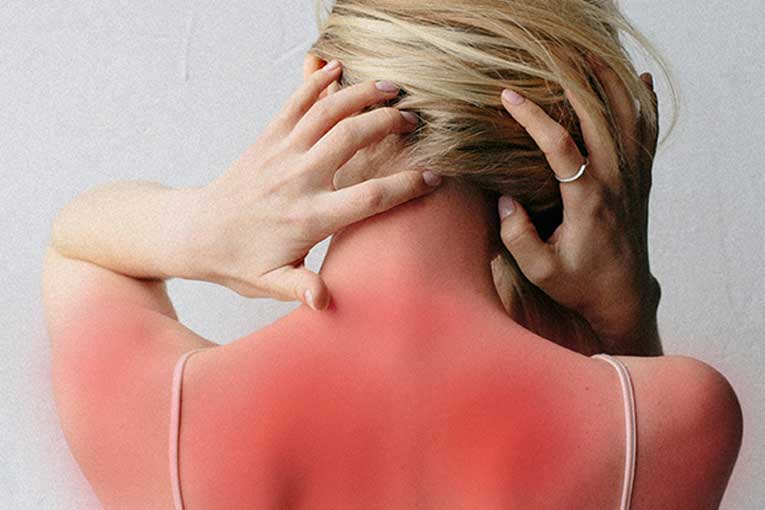
How to Treat Sunburn

how to treat sunburn

Sunburns, though common, can be uncomfortable and painful. 

Here’s how to treat sunburn and ease the discomfort:

Move to Shade

The first step is to get out of the sun. 

Move the affected person into the shade or preferably indoors to prevent further exposure to UV rays.

Cool the Skin

To relieve the heat in the skin, take a cool shower or bath for about 10 minutes. 

Avoid using hot water, as this can further irritate the burn.

Apply After-Sun Lotion

Use after-sun lotion or aloe vera gel to soothe the skin and provide moisture. 

These products can help cool and hydrate the burn. 

Avoid using greasy or oily products like petroleum jelly, as they can trap heat in the skin and worsen the burn.

Pain Relief

To reduce pain, over-the-counter medications like paracetamol or ibuprofen can be used. 

Always follow the manufacturer’s instructions. 

Never give aspirin to children under 16 years of age due to the risk of Reye’s syndrome.

Stay Hydrated

Sunburns can lead to dehydration, especially if the skin is extensively burned. 

Drink plenty of fluids, particularly water, to stay hydrated.

Monitor for Heat Exhaustion

Watch for signs of heat exhaustion or heatstroke, which include dizziness, rapid pulse, or vomiting. 

If symptoms worsen, seek immediate medical help.

When Should You Go to Hospital With a Burn?

when to go hospital with burn

While many burns can be treated at home, there are some situations where immediate medical attention from a healthcare professional is required. 

You should seek medical attention if:

Large Burns

If the burn covers an area larger than the size of the person’s hand, it requires medical evaluation. 

Larger burns can be more severe and prone to complications.

Deep Burns

Burns that cause the skin to appear white, blackened, or charred indicate severe tissue damage. 

These require prompt medical attention.

Burns on Sensitive Areas

Burns to the face, neck, hands, feet, joints, or genitals are considered high-risk and should be treated at a hospital. 

These areas have delicate tissue and can lead to long-term complications if not properly treated.

Electrical or Chemical Burns

Any burn caused by electricity or chemicals must be evaluated by healthcare professionals. 

These burns can cause deeper, hidden damage and may lead to serious complications.

Signs of Shock

Symptoms of shock include cold, clammy skin, rapid breathing, weakness, and dizziness. 

If any of these occur, immediate medical attention is necessary.

Special Conditions

Children under 10, people with medical conditions such as heart disease or diabetes, or those with a weakened immune system should seek hospital care for burns.

Breathing Problems

If someone has inhaled smoke or fumes, they should be assessed at a hospital, even if they seem fine.

Things to Avoid When Treating a Burn

When treating a burn, it’s essential to avoid certain actions that can cause further damage. 

Here’s a list of things to steer clear of:

Ice or Ice Water

Applying ice or using ice-cold water to cool a burn can cause frostbite and further harm the skin. 

It also slows down blood flow, which can worsen the injury.

Butter or Greasy Substances

Never apply butter, oils, or greasy creams to a burn. 

These substances may feel soothing initially, but they can trap heat and hinder the cooling process, making the burn worse.

Breaking Blisters

If blisters form on the burn, avoid popping them. 

Blisters act as a natural barrier to protect the skin underneath from infection. 

Popping them exposes the sensitive tissue and increases the risk of infection.

Tight Bandages

Don’t wrap a burn with tight bandages. 

This can restrict blood flow and increase the severity of the injury. 

If a bandage is necessary, use a loose, non-stick dressing to cover the burn.

Scrubbing the Area

Avoid scrubbing or rubbing the burned skin, as this can cause irritation and damage to the affected area. 

Gently clean the burn using cool water and avoid friction that could lead to further injury.

Burn Aftercare

burn aftercare

Once the immediate first aid has been applied, proper aftercare is vital for the burn to heal properly. 

Here are some steps to follow:

Keep the Area Clean

Gently wash the burn with mild soap and water to prevent infection. 

Avoid scrubbing the burn, as this can cause further damage. 

Do not use harsh chemicals or strong soaps, as they can irritate the skin and delay healing.

Moisturise

To prevent the skin from drying out and to promote healing, apply a soothing lotion, such as aloe vera gel. 

Aloe vera helps hydrate the skin and reduce inflammation. 

Avoid using products with alcohol, as they can dry out the skin and cause irritation.

Monitor for Infection 

It’s important to keep an eye on the burn for signs of infection. 

Symptoms such as increased redness, swelling, pus, or an unpleasant smell may indicate an infection. 

If you notice any of these signs, seek medical help immediately to prevent complications.

Avoid Further Sun Exposure

The burn should be kept out of direct sunlight to prevent further skin damage and reduce the risk of scarring. 

Consider covering the area with loose clothing or using sunscreen once the skin has healed enough.

Follow-Up Care

For severe burns, follow-up care may be necessary. 

This may include dressing changes, further treatment, or checking for complications, and should be done under the guidance of a healthcare professional.

Conclusion

You should now have the knowledge on how to treat a burn.

Treating a burn correctly and promptly can significantly reduce pain and the risk of complications. 

It is essential to follow proper first aid steps, such as cooling the burn, protecting the area, and seeking medical help when necessary.
IOSH appoints new Chair and four trustees to its Board

IOSH confirms leadership changes with UK-based Chair appointment

The Institution of Occupational Safety and Health (IOSH) has announced that Ruth Boumphrey will become Chair of its Board of Trustees on 27 May 2025.

Boumphrey currently serves as Chief Executive of Lloyd’s Register Foundation and brings experience in research, development and regulation.

She will succeed Bobby Chakravarthy, who has acted as interim Chair since Professor Peter Bonfield stepped down in 2024 to take up a UK Government appointment.

Boumphrey holds additional roles as a Non-executive Director of the UK Government’s Centre for Environment, Fisheries and Aquatic Sciences (Cefas) and as a Commissioner for the National Preparedness Commission.

She said: “I’m delighted to be the next Chair of IOSH’s Board of Trustees, and look forward to working with IOSH and its members around the world in delivering its vision of a safe and healthy world of work.

“This vision is very close to my heart and aligns with our mission at Lloyd’s Register Foundation, so I hope to bring and share knowledge, networks and insights that help amplify IOSH’s impact globally.”

IOSH adds four new trustees to Board

Alongside the appointment of Boumphrey as Chair, four new trustees have also joined the IOSH Board.

Arlette Anderson and Sonia Whiteley have been named as member trustees, while David Auger and Stuart Stockley take up positions as independent trustees.

Anderson is a Chartered Fellow of IOSH and the Institute of Environmental Management and Assessment. Her previous work has focused on cultural change in multinational organisations. She has served on IOSH’s Performance and Development Committee.

Whiteley, also a Chartered IOSH Fellow, is Vice-Chair of the Essex Branch. She has over 20 years’ experience in occupational safety and health and is currently Head of Health and Safety at the European Bank for Reconstruction and Development.

Independent trustees bring business and industry experience

David Auger joins the Board as an independent trustee following a 35-year career in finance.

He is a member of the Institute of Chartered Accountants in England and Wales and has held senior roles in manufacturing companies. His previous posts include Chief Finance Officer and Board Advisor to a global shipping group.

Stuart Stockley also joins as an independent trustee. He has over 20 years of experience in senior positions within the building materials industry across the UK and Europe.

His background includes work in commercial, operational, sales and marketing, category management and e-commerce roles.

Board transition marks the end of current trustees’ terms

The announcement also marks the conclusion of terms for three long-serving trustees: Simon Hatson, John Green and David Blower.

IOSH extended its thanks to the departing members, as well as to Bobby Chakravarthy for his service as interim Chair.

Chakravarthy will remain on the Board as an independent trustee once Boumphrey assumes the role of Chair.

NEBOSH to present on leadership and psychological safety in Birmingham

NEBOSH announces presence at Birmingham safety event

NEBOSH has confirmed it will exhibit at the Health and Safety Event 2025, taking place from 8–10 April at the NEC in Birmingham.

As reported by NEBOSH, the organisation will be located at Stand 3/G40, where attendees can speak with its team about available qualifications.

These include courses developed in partnership with the Health and Safety Executive (HSE).

NEBOSH representatives will also deliver presentations each day as part of the Knowledge Exchange theatre.

Daily presentations to focus on learning, leadership and psychological safety

Three NEBOSH speakers are scheduled to present during the three-day event.

On 8 April, Dr Nikki Booth, Head of Assessment Development, will speak on “Creating a High-Impact Learning Environment: Unpacking Learning and Assessment.”

On 9 April, NEBOSH Chief Executive Officer Andy Shenstone will present “Getting Leaders on Board – Talking the C-Suite Language.”

On 10 April, Dee Arp, Chief Quality Officer, will lead a session titled “Creating the Conditions for Psychological Safety.”

Range of qualifications available to discuss at NEBOSH stand

NEBOSH will provide information about its qualifications throughout the event.

Visitors can discuss a variety of training programmes with NEBOSH staff, including those developed with the HSE.

These qualifications aim to support professionals in improving health and safety performance at work.

The stand will also offer an opportunity to learn about the organisation’s approach to assessment and learning design.

Event to run alongside co-located safety and security shows

The Health and Safety Event 2025 is co-located with The Fire Safety Event, The Workplace Event, The Security Event and the National Cyber Security Show.

This allows attendees to explore a wide scope of topics across safety and security.

NEBOSH stated that the event offers the chance to engage with the UK’s health and safety community, participate in CPD-accredited sessions and view new products and services.

NEBOSH presents at Health and Safety Event 2025 in UK: Summary

NEBOSH will exhibit at the Health and Safety Event 2025, scheduled from 8–10 April at the NEC Birmingham.

NEBOSH staff will be available at Stand 3/G40 to provide information on qualifications, including those co-developed with the Health and Safety Executive.

The organisation’s representatives will also speak daily in The Knowledge Exchange.

Presentations include topics on learning environments, leadership engagement and psychological safety.

Speakers are Dr Nikki Booth on 8 April, Andy Shenstone on 9 April and Dee Arp on 10 April.

The Health and Safety Event is co-located with The Fire Safety Event, The Workplace Event, The Security Event and the National Cyber Security Show.

NEBOSH said that the event provides a platform to connect with the UK’s health and safety professionals, participate in CPD sessions and explore new industry developments.

Firefighters with cancer could get federal benefits under proposed US law

Honoring Our Fallen Heroes Act reintroduced in US Senate

According to the LA Times, a new federal bill has been reintroduced to expand benefits for firefighters who develop cancer linked to their work responding to wildfires.

The Honoring Our Fallen Heroes Act would allow access to the Public Safety Officers’ Benefits Program for firefighters diagnosed with non-9/11 service-related cancers.

This move follows the January wildfires in Los Angeles County, during which 20 Northern California firefighters were found to have high blood levels of lead and mercury after responding to the blazes.

Research tracks health risks linked to wildfire response

As reported by the LA Times, a study led by researchers from institutions including Harvard, UCLA, UC Davis and the University of Texas at Austin is monitoring the long-term health effects on firefighters exposed to the January fires in Southern California.

According to the World Health Organization, firefighting is classified as carcinogenic.

A 2024 study found that firefighters are 14% more likely to die from cancer than the general population.

Between 2002 and 2019, 66% of firefighter line-of-duty deaths were attributed to cancer.

Concerns raised over future implementation

The bill has bipartisan support, but the LA Times reports that its passage and implementation remain uncertain.

John Feal, a 9/11 site responder and advocate, warned of potential administrative hurdles: “Getting the piece of legislation passed is not as hard as guarding it.”

He said that growth in the number of claims and applicants could strain the system.

The legislation would allow eligible firefighters to access an existing benefits scheme, but disability and education support would still be subject to annual budget approval.

Previous programmes cited as cautionary examples

Attorney Michael Barasch, who represents clients from the 9/11 community, said streamlined eligibility will be necessary to avoid delays.

“In my experience representing more than 40,000 members of the 9/11 community, any similar program should have a clear set of standards to determine eligibility,” Barasch said to KFF Health News.

Feal added: “There’s a backlog on enrollment into the WTC program because they’re understaffed, and there’s also a backlog on getting your illnesses certified so you can get compensated.”

The bill would add cancer diagnoses unrelated to 9/11 to the list of qualifying conditions for the Public Safety Officers’ Benefits Program.

Firefighters with cancer from wildfires could get federal benefits under proposed US law: Summary

The LA Times has reported that US Senators have reintroduced the Honoring Our Fallen Heroes Act to support firefighters with service-related cancers.

The legislation would enable firefighters to access the Public Safety Officers’ Benefits Program for conditions not related to the 9/11 attacks.

The January 2025 wildfires in California prompted new research which found toxic exposure among firefighters.

Concerns remain over the implementation of the bill, including documentation challenges, staffing levels and funding consistency.

A similar bill was passed by the Senate Judiciary Committee in 2024 but did not progress.

The Congressional Budget Office previously estimated an annual cost of $250 million.

Advocates say the program must avoid the administrative delays seen in 9/11-related compensation schemes.

The legislation is backed by a number of senators and firefighter associations.

10 Most Common Flammable Materials

Flammable materials are everywhere in our daily lives, both at home and work. 

Understanding what they are and how to handle them safely is essential for preventing accidents. 

They can be found in nearly every environment, from our homes to workplaces, factories, and vehicles. 

Everyday products, such as cleaning agents, fuels, and textiles, can all be flammable.

In this article, we will explore what flammable materials are, why they are dangerous, and how to stay safe around them. 

We will also look at 10 of the most common flammable materials that you might encounter regularly. 

By learning to identify these materials and how to handle them correctly, you can help prevent fires and keep your surroundings secure. 

What Are Flammable Materials?

Flammable materials are substances that can easily ignite and catch fire when exposed to heat, flame, or sparks. 

These materials have a low flashpoint, which is the temperature at which they release enough vapor to catch fire.

Materials with a flashpoint under 100°F (37.8°C) are generally considered flammable.

Flammable materials can be found in solids, liquids, or gases and can be natural or man-made.

It’s important to handle flammable materials with care, store them properly, and use them in safe conditions. 

Recognising and understanding flammable substances in your environment is crucial for preventing fires and ensuring safety in both homes and workplaces. 

Proper knowledge and caution can minimise the risk of accidents.

10 Most Common Flammable Materials

Flammable materials are substances that can catch fire easily when exposed to heat, sparks, or open flames. 

Many of these materials are found in our homes, workplaces, and public areas. 

Being aware of these materials and how to handle them safely is crucial in preventing accidents and ensuring fire safety. 

Here are 10 common flammable materials, explaining their characteristics and risks.

Acetone

flammable materials acetone
Source: Wikipedia

Acetone is a colorless, flammable liquid commonly used as a solvent in nail polish removers, paint thinners, and some cleaning products. 

Acetone is highly volatile and evaporates quickly, forming flammable vapours. 

Its flashpoint – the lowest temperature at which it can vaporize and ignite – is -4°F (-20°C), making it one of the most flammable substances in households.

Store acetone in a cool, dry, and well-ventilated area, away from heat and open flames and always use acetone in well-ventilated spaces, as the vapours can be hazardous to your health.

Alcohol Spirits

flammable materials alcohol spirits

Alcoholic spirits, such as vodka, whiskey, and rum, are commonly found in homes, bars, and restaurants. 

These beverages are made by fermenting and distilling various grains, fruits, and other ingredients. 

Due to their high alcohol content (usually above 20%), they are highly flammable and can ignite easily when exposed to heat, sparks, or open flames.

Make sure to store alcoholic spirits in tightly sealed containers, away from heat sources and open flames.

Deodorant

flammable materials deodorant
Source: Wikipedia

Aerosol deodorants contain flammable propellants such as butane or propane, which are highly volatile gases. 

These gases make deodorants easy to spray but also pose a significant fire hazard. 

If exposed to heat or flames, deodorant cans can explode, leading to serious injuries or property damage.

Store aerosol deodorants in cool, dry places and away from direct sunlight and always follow the manufacturer’s instructions on proper usage and storage.

Flour

flammable materials flour

Flour is a common ingredient in kitchens, but it can pose a significant fire risk. 

While flour itself doesn’t ignite easily, the fine flour particles can create a dust cloud that is highly combustible. 

If this dust comes into contact with a spark or flame, it can ignite and cause a dust explosion. 

This is particularly a concern in industrial environments like flour mills, but it is still important to be cautious in the home.

Clean up flour spills immediately, and avoid sweeping or vacuuming to prevent dust clouds.

Furniture Polish

flammable materials furnture polish

Furniture polish contains flammable chemicals, including solvents and oils that can easily ignite. 

These products are designed to clean and shine surfaces, but they often contain petroleum-based ingredients that make them highly flammable. 

Furniture polish is commonly used in homes and offices, so proper storage and handling are essential to avoid accidents.

Store furniture polish in a cool place, away from direct sunlight and heat sources.

Hair Spray

flammable materials hair spray
Source: Wikipedia

Hair sprays, like deodorants, are often contained in aerosol cans and contain flammable propellants such as butane, propane, or ethanol. 

These chemicals allow the product to spray evenly, but they also make the product highly flammable. 

When applied to the hair, hair spray can ignite if exposed to a flame or excessive heat, especially if used near a stove, cigarette, or open flame.

Always follow the manufacturer’s safety instructions on the label.

Hand Sanitiser

flammable materials hand sanitiser
Source: Wikipedia

Hand sanitisers, which contain high amounts of alcohol, are highly flammable and should be handled with care. 

Most hand sanitisers contain between 60% to 95% ethanol or isopropyl alcohol, both of which have low flashpoints. 

As these alcohol-based products have become increasingly popular, and not just found in the healthcare industry, it’s essential to be aware of the fire risks associated with improper use and storage.

Never use hand sanitiser near open flames or high-temperature surfaces.

Permanent Markers

flammable materials permanent markers
Source: Wikipedia

Permanent markers often contain flammable solvents such as toluene or xylene. 

These chemicals help the ink dry quickly and provide long-lasting marks. 

The solvents are highly volatile and can easily catch fire when exposed to heat or flames. 

Though the risk may seem small, using permanent markers around heat sources can be dangerous.

Avoid using permanent markers near candles, stoves, or any equipment that could generate sparks.

Petrol (Gasoline)

flammable materials petrol gasoline

Petrol, or gasoline, is one of the most well-known flammable substances. 

It is commonly used as fuel for vehicles, lawnmowers, and generators. 

Petrol has a low flashpoint, which means it can ignite easily when exposed to a heat source or spark. 

Petrol vapours are also highly flammable, making it dangerous to handle, especially when fueling up vehicles.

Always store petrol in approved containers and keep it away from living spaces and never refuel a vehicle or machine near an open flame, heat source, or while the engine is running.

Turpentine

flammable materials turpentine
Source: Wikipedia

Turpentine is a solvent derived from pine trees and is commonly used in paint thinners and cleaning products. 

It has a low flashpoint, making it highly flammable, and can ignite easily when exposed to heat, sparks, or open flames. 

Turpentine is used in various artistic and industrial applications but must be handled with care due to its volatile nature.

Make sure to store turpentine in airtight containers and away from heat sources or flames and use turpentine in well-ventilated areas to avoid inhaling harmful fumes.

How Can You Stay Safe Around Flammable Materials?

Ensuring safety around flammable materials is crucial to prevent accidents and ensure both personal and property safety. 

Here are some important steps to take:

Proper Storage

Always store flammable materials in well-ventilated areas away from heat sources, flames, or sparks. 

Use approved containers to hold liquids and keep them tightly sealed. 

Ensure that containers are labeled clearly to identify the material inside.

Keep Away from Flames

Avoid using flammable substances near open flames, heat sources, or electrical equipment. 

In areas where flammable materials are used, make sure there are no exposed wires or sparks that could ignite vapors.

Use Materials Carefully

When using flammable substances such as cleaning agents, paints, or aerosols, follow the manufacturer’s instructions carefully. 

Use them in well-ventilated spaces, and never leave them unattended while in use.

Proper Disposal

Dispose of flammable materials, such as rags soaked with oil or paint, in designated fire-resistant containers. 

Do not throw them in regular trash bins, as they could ignite from friction or heat.

Install Smoke Detectors

Ensure working fire detection, such as smoke detectors, are installed in areas where flammable materials are stored or used, such as kitchens or workshops. 

This can provide an early warning in case of a fire.

Keep Extinguishers Nearby

Keep fire suppression equipment such as fire extinguishers in places where flammable materials are stored or used. 

Be sure to have one suitable for the type of fire that could occur.

How is Flammable Different to Combustible?

Flammable and combustible are both terms used to describe materials that can catch fire, but they are not the same. 

The main difference lies in the temperature at which each type of material ignites.

Flammable materials are substances that ignite easily at relatively low temperatures, usually below 100°F (37.8°C). 

These materials are highly volatile, meaning they can catch fire quickly when exposed to heat, sparks, or flames. 

Flammable substances are particularly dangerous because they can release vapors that catch fire even without direct contact with a flame.

Combustible materials, on the other hand, require higher temperatures to catch fire, typically above 100°F (37.8°C). 

While combustible materials are still capable of burning, they are less likely to ignite quickly compared to flammable materials. 

Although they can burn, they are generally less hazardous than flammable materials in terms of ignition risks.

Conclusion

You should now have an understanding of 10 of the most common flammable materials.

Flammable materials are part of everyday life and require careful handling to ensure safety. 

Understanding their properties, risks, and differences from combustibles can help prevent accidents. 

By staying informed and following safety precautions, you can minimise the risks associated with these common materials. 

Always prioritise safety and treat flammable substances with caution.