Improvements approved for Isle of Wight fire stations

Fire stations across the Isle of Wight are to set to recevie improvements to the tune of £1.7m. Hampshire and Isle of Wight Fire and Rescue Authority (HIWFRA) approved the spending at a meeting last week.

The money follows on from a £1.1m investment in its Isle of Wight estate in 2021 (Phase one improvements) which saw the Island’s 10 stations fitted out with new and improved vehicle exhaust extraction kits and upgraded fire alarm systems.

Following the Fire Authority’s decision to invest further, all 10 sites will now receive electrical infrastructure updates and surveys to bring the stations in line with those in Hampshire.

Other work will include:

• Roof replacements at Newport, Cowes, Bembridge, Ventnor and Freshwater
• Kitchen upgrades at Ryde, Newport, Bembridge, Sandown, Shanklin and Freshwater, to make life better for our colleagues and attract partner agencies to these locations
• The appliance bay door at Shanklin will be upgraded
• A four-bed dormitory and bathroom will be created at Bembridge, providing accommodation for colleagues travelling to the Island, at no cost to HIWFRS

Rhydian Vaughan, Councillor and chairman of HIWFRA, said: “As we approach the first anniversary of the formation of the Combined Fire Authority, it is pleasing to see the progress that has already been made to improve fire stations across the Isle of Wight. The investment of a further £1.7m will now allow more essential maintenance work to be carried out, making life better for firefighters, support staff and our communities.

He added that council charges one of the lowest taxes in England, yet continues to be committed to providing good value for money to its residents. “Proactively investing in our estate is important because it ensures that our buildings are fit for purpose and can meet the needs of a modern fire and rescue service,” Vaughan added.

Dahua’s new technology reduces Chinese mountain wildfire by 80%

At the beginning of 2020, Dahua Technology provided an intelligent forest fire prevention monitoring system for Rizhao. This solution gives an automatic early warning of fire, real-time fire control and closed-loop response through digital intelligence technology, significantly improving forest fire prevention and dispatch.

Mountainous regions, like Rizhao in Shandong Province of China, are vulnerable to forest fires. Recognised by the United Nations in 2009 as one of the most habitable cities in the world, this city consists of 4,358 mountains, with a forest area of 1,400 square kilometers that account for 70% of the region.

Up until now, forest rangers have manually scouted and monitored the area, walking nearly 10 kilometers of treacherous trails for several hours a day.

The Illegal wood burning in the area, if not controlled properly, can lead to a disastrous wildfire. According to a World Health Organization report, in 50% of wildfires recorded, the cause that triggered them is unknown.

At present, high-altitude dual-lens thermal imaging cameras cover the main mountains in the city, carrying out 360 ° remote monitoring 24/7. This solution also offers real-time sensing and intelligent management of people and vehicles coming in and out of the forest areas.

Furthermore, to reduce false alarms, the system adopts algorithms for deep smoke and mountain scanning, thus improving the accuracy of real fire alarms and saving manpower and material resources.

After half a year of operation, the system has detected more than 30 real mountain fires. The average number of fires found every day during fire season has significantly decreased by 80% compared with the initial stage of the project. This reflects the effectiveness of the solution in fire monitoring and the increasing awareness of villagers regarding fire safety.

Overall, this solution helps guarantee the safety of 1,400 square kilometers of forest resources in Rizhao.

Triangle Housing awards SPIE fire and security maintenance contract

SPIE UK has been awarded a fire and security reactive maintenance and serving framework contract by Triangle Housing Association, a major provider of supported living, resettlement accommodation and support for people leaving hospitals in Northern Ireland.

SPIE UK will be responsible for the servicing and maintenance of fire safety equipment. This includes fire alarm systems, domestic smoke and carbon monoxide detectors, emergency lighting, firefighting equipment, smoke vents, door access controls, nurse call systems, warden call systems and other specialist fire safety equipment in accordance with Fire Safety Regulations.

On top of this, SPIE will provide a 24-hour reactive response and repairs service across all of Triangle Housing’s properties. The framework contract has been signed for an initial 36 months, with the option to extend it by a further 36 months if both parties agree to.

Andrew Fleming, property assets manage, Triangle Housing Association said: “We feel confident that SPIE UK will help to guarantee that safety over our large and varied estate and support our vision of building better lives together.”

Jim Skivington, divisional managing director, SPIE UK said: “We are delighted that Triangle Housing Association has given SPIE UK the responsibility of maintaining the fire and security equipment and systems across its estate. Our highly skilled team takes its responsibility to Triangle Housing and its tenants very seriously and we look forward to a productive future working relationship.”

The 36-month contract will see SPIE working across Triangle Housing’s 1,000 property estate and provide 24-hour reactive response.

Global fire alarm and detection market to reach $53.15bn in 2032

The global fire alarm and detection market is expected to be $53.15bn in 2032 expanding at a CAGR of 6% from 2022 through to 2032. The market is currently valued at $29.68bn in 2022.

The increase is forecasted to comes from a demand for developed fire safety systems in mining, automotive, petrochemical, oil and gas exploration, and power and utility sectors.

Rising deployment of fire alarm and detection systems across educational institutes and increasing awareness about its benefits among residents for fire detection systems are key factors propelling market expansion during the forecast period. Furthermore, ongoing technological developments in fire detection and alarming devices is expected to boost the industry’s growth in the coming time.

In addition, the advancement of wireless and remote function fire detection and alarm systems are anticipated to offer significant opportunities for expansion in the evaluation time.  

The Covid-19 pandemic ushered in a change in the demand and consumption pattern of fire alarm and detection systems. With increasing hospitalisation rates and shift towards remote working, the need for residential and healthcare setting oriented fire safety protocols have increased, leading to growing sales of fire alarm and detection systems across these domains.

Key players in the global fire alarm and detection market have adopted various strategies of mergers, acquisitions, and partnerships. In August 2021, ProPharma group acquired iSafety Systems, an Indian pharmacovigilance service provider.

Then in July 2021, ICON plc acquired a CRO, called PRA Health Sciences. The objective of the acquisition was to increase the services portfolio of ICON plc. In October 2020, Honeywell rolled out its first tools from its new suite of Connected Life Safety Services (CLSS), which is its first all-in-one cloud platform for fire safety systems.

30 U.S. fire departments to receive stipends for Home Fire Sprinkler Outreach

The Home Fire Sprinkler Coalition (HFSC) will award stipends to 30 qualifying fire departments that demonstrate a plan to conduct community outreach during home Fire Sprinkler Week 2022.

The stipends, funded through a grant from State Farm Insurance, are being rolled out ahead of Home Fire Sprinkler Week, which will take place across North America May 15-21, 2022. Co-Sponsored by HFSC and the NFPA Fire Sprinkler Initiative, the week emphasizes the dangers of home fires to residents and firefighters and promotes the importance of building new homes with automatic fire sprinklers.

The stipends will help fire departments of any size or type conduct educational programs that may include:

  • Produce an educational banner or canopy tent with your logo.
  • Purchase a TV monitor to play HFSC’s new Virtual Reality video or other HFSC educational videos.
  • Create a video using your smartphone showing the benefits of home fire sprinklers and post to social media or your website.
  • Boost social media posts. Share HFSC’s new Virtual Reality video, other HFSC educational videos and social media cards. 
  • Build a Home Fire Sprinkler 13D Display which includes a riser pack donated by AGF Manufacturing. HFSC’s Display Guide provides all the information you need to build it.

To qualify, applicants must be current members of the free Built for Life Fire Department Program (BFLFD). They will also be required to describe their plan to use and evaluate their awards. Join the BFLFD program and apply for a stipend here: 2022 HFSC Stipend Program.  The deadline to apply is February 21, 2022.

Now in its fifth year, Home Fire Sprinkler Week has become popular with fire departments in the US and Canada and HFSC anticipates widespread participation again in 2022.

RoSPA launches safety guidance for zero emission light-powered vehicles

The Royal Society for the Prevention of Accidents (RoSPA) has produced new safety guidance for users of zero emission light powered vehicles (ZELPVs).
 
Zero emission light powered vehicles (ZELPVs), also known as powered light vehicles (PLVs), are vehicles with two, three or four wheels that are smaller and lighter than traditional vehicles, and produce zero exhaust emissions. Examples of ZELPVs include small electric mopeds, tricycles and quadricycles (small cars). Electric bicycles and electric scooters are not considered to be ZELPVs.
 
Rebecca Needham, Road Safety Officer at RoSPA said: “For 105 years, RoSPA has been striving to make our roads safer for all. In that time, the nature of the risks on the road have changed partly due to emerging technology and people making journeys with different modes of transport such as ZELPVs and other electric vehicles.”
 
“As the use of ZELPVs in the UK increases, RoSPA would like to see health and safety at the heart of every stage of their development, from their design and manufacturing to their testing and licensing.”
 
At present, all ZELPVs can be legally classified as “L-category” vehicles. Within this category, vehicles are separated into groups depending on characteristics such as their size, engine capacity and speed, and different licence entitlements are required depending on the vehicle.
 
ZELPVs are smaller and lighter than traditional vehicles, individuals who use them are more vulnerable to harm on the road. However, ZELPVs sit across several vehicle categories this means collision data is not readily available
 
Rebecca continued: “RoSPA would also like to see a government-led campaign which helps to raise awareness about ZELPVs and provides guidance for their safe use. It is particularly important that workers who use ZELPVs as part of their job are given clear instructions for safe use. Looking ahead, RoSPA recommends that ZELPVs should be given their own category when road safety collision data is being collected to allow for a clearer safety analysis.”

LEADER launches LEADER MIX A 1000 foam proportioner

In the family of autonomous foam proportioners from the firefighting equipment manufacturer LEADER, here is the latest: the LEADER MIX A 1000. With its patented automatic dosing principle, the new LEADER MIX A 1000 meets the expectations of firefighters faced with class A fires, and more specifically forest fires wildland fires. It completes the range of autonomous foam proportioners. We tell you more!

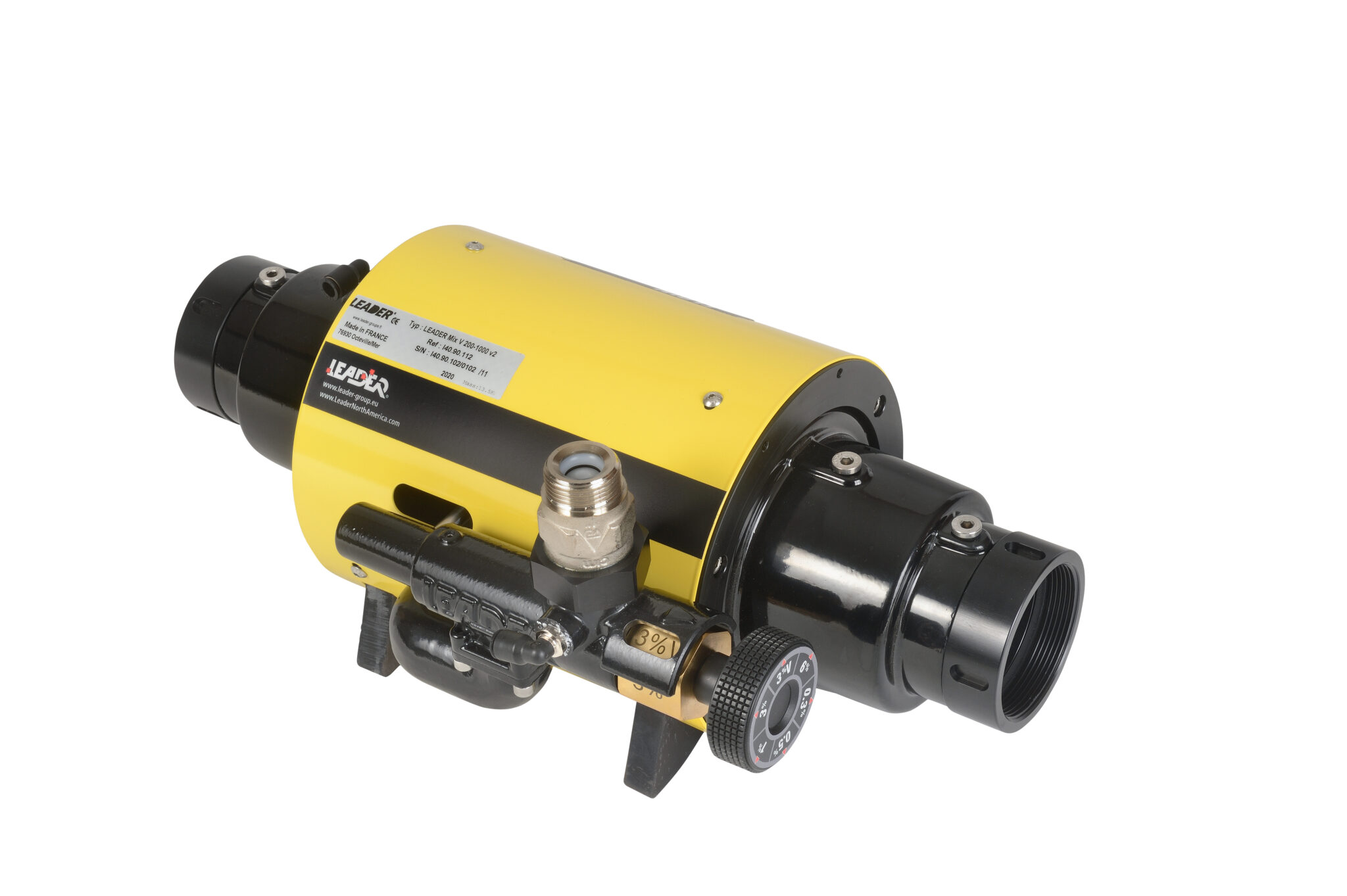
The ideal equipment for interventions on class A fires, the LEADER MIX A 1000 proportioner is calibrated for class A additives (foam concentrates and wetting-foaming agents). Designed and patented by the LEADER company’s R&D team, its unique operation is based upon a powerful venturi system that allows it to precisely aspirate the quantity of additive requested (0.3%, 0.5% or 1%) and to mix it with water.

Just turn the selector to instantly change the concentration rate. The LEADER MIX A 1000 adapts in real time the amount of foam concentrate to be aspirated according to flow variations. It operates over a wide flow range, from 200 to 1000 l/min, for a pressure between 5 bar and 16 bar. Successful fire extinction is closely linked to the proper functioning of the equipment and the quality of the additive used.

With LEADER MIX A 1000, get precise foam dosing to avoid wasting precious foam concentrate stock and to extinguish fires efficiently. Unlike electronic foam proportioners which require a power supply and regular maintenance, the LEADER MIX A 1000 operates without electronics and without power supply: it is a 100% mechanical system that is reliable and autonomous.

The absence of a metering pump increases the reliability of the system and allows dry operation if the end of the tank is reached. No periodic maintenance is required.

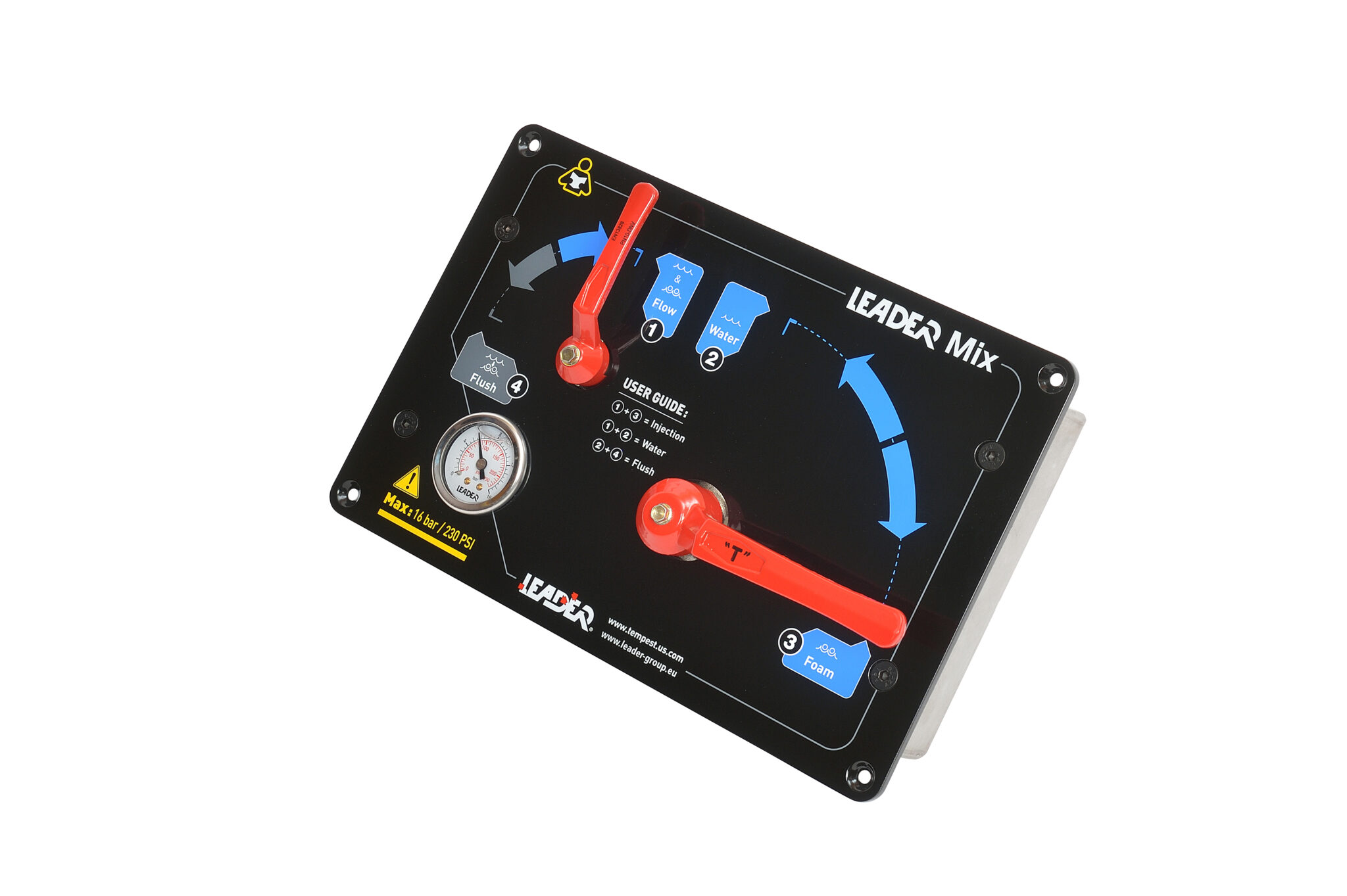
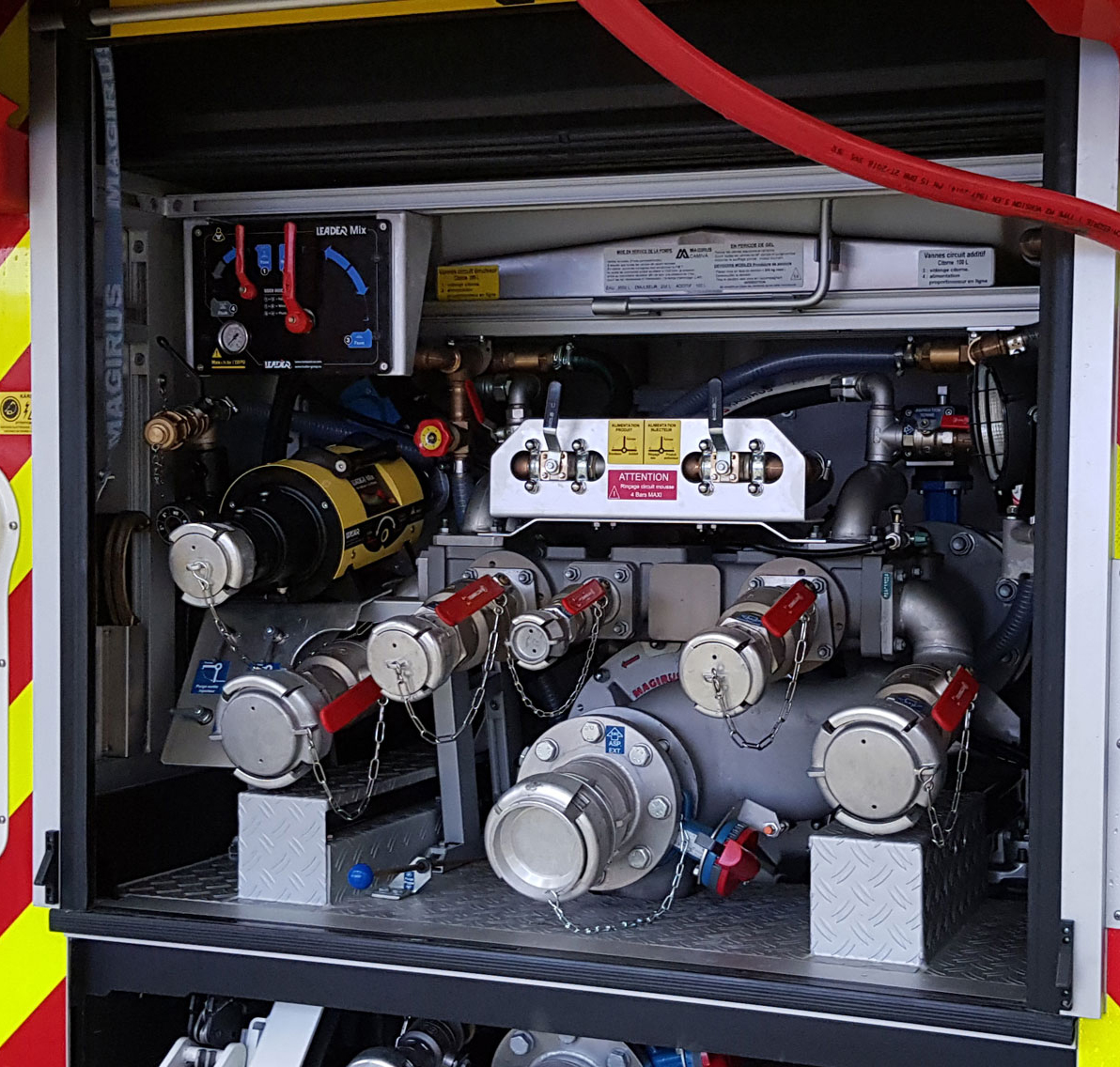
Its robust construction, as well as its extremely compact and light format (16 kg), allow it to be easily installed in fire fighting vehicles (fire truck, skid, pick-up, trailer). The remote-control panel allows you to view the inlet pressure and select the intervention position: water only, foam or flush. The “water” position (bypass) reduces pressure drops when injection is not necessary.

The “flush” position allows the dosing system to be rinsed in anticipation of the next intervention. The simple interface is easily understandable allowing fast and flawless action. Many fire departments have already tested and approved the performance of LEADER MIX automatic dosing systems. To try it is to adopt it!

To learn more about LEADER MIX A 1000 foam proportioner, visit https://www.leader-group.company/en

Exclusive: Protection without compromise 

IFSJ sits down with Ian Callaghan, Senior Director, International Marketing & Sales at PBI International 

The protection of firefighters is always a concern when they are on the scene of a potentially hazardous fire, or when they are in environments that puts them at imminent danger. Over the years, the dangers they face has changed. As the world around them continues to evolve, so to must the protection equipment, which needs to be stronger in the face of challenges old and new. Standing at the forefront of this protective equipment is the fabric that is used. It can withstand extreme heat and ensure that injuries are mitigated, therefore, giving the wearer the comfort and confidence to focus on the incident.

PBI Performance Products are one company that have continued to focus their attention on making sure that what goes into PPE is consistent and able to reflect the challenges the wearer faces. With nearly 40 years’ experience, the company continue to stand at the forefront of its industry. To find out how the company have progressed, International Fire and Safety Journal caught up with Ian Callaghan, Senior Director, International Marketing & Sales at PBI International.

A different climate

It is not surprising that upon speaking with Callaghan, he touches on the fact that 2021 had been a difficult year, especially with the pandemic, but 2021 was a year in which the company managed to expertly navigate to further renew its commitment to the fire services. Issues with supply chains have become common place for manufacturers, and this is the case for PBI but one that they have tackled head on.

On the difficulties that have been presented with, Callaghan revealed: “Not just for PBI, it has been a tough two years for everybody no matter what industry you are in. Working from home and not being able to travel to see customers or go to events, it has been a different climate to live in for everybody, let alone to work in as a business, but we have done well.

“Our supply chain has been really supportive during this period and all our customers have been looked after. We have made sure that they have never needed anything. We have been able to continue producing fibre to them throughout 2021, which is obviously vital for safety. Considering the challenges we have faced, we have been able to overcome them.

“Going forward, I think life for everyone will be difficult, and we are already seeing the impact COVID has had on the cost of transport and raw materials, and it is about managing that and making sure that everybody understands that we are doing everyone we can. Not just us, but the supply chain as well.”

The evolution of protection

Callaghan himself is extremely experienced in the sector and is well placed to evaluate changes to market requirements. Whilst many industries have seen changes off the back of the pandemic, Callaghan reveals that the demand for PPE has almost remained the same. He comments: “I don’t think we have seen requirements for PPE change in the last year. However, because of how we have all had to adapt because of the pandemic, we are seeing a lot of change because of that.

“From our perspective, it has completely changed how we address the market. Regarding PPE requirements, firefighters still need to do their job to the best of their ability and to be able to do that they need to be fully protected, and that is what we are here for. That hasn’t changed. Over the last year it is quite clear that the job of a firefighter is evolving, but it has been evolving for many years.

He continues: “The pattern has changed over many years as to what the fire services require, but one thing that has remained the same is making sure that the protection is there for the firefighter. That has never changed and that is where we come into it because our fibre is what gives them that protection. However, because of the variety of activities and incidents that firefighters do, they obviously want to be comfortable, they want mobility which usually fall under the criteria of lightweight and breathable. That has always been the case. People want the highest protection and the lowest weight which is great for us because for a number of years PBI have always been a lightweight option.

“It’s not like we have had to reinvent ourselves, we have always been at the forefront of the lightweight market that has given the best protection. That is what we have become known for, the protection. There is no compromise on that at all for me.”

New developments

To keep on top of the needs of firefighters, PBI are constantly collaborating with the supply chain, its partners and the most important relationship, the end user. This has given them the knowledge to improve on their product.

An example of this type of innovation will be on show this year, and promises to be a positive step for PBI. When asked about their latest innovations, Callaghan reveals: “This year at INTERSCHUTZ we are launching PBI LP, which stands for lightweight protection. For a number of years, our technical team have been working on improving our raw fibre, which we have done with the PBI LP. It is phenomenal in its performance levels and because it performs so well with heat and flames, it is able to be used in a lighter weight construction.

“We have been working very closely with our suppliers to get them to produce LP products and test them, which we have done for a number of years now. Now, we have products that are made with PBI LP that are reducing the outer shell weight without compromising any of the performance which is a massive step forward for the market.

“It has given our supply chain and our end users the opportunity to get an even lighter weight without effecting protection, which is the most important thing. In short, you could say that we have adapted to requirements, but we are always working on improving our fibre. We are ahead of the game, and I think LP will be a massive change in the market over the next few years.”

Working towards a safer future

Of course, for companies like PBI who have a track record of delivering vital solutions, it is often the case that the continued dedication for innovation doesn’t stop.

On how they are able to look forward and improve their solutions, Callaghan comments: “We are very fortunate that we have a fantastic fibre that does exactly what it says it does. Under heat and flame, it is unique in its performance and when you expose it to heat it doesn’t go brittle or carbonise, and most importantly for a firefighter, it doesn’t break open.

“So, in that respect, how do we improve things? We work with the best weavers and manufacturers in the world. Equally as important as that is that we listen to the end users. If they want something lighter or different, we listen to that.

As we ponder on what 2022 might bring, one thing that is certain is that departments will continue to need garments that protect them. The PBI LP looks certain to deliver this globally in what is shaping up to be a positive year for the company. Like many of us, Callaghan is hoping that 2022 will represent a time in which we will see a return to normal.

“On their plans for 2022, Callaghan believes that they will be at the forefront of positive change for their end users: “We are hoping that we will be allowed to get back to some sort of normality. There are a lot of events and a lot of people that we need to see globally who we haven’t seen for over two years. We are of course fully committed to the fire services globally as we always have been, we are really looking forward to launching PBI LP in the right way because it really does bring a new level of performance to Firefighters.”
ZF and ZIEGLER agree strategic partnership

Technology company ZF has received a major order for its digital connectivity solution ZF Rescue Connect from Albert Ziegler GmbH, one of the leading manufacturers of firefighting vehicles. The deal, worth several million euros, is one of the largest framework contracts for digital services ever awarded to ZF.

From the beginning of 2022, ZIEGLER will equip new vehicles with ZF Rescue Connect as an option and offer digital services to its end customers. In addition, ZF and ZIEGLER have agreed a strategic partnership for the digitalisation and networking of ZIEGLER firefighting vehicles.

With more than 130 years of experience in the industry, ZIEGLER possesses a vast wealth of professional knowledge and expertise, making it a perfect partner. Both companies are committed to developing the best possible solutions for customers worldwide in order to make the world a safer place. ZIEGLER’s production knowledge and fire know-how mean it is ideally placed to create the firefighting vehicles of the future.

“This major order from ZIEGLER affirms that with ZF Rescue Connect we have created a convincing solution for networking rescue services,” said Florian Freund, responsible for ZF Rescue Connect. “At the same time, ZF Rescue Connect is an example of ZF’s innovative strength as a developer of new digital services.”

“The strategic partnership with ZF is an important building block for us in the ongoing digitalisation of our firefighting vehicles, and enables us to offer our customers cloud-based services with high added value,” said Bernd Geiselmann, CFO at ZIEGLER. “In addition, we can make over-the-air software updates to firefighting appliances throughout their entire service life, regardless of location.”

Connectivity for rescue services

ZF Rescue Connect digitally connects rescue services with one another during operations and provides them with all important status information relating to the vehicles and equipment deployed in real time. The digital connectivity solution is based on an Internet of Things (IoT) cloud platform driven by technology group ZF.

This is where all data from the relevant emergency vehicles converge and can be accessed by the operations center via a digital dashboard. Using this overall view, the incident commander and the services involved can see, for example, whether heavy equipment such as spreaders and rescue shears are on site for rescuing accident victims from vehicles, how much of which extinguishing agent is available to the fire department at the scene, whether the emergency physician and ambulance have already arrived or to which hospital the injured have been taken.

Small electronic transmitters and receivers network accident victims and the rescue forces deployed, and provide essential information from other rescue equipment via mobile communications and the IoT cloud.

The real-time availability of such data gives emergency response leaders unprecedented access to the information required to successfully and quickly complete operations with the best possible outcomes.

More information: www.zf.com/rescue-connect

Highlight Parking launches AI-powered system to detect smoke or fire in seconds

Highlight Parking, an innovator in parking information systems for multi-storey car parks has announce the launch of its AI-powered Smoke and Fire Early Warning System S.A.F.E. which can detect smoke or fire within just a few seconds. Since the King’s Dock multi-storey car park at Liverpool Echo Arena was devastated by fire on New Year’s Eve 2017, causing millions of pounds’ of damage, Highlight Parking has been developing S.A.F.E. to help prevent similar events and improve the overall safety of car parks.

This innovative solution works with around-the-clock unattended monitoring, detecting smoke within seconds. Connected to a cloud application, S.A.F.E. immediately triggers a visual and audible alert, with email/SMS warnings sent automatically to smart devices and to car park control room screens. S.A.F.E.’s AI capability means that smoke can be detected as fast as the human eye, rather than relying on smoke to reach a car park’s ceiling mounted fire wire detectors. The outcome is that emergency measures can be taken far more quickly, so the likelihood of serious damage or injury is dramatically reduced.

“We developed S.A.F.E. because conventional fire systems are based on heat detection, which means a fire may already be out of control before it is detected, as was the case at King’s Dock”, explains David Harrison, MD at Highlight Parking. “By the time fire services had been alerted (13 minutes), despite their quick response, it was too late; nearly 1,200 vehicles were destroyed, and the insurance bill was a massive £20 million. Thankfully nobody was injured.”

As well as the existing risk of a petrol or diesel fire, as electric vehicle become more popular and EV charging points in car parks are increasingly commonplace, there is the additional increased threat of an electrical fire. Consequently, the need for a more sophisticated fire detection solution such as S.A.F.E. is even more imperative.

Harrison continues, “Obviously, fire safety is extremely important to car park operators and Chief Fire Officers who cite speed of response as absolutely crucial when it comes to preventing a fire disaster, like the one in Liverpool. We believe S.A.F.E. provides this.”

FTSE 100 company, Severn Trent Water, has installed S.A.F.E. at its headquarters in the West Midlands. Richard Carney, Project Manager at Severn Trent comments, “The S.A.F.E. system was a guaranteed investment for us. We did of course have a fire alarm system in the car park but, S.A.F.E. provides a far quicker response; we timed it at between seven and eight seconds compared to 12 minutes for our existing system.”

While S.A.F.E. has been developed for car parks, its AI software can be implemented in any other setting such as warehouses, storage facilities, retail and other large building where there is a fire risk. It can be installed using an existing or a new CCTV camera system.