The Latvian National Armed Forces has awarded a contract to Avon Protection for supply of their market leading CBRN respiratory protection including FM50 mask systems, filters, spares and accessories.
Latvia joins other NATO Nations and Partners including Belgium, Denmark, Finland, Lithuania, Norway and The Netherlands in purchasing the FM50 to protect their armed forces. In 2020, the NATO Support and Procurement Agency (NSPA) awarded Avon Protection a 10-year contract to supply a complete CBRN personal respirator system. Since the contract award Avon Protection has received orders for over 200,000 masks and has successfully delivered world class training on the system to users across NATO.
Today, over 3.5 million users rely on Avon Protection products that have been developed to counter the multitude of CBRN threats in modern conflict, anti-terrorist and peace-keeping operations. The FM50 product range, as deployed through the NSPA contract, is the most operationally proven and widely deployed armed forces respirator in the world.
Commenting, Steve Elwell, Vice President at Avon Protection, said: “We are proud to continue supporting NATO in enhancing CBRN capability and enabling greater interoperability among coalition nations. The growth of both new partners to the framework such as Latvia and increasing deployment of capability to existing partners demonstrates the continued confidence and reliance on Avon Protection to supply products of the highest quality and performance to protect armed forces around the world.”
More elderly and disabled people will be helped to install fire alarms that save lives and meet new building standards rules thanks to an additional £500,000 in funding.
This doubles the funding already given to Care and Repair Scotland to help older and disabled people to install the alarms. Together with the £1 million already provided to the Scottish Fire and Rescue Service to install alarms in the homes of people at highest risk, the Scottish Government is providing £2 million to help people to meet the new standards.
The new rules require all homes in Scotland to have interlinked fire alarms, which communicate with each other so that a fire in one room sets off alarms throughout the property, giving people more time to escape and call emergency services.
The requirements have been in place for new-build and private-rented homes for a decade, and will come into effect for owner-occupied homes and those in the social rented sector on Tuesday 1 February. They place a legal duty on councils to monitor how many homes are compliant. Homeowners will not be penalised if they haven’t had the alarms installed in time but are encouraged to do so.
Housing Secretary Shona Robison said: “We’re introducing these new standards because interlinked fire alarms will save more lives. One death from fire is one too many, but tragically last year alone 44 people died in house fires in Scotland. We would encourage all homeowners to install the alarms as soon as they are able – long life battery-powered interlinked alarms are as easy to install as traditional standalone ones.
“We know that some homeowners may not be able to meet the cost of fitting the necessary alarms so had already provided £500,000 funding through Care and Repair Scotland to help elderly and disabled people. We don’t want funding to be a barrier to this important work, which is why we’re now doubling this funding, taking our total support to help people install these alarms to £2 million. We are in discussions with Care and Repair to ensure support continues up to and beyond the 1 February deadline, so that elderly and disabled people can make this fire safety improvement.”
Robert Thomson, National Director for Care and Repair Scotland, said: “We are delighted by this announcement as this has been a very popular scheme and the additional funding will allow local Care and Repair services to continue to support older and disabled people. We intend to target some of this additional funding to Council areas that do not have a Care and Repair service. It is also helpful that we are able to continue to provide support beyond the 1 February deadline.”
People tasked with extinguishing flammable liquid fires have known the limitations of water as a fire suppressant for years.
The pursuit for a better solution led Russian chemist Aleksandr Loran to develop and introduce in 1902 the first firefighting foam for flammable liquid/oil fires, after witnessing thedestruction they caused in his hometown.
The foam is used to create a foam blanket, which has lower density than water and floats on top of the fuel surface separating the flammable liquid from oxygen.
Through the years, technological innovations have improved on the effectiveness of firefighting foam.
While the advancements to foam technology helped firefighters to save thousands of lives over the years, they sometimes also brought unwelcome properties that had an impact on the environment.
Emergence of Aqueous Film Forming Foam
Aqueous Film Forming Foam (AFFF) containing PFAS (per- or polyfluoroalkyl substance) were introduced in the mid-1960s, first commercialised in the early 1970s, and have served as the industry workhorse ever since.
PFAS is a term used to describe a broad category of fluorochemicals (polymers and non-polymers) of different carbon chain lengths, physical and toxicological properties, and environmental impacts.
It includes long-chain PFAS such as PFOS and PFOA that are considered persistent, bio-accumulative, and toxic (PBT).
It also includes short-chain PFAS, such as C6 fluorotelomer fluorosurfactants used in current-day AFFF agents.
Short-chain (C6) fluorosurfactants do not contain or breakdown in the environment to PFOS or PFOA, and they’re currently considered lower in toxicity with significantly reduced bio-accumulative potential compared to long-chain PFAS.
Foams made with only short-chain fluorosurfactants likely contain trace quantities of PFOA and PFOA precursors as an unavoidable byproduct of the manufacturing process.
Advanced analytical methods and more sensitive instrumentation developed in the 1990s led to the detection of small amounts of PFAS chemicals, specifically PFOS and PFOA, in blood and the environment.
In response to getting this data, some manufacturers, like 3M, began phasing out PFOS and PFOA production in 2002.
In the early 2000s, government environmental agencies around the world intensified their scrutiny of PFAS chemicals, and over the past twenty years, many governments have passed legislation that restricts or bans the use of PFAS-based foams.
Because of these changes, many end users are transitioning or planning their transition to the next generation of fire protection.
Making that transition, however, is a big decision for any company.
End users need to confirm compatibility between the next generation foam and existing hardware in the foam system.
A couple of key considerations include maintaining business continuity and minimizing the capital investment required to make the transition.
The final solution is almost always influenced by the Authority Having Jurisdiction (AHJ) approving the foam system – i.e., Fire Marshall, Municipal Fire Department, or Insurance company.
These organisations also must factor in third party approvals from Underwriter Laboratories (UL), Factory Mutual, EN 1568 standard and or other vertical market foam standards, including U.S. MIL-SPEC, International Civil Aviation Organisation (ICAO), International Maritime Organisation, or the U.S. Coast Guard.
Foam systems are often in place for decades, and end users must make sure that their solution is sustainable for years to come.
What to Consider When Moving to a New Foam System
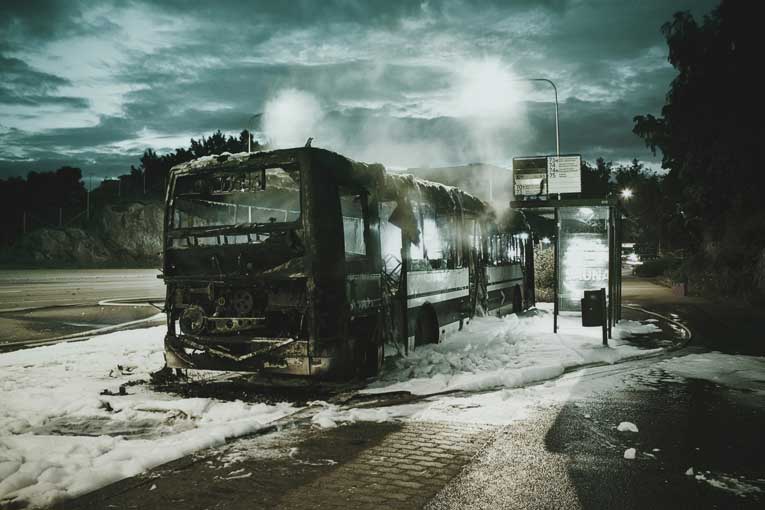
Burning Bus Extinguished by Fluorine Free Foam. Image credit: Unsplash
Class B foams are used to address the two primary types of fuel hazards – hydrocarbon and polar solvent.
Hydrocarbon fuels typically have a lower density than water and are not water miscible – i.e., gasoline, diesel, and aviation fuels.
Polar solvents include fuels such as ethanol, methanol, and isopropyl alcohol, which are miscible with water.
AFFF foams are used to create a foam blanket that readily spreads across the surface of the fuel separating the fuel source from the oxygen in the air and drainage of the foam blanket provides continual cooling to the surface of the fuel.
Alcohol resistant AFFF (AR-AFFF) firefighting foams have an additional feature that includes polymer(s) that are insoluble in the fuel.
These polymers precipitate out on the fuel surface and provide protection for the foam blanket from the polar solvent fuels that are hydrophilic (attracted to water).
This foam blanket separates the fuel from the oxygen in the air, suppressing the fire.
Perimeter Solutions’ new SOLBERG® VERSAGARD™ AS-100, is a fluorine-free alcohol type concentrate (ATC™) proportioned at 3% for both hydrocarbon and polar solvent fuel fires.
This is a tremendous advantage for municipal and/or industrial firefighters because they don’t have to worry about whether the foam they are using is the right foam for the job.
With all the focus on the use and regulations around PFAS based foams, there is little attention being paid to the inclusion of certain kinds of siloxanes in new fluorine-free solutions.
Some of these siloxanes are very persistent in the environment, and they are facing the same environmental pressures as fluorinated chemistries.
In fact, regulatory bodies including the Stockholm Convention for Persistent Organic Pollutants and California’s Prop 65 have already flagged certain siloxanes for their environmental persistence.
Case Studies – Making the Move to Fluorine Free
Perimeter Solutions is working with many customers to help them transition their fire safety systems. Each project is unique based on the customer, their industry and how old the system is that they are replacing.
One of the more recent projects we completed was with the Lehigh Valley Airport Authority.
They were interested in updating the fluorinated foam system used in one of their 40,000 square foot hangars.
That means that it requires an aircraft access door height of more than 28’, it can house an aircraft with a tail height over 28’, and that it needs to have a single fire area in excess of 40,000 square feet.
We helped the Airport Authority to convert its deluge fire sprinkler system, which was designed for 0.16 gallons per minute per square foot.
We were able to retrofit that existing system to use SOLBERG RE-HEALING™ foam 3%, fluorine-free 3%. This version of RE-HEALING foam has the exact same design application rate as the AFFF foam that they were previously using.
By selecting a foam with the same design application rate, the customer didn’t need to change out its discharge devices, or the piping infrastructure, dramatically reducing the amount they needed to invest to upgrade.
It was simply a matter of bringing in new foam storage, a change in the proportioner, and a change in the foam.
Another project recently completed involved the installation of a foam system at an 800,000 square-foot flammable liquid storage facility.
This was a racked storage facility that included a significant amount of flammable and combustible liquids on the property – both hydrocarbon and polar solvents.
The facility needed to transition to a versatile foam that would allow them to extinguish fires regardless of the fuel source.
Based on its versatility, the customer decided to use VERSAGARD AS-100 and has had great success with the new foam.
Fluorine Free Foam Technology- A Look Ahead
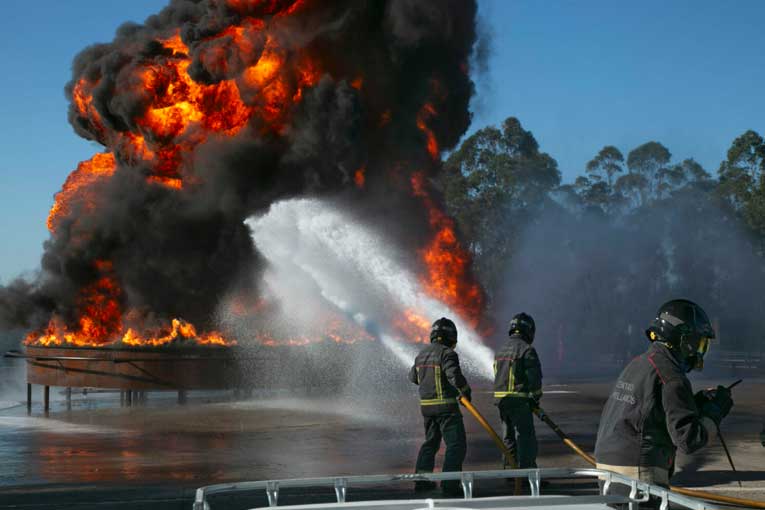
Fire Fighters Using Fluorine Free Foam.
Both of these transitions demonstrate that fluorine-free foams can now meet the needs of end-users who are looking for alternatives to legacy AFFF and AR-AFFF foams.
It will still be some time before AFFF and AR-AFF foams are completely replaced by fluorine-free alternatives, but we will see more of it in the next few years as regulations and requirements are updated.
In fact, the United States Federal Aviation Administration (FAA) recently issued a certification alert that removed a mandate to use fluorinated foams.
The FAA didn’t alter the existing performance specifications within the certification, so fluorine-free solutions must meet those specifications, but this shows that US agencies are creating inroads for fluorine-free technology.
The U.S. MIL-SPEC is also expected to transition to fluorine-free foam, and the U.S. military has stated that it will no longer purchase and/or use fluorinated foams starting in 2024, except for shipboard for the navy.
For those of you that have been around since the early days of AFFF and AR-AFFF, you may recall that they were proportioned up to 9% foam concentrate.
Through continued innovation, those percentages dropped to 3% and in some cases all the way down to 1%, meeting or exceeding the same level of effectiveness.
It is likely that fluorine-free foams will see the same type of development and will ultimately catch up to the legacy foams with the same proportioning percentage and application rates.
About the Author
Craig McDonnell is the General Manager at Fire Suppressions Americas, Perimeter Solutions profiles the history of fluorine-free Foam
Industry-certified processes, stringent quality control, dedicated workforce skills and the latest production technologies underpin manufacturing excellence at Teledyne Gas & Flame Detection. Comprising the Teledyne Oldham Simtronics, Teledyne Gas Measurement Instruments and Teledyne Detcon brands, the company’s meticulously designed and controlled production operations help impart its core product attribute: safety.
Robust and quality-centric manufacturing processes ensure that products perform their designated function, be it site protection, area monitoring or personal protection, in a failsafe manner. At three highly-specified manufacturing sites in France, the UK and the US, Teledyne produces a market-wide range of gas and flame detection solutions to meet the requirements of customers across all industry sectors.
Product quality and reliability equate to customer trust. But delivering these attributes relies on robust manufacturing processes. At Teledyne Gas and Flame Detection, production operations leverage the experience of a history in manufacturing that dates back more than a century. Of course, locations and facilities have changed over the years, but production capacity today is a global concern that embraces Teledyne Oldham Simtronics (Arras, France), Teledyne Gas Measurement Instruments (Renfrew, UK) and Teledyne Detcon (Cypress, US), with each facility supported by expert staff and a commitment to customer satisfaction.
he Arras headquarters and manufacturing plant of Teledyne Oldham Simtronics is located in the Hauts-de France region. Market leader in France for gas detection, the brand is also strong across Europe, CIS (Commonwealth of Independent States) countries, Africa and Asia.
Covering an area of 5,552 m2, the Teledyne Oldham Simtronics’ plant includes 3,379 m2 of workshop and warehouse space. Manufacturing class-leading products since 1948, the factory’s track record of production excellence centres on its accreditations, which include ISO9001 for quality, ISO14001 for environmental management and ISO45001 for health and safety. The plant benefits from an advanced in-house manufacturing engineering team that creates the software, tools and machines required by production.
With over 100 highly capable employees on site, some 75,000 gas and flame detectors and controllers are ‘Made in Arras’ every year. Each one provides customers with highly capable and dependable performance to ensure complete protection.
UK manufacturer
Teledyne Gas Measurement Instruments is the number one supplier of gas leak detectors to the UK natural gas distributor sector, and a key player in the industrial portable gas detection market with over 300,000 high-quality instruments delivered. Ideal for use in challenging industries such as gas utilities, chemical, shipping, brewing, construction, defence, nuclear, petrochemical, papermaking, refining and telecoms.
Teledyne Gas Measurement Instruments is also prominent across Europe and North America. Producing trustworthy, proficient products is key to building further on the brand’s established reputation for providing customers with assured protection. The company’s production facility is located in Renfrew, near Glasgow, where its portable gas detection and measurement devices have been manufactured in the UK since 1947. Spanning 2,230 m2, the site boasts ISO9001, ISO14001 and ISO45001 accreditations.
Additionally, Teledyne Gas Measurement Instruments is an active member of many global gas associations, including the Institution of Gas Engineers & Managers (UK), the American Gas Association (USA) and the Canadian Gas Association. The company was also a founding member of the Council for Gas Detection and Environmental Monitoring (CoGDEM) in Europe.
There are around 80 knowledgeable employees at Renfrew including 35 fully cross-trained assembly operators. In particular, the site is notable for its high-end production technologies.
US manufacturer
Teledyne Detcon has its 2,929 m2 headquarters in Cypress, near Houston, from where it manufactures over 15,000 industry-leading fixed gas detectors, control systems and analysers every year. The advanced site is ISO9001-certified and carries accreditations to IECEx and Intertek. Extremely proud of its ‘manufactured in the US’ heritage, which extends back to 1983, the brand is well known in North America, the Middle East, CIS countries and Asia. With 32 expert employees, Teledyne Detcon also has extensive experience in cell manufacturing and wireless technology.
Proven design (and manufacturing)
Each Teledyne Gas and Flame Detection manufacturing site houses its own customer service, technical support, engineering and R&D functions, all staffed by personnel with considerable industry experience and long service within the business. These employees nurture established professional relationships with customers, adding value with their know-how and market awareness.
Furthermore, throughout the Teledyne Gas and Flame Detection business, inherent flexibility means the team can react accordingly to customer requirements as they evolve. Offering one of the most extensive gas and flame detection portfolio on the market,
Teledyne has in-country approvals and certifications for most products. A proven range of accomplished and convincing measurement, detection and wireless technologies, alongside the unrivalled skills and innovation of employees, ensures Teledyne Gas and Flame Detection can meet the safety and protection requirements of all applications.
The company’s rugged yet reliable and precise gas and flame detection products offer fast response times, durability and intrinsically safe instrumentation. With excellence in manufacturing at the heart of its customer offer, Teledyne Gas and Flame Detection will continue providing products that support and protect workforces, assets, operations and the environment.
Winkhaus FireFrame composite fire doorsets solutions are the first company to attain the new Q Mark 3rd party audit certification for Smoke and become the first company to attain Q Mark certification for all three critical performance requirements: Fire, Smoke and Security.
Winkhaus UK Technical Director Chris Flaherty explains the importance of the new Q Mark certification for Smoke. “The Ministry of Housing, Communities & Local Government (MHCLG) guidelines for fire doors identifies three critical performances that require testing – Fire, Smoke & Security. The guidelines also clearly state that these critical performances should be 3rd party independently audited”. “Traditional test evidences most often include smoke resistance, but the smoke evidence has not been controlled by the 3rd Party independent audit / Certification scheme as recommended by the MHCLG”.
Jon Cole, Chief Operating Officer at Secured by Design comments – “In 2021 we secured agreement from all of the UK certification bodies working in this area to incorporate smoke control into their fire and security schemes for flat/apartment entrance doorsets”. “We fully support the active and progressive position that Winkhaus has taken on this matter, Chris and his technical team have demonstrated that it is possible to meet all of the requirements in one package. Flat/Apartment entrance door sets are becoming increasingly complex products and Winkhaus are the first to meet all of the SBD requirements through the Q Mark 3rd party certification scheme”.
Chris explains “Driving this change ensures that all three performances are tested and regularly independently audited to prove that all future production in the coming weeks, months and years will continue to provide the safest door set solution”.
“We are delighted that our composite fire doorset solutions are the first to be awarded Q Mark Certification for Smoke and the first to hold all three Q Mark certifications from BM Trada, with our timber doorset solutions currently completing the same certification process”.
Streamlight® Inc., a leading provider of high-performance lighting, have introduced the BearTrap®, a multi-function, 2,000-lumen work light designed for law enforcement and first responder uses such as providing emergency scene lighting, illuminating traffic stops or servicing agency fleets.
Featuring both spot and flood beams, the BearTrap can rotate 270 degrees in its frame. The light clamps to most surfaces without scratching or stands alone for hands-free task illumination. The BearTrap also features a magnetic base and a hanging hook for additional hands-free lighting options.
“With its bright white light and hands-free options, the BearTrap is a versatile light for law enforcement – for anything from fleet vehicle servicing to emergency lighting,” said Streamlight Vice President, Sales and Marketing, Michael F. Dineen. “Fleet maintenance technicians can use it to illuminate hard-to-reach areas when making vehicle repairs, and police can clamp it to a patrol vehicle hood or use it on a stand-alone basis for scene lighting. And its rechargeable lithium-ion battery allows for extremely low operating costs.”
This new work light provides six output modes, including three spot and three flood settings The BearTrap’s flood mode fills work areas with soft, bright light, ranging from 2,000 lumens on high with a 2.5-hour run time to 575 lumens on low, with an 8.75-hour run time. In spot mode, the light provides a white concentrated beam for specific task lighting, ranging from 1,000 lumens on high for 4.5 hours to 325 lumens on low for 12.5 hours.
The BearTrap has an easy access, multi-function push-button switch with a battery life indicator. The indicator changes from green to yellow to red and then flashing red when the battery is in need of recharging. The new light uses a 7.26-volt, 5200 mAh lithium-ion battery that can be recharged in 5.5 hours, including when the light is in use.
Manufactured from tough thermoplastic construction, it also features a gasket-sealed lens that is impervious to the most common automotive fluids and chemicals. It has an IPX4 rated design for water-resistant operation and is impact resistance tested to 1 meter.
Hochiki Europe has announced a new perfect fit partnership which will enable its most sophisticated addressable multi-sensor device, the ACD, to be compatible with the MxPro 5 range of addressable fire control panels from Advanced Electronics.
This new partnership with Advanced Electronics allows Hochiki’s ACD addressable loop-powered multi-sensor, with smoke, heat and CO sensing elements to be installed in even more projects than was previously possible. Schools, hospitals, accommodation, commercial premises, cultural properties and beyond will now benefit from greater choice when it comes to choosing the latest in life safety technology.
Both the ACD multi-sensor and MxPro 5 panel systems include several features that make this new partnership the perfect product and panel fit for the smallest to the largest of sites. Advanced Electronics’ MxPro 5 range is their highest performance analogue addressable fire panel range to date, approved to EN54 Parts 2, 4 and 13 and certified by FM approvals to EN54 Parts 2 and 4. There are 24 modes of operation in the Hochiki ACD multi-sensor, detecting smoke, heat, CO and the threat of COHb poisoning, all fully supported by the MxPro 5 panels.
There is also a Reduced False Alarm function (+RFA), where the sensor will automatically adjust the sensitivity of the optical sensing element over time, learning from its surrounding environment from the moment of installation. This allows the installer to ‘fine-tune’ the product to work perfectly with MxPro 5 panel and more importantly for the environment to which it is being fitted.
Commenting on the partnership, Nathan Hudson, Hochiki Europe’s Sales and Marketing Director said “It is imperative that installers and end users get the greatest choice across the market when selecting fire detection products and systems. Not only to ensure the best products are used to protect people and property, but also to ensure budgets are met, especially important on complex projects. We’re really excited by this partnership with Advanced Electronics as it means even more customers around the globe now have access to the most sophisticated and innovative life safety technology on the market which can be perfectly tailored to their projects” For more information about Hochiki Europe’s flagship product ACD visit: hochikieurope.com
Tanja Haimerl, HAIX Managing Partner shares details on the company’s heritage and culture and the trends she envisages in safety footwear
Many companies claim to be a ‘family business’, but few can be as confident when they say this as global functional footwear expert HAIX, now led by the third generation of the Haimerl family.
First founded in 1948 by Xaver Haimerl (with the HAIX name being a shortened version of the ‘Haimerl Xaver Shoe Factory’), the HAIX brand quickly became synonymous with quality work and outdoor footwear. While working as a certified master shoemaker in his father’s factory, Ewald Haimerl had risen to the rank of deputy chief of Mainburg fire service. This gave him first-hand experience of the working life of a firefighter and especially the rubber boots they were expected to wear on duty. So, in the 1990s Ewald decided to design a collection of functional leather firefighting boots for his colleagues. The boots set new standards of functionality, protection and comfort, and were so well regarded that HAIX began selling them.
Since then, HAIX has gone on to become one of the world’s leading footwear manufacturers and its range is trusted by professionals in industries as diverse as manufacturing, utilities, logistics, forestry and the emergency services.
Sadly, Ewald passed away suddenly in 2019 but the family remains at the heart of the business with his children now leading HAIX into the future. We spoke to his daughter, Tanja, about their heritage, their commitment to building on this experience and their ambitions for HAIX.
Could you tell us about the HAIX culture and what you do that’s different from other businesses?
We are proud that HAIX is still a family business. When my father developed the first leather firefighter boots, it was an extremely unconventional idea. We have carried on this tradition and I believe that this is one of the secrets to our success: dare to do something new.
We also made a corporate responsibility promise over seventy years ago focussed on ‘Made in Europe’ manufacturing. All HAIX shoes are 100 per cent manufactured in Europe and our promise means fair working conditions, sustainable practices and modern testing facilities. Our promise also reflects our commitment to Europe as a business location and to European values such as equal opportunities, education and respect.
Does HAIX support Corporate Social Responsibility initiatives?
We regularly witness the effects of global climate change in our work supporting organisations and fire brigades in dealing with major incidents. Recently, our US team supported the rescue forces dealing with the tragic building collapse in Miami by providing safety boots, and after the flood disaster in Germany, our colleagues were on-site to provide rescue workers with shoes and equipment.
Sustainability plays a critical role at HAIX. Every year over 300 million pairs of shoes are thrown away by the UK public. We use high-quality materials to extend the life of footwear and encourage prolonged use. In fact, HAIX® shoes are put through their paces to ensure that they exceed the minimum standards as much as possible, including undergoing a series of over 100 material and quality assurance tests, replicating the day-to-day challenges of wearers, who spend most of their time on their feet. We also offer a repair service, for example, a full resole gives renewed grip and posture and can double the life expectancy of HAIX footwear.
We are also committed to reducing our emissions and ensuring we save valuable resources where possible. We have already achieved a lot through our durable products, Made in Europe
manufacturing and our repair service. To further reduce our ecological footprint, we operate three photovoltaic systems, use heat recovery and have switched to energy-saving LED lighting. We are also supported by our interdisciplinary Footprint team, which initiates sustainable actions, for example, our own beekeeping.
How many people work for HAIX and where do you operate around the globe?
At the moment, around 1,700 employees work at HAIX. Our production sites in Mainburg, Germany and Mala Subotica, Croatia are among the world’s most modern shoe production facilities, helping us to serve our customers in more than 80 countries across the world. All our facilities are socially audited according to the Business Social Compliance Initiative (BSCI), an industry-driven movement that aims to monitor and assess workplace standards across the global supply chain. This ensures workers are protected from common perils of the retail industry from extremely low wages to health problems and insecure work.
HAIX is synonymous with innovation and product development, do you work closely with your end-users to understand their needs?
Although laboratory testing and development is a foundation of any high-quality product, it’s our commitment to wearer trials that takes things a step further. We equip users with boots for months at a time to use during their day-to-day routine activities. Performance questionnaires are distributed both during and at the end of the trail, then the user feedback is taken on board, and design changes are made as necessary to better support the wearer’s needs.
This has led to some of the unique design elements that you see in our footwear today such as lacing systems that are easy to use and ensure a comfortable fit, material changes to improve durability and outsole designs that improve slip resistance.
What trends do you envisage in safety footwear? What are going to be the critical factors in design – looks, comfort, technical function?
Foot health is becoming more and more important, especially in the field of emergency and safety footwear. Of course, these shoes must first and foremost protect their wearers. But even the safest shoe is of no use if it is uncomfortable and therefore not worn willingly. That’s why we also focus on maximum comfort, so that our customers feel completely at ease.
Our CONNEXIS product line promotes the wearer’s health by stimulating the fascia, thereby releasing tension, stimulating the muscles and reducing negative effects on the musculoskeletal system. In addition, CONNEXIS models are designed to support the natural functioning of the feet and prevent malpositions. CONNEXIS is therefore a double investment, because it protects its wearers today and pays for their health tomorrow.
During a small, festive ceremony in front of the Westfalenhalle on Tuesday, representatives of Magirus handed over 13 identical Magirus turntable ladders to the Dortmund Fire Department.
In the course of this delivery, Dortmund is replacing all existing turntable ladders for its professional fire brigades as well as one volunteer fire brigade with new vehicles from Magirus. This means that in future the fire brigade will not only have a pure Magirus turntable ladder fleet but will also use M32L-AT articulated turntable ladders across the board.
Dipl.-Ing. Dirk Aschenbrenner, Director of the Dortmund Fire Department, explains this extraordinary step as follows: “We have discussed things in detail and see decisive advantages in the joint training on a uniform firefighting technology. With around 2,200 professional and volunteer firefighters and more than 150,000 operations per year, it must be ensured that all machinists can handle every turntable ladder perfectly. In addition to the high quality and reliability of Magirus turntable ladders, we also appreciate their ease of operation.”
The Dortmund firefighters were able to convince themselves of these advantages via a pre-built prototype, which they tested intensively for four weeks. Norbert Schilff, the 1st Mayor of the City of Dortmund, and Torsten Wandel, Head of Sales Germany at Magirus, were also present at the ceremonial handover of the keys.
Torsten Wandel is particularly pleased about the major order for the Dortmund Fire Department: “We are proud to have won this important tender for Magirus. At the same time, it was also an obligation for us to be able to deliver our highly reliable turntable ladder technology for all vehicles to the Dortmund Fire Brigade within one year.”
When the city of Dortmund launched the tender approximately one year ago, Magirus was able to prevail against all competitors. In addition to the service and maintenance costs, it was, among other things, the uncompromisingly high qualitative and technical criteria with which the articulated turntable ladders from Magirus were able to convince.
All 13 vehicles are built on Mercedes-Benz Atego 1530 F chassis and were completed and delivered in only 12 months after receiving the order. During the development phase, special emphasis was placed on safe operation, maximum ease of use and multifunctional equipment.
The Magirus RC500 rescue cage for 5 persons or 500 kg is equipped with a water and foam monitor with a capacity of up to 2,500 litres per minute as well as self-protection nozzles. Furthermore, in addition to a video support system and the specially developed direct entry with camera, all vehicles are also equipped with the Magirus SkyBeam safety function.
With its automatic headlight positioning, it helps to detect possible sources of danger such as overhangs or overhead lines even in the dark or in poor visibility which can also help to avoid a time-consuming repositioning of the vehicle. The scope of the contract also includes a service and maintenance contract for 10 years for the superstructure as well as the delivery of a Magirus RescueLoader RL500, which has been especially designed for the rescue of obese persons.
The RescueLoader thus represents an important support for the emergency services and, thanks to its unique levelling system as well as special transport functions, enables a safe and gentle rescue of persons without any improvisation.
Following a decision of its Board, Euralarm has welcomed its newest member Kidde Fire Protection. The company will join the Extinguishing Section of Euralarm. The section monitors the technical and political trends and takes action to guide, influence their development and improve them. The section collaborates with a diverse number of stakeholders in Europe on finding solutions for today’s challenges as well as tomorrow’s challenges for fire safety in a digitised world.
Companies joining Euralarm get a unique insight into what is happening on other European markets and the opportunities that they might offer. They not only tap into the political expertise and understanding of the EU policy but can also make personal connections with technical and political experts and potential business partners.
Being a member of Euralarm enables companies and associations to gain expertise on standardisation. Members have their voice heard in Brussels and can support and direct standardisation and legislative processes.
Kidde Fire Protection will now benefit from Euralarm’s services in terms of representation towards European Institutions and Standardisation Organisations. This includes the monitoring of legislative and standardisation issues relevant to the Industry. Kidde will have access to the extended network of national associations and major companies in the electronic fire safety and security sectors, which form Euralarm’s membership.
Kidde Fire Protection
Kidde Fire Protection, headquartered in the UK, is a world leader in Clean Agent & Inert Gas fire suppression systems for special fire hazards, serving industries such as marine/offshore, oil and gas, commercial cooking, manufacturing & industrial, power-gen and data centres since 1917.
Kidde Fire Protection is part of Carrier (NYSE: CARR) a leading provider of heating, air conditioning and refrigeration systems, building controls and automation, and fire and security systems leading to safer, smarter, sustainable and high-performance buildings. More information on Kidde can be found on www.kfp.co.uk.