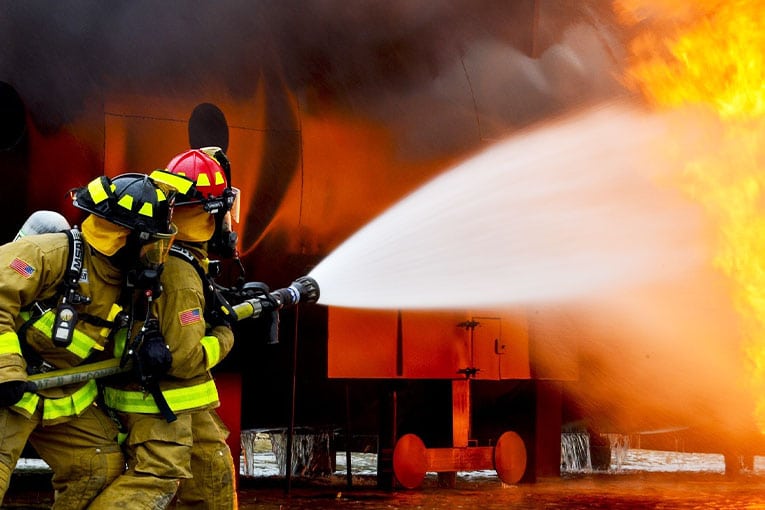
In a recent initiative, Reliance Jio has rolled out a fire safety and prevention campaign targeting improved safety across its network sites in Delhi NCR.
Educating and training for a safer environment
This endeavour, set to conclude by September 30, highlights Jio’s dedication to safety.
The campaign’s focal point is to enlighten its field teams and service provider partners about fire safety.
By fostering a culture grounded in safety awareness, the goal is to spread knowledge concerning fire safety and preventive steps.
Reliance Jio’s objective is clear: reducing fire-related incidents at its network sites, aiming for a flawless safety record.
Key elements of the campaign
Safety education, drills, improved infrastructure, engaging the community, liaising with authorities, and ensuring standards compliance form the campaign’s backbone.
Emphasis is laid on adhering to safety standards, like ensuring correct power connections and using personal protective equipment.
As the campaign kickstarted, both Jio staff and their service partners vowed their dedication to fire safety.
Additionally, the campaign features informative poster displays about top safety habits, coupled with engaging contests, reinforcing safety awareness and the importance of taking preventive actions.
Reliance Jio’s focus on fire safety and prevention reiterates its proactive stance on ensuring its stakeholders’ safety.
By instilling this safety-first mindset, Jio sets a precedent in fire safety within the telecommunications sector.
IFSJ Comment
Reliance Jio’s latest initiative is a commendable step forward in the realm of fire safety.
The telecom giant’s proactive stance serves as a shining example for other industries, emphasising the critical nature of safety practices.
By focusing on education, practical drills, and community involvement, the campaign presents a comprehensive approach to fire prevention.
In a bustling region like Delhi NCR, where urban infrastructure can pose significant fire hazards, such proactive measures can pave the way for safer urban environments.
It is encouraging to see major players like Jio setting high safety benchmarks, and we look forward to observing the positive ripple effects of this campaign across the industry.
Fire, in all its elemental splendour, has long been a double-edged sword in human history.
It’s been the beacon that guided our ancestors through dark nights and the hearth around which stories were spun.
Yet, it’s also been the beast that consumed entire cities and forests, leaving destruction in its fiery wake.
In recognising the duality of fire’s nature, we find ourselves face to face with the elemental truth: fire is a force to be reckoned with.
It’s this very duality that underscores the importance of understanding the role of fire safety in our lives.
While fire has been instrumental in shaping our progress and culture, it has equally posed threats to our safety, often when we least expect it.
In this delicate balance between harnessing fire’s potential and protecting ourselves from its destructive tendencies, we find the essence of Fire Prevention Week.
Fire Prevention Week stands as an annual reminder, a beacon of awareness that illuminates the path to safeguarding our homes, families, and communities from the perils of fire.
In the following pages, we’ll delve into the heart of this vital event, exploring its significance, tracing its historical roots, and uncovering why it’s a pivotal moment on the calendar for everyone.
So, let’s embark on this journey to unravel the essence of Fire Prevention Week and discover how it shapes our understanding of fire in the modern world.
What is Fire Prevention Week?
Fire Prevention Week is an annual event that brings together communities and organisations throughout the United States, rallying under the common banner of fire safety.
This crucial week serves as a powerful reminder of the paramount importance of fire prevention and preparedness in our lives.
Promoting fire safety helps the fire service
It’s a time when our collective focus sharpens, and we turn our attention towards understanding the hazards posed by fire and some of the most common causes of fire, and learning how to mitigate them.
Throughout the duration of Fire Prevention Week, an array of activities and educational programs are thoughtfully organised to enlighten people about the ever-present risks of fires and, most importantly, how to actively mitigate these risks.
It’s a concerted effort to ensure that individuals, families, and communities are equipped with the knowledge and tools necessary to protect themselves and their surroundings.
These activities and programs span a wide spectrum, catering to diverse audiences.
For instance, schools often incorporate fire safety lessons into their curricula, ensuring that young minds grasp the fundamentals of fire prevention early on.
Fire departments and local organisations host open houses, where the public is invited to explore fire stations, interact with firefighters, and witness live demonstrations that highlight fire safety techniques.
Furthermore, many local communities conduct fire drills and evacuation exercises, enabling residents to practice their response to potential fire emergencies.
These drills instil a sense of readiness and ensure that everyone knows how to react swiftly and effectively in the event of a fire.
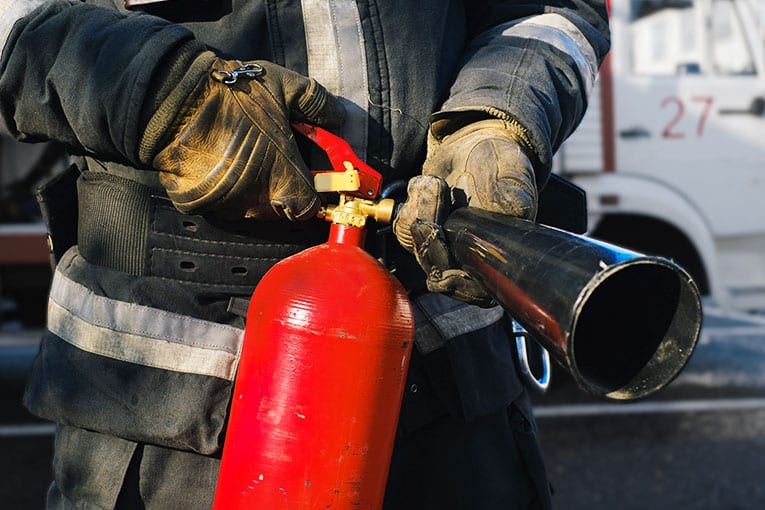
Additionally, fire safety workshops and seminars are commonly held, where experts share invaluable insights on fire prevention strategies, home fire safety, and the proper use of fire extinguishers.
The collective aim during Fire Prevention Week is to foster a culture of fire safety that transcends this specific week and becomes an integral part of our daily lives.
It’s about ingraining the knowledge of fire risks and safety measures into our consciousness, ensuring that fire safety is not just an annual event but a lifelong commitment.
By actively participating in the activities and programs offered during this week, individuals and communities stand better prepared to protect themselves against the devastating impact of fires.
When is Fire Prevention Week?
Fire Prevention Week is observed in the United States and Canada during the week in which October 9th falls.
October 9th holds historical significance as it commemorates the Great Chicago Fire of 1871, one of the most devastating fires in American history.
This tragic event serves as a stark reminder of the destructive power of fires and the need for fire prevention measures.
When is Fire Prevention Week 2023?
Fire Prevention Week is between October 8-14 in 2023.
Promoting fire prevention is in everyone’s best interest
What is the History of Fire Prevention Week?
The origins of Fire Prevention Week are deeply rooted in one of the most tragic and defining events in American history – The Great Chicago Fire of 1871.
This devastating fire, which ignited on the fateful night of October 8 and continued to rage into October 9, marked a turning point in the nation’s understanding of fire safety.
It consumed over 2,000 acres of land, leaving behind a trail of destruction that stretched as far as the eye could see.
The flames roared through the city, devouring everything in their path.
The devastation was not limited to property; it also claimed the lives of hundreds of people and displaced thousands more, rendering them homeless in its wake.
The aftermath of this catastrophic event left a profound impact on the collective consciousness of the nation.
It served as a stark reminder of the destructive force of fire and the imperative need for comprehensive fire prevention measures.
In the wake of this tragedy, the Fire Marshals Association of North America, an organisation that later evolved into the International Fire Marshals Association, took a decisive step to honour the memory of the Great Chicago Fire.
In 1920, they designated October 9 as National Fire Prevention Day, a solemn day to remember the fire’s victims and to reflect on the importance of fire safety.
However, recognizing that a single day of reflection and awareness was insufficient to address the magnitude of the fire safety challenge, the event was expanded.
In 1922, it was transformed into a week-long initiative, evolving into the enduring institution we now know as Fire Prevention Week.
This extension allowed for a more comprehensive approach to fire safety education and outreach, enabling communities to delve deeper into the complexities of fire prevention.
Fire Prevention Week, with its roots firmly embedded in the lessons of the Great Chicago Fire, has since become a poignant annual tribute to the resilience of communities in the face of disaster and a platform for educating generations on the vital importance of fire safety.
It stands as a testament to the enduring commitment to the evolution of fire safety that arose from the ashes of one of the nation’s most devastating fires.
What is the Theme of Fire Prevention Week 2023?
Each year, Fire Prevention Week has a specific theme that guides its educational efforts.
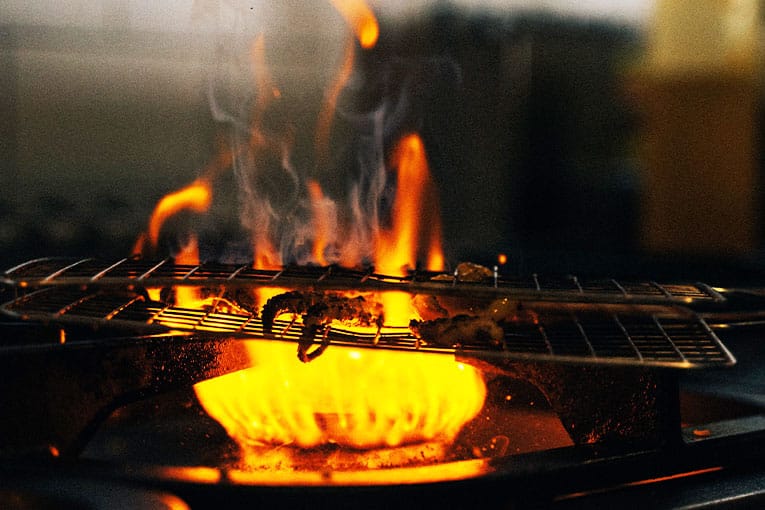
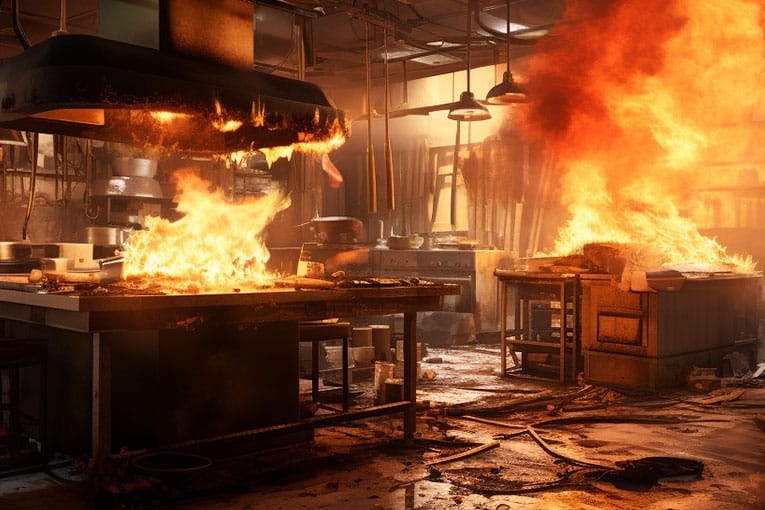
Fire Prevention week for 2023 promotes fire safety in the kitchen
This theme emphasises the importance of fire safety in the kitchen, one of the most common types of fire, where a significant number of fires originate.
It aims to educate people on how to prevent kitchen fires, what to do if one occurs, and how to keep their families safe.
What Were the Themes of Previous Fire Prevention Weeks?
Since its inception, Fire Prevention Week has tackled various fire safety topics, evolving to address contemporary concerns.
Here are some recent themes and their associated messages:
2022: “Fire Won’t Wait, Plan Your Escape”
Theme: Focused on the importance of having an escape plan and practicing it regularly.
Message: Encouraged people to be proactive in fire safety by planning and rehearsing escape routes from their homes. Fire doesn’t wait, and being prepared saves lives.
2021: “Learn the Sounds of Fire Safety”
Theme: Emphasised understanding the different sounds of smoke and carbon monoxide alarms.
Message: Educated people about the significance of smoke alarms and carbon monoxide detectors in early fire detection and prevention.
2020: “Serve Up Fire Safety in the Kitchen”
Theme: Centred on kitchen fire safety and the prevention of cooking-related fires.
Message: Highlighted the importance of safe cooking practices, including attention to stovetop and oven cooking to prevent kitchen fires.
2019: “Not Every Hero Wears a Cape. Plan and Practice Your Escape!”
Theme: Highlighted the importance of fire escape planning.
Message: Encouraged families and individuals to create and practice fire escape plans for their homes. Being prepared can make a life-saving difference in emergencies.
2018: “Look. Listen. Learn. Fire Can Happen Anywhere”
Theme: Focused on the importance of learning fire safety in various settings.
Message: Urged people to understand the basics of fire safety, whether at home, work, or in public spaces.
2017: “Every Second Counts. Plan Two Ways Out”
Theme: Emphasised the need for multiple escape routes in case of fire.
Message: Encouraged households to plan not just one but two ways to exit their homes during a fire. Seconds matter in emergencies.
2016: “Don’t Wait. Check the Date. Replace Smoke Alarms Every 10 Years”
Theme: Highlighted the importance of regularly maintaining and replacing smoke alarms.
Message: Informed people about the necessity of checking the age and condition of smoke alarms and replacing them every decade for reliable fire detection.
2015: “Hear the Beep Where You Sleep. Every Bedroom Needs a Working Smoke Alarm”
Theme: Advocated for smoke alarms in every bedroom.
Message: Promoted installing smoke alarms in all sleeping areas to ensure early warning and escape in case of fire.
2014: “Working Smoke Alarms Save Lives. Test Yours Every Month”
Theme: Focused on the life-saving role of smoke alarms.
Message: Encouraged monthly testing of smoke alarms to ensure they are functioning correctly.
2013: “Prevent Kitchen Fires”
Theme: Centred on kitchen fire prevention.
Message: Raised awareness about the common causes of kitchen fires and promoted safe cooking practices.
2012: “Have 2 Ways Out”
Theme: Stressed the importance of having multiple exit routes.
Message: Reminded people that having two ways out of every room is vital for swift evacuation during a fire.
2011: “Protect Your Family From Fire”
Theme: Focused on overall family fire safety.
Message: Encouraged households to take comprehensive measures to safeguard their loved ones from fire hazards.
2010: “Smoke Alarms: A Sound You Can Live With”
Theme: Emphasised the importance of smoke alarms.
Message: Highlighted the life-saving role of smoke alarms in providing early warning of fires.
These themes illustrate the evolving focus of Fire Prevention Week, aiming to address current fire safety challenges and educate the public on ways to prevent fires and protect lives.
Conclusion
Fire Prevention Week is important. It reminds us that fires are dangerous, both in the past and today.
It started because of the Great Chicago Fire, but it’s not just about that. Fires can hurt anyone, anywhere.
During this week, we learn about fire safety. We should use this knowledge to protect our homes.
This week’s actions should last all year. We need to stay safe from fires, always.
So, during Fire Prevention Week and always, remember to be safe from fires. Teach your family and community about fire safety.
Let’s keep our homes and loved ones safe from fires. Fire Prevention Week is more than just a week; it’s a promise to stay safe.
Fire, as a natural phenomenon, has been intertwined with human history for millennia.
It has served as a steadfast companion, offering warmth on cold nights, providing protection from predators, and allowing us to cook our food for sustenance.
The mastery of fire was one of the defining moments of human evolution, enabling our ancestors to forge tools, tame the wilderness, and build thriving civilizations.
However, fire’s dual nature must not be overlooked.
As much as it has been our friend, it can also be a formidable foe.
When fire becomes unbridled and uncontrollable, it can wreak havoc, causing devastating consequences to lives, homes, and natural landscapes.
The destructive power of wildfires, building fires, and industrial accidents reminds us of the need for vigilance and preparedness in the face of this primal force.
To navigate the complexities of fire and its potential dangers, understanding how many types of fire there are, as well the differences between them is of paramount importance.
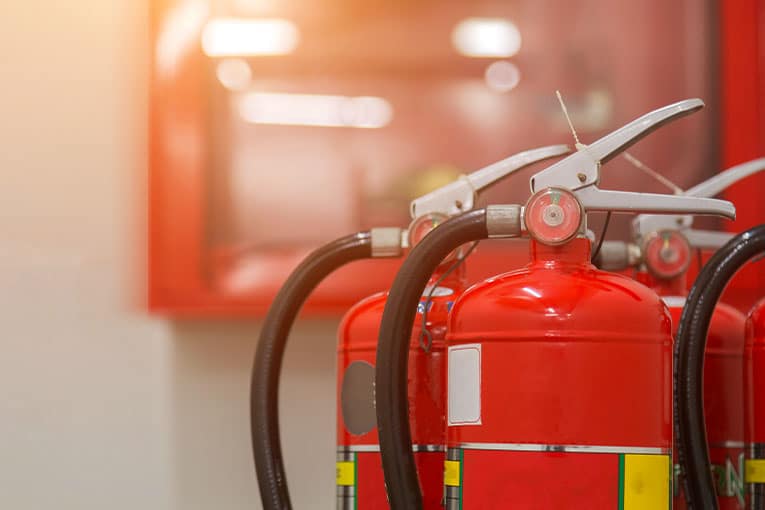
Knowing the right fire extinguisher for the right fire type is vital
Different types of fires arise from a diverse range of materials, each requiring an evolution of fire safety and a tailored approach for effective extinguishing.
From the common Class A fires involving ordinary combustible materials to the specialised challenges of Class D fires involving combustible metals, a comprehensive knowledge of fire classifications empowers us to respond confidently and responsibly to fire emergencies.
How Many Types of Fire Are There?
There are six main classes of fires, each involving different materials and posing unique challenges for firefighting:
1. Class A – Solids
2. Class B – Liquids
3. Class C – Gasses
4. Class D – Metals
5. Class F – Oils and Fats
6. Electrical Fires – These are not given their own class, as they can fall into any of the above categories, however due to the different requirements of electrical fires we will be covering them here.
What are Class A Fires?
Class A fires are the most common type of fire encountered in various settings, ranging from residential homes to commercial offices and public spaces.
These fires are characterised by their ignition of ordinary combustible materials, which are readily available in our everyday surroundings.
Understanding the nature of Class A fires and how to handle them is crucial for effective fire safety and prevention.
The fuel sources that feed Class A fires include materials such as wood, paper, cloth, cardboard, and common plastics.
These materials are typically found in abundance in residential and commercial spaces, making Class A fires a significant concern for fire safety.
How Do You Extinguish a Class A Fire?
The primary method for extinguishing Class A fires is to use water or water-based extinguishers.
Water is a versatile and readily available firefighting agent that cools down the burning material, reducing the heat and ultimately smothering the flames.
By removing the heat element of the fire triangle (heat, fuel, and oxygen), water effectively puts out the fire and prevents re-ignition.
When using water to extinguish Class A fires, it is essential to apply the water directly to the base of the flames.
This ensures that the water reaches the burning material and cools it down, preventing the fire from spreading further.
Class A fires are one of the most common types of fire
If possible, avoid spraying water directly onto electrical equipment or live electrical wires to prevent electric shock and potential electrocution hazards.
Another effective method to combat small Class A fires is by using fire blankets.
Fire blankets are made of fire-resistant materials and can be quickly deployed to smother flames.
They work by cutting off the oxygen supply to the fire, suffocating it and extinguishing the flames.
Fire blankets are particularly useful for smothering fires on clothing, curtains, or small household items.
What are Class B Fires?
Class B fires pose a unique set of challenges due to the involvement of flammable liquids such as gasoline, oil, grease, and alcohol.
These fires can occur in various settings, including kitchens, garages, workshops, industrial facilities, and places where flammable liquids are stored or used.
Understanding how to handle Class B fires is crucial for effective fire safety and prevention.
Flammable liquids are highly volatile and can ignite easily, making Class B fires more intense and difficult to control compared to Class A fires.
When a flammable liquid catches fire, it can quickly spread and produce intense flames, creating a dangerous and rapidly evolving situation.
Additionally, flammable liquid fires can re-ignite if not fully extinguished, making them particularly challenging to manage.
How Do You Extinguish a Class B Fire?
To effectively control and extinguish Class B fires, it is crucial to use the appropriate firefighting agent.
Water is generally not recommended for Class B fires as it can cause the flammable liquid to spread, potentially making the fire more dangerous.
Instead, foam-based extinguishers or dry chemical extinguishers are the preferred choices for combating Class B fires.
Foam-based extinguishers work by covering the flammable liquid with a layer of foam, creating a barrier that prevents the release of flammable vapours and cutting off the oxygen supply to the fire.
This smothers the flames and cools down the burning liquid, eventually extinguishing the fire.
Dry chemical extinguishers, on the other hand, are effective for Class B fires because they disrupt the chemical reaction of the fire.
These extinguishers release a fine powder that separates the fuel from the oxygen, extinguishing the flames.
They also work well on Class A fires, making them versatile and useful in various fire situations.
It is important to remember that when dealing with Class B fires, safety is paramount.
Before attempting to extinguish a fire, assess the situation and ensure you have an escape route in case the fire becomes uncontrollable.
If the fire continues to spread or becomes too intense, evacuate the area immediately and call the emergency services for professional assistance.
What are Class C Fires?
Class C fires involve flammable gases, which can create a hazardous and potentially explosive atmosphere.
These fires present unique challenges and require specific precautions to ensure safety and prevent accidents.
Class C fires pose a significant threat to locations like manufacturing and industrial warehouses, chemical plants, and facilities storing substantial quantities of flammable gases. These settings are particularly vulnerable to these types of fires.
Understanding the risks associated with flammable gases and implementing proper safety measures is crucial in managing Class C fires.
How Do You Extinguish a Class C Fire?
Extinguishing a Class C fire requires a methodical and cautious approach due to the volatile nature of flammable gases involved.
When facing such a fire, two crucial steps come into play: shutting off the gas supply and utilising a dry powder extinguisher.
The first and most crucial step is to quickly shut off the gas supply at its source.
This action prevents the continuous flow of fuel to the fire, thereby hindering its ability to grow and spread.
Cutting off the gas supply is paramount to prevent the fire from intensifying and posing a greater threat to individuals attempting to extinguish it and those nearby.
After successfully shutting off the gas supply, the use of a dry powder extinguisher is recommended for extinguishing the Class C fire.
Dry powder extinguishers are specifically designed to combat fires involving flammable gases effectively.
The dry powder agent works by smothering the flames, cutting off their oxygen supply, and interrupting the fire’s chemical chain reaction, which leads to its rapid extinguishment.
It is important to note that while dry powder extinguishers are effective for Class C fires, water-based extinguishers should never be used in this scenario.
Water-based extinguishers may cause the fire to spread or result in an explosion due to the reactive nature of certain flammable gases.
Additionally, individuals attempting to extinguish a Class C fire should prioritise their safety at all times.
If the fire is beyond their control or if they are unsure about the gas source, it is best to evacuate the area immediately and call for professional help.
The handling of Class C fires requires a level of expertise and knowledge to ensure the safety of both individuals and property
What are Class D Fires?
Class D fires present a unique and highly hazardous situation, involving combustible metals such as magnesium, titanium, potassium, sodium, and lithium.
These fires can be particularly dangerous due to the reactive properties of these metals, which make them prone to violent and rapid combustion when exposed to air or water.
The presence of combustible metals in specific industrial settings or laboratories increases the risk of Class D fires, and proper precautions must be taken to handle and store these materials safely.
One of the critical challenges in dealing with Class D fires is the limited effectiveness of conventional firefighting methods.
Water, commonly used to extinguish other types of fires, can exacerbate Class D fires.
When water comes into contact with burning combustible metals, it reacts vigorously, releasing hydrogen gas, intensifying the fire, and causing potential explosions.
How Do You Extinguish a Class D Fire?
To extinguish Class D fires safely and effectively, specialised dry powder extinguishing agents must be used.
These agents, typically made of sodium chloride or graphite-based compounds, form a smothering layer over the burning metal, cutting off the supply of oxygen and heat.
This action disrupts the combustion process and gradually cools the metal, leading to the fire’s suppression.
Due to the specialised nature of Class D fires and the need for specific extinguishing agents, it is essential to have personnel trained in handling such emergencies.
Firefighters and other responders must be equipped with the appropriate dry powder extinguishers and knowledgeable about the risks and characteristics of combustible metal fires.
These fires can be unpredictable and require careful planning and coordinated efforts to control and eliminate them safely.
What are Class F Fires?
Class F fires, also known as cooking oil fires or fat fires, are a specific type of fire that commonly occurs in commercial kitchens, restaurants, and other food preparation areas.
These fires involve cooking oils and fats and can quickly escalate into intense and challenging situations to control.
The high temperatures used in cooking, especially deep frying, can cause cooking oils and fats to reach their autoignition point, leading to spontaneous combustion.
Once ignited, the flames can rapidly spread and generate intense heat, posing a severe threat to kitchen staff, customers, and the entire building.
Class F fires can be incredibly dangerous due to the oil involved
One of the primary reasons Class F fires are so dangerous is that water, a common extinguishing agent used for other types of fires, is ineffective and dangerous when applied to cooking oil fires.
When water comes into contact with hot oil, it instantly vaporises and expands, splattering the burning oil and spreading the fire further.
This reaction can cause severe burns and injuries to anyone nearby.
The most effective method to extinguish Class F fires is to smother the flames with a fire blanket or use a wet chemical extinguisher specifically designed for cooking oil fires.
Wet chemical extinguishers contain a special solution that creates a thick, soapy foam, which cools the burning oil, forms a barrier, and prevents the release of flammable vapours.
This action starves the fire of oxygen, extinguishing it safely and effectively.
Preventing Class F fires involves implementing several safety measures in commercial kitchens and food preparation areas.
Regular cleaning and maintenance of cooking equipment, ventilation systems, and hoods help reduce the buildup of grease and oil residues that could fuel a fire.
Additionally, kitchen staff should be properly trained in fire safety, including the proper use of fire extinguishers and the importance of using fire blankets when dealing with cooking oil fires.
Commercial kitchens should have well-maintained fire suppression systems, such as automatic fire suppression systems installed in hoods above cooking areas.
These systems can quickly detect and suppress cooking oil fires, minimising the risk of fire spreading to other parts of the kitchen.
What are Electrical Fires?
Electrical fires are a prevalent and concerning type of fire that poses a significant risk in modern life.
Unlike other classes of fire (Class A, B, C, etc.), electrical fires are not categorised under a specific class.
Instead, they are a distinct category of fires caused by electrical faults and malfunctions.
These fires can result from various factors, such as faulty wiring, overloaded circuits, damaged appliances, or improper use of electrical equipment.
Over time, electrical wires can deteriorate, become frayed, or develop loose connections. These issues create resistance and generate heat, which can ignite nearby combustible materials.
Similarly, overloaded circuits, often caused by plugging too many electrical devices into a single outlet or circuit, can lead to overheating and ultimately trigger an electrical fire.
Another common cause of electrical fires is damaged appliances and electrical equipment.
Ageing or poorly maintained appliances can develop electrical faults, leading to short circuits and fires.
Electrical fires can also be triggered by the misuse of electrical equipment, such as using extension cords or power strips inappropriately or using appliances with damaged cords or plugs.
How Do You Extinguish an Electrical Fire?
In the event of an electrical fire, using water to extinguish the flames is extremely dangerous due to the risk of electrical shock.
Instead, it is best to de-energize the electrical source by shutting off power at the circuit breaker or main electrical panel, if safe to do so.
For smaller electrical fires, a Class C fire extinguisher or a dry powder extinguisher can be used.
However, it is essential to prioritise personal safety and evacuate the area if the fire becomes uncontrollable.
To prevent electrical fires, regular electrical inspections and maintenance are essential.
Homeowners and businesses should have their electrical systems inspected by qualified electricians to identify and address any potential issues.
It is crucial to avoid overloading circuits, use proper wattage bulbs in light fixtures, and refrain from using damaged electrical equipment.
Conclusion
Understanding how many types of fire there are, and the appropriate methods to extinguish them is vital for everyone’s safety.
In case of an emergency, knowing how to act quickly and effectively can make a significant difference in protecting lives and property.
Fire safety training, having the right fire extinguishers, and staying informed about potential hazards are all crucial steps towards ensuring a safer environment for ourselves and those around us.
With the current shift to electric cars, and the rise in the usage of lithium-ion batteries, it is now more important than ever to understand the difference in fire types and how to safely deal with them, with lithium-ion battery fires costing the UK £158 million a year alone.
Let us all be proactive in fire prevention and response to mitigate the risks of fire-related incidents and create a safer world for everyone.
Updates on the Building Safety Act implementation: what fire safety professionals should know
Fire safety professionals are gearing up to attend two webinars set for 5 and 6 September 2023.
The purpose of these sessions is to offer insights on the ongoing Building Safety Act implementation programme and introduce professionals to impending changes.
Earlier in 2023, the Government rolled out the Higher-Risk Buildings Regulations.
These regulations necessitate that the Principal Accountable Person register high-risk buildings with the Building Safety Regulator (BSR) by 1 October 2023.
Industry progress and registration insights from Dame Judith Hackitt
As the mentioned deadline draws closer, Dame Judith Hackitt has been slated to speak at FireDNA’s webinars titled “All buildings, all builders – an essential guide to the widespread impacts of the new building safety regime”.
Hackitt will provide her perspective on the strides made by the industry and give an update on the volume of buildings registered with the BSR thus far.
Tony Millen, from FireDNA, voiced: “These webinars will highlight the importance of everyone in the supply chain taking responsibility for their role in contributing to, maintaining and managing building safety information.
“Everyone in the industry has a key role to play in making buildings safer.”
On 5 September, Dame Judith Hackitt will collaborate with architects Buckley Gray Yeoman and Ballymore Asset Management Ltd.
The conversation will revolve around the Building Safety Act’s ripple effects through the supply chain, predicted changes in the ensuing 18 months, and adjustments to ongoing projects to align with the new laws.
Construction products and competency in focus for fire safety webinar
The session on 6 September will pivot towards the nitty-gritty of construction products and the proficiency of individuals handling life safety products.
Notable industry figures, including Hanna Clarke of the Construction Products Association (CPA), Iain McIlwee of The Finishes and Interiors Sector (FIS), and others, will delve into the intricacies of ensuring product information is precise and consistently transferred from its origin to its eventual use in buildings.
Furthermore, discussions will shed light on third-party certification and the challenges faced by organisations in assimilating the Building Safety Act.
These webinars are being presented by FireDNA in collaboration with the NBS, FIS, and GAI.
For those interested in participating, details and registration options are available at the FireDNA website.
IFSJ Comment
The introduction and subsequent implementation of the Building Safety Act will invariably alter the landscape of fire safety.
With renowned experts offering their insights and expertise in these webinars, professionals across the board can gain a deeper understanding of the impending changes and their broader implications.
Equipped with this knowledge, the industry can move forward in unison, ensuring that the overarching goal of building safety remains a top priority.
House burn broadcasted live on TV reaches 700,000, emphasising the rapidity and peril of fire
In a recent collaboration, Fire and Emergency joined forces with TVNZ’s Seven Sharp to visually underscore the alarming pace at which a fire can devastate a home.
The broadcast, aired on Tuesday 15 August, took place in a derelict house situated in Levin.
The main objective: to illustrate how quickly a house fire can escalate to a fatal degree.
Highlighting house burn dangers and preventive measures
The live demonstration was not only to raise awareness but to accentuate the necessity of equipping homes with functioning smoke alarms and the formulation of a coherent 3-Step Escape Plan.
Peter Gallagher, the National Risk Reduction and Investigations Manager, shed light on the evening’s proceedings.
He emphasised key takeaways, including:
Lithium-ion batteries as potential fire-starters: Ensuring safe usage involves choosing the correct charger for the designated device and avoiding charging on or under fabrics such as blankets.
The vital role of smoke alarms: Placement in every bedroom, hallway, and main living areas is essential. Interlinked alarms provide the earliest possible warning.
The imperative of a 3-Step Escape Plan: Everyone should be well-versed in first and second exits, along with a predetermined safe assembly point.
A stark reality: House fires can become fatal in under three minutes. Given the improbability of fire service intervention within that timeframe, preparation via alarms and an escape strategy is paramount.
House burn event an educational tool for community engagement
Beyond the television audience, Fire and Emergency’s Community Readiness and Recovery team worked closely with local educational institutions.
School students were invited to view the fire, integrating it into their “Get Firewise” curriculum, fostering an understanding of smoke alarms’ significance and the urgency to evacuate during fire or smoke detection.
This televised initiative is the third of its kind, with previous broadcasts proving instrumental in amplifying Fire and Emergency’s pivotal fire safety guidelines.
Notably, these broadcasts have spurred viewers into action, ensuring they’re better equipped for potential house fires.
It’s worth noting that the property chosen for this demonstration was already designated for demolition and generously contributed to Fire and Emergency for the purpose of this live demonstration.
For a deeper dive into home fire safety and guidance on creating a 3-Step Escape Plan, interested readers can explore escapemyhouse.co.nz.
IFSJ Comment
By vividly portraying fire’s rapid and destructive nature, this live event underscores our mission of fire safety education.
It serves as a powerful reminder for everyone to stay prepared and informed.
Lessons from the Dagestan Tragedy: Understanding the Catastrophic Fire in Makhachkala
The recent fire at a petrol station in Dagestan has sent shockwaves across the globe, resulting in the tragic loss of 30 lives, including three children.
It further left 105 individuals injured, shining a light on the grave implications of safety lapses in petrol station operations.
The inferno began at a car repair shop in the Dagestani capital, Makhachkala.
Emergency services worked relentlessly to combat the flames that threatened to engulf the entire station.
Swift Spread: How an Adjacent Fire Became a Petrol Station Inferno
The proximity of the car repair shop to the petrol station allowed the flames to rapidly transition from one building to the next, leading to a series of explosions.
As images and videos of the incident flooded the internet, it became evident that the situation was dire.
The fire engulfed an area of 600 square meters within a short span of 3.5 hours.
Emergency Response: A Race Against Time
Emergency services displayed commendable bravery, working in tandem to subdue the fire.
They were faced with a colossal task, as the fire’s intensity was fueled by the petrol station’s resources.
Implications for Fire Safety in Petrol Station Design and Operations
The catastrophic event in Dagestan underscores the pressing need to evaluate and enhance fire safety protocols at petrol stations worldwide.
A closer look into the situation reveals several possible areas of improvement.
Distance from Other Establishments
The fire’s rapid spread from the adjacent auto repair shop to the petrol station highlights the danger of close proximity between fueling stations and potential fire hazards.
Petrol stations should ideally maintain a buffer zone or safe distance from establishments or operations that might be prone to fires, such as auto repair shops, restaurants, and any facilities using open flames or combustible materials.
Advanced Fire Suppression Systems
Petrol stations, due to their inherent risk of being fire-prone zones, need state-of-the-art fire suppression systems. This includes:
Automatic Fire Extinguishing Systems: Systems that can detect and suppress fires without human intervention, reducing response times dramatically.
Foam Fire Suppressants: Specially designed foam that can rapidly suffocate fuel fires, preventing their spread.
Water Mist Systems: These use less water but are highly effective, especially in cooling down high-temperature fires.
Safety Design Infrastructure
The design and infrastructure of petrol stations should prioritize safety:
Fuel Dispenser Placement: Ensure fuel dispensers are spaced adequately apart to prevent a fire from spreading rapidly.
Non-combustible Materials: Building with fire-resistant materials can provide critical additional minutes during a fire incident.
Fire-Resistant Barriers: Install barriers that can prevent or slow down the spread of fire to critical areas.
Regular Drills and Training
It’s not enough to have state-of-the-art equipment if the staff isn’t trained to use them or respond to emergencies. Regular training programs and emergency evacuation drills should be mandated.
Emergency Evacuation Plans: Clear, easy-to-follow evacuation procedures should be displayed prominently.
First-Aid and Emergency Medical Training: Given the nature of potential injuries at a petrol station, staff should be trained in providing first-aid, especially for burn-related injuries.
Continuous Monitoring & Inspections
Regular inspections by local fire departments or safety agencies can identify potential risks and ensure that all safety equipment is operational.
CCTV Surveillance: Cameras can help in monitoring for any irregularities and are crucial for post-incident investigations.
Regular Safety Audits: These audits can identify vulnerabilities and ensure that all fire safety protocols are up-to-date and in compliance with the latest industry standards.
Public Awareness and Safety Information
Public awareness can play a significant role in preventing accidents. Clearly marked zones, hazard warnings, and information on what the public should do in case of emergencies can be life-saving.
By addressing these critical areas, it is possible to significantly reduce the risk of fires at petrol stations and ensure a swift and effective response when they do occur.
Moving Forward: Lessons for the Fire Industry
The Dagestan petrol station fire, with its devastating consequences, offers a clarion call for industry stakeholders to elevate fire safety protocols and preparedness globally. For the fire industry, this tragic event becomes an invaluable case study in understanding risks, refining procedures, and championing proactive safety measures.
Collaborative Learning
Fires, unfortunately, provide real-world data that, when analyzed correctly, can lead to better safety protocols.
Industry stakeholders, from equipment manufacturers to emergency response teams, should collaborate, sharing insights and best practices to ensure maximum preparedness in the future.
Innovative Firefighting Solutions
The rapid spread of the Dagestan fire underscores the need for innovative firefighting tools and techniques, particularly for high-risk zones like petrol stations.
Drone Surveillance: Drones equipped with infrared cameras can provide real-time heat mapping, helping firefighters target the most intense fire zones.
Remote Firefighting Robots: Robots can be sent into danger zones, dispensing foam or water, especially in environments deemed too risky for human firefighters.
Refined Training Simulations
While training drills are essential, there’s a growing need for hyper-realistic simulations, leveraging virtual reality (VR) or augmented reality (AR).
These can immerse trainees in lifelike emergency scenarios, enhancing their decision-making skills under pressure.
Community Engagement
Educating the public on recognizing potential fire hazards and knowing how to respond can make a significant difference in emergency situations.
Community Fire Safety Workshops: Regular workshops can provide hands-on training for community members, from using a fire extinguisher to basic first-aid.
School Engagements: Incorporating fire safety into school curriculums ensures that from a young age, individuals are equipped with knowledge that can be lifesaving.
Regulatory Revisions
Governments and industry regulators must periodically review and update fire safety standards, especially in light of significant incidents.
Such reviews can pinpoint outdated practices, paving the way for the introduction of contemporary, more effective protocols.
Post-Incident Analysis and Reporting
A thorough post-mortem analysis of major fire incidents, like the one in Dagestan, can provide invaluable insights.
Transparent and detailed reporting can help in identifying both lapses and best practices, guiding future fire prevention and response strategies.
In the aftermath of the Dagestan tragedy, it is crucial for industry professionals to engage, learn, and innovate, ensuring that such an incident serves as a turning point for enhanced fire safety measures globally.
Legislation to retrofit public housing buildings with sprinkler systems
U.S. Senators Tina Smith and Amy Klobuchar have reintroduced legislation to help install sprinkler systems in older public housing buildings, aiming to increase safety and save lives.
A detailed outline of the proposed legislation can be found here.
Companion legislation has been introduced in the House by US Representatives Bonnie Watson Coleman and John Rutherford, with support from Representative Ilhan Omar.
The Public Housing Fire Safety Act is a response to the tragic Cedar High Apartments fire in Minneapolis, Minnesota, in 2019.
The upper floors of the building where the fire erupted did not have sprinkler systems installed.
Key quotes from the officials on public housing fire safety
Senator Klobuchar stated: “In the wake of the tragic 2019 Cedar High Apartments Fire, I joined Senator Smith in introducing legislation to ensure that buildings have properly installed fire and sprinkler systems.
“Every second counts during a house fire, and with up-to-date systems, more lives can be saved.
“We need to continue these efforts by passing the Public Housing Fire Safety Act to bring us one step closer towards ensuring that buildings are safe for all residents.”
Senator Smith remarked: “The fire at Cedar High Apartments was a tragic loss for the Cedar-Riverside community.
“In the aftermath of the tragedy, I began connecting with people closely affected by the fire and looking into ways to prevent it from happening again.
“This bill gets to the root of what we need to do: incentivise public housing authorities to install sprinkler systems and give them the support they need to do it.”
Bill Webb, Executive Director of the Congressional Fire Services Institute, noted the importance of investment in retrofitting with fire sprinkler systems for public housing safety.
Trinidad Uribe, President of the USA Sprinkler Fitters Association, called the Public Housing Fire Safety Act a “crucial and necessary solution to improving the safety of public housing facilities and protecting the lives of tenants across the country.”
Details of the Public Housing Fire Safety Act and historical context
The Federal Fire Safety Act of 1992 mandated the installation of sprinklers in all newly constructed government-owned high-rise buildings.
However, thousands of public housing apartment buildings around the country were built before that date, leaving them without mandatory sprinkler systems.
Nearly all of the high-rise public housing buildings in Minneapolis were constructed prior to these regulations.
The Public Housing Fire Safety Act would create an annual $25 million competitive grant programme to provide funds to public housing authorities wishing to retrofit older high-rise apartment buildings with sprinkler systems.
Senators Smith and Klobuchar have previously secured $2 million in funding for the Minneapolis Public Housing Authority to install fire sprinklers in outdated public housing, reflecting a long-standing commitment to safety in public housing.
IFSJ Comment
The reintroduction of legislation aimed at improving fire safety measures in public housing reflects a timely response to the ongoing challenge of keeping residents safe.
By focusing on retrofitting older buildings with sprinkler systems, the Public Housing Fire Safety Act has the potential to significantly reduce the risk of tragic incidents like the Cedar High Apartments fire in 2019.
We will continue to monitor the development of this legislation and its potential impact on public housing across the country.
A recent tragic incident in France underscores the urgent need to review and improve fire safety measures for disabled people, especially in holiday accommodations.
As reported by both the BBC and The Guardian, a fire in a holiday home for disabled people resulted in the death of at least 9 individuals, with others feared dead.
This devastating event raises essential questions about fire safety provisions in holiday accommodations.
Tragedy in Wintzenheim: A Quick Overview
On August 9, 2023, a holiday home in Wintzenheim, France, caught fire early in the morning. Hosting two groups of adults with learning disabilities, the private gîte—a converted barn—became the scene of an unthinkable tragedy. Despite the quick response and courageous efforts of the firefighters, many lives were lost.
Key Factors Contributing to the Tragedy
1. The Building’s Structure
The holiday home was a converted barn, and two-thirds of it was ablaze before firefighters could bring it under control.
The structure, especially the upper floors, became unstable, making rescue efforts challenging.
2. Accessibility of Exits
According to reports, those on the ground floor were able to escape quickly, but not everyone on the first floor could reach the exits.
This highlights the need for accessible evacuation routes, especially for those with disabilities.
3. Early Morning Outbreak
The fire broke out at about 6.30am local time, possibly when many guests were still asleep, which could have delayed response times.
Ensuring Fire Safety in Holiday Accommodations
1. Building Regulations and Compliance
Adapting Existing Structures: Buildings like converted barns should meet strict safety standards, including materials that resist rapid fire spread.
Regular Inspections: Authorities must conduct regular inspections to ensure adherence to fire safety codes.
2. Evacuation Plans and Accessibility
Accessible Exits: Accommodations must have accessible exits for all guests, including those with disabilities.
Evacuation Drills: Regular evacuation drills should be conducted to familiarize guests and staff with emergency procedures.
3. Fire Detection and Alarm Systems
Efficient Alarm Systems: Fire detection and alarm systems should be designed to alert all occupants, including those with hearing or visual impairments.
Regular Maintenance: Regular testing and maintenance of these systems is crucial to ensure they function when needed.
4. Staff Training and Guest Education
Training for Staff: Staff should be trained in assisting guests with disabilities during emergencies.
Information for Guests: Guests should be informed about emergency procedures, including accessible escape routes.
Conclusion: A Wake-up Call
The tragic incident in Wintzenheim serves as a somber reminder that there is much work to be done to ensure fire safety for disabled individuals in holiday accommodations.
Implementing rigorous building regulations, ensuring accessible evacuation routes, investing in efficient alarm systems, and educating both staff and guests can significantly mitigate the risk of such a tragedy reoccurring.
The collective responsibility to protect the most vulnerable among us should prompt immediate and comprehensive action.
Fire Brigades Union calls for meeting with Home Secretary over Bibby Stockholm fire safety
The Fire Brigades Union has issued a formal letter to Home Secretary Suella Braverman, voicing their worries about fire safety provisions on asylum seeker accommodations, with specific focus on the Bibby Stockholm.
This vessel, currently anchored in Portland, Dorset, is expected to serve as housing for asylum seekers. Here is the full letter for those interested.
Firefighters anticipate potential hazards in Bibby Stockholm accommodation
In an unfortunate event of a fire onboard the Bibby Stockholm, it would be the firefighters responding.
The Union has highlighted its concerns regarding potentially limited entry and exit points, narrow corridors and doorways, and an increased number of residents.
The barge, initially designed to accommodate 222 individuals, is now anticipated to house over 500.
The Union has previously expressed its disapproval towards the government’s intention to exempt asylum seeker accommodation from the requirement of obtaining an HMO licence.
This licensing process enables Local Authorities to verify that sufficient safety measures and equipment are operational.
Assistant General Secretary Ben Selby stated: “The Fire Brigades Union represents the overwhelming majority of firefighters and emergency control staff across the UK, and it they who will be forced to deal with the consequences of any fire on board the Bibby Stockholm.
“As firefighters, we are driven by the need to prevent loss of life and protect public safety.”
“Everyone has the right to live in safe and decent housing, no matter where they are from,” Selby continued. “The government has already scrapped vital fire safety measures for asylum seeker accommodation.
!Now, it wants to put more than 500 people onto an off-shore barge designed to hold around 200. This is a cruel and reckless approach to the welfare of asylum seekers, and puts the safety of firefighters at risk.”
The complete letter to the Home Secretary from the Union, reflecting these concerns, is available to view here.
IFSJ Comment
The issues raised by the Fire Brigades Union surrounding the Bibby Stockholm underline the importance of adhering to fire safety regulations, especially in accommodation housing a large number of people.
It highlights the critical role of fire safety measures in preventing possible tragedies and ensuring public safety.
The significance of the Home Ignition Zone in reducing wildfire risks
A detailed analysis from the National Fire Protection Association (NFPA) emphasises the pivotal role a five-foot zone around one’s home plays in enhancing safety from wildfires.
The association, noted for its efforts in raising awareness about reducing homes’ wildfire risks, recently revisited the concept of the home ignition zone and its immediate area.
Origins of the Home Ignition Zone and its primary components
The Home Ignition Zone (HIZ) is an idea pioneered by retired USFS researcher Dr. Jack Cohen.
The theory focuses on the premise that the condition of a home, including the materials it’s built from and its maintenance state, as well as the vegetation within a hundred feet, greatly affects its potential to catch fire during a wildfire.
The combined research by Dr. Cohen and the Insurance Institute for Business & Home Safety (IBHS) underpins that the immediate zone or non-combustible zone – the home and its surroundings up to five feet – is the most significant risk factor and should therefore be the starting point in mitigating risks.
The importance of a five-foot buffer in wildfire safety
Embers and small surface flames are the primary causes of home ignition during wildfires.
To prevent these, a five-foot buffer is created around the home to ensure embers or surface fires cannot reach it. This involves:
Clearing debris such as leaves, needles, and branches from roofs and gutters.
Ensuring the immediate five feet around the base of homes and attached structures, like decks, is devoid of any debris and well-maintained.
Substituting wooden mulch products with non-combustible alternatives like crushed stone or gravel.
Constructing walkways using non-combustible materials like concrete or pavers.
Pruning trees and shrubs next to the home to prevent them from overhanging the roof, gutters, or chimneys.
For additional tips and resources on preparing homes for wildfires, visit the NFPA’s dedicated page.
A small investment in time spent on such preventive measures can significantly improve a home’s chances of withstanding a wildfire, and provide greater peace of mind.
IFSJ Comment
The exploration of the Home Ignition Zone concept and its correlation with wildfire safety highlights a key preventive measure homeowners can adopt.
By focusing on the immediate surroundings of their homes, residents can drastically reduce wildfire risk, reinforcing community safety and resilience against such disasters.
About NFPA
The National Fire Protection Association (NFPA) is a global, non-profit organisation devoted to eliminating death, injury, property, and economic loss due to fire, electrical and related hazards.
NFPA provides a wealth of resources to better educate residents about reducing the risk of wildfires to their homes.
Their commitment to research, training, and providing necessary resources reflects their mission to enhance public safety.