The Fire Brigades Union (FBU) has raised widespread concerns that the imposed changes to working hours will make the job too costly for those with childcare or caring responsibilities. They have acknowledged how these decisions will take a toll on the mental health of a workforce already under pressure.
At a Scrutiny Committee meeting, Councillor Dave Norman confirmed that the county council will move ahead with changing firefighters’ shifts from nine hour days and 15 hour nights, to 11 hour days and 13 hour nights for wholetime community fire stations.
This decision has been made regardless of the Scrutiny Committee raising the need for a consultation process involving firefighters, after councillors received a number of letters and emails opposing the change.
Alongside written complaints, 25 firefighters attended the public meeting in opposition to these changes. In the wake of this, the FBU warn that firefighters have extended a warning to Gloucestershire County Council that they will be fighting the decision.
Kate Yhnell, Fire Brigades Union, Brigade Organiser’s statement
Fire Brigades Union, Brigade Organiser for Gloucestershire, Kate Yhnell said of the issue that: “No firefighter should be put in a position where it is cheaper for them to quit because of the cost of childcare around unworkable shifts.
“Gloucestershire Fire and Rescue offers the worst maternity provision in the country. Instead of improving support for women in the workplace, it is now punishing parents and carers with this unnecessary and damaging policy. “
Dave Roberts, Fire Brigades Union, Regional Secretary for the South West’s statement
Dave Roberts, Fire Brigades Union Regional Secretary for the South West said of the decision that: “Firefighters are dedicated to protecting our communities, and work extremely hard under immense pressure to save lives and homes.
Gloucestershire County Council has chosen to insult the frontline by refusing to listen to any of the serious issues raised around changes to working hours. This will only have a detrimental effect on the working lives of firefighters in the region, and the service as a whole. “
“We will do everything in our power to reverse this nonsensical decision.”
Ben Selby, Fire Brigades Union, Assistant General Secretaries statement
The Fire Brigades Union, Assistant General Secretary, Ben Selby discussed how this decision will impact female members of staff, saying: “Gloucestershire fire and rescue service cannot claim to be supporting or recruiting women firefighters while implementing shifts that increase financial pressures on those with caring responsibilities.”
Impact of Gloucestershire’s change to working hours will be damaging say The Fire Brigades Union: Summary
The Fire Brigades Union have spoken out about changes to the shift patterns of firefighters under the Gloucestershire County Council, calling them damaging and nonsensical.
By accidentally combining common household cleaners, Londoners are putting themselves at risk as they create dangerous chemical cocktails. The London Fire Brigade (LFB) has highlighted how the combination of common cleaning products can trigger a chemical reaction and unleash dangerous fumes.
Since 2023, the LFB has responded to over 150 incidents involving cleaning chemicals that have triggered a dangerous reaction. Chemical incidents require the Brigade to deploy specially trained and equipped officers to identify and deal with these dangerous combinations.
A chemical incident will trigger a larger response from the LFB, this is due to the need to send specialist hazardous material crews to the scene, alongside responding firefighters. These specialist crews are trained to identity the chemicals and the risk they pose.
The Fire Brigade’s Group Commander, Matt Hayward’s statement
The Fire Brigade’s Group Commander Matt Hayward, is warning Londoners to always read the labels and instructions on your cleaning products. He said: “Always follow the instructions on the container to ensure you are using your cleaning products safely. People often think that cleaning products will be twice as effective when mixed, but it can be a recipe for disaster.”
“If you do accidentally mix chemicals and start to feel unwell, make sure you leave your property immediately and stay out whilst you call 999 for assistance. We have crews that are trained and equipped to deal with these incidents, so we are ready to help if required.”
Santosh’s story
In one incident highlighted by the LFB, Santosh Karma, an IT worker in Canary Wharf, was exposed to dangerous gases after mixing two common cleaning products. This caused a dangerous chemical reaction at his house in Plumstead, leading to the ambulance and LFB being called to the scene.
Santosh recalled: “I poured bleach into the wash basin, toilet and the bath. I then used a drain cleaner. The mixture then started to produce gases and as I continued cleaning the bathroom I began to have trouble breathing and started coughing. I opened the small bathroom window, but it didn’t help.
“After a few minutes I was struggling to breathe. I went to my bedroom, opened the window and hung out to breathe in fresh air. It was scary not being able to breathe properly and it felt like it was having a serious impact on my health.
“When the ambulance crew arrived, there were firefighters in breathing apparatus too. I was surprised to see London Fire Brigade at our house, but the ambulance crews had called them.
Santosh also commented on how important the firefighters presence where during the incident and what they did to ensure his home was a same environment again. He remembered how: “The firefighters checked the air quality in our house to make sure it was all ok for everyone to return inside. The ambulance crew took me to hospital for checks. I did some blood tests and fortunately everything was ok. “
The impact of chemical cocktails created by cleaning products on Londoners safety: Summary
The Fire Brigade have discussed what they recognise to be an increased number of Londoners creating dangerous chemical cocktails through using a variety of common cleaning products.
“Firefighters are being pushed beyond limits to keep the public safe,” says Fire Brigades Union.
Data obtained by Accident Claims Advice (ACA) via Freedom of Information Request to UK Fire Services has found that work-related stress, anxiety, depression, and PTSD were the most common conditions cited for staff mental health absences in the last three years.
Out of thirty four Fire and Rescue Services that responded to the request in full before the deadline, thirty people reported a rise in staff absences due to mental health.
Cost of the mental health crisis
What’s more, the estimated total cost of all sickness absences (including for mental health) since 2021 is £84m at London Fire Brigade alone – so is likely to be well in excess of £100m for the UK’s fire services as whole.
Between 2021 and 2024 more than 24,000 UK Fire Service staff took at least one day off work due to mental health, with the figure rising year on year.
In 2021/22, 7,359 staff absences were recorded, rising to 8,300 the following year.
The figure has now reached a three-year-high with 10,338 UK fire staff mental health absences recorded – a rise of 40% compared with 2021/22.
The London Fire Brigade estimates that the total cost of all sickness absences to the service amounted to £25,693,253.88 between 2021/22 rising to £28,697,037.01 and is now at a three-year-high with the estimated cost to the service standing at £29,552,381.75 for 2023/24.
Fire Brigades Union General Secretaries statement
The Fire Brigades Union General Secretary, Matt Wrack, told ACA: “We are facing a mental health crisis in the fire and rescue service. Since attending traumatic incidents is an unavoidable part of the job for firefighters, mental health support is vital.
“After a decade of cuts and to address this crisis, we need central government to provide the investment needed to rebuild the service.”
Nationwide impact
Across the UK, the biggest increase in staff mental health sickness absences was recorded at Cumbria Fire and Rescue which saw a 75 per cent rise between 2021 and 2024. It is followed by Surrey Fire and Rescue which saw an increase of 68 per cent and Royal Berkshire, where staff mental health absences rose by 67 per cent in the last three years.
The highest number of mental health staff absences was at London Fire Brigade, where a total of 1,129 have been logged in the last three years.
UK Fire & Rescue discuss impact of mental health crisis: Summary
The Fire Brigades Union have spoken out about increased amount of firefighters who are struggling with their mental health.
General Secretary for the FBU, Mark Wrack, highlighted why firefighters might be struggling. Noting attending traumatic incidents and decades of cuts to the service as being impacting factors.
A team of five firefighters is the safe operational standard; three firefighters arriving at an incident are unable to operate breathing apparatus, or to respond to high-risk incidents.
On-call firefighters will continue to attend automatic fire alarms, which have the potential to be life threatening.
One hundred and thirty Staffordshire firefighters signed a letter in opposition to the reduction in crew size, citing concerns that teams of three do not have the capacity to safety respond to high-risk incidents.
Fire Brigades Union Brigade Secretaries statement
Martin Starkey, Fire Brigades Union Brigade Secretary for Staffordshire said: “A crew of three firefighters is fundamentally incapable of safely responding to high-risk incidents upon arrival.
“The public consultation cited to support this reckless policy was deeply flawed, with only 1,500 respondents answering a question deliberately framed to elicit a specific answer. Such a low level of participation cannot be taken as evidence of any meaningful support for this dangerous approach.”
Fire Brigades Union General Secretaries statement
Matt Wrack, Fire Brigades Union general secretary said: “Firefighters should never be put in the terrible position of waiting at an incident for back-up, unable to take action safely because there are only three in the team. A team of five firefighters is the professional and safe operational level.”
Staffordshire Fire and Rescue Services condemned by Fire Brigades Union: Summary
The Fire Brigades Union have called Staffordshire Fire and Rescue Services decision to send three firefighters to an incident a dangerous policy that must be ended immediately.
Brigade Secretary for Staffordshire, Martin Starkey, reiterated the importance of a firefighters safety and how when a fire engine arrives to an incident there is an expectation that the necessary resources will be available. Starkey added that with a limited crew of three, back-up is needed.
We are excited to invite you to the Fire Service Cultural Competency Certificate Program in Washington, D.C., presented by FSPA and the DC Fire & EMS Department. This UNIQUE and immersive program offers 7 Continuing Education (CE) credits, making it an invaluable opportunity for psychologists and masters-level mental health clinicians to gain unique insights into the world of firefighting and emergency medical services. The program will take place in conjunction with FSPA’s 7th Annual Conference, but attendance at the conference is not required for enrolment in this comprehensive training.
The program will take place in conjunction with FSPA’s 7th Annual Conference on October 3&4, but attendance at the conference is not required for enrolment in this comprehensive training.
Program Schedule:
Day 1: Fire Operations 101 • Date: October 2nd • Location: DC Fire & EMS Training Facility • Time: 0800-1600 hrs. EDT Participants will experience realistic firefighting scenarios, including live fire, search and rescue, aerial ladder operations, and medical emergencies such as overdose response.
Day 2: Understanding Fire Service Culture • Date: October 5th • Location: DC Fire & EMS Training Facility • Time: 0800-1600 hrs. EDT This classroom session will provide a deeper understanding of the unique cultural aspects of the fire service, including performance standards, trauma exposure, and psychological demands.
Participants will also have the opportunity to complete 40 hours of ride-alongs with DC Fire & EMS and receive additional consultation hours to ensure proficiency in fire service psychology.
FSPA’s Cultural Competency Training is unique from other programs because participants will also have the opportunity to complete 40 hours of ride-alongs with fire departments near their practice and receive additional consultation hours to ensure proper support and proficiency as they learn to work with firefighters.
Space is limited! Click Here to sign up today and secure your spot. For any questions or special accommodation requests, please contact us at info@firepsychology.org.
We look forward to seeing you in D.C.!
Best regards, Kristen Wheldon Founder, Fire Service Psychology Association
Tyne and Wear Fire and Rescue Service is proud to announce the renewal of its welfare partnership with The Salvation Army.
The Memorandum of Understanding was signed at Marley Park Community Fire Station representatives from both organisations. This agreement cements an invaluable relationship that has been in place for the past four years.
The memorandum ensures that the welfare of firefighters and crews, who are working on the ground at incidents, is in safe hands, as The Salvation Army helps to provide essential support in the form of on-site food and drink supplies.
Deputy Chief Fire Officer Stewart Nicholson of Tyne and Wear Fire and Rescue Service, said: “This vital renewed relationship with The Salvation Army is one part of the Service’s welfare package.
“The Salvation Army is a superb partner that provides essential and flexible welfare provisions at operational incidents for our operational crews. Supplies include much-needed food-on-the-ground and hydration facilities during some quite challenging situations.
“Their dedication and devotion to the community cause highly complements our diverse workforce.”
The emergencies can vary from prolonged incidents like wildfires through to relatively short-term events in the community. But those welfare facilities will be available for all crews with the short-term duration being up to eight hours or less.
Adrian Clee, Territorial Emergency Response Officer at The Salvation Army, said: “We think this is a real worthwhile investment as we look to work alongside Tyne and Wear Fire and Rescue Service during what can be quite traumatic circumstances.
“We signed our first agreement just before COVID and have invested a lot of time and resources into purchasing the right vehicle to support Tyne and Wear crews when they need us the most.
“Our catering vehicle will be dispatched to major and prolonged incidents across the region with our volunteers giving out welcomed food and drink, and they can even provide support and a listening ear if needed.”
The catering vehicle based in Tyne and Wear is one of twenty-seven similar vehicles that The Salvation Army has up and down the country to support several other blue light organisations.
Phil Sowerby, Head of Operations at Tyne and Wear Fire and Rescue Service, said: “When The Salvation Army turns up to any of our major incidents, all of the firefighters know just how important they are, as crews are always grateful to the volunteers who serve out food and hot drinks.
“The volunteers are welcome sight, especially if the firefighters have been working hard and are looking for that little bit of respite after experiencing some difficult circumstances. The food and drink provide sustenance to keep them going throughout the incident.
“Our welfare provision is an essential element within our national operational guidance, and here in Tyne and Wear we take that very seriously. We have just invested to extensively upgrade our welfare provision for areas like sanitation and washing facilities where contaminants are involved: and the work that we are doing with The Salvation Army will help to harmonise that welfare provision.”
Over the coming weeks TWFRS officers will be receiving awareness relating to the new welfare unit and the offering being provided by The Salvation Army. This will ensure the facilities are available to fire fighters at operational incidents, training events and exercises.
For further information about the work of Tyne and Wear Fire and Rescue Service, please visit our website www.twfire.gov.uk or social media platforms.
Responding to the report, Matt Wrack, Fire Brigades Union general secretary, said:
“Today is a sobering reminder of the tragic deaths of 72 people, and the deep scar that the Grenfell Tower fire has left on the community. The FBU shares the grief and anger of the bereaved, survivors and residents, and we call for justice for those who were killed by this entirely preventable fire.
“The FBU has always argued that the fire was the result of decades of failure by central government to regulate the building industry – the prioritisation of private profit over human life.
“This report completely vindicates that position, demonstrating beyond doubt that an agenda of deregulation cost lives. Construction companies gamed the system to maximise their profits. A system of semi-privatised building control put commercial interests ahead of regulatory duties.
“Firefighters and fire control staff were put in an impossible position, forced to respond to a fire in a high rise building effectively wrapped in petrol. Again and again, residents and firefighters warned of the dangers of combustible cladding but were ignored.
“The FBU is still digesting the report’s recommendations, but the government must go further than what is set out in this report. The deregulation of recent decades must be comprehensively reversed. The systems for delivering building safety must be brought under public ownership and must be given the resources they need.
“The lessons of the Grenfell Tower fire are relevant to fire and rescue services across the UK. To implement them, we need national standards set by a statutory advisory body on fire policy, giving a voice to firefighters and control staff and drawing on the best expert advice.
“Seven years on from this horrific event, our thoughts and solidarity are with the victims of the fire.”
This year’s event welcomed 30 elite firefighters from Germany
September 4 – 5, TenCate Protective Fabrics hosted the third annual “Experience Days” firefighting event, a collection of hands-on training sessions designed for firefighters to put their skills to the test in real-world firefighting simulations. The event was held at Twente Safety Campu[SJ1] s and the TenCate Protective Fabrics Nijverdal corporate office and production plant.
This year’s event welcomed 30 elite firefighters from Germany, all participating in intense training exercises over the two days. Each fire fighter got to wear the latest innovation in firefighter protection – the Nomex® Advance® Truecolor® – a new fire suit outer shell developed to deliver industry-leading levels of durability and colorfastness so wearers can stay more safe and more confident on the job.
Experience Days is an unparalleled opportunity for firefighters to engage in realistic, high-pressure environments where the performance of top-of-the-line fire suits can truly be assessed. The event is made possible through the collaboration of TenCate Protective Fabrics with Dupont and Isotemp,[SJ2] who will also be present to support the training exercises.
To learn more about how Nomex® Advance® Truecolor® outer shell fabric enables firefighters with new levels of durability and colourfastness – visit TenCate’s website.
For information please contact:
Dawn Hill, Global Marketing Specialist, Emergency Response, TenCate Protective Fabrics
Discrepancies in maternity pay among UK firefighters
A recent report published by the Fire Brigades Union has highlighted the discrepancies in maternity pay provisions within the fire service.
The findings indicate that women firefighters face vast inequalities in their maternity pay, with disparities reaching up to £15,000 depending on their location.
For instance, a firefighter based in Cornwall receives £15,000 less in maternity pay compared to their counterpart in Staffordshire.
These disparities were brought to light through FOI requests, as well as other information gathered from fire and rescue services across England.
National standards versus local variations in maternity pay
The national standards for maternity pay in the fire service currently stand at 90% pay for the first six weeks.
This is followed by 50% pay for the next 12 weeks, and then statutory maternity pay.
These minimum standards have created a ‘postcode lottery’ in maternity pay.
However, some services have been able to provide better maternity provisions, primarily due to campaigns by the FBU.
The impact of current maternity provisions and the call for equality
The report also provides several insights from case studies. One firefighter stated: “When I was pregnant, I had one contract terminated when I told [the service], and my temporary promotion ended all because I was pregnant. This was made clear in an email sent to me.”
Another shared: “Honestly, working for a professional government body, I wouldn’t have believed I would ever end up in this situation. Both my maternity leaves have been tainted with stress and anxiety due to our absolutely appalling maternity pay.”
Ben Selby, Fire Brigades Union assistant general secretary, expressed his concerns by stating: “It cannot be right that a new mother in Cornwall gets £15,000 less than a new mother in Staffordshire. This system is unfair and systematically undervalues women firefighters.
“Every year, women are forced to return to work too early – to a job that is physically and psychologically stressful – because their maternity leave is so bad. Others have experienced serious economic hardship.”
The report cites research highlighting the dangers of exposure to contaminants during firefighting on the health of pregnant firefighters and their offspring.
In response to these findings, the report suggests that all UK firefighters should receive twelve months of maternity leave on full pay.
This recommendation is supported by the union, which believes that improving maternity and caring provisions will boost the recruitment and retention of women in the fire and rescue service.
IFSJ Comment
The disparity in maternity pay among UK firefighters sheds light on broader issues within the fire and rescue service.
The recruitment and retention of women in this vital sector are directly affected by such inequalities.
Addressing these disparities is not just about ensuring financial fairness; it’s about safeguarding the health of pregnant firefighters and their children.
In a profession that demands physical and psychological resilience, it is imperative to offer robust support structures, especially for those starting families.
With discussions around maternity provisions now in the spotlight, it’s an opportunity for the industry to review and enhance its policies, ensuring that all firefighters, regardless of their gender or location, receive equitable treatment.
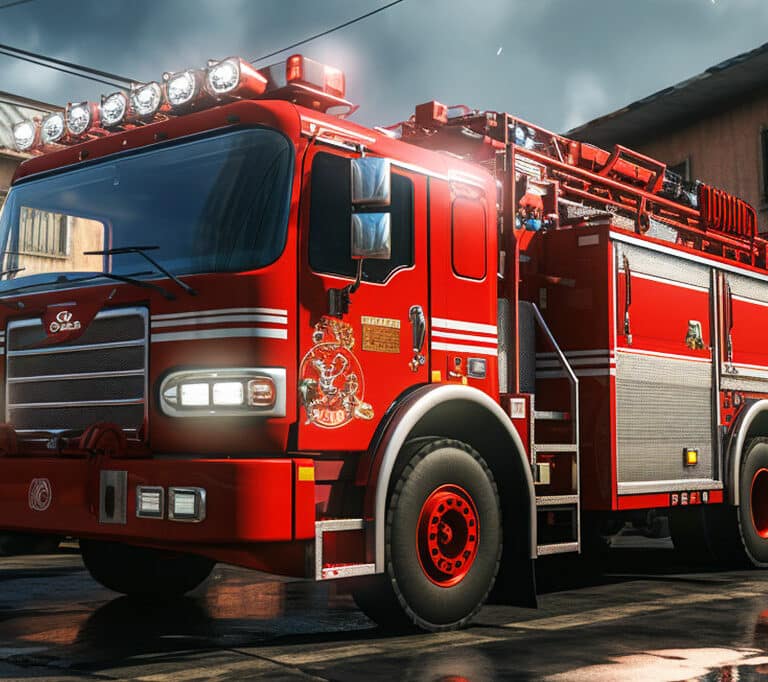
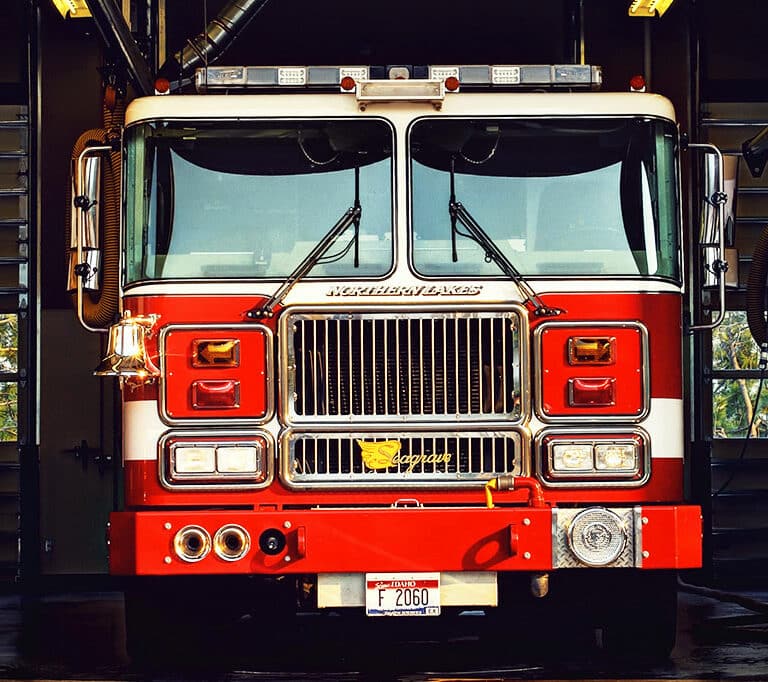
How much does a fire truck weigh is one of the most common questions asked by school kids whenever the fire service comes to visit.
Fire trucks, with their red flashing lights and blaring sirens, are a symbol of emergency response and safety in communities around the world.
These impressive vehicles are equipped with specialised tools and equipment to combat fires and save lives.
But have you ever wondered as an adult, not just how much does a fire truck weigh, but what equipment does it carry or even what types of fire truck are there?
In this article, we will answer these common questions and provide insights into the fascinating world of fire trucks.
How Much Does a Fire Truck Weigh?
The weight of a fire truck is a critical factor in its design and functionality.
The range in weight is primarily due to the size and capacity of the vehicle.
To answer the question of how much does a fire truck weigh, the simplest answer is that a standard fire engine, which is commonly used for responding to fires and emergencies, typically falls within the 20,000 to 40,000-pound range.
These trucks are equipped with essential firefighting equipment which add to their overall weight.
On the other hand, larger aerial ladder trucks, often used for rescuing people from tall buildings and providing elevated water streams, can be significantly heavier.
These trucks feature an extendable ladder, which requires additional structural support and hydraulic systems, contributing to their weight of up to 70,000 pounds.
A fire truck can weigh up to 70,000 pounds
The total weight of a fire truck includes various components.
The chassis, which serves as the foundation of the vehicle, contributes a significant portion to the overall weight.
The body of the fire truck, made of steel or aluminium, houses the equipment and water tanks.
Additionally, the equipment carried on the truck, such as ladders, firefighting tools, and medical supplies, further adds to the weight.
All these factors are carefully considered during the design and construction of fire trucks to ensure they are efficient, durable, and capable of responding effectively to emergencies.
How Much Does a Fire Truck Weigh When Full of Water?
Probably the second most asked question in relation to how much does a fire truck weigh, is how much does it weigh when full of water.
When a fire truck is filled with water, its weight can increase significantly due to the large water tank it carries.
On average, a fire engine can hold between 500 to 1,500 gallons (1,893 to 5,678 litres) of water.
Since each gallon of water weighs around 8.3 pounds (3.8 kilograms), a full tank can add an extra 4,150 to 12,450 pounds (1,882 to 5,647 kilograms) to the vehicle’s weight.
This added weight is a crucial consideration for firefighters and drivers, as it affects the truck’s handling and performance during emergency responses.
Properly managing the water supply is essential to ensure the fire truck can manoeuvre effectively and safely while combating fires and providing vital support to emergency situations.
How Long is a Fire Truck?
The length of a fire truck varies based on its type and model.
Standard fire engines typically measure around 25 to 35 feet (7.6 to 10.7 metres) in length.
However, aerial ladder trucks, equipped with extendable ladders, can reach impressive lengths of 75 to 100 feet (22.9 to 30.5 metres).
These longer fire trucks are often employed in high-rise firefighting and rescue operations, where their extended reach is essential for accessing upper floors and providing a safe evacuation route.
The varying lengths of fire trucks allow firefighting teams to choose the most suitable vehicle for specific emergency scenarios, ensuring an effective response to fires and other critical incidents.
How Wide is a Fire Truck?
The typical width of a fire truck ranges from 8 to 10 feet (2.4 to 3 metres).
This dimension is carefully designed to ensure that the vehicle can manoeuvre through narrow streets and tight spaces in urban areas without encountering difficulties or causing damage to buildings and obstacles.
A fire truck can be up to 3 meters wide
The compact width enables fire crews to quickly reach emergency scenes and provide timely assistance, even in congested environments.
What Types of Fire Trucks Are There?
Fire trucks come in various types, each designed for specific firefighting tasks, depending on the cause and type of fire. The most common ones include:
Fire Engines
Standard fire trucks equipped with water tanks, hoses, and firefighting equipment. They respond to most fire emergencies and carry a crew of firefighters. Recently, electric fire trucks have also been rolled out.
Aerial Ladder Trucks
Also known as ladder trucks or hook-and-ladder trucks, these vehicles feature extendable ladders and platforms for rescue operations in tall buildings.
Rescue Trucks
Rescue trucks are equipped with specialised equipment for rescuing people from hazardous situations, such as vehicle accidents or collapsed buildings.
Wildland Fire Engines
Designed for fighting wildfires in rural and forested areas, these trucks have off-road capabilities and carry water to extinguish smaller fires.
Airport Crash Trucks
Specialised fire trucks used at airports to respond to aircraft emergencies, such as fires or crashes.
Foam Trucks
Equipped with foam-generating systems to fight fires involving flammable liquids.
Each type of fire safety vehicle is carefully designed to address specific fire scenarios, ensuring that firefighters have the right tools and resources to combat various emergencies effectively.
The diversity of fire truck types enables firefighting teams to be prepared for a wide range of incidents, from standard structural fires to specialised hazardous material incidents.
These versatile vehicles play a crucial role in ensuring the safety of communities and protecting lives and property during emergencies.
What Equipment is on a Fire Truck?
Fire trucks are equipped with a wide range of tools and equipment to handle various emergency situations.
Some common equipment found on a fire truck includes hoses, nozzles, axes, saws, ladders, breathing apparatus such as oxygen masks, medical supplies, and thermal imaging cameras.
The exact equipment may vary depending on the specific type and purpose of the fire truck.
For example, ladder trucks will have extendable ladders and platforms for tall building rescues, while hazmat trucks will carry specialised gear for handling hazardous materials incidents.
The availability of this diverse firefighting equipment ensures that firefighters have the necessary tools to effectively and safely respond to different emergencies they may encounter.
How Long is a Fire Truck Hose?
The length of a fire truck hose varies based on the truck’s size and intended use.
Standard fire hoses used for firefighting operations are typically 50 feet (15 metres) long.
Aerial ladder trucks may carry longer hoses, up to 100 feet (30 metres), to reach higher floors in tall buildings.
The length of the hose is crucial in ensuring firefighters can effectively deliver water to the source of the fire, regardless of the building’s height or accessibility.
How Much Water Does a Fire Truck Hose Deliver?
The amount of water a fire truck hose can produce is determined by its diameter and water pressure.
Most fire hoses have a diameter of 1.5 to 2.5 inches (3.8 to 6.4 centimetres) and can deliver water at pressures ranging from 50 to 150 pounds per square inch (psi).
At an average flow rate of 100 psi, a fire hose can deliver around 50 to 125 gallons (189 to 473 litres) of water per minute.
This water flow is critical for effectively extinguishing fires and controlling their spread, especially in larger and more intense fire incidents.
Firefighters must skillfully operate the hoses to direct the water precisely and efficiently, making the most of their water supply to combat the flames and protect lives and property.
Firefighters need a special licence to drive a fire truck
The exact licence requirements vary depending on the fire truck’s weight, size, and type. For instance, a firefighter operating a standard fire engine may need a different endorsement than one operating an aerial ladder truck.
To obtain the necessary CDL and endorsements, firefighters must undergo specialised training to operate these vehicles safely and effectively.
This training includes learning how to handle the larger dimensions of fire trucks, understanding the unique challenges of emergency driving, and practising manoeuvres such as backing up, turning, and navigating tight spaces.
Firefighters also receive instruction on vehicle maintenance and safety protocols to ensure the proper functioning of the fire truck during emergencies.
Conclusion
Hopefully this article provided a clear and concise answer to how much does a fire truck weigh, and some of the most common questions to do with fire trucks.
Fire trucks are essential vehicles in emergency response and play a crucial role in safeguarding communities.
Their size, weight, and equipment are carefully designed to handle various firefighting and rescue tasks effectively.
The training and expertise of firefighters who operate these machines are vital in ensuring their efficient use during emergencies.
From carrying large amounts of water to navigating through tight spaces, fire trucks are equipped to tackle a wide range of challenges.
Understanding the capabilities of these vehicles helps us appreciate the dedication and skill of firefighters who work tirelessly to protect lives and property in times of crisis.