Paul Lake brings more than 40 years of aviation firefighting and rescue experience to Blackpool Airport fire service
Blackpool Airport fire service has appointed Paul Lake as Senior Airport Fire Officer. Bringing more than 40 years of aviation firefighting and rescue experience, he joins the airport as it continues to support its long-term growth and operational resilience.
Blackpool Airport has appointed Paul Lake as its new Senior Airport Fire Officer (SAFO), bringing more than four decades of aviation fire and rescue experience gained across military, civilian and international airport operations.
Lake will lead the airport’s fire service, drawing on a career that has spanned operational leadership, firefighter training and international airport fire management in the UK and overseas.
He began his aviation firefighting career at Farnborough Airport before going on to hold senior operational and training roles at Boscombe Down, RAF Leeming, the International Fire Training Centre (IFTC) in Teesside, where he trained aviation firefighters from around the world, the International College of Engineering & Management in Oman and Falck Fire.
Most recently, he served as Chief Fire Officer at King Fahd International Airport in Saudi Arabia, the world’s largest airport by land area, leading a team of 150 firefighters across four fire stations.
Returning to the UK to join Blackpool Airport, Lake said: “After 40 years in the fire service I still love my job and I’m delighted to be back in the UK to take up the position of SAFO at Blackpool Airport.
“It’s an exciting time to join the airport and play a part in its growth masterplan. The team here is fantastic and it was great to see a few familiar faces from my time as an instructor in Teesside.”
Steve Peters, Airport Director, said: “We are very pleased to welcome Paul to Blackpool Airport. His wealth of experience, leadership credentials and international expertise make him an outstanding addition to our team.
“As the airport continues to develop and grow, Paul’s knowledge and commitment will be invaluable in ensuring the highest standards of safety and resilience.”
The appointment reinforces Blackpool Airport’s commitment to maintaining high operational standards while supporting its future growth and development plans.
A proposal by Airservices Australia would transfer aviation rescue fire stations, specialised firefighting vehicles, training facilities and protective equipment to a third-party commercial entity under a long-term leaseback arrangement.
The United Firefighters Union of Australia – Aviation Branch (UFUAV) said the proposal would amount to the privatisation of the nation’s Aviation Rescue Fire Fighting Service and the transfer of critical emergency service infrastructure to a sovereign wealth fund.
The arrangement would see Airservices lease the assets back after the transfer.
UFUAV said the proposal would also move specialised emergency vehicle technicians and maintenance capability to the private asset owner.
The union said this would separate maintenance capability from operational firefighting functions within a system it described as an integrated emergency response capability.
UFUAV says proposal could affect readiness
UFUAV Branch Secretary Wes Garrett said the proposal would commercialise a frontline emergency service that exists to maintain public safety and save the lives of air travellers when disaster strikes.
Garrett said: “Aviation firefighting is not a money-making enterprise.
“It is a lifesaving emergency service.
“The moment you introduce a profit motive, safety stops being the first priority.
“Australians expect world-class aviation rescue firefighters to come to their aid when something goes wrong, not an emergency service run according to a lowest bidder mentality designed to maximise returns for an investment fund.
“Under the proposal, ownership and management of critical aviation safety assets would be transferred to a commercial operator whose primary obligation would be delivering a financial return to investors, not protecting the safety of air travellers or firefighters.”
He added: “We have seen this exercise attempted in other jurisdictions before.
“When profit becomes a central driver of decision-making, there is always inevitable pressure to cut costs.
“That will mean delaying maintenance on our specialised firefighting vehicles, reducing investment in equipment and facilities or underinvesting in operational readiness.”
Garrett said those risks carry catastrophic consequences in aviation firefighting.
He said: “In an aircraft fire, passengers typically have only minutes to survive.
“International aviation standards require firefighters to reach an incident within three minutes because every second counts.
“If operational preparedness is compromised by cost-cutting or delayed maintenance, the consequences could be fatal for passengers and devastating for firefighters who are sent into those situations.”
The union said long-term lease arrangements would lock the Commonwealth into escalating costs designed to deliver profits to investors and said it would oppose any attempt to privatise aviation rescue firefighting services.
Garrett said: “If aviation firefighting can be privatised, what emergency service is next?
“The travelling public deserves a world-class aviation rescue firefighting service that puts safety first every single time.
“They do not deserve a system where critical emergency infrastructure is run to maximise financial returns.”
He said: “Firefighters will never accept a future where lifesaving services are hollowed out to satisfy financial models.
“When safety fails, it is the travelling public and our firefighters who pay the price.
“We call on Airservices Australia to put the lives of Australia’s air travellers first by abandoning the proposal to privatise the aviation firefighting services they rely upon to keep them safe.”
The world is making significant investments to rise to the challenge of managing and responding to deadly wildfires. Not only has the US federal government expanded budgets to prevent and defend against wildfires, but it is also evaluating the organisation of its federal wildfire agencies.
Likewise, state and local governments and utility companies are increasing their investments in wildfire prevention, mitigation and suppression.
IDGA’s Wildfire Technology Summit, taking place on April 21-22, 2026, at the Kona Kai Hotel in San Diego, CA, convenes senior decision-makers from across the wildfire ecosystem to tackle real-world challenges, accelerate modernisation efforts and shape the next phase of wildfire resilience, prevention, and suppression.
IDGA’s Wildfire Technology Summit agenda
Here’s a sneak peek at what you’ll find in the agenda:
✔️ Timely and high-priority sessions, such as the role of the brand-new U.S. Wildland Fire Service, advancing wildfire capabilities, AI and its role in wildfire intelligence, management strategies, and more!
✔️ Recently confirmed speakers, including Dirk Giles and Jessica Haas from the U.S. Forest Service, Sean Triplett and Mike Falkowski from Earth Fire Alliance and Brian D’Agostino from San Diego Gas and Electric, alongside many new additions
✔️ Networking opportunities with more than 300 senior wildfire experts, all focused on exploring solutions for the prediction, prevention, detection, suppression, and mitigation of destructive wildland fires
Fires can spread quickly, especially in remote and hard-to-reach areas.
Over time, firefighting has adapted to meet these challenges, using a mix of tools, teams, and technology.
Aircraft have become a familiar sight during major fire seasons, often seen moving across the sky as part of a wider response effort.
These flying resources work alongside crews on the ground and play a key role in modern wildfire management. U
Understanding the different fire fighting aircraft involved helps explain how large fires are tackled from multiple angles.
Key Takeaways
Aircraft (planes and helicopters) drop water or retardant to slow wildfires and scout from above.
Air Attack planes (air tactical aircraft) coordinate aerial operations and choose drop targets.
Fixed-wing airtankers carry retardant by size: Type I (3,000 – 5,000 gal), Type II (1,800 – 3,000), Type III (800 – 1,799). Very Large Air Tankers (VLATs) like DC-10s carry >8,000 gal.
Helicopters also have types I to III. Heavy Type I helos (~700 gal buckets) carry large loads, while Type II (~300 gal) and Type III (~100–180 gal) are smaller and quicker.
Military and converted aircraft provide extra capacity (~3,000 gal) and speed. A MAFFS C-130 can dump 3,000 gal in under 5 second.
What is Aircraft Fire Fighting?
Aerial firefighting (or aircraft firefighting) is the use of aircraft vehicles to suppress wildfires.
It involves fixed-wing airtankers (airplanes) that carry water or fire retardant and drop it on or ahead of a fire.
Helicopters are also used, either dropping water with a bucket or the transport of crews.
Aircraft may carry buckets, tanks, or sling loads of water.
Air attack aircraft (small fixed-wing spotter planes) provide overhead reconnaissance and direct the tanker drops.
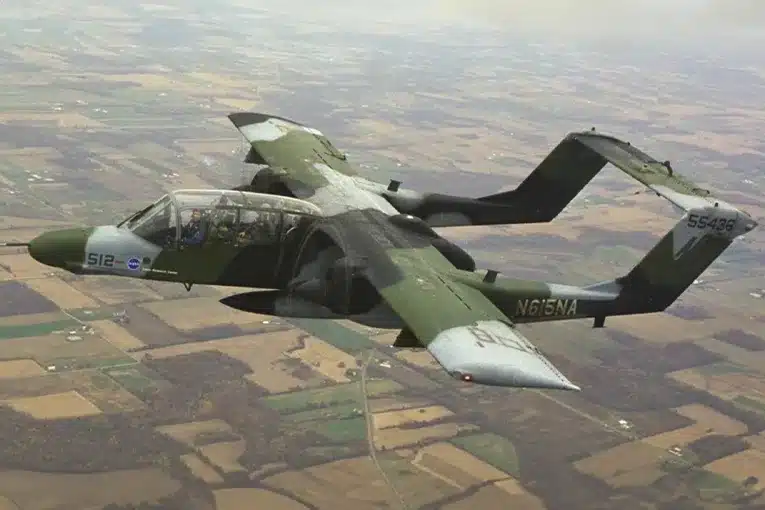
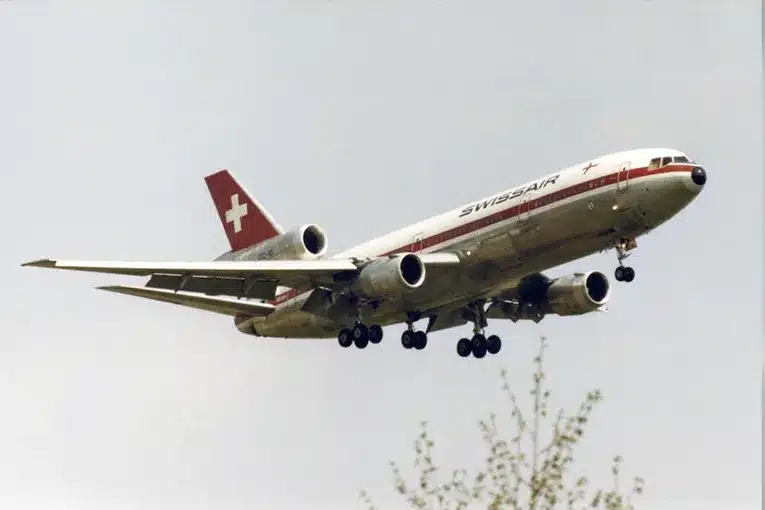
For example, wide-body jets like the DC-10 are outfitted with 12,000-gallon retardant tanks for big fires, while helicopters like the UH-60 Black Hawk (Firehawk) insert firefighters or drop several hundred gallons at precise spots.
These flying machines extend firefighting reach into rugged areas, deliver large drops quickly, and act as flying lookout posts to support ground teams.
Why is Aircraft Fire Fighting Used?
Aircraft vastly improve wildland fire response speed and effectiveness.
Ground crews can take hours to reach a remote ridge, but planes can fly over terrain.
By dropping water or retardant early, aircraft help contain fires when they are small.
A swift initial attack from the air can keep a fire to mere acres (California’s goal is to keep 95% of fires under 10 acres).
Aircraft are used because they can access fires rapidly, cover wide areas with retardant or water, and support ground crews with real-time intelligence, saving time and lives compared to relying on ground crews alone.
10 Types of Aircraft Fire Fighting
The 10 types of fire fighting aircraft are Air Tactical Aircraft, Fixed Wing Aerial Tankers (type I to III, VLAT and military) and helicopters (type I to III and military).
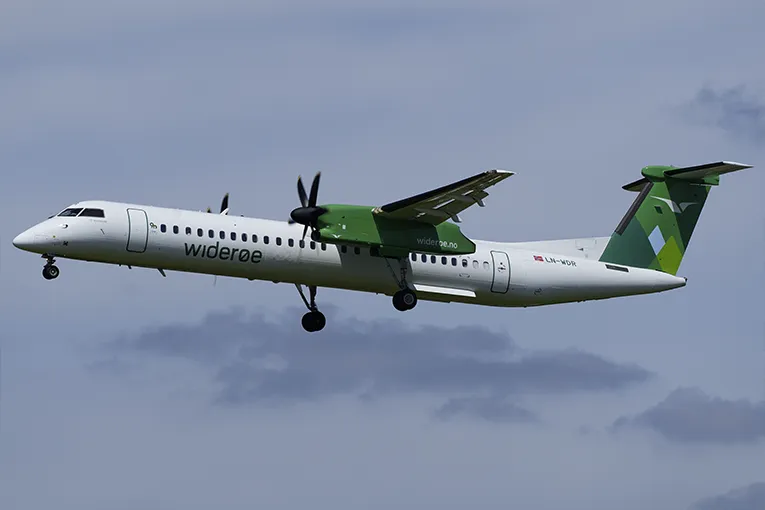
Type II airtankers are medium-sized tankers carrying about 1,800 – 3,000 gallons.
They include turboprop airliners and converted executive jets.
For example, the Bombardier Dash 8 Q400 (a Canadair airliner) drops around 2,600 gal, and older warbirds like the Douglas DC-6 or C-130 derivatives are in this class.
Type II tankers balance capacity with flexibility.
They are faster and more fuel-efficient than single-engine tankers yet can still operate from many airports.
Multiple Type II drops can cover a large area while using smaller airfields.
Aviation contractors combine Type II tankers for broad coverage.
For instance, three Q400s might deliver a combined load equivalent to one Type I tanker, but with quicker turnaround from multiple bases.
Examples are the Air Tractor AT-802 (about 800 gal) and light amphibious planes like the Canadair CL-215 (~1,300 gal).
Type III tankers are nimble and can use very short or unimproved runways close to fires.
They are ideal for initial attack on new wildfires.
They arrive quickly, make short drops, and return for more.
Their advantage is agility and responsiveness.
Because they operate from small airports, they can reach remote incidents faster, and their shorter water lines can get into steep or confined terrain.
Airtankers like the S-2 Tracker have stout landing gear and torpedo bays made for retardant tanks, allowing them to basing at small fields with short runways.
Type III tankers sacrifice drop volume for speed and access to work effectively in the early stages of a fire.
Very Large Air Tankers (VLATs) represent the largest class of fixed-wing firefighting aircraft and are deployed when massive fire coverage is needed quickly.
This can carry upwards of 9,400 gallons of fire retardant in one load, released in just a few seconds to lay down long, continuous lines ahead of advancing flames.
A single VLAT drop can cover a fireline hundreds of feet wide and miles long, making it much more efficient at slowing fire spread than smaller tankers.
Other legacy VLAT projects, such as the Boeing 747 Supertanker, were designed to carry nearly 20,000 gallons, demonstrating just how much retardant can be delivered from the air.
Newer programmes are now developing Boeing 767-based VLATs with even greater capacity and modern systems.
The main advantages of VLATs are their high payloads and long-reach retardant delivery, which are particularly valuable on very large or fast-moving wildfires where quick, broad coverage is crucial.
Military Aerial Tankers
C-130 Hercules equipped with MAFFS / Source: Wikipedia
Military transport aircraft are also used in firefighting when available.
For example, two MAFFS C-130s were sent to help Colorado fires in 2025.
A MAFFS unit can discharge 3,000 gal of retardant in under five second.
In addition, very large military or former military jets have been converted to airtankers.
These military-type planes cover enormous areas.
The key advantage is volume and reach.
Such planes can fight high-intensity fires or provide surge capacity when multiple air drops are needed.
They do require specially equipped bases to refill, but in return they extend the firefighting fleet’s capability by an order of magnitude compared to smaller tankers.
Helicopters
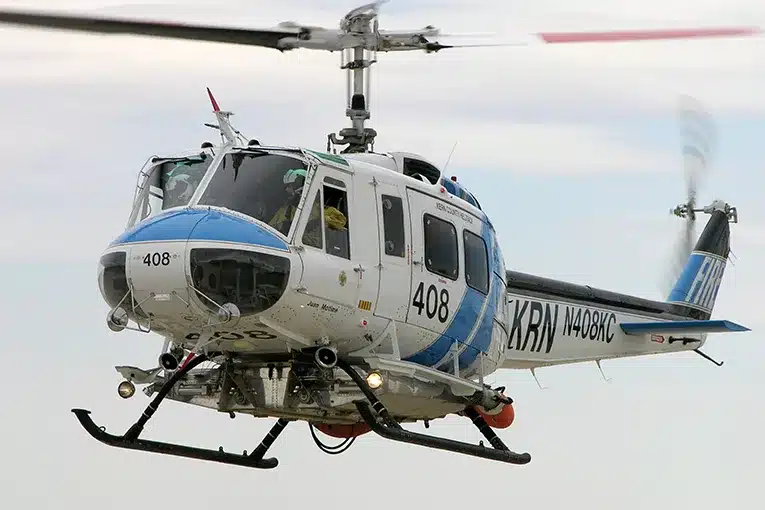
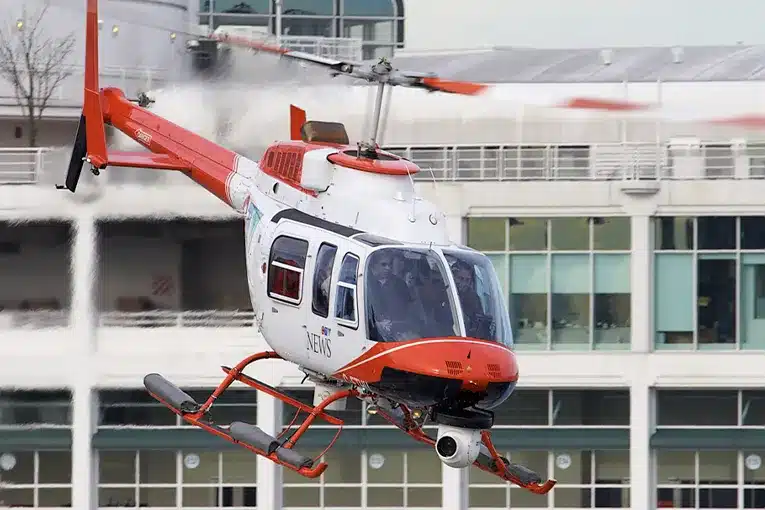
Helicopters are highly versatile firefighting aircraft.
They can rapidly drop water or retardant on fires, ferry firefighters and equipment, perform aerial ignition, or conduct search and fire rescue.
They operate closer to the fireline than fixed-wing tankers.
Helicopters are also classified by type based on size and capacity.
Heavy helitankers are Type I, medium helis Type II, and light ones Type III.
These categories guide their deployment, as we describe below.
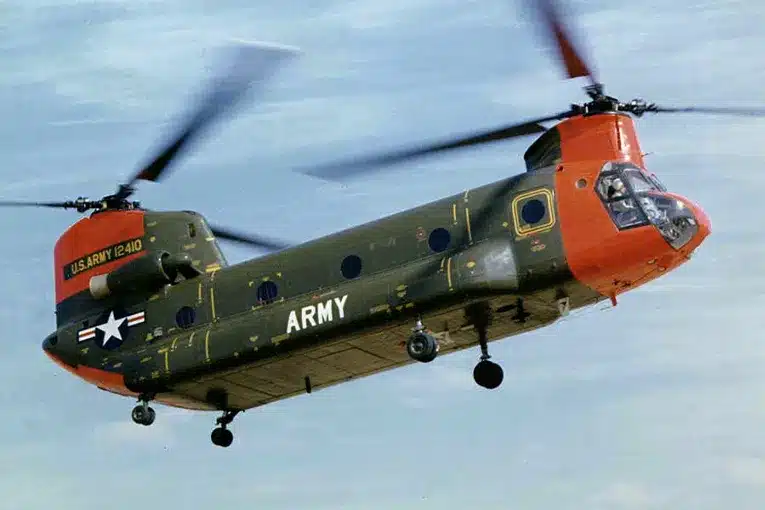
Military helicopters, especially heavy transports, have been adapted as ‘helitankers’ with enormous capacity.
The Boeing CH-47 Chinook (used by Southern California’s Quick Reaction Force) is the largest firefighting helicopter in the world.
Chinooks carry an internal 3,000-gallon tank and can hover-fill from a source in 90 seconds.
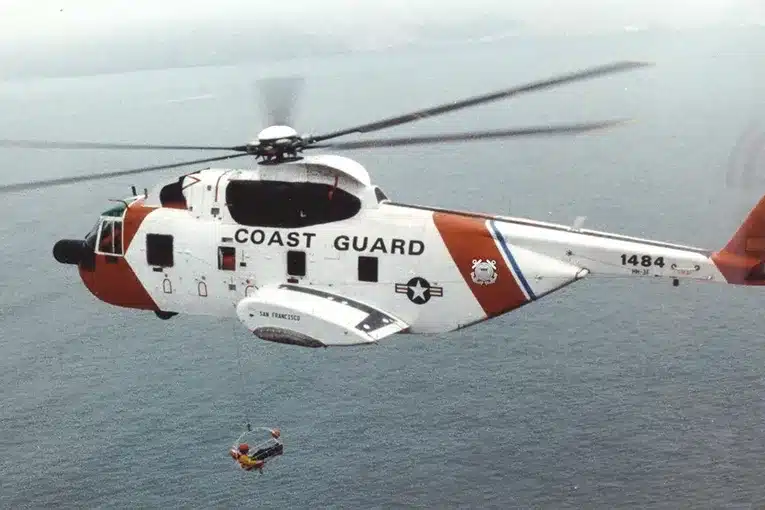
Another is the Sikorsky CH-53 Sea Stallion/CH-53K, with roughly 2,200 gal capacity, and the CH-54 ‘Helitanker’ Pelican (also ~2,200 gal).
These military helos are also fast; for example, the Chinook cruises at 160 kt.
Their advantage is clear.
They deliver far more water than civilian helicopters.
A single Chinook drop equals multiple drops by Type I helos.
Additionally, many are night-capable and can transport many troops or load heavier gear.
Military helitankers combine high volume, speed, and durability, making them formidable tools for large-scale firefighting operations
Final Thoughts
Aerial fire fighting brings together a diverse fleet of aircraft, each with a specialized role.
Air attack planes guide the operation, fixed-wing tankers blanket fires with retardant, and helicopters provide agile support.
Each type has advantages – from the enormous drops of DC-10s to the nimble bucket work of small helicopters.
Used together, these aircraft help contain wildfires that would otherwise spread.
Modern firefighting continuously evolves (new tankers, night-ops, and even drones), but the core remains.
Different flying machines are tools in the sky fighting fires.
By rapidly reaching remote fires, delivering huge volumes of water, and coordinating efforts, these aircraft types save land and lives, proving that the sky is an invaluable front line in wildfire suppression.
Pierce Manufacturing has appointed Marty Bass as President of Pierce Manufacturing, effective 13 January 2026.
Bass’s responsibilities include oversight of Pierce Manufacturing, MAXIMETAL, Oshkosh Airport Products (ARFF) and Frontline Communications.
He joins Pierce following a 19-year career at Brunswick Corporation.
His most recent role there was President, Americas Market Operations for the Navico Group.
Role scope and background
Bass has more than two decades of leadership experience in global manufacturing businesses, with a background in operations, quality systems and complex supply chains.
During his tenure at Brunswick, he held roles including President of Mercury Marine’s Europe, Middle East and Africa region.
He also served as Vice President of Global Category Management and Strategy at Mercury Marine.
Mike Pack, Oshkosh Corporation Executive Vice President and President, Vocational, said: “Marty is a proven leader with a deep understanding of how to deliver quality, efficiency and long-term growth to meet the critical needs of our customers.
“As Pierce continues to make significant investments in people and across operations, Marty’s experience leading advanced manufacturing organizations will be instrumental in helping us remain focused on what matters most: delivering safe, reliable, quality fire apparatus while being thoughtful stewards of our customers’ resources.”
Current operating context and investment claims
The company said Bass joins as departments across North America face increased budget pressures, industry-wide extended lead times and rising operational demands.
Pierce described its response as more than $150 million in capital investment and capacity expansions, process improvements and workforce development aimed at strengthening quality and improving production flow to reduce delivery timelines.
Bass said: “I’m honored to join Pierce Manufacturing and build upon the legacy of craftsmanship, innovation and customer commitment which defines this organization.
“Fire departments and their communities rely on Pierce apparatus to perform in the most critical moments, and that responsibility guides every decision we make.
“My focus will be on supporting our teams, reinforcing quality and operational discipline, and ensuring we continue to earn the trust of our customers and the fire service community.”
Before his corporate career, Bass served as an officer and engineer in the United States Navy within the Naval Nuclear Propulsion Program.
He holds dual master’s degrees in business administration and engineering management from Northwestern University.
He also holds a master’s degree in mechanical engineering from the Naval Postgraduate School and a bachelor’s degree in electrical engineering from the University of Illinois Urbana-Champaign.
Aviation crisis leadership in focus at Intersec 2026
Intersec has confirmed that aviation crisis leadership will be a core part of the International Security Leaders’ Summit taking place from 12–14 January at the Dubai World Trade Centre.
Organisers said the programme will focus on how leaders across government, aviation and national infrastructure are adapting their decision-making, communication and coordination practices amid operational disruption.
The update follows April 2024’s record rainfall in the UAE, which the National Centre of Meteorology described as the heaviest since climate data records began in 1949.
According to Intersec, the rainfall event demonstrated the scale of planning and cross-agency cooperation required to maintain continuity in complex environments.
The summit will examine how recent events continue to influence leadership approaches across critical infrastructure.
Aviation lessons from April 2024 flooding
Intersec highlighted insights from David Warham, Head of Response and Recovery Planning at Dubai Airports, whose team managed the impacts of the rainfall event.
Warham said: “Effective crisis leadership is defined by calm decision-making, clarity of communication, and credible coordination under pressure.
“In aviation, where seconds matter and stakeholders span multiple agencies, leaders must translate uncertainty into direction.”
He noted that preparation underpins leadership decisions in high-pressure situations.
Warham added: “But effective leadership in a crisis begins long before the event itself.
“It’s built on preparedness, planning, and the discipline of regular scenario testing.
“True crisis leadership means projecting calm, inspiring trust, and making informed decisions even when information is incomplete.”
Intersec said Dubai Airports operates in a region shaped by rapid development, climate variability and multi-stakeholder operational demands.
Warham continued: “Organisations in the Middle East operate in fast-growing, multicultural environments where critical infrastructure, government agencies and private operators must work in harmony.
“Building resilience here requires more than plans.
“It demands alignment, consistent joint training, and strong communication channels that transcend organisational boundaries.”
He stated that this model is reflected in the airport’s oneDXB community.
Warham said: “It ensures that when disruption occurs, we respond as one team with clarity, trust and collective strength.”
Aviation risk, regulation and collaboration in the 2026 programme
Intersec said Warham will join a panel titled Crisis Leadership Through Lived Experience at the International Security Leaders’ Summit.
The panel will also include Amira G AlMutairi from the Ministry of Communications and Information Technology, Peter O’Connell from AtkinsRéalis and Navaid Ahsan from Etihad Airways.
The session will be moderated by Glenn C Schoen, described by Intersec as an international security specialist and author.
Organisers said the panel is expected to address the General Civil Aviation Authority’s Civil Aviation Regulation on Airport Crisis Management.
According to Intersec, the regulation outlines expectations for how airports prepare for, respond to and recover from operational disruption, and is aligned with international practices.
Intersec added that the regulation builds on the Executive Council Resolution No. 30 of 2024 concerning the Dubai Supreme Committee of Crisis and Disaster Management.
PwC will also host a closed-door roundtable on multi-sector crisis management, with a white paper to follow.
Intersec said the summit will sit alongside other conference platforms including the Fire and Rescue Conference, the Health and Safety Conference, the Access Control Theatre, the Control Room Innovation Theatre, the InCyber Briefing and the SIRA Forum.
Organisers confirmed the event is held under the patronage of His Highness Sheikh Mansoor Bin Mohammed bin Rashid Al Maktoum with support from the General Command of Dubai Civil Defense and the Security Industry Regulatory Agency.
Dishan Isaac, Show Director of Intersec at Messe Frankfurt Middle East, said: “The Security Leaders’ Summit brings together diverse voices from across government, aviation and critical infrastructure to share lived experience and actionable insights.
“It reinforces Intersec’s commitment to advancing resilience, collaboration and security leadership across the region.”
Practical implications for high-risk infrastructure management
Aviation leaders, airport crisis managers and emergency planners may find this development relevant because the summit will examine operational experiences from April 2024’s rainfall event in the UAE.
Teams responsible for decision-making during complex disruptions could draw practical insight from the leadership approaches described by Dubai Airports, particularly around planning, multi-agency coordination and communication practices.
Organisations operating in transport hubs may also have interest in the General Civil Aviation Authority’s Civil Aviation Regulation on Airport Crisis Management, which will be discussed by panel participants and shapes expectations for crisis preparation and recovery.
Professionals working in control rooms, access management, fire and rescue operations and safety planning may benefit from the wider Intersec 2026 programme, which includes conference tracks focused on operational readiness in interconnected safety environments.
Delivery of Striker vehicles to MWAA announced by Oshkosh Airport Products
Oshkosh Airport Products has reported the delivery of three new Striker 6×6 Aircraft Rescue and Fire Fighting (ARFF) vehicles to the Metropolitan Washington Airports Authority (MWAA) in the United States.
The vehicles will be deployed at Washington Dulles International Airport and Ronald Reagan Washington National Airport.
Oshkosh Airport Products stated that the delivery includes one unit with a High Reach Extendable Turret (HRET), and all three vehicles are equipped with advanced fire suppression and safety systems.
According to the manufacturer, the Striker units will be integrated into MWAA’s emergency operations following training supported by Oshkosh’s technical team.
The company explained that this addition is intended to strengthen MWAA’s response capabilities at two of the busiest airfields in the Mid-Atlantic region.
Oshkosh provides technical details of fire apparatus features
Oshkosh Airport Products stated that all three Striker vehicles delivered to MWAA are configured for high-volume response.
The manufacturer explained that each unit is built with a 3,000-gallon water tank, 440-gallon foam capacity, and 550 pounds of dry chemical agent.
The vehicles include a Scania DC16/V8 engine delivering 670 horsepower, TAK-4 Independent Suspension, and a 360-degree camera system.
Additional features include low attack bumper turrets, in-cab emergency medical storage, water and foam level indicators, and a top-mounted light tower.
One of the three vehicles is fitted with the HRET turret system to provide reach and height advantages during operations.
Statement from Oshkosh Airport Products
Jack Bermingham, business unit director at Oshkosh Airport Products, said: “We are honoured to support the Metropolitan Washington Airports Authority with the delivery of these advanced Striker vehicles.”
He added: “Our team is proud to provide proven, high-performance ARFF solutions that meet the demands of some of the busiest airports in the country.”
He continued: “This delivery reflects our continued commitment to delivering innovative, mission-ready vehicles that enhance safety and preparedness for every emergency scenario.”
MWAA confirms integration plans for new ARFF units
The Metropolitan Washington Airports Authority confirmed the vehicles will be added to its emergency fleet after completion of operational training.
Assistant Chief Russell Carpenter of the Airports Authority Fire & Rescue Department said: “These three new vehicles are a welcome addition to the Airports Authority’s fleet.”
He added: “They are an investment in the safety of passengers travelling through our airports, as well as the employees who utilise them every day.”
He continued: “We look forward to putting the new vehicles into service after training is complete.”
MWAA stated that its fire and rescue teams are working with Oshkosh Airport Products to ensure a coordinated handover process.
Airports Authority outlines passenger traffic and fleet development
According to the Metropolitan Washington Airports Authority, its two airports handled more than 53 million passengers in 2024.
The organisation stated that both Dulles and Reagan National are classified as high-traffic facilities requiring specialist ARFF resources.
It added that the delivery of the new fire apparatus forms part of a wider plan to strengthen operational readiness and safety infrastructure.
Oshkosh Airport Products confirmed that the production and delivery were coordinated with MWAA’s public safety and procurement departments.
The manufacturer noted that its support will continue beyond delivery through technical assistance and training modules.
Washington airports expand ARFF capabilities with new fire apparatus: Summary
Oshkosh Airport Products delivered three Striker 6×6 ARFF vehicles to the Metropolitan Washington Airports Authority.
One of the vehicles is equipped with a High Reach Extendable Turret.
The vehicles are assigned to Washington Dulles International Airport and Ronald Reagan Washington National Airport.
All three vehicles include fire suppression systems, onboard storage, and advanced control features.
The Striker vehicles have capacities of 3,000 gallons of water, 440 gallons of foam, and 550 pounds of dry chemical.
Each unit is powered by a 670 HP Scania engine and includes TAK-4 suspension.
MWAA confirmed the vehicles will enter service following training.
Assistant Chief Russell Carpenter said the vehicles will enhance passenger and staff safety.
Jack Bermingham of Oshkosh Airport Products said the delivery supports MWAA’s emergency response.
MWAA handled over 53 million passengers in 2024.
The fire apparatus will be fully integrated into MWAA’s operational plans.
Nordisk Aviation has stated that its AKE containers provide advanced fire protection while maintaining a lightweight design.
Firesafety testing with lithium-ion batteries
To assess the performance of the containers, Nordisk Aviation collaborated with Emirates on a series of fire tests.
The trials extended beyond standard aerospace fire regulations, which typically focus on Class A paper fires.
The test involved placing 1,000 lithium-ion battery cells across 60 pieces of luggage, along with flammable items such as clothing, toiletries, and alcohol.
The Nordisk AKE container contained the fire for the full six-hour test by allowing flue gases to escape while preventing oxygen inflow.
Design and sustainability features
Nordisk Aviation has stated that its AKE containers are the lightest available on the market while offering high levels of fire resistance.
The company also highlighted that most components of the containers are 100% recyclable, reducing environmental impact.
The fire-resistant features are aimed at improving aviation safety, particularly in cases where lithium-ion batteries are transported in cargo and baggage.
Ongoing risks of lithium-ion battery fires
Lithium-ion batteries remain a concern for cargo and baggage transport, both when they are declared and when they are transported without disclosure.
Nordisk Aviation has reported that its testing has provided insight into factors affecting fire intensity, helping to improve fire containment measures.
The agreement between Nordisk Aviation and Emirates aims to improve safety standards while supporting ongoing collaboration in fire protection technologies for aviation.
Nordisk Aviation has signed an agreement with Emirates to provide up to 10,000 fire-resistant AKE containers for cargo and baggage.
The containers are designed to mitigate lithium-ion battery fire risks while maintaining a lightweight structure.
Nordisk Aviation and Emirates conducted fire tests that went beyond standard aerospace regulations, using 1,000 lithium-ion battery cells and additional flammable materials.
The AKE container successfully contained the fire for six hours.
Nordisk Aviation has stated that its AKE containers are fully recyclable, supporting sustainability efforts.
Lithium-ion battery fires remain a concern for aviation, and the company has reported that its testing has helped identify key factors affecting fire intensity.
The agreement supports continued collaboration between Nordisk Aviation and Emirates on aviation safety technologies.
DACO and NFPA establish collaboration to improve fire safety
The National Fire Protection Association (NFPA) and Dammam Airports Company (DACO) have signed a Memorandum of Understanding (MoU) to advance fire safety in Saudi Arabia’s aviation sector.
According to NFPA, DACO is the first aviation entity in the Middle East to formalise an agreement with the organisation.
The collaboration aims to provide fire safety professionals with education, training, and certification.
The partnership is intended to strengthen fire prevention efforts and improve safety protocols.
Agreement supports training and certification for fire safety professionals
The MoU was signed by Michael Brunzell, NFPA Vice President for Global Business Development, and Mansour F. Al-Otaibi, DACO Chief Financial Officer.
DACO will integrate NFPA training and certification programmes into its operations.
The agreement is expected to provide professionals with access to updated safety standards and best practices.
Mansour F. Al-Otaibi said: “We are delighted to collaborate with NFPA to provide professionals in fire and life safety with access to world-class education and training on safety codes and standards, enabling us to create the safest possible environments.
“With the aim to enhance the Kingdom’s aviation sector, maintaining the highest fire and life safety standards remains a top priority to ensure the safety and well-being of both our employees and the public.”
NFPA highlights importance of safety collaboration in the region
NFPA will provide DACO with resources to support fire safety improvements as infrastructure development continues across the region.
Michael Brunzell said: “We are excited to team up with DACO to help them further improve fire and life safety standards.
“As infrastructure development continues to grow in the region, it’s vital for governments, professionals, educational institutions, and industry leaders to work together to maintain the highest safety standards.
“This partnership will help create a strong network where fire safety professionals can stay informed with the latest resources, enabling them to ensure safer environments for all.”
Access to NFPA resources and safety framework
Under the agreement, DACO fire and life safety specialists will receive NFPA membership, allowing them to participate in industry events and review safety codes.
DACO will also incorporate elements of the NFPA Fire & Life Safety Ecosystem, a framework aimed at reducing risks from fire, electrical, and other hazards.
NFPA stated that DACO will use insights from publicly available fire data, economic impact studies, and international safety benchmarks to enhance protocols and improve operational efficiency.
NFPA and DACO sign agreement to enhance fire safety in Saudi Arabian aviation: Summary
NFPA and DACO have signed an MoU to improve fire safety within Saudi Arabia’s aviation sector.
DACO is the first Middle Eastern aviation organisation to establish an agreement with NFPA.
The collaboration will provide training, education, and certification for fire safety professionals.
DACO will gain access to NFPA resources and safety frameworks.
NFPA stated that this will support ongoing infrastructure development and ensure that industry professionals stay informed on safety standards.
DACO fire and life safety specialists will receive NFPA membership, allowing them to participate in industry discussions and review safety codes.
The collaboration will also incorporate data-driven insights from NFPA’s Fire & Life Safety Ecosystem.






.jpg)

.jpg)

.jpg)
.jpg)
.jpg)
