Why is PPE Important?

In every workplace, safety should be the top priority for both employers and employees.

Ensuring a safe and secure working environment not only protects the well-being of workers but also helps to increase productivity and overall organisational success. 

One crucial aspect of achieving workplace safety is the use of Personal Protective Equipment, commonly known as PPE

PPE refers to a diverse range of specialised gear designed to shield workers from various workplace hazards, such as chemical exposure, physical impacts, electrical shocks, and more. 

Cloth Facemasks
PPE equipment includes respiratory protection

Throughout this article, we will delve into the different types of PPE available, explore why is PPE important and understand the benefits they offer, all while emphasising the significance of compliance in fostering a culture of safety.

Different Types of PPE

There are countless potential workplace hazards which create the need for several categories of PPE options that are tailored to provide specific protection.

There are 5 main categories:

Protective Clothing

From standard coveralls, gloves and aprons, to specialised fire-resistant or high-visibility clothing, PPE workwear and clothing items are an essential part of everyday life for many organisations.

These garments act as a robust barrier against harmful chemicals, biohazards, and other potentially hazardous substances.

Eye Protection

Safety goggles, face shields, and safety glasses are important PPE items that shield the eyes from dust, debris, chemicals, and intense light. 

Doctor Wearing PPE
The right PPE has to fit for purpose for the right job

These protective gear options are especially important in the construction, manufacturing, and healthcare industries.

Respiratory Protection

Respiratory protection is essential for workers who could be exposed to airborne contaminants like dust, fumes, or gases. 

Respirators, masks, and filters ensure that the air the wearer breathes in is free from harmful particles, safeguarding their respiratory health.

Hearing Protection

Hearing protection, such as earplugs and earmuffs, is vital for employees working in noisy environments, as prolonged exposure to high levels of noise can lead to hearing damage or loss.

Head Protection

Head protection, most often hard hats, serves as a primary defence against head injuries resulting from falling objects or accidental collisions on construction sites or other hazardous workplaces.

Why is PPE Important in the Workplace?

PPE is an individual’s first line of defence against a wide range of workplace accidents, injuries and illnesses. 

Wearing and utilising the correct PPE significantly reduces the risk of severe injuries and long-term health issues caused by exposure to various hazards.

PPE provides an additional layer of safety, offering protection even in circumstances where other safety measures might fall short.

The proper use of PPE can give workers confidence, empowering them to carry out their duties effectively, knowing they have reliable protection against potential harm. 

This sense of security fosters a safer work culture, and can even boost employee morale and motivation.

As well as this, strict adherence to PPE guidelines showcases an employer’s commitment to their employees’ well-being and safety. 
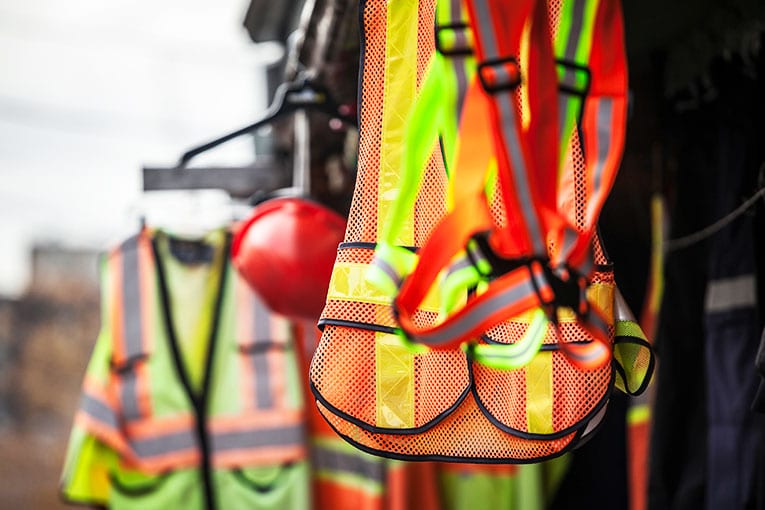
High Vis PPE
PPE is vital for safety in the workplace

As such, a proactive approach to safety can enhance the company’s reputation and contribute to improved employee loyalty and retention.

PPE is especially important in high-risk industries such as construction, manufacturing, healthcare, and laboratories, where exposure to hazardous substances and potential accidents is much more prevalent.

The use of PPE ensures the continuity of business operations by minimising work disruptions due to accidents or illnesses. 

When workers remain safe and healthy, absenteeism decreases, leading to enhanced productivity and reduced downtime.

What are the Benefits of Wearing PPE?

Using PPE offers a multitude of benefits for both employers and employees alike. 

Reduces Risk of Injury or Illness

Using the correct PPE significantly lowers the risk of injury or illness, and prevents a wide range of accidents, from minor incidents to life-altering mishaps. 

For instance, using appropriate gloves when handling hazardous chemicals can prevent skin irritation or burns.

Enhances Overall Workplace Safety

PPE can enhance overall workplace safety, and lead to fewer accidents and injuries. 

A safe work environment instils a sense of confidence and well-being in employees, leading to improved job satisfaction and reduced stress.

Reduces Medical Expenses & Insurance Costs

By preventing accidents and illnesses, PPE can lead to reduced medical expenses and insurance costs for businesses. 

Fewer accidents result in fewer worker compensation claims, saving both time and financial resources.

Fosters Positive Work Environment

Prioritising creating a safe workplace fosters a positive work environment, promoting teamwork and trust among employees. 

As a result, workers are more likely to feel valued and loyal to their employer, contributing to higher employee retention rates and increased productivity.

Enhances Compliance

In addition to the immediate benefits of PPE, employers also benefit from enhanced compliance with safety regulations and standards when they supply their workers with the correct PPE. 

Adherence to safety guidelines helps businesses avoid penalties and fines from regulatory bodies and creates a more positive image for the company.

Attracts Potential Clients & Investors

A good safety record can also attract potential clients and investors, who recognise the company’s commitment to responsible business practices. 

A positive reputation for safety can give a competitive edge to the business, making it an attractive choice for clients and investors.

Longer Term Financial Savings

By investing in PPE and prioritising safety, companies can reduce the costs associated with accidents and injuries, leading to long-term financial savings and increased profitability.

What Can Be Done to Ensure Correct Use of PPE?

Thank You Sign
Positive Signage Encourages Compliance. Image credit: Pixabay

Ensuring the proper use of PPE requires a comprehensive approach that involves employees, employers, and the organisational culture. 

Training and education are the cornerstones of proper PPE implementation. 

All employees must be trained on the potential hazards in their workplace, the appropriate PPE for each task, as well as the correct way to wear and maintain their equipment. 

Here are some ways you can ensure that PPE is used correctly within your organisation:

Provide Easy Access to the Correct PPE

Ensure that it fits well and is comfortable for the workers.

One-size-fits-all approaches may not be suitable for all employees, so it is vital to offer a range of sizes and styles to accommodate individual needs.

Regularly Inspect PPE

Identify any defects or signs of wear and tear, so that damaged or outdated equipment can be replaced.

Get Supervisors to Enforce PPE Usage

Management should lead by example, consistently wearing PPE, and address any non-compliance promptly.

Recognising and rewarding employees who consistently use PPE can also boost compliance.

Create an Open Communication Culture

Encourage open dialogue to foster compliance with PPE guidelines.

Employees should feel comfortable expressing their safety concerns and providing feedback on PPE usage and any challenges they may face.

Host Regular Safety Meetings

Organise regular huddles and staff meetings where PPE usage is discussed.

This provides an opportunity to address any issues and find practical solutions collaboratively.

Promote the Importance of PPE

Create and display safety campaigns and posters as reminders in prominent areas of the workplace.

Periodic PPE Policy & Practice Evaluation

This ensures they remain up-to-date and effective.

As workplaces evolve, so do the potential hazards, and adjustments to PPE guidelines may be necessary to keep workers protected.

Conclusion

Personal Protective Equipment (PPE) plays a pivotal role in safeguarding employee from workplace hazards.

Hopefully from this article you have gained an answer to the question of why is PPE important.

The diverse range of PPE options, from protective clothing to eye, respiratory, hearing, and head protection, ensures a comprehensive defence against potential accidents and illnesses when implemented and used correctly.

Using PPE is not only vital for protecting individual workers but it can also contribute to a safer work environment overall. 

The benefits of proper PPE implementation are manifold, ranging from reduced injury rates and medical expenses to improved employee morale and enhanced productivity.

The key to effective PPE usage lies in comprehensive training, easy access to equipment, regular inspections, and a culture that prioritises safety. 

Employers, employees, and organisational leaders must work together to foster a safety-first mindset.

Building Safety Regulator takes over as the building control authority for high-risk structures in England

As of 1 October, the Building Safety Regulator (BSR) has assumed the role of the Building Control Authority for all higher-risk buildings (HRBs) in England.

As part of the change, developers constructing new residential buildings over 18-metres or those comprising seven storeys and having at least two residential units will no longer have the discretion to choose their preferred building control body.

The same rule applies to hospitals and care homes that match the same height criteria.

The role and responsibilities of the new building control authority

Developers are now mandated to seek building control approval from the BSR before initiating any construction project associated with HRBs.

Neil Hope-Collins, Operational Policy lead for Gateways and Building Control, elaborates on the modifications to the building safety protocol and the pivotal role of BSR in this new setup: “The Building Safety Act, 2022 (BSA) imposes fresh legal obligations on individuals engaged in the design, construction, and occupation of HRBs.”

Everyone involved in construction activities must ensure that they are compliant with the law.

They must also be prepared to furnish tangible proof of this compliance if required.

This stringent oversight aims to guarantee absolute accountability for the safety of HRBs throughout their lifespan.

Adding to this, The Building (Higher-Risk Buildings Procedures) (England) Regulations 2023, effective from 17 August 2023, detail the building control processes relevant to all HRB projects.

Recommendations and the new regime

The new regulations, which encompass the technical specifics, embody the recommendations presented by Dame Judith Hackitt in her report titled “Building A Safer Future”.

They delineate the enhanced regime for the design, construction, and in-occupation safety standards for HRBs.

From October onwards, the BSR will execute its duties as the Building Control Authority with the support of multi-disciplinary teams (MDTs).

Comprising a registered building inspector and other essential specialists, these teams, under the guidance of BSR, will play a decisive role in evaluating building control application submissions, ensuring efficient regulatory verdicts, and structuring inspection schedules.

Though the assessment of plans and site inspections isn’t novel, the method of delivery is certainly a fresh approach.

The Three-Gate Approval Process

To augment regulatory oversight, construction projects on HRBs will now navigate through a rigorous three-gateway approval process, necessitating BSR consent:

  1. Prior to the commencement of building work.
  2. Before any major changes during construction.
  3. Upon completion of the construction.

Starting construction without BSR’s nod is now an offence, and the regulator possesses the power to enforce penalties for violations.

The article further details the three planning gateways and their requirements, with the third gateway emphasising the need for registration of the building with the BSR post-completion.

Registered buildings will undergo periodic checks by the BSR to ensure consistent management of fire and structural risks.

For additional insights, readers can refer to ‘The three gateways to building safety’ leaflet and the ‘FAQ Explainer – Building Safety Regulator as the Building Control Authority’, which provides responses to frequently posed queries.

All these details and more can be accessed here.

IFSJ Comment

Such reforms present a clear path towards enhanced building safety, addressing long-standing concerns in the industry.

By implementing a centralised control mechanism via the BSR, there’s a more unified approach to building oversight, ensuring that HRBs in England adhere to the highest safety standards.

This move, inspired by Dame Judith Hackitt’s recommendations, also underscores the country’s commitment to improving the structural and fire safety standards, a pivotal step for the safety and well-being of its residents.

The changing landscape of fire safety

Navigating the maze of new fire safety regulations, FR Consultants’ Managing Director Dorian Lawrence sheds light on adaptive compliance strategies

The introduction of the Fire Safety (England) Regulations 2022 and the Building Safety Act 2022 has significantly altered the landscape of fire safety compliance in England.

These new standards present a complex challenge that requires diligent navigation and understanding.

FRC, under the leadership of Managing Director Dorian Lawrence, has been actively engaging with this shifting terrain.

By offering tailored services, conducting informative webinars, and providing essential guides to meet these regulations, FRC demonstrates a commitment to assisting clients in meeting and exceeding these new compliance standards.

In this exclusive interview, Lawrence outlines FRC’s strategies, challenges, and unique approaches, offering valuable insights into the evolving world of fire safety.

His perspectives provide a thoughtful examination of the industry’s response to the regulatory transformation, and how FRC contributes to the collective effort of building a more resilient and compliant future.

How is FRC helping clients navigate the shifting terrain of fire safety regulations?

First and foremost, FRC is there to understand and explain the regulations.

Working closely with industry experts and joining government panels and forums, we can be at the forefront of new developments and advisories so that we can feed back the latest developments to our clients.

Once we understand something, we try to make it as accessible as possible, and we regularly conduct webinars, undertake certified continuing professional development sessions and send out fact sheets and newsletters, all with the aim of breaking down the very technical guidelines into simple, actionable steps and providing the necessary information on how to meet compliance.

We also offer services tailored to what the market needs in order to meet the new regulations, such as the recent launch of our abbreviated site inspection service to confirm whether a fire risk appraisal of external walls (FRAEW), as specified by PAS 9980, is required.

What are the biggest challenges in adapting to the new legislation?

The biggest challenges are probably the short time frame and the cost.

The sheer scale of this legislation – in a relatively short time, the industry has gone from self-regulation to complete external regulation that brings in the fire services, government bodies and consultancies – has meant that many things are being introduced without a long lead-in or time to adequately prepare and produce documentation.

It leads to a large degree of ‘learn by trying’ as everyone tries to grapple with the exact requirements of the all-new legislation.

This isn’t helped by cases in which legislation overlaps itself and – in some cases – even contradicts itself.

To some degree, this is to be expected with such a huge change of legislation, but it does present challenges.

What strategies FRC has implemented to assist clients in adapting to new regulations?

The biggest thing we’ve done is develop a full, end-to-end service from report to completion of building safety case, with every step in between provided.

For clients who want complete compliance and peace of mind, we can take care of every step in-house.

For those who need only a helping hand, we have produced easy-to-read guides on different routes to compliance and a legal notices service, and, most recently, our abbreviated site inspection provides an economical solution for those who need assurances on whether a FRAEW is needed.

How is FRC pioneering the adaptation to the Fire Safety (England) Regulations 2022 and the Building Safety Act 2022?

FRC believes in the power of the new legislation to make the UK’s buildings safer, and we are doing everything we can to ensure the implementation is a success. That starts with education: webinars with partners to combine and share knowledge and ensuring that our clients can understand what is required of them.

We create as much collateral as is needed and try to leverage visual aids such as building information charts and fact sheets to condense and simplify the requirements.

Along with having staff undertake the Chartered Institute of Building (CIOB) Level 6 diploma to prepare them for looking after the day-to-day management of fire and structural safety in higher risk buildings and establishing a clear point of contact for residents for fire- and safety-related issues, we’ve spoken to legal partners for advice on how to ensure correctness on all points.

What insights can you provide to property owners or managers on how to stay ahead of the curve?

There are two main routes you can go, depending on how confident you are.

The first is, as mentioned, to use an all in-house, end-to-end service such as the one we provide; then you know without a doubt that everything is up to scratch and will meet compliance.

If you manage the process yourself, prioritisation is key: understand what you need to do, break it down into steps and tackle tasks one at a time.

There are also lots of things that will take time, so get things rolling straight away.

It’s always worth getting advice, though, and the most important thing is to ensure that you are listening to qualified, experienced professionals.

How has FRC’s approach aided clients in navigating new fire safety regulations?

Our approach to diligence and detail, combined with our goal to improve fire safety, means we are 100% committed to backing the legislation.

This has been proven on several occasions, but one recent example is when we provided a client, the property manager, with a PAS 9980 report.

The pledge developer of the building then sought out their own report, as is their right, but when this came back the property manager noted dissimilarities and asked us to peer review the report.

The new report that had been obtained by the pledge developer was absolutely non-compliant and suggested remediation proposals that were wholly inadequate, including that combustible materials be left in place on a high-risk building above 18 metres in height.

We were able to challenge the new report, and the developer’s suggestion that BS 8414 testing had been carried out, and to ensure that the unsafe measures proposed were not undertaken.

Unfortunately, in this instance, the developer was not forthcoming with their pledge and caused a series of delays, so we instead supported the property manager to find alternative means of funding for the life-critical safety remediations to meet the requirements of the Building Safety Act 2022.

Utilising our own report and the expertise of our fire engineering and building surveying teams, we helped to secure an alternative settlement offer from the building’s construction warranty provider that protected the leaseholder’s best interests while ensuring remediation proposals were carried out to provide a safe and fully compliant building.

We must remember the ultimate goal is to obtain a Building Assessment Certificate from the Building Safety Regulator.

Many works being undertaken by developers will not meet these requirements.

Be careful.

How is FRC helping clients prepare for the October 2023 registration deadline?

It’s important to me and FRC that the new legislation is a success that prevents fire disasters in high-rise and medium-rise buildings in the future.

We can provide an end-to-end solution to get them completely prepared for the October deadline, in which we guide and manage the whole process, step by step, to ensure all requirements are met and that the building is safe.

We also know that not everyone wants such a comprehensive service and have developed various single products to help people with only the advice they need, whether that is an abbreviated site inspection, a safety case report or a gap analysis to help them get back on track.

This article was originally published in the September 2023 issue of International Fire & Safety Journal. To read your FREE digital copy, click here.

Addressing legacy issues in the fire safety sector with Quelfire

A recent article from Darryl Wells, the Commercial & Development Director at Quelfire, sheds light on the pressing challenges faced by those in the construction industry, particularly concerning fire safety.

In his post, Wells brings attention to instances where firestopping installations may not have been entirely compliant. The full post can be found here.

Legacy issues: The cost of getting it wrong

“Like fixing anything that goes wrong, legacy issues are no stranger to a hefty price,” says Wells.

As an illustration of this, in July 2023, Barratt Development allocated £180m to address the safety concerns of legacy buildings, following a £434.6m provision in 2022.

Addressing legacy issues in retrofit projects can be particularly costly, with challenges such as limited access and significant disruptions to buildings.

Opting for competent products from trustworthy manufacturers during the initial stages of construction is highlighted as a more cost-effective and prudent choice.

Avoiding legacy issues: The proactive approach

For Wells, the solution is clear: “Do it right, do it once.” Early engagement, while it may seem to slow down projects initially, allows for timely identification of potential problems.

“Engaging all stakeholders in the early stages ensures installations that align with manufacturer guidelines, averting unforeseen costs and bolstering reputations.

Another crucial strategy highlighted is the “golden thread of information”, a concept born from Hackitt’s Building Safety Review.

This process ensures that vital information about a building’s lifecycle is collated and maintained consistently.

Such practices reduce the chances of oversight and potential legacy issues, aiming to maintain the safety of the building and its inhabitants.

Furthermore, industry software provides invaluable support. By maintaining up-to-date records, there’s a clear trail, eliminating potential vulnerabilities in the future.

For those grappling with legacy issues, Wells’s message is one of hope and urgency: To genuinely address these concerns, there’s a need to evolve past practices, learn from errors, and embrace a proactive approach.

IFSJ Comment

Darryl Wells’s insights are especially poignant in the current climate where the focus on fire safety has never been sharper.

Legacy issues not only have financial implications but also endanger lives.

Addressing these concerns isn’t merely about compliance; it’s about creating a culture of safety and responsibility.

Early engagement, up-to-date documentation, and collaboration across sectors can drastically mitigate the repercussions of past mistakes.

As the construction sector evolves, ensuring that fire safety remains paramount will be pivotal.

The road to standardisation

Craig Wells, Sales Director at Quelfire looks at enhancing building safety through the standardisation of processes

Today, firestopping solutions are typically selected by the main contractor as part of a ‘design and build’ contract.

Because of this, they have the responsibility to ensure the chosen solutions are compliant and installed accordingly.

To achieve the end goal of protecting people and property, many external trades need to be involved, making it a complex process.

That is why we strongly recommend that a standardised process is achieved and implemented for each project.

A recommended standardised process: what does it involve?

Like all processes, there are steps and measures that need to be thoroughly followed to achieve the wanted outcome.

Processes are there for a reason. And for high-rise and multi-occupancy buildings, the need for these have never been more glaringly obvious.

They save lives. But also limit the damage caused by fire to a building and its contents.

Consequently, when a compliant process has been established within your organisation and for any current projects, it makes sense that this should then be standardised and applied to any future projects.

This gives you the chance to optimise how you work, making the process more robust.

In our experience working with various parties involved in construction projects, the best practice for creating a standardised process will always be to engage early with your team and relevant trades to identify and bring together all the suitable tested details.

This is important from a compliance perspective, but also from a commercial liability and practical perspective.

1) Identifying the project’s requirements

The starting point is to understand the project’s wants and need. What comes under that, and is non-negotiable, are the fire strategy requirements of the project.

Once these have been established and the location of the walls and floors have been situated, how the compartment lines are going to be compromised can be determined.

In other words, the services that are going to be installed and maybe even a choice of services you want to be installed.

However, the success of early engagement does depend on the flexibility of all parties.

For instance, if there are no available tested solutions for the type of insulation desired, a level of compromise is crucial to identify alternative tested solutions.

The next step is to decide how the services should penetrate the wall or floor. Are you going to drill a hole and use a direct-to-wall seal, or create a letterbox opening and use fire batt or compound to seal the gap left behind?

At this stage, it’s important to have an idea of how you intend to execute the penetrations whilst ensuring they’re achievable.

2) Engaging with the relevant parties

Only when you have identified the project’s requirements should you begin to engage with the relevant firestopping manufacturer, like ourselves, to identify the available tested solutions for your requirements.

Once there is a portfolio of details, the designer can then gather all the information and communicate it to the supply chain.

This part of the process is paramount in ensuring that all the relevant, competent trades are not only happy with the design, but can also efficiently build it.

In the event that any grey areas or untested applications come to light, it becomes necessary to start the process from the beginning, identifying any changes that need to be made.

For instance, this could involve modifying the wall type to be able to utilise a tested, compliant detail.

3) It’s time to build

At this point, you will possess a finalised design.

This will clearly outline the precise firestopping solutions for each service, including spacing requirements, dimensions of the letterbox, and the necessary space between each seal, among other aspects.

Once the details have been approved, and everyone is in agreement, construction can commence.

This enables installers onsite to adhere to the provided design, guaranteeing that installations meet compliance requirements.

Cultural change: industry vs organisation

As we’re well aware, establishing a standardised process isn’t as straightforward as it sounds.

Cultural change does not happen overnight.

Therefore, employers must take on the role of influencers in the development of their organisation.

As well as employees being committed to doing what’s right and compliant.

With cultural change, it’s possible that once new processes are implemented, issues from past projects may arise.

Instances where firestopping installations were non-compliant may come to light, such as improperly fixed fire collars, wraps used in oversized holes, or incorrect use of PU foam around services.

We understand that the challenges of construction projects can sometimes lead to unintentional deviations from plans and regulations.

And, at times, adhering to guidelines might be hindered by tight deadlines, changing requirements, or even a lack of clarity in terms of industry best practices.

Whilst you may have been working to the best of your knowledge at that time, it’s crucial that these issues are addressed.

This involves areas of non-compliance and changing internal processes to ensure any future projects are in line with regulations.

Implementing an internal standardised process may involve ensuring your team adopts an approach which addresses the project’s needs from an early stage.

It also involves creating the golden thread of information to gather, store, and maintain key information about a building’s lifecycle.

And realising that you don’t have to go it alone.

Construction industry software can support accountable persons in maintaining the golden thread of information.

This ensures transparency and traceability, thus, reducing any potential future vulnerabilities.

The cost of not doing it right the first time around

Standardised processes also play an important role in minimising commercial liability.

The cost of having to correct errors once the building is occupied far outweighs the initial effort of optimising internal processes and adhering to regulations.

Yes, it may take longer to establish and implement new processes, but it is more beneficial in the long run.

Issues that come to light late in the design stage and during installation inevitably lead to extra costs and delays.

For instance, if there is no tested solution at the design stage, the application will need to be redesigned; if products are installed incorrectly, they will have to be rectified; and if issues are discovered during inspections, this will not only require the reconsideration of the firestopping products used, but the design of them too.

Ultimately, if errors are not identified during the final inspection and a fire breaks out when the building is already occupied, putting lives at risk and legal implications will be the price of cutting corners and compromising fire safety measures.

Standardising processes within the construction industry is undeniably challenging.

It requires not only an industry-wide cultural change, but also an organisational one.

Collaboration, standardisation, and optimisation: these are key takeaways. Equally important is to recognise that fire safety must be at the forefront of any project-based decision.

These decisions, whilst they seem small in the moment, are some of the most important choices we will ever make.

They are life critical.

That is why ensuring you have a compliant standardised process in place will encourage competency and, ultimately, enhance building safety.

This article was originally published in the September 2023 issue of International Fire & Safety Journal. To read your FREE digital copy, click here.

London Mayor highlights Government’s delayed fire safety rules affecting 34,000 new homes

Mayor Sadiq Khan appeals for clarity on fire safety rules.

Recent updates from the Mayor of London suggest that the awaited government guidelines on fire safety rules are causing a delay in the construction of 34,000 new homes in the capital.

Mayor Sadiq Khan has voiced concerns regarding the hold-up, emphasising the significance of these regulations for housing developments in London.

The background of the fire safety rules.

Last December, ministers proposed mandatory second staircases in tall buildings in response to the tragic Grenfell Tower fire of June 2017.

Housing Secretary Michael Gove had previously pledged a seamless transition, assuring: “there is no disruption to housing supply”.

However, recent information from City Hall highlights that the delay in providing clarity on these new fire safety rules is impacting 34,000 homes in significant developments.

This delay may have further repercussions, potentially affecting even more homes in smaller developments throughout London.

Building practices in London move towards enhanced safety

Mayor Khan has taken initiatives, such as the London Plan and other funding programmes, to surpass national building regulations.

These measures include the mandatory installation of sprinklers and the prohibition of combustible cladding in all new homes.

Despite these efforts, the absence of guidance regarding the new rules, including specifics on staircase requirements, creates a cloud of uncertainty for housing developers and local authorities.

The Mayor of London expressed his views stating: “While I strongly support the highest fire safety standards for new buildings, the chaotic way these new rules are being put in place by the Government is now holding up the delivery of thousands of homes across the capital.”

He urged the ministers to “Cut through this bureaucratic dither and delay to urgently bring clarity on these new fire safety rules.”

Commenting on the issue, Stephanie Pollitt, Program Director for Housing at BusinessLDN, emphasised the importance of building pace: “Providing this certainty is critical to help the industry deliver high-quality and well-designed homes that meet the highest safety standards.”

IFSJ Comment

The delay in the implementation of fire safety rules in London’s housing sector underscores the broader challenges of ensuring safety while maintaining the pace of construction.

As the capital grapples with a housing crisis, a balance between swift construction and stringent safety measures is imperative.

Mayor Khan’s call for clarity is not just about expediting housing projects but ensuring that when these homes are built, they meet the highest safety standards.

With the haunting memory of the Grenfell Tower fire, it is essential that safety rules are clear, timely, and in the best interest of the public.

Meeting reveals cladding concerns brought before Secretary of State

Recent discussions between Secretary of State Michael Gove and the End Our Cladding Scandal group have highlighted continued concerns surrounding the cladding issue.

These concerns were voiced in a post by representatives of the End Our Cladding Scandal group.

Industry’s role in the cladding crisis

One of the main topics of discussion was the role of construction product manufacturers in the cladding debacle.

The group asked: “Why construction product manufacturers, who are partly responsible for this crisis, continue to profit from innocent leaseholders?”

They pressed for accountability measures such as taxation or levies to be imposed on these companies.

Rising building insurance premiums and cladding

Another pressing issue was the steep increase in insurance premiums faced by leaseholders.

It was reported that many have seen their premiums rise significantly, despite reassurances about a Reinsurance Scheme.

A key concern was the shift in insurance justifications: “The insurers were now blaming escape of water for soaring insurance costs despite having previously told us and the Government that the premiums were due to the ‘fire risks associated with the buildings’.”

Challenges for social landlords and shared owners

Concerns were also raised about housing association shared owners. Some examples included individuals incurring losses of up to £1,000 a month, leading to severe health and mental health issues.

Gove acknowledged these concerns, noting that he had constituents experiencing similar challenges.

He stated that “there is more the Department could do” regarding housing associations.

IFSJ Comment

This meeting between the End Our Cladding Scandal group and Michael Gove, Secretary of State, highlights the far-reaching consequences and complexities of the cladding crisis.

For those in the fire and safety industry, understanding these developments provides a clearer picture of both the legislative landscape and public sentiment.

From insurance implications to the roles of manufacturers, every facet of this issue has a direct impact on how professionals approach building safety, risk management, and the broader conversation around construction integrity.

About End Our Cladding Scandal Group

The End Our Cladding Scandal Group is an advocacy organisation focusing on the issues arising from the cladding crisis.

They represent the voices of thousands of affected leaseholders and are committed to ensuring safe housing for all, holding those responsible accountable, and addressing the widespread financial implications faced by innocent homeowners.

UK government overlooked recommendations regarding lightweight concrete in buildings

The UK government did not heed advice regarding buildings containing potentially hazardous lightweight concrete, an issue that has since emerged in over 100 educational establishments, the Financial Times reported.

Government’s classification omits certain buildings

In 2020, an independent advisory group suggested that structures comprising reinforced autoclaved aerated concrete (Raac) be listed on a high-risk register under the government’s Building Safety Act – a suggestion that was not implemented.

The government’s criteria for “higher risk buildings” presently encompasses only buildings taller than seven stories with at least two residential units, as stipulated by the Act.

Had the advice been taken into account, there would have been a mandatory addition of all buildings with Raac to publicly listed by October 1 this year.

Building owners would subsequently have legal duties to declare structural safety problems and implement risk mitigation strategies.

Currently, various governmental departments are working to determine the prevalence of this lightweight concrete in both public and private sectors, following reports of its existence in diverse structures, including schools, hospitals, and office spaces.

Concrete concerns amongst stakeholders

A representative for the government stated: “These reforms complement longstanding duties on all building owners to address safety risks in their properties in a proportionate way.”

They continued: “If properly designed, manufactured, in good condition and with good bearing, Raac installations are considered safe.”

Notably, both Heathrow and Gatwick, two major UK airports, confirmed to the Financial Times the detection of this potentially fragile concrete on their premises.

Furthermore, the University of East Anglia opted to close its Norfolk and Suffolk Terrace housing due to government Raac guidelines, impacting numerous students.

Matthew Byatt, president of the Institute of Structural Engineers, stated: “Not knowing if a building contains weak or deleterious material is clearly a concern.”

He also highlighted: “Raac is a known risk material that needs to be assessed to determine whether it is safe, and if necessary to have mitigations put in place.”

Regarding the potential dangers, Byatt commented: “If Raac is present, it could be at risk of collapse with little or no warning.”

History and relevance of Raac

The Building Safety Act, enacted post the Grenfell Tower fire to address pre-existing safety lapses, was instituted in 2022.

Asked about the categorisation of “higher risk buildings”, Byatt mentioned: “We fully accept that it is the elected government that has to determine policy and therefore what becomes law.”

Another source affiliated with the institute believed the government was correct in its categorisation decision, suggesting that implementing a mandatory registry would be “very hard to legislate”.

Historically, this porous concrete was predominantly utilised in public buildings between the mid-1950s and mid-1990. However, it was also found in commercial private sector structures.

Both Heathrow and Gatwick, privatised in the 1980s, have been cognisant of the material prior to recent public awareness.

In conclusion, experts emphasise that structures containing Raac are primarily of concern if they’ve been inadequately maintained, which is predominantly the case in public buildings where maintenance investments have been inconsistent.

IFSJ Comment

Understanding the materials that constitute our buildings, especially those accessible to the public, is crucial.

The concerns surrounding Raac reiterate the importance of continued monitoring and adherence to professional recommendations.

By staying informed and proactive, we can ensure safer environments for all.

White paper on building safety reveals improved management of information for safer homes

Making UK homes safer with better information

A recent white paper released by construction management software solution leaders Createmaster and Zutec has highlighted the significant role that digital technology plays in enhancing building safety and improving outcomes.

The study titled, “Building Safety in the Digital Age: Embracing Technology for Enhanced Building Information” is now available for access here.

The UK’s changing landscape of building safety

Published in anticipation of the next provisions of the Building Safety Act 2022, set to come into effect in October 2023, the report delves into the transformative journey the UK building industry has undertaken over the past five years.

It provides an in-depth examination of the strides made by asset owners and building operators in managing crucial information to meet regulatory requirements.

Particular emphasis is placed on the UK residential and rental market, corroborated by insights from two national sample surveys conducted with non-freehold tenants.

These surveys offer an understanding of the current resident perspectives on building safety, the availability of information, and service quality.

Understanding resident sentiments towards building safety

One of the standout findings from the paper is a notable increase in resident access to essential building information.

However, the report also acknowledges areas where the industry falls short.

There remain significant challenges in addressing maintenance requests in a timely manner, posing potential safety concerns for residents.

Another trend observed was the 22% spike in resident satisfaction regarding communication from asset owners over an 18-month span.

By 2023, nearly half of the participants demonstrated a better understanding of essential documents like fire certificates, with 90% being aware of the responsible party for these certificates.

Challenges and the road to improved building safety

While there is increased engagement and awareness, transforming this into actionable solutions for defects and damages remains a hurdle.

The majority of the respondents felt that their maintenance requests were not addressed promptly, with many reporting unresolved issues.

A further cause for concern is the decrease in service satisfaction by 10% over the same 18-month period.

The report suggests that residents today are three times more likely to inhabit homes with subpar maintenance.

On a positive note, only 2% of participants in 2023 felt somewhat unsafe in their homes.

This is a marked improvement from 2021, and it’s evident that residents now have a clearer understanding of fire safety protocols.

However, issues such as items stored in corridors, propped open fire doors, and faulty fire alarms still exist and warrant immediate attention.

Envisioning a safer future for UK homes

As the white paper underlines, while there are long-standing issues that still persist, asset owners and facility managers are on the right trajectory towards constructing a safer environment.

One of the central themes highlighted is the value of digital assets.

For the new regulatory landscape, maintaining the highest quality and ensuring safety will hinge on having complete, accurate, and easily accessible building information.

Zutec COO, Emily Hopson-Hill commented: “While there were significant advancements in information provision and communication, the time taken to respond to maintenance remains a sore point for tenants.

“Digitising property information is now a non-negotiable, especially for compliance. The report makes it abundantly clear that there are affordable tools available to ensure accurate, up-to-date building data.”

IFSJ Comment

The insights offered by the recent white paper by Createmaster and Zutec provide a comprehensive snapshot of the current state of building safety in the UK.

The advances in the last five years, especially in the realm of digital technology, offer hope for the future.

However, it’s also a stark reminder that there is much work to be done.

Maintenance issues and fire safety concerns cannot be ignored.

It’s essential that industry stakeholders take note of these findings and work collaboratively to ensure safer homes for UK residents.

Building Safety Act: Wales Government Introduces New Guidance

New guidance on fire safety responsibilities under Section 156 of the Building Safety Act 2022 has been issued by the Welsh government.

The guidance is intended to provide clarity on changes to the Regulatory Reform (Fire Safety) Order 2005, a key component in maintaining building safety across Wales.

Key points from the Building Safety Act guidance:

This new guidance aims to assist “Responsible Persons” in understanding the changes made to the Fire Safety Order through the Building Safety Act 2022.

However, those seeking a deeper understanding or facing ambiguity are encouraged to consult a qualified fire safety professional.

Applicability and enforcement

The new requirements apply to all non-domestic premises.

These areas include workplaces and the non-domestic portions of multi-occupied residential buildings.

Fire and rescue authorities are primarily responsible for enforcing the Fire Safety Order, but local authorities and other specific bodies also play crucial roles in different situations.

Crucial changes introduced by Section 156

The Building Safety Act 2022 amends several requirements. Some of these changes are:

  • Responsible Persons must record their fire risk assessment and their fire safety arrangements in their entirety.
  • There is a need for clarity on the identity of individuals or organisations involved in the fire risk assessment process.
  • Outgoing Responsible Persons must provide relevant fire safety information to their successors.

Duties for Responsible Persons

All Responsible Persons are now required to record their fire risk assessment and safety arrangements fully.

This move aims to make fire safety information more accessible and comprehensive.

Cooperation among Responsible Persons is essential.

They need to communicate with others in the premises to ensure an integrated approach to fire safety throughout the entire building.

Enhanced safety for multi-domestic premises

In buildings with two or more domestic premises, the amendments aim to improve the provision of information and involve residents in the fire safety process.

Residents must be given information on potential fire risks, safety measures in place, and contacts for Responsible Persons or fire safety assessors.

Alterations in penalties and guidance:

In addition to clarifying duties, the Building Safety Act has also made changes to the Fire Safety Order penalties.

Specifically, it has increased the fines for certain offences. For instance, offences related to intentionally impersonating an inspector or failing to comply with inspector requirements can now lead to more significant fines.

Moreover, the status of guidance issued under article 50 has been enhanced, indicating its critical role in building safety.

Key Takeaways

The recent introduction of this guidance underlines the Welsh government’s commitment to enhancing building safety standards.

By clarifying the roles of Responsible Persons and emphasizing cooperation and comprehensive information provision, it strives to ensure a safer living and working environment for everyone.

The amendments, especially the strengthened penalties and enhanced guidance, serve as a robust reminder of the paramount importance of adhering to fire safety regulations.