Industry marks International Women in Engineering Day 2024

International Women in Engineering Day: Fire engineering group supports diversity

In celebration of International Women in Engineering Day (INWED) on June 23, the London Fire Brigade has highlighted its dedication to supporting women and girls in engineering.

As reported by London Fire Brigade, the organisation’s Fire Engineering and Fire Investigation teams are fostering a diverse and inclusive environment for women in STEM through both internal and external initiatives.

The Fire Engineering Group plays a crucial role in supporting fire investigations and safety enforcement activities, conducting over 10,500 building consultations annually.

Since 2017, the team has grown from seven members to 26, with nearly 40% being women, surpassing the national average of 16%.

The Brigade funds and supports individuals from various staffing groups to gain fire engineering qualifications.

It also introduced a graduate entry programme, aiming to attract talent from broader engineering and science backgrounds.

Lynsey Seal, joint head of the Fire Engineering Group, exemplifies the organisation’s commitment: “Our Fire Engineering is probably the most diverse team in the Brigade.

“We’ve a really good culture; everyone looks out for each other and is supportive.”

Outreach by the fire investigation team

Externally, the Brigade’s Fire Investigation (FI) team encourages young women to pursue careers in forensic science and engineering.

Members Steve Girling and Lisa Wincott have conducted outreach with Norbury High School for Girls (NHSG), enabling students to engage directly with Fire Investigators.

Natalie Joyce, a Forensic Science teacher at NHSG, praised the initiative: “The students loved every minute of the experience.

“They learned so much, and meeting the team has definitely inspired some of the girls to pursue forensics.”

The partnership, now in its second year, provides students with a broader view of careers within the London Fire Brigade and the scope of forensic science and engineering.

Promoting inclusion and professional development

The London Fire Brigade continues to champion inclusion through various initiatives celebrating women in engineering.

From internal professional development to outreach programmes, the organisation is committed to creating awareness of opportunities within the Brigade and breaking down barriers for women in STEM fields.

Lynsey Seal’s participation as a STEM ambassador and member of the Women’s Engineering Society highlights this commitment.

She regularly engages in outreach to inspire the next generation of female engineers and recently presented on creating inclusive work environments at the University of Central Lancashire.

A conversation with Rebecca Allen from Kentec

Rebecca Allen, Senior Supervisor in the Metal Department at Kentec, shared her experiences in engineering in celebration of INWED.

Rebecca transitioned from a shift manager role at McDonald’s to Kentec, receiving extensive support and training to gain knowledge in engineering.

Rebecca led a project to improve the efficiency of the cleaning bay operation in the metal workshop, which enhanced product quality and staff morale.

She noted: “Everyone here is very accepting. Everyone just gets on; everyone respects job roles; it doesn’t really matter about sex in the factory.”

Rebecca advises young women considering joining the fire industry to “get stuck in and give it a try.”

She also highlighted the support and mentoring she received, particularly from Scott Venus, Director of Manufacturing, who guided her through her level 3 course.

IFSJ comment

International Women in Engineering Day serves as a reminder of the progress made and the work still needed to achieve gender equality in engineering fields.

The London Fire Brigade’s initiatives showcase the importance of creating inclusive environments where women can thrive.

By funding qualifications, offering graduate entry programmes, and engaging in STEM outreach, the Brigade is paving the way for future female engineers.

Rebecca Allen’s journey at Kentec further illustrates the supportive culture essential for women in engineering.

Her experiences highlight the significance of mentorship and the positive impact of a collaborative work environment.

Both the London Fire Brigade and Kentec demonstrate that fostering diversity and inclusion within engineering teams not only benefits the individuals involved but also enhances the overall effectiveness and innovation within the field.

UK election campaign renews focus on technical apprenticeships

Government promises increase in apprenticeships

The Building Engineering Services Association (BESA) has welcomed the renewed focus on technical apprenticeships triggered by the general election campaign.

The Conservative Party has pledged to deliver 100,000 ‘high skilled apprenticeships’ annually by the end of the next parliament as an alternative to university degrees, which it claims do not offer value for money or good employment prospects.

The Institute for Fiscal Studies (IFS) estimates that one in five students, approximately 70,000 each year, would have been financially better off not attending university in terms of lifetime earnings.

The Office for Students reports that nearly 30% of graduates do not secure skilled employment or further education within 15 months of graduation.

The proposed government initiative would represent a 30% increase in new apprenticeship starters.

Labour’s apprenticeship and skills proposal

Labour has also introduced its own proposal, a ‘growth and skills levy’, which would allow employers to allocate up to half of the government funding they receive to train existing staff in high-level technical skills, including building retrofit and engineering.

The party has committed to reserving at least 50% of the training levy funds for apprenticeships and aims to create 150,000 traineeships for young people.

BESA has highlighted that while technical apprenticeships are valuable alternatives to degree courses, employers require significantly more financial support to accommodate the increased number of apprentices proposed.

According to the IFS, the training levy raises around £550 million more from larger employers than is currently allocated to apprenticeship funding.

BESA’s involvement in apprenticeship standards review

The Building Engineering Services Association, representing employers across the building services engineering sector, has recently collaborated with the Institute for Apprenticeships and Technical Education (IfATE) on a comprehensive review of apprenticeship standards.

The Department for Education (DfE) has confirmed new funding arrangements for building services apprenticeships, including £12,000 a year for the new building services engineering (BSE) installer course, £17,000 for BSE craft person, and £18,000 annually for BSE service and maintenance apprentices.

These funding bands will take effect from the new academic year starting in August.

Helen Yeulet, BESA’s director of competence and compliance, said: “We are pleased to see technical apprenticeships getting high level political attention, which comes hot on the heels of the very positive funding news from the DfE.

“We have been working hard on behalf of our employers to update and improve apprenticeships to help plug the industry’s skills gap. Confirmation of funding is a huge step forward.”

The current state of BSE apprenticeships

According to DfE data, 15,570 apprentices started working in the BSE sector during the academic year up to last July, a 20% decrease from the previous year.

However, the BSE technician and professional categories experienced growth, albeit from a relatively low starting point.

The larger operative category saw a 9% decline.

BESA believes that recent changes to courses and the confirmation of government funding will encourage more employers to invest in apprenticeships in the coming years.

Yeulet added: “Apprenticeships offer great value for money and represent an excellent option for people of all ages looking to learn new skills and improve their employment prospects.

“We are encouraged that this is being debated by the main parties during the election and will continue to work with the new administration to turn the vision for a future powered by apprenticeships into reality.”

Read IFSJ’s exclusive interview with Xact on the advantages of apprenticeships in the fire sector.

The Institution of Fire Engineers starts recruitment drive for volunteer fire safety assessors

New recruitment drive aims to support competency frameworks

The Institution of Fire Engineers (IFE) has announced the launch of a new recruitment drive to increase its volunteer cohort.

This initiative comes ahead of the competency requirement in Section 156(4) of the Building Safety Act (BSA) 2022 and the new British Standard for Fire Risk Assessor competence.

As reported by the Institution of Fire Engineers, the fire risk assessor field is moving towards a system of Conformity Assessment and certification schemes.

The IFE seeks to shape industry standards and practices during this challenging period.

Recruiting volunteers with diverse backgrounds and skills is essential to the IFE’s mission to advance global fire safety standards and ensure visibility of competency levels across the sector.

The role of volunteers in advancing fire safety standards

Voluntary roles are crucial to the IFE’s operations, including assessing competency levels for membership, drafting exam papers, and facilitating the path to Engineering Council registration.

IFE Special Interest Groups (SIGs) develop expertise in various fire safety areas, such as heritage buildings, transport, emerging trends, and electric vehicles.

With the awaited publication of the Grenfell inquiry report and upcoming legislative changes, the fire safety landscape underscores the need for specialised expertise in safety subjects.

The call for volunteers comes at a critical time for the fire safety sector, with the Fire Sector Federation’s Industry Benchmark Standard highlighting the importance of maintaining a suitable record of learning and development.

Steve Hamm, IFE CEO, said: “The IFE recognises the critical role that competency plays in ensuring the safety and well-being of our communities.

“As we prepare for the implementation of new competency frameworks, we are calling on passionate individuals from all aspects of fire to join us in our mission to advance fire safety standards and practices.”

Importance of competency in fire risk assessment

The Fire Competency Framework document emphasises the importance of robust record-keeping, demonstrating a commitment to quality and ongoing professional development within the industry.

Dame Hackitt’s Review of Building Regulations and Fire Safety identified fragmentation and lack of cohesion in competence within fire safety roles, including fire risk assessors.

Volunteers supporting this initiative will play a crucial role in verifying competencies, providing Responsible Persons (RPs) confidence in the assessors they appoint.

Subsection 156(4) of the Building Safety Act 2022 amends the Fire Safety Order (FSO), placing a new legal duty on RPs not to appoint a person to assist them with fire risk assessments unless that person is competent.

IFE members interested in volunteering can find further information and submit applications on the IFE website.

How to get involved

Those interested in helping navigate the changes ahead and aiding the workforce in demonstrating and aligning competencies in fire risk assessment will find this a crucial time for the industry.

More details about volunteering opportunities can be found at www.ife.org.uk/volunteering.

IFSJ Comment

The Institution of Fire Engineers’ recruitment drive for volunteers comes at a significant juncture for the fire safety sector.

The introduction of new competency frameworks and the Building Safety Act’s amendments necessitate a robust system of Conformity Assessment and certification.

By recruiting volunteers with diverse backgrounds and skills, the IFE aims to advance global fire safety standards and ensure visibility of competency levels across the sector.

The roles offered by the IFE provide an opportunity for individuals to contribute to assessing competency levels, drafting exam papers, and supporting Engineering Council registration.

The call for volunteers is timely, given the anticipated changes in legislation and the emphasis on maintaining a comprehensive record of learning and development.

The involvement of volunteers in developing expertise in various fire safety areas is vital as the sector adapts to new challenges and demands.

The IFE’s collaboration with the Home Office highlights the importance of supporting the current workforce in showcasing competencies in fire risk assessment.

This recruitment drive is essential for the ongoing professional development and assurance of quality within the fire safety industry.

SFPE annual conference & expo 2024 in Louisville: Program and speakers announced

Registration opens for SFPE annual conference & expo

The Society of Fire Protection Engineers (SFPE) has announced the opening of registration for the SFPE Annual Conference & Expo, scheduled to take place from October 6-8, 2024, at the Louisville Marriott Downtown in Louisville, Kentucky, USA.

The event will bring together the global fire protection and fire safety engineering community to learn, network, and engage with over 45 presentations on topics such as building design, energy storage, fire-safety systems, and sustainability.

Keynote and sessions

The conference will open with a keynote presentation by Fire Chief Brian O’Neill of the Louisville Fire Department.

Other sessions will cover special hazard systems, recent code changes, fire risk assessment, and insights from the SFPE Energy Storage Symposium.

Attendees can earn up to 14.50 hours of professional development credits.

SFPE President Bob Libby, PE, FSFPE, stated: “This year’s annual conference will provide an update on how the Society’s new strategic plan will advance engineering best practices and increase competency in the field of fire protection engineering.”

Networking and exhibitions

Chris Jelenewicz, PE, FSFPE, Chief Executive Officer of SFPE [pictured], emphasised the value of networking at the event: “We’ve lined up some of the sharpest minds in fire protection engineering to share their knowledge at our conference and post-conference seminars.”

The exposition will feature 75 companies showcasing their latest products and services.

The event is sponsored by SAFE Fire Detection, SSI Canada, AGF, Armstrong, Denios, M.C. Dean, Reliable Automatic Sprinkler Co., and Viking.

Post-conference seminars

Following the main conference, SFPE will host additional seminars from October 9-10, which require separate registration and are available to both conference attendees and non-attendees.

Early registration for the conference is available until August 26, 2024.

For more information and to register, visit sfpe.org/annual24.

IFE reports further progress in strategy development for fire safety

IFE advances strategic themes for fire safety in 2025-2029 plan

The Institution of Fire Engineers (IFE)’s development of its strategy for the 2025-2029 period has reached another significant milestone.

The recent completion of phase 2 workshops and a comprehensive online feedback survey have collected insights from IFE members and external organisations across 32 branches worldwide.

This extensive engagement has facilitated the identification and prioritisation of key strategic themes for the institution’s future focus.

Details from the strategy engagement workshops

During the phase 1 workshops, the IFE gathered over 500 pieces of feedback, which shaped the initial strategic themes.

These themes were further refined in the phase 2 workshops, with nearly 600 additional feedback entries enhancing the global perspective of the strategy.

This collaborative process led to the identification of four main strategic themes: reinforcing the IFE’s purpose and identity, expanding its role in global fire safety, emphasising the impact of learning and data, and promoting inclusivity in fire safety practices.

Strategic themes identified

The analysis of the feedback pinpointed several areas critical for the IFE’s strategic focus.

These include aligning the institution’s identity with its advocacy for a safer future, enhancing its role in global fire safety, leveraging learning and data for tangible impacts, and fostering a comprehensive approach to inclusivity in fire safety.

Each theme has been scored for relevance and importance, guiding their prioritisation in the strategy development process.

Next steps in strategy formation

Following the detailed feedback analysis, the IFE is set to transform these themes into concrete strategic objectives.

These objectives will be outlined and presented to the IFE Board of Trustees and the International General Assembly, setting the stage for their implementation in the coming strategy period.

IFSJ Comment

The IFE’s systematic approach to developing its 2025-2029 strategy exemplifies a methodical advancement in fire safety planning.

By incorporating a wide range of international insights and prioritising based on detailed feedback, the IFE is positioning itself to address the evolving needs of fire safety globally.

This process enhances the institution’s strategic alignment and ensures that its initiatives are grounded in the collective expertise and needs of its members.

Why are Firetrucks Red?

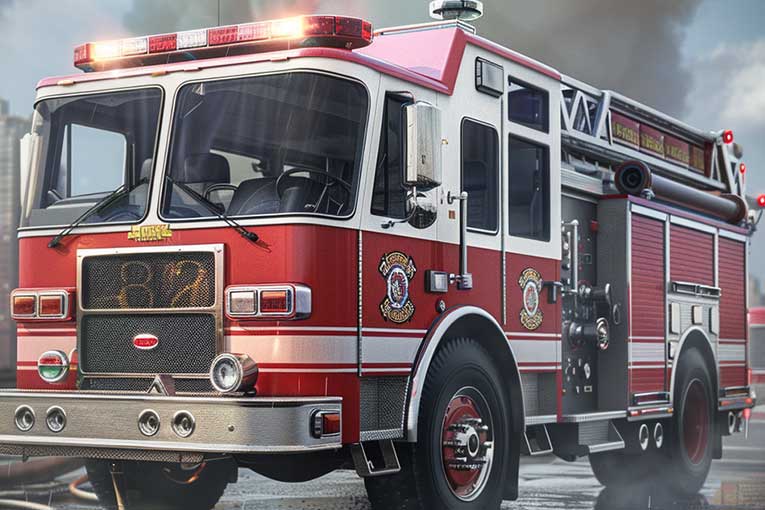
Firetrucks, with their distinctive red hue, stand out as symbols of rapid response to emergencies, commanding attention on roads and streets worldwide. 

But why are firetrucks red?

The vibrant red colour has become synonymous with the urgency and gravity of firefighting efforts. 

While the sight of red firetrucks is deeply ingrained in our collective consciousness, the origins of this colour choice remain shrouded in curiosity and speculation.

In this article, we will delve into the mystery behind the enduring tradition of painting firetrucks red.

Why are Firetrucks Red?

why are firetrucks red image

Firetrucks, with their bold and unmistakable red hue, have become iconic symbols of emergency response. 

The choice of this vibrant colour is deeply rooted in tradition. 

As to why firetrucks are red, the short answer is nobody knows for sure.

However there are numerous theories as to why, with some of the most common being:

Cheapest Colour of Paint

firetrucks red cheapest paint

One widely circulated theory suggests that red became the colour of choice for firetrucks due to its historical status as the least expensive colour of paint. 

In the early days of fire departments, when budgets were tight and they were mostly volunteers, the cost-effectiveness of red paint made it an economical choice. 

This theory reflects a pragmatic approach, where fire departments aimed for a uniform and easily recognizable colour without straining their limited resources.

Most Expensive Colour of Paint

firetrucks red most expensive paint

Contrary to the cost-effectiveness theory, another perspective argues that red was intentionally chosen as the most expensive colour of paint. 

In this view, fire departments sought high-quality, durable paint to protect their vehicles from the elements and enhance their visibility. 

While this theory challenges the notion of frugality, it underscores the importance of investing in materials that ensure the longevity and effectiveness of firefighting equipment.

Farmers

firetrucks red farmers carts

An interesting historical twist connects the colour choice of firetrucks to the practices of farmers. 

During the early days of fire departments, when acquiring vehicles for their fleets, departments often obtained used trucks from farmers. 

Farmers, who commonly painted their carts red to hide dirt and grime, unintentionally contributed to a surplus of red-painted carts that fire departments adopted. 

This theory highlights the influence of practicality and resourcefulness in shaping the colour palette of firefighting fleets.

Displaying Urgency

firetrucks red urgency

The early 20th century, marked by the dominance of black-coloured Ford cars, introduced another theory regarding the choice of red for firetrucks. 

In an era where many vehicles were black, fire departments opted for red to stand out and convey a sense of urgency. 

The stark contrast between the red firetrucks and the sea of black vehicles on the road facilitated quick identification and emphasised the critical nature of their mission.

An Old Joke

firetrucks red old joke

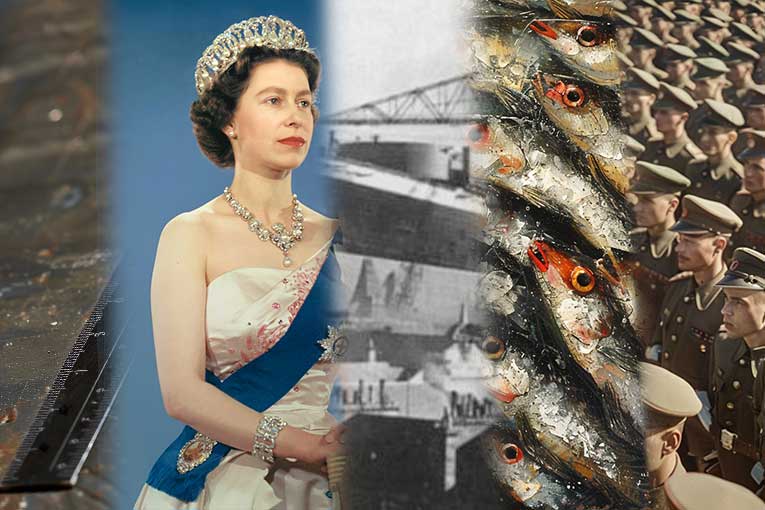
“Because they have 8 wheels and 4 people on them, and 4 plus 8 makes 12, and there are 12 inches in a foot, and 1 foot is a ruler, and Queen Elizabeth was a ruler, and Queen Elizabeth was also a ship, and the ship sailed the seas, and there were fish in the seas, and fish have fins, and the Finns fought the Russians, and the Russians are red, and fire trucks are always ‘Russian’ around, so that’s why fire trucks are red!”

Adding a humorous twist to the discussion is a centuries-old joke that offers a playful explanation for why firetrucks are red. 

According to this whimsical theory, the colour choice is a result of a convoluted chain of associations involving wheels, rulers, ships, fish, and even geopolitical references. 

While clearly a jest, this theory highlights the lighthearted and imaginative interpretations that have woven their way into the lore surrounding firetruck colours.

Can Firetrucks be Other Colours?

While red remains the traditional and widely recognized colour for firetrucks, fire departments around the world have occasionally deviated from this norm, experimenting with different colours for various practical and strategic reasons. 

These alternative colour choices not only break with tradition but also serve specific purposes in enhancing safety, visibility, and aesthetic appeal during emergency responses.

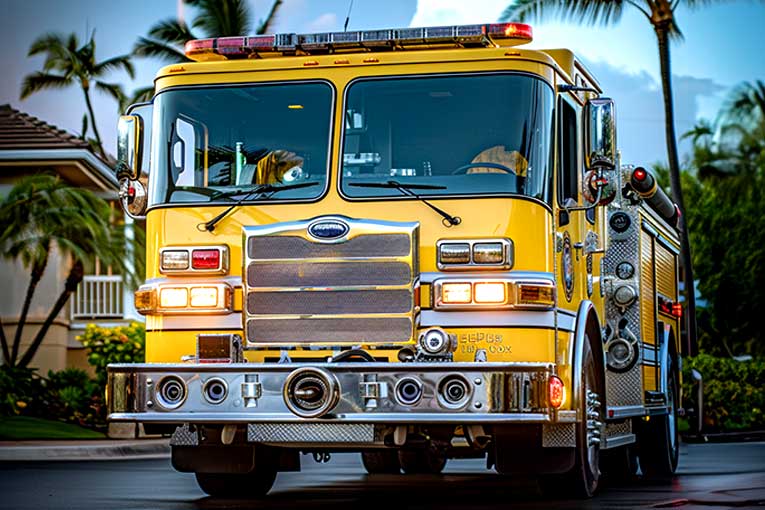
Yellow

yellow firetruck

Yellow firetrucks are occasionally employed to address specific challenges posed by rural environments. 

The vibrant and contrasting colour of yellow enhances visibility, making the trucks more noticeable, especially in expansive rural landscapes. 

This increased visibility is crucial for navigating challenging terrains and locating emergency sites efficiently. 

A notable example is the use of yellow firetrucks in Australia, in regions where the topography and vegetation necessitate heightened visibility for effective emergency response.

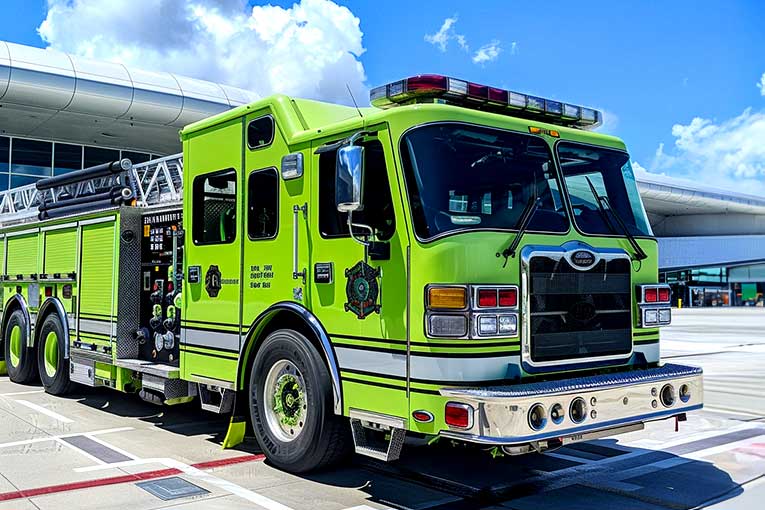
Lime Green

lime green firetruck

Lime green has emerged as a colour choice motivated by a desire to maximise visibility both during the day and at night. 

This highly visible hue stands out in various lighting conditions, ensuring that firetrucks are easily spotted by motorists and pedestrians alike. 

Fire departments adopting lime green firetrucks prioritise safety and awareness during emergency responses. 

This choice is particularly evident in urban areas where diverse lighting scenarios demand enhanced visibility. 

Several examples showcase fire departments incorporating lime green firetrucks into their fleets to bolster their visibility during critical operations.

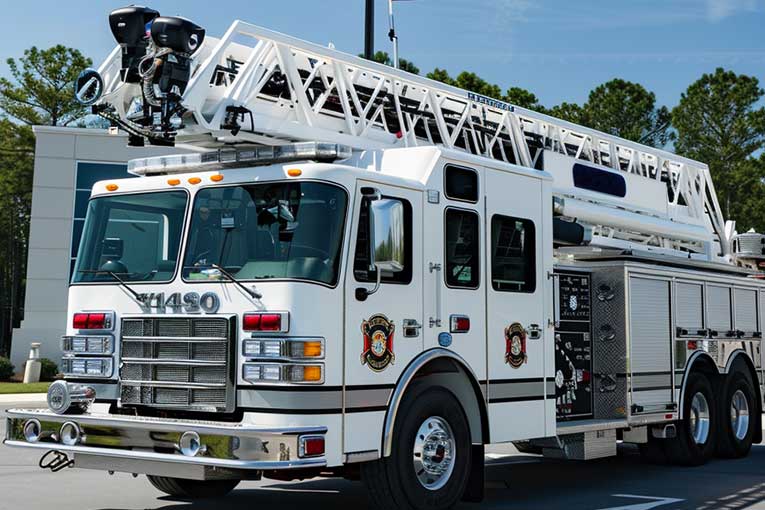
White

white firetruck

White firetrucks represent a departure from the traditional red, chosen by certain fire departments for their clean and modern aesthetic. 

The use of white not only imparts a contemporary look but also serves practical purposes. 

White is a reflective colour, aiding visibility, especially in low-light conditions. 

This choice aligns with the evolving design preferences of fire departments seeking a fresh and modern image while maintaining functionality. 

Examples of fire departments incorporating white firetrucks into their fleets can be found in urban settings where aesthetics and visibility converge as crucial considerations.

Blue

blue firetruck

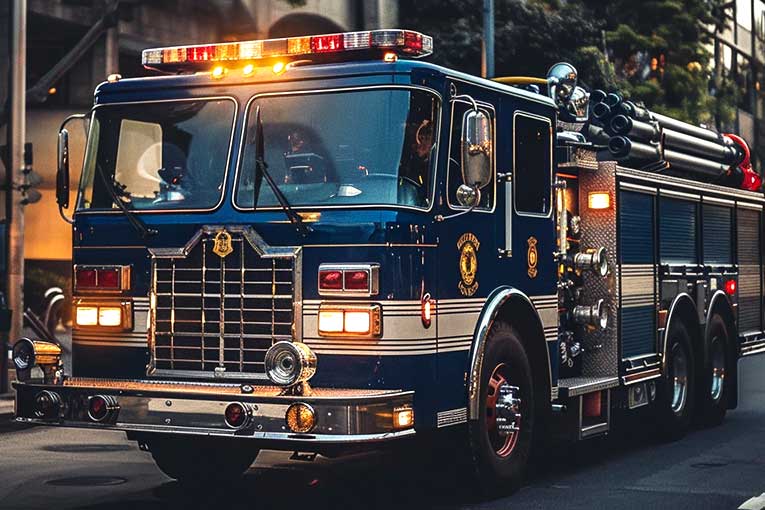
While less common, blue firetrucks are occasionally employed for special purposes or to distinguish specific types of emergency vehicles. 

Blue may be reserved for specialised units within a fire department, signifying distinct functions or equipment. 

This colour choice can aid in rapidly identifying the purpose of a particular vehicle during multi-agency responses. 

Real-world instances include fire departments utilising blue firetrucks for hazardous materials response teams or specialised rescue units, where differentiation in colour supports quick and efficient coordination during emergencies.

Orange

orange firetruck

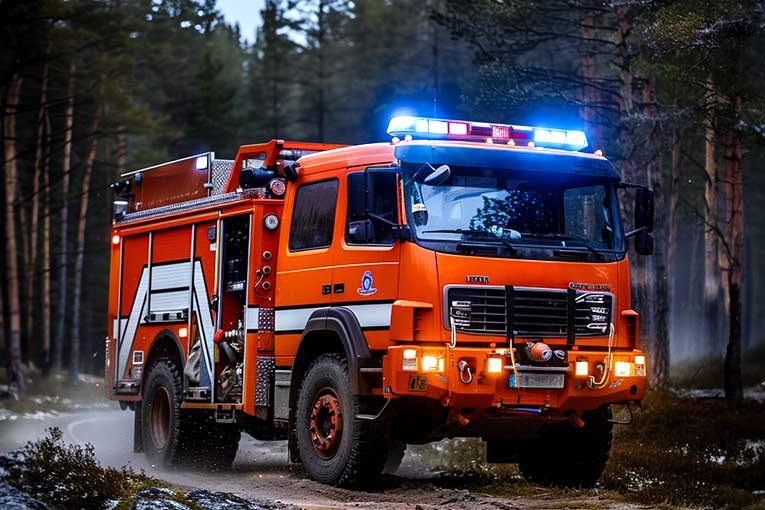
In Finland, the use of orange firetrucks adds a distinctive touch to the country’s emergency response vehicles. 

The choice of orange as a colour for firetrucks is not only a departure from the traditional red but also serves specific purposes tailored to the unique challenges of Finland’s environment.

The vibrant orange hue enhances visibility, especially in the country’s varied landscapes, including forests and lakes. 

Finland’s terrain, characterised by vast expanses of nature, demands vehicles that can stand out against diverse backgrounds. 

Orange firetrucks address this need by providing increased visibility during emergency responses, ensuring that they can be easily spotted in both urban and rural setting

Conclusion

Hopefully this should answer your question of why are firetrucks red?

While red remains the predominant colour for firetrucks, the choice is not solely based on tradition or aesthetics. 

Practical considerations, historical influences, and attempts to increase visibility and safety have all played a role in shaping the colour choices for these vital emergency response vehicles. 

As fire departments continue to evolve and adapt to new technologies and safety standards, we may see further experimentation with colours in the future. 

Regardless of the colour, the primary goal remains the same – to ensure that firetrucks are easily recognizable and effective in responding to emergencies.

IFE members encouraged to apply for trustee director positions

Details on the trustee director vacancies

The Institution of Fire Engineers (IFE) has announced that nominations are now open for two trustee director positions on their board.

This opportunity allows IFE members to influence the organization’s strategic direction and governance.

The new trustee directors will begin their terms following the Annual General Meeting in October 2024, serving an initial period of three years.

Trustees will have significant responsibilities, including advancing the IFE’s objectives and overseeing its strategic development.

These roles offer a platform to expand professional networks and enhance personal profiles while making substantial contributions to the global fire safety community.

Responsibilities and eligibility for nominees

Trustee directors at IFE are tasked with acting in the organization’s best interests, ensuring diligent management and handling any conflicts of interest in accordance with the governing laws and documents.

The eligibility criteria for these positions require candidates to be paid-up voting members, such as Life Fellows, Fellows, Members, Associates, Graduates, or Technicians, and not disqualified from acting as trustees.

The Scottish charity regulator provides a guide for charity trustees, emphasizing the legal responsibilities and the importance of compliance.

Prospective applicants can find the role description and more information on the IFE website.

Nomination and election process

Candidates must submit their nominations by 12 noon BST on 31 May 2024 to be considered for the ballot.

The IFE’s Articles of Association mandate that only nominees recommended by the Nominations Committee can advance to the election phase.

If there are more approved nominations than available positions, an online ballot will be held, with results announced at the upcoming AGM.

Candidates are encouraged to ensure their contact details are updated in the IFE’s records to receive all pertinent information.

BESA introduces new support network for young engineers

BESA launches dedicated group to support young engineers

The Building Engineering Services Association (BESA) has initiated a new network aimed at supporting young engineers and new entrants in the building services sector.

Named the BESA NextGen network, this initiative replaces the previously established ‘Future Leaders’ group, formed in 2017 to support promising young professionals within the industry.

The newly formed network broadens its focus, offering technical knowledge, career support, and networking opportunities, not just to young engineers but also to those in non-engineering roles within the sector.

Goals and objectives of the NextGen network

According to BESA, the network is open to both members and non-members, facilitating a more inclusive environment for professional growth and development.

Ryan Walton, the first chair of the NextGen network and a specification engineer at Panasonic Heating and Cooling, commented on the new initiative: “It is a real honour and a great opportunity to work with my fellow young engineers through this exciting initiative.

“We have a lot to offer the Association and the wider industry, but it is often hard for us to make our collective voice heard.”

Challenges and opportunities

Walton further noted the difficulties young professionals face in the industry, particularly when networking with more seasoned engineers: “It can also be an intimidating experience for younger people to network with older, more experienced engineers, particularly when they are just finding their feet in the industry.

“So, we believe having our own community will help us develop our own priorities and then use BESA’s established and respected platform to help shape the industry’s agenda,” he said.

Strategic importance of the NextGen network

The creation of the NextGen network is part of BESA’s strategic initiative during its 120th anniversary year, aiming to empower younger members to drive innovation, particularly in digital technologies.

BESA also hopes the network will promote a culture change within building services firms, attracting diverse talents necessary for future challenges.

Graeme Fox, BESA’s technical director, highlighted the importance of networking within the industry: “Business relationships are all about networking – developing connections and friendships which are crucial to making the construction industry work.

“The BESA Next Gen network is a critical pathway to creating those connections for people still relatively new to the sector.”

Future plans and initiatives

The network has already started influencing the content for this year’s BESA Annual Conference scheduled for October 17 in London.

Young members will host their own panel discussion and participate in several sessions, reflecting their views and priorities.

IFSJ Comment

The introduction of the BESA NextGen network represents a thoughtful approach towards integrating young professionals into the building services industry.

By providing a platform for growth and expression, BESA is nurturing future industry leaders and ensuring the sector remains vibrant and responsive to technological advancements and cultural shifts.

This initiative also highlights the importance of inclusivity and mentorship within professional communities, fostering a collaborative environment that is crucial for both personal and industry-wide development.

IFE launches strategy development sessions for 2025-2029

Overview of the IFE’s strategy development process

The Institution of Fire Engineers (IFE) has initiated the process of shaping its strategy for the years 2025 to 2029.

Phase 1 of the virtual strategy development sessions took place in March, drawing participation from members across 25 different IFE branches worldwide.

These sessions aimed to conduct a strategic analysis of the global fire safety context, enabling delegates to discuss strategic issues and identify opportunities for improvement within the fire safety domain.

Key outcomes from phase 1 sessions

During the phase 1 sessions, valuable insights were gathered from the global IFE community, involving delegates from 11 different countries.

The sessions utilised the PESTLE analysis method to examine external factors affecting the IFE, such as political, economic, sociological, technological, legal, and environmental aspects.

As a result, several strategic themes were identified, including the need to coordinate the Institution’s identity and purpose, the development of a more significant role for the IFE in promoting global fire safety, and the creation of an inclusive approach to understanding diverse fire safety contexts.

These themes aim to achieve demonstrable impacts through learning, data, and case studies.

 Next steps and member involvement

The IFE is currently concluding phase 2 of the strategy development sessions and has launched a survey inviting members to contribute their thoughts to the strategy formulation process.

Members received email invitations earlier this week, with a deadline for submissions set for 19th April 2024.

This initiative underscores the IFE’s commitment to involving its membership base in shaping the future direction of the Institution and enhancing fire safety on a global scale.

IFSJ Comment

The Institution of Fire Engineers’ initiative to embark on a comprehensive strategy development journey for the years 2025-2029 marks a proactive step towards enhancing global fire safety standards.

By engaging members from diverse geographical and professional backgrounds, the IFE ensures that its future strategy is informed by a wide range of insights and experiences.

This inclusive approach facilitates a more thorough understanding of the challenges and opportunities within the fire safety domain and fosters a collaborative environment for innovation and improvement.

SFPE Foundation releases report on Building Information Modeling and fire protection integration

New report explores the integration of Building Information Modeling in fire safety systems

The SFPE Foundation has officially released a report titled “The Integration of Building Information Modeling with Fire Protection Systems, Software, and Workflows.”

Dated March 18, 2024, and announced in Gaithersburg, Maryland, this publication represents a significant exploration into how Building Information Modeling (BIM) can be integrated into the fire engineering sector.

Spearheaded by Stephen B. Roth, PE, the research investigates the application of BIM software and schemas for fire engineers, aiming to enhance design processes and promote wider adoption of BIM technologies in this critical field.

Findings and recommendations from the research

The report, which concludes a year of rigorous research and analysis, uncovers the potential for notable improvements in software, data management, and interoperability between various systems used by fire engineers.

Based on interviews with over 40 stakeholders, Roth recommends that manufacturers of fire protection equipment focus on designing more user-friendly Revit families.

Additionally, updates to the IFC (Industry Foundation Classes) schema are suggested to facilitate better interoperability.

The document also delves into the future prospects of BIM in fire engineering, including the adoption of artificial intelligence tools and the creation of digital twins for more effective firefighting strategies.

Supplementary User Guide and industry impact

Accompanying the main report is a User Guide that offers practical advice on overcoming common workflow challenges encountered by fire engineers when utilising FE-related software tools.

Leslie Marshall, Ph.D., Director of the SFPE Foundation, emphasised the importance of collaborative efforts within the fire engineering community to ensure BIM’s broader adoption.

Marshall stated: “This research highlights the need for the fire engineering community to align efforts and collaborate with a diverse array of stakeholders to ensure greater adoption of BIM.”

IFSJ Comment

The SFPE Foundation’s initiative to explore and advocate for the integration of Building Information Modeling (BIM) with fire protection systems marks a critical step towards the advancement of fire safety engineering.

By focusing on the interoperability between BIM tools and fire protection workflows, the foundation is laying the groundwork for a more cohesive and efficient design process.

The emphasis on collaboration and the need for practical tools, as demonstrated through the supplementary User Guide, provide valuable resources for professionals in the field.

As the industry moves towards a more digitalised future, incorporating advanced technologies like AI and digital twins, the report’s findings and recommendations serve as a crucial guide for enhancing fire protection strategies and ultimately improving safety standards across the built environment.