10 Types of Aircraft Fire Fighting

Fires can spread quickly, especially in remote and hard-to-reach areas. 

Over time, firefighting has adapted to meet these challenges, using a mix of tools, teams, and technology. 

Aircraft have become a familiar sight during major fire seasons, often seen moving across the sky as part of a wider response effort. 

These flying resources work alongside crews on the ground and play a key role in modern wildfire management. U

Understanding the different fire fighting aircraft involved helps explain how large fires are tackled from multiple angles. 

Key Takeaways

  • Aircraft (planes and helicopters) drop water or retardant to slow wildfires and scout from above.
  • Air Attack planes (air tactical aircraft) coordinate aerial operations and choose drop targets.
  • Fixed-wing airtankers carry retardant by size: Type I (3,000 – 5,000 gal), Type II (1,800 – 3,000), Type III (800 – 1,799). Very Large Air Tankers (VLATs) like DC-10s carry >8,000 gal.
  • Helicopters also have types I to III. Heavy Type I helos (~700 gal buckets) carry large loads, while Type II (~300 gal) and Type III (~100–180 gal) are smaller and quicker.
  • Military and converted aircraft provide extra capacity (~3,000 gal) and speed. A MAFFS C-130 can dump 3,000 gal in under 5 second.

What is Aircraft Fire Fighting?

image showing aircraft fire fighting

Aerial firefighting (or aircraft firefighting) is the use of aircraft vehicles to suppress wildfires. 

It involves fixed-wing airtankers (airplanes) that carry water or fire retardant and drop it on or ahead of a fire. 

Helicopters are also used, either dropping water with a bucket or the transport of crews. 

Aircraft may carry buckets, tanks, or sling loads of water. 

Air attack aircraft (small fixed-wing spotter planes) provide overhead reconnaissance and direct the tanker drops. 

For example, wide-body jets like the DC-10 are outfitted with 12,000-gallon retardant tanks for big fires, while helicopters like the UH-60 Black Hawk (Firehawk) insert firefighters or drop several hundred gallons at precise spots. 

These flying machines extend firefighting reach into rugged areas, deliver large drops quickly, and act as flying lookout posts to support ground teams.

Why is Aircraft Fire Fighting Used?

Aircraft vastly improve wildland fire response speed and effectiveness. 

Ground crews can take hours to reach a remote ridge, but planes can fly over terrain. 

For instance, California reports that its firefighting aircraft reach the most remote state fires in about 20 minutes. 

By dropping water or retardant early, aircraft help contain fires when they are small. 

A swift initial attack from the air can keep a fire to mere acres (California’s goal is to keep 95% of fires under 10 acres). 

Aircraft are used because they can access fires rapidly, cover wide areas with retardant or water, and support ground crews with real-time intelligence, saving time and lives compared to relying on ground crews alone.

10 Types of Aircraft Fire Fighting

The 10 types of fire fighting aircraft are Air Tactical Aircraft, Fixed Wing Aerial Tankers (type I to III, VLAT and military) and helicopters (type I to III and military).

Air Tactical Aircraft
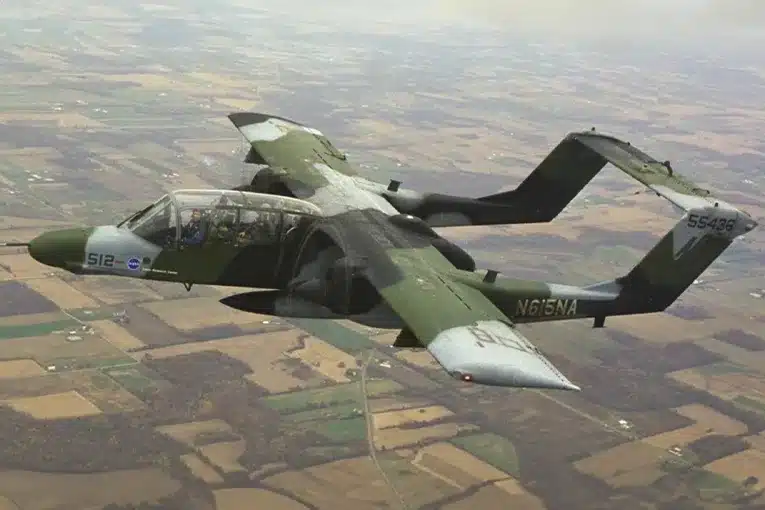
image of a OV-10 Bronco Air Tactical Aircraft
OV-10 Bronco / Source: Wikipedia

Air tactical aircraft (air attack planes) are small, fast planes used to direct aerial firefighting. 

They fly over a wildfire with a pilot and an Air Tactical Group Supervisor (ATGS) onboard. 

From above, they scout fire perimeters, identify hot spots, and radio drop instructions to airtankers and helicopters. 

Examples include the North American OV-10 Bronco (formerly used by CAL FIRE) and light turboprops like the Beechcraft King Air or Cessna 337. 

These planes can loiter over the fire and mark targets for larger aircraft. 

The advantage of air attack planes is coordination.

By ‘calling the drops’, they ensure retardant hits the most critical areas and that multiple aircraft don’t conflict.

They improve safety and efficiency of the aerial assault, acting as flying command centers for the firefighting effort.

Fixed Wing Aerial Tankers

Fixed-wing aerial tankers (airtankers) are airplanes modified to carry fire retardant or water in tanks. 

They fly low over fires and release a stream or line of retardant to slow flames. 

Tankers range from small single-engine aircraft to large multi-engine jets. 

Their role is to blanket the fireline with retardant, creating firebreaks. 

The airtankers are categorized by capacity: Type I (>3,000 gal), Type II (1,800 – 3,000), and Type III (800 – 1,799). 

Very large air tankers (VLATs) exceed 8,000 gallons. 

Each class has its purpose, as detailed below.

Type I

image of a Lockheed L-188 Electra plane
Lockheed L-188 Electra / Source: Wikipedia

Type I airtankers are the largest conventional tankers (3,000 – 5,000 gallons). 

It can drop that in a single pass. 

Type I planes include the Lockheed L-188 Electra (3,000 gal), BAe 146 regional jet (3,000 gal), and McDonnell Douglas MD-87 (4,000 gal). 

These planes carry far more retardant than smaller tankers, so one drop covers a very long stretch of fireline. 

Their advantage is sheer volume. 

Type I tankers are used for extended attacks on large fires where massive coverage is needed.

Type II
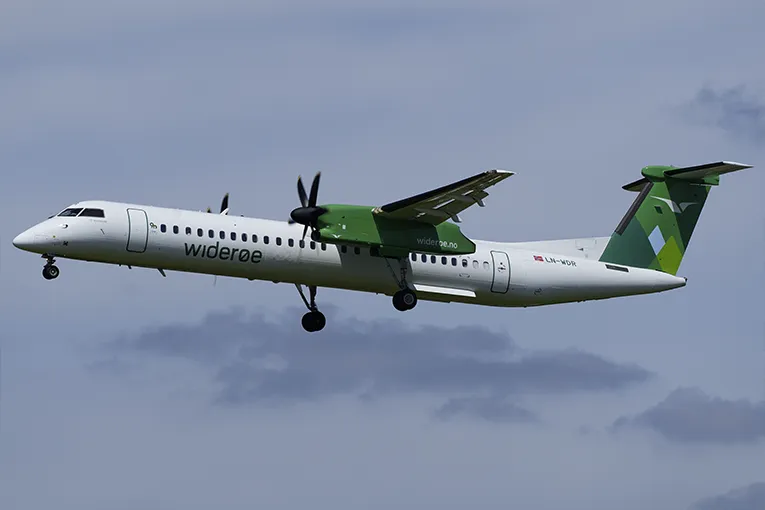
image of a Bombardier Dash-8 Q400 plane
Bombardier Dash 8 Q400 / Source: Wikipedia

Type II airtankers are medium-sized tankers carrying about 1,800 – 3,000 gallons. 

They include turboprop airliners and converted executive jets. 

For example, the Bombardier Dash 8 Q400 (a Canadair airliner) drops  around 2,600 gal, and older warbirds like the Douglas DC-6 or C-130 derivatives are in this class. 

Type II tankers balance capacity with flexibility.

They are faster and more fuel-efficient than single-engine tankers yet can still operate from many airports. 

Multiple Type II drops can cover a large area while using smaller airfields. 

Aviation contractors combine Type II tankers for broad coverage.

For instance, three Q400s might deliver a combined load equivalent to one Type I tanker, but with quicker turnaround from multiple bases.

Type III

image of a Canadair CL-215 plane
Canadair CL-215 / Source: Wikipedia

Type III airtankers are smaller fixed-wing aircraft carrying 800 – 1,799 gallons. 

These include single-engine airtankers (SEATs) and small twin-engine planes. 

Examples are the Air Tractor AT-802 (about 800 gal) and light amphibious planes like the Canadair CL-215 (~1,300 gal). 

Type III tankers are nimble and can use very short or unimproved runways close to fires. 

They are ideal for initial attack on new wildfires.

They arrive quickly, make short drops, and return for more. 

Their advantage is agility and responsiveness. 

Because they operate from small airports, they can reach remote incidents faster, and their shorter water lines can get into steep or confined terrain. 

Airtankers like the S-2 Tracker have stout landing gear and torpedo bays made for retardant tanks, allowing them to basing at small fields with short runways.

Type III tankers sacrifice drop volume for speed and access to work effectively in the early stages of a fire.

VLAT
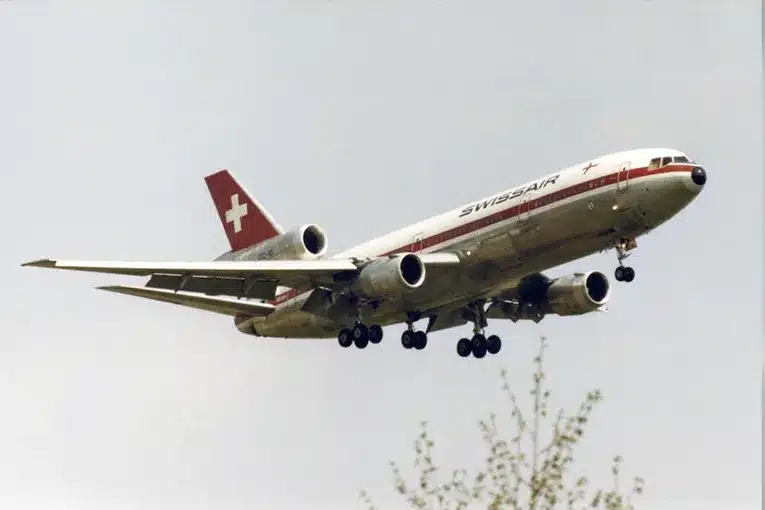
Image of a McDonnell Douglas DC-10 plane
McDonnell Douglas DC-10 / Source: Wikipedia

Very Large Air Tankers (VLATs) represent the largest class of fixed-wing firefighting aircraft and are deployed when massive fire coverage is needed quickly. 

These aircraft are often converted wide-body jets, such as the McDonnell Douglas DC-10.

This can carry upwards of 9,400 gallons of fire retardant in one load, released in just a few seconds to lay down long, continuous lines ahead of advancing flames. 

A single VLAT drop can cover a fireline hundreds of feet wide and miles long, making it much more efficient at slowing fire spread than smaller tankers. 

Other legacy VLAT projects, such as the Boeing 747 Supertanker, were designed to carry nearly 20,000 gallons, demonstrating just how much retardant can be delivered from the air. 

Newer programmes are now developing Boeing 767-based VLATs with even greater capacity and modern systems. 

The main advantages of VLATs are their high payloads and long-reach retardant delivery, which are particularly valuable on very large or fast-moving wildfires where quick, broad coverage is crucial.

Military Aerial Tankers

image of a C-130 Hercules equipped with MAFFS
C-130 Hercules equipped with MAFFS / Source: Wikipedia

Military transport aircraft are also used in firefighting when available. 

The U.S. Forest Service’s Modular Airborne Firefighting System (MAFFS) equips C-130 Hercules transports as temporary tankers (3,000 gal each). 

For example, two MAFFS C-130s were sent to help Colorado fires in 2025. 

A MAFFS unit can discharge 3,000 gal of retardant in under five second. 

In addition, very large military or former military jets have been converted to airtankers. 

These military-type planes cover enormous areas.

The key advantage is volume and reach. 

Such planes can fight high-intensity fires or provide surge capacity when multiple air drops are needed. 

They do require specially equipped bases to refill, but in return they extend the firefighting fleet’s capability by an order of magnitude compared to smaller tankers.

Helicopters

Helicopters are highly versatile firefighting aircraft. 

They can rapidly drop water or retardant on fires, ferry firefighters and equipment, perform aerial ignition, or conduct search and fire rescue

They operate closer to the fireline than fixed-wing tankers. 

Helicopters are also classified by type based on size and capacity. 

Heavy helitankers are Type I, medium helis Type II, and light ones Type III. 

These categories guide their deployment, as we describe below.

Type I
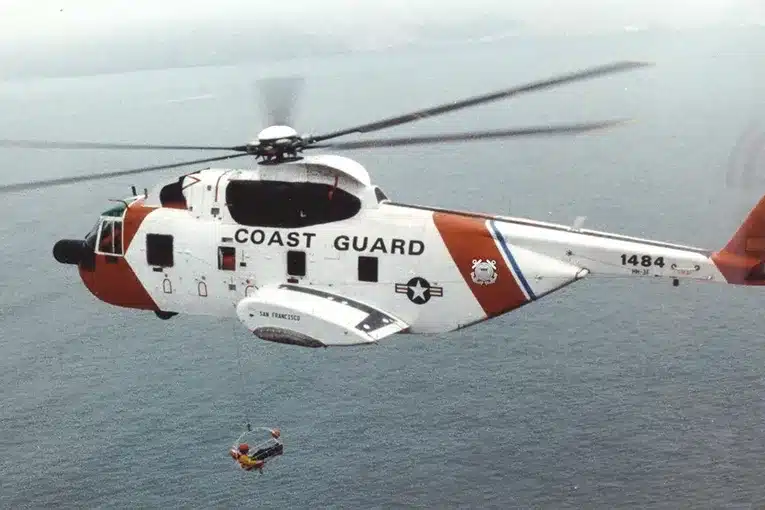
image of a Sikorsky S-61 helicopter
Sikorsky S-61 / Source: Wikipedia

Type I helicopters are the largest firefighting helos (roughly 15+ passenger seats and ~700 gal capacity). 

Examples include Sikorsky S-61/CH-3E and heavyweight airframes like the S-64 Skycrane. 

These can lift several tons of water. 

Civilian Type I helitankers include the AS332 Super Puma and the Erickson S-64 Skycrane (2200 gal). 

Advantages of Type I helis include high drop capacity and speed. 

They can deliver thousands of gallons per mission with good accuracy. 

They often also transport large crews (up to 18 firefighters) in addition to their fire load. 

Their size allows long range and heavy pickups, making them key assets for large or long-duration fires

Type II
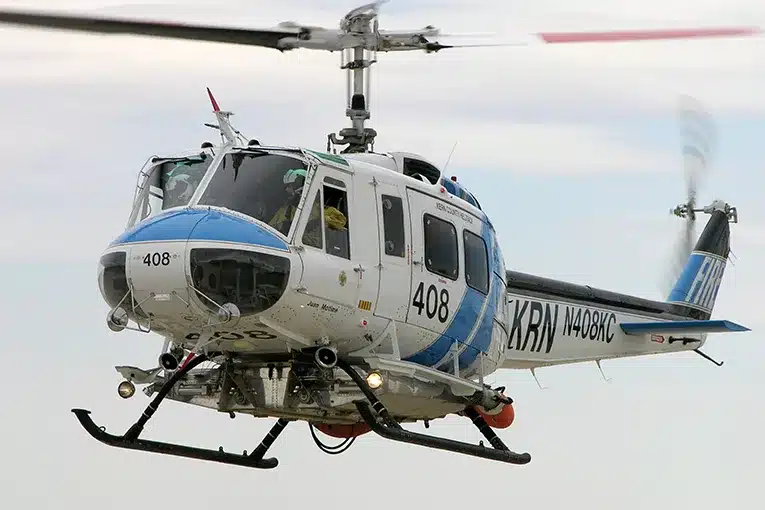
image of a Bell 205 helicopter
Bell 205 / Source: Wikipedia

Type II helicopters are medium-sized firefighting helicopters (around 9–14 seats) with moderate bucket loads (up to ~300 gal). 

Examples include the Bell 205/212 (Huey family) and the Sikorsky S-70i (Firehawk) in firefighting configuration. 

These choppers are workhorses for initial attack. 

They can rapidly deliver 200 – 300 gallons to a fire and shuttle firefighters or gear. 

Type II helos balance power and efficiency.

They are faster and carry more than Type III, yet require less support than Type I. 

In many states, Cal Fire’s UH-1H Super Huey (Type II) and similar aircraft are used to bolster early fire response. 

Advantages include quick turnaround and versatility.

TType II helos can be reloaded with water via snorkel taps in seconds and return to precise drop points to support ground crews.

Type III
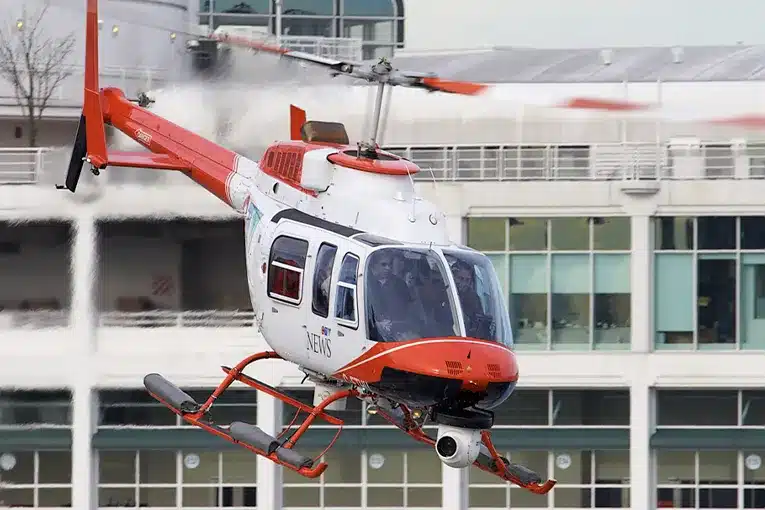
image of a Bell 206 helicopter
Bell 206 / Source: Wikipedia

Type III helicopters are the smallest firefighting helos (roughly 4–8 seats) carrying about 100–180 gallons. 

Examples include the Bell 206/407 and MD Helicopters 500 series with buckets. 

Although their loads are small, they have high cruise speeds and rapid maneuverability. 

They can often arrive on scene faster than larger helos, making them useful for quick initial hits on new fires. 

Type III helos typically set up a water bucket (180-gal) and can dip in any nearby water source. 

Their main advantage is agility.

They can operate in confined areas and rough terrain where bigger aircraft cannot, and they can efficiently scout fire edges. 

They cost less to operate, so they are often used to support engines and crews on small fires or in difficult spots.

Military Helicopters
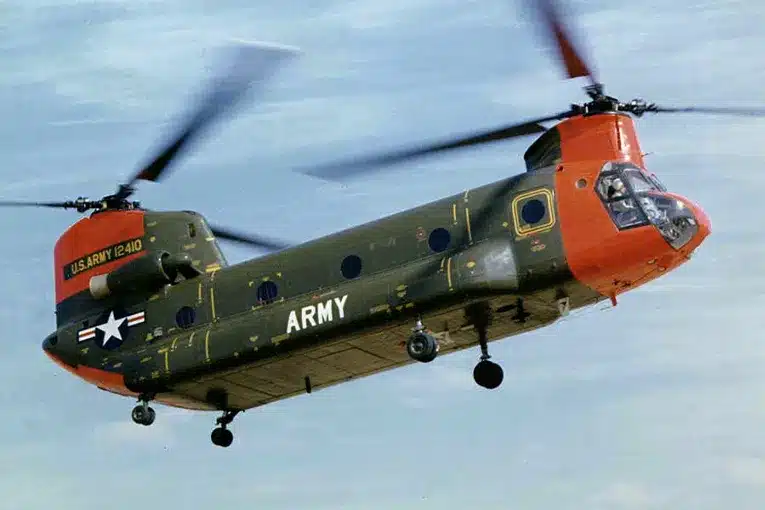
image of a Boeing CH-47 Chinook helicopter
Boeing CH-47 Chinook / Source: Wikipedia

Military helicopters, especially heavy transports, have been adapted as ‘helitankers’ with enormous capacity. 

The Boeing CH-47 Chinook (used by Southern California’s Quick Reaction Force) is the largest firefighting helicopter in the world. 

Chinooks carry an internal 3,000-gallon tank and can hover-fill from a source in 90 seconds. 

Another is the Sikorsky CH-53 Sea Stallion/CH-53K, with roughly 2,200 gal capacity, and the CH-54 ‘Helitanker’ Pelican (also ~2,200 gal). 

These military helos are also fast; for example, the Chinook cruises at 160 kt. 

Their advantage is clear.

They deliver far more water than civilian helicopters. 

A single Chinook drop equals multiple drops by Type I helos. 

Additionally, many are night-capable and can transport many troops or load heavier gear. 

Military helitankers combine high volume, speed, and durability, making them formidable tools for large-scale firefighting operations

Final Thoughts

Aerial fire fighting brings together a diverse fleet of aircraft, each with a specialized role. 

Air attack planes guide the operation, fixed-wing tankers blanket fires with retardant, and helicopters provide agile support. 

Each type has advantages – from the enormous drops of DC-10s to the nimble bucket work of small helicopters. 

Used together, these aircraft help contain wildfires that would otherwise spread. 

Modern firefighting continuously evolves (new tankers, night-ops, and even drones), but the core remains.

Different flying machines are tools in the sky fighting fires. 

By rapidly reaching remote fires, delivering huge volumes of water, and coordinating efforts, these aircraft types save land and lives, proving that the sky is an invaluable front line in wildfire suppression.

New report estimates £126m annual school fire losses in England without sprinkler cover

Sprinkler data highlights scale of school fires

School fires in England are occurring six to seven times a week, with new research linking their frequency and cost to the absence of sprinkler systems in most affected buildings.

The National Fire Sprinkler Network (NFSN) has published a report titled What is the Cost of Fires in Schools.

It states that between 2010/11 and 2023/24 there were an average of 350 school fires per year.

The average area of damage per incident is equivalent to one classroom.

Fires that start in the evening or at night are associated with much larger areas of damage.

Over a 30 year period, the likelihood of a secondary school experiencing a fire reaches 70%.

Costs of school fires and sprinkler performance rates

The report estimates that direct and consequential costs of school fires over the last 14 years amount to more than £126 million per year, or £282,200 per incident.

Direct costs include casualties, property damage, fire and rescue response and environmental effects.

Consequential costs include temporary accommodation and pupil transport to alternative schools.

The report also refers to wider impacts such as stress for pupils and staff, disruption to education, loss of coursework and effects on vulnerable children.

Government data cited in the report states that one lost day of education equates to £750 in reduced lifetime earnings.

The research concludes that in secondary schools a single day of closure is sufficient to justify the cost of installing sprinklers.

It states that over 97% of school fires in the last 14 years occurred in buildings without a safety system present.

Where sprinklers were installed and operated, they extinguished the fire in 71% of incidents and contained or controlled it in a further 27%, giving an overall effectiveness rate of 98%.

Terry McDermott, QFSM, MA, Secretary, National Fire Sprinkler Network, said: “Every week, schools are impacted by fire and every closure harms children’s learning and community stability.

“Sprinklers work, they are cost effective, and they prevent devastation.

“Protecting schools is not optional, it is essential.”

The NFSN is calling for sprinklers to be included as standard in all new and refurbished school buildings.

Dignity through automation: The Fire Knight challenges legacy protection

Richelle Sinclair, Executive Representative to the CEO at The Fire Knight, outlines why legacy protection lags modern materials and faster incident growth

For decades, the foundations of fire safety in the built environment have rested on two pillars: smoke alarms and sprinkler systems.

While both serve essential purposes, they share a critical weakness: they rely on intervention that may come too late.

Traditional fire protection was designed for a different era.

Buildings once used slower-burning materials, occupants were assumed to be mobile, and intervention was expected to come from householders or firefighters arriving promptly.

Smoke alarms were intended simply to wake people.

Sprinklers were developed primarily to protect property, activating only when flames reached high temperatures.

Both assumed slower fire growth and simpler risks than those we face today.

Against this backdrop, the contrast is stark.

While society has embraced innovation in every sphere, fire detection and suppression remain locked in a reactive model.

If our phones, cars, and homes have all become “smart,” why hasn’t the same leap been made in the systems designed to protect our lives from one of humanity’s oldest threats?

In the modern built environment, fires move fast.

Lightweight construction materials, synthetic furnishings, and tightly sealed buildings mean a small flame can become a fully developed fire in minutes.

Traditional systems were not designed for this reality.

Smart fire systems are emerging as the missing link.

By detecting fires at the earliest stages and automatically triggering suppression, they buy precious time for evacuation and emergency response.

Seconds and minutes make all the difference, particularly in homes and care facilities where residents may not be able to move quickly, or at all.

A confronting reality in care settings

The situation is especially confronting in assisted living and disability housing.

In Australia, carers are under no legal obligation to assist with evacuation during a fire in a private, residential setting.

That stark reality leaves many vulnerable people exposed, relying on systems designed decades ago for healthier, more mobile populations.

Comparable frameworks in the UK and USA also stop short of requiring carers in domestic settings to assist evacuation, despite stronger rules for institutional facilities.

On a personal note, my 83-year-old mother lives in a ground-floor housing commission unit in Brisbane.

Her bedroom opens onto a balcony, but every window and the balcony itself are secured with bars.

If a fire were to start in her small kitchen, the most likely ignition point, the only interior path to safety could be cut off, and she would be unable to squeeze through the barred exits.

A smart fire detection and suppression system in that kitchen would dramatically increase her chance of survival by controlling the fire before escape routes are compromised.

Situations like hers are far from unique, and they highlight the urgent need for autonomous, early-stage fire protection for people who cannot rely on rapid evacuation or human assistance.

Smart fire systems are about protecting property and providing dignity and safety to those who cannot otherwise protect themselves.

By intervening automatically, without waiting for human action, they bridge a moral and practical gap in current standards of care.

Lessons from the specialist disability accommodation sector

Our recent association with the Specialist Disability Accommodation (SDA) sector of Australia’s National Disability Insurance Scheme (NDIS) has highlighted just how critical this gap is.

These facilities are home to individuals with high support needs, yet even here, fire-safety provisions often fail to go beyond the basics.

As Debbie Kindness, General Manager at NDIS Property Australia, explains: “The primary challenge is a regulatory gap.

“The current NDIS SDA Design Guidelines don’t mandate specific fire safety measures, leaving critical decisions to voluntary or cost-based compliance, which can result in protection gaps.

“Retrofitting solutions like sprinklers into existing homes is also costly and disruptive.

“Most importantly, residents often have mobility or cognitive impairments, making rapid self-evacuation nearly impossible.”

Industry culture adds another barrier.

Tania Gomez, Director of Tania Gomez Consulting, observes: “Emergency management is considered during the audit process because there is a standard around it, but when I speak to providers about testing their plans, doing drills, and the requirements to do this with participants, it’s largely not considered.

“They have a plan, but find testing it too hard, and as a result often do nothing about fire management outside of what’s reviewed during audit.”

Gomez notes that awareness of the limitations of traditional suppression methods is still low, adding that the biggest opportunity for change lies in “building knowledge and awareness of the dangers of fire, and creating strategies to educate and empower frontline staff in emergencies.”

Provider decision-making is equally pivotal.

Nick Lukowskie, General Manager of the Equitifund Group, highlights the complex mix of factors influencing adoption: “In certain circumstances, compliance requirements, particularly those tied to building classifications, may not permit the installation of non-traditional fire systems.

“However, where a mandatory system is not prescribed, there is scope to apply a risk assessment and cost-benefit analysis to guide decision making.

“Ultimately, adopting a practical, risk-based approach provides the most effective pathway when assessing the suitability of smart fire safety systems.”

Nick also notes the biggest barrier: recognition.

He says: “The most pressing challenge lies not in the system’s functionality, but in its acceptance and recognition as a formal fire safety solution.

“Building certifiers, insurers, and other governing bodies may be hesitant to acknowledge it as compliant.

“Without such recognition, the system risks being overlooked or dismissed despite its potential to address safety gaps in existing housing.”

On practical rollout, he also stresses the need for detection and suppression as an integrated base layer.

The SDA sector has become a proving ground for the role smart fire systems can, and must, play.

But the lesson is not limited to one sector.

If this level of vulnerability exists in specialised accommodation, it exists across the built environment.

From alarms to smart detection

Technology is now stepping in where legacy systems fall short.

The latest generation of smart fire detection doesn’t just sense smoke; it monitors a broader spectrum of risk indicators.

Our own system has evolved significantly.

Originally designed with broad-spectrum VOC (volatile organic compound) sensing, it has since been refined to incorporate targeted gas detection, including carbon monoxide (CO), carbon dioxide (CO₂), liquefied petroleum gas (LPG), and methane.

This shift has delivered earlier, more reliable detection of both fire and explosion risks.

Instead of waiting for thick smoke or extreme heat, smart systems detect the earliest chemical changes in the environment.

This allows them to trigger suppression or alarms before flames spread, giving occupants and responders a crucial head start.

Making smart fire systems mainstream

The case for smart fire systems is compelling: they save lives, protect property, and reduce risk across diverse environments.

Yet adoption remains limited.

Too often, they are seen as optional extras rather than standard inclusions.

Just as smoke alarms became a non-negotiable feature of modern housing, smart detection and suppression should be embedded in every new build.

For existing housing stock, retrofitting must be made practical and accessible, ensuring millions of homes are not left behind.

The technology is here, the benefits are clear, and the need is undeniable.

What remains is for regulators, developers, and policymakers to catch up, and for the industry to embrace a future where early-stage, autonomous response is the norm, not the exception.

Debbie Kindness concludes: “Protecting vulnerable populations requires a best-practice approach, not just minimum compliance.

“We must anticipate risks and act preventively.

“Inadequate fire safety carries profound human and liability consequences.

“Advanced fire safety should be a mandatory standard of care, regardless of current policy.”

This was originally published in the February 2026 Edition of International Fire & Safety Journal. To read your FREE copy, click here.

Unmanned firefighting robots deployed to rescue units across South Korea

Firefighting robots donated to Korea National Fire Agency

Hyundai Motor Group has donated four unmanned firefighting robots to South Korea’s Korea National Fire Agency (KNFA) to support fire suppression in high-risk environments.

The Group confirmed that a donation ceremony took place on 24 February at the National 119 Rescue Headquarters in Namyangju, Gyeonggi Province.

Two firefighting robots have already been deployed to 119 Special Rescue Units in the Capital and Yeongnam regions and are in use during live fire operations.

Two additional units will be delivered to the Gyeonggi Provincial Fire Headquarters in Hwaseong and the Chungnam Provincial Fire Headquarters.

Euisun Chung, Executive Chair of Hyundai Motor Group, said: “Firefighters who rush into danger without hesitation to save lives remind us of the values our society must uphold.

“In partnership with the Korea National Fire Agency, we developed the Unmanned Firefighting Robot to help realize the very value of ‘safety’ that firefighters have long protected.

“The Unmanned Firefighting Robots that we are donating embody Hyundai Motor Group’s core technologies and represent a new form of mobility built on our shared goal of ‘technology that saves lives.’

“We hope they will serve as reliable teammates, entering dangerous scenes ahead of others to safeguard the firefighters’ safety.

“When the National Fire Hospital opens this June, we will support firefighters’ swift recovery by donating vehicles and rehabilitation equipment.

“Hyundai Motor Group will continue to provide the technologies and support needed to ensure that firefighters can carry out their missions in a safer environment.”

Seung-ryong Kim, Acting Commissioner of the Korea National Fire Agency, said: “This initiative marks the first step in a paradigm shift that will redefine disaster response.

“We will continue to actively introduce advanced technology to the field through innovative collaboration with the private sector, including Hyundai Motor Group, a global mobility leader.”

Robot design and operational capabilities

Hyundai Motor Group developed the unmanned firefighting robot in collaboration with the KNFA based on Hyundai Rotem’s electrified multi-purpose unmanned vehicle, the HR-Sherpa.

The robot is equipped with a front-mounted water cannon capable of delivering both direct and spray-type water streams to address different fire conditions.

A self-spraying cooling system creates a protective water curtain around the vehicle, enabling it to maintain an internal temperature of 50 to 60°C when exposed to external temperatures reaching 800°C.

An infrared camera supports object detection through smoke and flames and helps identify fire origins and individuals requiring rescue.

Operators receive real-time video via a wireless connection, enabling remote control of driving and firefighting functions.

The vehicle uses high-temperature-resistant tyres and a six-wheel independent drive in-wheel motor system to support mobility across debris and uneven terrain.

BSI opens draft for Underground fire hydrants standard for public comment

Underground fire hydrants standard draft opens for comment

A draft revision of BS 750, covering requirements for underground fire hydrants, is open for public comment until 13 April 2026.

The British Standards Institution (BSI) announced that the Draft for Public Comment is intended to support work responding to Recommendation 40 of the Grenfell Tower Inquiry Phase 2 report.

The standard is titled Underground fire hydrants. Surface box frames and covers. Specification (BS 750).

What BS 750 covers and what the amendment proposes

BS 750 specifies requirements for surface box frames and covers, including how they are designed, manufactured and tested to deliver reliable performance.

The standard is intended to provide a consistent technical framework for manufacturers, water companies and fire and rescue services, supporting durability, compatibility and effective operation.

The revised document is intended to provide greater clarity and strengthened requirements within the standard.

The proposed amendment aims to improve clarity in definitions and figures so the measurement of the flow coefficient is clearly described, in line with the Grenfell Tower Inquiry recommendation published in September 2024.

It also strengthens requirements for third-party verification and certification, alongside enhanced technical specifications designed to support greater consistency, transparency and accountability across the industry.

Consultation timetable and stakeholder engagement

The Draft for Public Comment is being promoted initially to existing users of BS 750, with wider industry engagement to follow.

Anne Hayes, Director of Sectors and Standards Development at BSI, said: “The publication of this draft reflects our clear commitment to responding constructively to the findings of the Grenfell Tower Inquiry and supporting safety across the built environment.

“We recognise the importance of actively addressing the Inquiry’s recommendations through the standards-making process.

“By progressing this amendment to BS 750, we are reinforcing our role as a responsible partner in supporting public safety and strengthening the technical standards that underpin critical fire and rescue infrastructure.”

Comments can be submitted during the consultation period via the BSI standards development site.

What underground fire hydrants are and how they work

Underground fire hydrants are fixed connections to the public water supply that allow fire and rescue services to obtain water for firefighting.

In the United Kingdom, these hydrants are installed below ground level inside a protective chamber, with access provided through a surface box and cover set into the pavement or road.

The hydrant itself is connected directly to the local water main.

It contains a valve and outlet that remain sealed until needed.

When accessed, the hydrant provides a controlled supply of water that can be directed through firefighting equipment such as hoses and pumps.

Unlike above-ground hydrants used in some countries, underground fire hydrants are not immediately visible.

Their location is marked using indicator plates, typically mounted on nearby walls or posts, which display the letter “H” and provide distance measurements to help firefighters find the exact position.

The hydrant cover at ground level is designed to protect the chamber and prevent debris or surface water from entering.

To use an underground hydrant, firefighters remove the surface cover and insert a standpipe into the hydrant outlet.

The standpipe is a portable metal pipe carried on fire appliances, which allows water to be brought above ground and provides standard hose connections.

Once the standpipe is secured, a hydrant key is used to open the valve, allowing water to flow from the water main into the standpipe and through connected hoses.

These hydrants form part of the fixed infrastructure supporting firefighting operations across towns and cities.

They provide a dependable water source in areas where fire appliances may need additional supply beyond what is carried on board.

This is especially important during large incidents, extended firefighting operations or when operating at locations distant from open water sources.

The performance of underground fire hydrants depends on several technical factors, including water pressure, flow capacity and compatibility with firefighting equipment.

Standards such as BS 750 define requirements for hydrant components, including surface box frames and covers, and establish criteria for design, manufacture and testing.

These requirements support consistency across the network and help ensure hydrants operate as expected when needed.

Water companies are typically responsible for maintaining the hydrant connection to the water main, while fire and rescue services carry out inspection and operational checks to confirm accessibility and functionality.

Regular inspection helps identify issues such as obstruction, damage or reduced flow, which could affect firefighting operations.

Underground fire hydrants are widely used across the UK because their below-ground installation protects them from accidental damage, reduces obstruction in public spaces and allows installation in dense urban environments.

Their integration with the public water supply ensures that fire and rescue services can access a distributed network of water sources, supporting firefighting capability across residential, commercial and industrial areas.

Simplifying fire sprinkler testing: AGF adds relief with Model 1511

How AGF’s DRAINANTEST Models 1500 and 1511 combine drain and test functions for commissioning and inspection of wet system risers

Fire sprinkler systems are symphonies of precision: they must flow when needed and stay silent when not.

At the heart of reliable system commissioning and ongoing inspection is the often-overlooked test valve.

AGF’s DRAINANTEST Models 1500 and 1511 bring harmony to this essential task, giving engineers and installers elegant, efficient tools to carry out alarm check tests and main drain functions without fuss.

The DRAINANTEST line is rooted in an idea both simple and powerful: combine critical functions into a compact, resilient valve assembly that supports proper system testing while minimizing connections, leakage points, and installation complexity.

Both the Model 1500 and the Model 1511 are designed for wet fire sprinkler systems where a test point is needed downstream of an alarm check valve to validate flow and alarm activation.

By combining the functions of a main drain and an inspector’s test connection, these models streamline riser assemblies and reduce field installation labor.

At a glance, the Model 1500 and Model 1511 share the core design philosophy of the DRAINANTEST brand: rugged iron bodies, single-handle ball valve operation, and a range of tamper-resistant orifices that let designers tailor testing to hydraulic requirements.

Orifice options span from smaller values suitable for residential and light commercial systems up through larger ESFR K-factors that accommodate high-demand commercial and industrial applications.

These tamper-resistant test orifices protect the installed configuration, helping maintain testing requirements throughout the life of the system.

What sets Model 1511 apart is the inclusion of a pressure relief valve with drain trim.

Some jurisdictions, insurance inspections, or system designs require pressure relief to guard against unexpected pressure spikes.

Model 1511 answers this need directly, eliminating the requirement for a separate relief assembly and the associated fittings.

With pressure relief included, installation is cleaner, and inspectors see a complete solution in one compact footprint.

By contrast, the Model 1500 is offered without the pressure relief kit, serving markets and systems where relief is not required or is provided elsewhere in the design.

This modular approach respects design intent: supply exactly what’s needed without extra parts or unnecessary cost.

Both models are available in threaded BSPT or NPT, aligning with international piping practices found across Europe, Asia, the Middle East, and beyond.

BSPT threading promotes compatibility with locally sourced components, making the DRAINANDTEST line well-suited for global projects.

NPT connections are also available, ensuring flexibility for every project.

In a global fire protection landscape where clarity and efficiency matter, AGF’s DRAINANTEST line turns a necessary procedure into a straightforward task with fewer fittings, fewer potential leak points, and more reliability when it counts.

To find an AGF distributor in your region, visit the AGFMG website.

This was originally published in the February 2026 Edition of International Fire & Safety Journal. To read your FREE copy, click here.

Designing fire sprinkler systems for maintainability: AGF on ITM design

AGF Manufacturing explores how field experience influences system design to ensure that components remain accessible and compliant for technicians

Fire sprinkler systems are typically judged at the moment of acceptance.

If the system passes its hydrostatic test, flows water as expected and meets the design criteria of NFPA 13, it is often considered successful.

But experienced professionals understand that commissioning is only the beginning.

The true measure of a fire sprinkler system is whether it remains reliable, serviceable and compliant years later as the building, occupancy and environment change.

Maintainability is rarely the primary focus during system design, yet it strongly influences long-term performance.

Systems designed with inspection, testing and maintenance (ITM) in mind tend to experience fewer impairments, lower lifecycle costs and more consistent compliance with NFPA 25.

Neglected systems can become difficult, time-consuming and risky to maintain.

This article explores how field experience highlights the importance of designing fire sprinkler systems for maintainability and how understanding the roles of NFPA 13 and NFPA 25 can support long-term reliability.

Understanding the different roles of NFPA 13 and NFPA 25

NFPA 13 and NFPA 25 serve different purposes.

NFPA 13 is an installation standard focused on the design and installation of fire sprinkler systems so they perform as intended at acceptance.

It addresses system layout, hydraulic criteria, component selection and installation practices.

NFPA 25 covers what happens after installation.

Its purpose is to provide minimum requirements for ongoing inspection, testing and maintenance of water-based fire protection systems.

It assumes that the system was installed correctly in accordance with NFPA 13 and focuses on keeping it operational over time.

As stated in NFPA 25 Chapter 1, the standard establishes requirements for periodic ITM and actions when changes in occupancy, use, process, materials, hazard or water supply could affect performance.

These ongoing responsibilities are not addressed in NFPA 13, yet they strongly influence system reliability.

A system can be fully compliant with NFPA 13 at installation and still be difficult to inspect, test and maintain in accordance with NFPA 25 if long-term access and service needs are not considered during design.

Code compliance vs long-term serviceability

Field experience shows that code compliance and serviceability are not always aligned.

A system may meet installation requirements yet place valves above hard ceilings, locate drains in impractical discharge areas or rely on test procedures that are difficult once the building is occupied.

These conditions complicate NFPA 25 compliance.

When systems are difficult to access or understand, inspection and testing become harder to execute consistently, increasing the likelihood of missed inspections, incomplete testing or deferred maintenance.

Designing with long-term serviceability in mind helps close this gap between installation compliance and operational reliability.

Accessibility and valve placement

Accessibility illustrates how NFPA 13 and NFPA 25 intersect while serving different goals.

NFPA 13 requires certain components, particularly control valves, to be accessible and visible from the floor so they can be located and operated quickly during emergencies.

NFPA 25 also requires control valves to be accessible, but its focus is inspection, testing and maintenance.

Sectional control valves are expected to be accessible without ladders or special tools.

Other valves may be accessed less frequently but must still be reachable for maintenance.

Clear identification of valve function and appropriate access reduce confusion and improve compliance with both standards.

Designing for drainage and low points

Water migrates to the lowest point in a sprinkler system, where trapped water, debris and corrosion byproducts accumulate.

NFPA 25 requires auxiliary drains where trapped water is likely.

Low points may exist without proper drains, or drains may be installed where they are difficult to locate or operate.

Designing for maintainability means identifying and labelling low points and providing documentation on quantity and location for each dry or preaction system, reducing the risk of missed maintenance and freeze damage.

System stability over time

Air management is another area where installation intent and long-term performance can diverge.

While NFPA 13 requires air vents to remove trapped air in wet systems, air-related issues often emerge years later due to system modifications or ageing infrastructure.

From an ITM standpoint, trapped air complicates testing, contributes to corrosion and can produce inconsistent pressure behaviour.

Main drain tests often reveal these issues through abnormal readings or slow pressure recovery.

Designers who consider how air will be managed throughout the system’s lifecycle can specify air vents at multiple high points and corrosion monitoring at susceptible locations, creating systems that are more predictable and easier to maintain.

Simplifying testing

Systems that are difficult to test increase the likelihood that inspection and testing requirements become burdensome or inconsistently applied.

Clear identification of test valves, logical layouts and intuitive testing configurations help technicians perform required tests accurately and repeatedly.

When procedures are straightforward, they are more likely to be completed correctly and documented properly.

Designing for the entire lifecycle

Fire sprinkler systems are long-term assets expected to perform for decades.

NFPA 13 ensures systems are installed correctly, while NFPA 25 ensures they remain operational as conditions change.

When systems are designed with accessibility, serviceability and long-term ITM in mind, compliance becomes more consistent and reliability improves.

Maintainability should form part of the design review so ITM needs are addressed from the start, supporting safer buildings and greater confidence that systems will perform when required.

This was originally published in the February 2026 Edition of International Fire & Safety Journal. To read your FREE copy, click here.

How Often Should Fire Extinguishers Be Inspected?

Fire extinguishers should be inspected every month, professionally serviced once a year, and undergo deeper internal maintenance at six-year and twelve-year intervals, depending on the model.

These inspections ensure that extinguishers are ready to use and fully compliant with international fire safety standards.

Without routine checks, even a brand new extinguisher can fail when needed most.

Understanding how often these inspections must happen, why they matter, and what takes place during a fire extinguisher inspection is essential for anyone responsible for fire safety, including homeowners, employers, facility managers, and building supervisors.

Fire extinguishers are simple devices in appearance, but they have strict performance and safety expectations for effective fire suppression.

This article explains those expectations clearly and thoroughly so readers can feel confident that their equipment is reliable.

Key Takeaways

  • Fire extinguishers must be checked monthly, serviced annually, and maintained internally at six and twelve year intervals.
  • NFPA 10 is the governing standard for inspection, maintenance, and testing requirements.
  • Regular inspections ensure safety, legal compliance, and extinguisher reliability.
  • All major extinguisher types require periodic inspection, although their servicing needs vary.
  • Accurate documentation is required for compliance, insurance, and audit purposes.

Why Fire Extinguishers Need Inspecting

Fire Extinguisher Inspector

A fire extinguisher is only effective if it works the moment it’s needed.

Over time, these devices can deteriorate in ways that are not immediately obvious to the casual observer.

Pressure can slowly drop inside the cylinder, hoses can become brittle, and internal components can corrode.

Even something as simple as a missing safety pin or a partially obstructed nozzle can prevent an extinguisher from operating during a fire emergency.

Environmental factors play a major role in extinguisher degradation.

Heat, cold, humidity, mechanical impact, and chemical exposure can all affect the condition of a cylinder.

Extinguishers in busy workplaces, such as warehouses or kitchens, may be bumped, moved, or even used without being reported.

Without scheduled inspections, damage often goes unnoticed.

Another important reason for routine inspection is human behavior.

An extinguisher might appear untouched for years, yet a previous user may have partially discharged it, leaving just enough pressure to make the gauge appear normal while still rendering the extinguisher ineffective.

Regular checks catch these issues long before a fire reveals them.

In short, inspections ensure that extinguishers remain safe, functional, and capable of performing exactly as designed.

Why Fire Extinguisher Inspections are Important

The most immediate reason inspections matter is the protection of human life.

A properly functioning extinguisher can stop a small incident from turning into a devastating fire. 

Early action often prevents injuries, property damage, business interruption, and even fatalities.

Inspections are also required by law.

Many countries follow the National Fire Protection Association’s NFPA 10 standard, which outlines exactly how and when fire extinguishers must be inspected, tested, and maintained. 

Building codes, insurance policies, workplace safety regulations, and fire authorities all rely on NFPA 10 to determine compliance.

Failing to meet these requirements can result in financial penalties, legal liability, and increased insurance costs.

Beyond safety and compliance, regular inspections save money over time.

Extinguishers that are monitored and maintained tend to last longer, reducing the need for costly replacements.

A well managed inspection program creates predictable maintenance schedules rather than emergency repairs.

How Frequently Should Fire Extinguishers Be Inspected?

The inspection schedule for fire extinguishers is structured into several levels.

Each level serves a different purpose and is timed according to how extinguishers age and how their components degrade.

Monthly Visual Inspection

The monthly inspection is a simple but essential check performed by a responsible person within the building.

It verifies that the extinguisher is present, clearly visible, unobstructed, and in good physical condition.

The individual performing the check ensures the pressure gauge is still in the operable range, that the safety pin is intact, and that there are no signs of leakage or corrosion.

This inspection is deliberately straightforward so it can be completed regularly without the need for technical expertise.

Its purpose is early detection of visible problems.

Annual Maintenance and Inspection

Once a year, extinguishers must be examined by a certified fire protection technician.

This process is far more detailed than the monthly inspection.

The extinguisher is checked internally and externally for mechanical damage, chemical deterioration, clogged nozzles, weakened hoses, and incorrect pressure levels.

The technician verifies that the extinguisher is appropriate for the hazards present in the environment, that it meets current standards, and that all labeling remains clear and legible.

An annual inspection ensures the extinguisher meets operational and regulatory expectations.

Six Year Maintenance and Inspection

Certain extinguishers, particularly stored-pressure dry chemical models, require internal maintenance every six years.

During this procedure, the extinguisher is fully discharged, opened, and inspected from the inside.

Any degraded components are replaced, the interior is cleaned, and fresh extinguishing agent is added.

After reassembly, the extinguisher is pressure tested and tagged as having undergone six-year maintenance.

This level of servicing addresses aging components that cannot be evaluated through external inspection alone.

Twelve Year Maintenance and Inspection

Many types of extinguishers require hydrostatic testing at twelve years.

Hydrostatic testing ensures the cylinder can safely withstand the pressures required during operation.

The extinguisher is emptied and filled with water under controlled pressure while a technician monitors for deformation, leaks, or structural weakness.

If it passes the test, it can be safely returned to service; if it fails, it must be removed permanently.

Hydrostatic testing is essential for preventing catastrophic cylinder failure.

Reactive Maintenance and Inspection

Any extinguisher that has been used, dropped, damaged, exposed to corrosive conditions, or found to be leaking must be serviced immediately, regardless of the scheduled interval.

This unscheduled maintenance ensures extinguishers remain reliable after incidents or unexpected deterioration.

What Happens During a Fire Extinguisher Inspection

Fire Extinguisher Inspection

A professional fire extinguisher inspection involves several methodical steps designed to evaluate the condition and performance of the extinguisher.

Visual Inspection

The technician examines the entire extinguisher body, including the handle, hose, nozzle, carrying bracket, pressure gauge, and labeling.

The goal is to identify signs of physical damage, vandalism, rust, or tampering.

Placement, accessibility, and suitability for the environment are also assessed.

Hydrostatic Testing

Hydrostatic testing ensures that the cylinder walls are strong enough to contain the internal pressure during discharge.

It involves filling the cylinder with water under pressure and observing any structural changes. 

This test protects users from rare but dangerous cylinder ruptures.

NFPA 10 Compliance

NFPA 10 defines where extinguishers must be mounted, how high they can be positioned, how often they require inspection, and which extinguisher types are permitted for specific hazards. 

During an inspection, technicians verify that each extinguisher matches the hazard classification of the area, meets mounting and visibility requirements, and carries all required labeling and tags.

Inspection Report

Once all checks and tests are complete, the technician prepares an inspection report that becomes part of the fire safety record.

This document outlines findings, maintenance performed, test results, and recommendations.

In many jurisdictions, these reports must be kept on file for audits, insurance verification, and code compliance.

What Records Are Taken During Fire Extinguisher Inspections

Fire extinguisher records must be kept accurately and include the technician’s name, the inspection date, detailed notes about the extinguisher’s condition, any corrective actions taken, and the date when the next inspection is due.

These records help track the history of each extinguisher, verify compliance during legal or insurance reviews, and identify patterns that may indicate environmental damage or misuse. 

Proper record-keeping protects the building owner legally and helps ensure consistent fire safety management.

Types of Fire Extinguishers Requiring Inspection

Every type of extinguisher must be inspected, yet most have different maintenance requirements:

Water Fire Extinguishers (Class A)

Water Fire Extinguisher

Water extinguishers rely on simple, reliable mechanics but still require pressure checks, inspections for internal corrosion, and periodic hydrostatic testing.

Foam Fire Extinguishers (Class A and B)

Foam Fire Extinguisher

Foam extinguishers contain agents that can degrade over time.

They require both internal and external checks to ensure their chemical mixture remains effective.

Powder Fire Extinguishers (Class ABC)

Dry Powder Fire Extinguisher

Powder extinguishers are versatile and widely used but require internal maintenance every six years to prevent compacted powder, moisture intrusion, or internal corrosion.

CO2 Fire Extinguishers (Class B and C)

CO2 Fire Extinguisher

CO2 extinguishers operate at high pressure, so their cylinders must undergo rigorous hydrostatic testing.

Weight checks are essential because CO2 extinguishers have no pressure gauge.

Wet Chemical Fire Extinguishers

Wet Chemical Fire Extinguisher

These are typically used in commercial kitchens for cooking oil fires.

Because their agents must remain chemically stable, annual inspections and prompt servicing after use are mandatory.

Final Thoughts

Fire extinguishers are among the most important safety tools in any building, yet they are often overlooked until needed.

Regular inspections ensure these devices function correctly, comply with safety standards, and remain ready to save lives.

By understanding how often inspections should occur, what happens during them, and why they matter, building owners and occupants can create safer environments and meet their legal and ethical responsibilities.

Sprinkler upgrades schedule set in Manitoba health facilities regulations update

Sprinkler upgrades milestones set in updated regulations

Updated fire safety regulations in Manitoba have been amended to align with a phased construction schedule for retrofitting health-care facilities with sprinkler systems.

The Manitoba government announced the change through Health, Seniors and Long-Term Care Minister Uzoma Asagwara.

Asagwara said: “In 2020, the previous government changed the completion target without updating regulations or providing clear public communication,

“When we formed government in 2023 and became aware of that gap, we focused on protecting residents, supporting front-line workers and ensuring strong fire safety measures were in place at every site.

“Our government worked with health facilities and local fire officials to confirm interim protections while moving projects into active construction.”

Construction schedule and compliance dates across 194 facilities

The sprinkler installation requirement was established in legislation in 2015 for personal care homes, hospitals and health-care facilities, with a system-wide completion target of Jan. 1, 2026.

A $286 million fire and life-safety initiative fund was created in 2020 to support the work, with the regulatory framework not updated at that time to reflect the revised construction schedule.

The requirement for sprinkler installation remains unchanged, with the updated regulations setting milestones as work continues at hospitals, personal care homes and health centres.

The updated framework applies to 194 active health-care facilities, with work phased to keep sites fully operational during construction.

Site-specific compliance schedules are based on the scope of work required.

Construction activity has accelerated since 2023.

The Manitoba government said $73 million has been invested in the fire and life-safety initiative to date, with approximately $2 million spent prior to fall 2023 and more than $71 million invested since then to move projects into active construction.

A total of 117 hospitals, personal care homes and health centres are reported to have full sprinkler coverage.

An additional 41 sites are expected to reach compliance by the end of the 2026 to 27 fiscal year, bringing the total to 158 of 194 facilities completed.

The remaining 36 sites are scheduled for completion by Dec. 31, 2028.

Facilities awaiting upgrades are required to maintain enhanced interim fire safety measures including regular inspections, staff training, response planning and ongoing co-ordination with local fire services.

The updated regulations align legal requirements with the current phased construction schedule while sprinkler installation work continues across the province.

Why ITM Matters: AGF Manufacturing explains how NFPA 25 keeps systems reliable

AGF Manufacturing explores NFPA 25 and the role of dependable system components in fire sprinkler systems

Fire sprinkler systems are often described as “silent guardians.” When designed and installed correctly, they wait, sometimes for decades, without drawing attention to themselves.

But this quiet reliability can be deceptive.

A fire sprinkler system that is not regularly inspected, tested and maintained may look perfectly fine right up until the moment it is needed most.

That is why Inspection, Testing and Maintenance (ITM), as required by NFPA 25, is one of the most critical disciplines in the fire protection industry.

This article takes an industry-focused look at ITM: why it exists, what NFPA 25 requires, common challenges faced by contractors and building owners and how thoughtful component selection can make long-term compliance safer, easier and more reliable.

While products alone never replace proper ITM practices, the right system components can support technicians in performing consistent, code-compliant work year after year.

The purpose of NFPA 25

NFPA 25, Standard for the Inspection, Testing, and Maintenance of Water-Based Fire Protection Systems, exists for a simple but essential reason: fire sprinkler systems are mechanical systems, and all mechanical systems degrade over time.

Corrosion, scale, freezing conditions, vibration, accidental damage and unauthorised modifications all pose real threats to sprinkler system performance.

NFPA 25 does not assume that the system will remain functional simply because it passed acceptance testing.

Instead, it recognises that reliability must be verified continuously throughout the life of the system.

The standard establishes minimum requirements for:

  • Inspection: Visual examinations to identify obvious deficiencies or changes in condition
  • Testing: Operational checks that confirm components function as intended
  • Maintenance: Repairs or corrective actions that restore system readiness

Together, these activities form a feedback loop.

Inspections identify potential problems, testing confirms performance and maintenance closes the gap before failures occur.

Why ITM is increasingly critical

Modern buildings place growing demands on fire sprinkler systems.

Mixed-use occupancies, complex hydraulics, energy-efficient construction and tighter building envelopes all influence system behaviour.

At the same time, many facilities are operating with reduced maintenance staff and tighter budgets.

In this environment, ITM is not simply a regulatory obligation, it is a risk management strategy.

Several industry trends are elevating the importance of ITM:

Aging Infrastructure

A significant portion of installed sprinkler systems in North America are well past their original design life.

Older systems may include obsolete components, undocumented modifications, or materials that no longer meet current expectations for durability and serviceability.

Corrosion and water quality issues

Corrosion-related failures continue to be one of the leading causes of sprinkler system impairment.

Poor water quality, trapped air, MIC (microbiologically influenced corrosion) and stagnant branch lines all increase the likelihood of leaks or obstructions.

NFPA 25 places growing emphasis on internal pipe condition assessments and corrective actions.

Increased enforcement and documentation

Authorities Having Jurisdiction (AHJs) are paying closer attention to ITM records.

Deficiencies that were once overlooked are now more likely to result in citations, system impairments, or required corrective work.

Accurate testing and clear documentation matter more than ever.

Key ITM requirements that matter most in the field

While NFPA 25 is comprehensive, several areas consistently demand attention during routine ITM activities.

Valves: Visibility, accessibility and operability

Control valves are among the most critical components in sprinkler systems.

NFPA 25 requires regular inspection to confirm valves are:

  • In the normal operating position
  • Properly supervised or locked
  • Accessible and clearly identified

Testing ensures valves operate smoothly through their full range of motion.

Maintenance addresses leaks, packing issues, or mechanical damage.

Valves that are difficult to operate or poorly labelled increase the risk of accidental shutdowns or delayed response during emergencies.

Drains and low-point management

Auxiliary drains or low-point drains play a key role in removing trapped water or condensation from dry and pre-action systems.

NFPA 25 requires periodic draining.

Inadequate draining can lead to frozen auxiliary drains that break, can cause flooding and false system trips.

From an ITM perspective, drains that are labelled and easy to locate and operate, reduce both labour time and the risk of incomplete maintenance.

Air and pressure management

Trapped air in wet systems contributes to corrosion, water hammer and inconsistent system performance.

NFPA 25 testing activities, such as main drain tests and trip tests, often reveal air-related issues indirectly through slow pressure recovery or abnormal readings.

Components that support effective air management can help stabilise system pressures and improve long-term reliability, even though they are not a substitute for proper system design or testing.

Why component selection matters

NFPA 25 governs what must be done, but it does not dictate how easy or difficult compliance will be.

That is largely determined during system design and installation.

From an ITM standpoint, the best systems share several characteristics:

  • Clear identification of components
  • Safe, ergonomic access to valves and drains
  • Durable materials suited to the system environment
  • Consistency across installations

When systems are designed with ITM in mind, inspections are faster, testing is more accurate and maintenance activities are less disruptive to building operations.

The role of purpose-built fire protection components

Within the fire sprinkler industry, certain components are specifically engineered to support inspection, testing and maintenance activities.

These components are not “extras”.

They exist to address real-world challenges encountered in the field.

Integrated test and drain assemblies

Test and drain valves simplify NFPA 25 testing by combining multiple functions into a single, clearly labelled assembly.

By reducing the number of separate connections and valves, they help minimise potential leak points and streamline annual testing procedures.

From an ITM perspective, fewer connections mean fewer opportunities for failure and fewer variables during inspections.

Additionally, these valves can incorporate the required pressure relief valves.

Newer pressure relief valves have features to isolate them from the system for the required hydrostatic test.

Auxiliary and drum drains

Purpose-built auxiliary drains help technicians remove trapped water from low points efficiently and safely.

Designs that allow automated draining and heated cabinets reduce the likelihood of incomplete draining or potential freezing.

Automatic air vents

Automatic air vents, when properly applied, assist with ongoing air management by releasing trapped air in wet system during system filling and operation.

While not a replacement for proper testing, they can support system stability and reduce long-term corrosion risks.

Inspector’s Test Assemblies

Clearly identifiable and properly sized inspector’s test connections are essential for verifying system performance.

Assemblies designed with accessibility and visibility in mind support consistent, repeatable testing in accordance with NFPA 25.

Manufacturers such as AGF have focused on developing components specifically for these applications, informed by decades of field experience.

When selected appropriately, these products can support, not replace, the disciplined ITM practices required by the standard.

Common ITM challenges and how the industry can address them

Despite clear standards, ITM challenges persist across the industry.

1. Incomplete or inconsistent inspections

Rushed inspections or unfamiliarity with system layouts can result in missed deficiencies.

Clear labelling, standardised assemblies and consistent component placement help reduce reliance on institutional knowledge.

2. Testing that becomes “check-the-box”

Testing performed without understanding system intent can miss underlying problems.

Components that provide clear flow paths, accurate discharge points and repeatable operation support meaningful testing rather than superficial compliance.

3. Deferred maintenance

Maintenance is often postponed due to cost or operational concerns.

Systems designed with serviceability in mind, using components that are designed to extend the life of a system, like air vent, reduce the burden of corrective work and encourage timely repairs.

ITM as a shared responsibility

NFPA 25 places responsibilities on multiple stakeholders:

  • Building owners must ensure ITM is performed and documented
  • Contractors and service providers must execute inspections and tests competently
  • Manufacturers must supply components that perform reliably over decades
  • AHJs must enforce requirements consistently

When any link in this chain fails, system reliability suffers.

Thoughtful collaboration across these roles strengthens overall fire protection outcomes.

Raising the bar for long-term reliability

The fire sprinkler industry continues to evolve, but the core mission remains unchanged: systems must work when lives and property are at risk.

NFPA 25 provides the framework to verify that readiness, but compliance is only as effective as the systems and components being maintained.

By designing and installing systems with ITM in mind, selecting purpose-built components and treating inspection, testing and maintenance as an ongoing discipline rather than a five-year obligation, the industry can improve system reliability across the entire building lifecycle.

In the end, ITM is not about paperwork or procedures.

It is about confidence, the quiet assurance that when the sprinkler is activated and water is demanded, the system will respond exactly as intended.

This was originally published in the February 2026 Edition of International Fire & Safety Journal. To read your FREE copy, click here.