EV battery fire risks tackled with new safety tech on Hyundai Glovis ships

Hyundai Glovis deploys new fire safety system across EV carrier fleet

Consilium has reported that Hyundai Glovis is installing new onboard safety systems to tackle lithium-ion fire risks on electric vehicle carriers.

The Safety Management Interface Graphics (SMiG) system, developed by Consilium Safety Group, is being rolled out across Hyundai Glovis ships as part of a broader effort to address fire safety in EV shipping.

Hyundai Glovis, responsible for transporting over half of South Korea’s electric vehicle exports, began fitting the SMiG system in 2024.

The company aims to enhance real-time visibility for ship crews by combining data from heat and smoke detectors into a single visual map.

Real-time alerts improve fire response on large-scale cargo ships

The company explained that the system reduces response time by presenting smoke and heat data visually, enabling faster decision-making.

Consilium’s Global Product Manager, Isak Nordberg, said: “Data from across the ships is translated into something visual and actionable.

“It’s designed to give early warnings when every second counts, often giving crews up to four extra minutes.”

During a drill on the 65,000-ton vessel Sunrise, the SMiG system displayed a blinking red dot to mark the fire location in real time, contrasting with older systems that provided only approximate coordinates.

Nordberg stated: “Decisions that once depended on guesswork were now grounded in data.”

Fire detection systems to extend beyond maritime environments

According to Consilium, the long-term ambition for SMiG includes extending the system to land-based locations such as parking facilities and logistics hubs.

Nordberg added: “In a garage, four minutes might not be enough to act. But if we could stretch that to 12, firefighters might have a realistic chance of reaching the location on time.”

He noted that response times on land can be slower due to reliance on external emergency services, making early detection even more important in non-maritime settings.

Cross-sector data sharing identified as a future safety enabler

Consilium has proposed that increased collaboration with vehicle manufacturers could allow access to battery-level temperature data, potentially increasing early detection windows.

Nordberg explained: “Those four minutes of early detection might stretch to 12 if we had that data.”

He concluded: “This is the kind of innovation we must continue pursuing through collaborations to make places safer.”

EV battery fire risks tackled with new safety tech on Hyundai Glovis ships: Summary

Consilium has reported that Hyundai Glovis is rolling out a new safety system for its electric vehicle carrier ships.

The system is called Safety Management Interface Graphics (SMiG).

It compiles smoke and heat data into real-time visual maps for crew use.

It is intended to help identify and respond to lithium-ion battery fires faster.

Hyundai Glovis transports more than 50 percent of South Korea’s EV exports.

Consilium said the SMiG system can provide up to four extra minutes for fire response.

A recent fire drill on the vessel Sunrise demonstrated the system’s real-time capabilities.

The company is exploring potential applications in land-based locations such as garages.

Consilium suggested that access to battery data from vehicle manufacturers could further improve response times.

The manufacturer said that extended early detection windows could allow first responders to reach fire locations more effectively.

Survitec expands Nordic fire safety services with NOHA acquisition

Survitec adds marine fire service team in Norway

Survitec has announced the acquisition of NOHA’s Marine Fire Service business in Norway, according to a press release from the company.

The marine division, formerly part of NOHA Norway AS, was based in Ålesund and included a team of seven fire safety specialists.

Survitec stated that this team will now operate under its brand, supporting the delivery of integrated marine safety services across the Nordic region.

New operational base established in Ålesund

The company said Ålesund would continue to be a core location, already recognised for its Marine Evacuation Systems, liferafts and survival technology supporting the Nordic ferry and offshore sector.

Survitec explained that the integration of the marine fire service into this site will support a more streamlined operation.

It added that this would improve coordination across product and service lines, particularly in Water Mist systems.

Company leaders welcome expanded capabilities

Eric Herman, Executive Managing Director – Marine Europe at Survitec, said: “Norway is a strategic growth market for Survitec, and this acquisition underlines our continued investment in providing customers with comprehensive, integrated safety solutions.

“By welcoming the NOHA marine fire service team into our business, we are not only expanding our service capacity, we are also gaining decades of specialist knowledge and an exceptional reputation for customer service that will directly benefit our customers.”

Jan Eskil Hollen, Managing Director, Marine Nordics at Survitec, added: “This acquisition expands our operational footprint and reinforces our commitment to the Norwegian market.

“We are pleased to welcome the marine fire specialists from NOHA into the Survitec family.

“By combining their deep technical expertise with Survitec’s global service network and legacy of innovation, we will accelerate the delivery of integrated fire and survival solutions across the region.”

NOHA comments on transition of marine team

Frode Lemvik, Managing Director of NOHA Nordics, commented on the transition: “We wish our colleagues a fond farewell; this acquisition will enable them to continue to thrive in a business fully focused on protecting the marine industry.”

The company confirmed that the marine fire unit’s integration into Survitec marked a shift in operational direction, allowing NOHA to focus on its other business activities.

It reiterated its support for the former team members in their new roles within Survitec’s safety service division.

Survitec expands Nordic fire safety services with NOHA acquisition: Summary

Survitec has acquired the Marine Fire Service business from NOHA Norway AS.

The acquired division is based in Ålesund and includes a team of seven marine fire specialists.

These staff members have joined Survitec to support operations in the Nordic region.

Survitec said Ålesund is a key site for its survival and evacuation solutions.

The company plans to integrate Water Mist systems and other services at the Ålesund base.

Eric Herman said the move adds expertise and expands marine service capacity.

Jan Eskil Hollen said the acquisition supports regional delivery of integrated safety solutions.

Frode Lemvik said the transfer allows the team to continue developing within Survitec.

The deal aligns with Survitec’s strategy to grow its core safety service capabilities.

Survitec expands operations to support UAE shipping safety

Expansion adds liferaft servicing to Fujairah facility

Survitec has announced the expansion of its service station in Fujairah, United Arab Emirates.

According to Survitec, the facility now includes 1,350 square metres of new capacity.

This development allows the site to operate as a full-service station for liferaft rental and exchange, lifeboat inspections, and marine fire safety servicing.

The upgrade is intended to reduce turnaround times and help customers meet marine compliance requirements in a single location.

Survitec stated that the Fujairah facility will now support its RaftXChange service, which provides a rental and exchange option for liferafts.

The company added that this service helps reduce downtime and improve efficiency for ship operators in the region.

Survitec targets regulatory compliance and customer needs

Beibei Qiu, Executive Managing Director for APAC & MEA at Survitec, said the investment reflects a direct response to rising service needs in the region.

Qiu said: “This is a targeted investment in regional capacity and capability.

“By broadening the scope of our Fujairah operations, we’re responding directly to the growing demand in the Middle East, ensuring we can deliver timely, flexible solutions tailored to the evolving needs of our customers such as RaftXChange, which enhances operational efficiency, reduces vessel downtime, and provides greater flexibility in managing liferaft compliance.”

The organisation added that the enhanced station allows for a single point of service across liferafts, lifeboats, and fire safety systems, helping customers reduce the burden of navigating multiple providers.

Qiu added: “Increasing capacity is just one part of the story.

“Ultimately, this is about giving our customers peace of mind and the confidence that their safety equipment is in expert hands, wherever their vessels operate.”

Facility strengthens shipping support across the Gulf

Survitec said the Fujairah station is located near the Strait of Hormuz and provides access to shipping lanes in the Gulf of Oman and beyond.

The company explained that consolidating multiple marine safety services under one roof improves both cost and operational efficiency for customers.

The facility has received regulatory approval from the UAE Civil Defence and Ministry of Interior.

Survitec reported that this allows it to meet the latest standards in safety and inspection services.

Survitec expands workforce and regional footprint

To support the expanded services, Survitec said it has recruited and certified new technicians.

These personnel are qualified to conduct servicing across liferafts, lifeboats, and marine fire systems.

The company noted that this expansion aligns with its wider strategy to grow in global shipping hubs and improve readiness for regulatory changes.

According to Survitec, the facility was opened at an official event attended by CEO Robert Kledal and Mr. Sharief Al Awardi, Director General of the Fujairah Free Zone.

Kledal said: “The expansion of Fujairah reflects our commitment to long-term investment in regions critical to global shipping.

“By strengthening our operational footprint and technical capabilities, we’re enhancing service delivery for our customers and reinforcing Survitec’s purpose: We Exist to Protect Lives.”

Survitec expands operations to support UAE shipping safety: Summary

Survitec has expanded its service station in Fujairah, United Arab Emirates.

The expansion adds 1,350 square metres of new operational space.

The facility now offers full-service liferaft rental, lifeboat inspections, and marine fire safety servicing.

Survitec’s RaftXChange service will operate from the expanded station.

The facility is located near the Strait of Hormuz to support regional shipping routes.

It has received regulatory approval from UAE Civil Defence and the Ministry of Interior.

Additional skilled technicians have been recruited and certified by Survitec.

Beibei Qiu and Robert Kledal both attended the facility opening.

The expansion is part of Survitec’s broader growth strategy in global maritime hubs.

The company operates over 400 service centres across 2,000 ports worldwide.

Two dead after Mexican Navy ship strikes Brooklyn Bridge in New York

Brooklyn Bridge accident kills two Mexican Navy cadets

Media reports have confirmed that two people died and at least 22 others were injured after the Mexican Navy training ship Cuauhtémoc collided with the Brooklyn Bridge in New York on 17 May 2025.

According to the New York City Police Department, the vessel lost power while manoeuvring, resulting in the masts striking the bridge and partially collapsing.

The ship was carrying 277 people at the time of the incident, which occurred as it passed under the Brooklyn Bridge in turbulent tidal conditions.

Eyewitnesses describe panic and chaos at the scene

Multiple media outlets have shared footage showing the Cuauhtémoc’s masts striking the bridge structure, with sailors falling and debris crashing onto the deck.

Brooklyn resident Nick Corso told AFP: “There was lots of screaming, some sailors hanging from the masts.”

According to the Guardian, Sydney Neidell and Lily Katz reported seeing one person dangling from the rigging for around 15 minutes before being rescued.

Kelvin Flores, speaking to the BBC, described the area as full of “commotion and a lot of chaos,” with emergency services struggling to reach the ship due to heavy traffic.

Emergency services conduct complex rescue operation

FDNY Commissioner Robert S. Tucker said in a press briefing that fire, police, and EMS units coordinated a large-scale response from both sides of the East River.

Tucker stated: “We didn’t know how many were injured, so we had to prepare for the worst.”

He added: “Our Marine units got out there, picked up Rescue 2 and Rescue 4, brought them out to the vessel. They started to remove and treat the aided.”

The operation included the establishment of a casualty collection point at Pier 16 in Manhattan, where 27 individuals were assessed and transported to hospital.

FDNY describes coordinated multi-agency response

FDNY Commissioner Robert S. Tucker explained that the response began at approximately 8:20pm when reports came in that a vessel had struck the Brooklyn Bridge.

He said: “We had a second alarm assignment respond. Our Marine Division did an absolutely amazing job in cooperation with our partners at the NYPD.”

Tucker noted that initial concerns included potential persons in the water and unknown casualty numbers.

He added: “We had to prepare for the worst.”

The response was divided between both the Brooklyn and Manhattan sides of the river.

A casualty collection point and EMS staging area were established at Pier 16 on the Manhattan side.

Tucker said EMS and rescue personnel were transported to the vessel to begin immediate triage and treatment.

He emphasised the importance of deploying medical teams directly to the scene: “It’s critical for us to both get our rescue personnel out there and our EMS personnel.

“That way, we can start to do those types of treatments that might save their lives once we get them to shore.”

He concluded that this type of integrated emergency response is why the city drills for complex incidents, citing a recent exercise on Fire Island.

Mexico confirms fatalities and cancels ship’s tour

President Claudia Sheinbaum posted on social media: “We are deeply saddened by the loss of two crew members of the training ship Cuauhtémoc, who lost their lives in the unfortunate accident in New York.”

The Mexican government identified the two deceased as cadets Adal Jair Marcos and América Yamilet Sánchez.

A bulletin from the Mexican Navy stated that 11 of the injured were in critical condition and confirmed the cancellation of the remainder of the ship’s scheduled international tour.

The vessel was originally en route to Iceland with planned stops including Aberdeen and London as part of a 200th anniversary tour marking Mexico’s independence.

Mexican Navy training ship Cuauhtémoc crashes in New York: Summary

Two people were killed when the Mexican Navy ship Cuauhtémoc struck the Brooklyn Bridge on 17 May 2025.

Media reports stated the vessel lost power and collided with the structure, causing its three masts to break.

A total of 277 people were on board at the time of the incident.

New York authorities reported 22 injuries, with 11 in critical condition.

Emergency responders used marine units to reach the ship and evacuate casualties.

The Mexican Navy confirmed the two deceased were naval cadets.

The crash occurred during the vessel’s international goodwill tour.

The ship was towed away from the scene following the incident.

No damage to the Brooklyn Bridge was reported after inspection.

Mexico has cancelled the Cuauhtémoc’s planned 254-day voyage.

Wildfire firefighting in Vietnam: Nghe An protects cultural heritage sites

Fire prevention measures intensified during festival season in Nam Dan

Cultura Newspaper has reported that authorities in Nam Dan district, Vietnam, are increasing wildfire firefighting efforts to protect forested heritage areas during the dry season and the Sen Village Festival.

The district includes the tomb site of Hoang Thi Loan, the mother of President Ho Chi Minh, which is located near dense pine forests in Nam Giang commune.

Local authorities are coordinating with the Forestry Protection Department, the Monument Management Board and fire control forces to reduce fire risks during periods of hot weather and high tourist footfall.

Risk mitigation efforts at Hoang Thi Loan tomb site

According to Cultura Newspaper, the Hoang Thi Loan tomb relic covers over 48 hectares, of which 20 hectares are forested, and is considered a high-risk area during the dry season.

The site management board has implemented regular vegetation clearance, enforced no-fire rules for visitors, and upgraded firefighting systems.

Nguyen Thi Kim Chi, Head of the Hoang Thi Loan Tomb Relic Site Management Council, said:
“We consider fire prevention not only our responsibility, but more importantly, the preservation of this sacred cultural space. Therefore, in addition to having a modern equipment system, we also regularly warn and remind visitors not to use fire or throw cigarette butts in the forest area.”

Additional safeguards across Nghe An relic zones

Cultura Newspaper reported that similar fire prevention measures are in place at Chung Mountain in Kim Lien commune and the Mai King Temple site.

Rangers have cleared vegetation over 70 hectares at Chung Mountain.

At Mai King Temple, nearly 10 km of firebreaks have been improved in preparation for high temperatures.

Across Nam Dan district, nearly 40 km of fire roads have been reinforced, and fire response equipment including extinguishers, blowers and mowers has been distributed.

Strategic fire response planning in Nam Dan

Each heritage site and commune in the area has developed detailed fire response maps, Cultura Newspaper stated.

These include fire risk zones, access routes, vehicle staging points, and emergency support areas.

Rescue drills are being held to prepare for potential incidents.

Authorities report that coordinated action by local government, forestry and heritage agencies has increased the capacity to protect both forest ecosystems and cultural assets.

Wildfire firefighting in Vietnam: Nghe An protects cultural heritage sites: Summary

Nam Dan district in Nghe An province, Vietnam, is implementing wildfire prevention measures during the dry season.

The efforts are focused on protecting cultural and historical relics surrounded by forested areas.

These include the tomb of Hoang Thi Loan, the mother of President Ho Chi Minh.

The site is located within over 48 hectares of land, with more than 20 hectares of pine forest.

Fire prevention includes vegetation clearance, visitor education, and upgraded equipment.

The management council has installed water pumps, hoses, and an automatic irrigation system.

Nguyen Thi Kim Chi said warnings are issued to tourists about fire risks.

Other sites, such as Chung Mountain and Mai King Temple, are also implementing fire control efforts.

The forestry sector has cleared vegetation and built firebreaks across large areas.

Nam Dan district has reinforced 40 km of fire roads and supplied equipment.

Operational maps have been created for each commune and relic group.

Authorities are conducting rescue drills and monitoring high-risk areas.

All information is based on a report from Cultura Newspaper.

What is a Second Degree Burn?

A second-degree burn can cause serious damage to the skin. 

While not as severe as third-degree burns, they still require attention and care. 

Second-degree burns affect deeper layers of the skin, causing pain, swelling, and blistering. 

Understanding what a second-degree burn is and how to treat it is important for healing and preventing further complications. 

In this article, we’ll explain the nature of second-degree burns, their causes, treatments, healing times, and more.

What is a Second Degree Burn?

A second-degree burn affects both the outer layer of skin (epidermis) and the deeper layer (dermis). 

These burns are more serious than first-degree burns, which affect only the outer skin. 

Second-degree burns typically cause blisters, severe pain, redness, and swelling. 

In some cases, the skin may appear wet or shiny due to the loss of fluids from the affected area.

Second-degree burns are classified into two categories based on the depth of the injury:

Superficial Partial-thickness Burns

These affect the top layer of the dermis and may cause the skin to blister and appear red and swollen. 

Deep Partial-thickness Burns: 

These burn deeper into the dermis, causing more severe damage. 

The skin may appear pale or blotchy and take longer to heal.

What Are The Most Common Causes of a Second Degree Burn?

second degree burn causes

Second-degree burns can occur due to several common factors. 

The most frequent causes include:

Hot Liquids

Scalding from hot liquids such as boiling water, coffee, or tea is one of the leading causes of second-degree burns. 

Spilling or splashing these liquids onto the skin can cause severe burns and blistering.

Hot Objects

Contact with hot objects, such as irons, stoves, or ovens, can lead to second-degree burns. 

Skin can burn quickly if it comes into direct contact with these surfaces for even a short period.

Sunburn

Excessive exposure to the sun’s ultraviolet (UV) rays can cause second-degree burns. 

Sunburns from prolonged sun exposure can cause the skin to blister and become red, painful, and swollen.

Electrical Burns

Electrical burns occur when an electrical current passes through the body, damaging the skin. 

These burns can be deep and severe, especially when the current is high.

Chemical Burns

Certain chemicals, such as acids or alkalis, can cause second-degree burns if they come into contact with the skin. 

These burns can be dangerous and require immediate medical attention.

Fire or Flames

Second-degree burns can result from direct exposure to flames, often during accidents, fires, or cooking mishaps, such as grease fires

The skin may burn if exposed to high heat for too long.

How Is a Second Degree Burn Different to Other Types of Burns?

how second degree burn different
Source: Wikipedia

There are different classifications of burns, based on how severe they are.

A second-degree burn is more severe than a first-degree burn but not as serious as a third-degree burn.

First-Degree Burns

A first-degree burn affects only the outer layer of the skin (epidermis). 

It causes redness, mild swelling, and pain. 

Sunburn is a common example of a first-degree burn.

Second-Degree Burns

Second-degree burns affect both the epidermis and the dermis (the deeper layer of skin). 

They cause blisters, severe pain, redness, and swelling. 

These burns often result from contact with hot liquids, flames, or chemicals. 

Third-Degree Burns

A third-degree burn is the most severe. 

It affects all layers of the skin, and can also damage underlying tissues, nerves, and muscles. 

The skin may appear white, charred, or leathery. 

Third-degree burns often do not cause pain initially due to nerve damage. 

How is a Second Degree Burn Treated?

Treating a second-degree burn quickly and properly is crucial for healing and preventing complications. 

The main focus is to reduce pain, prevent infection, and promote healing.

Cool the Burn

Immediately after the injury, cool the burn by running cool (not cold) water over the affected area for 10 to 20 minutes. 

This helps to stop the burn from getting worse and reduces pain. 

If running water is not available, apply a cool, wet compress. 

Avoid using ice, as it can cause further damage to the skin.

Clean the Burn

Gently clean the burn area with mild soap and cool water to remove any dirt or debris. 

Do not scrub the burn, as this could damage the skin further. 

Pat the area dry with a clean towel, being careful not to break any blisters that may have formed.

Apply an Antibiotic Ointment

Once the area is clean, apply an over-the-counter antibiotic ointment such as neosporin to help prevent infection. 

Cover the burn with a sterile, non-stick dressing to protect it from dirt and bacteria.

Pain Relief

Take over-the-counter pain relief medication like paracetamol or ibuprofen to manage the pain and reduce swelling. 

Follow the instructions on the packaging for correct dosing.

Avoid Popping Blisters

Blisters that form during healing protect the underlying skin. 

Do not pop or burst them, as this can lead to infection. 

If a blister breaks on its own, clean the area and apply a sterile dressing.

Seek Medical Help

If the burn is large, covers the face, hands, or genitals, or if it seems infected, seek medical help immediately. 

For deep second-degree burns, professional care may be needed.

How Long Does a Second Degree Burn Take to Heal?

how long second degree burn heal

The healing time for a second-degree burn depends on the depth of the burn, the location, and the treatment. 

Superficial Partial-thickness Burns

These usually heal within 2-3 weeks without scarring, although some discolouration may remain for a while.

Deep Partial-thickness Burns

These burns take longer to heal, often requiring 3-4 weeks or more. 

Scarring may occur, and the skin may need additional care during healing.

It is important to continue monitoring the burn during the healing process. 

If there are any signs of infection or complications, seek medical help immediately.

Does a Second Degree Burn Scar?

Second-degree burns can scar, especially if they are deep or not treated properly. 

Scarring is more likely if:

  • The burn is deep and affects the dermis.
  • The burn becomes infected.
  • The burn heals slowly due to poor care.

Superficial second-degree burns may not leave permanent scars, but there can be temporary skin discolouration. 

Deeper second-degree burns, on the other hand, are more likely to cause noticeable scars. 

The skin may also be more sensitive in the affected area even after it heals.

To minimise scarring, it’s important to:

  • Keep the burn clean and covered to prevent infection.
  • Avoid sun exposure, which can make scars more noticeable.
  • Apply moisturising creams or ointments to help with skin regeneration.

In some cases, scar treatments like silicone gel sheets or creams may be recommended by healthcare professionals to reduce the appearance of scars.

Conclusion

You should now have more of an understanding of what is a second degree burn. 

A second-degree burn is a painful injury that affects the skin’s epidermis and dermis. 

It is caused by factors like hot liquids, chemicals, fire, and sunburn. 

While not as severe as third-degree burns, second-degree burns require careful treatment and monitoring.

Cooling the burn, protecting the area, and seeking medical help if necessary can help promote healing. 

With proper care, second-degree burns often heal within 2-3 weeks, although deeper burns may take longer. 

Scarring is possible but can be minimised with appropriate treatment.

If you experience a second-degree burn, it is important to treat it as soon as possible and seek professional advice if the injury is extensive or becomes infected. 

With proper care, most second-degree burns will heal without long-term complications.

Port explosion at Shahid Rajaei port kills 25 and injures 800 in southern Iran

Port explosion in southern Iran kills 25 amid fire and chemical concerns

AP News has reported that a port explosion at Shahid Rajaei port in southern Iran on Saturday killed 25 people and injured around 800 others.

The explosion was linked to containers believed to hold chemical materials, according to Iranian state media.

Authorities reported that helicopters and aircraft worked through Saturday night and Sunday morning to extinguish the fire.

The explosion occurred as Iran and the United States were meeting in Oman for a third round of negotiations regarding Tehran’s nuclear program.

No Iranian officials directly attributed the explosion to an attack, although Iranian Foreign Minister Abbas Araghchi stated: “Our security services are on high alert given past instances of attempted sabotage and assassination operations designed to provoke a legitimate response.”

Concerns over chemical shipments and missile fuel at the port

According to private security firm Ambrey, the Shahid Rajaei port received a shipment of ammonium perchlorate from China in March.

Ambrey said: “The fire was reportedly the result of improper handling of a shipment of solid fuel intended for use in Iranian ballistic missiles.”

Iranian defence ministry spokesman Gen. Reza Talaeinik denied these reports, telling state television: “No sort of imported and exporting consignment for fuel or military application was (or) is in the site of the port.”

Ambrey attributed the chemical to missile production, referencing previous reports by the Financial Times.

Ship-tracking data reviewed by The Associated Press showed one of the vessels linked to the chemical shipment near the port in March.

Iran has not confirmed receipt of the ammonium perchlorate.

Casualty reports and ongoing safety concerns in Bandar Abbas

State media reported that only 10 of the deceased, including two women, had been identified as of Sunday.

Footage released by Iranian media showed multiple fires still burning within the port following the explosion.

The Customs Administration of Iran attributed the explosion to a “stockpile of hazardous goods and chemical materials stored in the port area,” according to the state-run IRNA news agency.

Officials closed schools and offices in Bandar Abbas on Sunday because of air pollution concerns involving ammonia, sulfur dioxide and nitrogen dioxide.

Social media videos showed extensive damage, including blown-out windows kilometres away from the site, and crowded hospitals treating the injured.

Previous attacks, investigations and port activities resume

AP News reported that Shahid Rajaei port had previously been the target of a cyberattack attributed to Israel in 2020.

The Interior Ministry has launched an investigation into the cause of the explosion.

Iranian President Masoud Pezeshkian offered condolences to the victims.

State television footage showed that activity at the port had resumed by Sunday, with containers being unloaded from ships.

Authorities stated that the fire was under control but noted that full extinguishment would continue into Sunday evening.

The port is a critical hub for Iranian trade and is located about 1,050 kilometres southeast of Tehran along the Strait of Hormuz.

Port explosion at Shahid Rajaei port kills 25 and injures 800 in southern Iran: Summary

A port explosion in southern Iran killed 25 people and injured around 800 others.

The explosion occurred at Shahid Rajaei port near Bandar Abbas.

Authorities linked the blast to hazardous chemical materials stored at the site.

Private security firm Ambrey reported that the chemicals were associated with missile fuel.

Iranian defence officials denied that missile fuel was stored or imported at the port.

The fire from the explosion continued burning into Sunday morning before being brought under control.

Iranian President Masoud Pezeshkian issued public condolences following the incident.

The Iranian Interior Ministry launched an official investigation into the cause of the explosion.

Social media footage showed widespread damage and hospitals crowded with the injured.

The Shahid Rajaei port is located on the Strait of Hormuz and plays a key role in Iran’s trade.

Port operations resumed Sunday after emergency crews worked overnight.

Air quality warnings were issued for Bandar Abbas due to chemical pollution.

Iranian state television confirmed that schools and offices in Bandar Abbas were closed on Sunday.

A previous cyberattack targeted Shahid Rajaei port in 2020.

Ship-tracking data indicated that a vessel carrying ammonium perchlorate was near the port in March.

No official cause for the explosion has been confirmed by Iranian authorities.

Survitec’s Seahaven inflatable system reduces cruise vessel costs and saves space

Survitec report shows Seahaven reduces lifeboat space and supports new ship layouts

Survitec has published independent analysis confirming the benefits of its Seahaven inflatable lifeboat system for cruise vessels.

According to Survitec, the review was conducted by Foreship and focused on the system’s impact on deck space, operational efficiency and design flexibility.

The Seahaven Application Study examined how Seahaven can support cruise ship layouts by removing the need for traditional davit-launched lifeboats.

Seahaven allows reallocation of passenger vessel deck space

The study outlines how Seahaven uses less vertical and longitudinal space than conventional lifeboats.

This reduces overhang and improves bridge visibility, especially during transits such as the Panama Canal.

By freeing up this space, operators could reconfigure ship interiors to include more balcony cabins or expanded entertainment areas.

Survitec said this flexibility may increase potential revenue from ticket sales and improve the guest experience.

Capacity and safety compliance testing support SOLAS compatibility

Foreship’s capacity analysis reviewed how Seahaven meets the total number of people on board (POB) across various ship types.

It also compared Seahaven’s deployment mechanisms with traditional systems under SOLAS standards, including deployment at a 20-degree heel.

The report confirmed that medium-sized cruise ships could adopt Seahaven without needing major modifications.

Seahaven system reduces lifeboat complexity and training needs

Seahaven can evacuate up to 1,060 people in under 22 minutes using an automated system.

This eliminates davit-release mechanisms, simplifies life-saving appliance (LSA) management, and reduces crew training and maintenance costs.

The system has passed heavy weather testing in sea states above Beaufort Scale 6.

Claude Sada, Chief Operating Officer at Survitec, said: “Beyond delivering safety performance, Seahaven enables shipowners to optimise their fleets with improved design flexibility, greater operational efficiencies, and enhanced commercial potential.”

System offers multiple deployment configurations

Seahaven can be deployed as a standalone system or as part of hybrid evacuation solutions using Marine Evacuation Systems and tender lifeboats.

According to Survitec, this adaptability makes Seahaven suitable for retrofitting as well as new vessel builds.

Sada added: “Since achieving Lloyd’s Register type approval in 2022, Seahaven has set new benchmarks for maritime safety and vessel optimisation. As the industry continues to prioritise regulatory compliance and passenger experience, adopting Seahaven represents a forward-thinking investment in the future of maritime evacuation systems.”

Seahaven inflatable system reduces cruise vessel costs and saves space: Summary

Survitec has released a study by Foreship validating the design and operational benefits of its Seahaven inflatable lifeboat system.

The system takes up less deck space than traditional lifeboats, which supports improved ship layouts and commercial space use.

Seahaven is compatible with SOLAS deployment rules and evacuates 1,060 people in under 22 minutes.

It integrates well with medium-sized cruise vessels without requiring structural changes.

The white paper outlines several configurations and design models for both new ships and retrofits.

Seahaven supports automation, reduces crew training requirements, and passed testing in Beaufort 6+ conditions.

It can be installed as a standalone solution or part of a hybrid LSA configuration.

Survitec says Seahaven can reduce construction costs and increase revenue opportunities.

How to Treat a Burn

Burns can happen quickly and unexpectedly, and knowing how to treat them immediately is crucial.

But do you know how to treat a burn? 

Whether caused by fire, chemicals, electricity, or the sun, proper first aid can minimise damage and reduce the risk of infection. 

This article outlines the different types of burns and the best ways to treat them effectively.

Types of Burn

types of burn
Source: Wikipedia

There are four different classifications of burns:

First-Degree Burns

These are the least severe, affecting only the outer layer of skin (epidermis). 

Symptoms include redness, mild swelling, and pain. 

Sunburns are a common example of first-degree burns.

Second-Degree Burns

These burns penetrate both the outer layer and the underlying skin (dermis). 

They cause more intense pain, redness, swelling, and blisters. 

If left untreated, second-degree burns can result in scarring.

Third-Degree Burns

The most severe type of burn, third-degree burns affect all layers of the skin and may extend to deeper tissues. 

The skin can appear white, blackened, or charred, and the person may not feel pain due to nerve damage. 

These burns often require immediate medical attention and can lead to permanent damage.

Fourth-Degree Burns

Fourth-degree burns are the most severe form of burn, causing extensive damage to the skin, muscles, tendons, and bones.

These burns penetrate all layers of the skin and may also damage deeper tissues and bones.

The affected area may appear blackened or charred, and due to severe nerve damage, there may be little or no pain.

Fourth-degree burns are critical and require urgent medical attention.

Burn Type

Burns can also be categorised by their cause. 

These include thermal burns (from heat), electrical burns (from electrical sources), chemical burns (from toxic substances), and sunburns (caused by overexposure to UV light). 

Each type of burn requires specific care to minimise damage and promote healing.

How to Treat a Burn

how to treat a burn image

Providing immediate first aid is crucial to minimise burn damage and alleviate pain. 

Here are the essential steps to follow:

Stop the Burning Process

Quickly remove the person from the source of the burn, whether it’s fire, hot liquid, or electricity. 

Remove any clothing or jewellery near the affected area, but be cautious not to pull off anything stuck to the skin, as this could cause further damage.

Cool the Burn

For most burns, hold the affected area under cool (not icy) running water for 20 minutes. 

This helps reduce both pain and the extent of the burn. 

Avoid using ice, as it can cause further tissue damage. 

Greasy substances like butter or oils should also be avoided, as they trap heat and worsen the injury.

Keep Warm

If the burn is severe and covers a large area, wrap the person in a blanket or add layers of clothing to maintain warmth. 

This helps prevent hypothermia, particularly if the burn is extensive.

Cover the Burn

After cooling the burn, cover it with clean cling film or plastic wrap. 

If the burn is on a hand or arm, use a non-stick cloth. 

Avoid wrapping it tightly, as it may cause more harm.

Treat the Pain

For pain relief, offer over-the-counter medications like paracetamol or ibuprofen. 

Do not give aspirin to children under 16 years old.

Raise the Area

If possible, elevate the affected area to reduce swelling, particularly for burns on limbs.

How to Treat an Electrical Burn

how to treat an electrical burn

Electrical burns can be dangerous, even if they seem minor. 

Here’s how to treat them:

Disconnect the Power

For safety reasons, the first step is to ensure the power supply is turned off. 

If you cannot immediately turn off the power, use a material that does not conduct electricity, such as a wooden stick or a dry cloth, to move the person away from the electrical source. 

Never touch the person directly while they are still in contact with the electrical current.

Seek Medical Attention

Even if the burn appears small, it’s crucial to seek medical help immediately. 

Electrical burns can cause deep internal damage, including to organs or tissues, which may not be visible. 

Only a healthcare professional can properly assess the extent of the injury.

Do Not Approach High-Voltage Sources

For burns caused by high-voltage electricity (1,000 volts or more), never approach the person until the power is safely turned off. 

Call emergency services immediately, as these burns can cause severe damage and require immediate medical care.

How to Treat a Chemical Burn

how to treat a chemical burn

Chemical burns can cause significant damage if not treated promptly. 

Here’s what you should do if you encounter one:

Identify the Chemical

If possible, try to determine what chemical caused the burn. 

Knowing the substance involved helps medical professionals provide the correct treatment. 

Check for labels on containers or ask the person who was burned, if they can identify the chemical.

Wear Protective Gear

If you’re assisting someone with a chemical burn, wear gloves or any other appropriate protective gear. 

This helps prevent further exposure to the chemical and contamination for both you and the injured person.

Remove Contaminated Clothing

Carefully take off any clothing that has come into contact with the chemical. 

Be sure to avoid spreading the chemical to other areas of the body. 

If clothing is stuck to the skin, do not attempt to pull it off.

Flush with Water

Use running water to rinse the affected area for at least 20 minutes. 

This will dilute and wash away any chemical residue. 

If the chemical is dry or powdery, gently brush it off before flushing the area.

Seek Medical Help

Even if the burn appears minor, always seek medical assistance immediately. 

Chemical burns can cause internal damage, and only trained professionals can provide proper treatment.

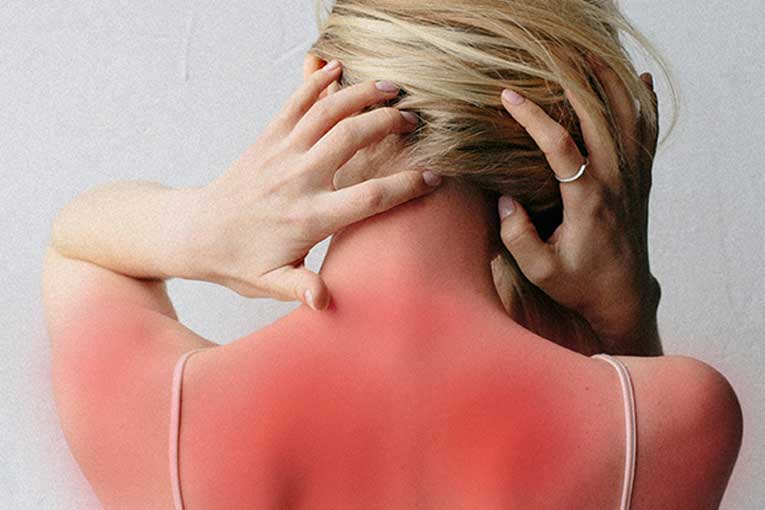
How to Treat Sunburn

how to treat sunburn

Sunburns, though common, can be uncomfortable and painful. 

Here’s how to treat sunburn and ease the discomfort:

Move to Shade

The first step is to get out of the sun. 

Move the affected person into the shade or preferably indoors to prevent further exposure to UV rays.

Cool the Skin

To relieve the heat in the skin, take a cool shower or bath for about 10 minutes. 

Avoid using hot water, as this can further irritate the burn.

Apply After-Sun Lotion

Use after-sun lotion or aloe vera gel to soothe the skin and provide moisture. 

These products can help cool and hydrate the burn. 

Avoid using greasy or oily products like petroleum jelly, as they can trap heat in the skin and worsen the burn.

Pain Relief

To reduce pain, over-the-counter medications like paracetamol or ibuprofen can be used. 

Always follow the manufacturer’s instructions. 

Never give aspirin to children under 16 years of age due to the risk of Reye’s syndrome.

Stay Hydrated

Sunburns can lead to dehydration, especially if the skin is extensively burned. 

Drink plenty of fluids, particularly water, to stay hydrated.

Monitor for Heat Exhaustion

Watch for signs of heat exhaustion or heatstroke, which include dizziness, rapid pulse, or vomiting. 

If symptoms worsen, seek immediate medical help.

When Should You Go to Hospital With a Burn?

when to go hospital with burn

While many burns can be treated at home, there are some situations where immediate medical attention from a healthcare professional is required. 

You should seek medical attention if:

Large Burns

If the burn covers an area larger than the size of the person’s hand, it requires medical evaluation. 

Larger burns can be more severe and prone to complications.

Deep Burns

Burns that cause the skin to appear white, blackened, or charred indicate severe tissue damage. 

These require prompt medical attention.

Burns on Sensitive Areas

Burns to the face, neck, hands, feet, joints, or genitals are considered high-risk and should be treated at a hospital. 

These areas have delicate tissue and can lead to long-term complications if not properly treated.

Electrical or Chemical Burns

Any burn caused by electricity or chemicals must be evaluated by healthcare professionals. 

These burns can cause deeper, hidden damage and may lead to serious complications.

Signs of Shock

Symptoms of shock include cold, clammy skin, rapid breathing, weakness, and dizziness. 

If any of these occur, immediate medical attention is necessary.

Special Conditions

Children under 10, people with medical conditions such as heart disease or diabetes, or those with a weakened immune system should seek hospital care for burns.

Breathing Problems

If someone has inhaled smoke or fumes, they should be assessed at a hospital, even if they seem fine.

Things to Avoid When Treating a Burn

When treating a burn, it’s essential to avoid certain actions that can cause further damage. 

Here’s a list of things to steer clear of:

Ice or Ice Water

Applying ice or using ice-cold water to cool a burn can cause frostbite and further harm the skin. 

It also slows down blood flow, which can worsen the injury.

Butter or Greasy Substances

Never apply butter, oils, or greasy creams to a burn. 

These substances may feel soothing initially, but they can trap heat and hinder the cooling process, making the burn worse.

Breaking Blisters

If blisters form on the burn, avoid popping them. 

Blisters act as a natural barrier to protect the skin underneath from infection. 

Popping them exposes the sensitive tissue and increases the risk of infection.

Tight Bandages

Don’t wrap a burn with tight bandages. 

This can restrict blood flow and increase the severity of the injury. 

If a bandage is necessary, use a loose, non-stick dressing to cover the burn.

Scrubbing the Area

Avoid scrubbing or rubbing the burned skin, as this can cause irritation and damage to the affected area. 

Gently clean the burn using cool water and avoid friction that could lead to further injury.

Burn Aftercare

burn aftercare

Once the immediate first aid has been applied, proper aftercare is vital for the burn to heal properly. 

Here are some steps to follow:

Keep the Area Clean

Gently wash the burn with mild soap and water to prevent infection. 

Avoid scrubbing the burn, as this can cause further damage. 

Do not use harsh chemicals or strong soaps, as they can irritate the skin and delay healing.

Moisturise

To prevent the skin from drying out and to promote healing, apply a soothing lotion, such as aloe vera gel. 

Aloe vera helps hydrate the skin and reduce inflammation. 

Avoid using products with alcohol, as they can dry out the skin and cause irritation.

Monitor for Infection 

It’s important to keep an eye on the burn for signs of infection. 

Symptoms such as increased redness, swelling, pus, or an unpleasant smell may indicate an infection. 

If you notice any of these signs, seek medical help immediately to prevent complications.

Avoid Further Sun Exposure

The burn should be kept out of direct sunlight to prevent further skin damage and reduce the risk of scarring. 

Consider covering the area with loose clothing or using sunscreen once the skin has healed enough.

Follow-Up Care

For severe burns, follow-up care may be necessary. 

This may include dressing changes, further treatment, or checking for complications, and should be done under the guidance of a healthcare professional.

Conclusion

You should now have the knowledge on how to treat a burn.

Treating a burn correctly and promptly can significantly reduce pain and the risk of complications. 

It is essential to follow proper first aid steps, such as cooling the burn, protecting the area, and seeking medical help when necessary.
CCE Group expands fire containment offerings with acquisition of Trip&Co

CCE Group acquires Netherlands-based cargo safety firm Trip&Co

CCE Group has acquired Trip&Co, a company based in the Netherlands known for fire containment and cargo protection solutions.

According to CCE Group, this acquisition will add to its existing capabilities in the aerospace sector by integrating Trip&Co’s products into its portfolio.

Trip&Co, founded in 1890 and headquartered in Nieuw-Vennep, has a long-standing presence in air cargo safety, with products including fire containment systems, thermal covers, straps, and cargo nets.

Trip&Co’s operations serve clients worldwide through a global production network, delivering customized solutions for cargo security and protection.

Trip&Co to strengthen CCE Group’s global air cargo capabilities

Trip&Co’s integration into CCE Group is intended to broaden the group’s cargo safety offerings. The company’s equipment is used to address safety risks in air cargo logistics, with fire containment systems designed to meet regulatory and operational demands.

CCE Group stated that Trip&Co will complement the work of AviusULD, another CCE business focused on cabin and cargo equipment, by adding specialized fire safety and thermal protection products to the group’s range.

The acquisition is expected to lead to operational collaboration between the companies while maintaining Trip&Co’s core focus areas.

CCE Group leadership describes acquisition as milestone in growth strategy

Klaus Hofmann, Group CEO of CCE Group, said: “The addition of Trip&Co to the CCE Group family is a significant milestone in our mission to lead the cabin and cargo equipment sector.

“Trip&Co’s century-long commitment to innovation and quality aligns perfectly with our vision. By adding another industry-leader to our group and combining our strengths, we will unlock new opportunities to deliver state-of-the-art cargo protection solutions to our global clientele.”

Trip&Co executives Tijmen Koster and Sietse van den Elzen also commented on the acquisition: “Trip&Co has been shaping the standards of air cargo protection for over a century.

“By joining the CCE Group, we’re not just growing – we’re reinforcing our position as the go-to partner for reliable, high-performance cargo solutions worldwide.

“Together, we’re unlocking new possibilities to serve our clients better and drive meaningful progress across the industry.

“We are excited to collaborate with CCE Group to drive the future of cargo and cabin safety and efficiency.”

Hivest Capital Partners supports CCE Group’s international growth

Hivest Capital Partners, a shareholder in CCE Group, supported the acquisition of Trip&Co as part of its broader investment strategy.

Frédéric Ramé, Senior Advisor at Hivest Capital Partners, said: “We are proud to support this first acquisition which is a key milestone in CCE’s strategy. Trip&Co is a natural fit for CCE Group, opening opportunities for strong commercial and operational synergies.

“We will continue to support the group in its international external growth strategy and contribute to its acceleration.”

Hivest Capital Partners confirmed that it will remain involved in CCE Group’s ongoing expansion plans, with a focus on the aerospace equipment sector.

CCE Group expands fire containment offerings with acquisition of Trip&Co: Summary

CCE Group has acquired Trip&Co, a Netherlands-based company founded in 1890, which supplies air cargo equipment including fire containment systems and thermal protection products.

Trip&Co will be integrated into CCE Group’s existing aerospace business, which includes AviusULD.

The acquisition aims to expand CCE Group’s product offerings in cargo safety and fire containment.

Trip&Co has a global client base and production network.

CCE Group CEO Klaus Hofmann stated that the acquisition aligns with the group’s growth strategy in cabin and cargo equipment.

Trip&Co executives Tijmen Koster and Sietse van den Elzen said the partnership will reinforce their ability to deliver reliable cargo protection.

Hivest Capital Partners supported the transaction as part of its continued investment in CCE Group’s international expansion.