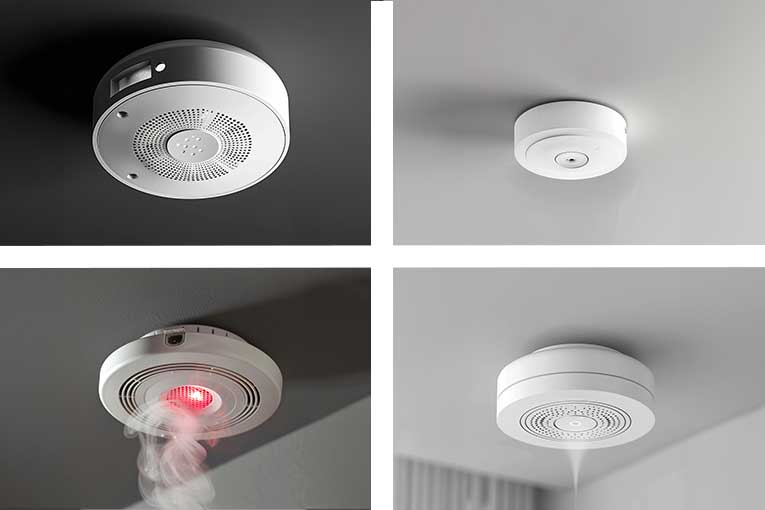
How to Test Smoke Alarms Properly

A smoke alarm is one of the most important safety devices in the home, yet they’re often overlooked until it’s too late.

If you have one installed, testing your smoke alarm regularly is a simple task that can save lives.

To test a smoke alarm, press and hold the test button on the front panel until you hear a loud, continuous sound.

If the alarm does not sound, replace the battery. If it’s a sealed unit, speak to a specialist to replace the alarm. 

You can also use a smoke detector test spray or safe smoke source to check the sensor, following the manufacturer’s guidance.

Our article explains exactly how to test your smoke alarm properly, how often you should test it, what to look out for, and what to do if something’s not right.

Whether you’re a homeowner, renter, or responsible for a business premises, this guide will leave you better informed and safer.

What is a smoke alarm and do I need one?
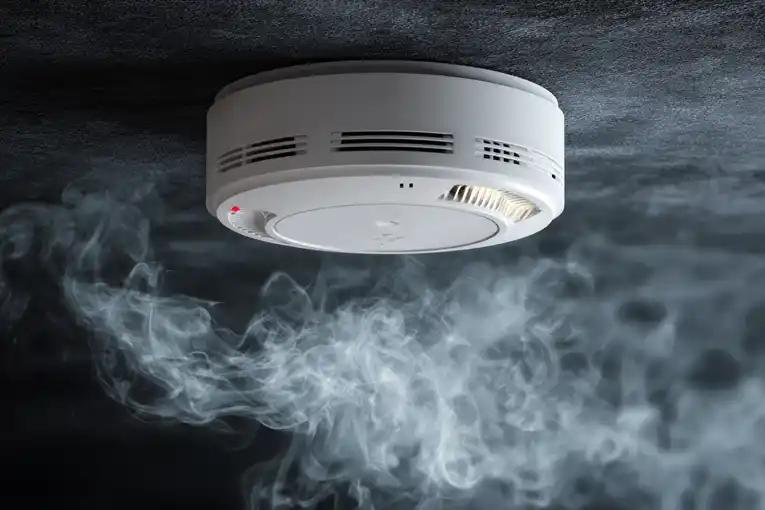
What is a Smoke Alarm

Smoke alarms are devices specifically designed to detect smoke (a primary indicator of fire), and sound an audible warning to alert people in the building.

Most smoke alarms operate using either ionization sensors, which respond to fast, spreading fires, or photoelectric sensors, which are better at detecting slow, smoldering fires. 

Some units combine both technologies for a more comprehensive coverage.

Every single building, residential or commercial, needs a smoke alarm – bar none!

In most countries, having at least one working smoke alarm on every level of a home is a legal requirement.

In the United States for example, the National Fire Protection Association (NFPA) recommends smoke alarms are fitted inside each bedroom, outside each sleeping area, and on every level of the home, including the basement.

In the UK, Australia, and many other countries, similar laws and recommendations also exist.

Why Test Your Smoke Alarms?

Testing your smoke alarm is the only way to know its working properly.

Even if the unit appears in good working order, components inside can degrade over time.

Batteries can die. Dust or insects can clog the sensors. Wiring can loosen.

A malfunctioning smoke alarm is essentially useless in an emergency.

Fire statistics consistently show that the risk of dying in a home fire is cut in half when working smoke alarms are present.

Regular testing ensures you and your family are alerted in time to escape.

How Often Should I Test My Smoke Alarms?

Woman Testing Smoke Alarm

Experts recommend testing your smoke alarms once a month.

This frequency ensures that any battery issues, sensor faults, or connectivity problems are identified before a real emergency happens.

Here’s some additional maintenance recommendations to remember:

  • Battery-powered alarms: Replace batteries at least once a year, unless the alarm uses a 10-year sealed battery.
  • Hardwired alarms: These are connected to your home’s electricity supply but typically still have a backup battery that needs yearly replacement.
  • All smoke alarms: Replace the entire unit every 10 years, or sooner if the manufacturer recommends it or if the unit fails testing.

Marking these tests on your calendar or making them a part of your monthly routine is an easy way to stay safe.

How to Test a Smoke Alarm

Smoke  Detector
Image credit: Pixabay

Testing a smoke alarm is a very straightforward process, but it varies slightly depending on the type of smoke detection unit you have installed.

Battery Units

  1. Locate the test button: This is usually visible on the front face of the alarm.
  2. Press and hold the button: After a few seconds, the alarm should emit a loud, high-pitched sound.
  3. Listen for consistency: The sound should be continuous and strong. If it’s weak or erratic, replace the battery immediately.
  4. No sound? Replace the battery first, then test again. If there’s still no response, replace the entire unit.

Hardwired Units

  1. Locate the test button: Press and hold the test button exactly as you would on a battery-operated alarm.
  2. Interconnected alarms: If your home has interconnected alarms, pressing the test button on one unit should cause all the alarms to sound. This is normal and confirms they’re correctly linked.
  3. Backup battery: Even though these alarms are connected to mains power, always check the battery backup. If the alarm fails the test and replacing the battery doesn’t fix it, call an electrician to inspect the wiring or replace the unit.

Optional Sensor testing

If you want to test the smoke sensor itself (not just the loudspeaker or battery), you can use a smoke detector test spray.

This creates a safe, simulated smoke environment.

Unless advised by the manufacturer, avoid using real smoke such as candles or matches, as this can contaminate and damage the sensor.

Troubleshooting

If your alarm fails the test or behaves strangely, here’s what to do:

  • Weak or chirping sound: This usually indicates a low battery. Replace it and retest.
  • No sound at all: Try a brand new battery. If still silent, the unit may be faulty.
  • Frequent false alarms: Dust, steam, cooking fumes, or insects can all cause false triggers. Clean the alarm with a vacuum cleaner or soft brush. Avoid using sprays or solvents.
  • Random beeps: Some units beep to signal end-of-life, often every 30 to 60 seconds. Check the label on the back for the recommended replacement date.

Safety Tips

  • Always test your alarms after a vacation or extended period away.
  • If you’re hearing impaired, install smoke alarms with strobe lights or vibration alerts.
  • Avoid painting over smoke alarms since this can block sensors.
  • For rental properties, landlords are usually responsible for installing alarms, but tenants should still test them regularly.
  • Don’t ignore chirps or unusual sounds, since they’re indicators telling you something’s wrong.

Key Takeaways

Testing your smoke alarms is one of the simplest ways to protect everyone in your home.

It takes less than a minute, but it could be the difference between life and death in the event of a fire.

Make it a habit, stay informed, and stay safe.

When testing, press and hold the test button monthly to check your smoke alarm’s function.

Replace all batteries at least annually, or sooner as needed.

Alarms should be fully replaced every 10 years, even if they seem to function properly.

Use some test spray for a more thorough check of the smoke sensor if desired.

And address any beeping, silence, or false alarms promptly. Don’t ignore them.

The Last Word with Denley Nunn, Cygnus

Denley Nunn, Regional Sales Manager at Cygnus, explains how Johnsons Workwear upgraded its fire alarm system with SmartNet-Pro 

Can you tell us about a recent Cygnus installation and the challenges it aimed to address? 

Johnsons Workwear, an industrial garment laundry business based in central Bristol, updated its fire alarm and detection systems with the help of installers, Cannon Fire & Security, after a fire risk assessment highlighted the existing 30-year-old system was inadequate. The assessment advised that its three buildings would require a category L1 fire alarm installation. 

The primary challenges included the risk of asbestos, installation time and potential operational downtime. To address these challenges effectively, Cannon Fire & Security chose Cygnus’ world first EN 54 certified and 100% wireless SmartNet-Pro fire detection and alarm system. This system ensured a highly reliable and efficient installation. 

What made Cygnus the right choice for this project? 

Cygnus’ award-winning SmartNet-Pro was chosen for its 100% wireless technology, significantly reducing the need for extensive cabling. The nature of the properties brought certain complexities due to their age, namely the amount of metal framework of the building which would require other wireless fire alarm systems to install a significant number of hard-wired expanders.  

Additionally, the risk of asbestos needed to be considered, as extensive drilling would present health and safety risks. SmartNet-Pro, being 100% wireless, required only minimal drilling to fix devices to ceilings and walls. This ensured minimal disruption, allowing Johnsons Workwear to continue operation during installation, and saving both time and costs. 

How did the installation process unfold, and were there any unique challenges? 

The installation process began with a pre-site meeting and walk-around to plan an initial hard-wired solution. Dominic Gundry-White, Managing Director of Cannon Fire & Security I met with the Cygnus team who discussed SmartNet-Pro and how the product uses wireless mesh technology to eliminate the requirement for any hard-wired cabling or boosters, characteristics which were ideal for Johnsons Workwear.  

By switching to Cygnus’ SmartNet-Pro, the installation took two weeks with no disruption the client, instead of the proposed eight weeks, which would have caused a lot of disruption. 

The site consists of two industrial laundry buildings and a separate boiler house, which have all been connected using one SmartNet-Pro control panel. The installation utilises 170 Cygnus SmartNet-Pro devices including detectors, sounders, call points and input/output units. 

How does this project showcase Cygnus’ capabilities for future installations? 

This project highlights Cygnus’ ability to provide reliable, robust, and adaptable fire detection and alarm solutions that are significantly faster to install than traditional wired systems. SmartNet-Pro, the world’s first EN 54 certified and 100% wireless fire detection and alarm system, utilises the renowned and patented Cygnus wireless mesh technology. It allows for 511 devices and up to 96 zones on one panel, with the ability to network up to 5 panels providing a combined solution of more than 2,500 devices.  

This article was originally published in the March 2025 issue of International Fire & Safety Journal – to read your FREE digital copy, click here.

Siemens solution for London landmark

A Siemens fire detection system has been installed in a London venue as a part of a multi-million pound refurbishment.

The Roof Gardens, around 100 feet above Kensington High Street, is a 6,000 square metre venue on the roof of the former Derry & Toms building in central London.

The decision to invest and restore the site included a need for a fire protection system which reflected the value of the Grade II listed building, including its rooftop gardens designed by landscape architect Ralph Hancock in the 1930s.

Cerberus Pro

Siemens gold solutions partner, London Fire & Security, proposed a system based around Cerberus PRO, Siemens comprehensive EN54-13 approved fire alarm system, with the new ASD+ aspirating smoke detection for certain areas.

Cerberus PRO features ASA detectors with their patented detection chamber design, dual optical sensing technology and Advanced Signal Analysis (ASA) to optimise response. It is designed to enable smoke detection in areas where thermal detection would ordinarily be necessary, providing reliable detection with no false alarms.

ASD+

Reflecting the importance of maintaining the surroundings and the club’s ambience for the Roof Gardens‘ members, in areas where conventional point detectors were deemed to impact on the aesthetics of a venue, Siemens ASD+ was employed.

Siemens has offered ASD systems for a number of years but this new generation, ASD+ features two new detectors which are specifically designed to provide solutions for larger and more complex projects. A single device can cover an area of up to 6,700 m2 – currently the largest coverage area available on the market. 

Even for Class A installations with the highest sensitivity requirements, up to 2,000 m2 of detection coverage is achievable with a single ASD+ detector. This makes the technology ideally suited to applications typified by their large open areas, the roof gardens being a prime example, with the detectors located for ease of access.

The project featured the installation of ASA detectors, sounder beacons, call-points and ASD+ pipework and detectors, with the relevant interfaces, all monitored by Cerberus PRO panels to provide site-wide detection.

London Fire & Security Managing Director, Chris Saxby’s statement

Managing Director of London Fire & Security, Chris Saxby said that: “We are pleased to have added the Roof Gardens to our portfolio of prestigious projects across the capital.

“As a company we always look to promote the benefits of the ASA detection and its ability to provide fault-free fire alarms.

“As a gold partner, Siemens always provides us with excellent support, and that was the case again with this project where we worked closely with the client to ensure we provided a solution which met the specific requirements of the site.”

Siemen’s Fire Systems Sales Manager, Mario Malone’s statement

Marios Malone, Fire Systems Sales Manager with Siemens, commented that: “For such a prestigious venue, the reputation that Siemens has globally as a fire systems solutions provider was certainly a factor in securing the contract.

“Also important was the ASA detectors’ ability to detect real fires and avoid false alarms and therefore unnecessary evacuations given the focus on providing a relaxed atmosphere for the club’s members and their guests.

“This is also reflected in the ongoing monitoring and maintenance of the system remotely. As a cloud-based technology Cerberus PRO enables many of the tasks that had traditionally been conducted on-site to be done remotely, presenting significant opportunities for disturbance-free testing which does not impact on the club’s day-to-day operations.”

Siemens install fire detection system in London venue: Summary

Siemens have installed one of their fire detection systems into The Roof Gardens, a venue based on Kensington High Street.

The project marks an addition to Siemens portfolio across the capital city.

New fire system installed in high-end Edinburgh store

A new fire detection system from Hochiki Europe has been installed in a luxury retail store in Edinburgh’s St James’ Quarter. The retail centre recently extended one of their luxury stores, with a critical element of the new infrastructure being a fire detection system from Hochiki Europe.

Luxury in-store experience

High-end retailers often feature meticulously designed interiors with clean lines and minimal distractions, meaning any visible fire detection devices can disrupt the desired ambiance and detract from the overall shopping experience. They may therefore chooses to prioritise discreet fire detection systems to maintain their brand’s aesthetic appeal.

By opting for discreet systems, these retailers ensure that fire safety remains a top priority without compromising the store’s intended atmosphere.

GB Integrated Systems (GBIS), specialise in providing fire detection and security system solutions for commercial properties. Having worked with Hochiki products for several years, trusting their reliability in retail environments, they knew the global fire manufacturer’s ESP range would provide the perfect answer.

Technical Director, GBIS, Mike Gray’s statement

Mike Gray, Technical Director of the GBIS spoke on the collaboration: “We chose Hochiki as it offered a comprehensive solution for this project with a broad selection of devices, including smoke detectors, heat detectors, manual call points, base sounders and air sampling system.”

Features of the fire system

The project comprised over 40 analogue addressable devices and an air sampling system, ensuring the highest standards in fire safety design. The air sampling system, integrated into the fire detection loop, was a crucial component of the installation, according to Hochiki.

Air sampling enables precise detection in hard-to-reach areas like ceiling voids, ensuring comprehensive coverage throughout a retail environment. The Hochiki devices respond accurately to real fire conditions while minimising false alarms through multi-sensor technology, environmental adjustments, and filtering mechanisms.

With these features the fire alarm system is designed to effectively differentiate between non-threatening signals and actual fire hazards, thereby improving safety, reducing false alarms, and enhancing operational efficiency within the store.

One of the reported challenges during the installation was interfacing the fire alarm system with the shopping centre’s security control centre. This complex integration required careful planning and execution to ensure that the system would respond appropriately to different fire scenarios.

In the event of a fire within the store, the system is designed to trigger specific alarms and notifications, while a fire in the shopping centre would activate different alerts, minimising disruption to the store’s operations.

Luxury retail store in Multrees Walk reopens with upgraded fire system: Summary

A luxury retailer based in St James’ Quarter, Edinburgh, have installed a fire system upgrade. By combining innovation, reliability, and aesthetic appeal, Hochiki Europe has helped to create a safe and secure space for customers to obtain a luxury shopping experience.

What is a Dual Sensing Smoke Alarm?

A smoke alarm is an essential safety device that can save lives. 

It detects smoke, alerting occupants to a fire, giving them time to escape. 

While there are different types of smoke alarms, a dual sensing smoke alarm is known for its enhanced detection abilities. 

This article will explore what a dual sensing smoke alarm is, its types, advantages, disadvantages, and other smoke alarm options.

What is a Dual Sensing Smoke Alarm?

dual sensing smoke alarm image

A dual sensing smoke alarm is a type of fire detection device designed to improve fire detection by using two different sensors: ionisation and photoelectric.

Ionisation Sensors

These are more responsive to fast-flaming fires, such as those caused by paper. 

They detect small particles of smoke that are typically produced in these types of fires.

Photoelectric Sensors

These are better at detecting slow, smouldering fires, like those caused by cigarettes. 

They work by sensing larger smoke particles that scatter light.

Why Dual Sensing is Safer

By combining these two sensors, dual sensing smoke alarms offer more comprehensive coverage, ensuring faster and more accurate detection of different types of fires. 

This dual approach minimises the chances of false alarms while maximising the likelihood of detecting a real fire.

These alarms are recommended by safety experts and are ideal for providing enhanced protection in homes, giving occupants crucial time to respond in case of a fire. 

Despite being slightly more expensive than single-sensor alarms, the added safety they provide makes them a valuable investment for any household.

What are the Different Types of Dual Sensing Smoke Alarm?

dual sensing smoke alarm types

Dual sensing smoke alarms come in several types, categorised by their power source, connectivity, and additional features. 

Understanding these types can help you choose the best option for your home.

Battery-Powered Dual Sensing Smoke Alarms

Battery-powered dual sensing smoke alarms are standalone units that rely on batteries for operation. 

These alarms are easy to install and can be placed anywhere in the home. 

They are especially useful in homes without hardwired smoke alarm systems. 

However, they require regular battery checks and replacements to ensure they function properly. 

Some models come with long-life lithium batteries, reducing the frequency of battery changes.

Hardwired Dual Sensing Smoke Alarms

Hardwired dual sensing smoke alarms are connected directly to your home’s electrical system, ensuring continuous power. 

These alarms usually include a battery backup to maintain functionality during power outages. 

Hardwired alarms are often interconnected, meaning that if one alarm is triggered, all alarms in the system will sound. 

This feature enhances safety by ensuring that the alarm is heard throughout the home.

Smart Dual Sensing Smoke Alarms

Smart dual sensing smoke alarms are equipped with wireless connectivity, allowing them to be monitored and controlled via a smartphone app. 

These alarms can send alerts to your phone if smoke is detected, even when you’re not home. 

Some models integrate with other smart home devices, such as lights or thermostats, to enhance safety. 

For example, if smoke is detected, a smart alarm could automatically shut off the HVAC system to prevent the spread of smoke.

Combination Alarms

Combination alarms are dual sensing smoke alarms that also detect other hazards, such as carbon monoxide (CO). 

These alarms provide comprehensive protection by combining smoke and CO detection in a single device. 

They are ideal for areas like bedrooms, where both fire and CO risks may be present.

What are the Advantages of a Dual Sensing Smoke Alarm?

dual sensing smoke alarm advantages

Dual sensing has a wide array of advantages over single-sensing alternatives.

The main benefits are: 

Comprehensive Fire Detection

Dual sensing smoke alarms combine two types of sensors: ionisation and photoelectric. 

This dual approach allows them to detect both fast-flaming fires and slow, smouldering fires. 

Ionisation sensors are more responsive to fires that spread quickly, like those involving paper or grease. 

Photoelectric sensors, on the other hand, are better at detecting smouldering fires, which may start from something like a cigarette or an electrical fault. 

By covering both types of fires, dual sensing alarms offer more reliable and comprehensive protection.

Reduced False Alarms

One of the significant advantages of dual sensing smoke alarms is their ability to reduce false alarms. 

Single-sensor alarms, like those with only ionisation or only photoelectric sensors, may trigger false alarms due to non-fire-related activities like cooking or steam from a shower. 

The dual sensors in a dual sensing smoke alarm work together to provide a more accurate response to actual fire threats, reducing the chances of unnecessary alarms.

Enhanced Safety and Peace of Mind

Dual sensing smoke alarms increase safety by providing earlier and more accurate fire detection. 

Early detection is critical in preventing injury or loss of life, giving occupants valuable time to escape in the event of a fire. 

Knowing that your smoke alarm can detect different types of fires effectively gives you peace of mind, especially when it comes to protecting your family and property.

Compliance with Safety Recommendations

Many fire safety organisations recommend the use of dual sensing smoke alarms due to their enhanced detection capabilities. 

Installing these alarms can help ensure that your home meets current safety standards and regulations, providing an extra layer of security and compliance.

Cost-Effective Protection

While dual sensing smoke alarms may be slightly more expensive upfront, they offer cost-effective protection in the long run. 

By combining the functions of two alarms into one, they eliminate the need to install multiple devices, reducing overall costs and maintenance efforts.

What are the Disadvantages of a Dual Sensing Smoke Alarm?

dual sensing smoke alarm disadvantages

While dual sensing smoke alarms have many benefits, they are not without their drawbacks. 

The main ones are: 

Higher Initial Cost

One of the main disadvantages of dual sensing smoke alarms is their higher initial cost compared to single-sensor alarms. 

Because they incorporate both ionisation and photoelectric sensors, dual sensing alarms are generally more expensive to purchase. 

For homeowners on a tight budget, the upfront cost may be a deterrent, especially when multiple units are required for comprehensive home coverage.

Maintenance and Battery Replacement

Dual sensing smoke alarms require regular maintenance, including battery checks and replacements. 

Although this is true for most smoke alarms, the complexity of dual sensing alarms can sometimes make maintenance slightly more cumbersome. 

Homeowners may also need to familiarise themselves with the specific maintenance needs of both types of sensors. 

In addition, if the alarm includes a battery backup for a hardwired system, maintaining both the electrical and battery components can be a hassle.

Potential for Over-Detection

While dual sensing smoke alarms are designed to reduce false alarms, their heightened sensitivity to different types of fires can sometimes lead to over-detection. 

For example, activities like cooking or using a fireplace may trigger the alarm more frequently, which could become annoying and lead to complacency. 

If the alarm goes off too often for non-emergencies, occupants may start ignoring it, which defeats the purpose of having an advanced detection system.

Installation Complexity

Dual sensing smoke alarms, particularly hardwired or interconnected models, can be more complicated to install than basic single-sensor alarms. 

Homeowners who are not comfortable with electrical work might need to hire a professional, adding to the overall cost. 

The complexity of installation might also make it more difficult to troubleshoot issues if the alarm malfunctions or needs to be replaced.

Limited Availability in Some Markets

In some areas, dual sensing smoke alarms might not be as readily available as single-sensor models. 

This limited availability can make it harder for homeowners to find and purchase the right alarm, especially if they live in remote or less densely populated regions.

What Other Types of Smoke Alarms are There?

other types of smoke alarms

Aside from dual sensing smoke alarms, there are other types of smoke alarms available, each with its own advantages and disadvantages.

Ionisation Smoke Alarms

Ionisation smoke detectors are designed to detect fast-flaming fires. 

They contain a small amount of radioactive material between two electrically charged plates, which ionises the air and creates a flow of current between the plates. 

When smoke enters the chamber, it disrupts this current, triggering the alarm. 

These alarms are particularly effective at detecting fires that produce little visible smoke but spread quickly, such as those involving paper or flammable liquids. 

However, they are more prone to false alarms from cooking or steam.

Photoelectric Smoke Alarms

Photoelectric smoke detectors are more sensitive to slow, smouldering fires that produce a lot of smoke before they burst into flames. 

These alarms use a light beam and a sensor inside the chamber. 

When smoke enters the chamber, it scatters the light beam, directing it towards the sensor and triggering the alarm. 

Photoelectric alarms are less likely to be triggered by cooking fumes, making them ideal for installation near kitchens. 

They provide earlier warning for smouldering fires, such as those caused by unattended candles or cigarettes.

Heat Alarms

Heat alarms are designed to detect a rapid rise in temperature rather than smoke. 

They are particularly useful in environments where smoke alarms might give false alarms, like kitchens or garages. 

Heat alarms are ideal for detecting fires in areas prone to dust, smoke, or fumes. 

However, because they don’t detect smoke, they are often used in conjunction with smoke alarms to provide comprehensive fire detection.

Conclusion

You should now have more of an understanding of dual sensing smoke alarms. 

A dual sensing smoke alarm is a critical safety device that enhances fire detection in your home. 

By combining ionisation and photoelectric sensors, these alarms provide comprehensive coverage for various types of fires. 

While they come with higher costs and some maintenance needs, the added protection they offer can be invaluable. 

Understanding the different types of dual sensing smoke alarms, their advantages, and disadvantages helps you make an informed decision when safeguarding your home. 

Remember, no matter which type of smoke alarm you choose, regular maintenance and testing are key to ensuring it functions correctly and provides the protection you need.

Fike Fire Watch receives FM approval for global use

Fike Fire Watch recognised in FM Global guidelines

Fike Corporation, a manufacturer of fire protection systems, has announced that its portable fire detection solution, Fike Fire Watch, has received FM Global approval.

As reported by Fike Corporation, the system is now recommended in FM Global’s datasheet 10-3 for Hot Work Management.

The Fike Fire Watch is designed to provide temporary fire detection in situations where the fire protection system may be impaired or during high-risk activities, such as hot work or construction.

The system helps organisations comply with NFPA standards and ensures safety in scenarios where permanent fire protection is unavailable.

Key features of Fike Fire Watch system

The Fike Fire Watch system offers an alternative to employing contractors or staff for temporary fire monitoring.

It includes one or two Fike IR3 HD flame detectors, an HD camera, and smoke detection via Fike Video Analytics.

The unit is powered by a battery capable of running for up to 18.7 hours continuously, ensuring uninterrupted monitoring.

If a fire is detected, the system triggers an alarm and can send notifications via SMS, email, or other mobile alerts.

It can also integrate with existing fire alarm systems or third-party monitoring equipment, offering flexible usage in various scenarios.

Industry response to Fike Fire Watch

Kevin Montgomery, Fike’s Manager of Fire Protection Product Management, highlighted the benefits of the new solution.

He said: “Fike Fire Watch fills a very important need in the industry of providing cost-effective temporary fire detection.

“Investing in just one Fike Fire Watch System will easily pay for itself after just a few uses.”

The system’s affordability and ease of use make it particularly appealing to organisations looking to minimise costs while maintaining high safety standards in temporary situations.

Fike Fire Watch receives FM approval for global use: Summary

Fike Corporation has received global FM approval for its Fike Fire Watch system, a portable fire detection solution designed for temporary monitoring during high-risk activities, such as hot work or when fire protection systems are disabled.

As reported by Fike Corporation, the system has been included in FM Global’s datasheet 10-3 Hot Work Management.

The system features flame detectors, an HD camera, smoke detection, and alarm notification capabilities.

Fike Fire Watch can provide up to 18.7 hours of continuous monitoring and is a cost-effective alternative to hiring contractors for fire watch duties.

Which Fire Extinguisher Should Be Used for Flammable Liquids?

Understanding how to handle fires involving flammable liquids is crucial for ensuring personal safety and protecting property from potential devastation. 

Flammable liquids, such as gasoline, oils, and solvents, pose unique fire hazards due to their ability to ignite easily and spread rapidly. 

In such situations, using the correct type of fire extinguisher becomes paramount to swiftly and effectively extinguishing the flames without exacerbating the risk.

By understanding the specific hazards associated with flammable liquids and knowing how to respond effectively with the right equipment, individuals can significantly reduce the potential for injury, property damage, and environmental impact caused by such fires. 

This article explores the different types of fire extinguishers suitable for flammable liquid fires and provides guidance on their proper use to enhance fire safety practices in various settings.

What Different Types of Fire Extinguishers are there?

different types of fire extinguisher

Fire extinguishers are categorised into several types, each designed to combat specific classes of fire

Choosing the right type of fire extinguisher depends on the specific fire hazards present in a given environment.

Understanding these types is crucial for effective fire response and safety:

Water

These are designed for Class A fires, which involve solid materials such as wood, paper, and textiles. 

Water extinguishers work by cooling the fire and reducing its heat until it is extinguished. 

They are not suitable for use on flammable liquids or electrical fires due to the risk of spreading the fire or electrical shock.

Foam

Foam extinguishers are effective against Class A and B fires. 

They work by creating a barrier between the fuel and the air or by cooling and smothering the fire. 

Foam extinguishers are versatile and commonly used in environments where both solid materials and flammable liquids are present.

Dry Powder

These extinguishers are suitable for Class A, B, and C fires. 

They work by smothering the fire and interrupting the chemical reaction necessary for combustion. 

Dry powder extinguishers are effective for extinguishing fires involving flammable gases and are also safe for use on electrical fires.

CO2

CO2 extinguishers are designed for Class B and electrical fires. 

They work by displacing oxygen around the fire, suffocating it and leaving no residue. 

CO2 extinguishers are ideal for use on fires involving flammable liquids such as oil and petrol, as well as electrical fires.

Wet Chemical

These are specifically designed for Class F fires, which involve cooking oils and fats. 

Wet chemical extinguishers create a blanket that cools the burning oil and prevents reignition. 

They are effective in commercial kitchens and other environments where cooking oils are used and grease fires can happen.

What Class of Fire are Flammable Liquids?

flammable liquids class of fire

Flammable liquids are classified as Class B fires according to fire safety standards. 

This classification encompasses fires fueled by flammable gases, liquids, greases, and similar substances. 

Class B fires are characterised by their ability to ignite easily and burn rapidly, often with intense flames.

Common examples of flammable liquids include gasoline, diesel fuel, kerosene, alcohol, acetone, and various industrial solvents. 

These liquids typically have low flash points, meaning they can vaporise quickly at relatively low temperatures and ignite easily when exposed to an ignition source.

Fires involving flammable liquids pose unique challenges due to the volatility of the fuel involved. 

They can spread rapidly and may produce intense heat and flames, making them potentially dangerous and difficult to extinguish if not addressed promptly and effectively.

Which Fire Extinguisher Should Be Used for Flammable Liquids?

When dealing with flammable liquids, choosing the right fire extinguisher is crucial to effectively and safely extinguish fires of this type. 

Here are the recommended fire extinguishers for flammable liquids:

Foam Fire Extinguisher

foam fire extinguisher
Source: Amazon

Foam extinguishers are suitable for Class B fires, which involve flammable liquids such as gasoline, oil, and paint. 

They work by forming a blanket of foam over the liquid surface, cutting off the fire’s oxygen supply and cooling the fuel below its ignition point. 

Foam extinguishers are effective for both indoor and outdoor use and are particularly useful where flammable liquids may spill or pool.

Dry Powder Fire Extinguisher

dry powder fire extinguisher
Source: Amazon

Dry powder extinguishers are versatile and can be used on Class B fires.

They work by smothering the fire and interrupting the chemical reaction necessary for combustion. 

Dry powder extinguishers are effective for quickly extinguishing fires involving flammable liquids like petrol, diesel, and solvents. 

However, they can create a cloud that reduces visibility and may cause respiratory irritation, so they should be used in well-ventilated areas.

CO2 Fire Extinguisher

co2 fire extinguisher
Source: Amazon

CO2 extinguishers are suitable for Class B fires involving flammable liquids. 

They work by displacing oxygen and reducing the heat of the fire. CO2 extinguishers are ideal for use in confined spaces or areas with sensitive equipment because they do not leave a residue that can damage electronics or other materials. 

However, they should be used with caution in enclosed spaces to avoid the risk of suffocation due to the displacement of breathable air.

How do you Extinguish a Flammable Liquid Fire?

how to extinguish flammable liquids

Extinguishing a flammable liquid fire requires careful consideration and the right approach to prevent the fire from spreading or reigniting. 

Here are the steps to effectively extinguish a flammable liquid fire:

Assess the Situation

Before attempting to extinguish the fire, assess the size and nature of the fire. 

If the fire is small and contained, you may attempt to extinguish it using a fire extinguisher. 

For larger fires or those involving significant quantities of flammable liquids, evacuate the area immediately and call emergency services.

Select the Correct Extinguisher

Choose the appropriate fire extinguisher based on the type of flammable liquid involved. Foam, dry powder, and CO2 extinguishers are suitable for flammable liquid fires.

Approach the Fire

Approach the fire from a safe distance to avoid exposure to heat and flames. 

Aim the nozzle of the fire extinguisher at the base of the flames where the liquid fuel is burning.

Use the PASS Method

Follow the PASS method to operate the fire extinguisher effectively:

  • Pull: Pull the pin to unlock the extinguisher.
  • Aim: Aim the nozzle at the base of the fire.
  • Squeeze: Squeeze the handle to discharge the extinguishing agent.
  • Sweep: Sweep the nozzle from side to side, covering the base of the fire with the extinguishing agent.

Discharge the Extinguisher

Maintain a steady discharge of the extinguishing agent until the fire is fully extinguished. 

Continue to apply the agent to prevent re-ignition.

Monitor the Area

After extinguishing the fire, monitor the area for any signs of reignition or hotspots. 

Ensure the area remains evacuated until it is declared safe by firefighting professionals.

Dispose of Extinguisher Properly

After use, even if partially discharged, fire extinguishers should be serviced or replaced according to manufacturer guidelines to ensure readiness for future emergencies.

What are the Dangers of Using a Wrong Fire Extinguisher Type on Flammable Liquids?

wrong fire extinguisher dangers

Using the wrong type of fire extinguisher on flammable liquids can lead to several dangers and exacerbate the fire rather than extinguish it effectively. 

Here are the key risks:

Increased Fire Spread

Using the wrong extinguisher type may not effectively control or suppress the flammable liquid fire. 

Instead, it could spread the fire by agitating the burning liquid or dispersing it, increasing the area affected by flames.

Escalated Danger

Certain extinguishing agents, if incompatible with flammable liquids, can react chemically, producing hazardous by-products or increasing the intensity of the fire. 

For instance, using water or foam on some flammable liquids can cause splashing, spreading the fire or causing explosions.

Ineffective Suppression

Incorrect extinguisher types may not effectively smother the flames or cool the burning liquid, allowing the fire to reignite or continue burning.

Personal Safety Risks

Incorrect use can endanger the person attempting to extinguish the fire. 

Exposure to heat, flames, or chemical reactions from the wrong extinguisher type can result in burns, inhalation of toxic fumes, or other injuries.

Damage to Property

Inadequate suppression can lead to greater property damage. 

Uncontrolled fires can spread rapidly, causing structural damage or affecting nearby equipment and materials.

Conclusion

Hopefully you now have an understanding of which fire Extinguisher should be used for flammable liquids.

Knowing which fire extinguisher to use for flammable liquids is crucial for effective fire management and ensuring the safety of individuals and property. 

By understanding the specific fire classes and corresponding extinguisher types, you empower yourself to respond confidently and swiftly during emergencies.

Fire safety education plays a pivotal role in equipping individuals with the knowledge to make informed decisions under pressure. 

When faced with a fire involving flammable liquids, the ability to identify the appropriate extinguisher – such as a foam or dry powder extinguisher – can significantly mitigate risks and prevent the situation from escalating.

How Do You Use a Fire Extinguisher?

Knowing how to use a fire extinguisher is not just a valuable skill but a critical aspect of ensuring safety in any environment. 

Fires can erupt suddenly and escalate rapidly, posing immediate threats to life and property. 

Being equipped with the knowledge of how to operate a fire extinguisher can make the difference between containing a small fire and facing a potentially devastating situation.

But how do you use a fire extinguisher?

This article aims to empower individuals by providing essential insights into the effective use of fire extinguishers. 

Whether at home, in the workplace, or in public spaces, understanding the principles behind each type of extinguisher and how to apply them correctly is paramount. 

By familiarising yourself with these basics, you’ll be better prepared to respond calmly and effectively in the event of a fire emergency, potentially minimising its impact and safeguarding those around you.

What are the Different Types of Fire Extinguishers?

types of fire extinguisher

Understanding the different types of fire extinguishers is crucial for effective fire suppression

Each type of fire extinguisher is identified by a colour-coded label and symbol that indicates the classes of fires it is suitable for. 

It’s essential to choose the correct type of extinguisher based on the specific classes of fire in your environment to ensure safe and effective firefighting. 

Regular maintenance and proper training in the use of extinguishers are also critical for preparedness in emergencies.

Here’s an overview of the most common types:

Water Fire Extinguishers

Water extinguishers are suitable for Class A fires, which involve ordinary combustibles like wood, paper, and fabrics. 

They work by cooling the fire and lowering the temperature below its ignition point.

Foam Fire Extinguishers

Foam extinguishers are effective against Class A and Class B fires. 

Class B fires involve flammable liquids such as gasoline, oils, and paints. 

Foam extinguishers create a blanket over the fuel, smothering the fire and preventing reignition.

Dry Powder Fire Extinguishers

Dry powder extinguishers are versatile and can be used on Class A, B, and C fires. 

Class C fires involve flammable gases like propane and methane. 

These extinguishers work by coating the fuel with a fine powder that interrupts the chemical reaction of the fire.

CO2 Fire Extinguishers

CO2 extinguishers are suitable for Class B and Class C fires. 

They work by displacing oxygen, which suffocates the fire. 

CO2 extinguishers are effective for electrical fires and flammable liquid fires (Class B).

Wet Chemical Fire Extinguishers

Wet chemical extinguishers are specifically designed for Class F fires, which involve cooking oils and fats. 

They work by creating a soapy layer on the surface of the burning oil, suppressing the fire and preventing splashing.

How Do You Use a Fire Extinguisher?

how do you use a fire extinguisher image

Using a fire extinguisher effectively can make a crucial difference in containing small fires before they escalate. 

Here’s a comprehensive guide on how to use a fire extinguisher:

Assess the Situation

Before attempting to use a fire extinguisher, evaluate the type of fire. 

Fire extinguishers are designed for specific classes of fires and using the wrong type can worsen the situation.

Choose the Right Extinguisher

Identify the correct type of fire extinguisher needed for the fire. 

The types include water, foam, dry powder, CO2, and wet chemical . 

The label on the extinguisher indicates the classes it can handle.

Remember PASS

The PASS method is vital for effective fire suppression:

  • Pull the pin: This unlocks the operating lever.
  • Aim low: Point the nozzle or hose at the base of the fire.
  • Squeeze the handle: This releases the extinguishing agent.
  • Sweep from side to side: Move the extinguisher nozzle or hose back and forth to cover the fire until it’s extinguished.

Position Yourself Safely

Stand about 6 to 8 feet away from the fire. 

This distance provides safety while allowing you to effectively aim the extinguisher at the base of the flames, and gives you the greatest chance of extinguishing the fire.

Activate the Extinguisher

Pull the pin or safety clip to unlock the operating lever. 

Some extinguishers may require twisting or other actions to activate.

Aim at the Base of the Fire

Direct the nozzle or hose toward the base of the flames, not at the top of the fire. 

This targets the source of the fire and helps smother it effectively.

Squeeze the Handle

Firmly squeeze the handle or lever to discharge the extinguishing agent. 

Maintain control of the extinguisher while applying the agent.

Sweep from Side to Side

Using a sweeping motion, move the nozzle or hose from side to side to cover the entire area of the fire. 

Continue until the flames are completely extinguished.

Monitor the Area

After extinguishing the fire, monitor the area for any signs of reignition. 

Stay cautious, as fires can rekindle from hidden hot spots.

Evacuate if Necessary

If the fire grows or becomes uncontrollable, evacuate the area immediately. 

Close doors behind you to contain the fire and alert others to evacuate.

After Use

Once the fire is out, let the area cool down and ventilate if necessary. 

Report the incident and ensure the fire extinguisher is refilled or replaced promptly.

What to do if You are Unable to Put Out a Fire Using a Fire Extinguisher?

unable to put fire out with fire extinguisher

If you find yourself unable to extinguish a fire using a fire extinguisher, follow these critical steps to ensure safety and minimise the fire’s impact:

Evacuate Immediately

If the fire continues to grow despite your efforts, prioritise your safety and evacuate the area. 

Alert others nearby and ensure everyone leaves the building or area safely.

Close Doors

As you evacuate, close any doors, not just fire doors, behind you to help contain the fire and prevent it from spreading further.

Call Emergency Services

Once you are safely outside, call the emergency services (fire department) immediately. 

Provide them with accurate information about the location, size, and nature of the fire.

Do Not Re-enter

Under no circumstances should you re-enter the building or area until emergency responders have declared it safe to do so. 

Fire can spread rapidly and unpredictably, posing serious risks to anyone inside.

Follow Emergency Procedures

Follow any emergency procedures or evacuation plans in place for the building. 

These plans are designed to ensure everyone’s safety in the event of a fire or other emergency.

Monitor the Situation

While waiting for emergency services to arrive, monitor the situation from a safe distance. 

Be prepared to provide additional information or assistance as needed.

Report the Incident

After the fire has been dealt with by professionals, report the incident to building management or authorities as required.

Conclusion

Hopefully this article has answered your question on exactly how do you use a fire extinguisher.

Knowing how to effectively use a fire extinguisher is crucial for protecting lives and property during emergencies. 

Each type of fire extinguisher is designed to combat specific classes of fires, so understanding their distinctions is essential. 

Remembering the PASS method – Pull the pin, Aim at the base of the fire, Squeeze the handle, and Sweep from side to side – provides a systematic approach to using an extinguisher effectively. 

Regular practice of these steps enhances familiarity and readiness, ensuring quick and confident action during a fire incident. 

By staying prepared and knowledgeable about fire extinguisher operation, individuals can play a proactive role in fire safety and potentially mitigate the impact of fires in their environments.

What is an Ionization Fire Detector?

In fire safety, fire detection plays a crucial role in early warning systems. 

Among these detectors, ionization fire detectors are one of the most common. 

But what exactly are ionization fire detectors, and how do they work? 

This article should give you the information on everything about ionization fire detectors, including their advantages and disadvantages, and how they stack up against other types of fire detectors.

What is an Ionization Fire Detector?

ionization fire detector image

An ionization fire detector is a type of fire alarm device designed to detect the presence of smoke particles in the air. 

It operates on the principle of ionization, utilising a small amount of radioactive material to ionize the air within the detector. 

When smoke enters the detector, it disrupts the ionization process, triggering the alarm.

Walter Jaeger, a Swiss physicist, is frequently attributed with the creation of the inaugural functional ionization smoke detector in 1943.

How Does an Ionization Fire Detector Work?

how ionization fire detector works

An ionization fire detector operates on a simple yet effective principle to detect the presence of smoke particles in the air. 

It utilises the process of ionization, facilitated by a small amount of radioactive material, typically Americium-241

The detector consists of an ionization chamber, a hollow enclosure containing two electrodes and a small radioactive source. 

The radioactive material emits alpha particles, which ionize the air within the chamber.

When alpha particles emitted by the radioactive source collide with air molecules in the chamber, they ionize them, creating positively and negatively charged ions. 

This process generates a small electric current between the electrodes.

Under normal conditions, the ionization process maintains a stable electric current between the electrodes. 

This current serves as a baseline for the detector’s operation.

When smoke enters the ionization chamber, it disrupts the ionization process. 

Smoke particles interfere with the movement of ions, causing a decrease in the electric current between the electrodes.

The drop in electric current triggers the alarm mechanism of the detector. 

The alarm may emit a loud sound, flash lights, or activate a connected fire alarm system, alerting occupants to the presence of smoke and potential fire.

What are the Benefits to an Ionization Fire Detector?

ionization fire detector benefits

Ionization fire detectors offer several benefits that make them valuable components of fire detection systems:

Fast-Flaming Fires 

Ionization detectors are highly sensitive to small smoke particles produced by fast-flaming fires, such as those caused by burning paper or flammable liquids. 

This sensitivity allows them to provide early warning in the critical early stages of a fire, giving occupants more time to evacuate safely and firefighters a better chance to contain the blaze.

Quick Response Time

Ionization detectors have a rapid response time, triggering the alarm promptly when smoke particles enter the ionization chamber and disrupt the electric current. 

This quick response is essential in emergency situations, helping to minimize the spread of fire and reduce property damage.

Availability and Affordability 

Ionization fire detectors are widely available and relatively affordable, making them accessible to homeowners, businesses, and organizations of all sizes. 

Their affordability allows for widespread deployment in residential and commercial buildings, enhancing overall fire safety.

Compatibility

Ionization detectors are compatible with standard fire alarm systems, allowing them to integrate seamlessly into existing fire protection infrastructure. 

They can be interconnected with other detectors, sirens, and monitoring systems to provide comprehensive coverage and centralized control.

Simple Installation and Maintenance

Ionization detectors are easy to install and require minimal maintenance. 

They can be mounted on walls or ceilings using simple hardware and do not require complex wiring or configuration. 

Routine maintenance typically involves periodic testing and battery replacement to ensure proper operation.

Effectiveness in Various Environments

Ionization detectors are effective in a wide range of environments, including residential homes, commercial buildings, and industrial facilities. 

They can detect smoke particles in open spaces, hallways, and enclosed rooms, making them versatile solutions for diverse fire detection needs.

What are the Downsides to an Ionization Fire Detector?

ionization fire detector downsides

While ionization fire detectors offer several advantages, they also have some downsides that should be considered:

Slow-Smouldering Fires

Ionization detectors are less sensitive to larger smoke particles produced by slow-smouldering fires, such as those caused by overheated electrical wiring or smouldering upholstery. 

These types of fires may produce less visible smoke and take longer to generate enough smoke to trigger an ionization detector, potentially delaying the alarm and increasing the risk of injury or property damage.

False Alarms

Ionization detectors are prone to false alarms, particularly in environments with high levels of dust, steam, or cooking fumes. 

These environmental factors can disrupt the ionization process and trigger false alarms, leading to nuisance alarms and potential complacency among occupants.

Radioactive Material

Ionization detectors contain a small amount of radioactive material, which is used to facilitate the ionization process. 

While the amount of radioactive material is minimal and considered safe for use in consumer products, some individuals may have concerns about the presence of radioactive material in their homes or workplaces.

Environmental Impact

The manufacturing and disposal of ionization detectors may have environmental implications due to the radioactive material they contain. 

Proper disposal of ionization detectors is necessary to prevent environmental contamination and ensure compliance with regulations governing the disposal of radioactive waste.

Limited Coverage Area

Ionization detectors are most effective at detecting smoke particles in open spaces and may have limited coverage in enclosed areas or rooms with obstructions. 

Supplementing ionization detectors with other types of detectors, such as photoelectric or heat detectors, can help overcome this limitation and provide more comprehensive fire detection coverage.

Incompatibility with Certain Environments 

Ionization detectors may not be suitable for certain environments with high levels of airborne contaminants or extreme temperatures, as these conditions can affect their performance and reliability.

What Other Types of Fire Detectors are Available?

fire detector types

In addition to ionization fire detectors, several other types of fire or smokes detectors are available, each offering unique advantages and capabilities:

Photoelectric Fire Detectors

Photoelectric fire detectors operate on the principle of light scattering. 

They contain a light source and a photosensitive receiver. 

When smoke enters the detector chamber, it scatters the light, triggering the alarm. 

Photoelectric detectors are highly sensitive to slow-smouldering fires and are less prone to false alarms from steam or cooking fumes.

Heat Detectors

Heat detectors are designed to detect changes in temperature rather than smoke particles. 

They are ideal for environments where smoke detection may be less effective, such as kitchens or garages. 

Heat detectors are available in fixed temperature and rate-of-rise models, which activate when the temperature exceeds a predetermined threshold or rises rapidly.

Dual Sensor Detectors

Dual sensor detectors combine the capabilities of ionization and photoelectric detectors into a single device. 

By integrating both sensing technologies, dual sensor detectors can provide comprehensive fire detection coverage, detecting both fast-flaming and slow-smouldering fires while minimising false alarms.

Air Aspiration Systems

Air aspiration systems use a network of pipes and sampling points to continuously draw air samples from the protected area. 

These samples are analyzed for the presence of smoke particles using sophisticated detection algorithms. 

Air aspiration systems offer highly sensitive and early detection of fires, making them suitable for high-value assets and critical infrastructure.

Flame Detectors

Flame detectors are designed to detect the presence of flames or combustion sources, such as those produced by gas or oil fires. 

They use optical sensors to detect the characteristic flicker of flames and can provide rapid detection in environments where smoke detection may be ineffective or impractical.

Ionization vs Photoelectric Fire Detectors

ionization vs photoelectric fire detector

Ionization and photoelectric fire detectors are two distinct types of smoke detectors, each offering unique advantages and capabilities. 

Ionization detectors excel at detecting fast-flaming fires, thanks to their high sensitivity to small smoke particles. 

They operate based on ionization, using a radioactive material to ionize the air within the detector chamber. 

However, ionization detectors may be less effective at detecting slow-smouldering fires, as they are less sensitive to larger smoke particles.

In contrast, photoelectric detectors are highly sensitive to larger smoke particles and are particularly effective at detecting smouldering fires. 

They work based on light scattering, utilising a light source and photosensitive receiver to detect changes in light patterns caused by smoke particles. 

While photoelectric detectors may have a slower response time to fast-flaming fires compared to ionization detectors, they are less prone to false alarms from environmental factors such as dust or cooking fumes.

Ultimately, the choice between ionization and photoelectric detectors depends on the specific fire detection needs and environment. 

Combining both types of detectors can provide comprehensive fire detection coverage, ensuring effective early warning in a variety of fire scenarios.

Ionization vs Heat Fire Detectors

ionization vs heat fire detector

Ionization, photoelectric, and heat fire detectors are three primary types of fire detection devices, each offering unique strengths and capabilities.

Ionization detectors are highly sensitive to small smoke particles produced by fast-flaming fires, making them effective at providing early warning in such situations. 

They operate based on ionization, using a small amount of radioactive material to ionize the air within the detector chamber. 

However, they may be less effective at detecting smouldering fires, as they are less sensitive to larger smoke particles.

Heat detectors are designed to detect changes in temperature rather than smoke particles. 

They are ideal for environments where smoke detection may be less effective, such as kitchens or garages. 

Heat detectors are available in fixed temperature and rate-of-rise models, which activate when the temperature exceeds a predetermined threshold or rises rapidly.

Conclusion

Ionization fire detectors serve as vital components of fire detection systems, offering early warning capabilities in the event of a fire. 

While they excel at detecting fast-flaming fires, they may have limitations in detecting slow-smouldering fires. 

By understanding their strengths and weaknesses, users can make informed decisions about incorporating ionization detectors into their fire safety plans, ensuring comprehensive protection against the threat of fire.

What is a Photoelectric Smoke Detector?

Within fire safety, smoke detectors play a pivotal role in the preservation of lives and protection of property. 

Amidst the diverse array of smoke detection technologies, the photoelectric smoke detectors have been gaining popularity since their invention in 1972. 

This article will look into the depths of photoelectric smoke detectors, and why they are indispensable. 

We will delve into the inner workings of these devices, understanding their unique advantages, acknowledging their limitations, and discerning how they stack up against their counterparts in the vast market of fire safety solutions. 

So, let’s venture into the world of photoelectric smoke detectors, where innovation meets necessity, and safety takes centre stage.

What is a Photoelectric Smoke Detector? 

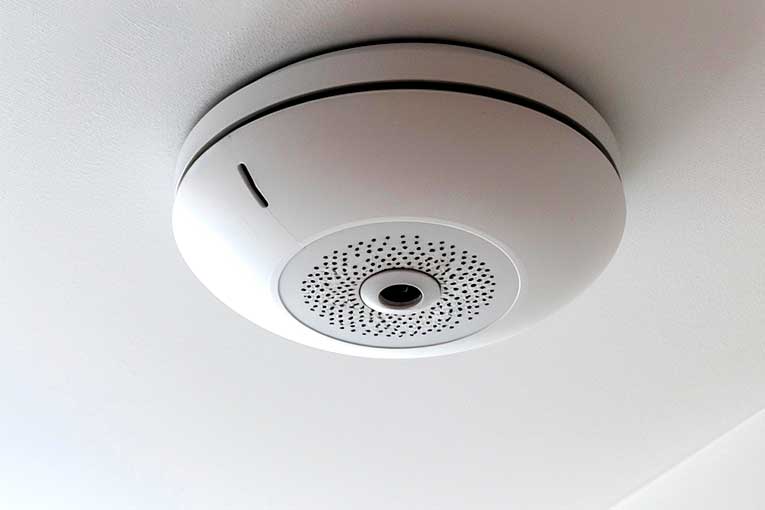
photoelectric smoke detector image

A photoelectric smoke detector is a device designed to detect smoke particles in the air and set off an alarm if smoke is detected. 

It operates based on the photoelectric effect – the emission of electrons when light falls on a material. 

In the context of smoke detection, the device uses a light source and a sensor to identify the presence of smoke.

The history of the photoelectric smoke detector dates back to the mid-20th century, marked by a continuous quest to enhance fire detection technology. 

Albert Einstein’s groundbreaking work on the photoelectric effect in the early 20th century laid the theoretical foundation for the development of photoelectric sensors.

In 1972, Donald Steele and Robert Emmark, researchers at Electro Signal Lab, invented and patented the photoelectric (optical) smoke detector.

Throughout the ensuing decades, advancements in electronics and materials science contributed to refining the efficiency and reliability of photoelectric smoke detectors. 

These devices became integral components of residential and commercial fire safety systems, playing a vital role in providing early detection of potential fire hazards.

Continued research and development in the field have led to the integration of photoelectric technology with other detection methods, contributing to more comprehensive fire safety solutions. 

The evolution of the photoelectric smoke detector stands as a testament to the ongoing commitment to innovation in enhancing our ability to detect and respond to fire threats effectively.

How does a Photoelectric Smoke Detector Work?

how photoelectric smoke detector works

A photoelectric smoke detector operates on the principle of light obscuration to identify the presence of smoke particles in its surroundings. 

This innovative technology relies on the photoelectric effect, a fundamental phenomenon in physics where light striking a material induces the emission of electrons. 

The device comprises a light source and a sensor strategically placed at an angle within a detection chamber.

In the absence of smoke, the light beam from the source does not reach the sensor directly. 

However, when smoke particles enter the detection chamber, they scatter the light, causing some of it to deviate towards the sensor. 

This triggers the sensor to send a signal, setting off the alarm and alerting occupants to the potential presence of a fire.

This design makes photoelectric smoke detectors particularly effective in detecting smouldering fires, characterised by slow combustion and the production of larger smoke particles. 

The early detection of such fires is crucial for timely response and evacuation.

The strategic placement of the light source and sensor, coupled with the sensitivity to the scattering of light by smoke particles, ensures a prompt and accurate reaction to the initial signs of a fire. 

This swift response provides valuable time for intervention and evacuation, enhancing the overall efficiency of fire safety systems

What are the Advantages to a Photoelectric Smoke Detector?

photoelectric smoke detector advantages

Photoelectric smoke detectors have a wide range of positives for their use: 

Early Detection of Smouldering Fires

One notable advantage of photoelectric smoke detectors is their efficacy in detecting smouldering fires. 

This type of fire is characterised by slow combustion and the production of larger smoke particles. 

Photoelectric detectors excel in identifying these larger particles, providing an early warning that is crucial for timely intervention and evacuation.

Reduced False Alarms

Photoelectric smoke detectors are less prone to false alarms triggered by non-fire-related particles like cooking smoke or steam. 

The technology’s focus on the scattering of light by smoke particles contributes to a more accurate and reliable response, minimising unnecessary disruptions and ensuring the alarm is activated only when a genuine fire hazard is present.

Enhanced Sensitivity

The strategic design of photoelectric smoke detectors, with a light source and sensor at an angle within a detection chamber, enhances their sensitivity to the early signs of a fire. 

This heightened sensitivity allows for a swift response, giving occupants more time to react and facilitating effective fire safety measures.

Broader Applicability

Photoelectric detectors are suitable for a wide range of environments, making them versatile for residential, commercial, and industrial use. 

Their effectiveness in various settings, coupled with reduced false alarms, contributes to their widespread adoption as a reliable component in comprehensive fire safety systems.

What are the Disadvantages to a Photoelectric Smoke Detector?

photoelectric smoke detector disadvantages

While incredibly useful, photoelectric smoke detectors do have some drawbacks:

Limited Effectiveness for Fast-Flaming Fires

One notable disadvantage of photoelectric smoke detectors is their potential limitation in effectively detecting fast-flaming fires. 

As these detectors primarily focus on larger smoke particles produced by smouldering fires, they may have a slight delay in responding to rapidly developing fires that produce smaller particles. 

While they excel in certain scenarios, their effectiveness may vary depending on the type of fire.

Dependency on Smoke Particles

Photoelectric smoke detectors rely on the presence of smoke particles to trigger an alarm. 

In environments where smoke is not readily produced, such as clean or well-ventilated spaces, these detectors might not provide timely alerts. 

This dependency on smoke particles may limit their effectiveness in certain conditions.

Potential for False Positives in Dusty Environments

While photoelectric detectors are generally less prone to false alarms, they can still be triggered in dusty environments. 

Particulate matter in the air, such as dust or insect debris, may scatter light and lead to false positives. 

Although less frequent than with other types of smoke detectors, false alarms can still occur in specific situations.

Slightly Higher Cost

Compared to some other types of smoke detectors, photoelectric models may have a slightly higher initial cost. 

While the difference in price is often marginal, it remains a factor to consider for budget-conscious consumers or businesses. 

Despite their advantages, the cost factor might influence the choice of smoke detectors in certain applications.

What Other Types of Smoke Detectors are Available?

other types smoke detectors

Several types of smoke detectors are available, each utilising distinct technologies to detect the presence of smoke and potential fire hazards. 

Apart from photoelectric smoke detectors, other common types include:

Ionisation Smoke Detectors

Ionisation smoke detectors use a small amount of radioactive material to ionise air particles within a detection chamber. 

When smoke enters the chamber, it disrupts the ionisation process, triggering the alarm.

Optical Smoke Detectors

Similar to photoelectric detectors, optical smoke detectors use light to detect smoke. However, they operate on the principle of infrared beams. 

When smoke particles scatter light within the detection chamber, the alarm is activated.

Heat Smoke Detectors

Unlike smoke detectors, heat detectors respond to changes in temperature. 

When the ambient temperature reaches a certain threshold, indicating a potential fire, the heat detector triggers the alarm.

Dual-Sensor Smoke Detectors

These detectors combine the features of both ionisation and photoelectric technologies. 

By integrating these two methods, dual-sensor detectors aim to provide comprehensive coverage, effectively detecting a wide range of fire types.

Air Sampling Smoke Detectors

These advanced detectors use a network of pipes to actively draw in air from the monitored space. 

The air is then analysed for the presence of smoke particles, providing early detection in environments where rapid response is critical.

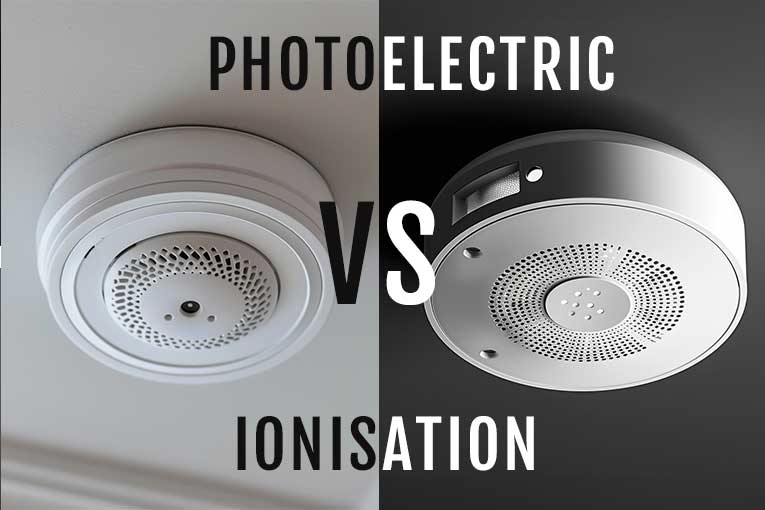
Photoelectric vs Ionisation Smoke Detectors 

photoelectric vs ionisation

Photoelectric and ionisation smoke detectors are two common types that operate on distinct principles, influencing their performance in detecting different types of fires. 

Photoelectric detectors utilise the principle of light obscuration, employing a light source and sensor within a detection chamber. 

These detectors excel in detecting smouldering fires characterised by larger smoke particles, offering a timely response and reduced risk of false alarms from non-fire-related particles like cooking smoke.

On the other hand, ionisation detectors rely on a small amount of radioactive material to ionise air particles in a detection chamber. 

When smoke disrupts this ionisation process, the alarm is activated. 

Ionisation detectors respond quickly to fast-flaming fires that produce smaller smoke particles, making them cost-effective. 

However, they are more susceptible to false alarms, especially in dusty environments, and may have limitations in detecting smouldering fires.

Choosing between these detectors depends on factors such as the specific fire hazards expected and preferences regarding sensitivity and potential false alarms in a given environment. 

Dual-sensor detectors that combine both technologies are also available for comprehensive fire detection.

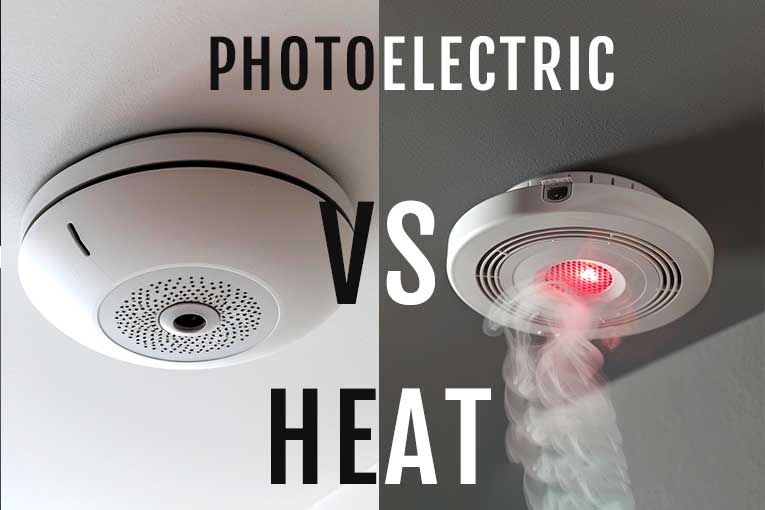
Photoelectric vs Heat Smoke Detectors

photoelectric vs heat

Photoelectric and heat smoke detectors represent two distinct approaches to fire detection, each tailored to address specific aspects of fire hazards. 

When smoke enters a photoelectric smoke detector, it scatters the light, triggering the sensor and activating the alarm. 

These detectors excel in identifying smouldering fires with larger smoke particles, offering early detection and reducing the risk of false alarms from non-fire-related particles.

Conversely, heat smoke detectors respond to changes in temperature rather than smoke particles. 

When the ambient temperature reaches a predetermined threshold indicative of a potential fire, the heat detector triggers the alarm. 

These detectors are particularly effective in areas where the presence of smoke is expected, and a faster response to elevated temperatures is crucial.

The choice between photoelectric and heat smoke detectors depends on factors such as the nature of the environment, the likelihood of different types of fires, and the desired sensitivity. 

Combining these detectors in a comprehensive fire safety system ensures a multifaceted approach to early detection, enhancing overall safety measures.

Conclusion

With regards to smoke detectors, the photoelectric variety stands out for its efficacy in detecting smouldering fires. 

While no detector is perfect for all scenarios, understanding the strengths and limitations of photoelectric smoke detectors allows individuals and businesses to make informed choices for enhanced fire safety.