Rhineland-Palatinate Fire Service enhances safety with new equipment
The Bellheim Community Fire Department, located in Rhineland-Palatinate, Germany, has enhanced the safety and efficiency of its firefighters by acquiring 180 sets of the FIRE FLEX protective suits from Rosenbauer.
Quality, comfort, and visibility
This decision came after rigorous testing and evaluations, where various operational clothing from different manufacturers were put through their paces.
The Bellheim Fire Department, which responds to approximately 100-120 operations annually, required top-notch equipment for its wide range of tasks.
Deputy Chief Jürgen Brinz highlighted the superior qualities of the FIRE FLEX suits, stating: “We have tested different operational clothing during training exercises and also, in some cases, in operations under real conditions.
“The FIRE FLEX from Rosenbauer was the most impressive for us.”
He emphasised the improved visibility, fit, and comfort of the FIRE FLEX suits compared to their existing personal protective equipment (PPE).
Prioritizing Safety with High-Performance Rosenbauer Materials
The choice of FIRE FLEX suits aligns with the department’s commitment to the highest safety standards.
The suits combine high-level heat protection, water resistance, and breathability, critical for the diverse and challenging tasks firefighters face.
Brinz said: “The safety of the crews deployed is, of course, the most important aspect.
“Accordingly, the personal protective equipment must be of the highest quality in terms of the materials used.”
Efficient delivery and positive experience with Rosenbauer
The Bellheim Fire Department’s experience with Rosenbauer has been consistently positive, extending beyond the FIRE FLEX suits.
They have also been using technical equipment and the ‘HEROS smart’ protective helmet from Rosenbauer, contributing to their operational success.
The efficient ordering and delivery process of the FIRE FLEX suits further reinforced this partnership, with Brinz noting: “We were then once again pleasantly surprised, because the delivery arrived even before the agreed date.”
Successful deployment of new suits
In their initial operations, the new FIRE FLEX protective suits have already proven to be robust and practical.
This acquisition marks a significant enhancement in the safety and performance of the Bellheim Fire Department, demonstrating their commitment to the well-being of their firefighters.
IFSJ Comment
The acquisition of 180 FIRE FLEX protective suits by the Bellheim Community Fire Department signifies a vital step in advancing firefighter safety and operational efficiency.
This decision, driven by extensive testing and evaluation, reflects a broader trend in the firefighting community towards prioritising high-quality, versatile, and comfortable protective gear.
The FIRE FLEX suits, distinguished by their high protection class and breathability, address key challenges faced by firefighters, such as heat exposure and the need for mobility.
Rosenbauer’s role in this transition, evident from the positive feedback on both the FIRE FLEX suits and other equipment like the ‘HEROS smart’ helmet, is noteworthy.
Their ability to deliver high-quality equipment promptly further cements their reputation as a reliable partner in firefighting safety.
Leading the way in firefighter safety and innovation
Fire-Dex, a prominent provider of high-quality personal protective equipment (PPE) for firefighters and emergency responders, has recently marked another season of exceptional achievements.
Recognised for its rapid growth and innovation, Fire-Dex has been honoured with several prestigious awards, reflecting its commitment to excellence in serving those who risk their lives to protect others.
Recognition on multiple prestigious platforms
Among its recent accolades, Fire-Dex has earned a place on the Inc. 5000 list for the third time in 2023.
This notable list, published annually by Inc. magazine, spotlights privately held U.S. companies that have exhibited consistent and rapid growth, highlighting Fire-Dex’s position as a top manufacturer in the field.
The company also celebrated its ninth Weatherhead 100 award, underscoring its status as one of Northeast Ohio’s fastest-growing businesses.
The Weatherhead 100 awards are a testament to the region’s enterprising spirit and to companies driving progress, recognizing impressive revenue growth and leadership.
Adding to its achievements, Fire-Dex has been honoured with eight NorthCoast 99 awards, an annual program presented by ERC (Employers Resource Council).
This award celebrates top workplaces in Northeast Ohio, honouring organisations that excel in attracting, developing, and retaining talent.
Furthermore, Fire-Dex has received the Cascade Business Awards for the 10th time. Presented by Cascade Capital Corp. and Smart Business magazine, this award honors businesses in the Akron-Canton (Ohio) region that have shown significant growth in sales and employment over the past five years.
Leadership and empowerment at the forefront
The company’s success is also reflected in its leadership. President Lauren Burke DeVere was honored for a second consecutive year at the Northeast Ohio Smart 50 Awards, recognizing the region’s most astute executives for their skill in building thriving enterprises.
Additionally, Burke was selected as a 2023 Progressive Women Honoree by Smart Business, acknowledging her contributions to building robust organisations and mentoring aspiring women in their careers.
Jamie Marks, Director of Human Resources at Fire-Dex, attributes these achievements to the collective passion and drive of the team: “We’re not just about protecting people, but also empowering our talented associates who make all of this possible.
“It’s our shared values and dedication that truly set us apart and lead to such remarkable recognition”.
Fire-Dex’s commitment rooted in family values
Since its establishment in 1983 in Medina, Ohio, Fire-Dex has adhered to its mission “to serve those who serve.”
With leaders like Lauren and a team of skilled associates, the company maintains a reputation for quality and consistency, evident in every aspect of its operations.
IFSJ Comment
Fire-Dex‘s recent spate of awards and recognitions is not just a testament to its growth as a company but also a reflection of the essential role it plays in ensuring the safety and efficiency of firefighters and emergency responders.
These accolades highlight the company’s ability to adapt, innovate, and lead in an industry where stakes are high, and the margin for error is low.
Fire-Dex’s commitment to excellence and its focus on leadership and workplace culture set a benchmark for others in the industry.
This series of awards also underscores the importance of continuous improvement and dedication to quality, aspects that are crucial in the field of fire and safety.
As Fire-Dex continues to grow and evolve, it serves as a prime example of how a company can effectively blend growth with a commitment to community and safety, embodying the very ethos of the fire and safety sector.
Growth driven by the increasing prevalence of fire incidents and the demand for enhanced safety measures, says Research Nester.
The rising trend in the fire-resistant fabrics market
The global fire-resistant fabrics market is set to experience significant growth, with a compound annual growth rate (CAGR) of over 9.1% from 2023 to 2035.
The market is anticipated to achieve a revenue of USD 12.5 billion by 2035, a substantial rise from the USD 4.4 billion recorded in 2022.
This upwards trend is linked to the increasing number of fire incidents globally.
For instance, according to the report by Research Nester: “About 3,700 civilians died and approximately 14,600 were injured in 2021 as a result of the over 1,353,400 fires that occurred in United States.”
Consequently, there is a growing demand for fire-resistant fabrics, particularly among firefighters.
How are these fabrics made flame-resistant?
To make fabrics flame resistant, a fire-retardant chemical is sprayed on them.
Though these fabrics’ fibres aren’t inherently protective, the chemical treatment enhances their resistance to flames.
These textiles are primarily produced from 100% cotton fibres or a blend of cotton and nylon.
This market is also benefiting from the increasing production of cotton fibres, with figures indicating that: “each year, about 26 million tonnes of cotton are produced worldwide.”
Urbanisation and its effects on the market
The rise in urban population has inadvertently led to an increase in fire incidents. Urban areas are more susceptible to fires, often stemming from electrical mishaps or cooking-related accidents.
With an estimated 55% of the global population residing in urban areas as of 2021, the demand for fire-resistant fabrics is on the ascent.
A regional breakdown
The fire-resistant fabrics market spans across major regions, including North America, Europe, Asia Pacific, Latin America, and the Middle East and Africa.
In Asia Pacific, the market is set to dominate with a 32% share, primarily due to the growth of the oil & gas industry, which produces about: “6 million barrels of oil daily in the Asia-Pacific area in 2022.”
North America is also anticipated to hold a significant market share, attributed to the frequent forest fires in the region. Notably: “according to data from the National Interagency Fire Centre, as of October 4, 2023, there had been about 49,100 fires which destroyed 2.57 million acres.”
Segments and end-users
The primary sectors that utilise fire-resistant fabrics are Transportation, Industrial, and Defense & Public Safety.
Among these, the industrial sector is projected to have the largest share, largely due to the rise in industrial activities like mining.
As the mining sector continues to expand, so does the risk of explosions and accidents, thus heightening the need for fire-resistant fabrics.
Key players in the market
The global fire-resistant fabrics market is home to several notable companies. Research Nester has profiled some of the leading brands, including Solvay S.A., Gunei Chemical Industry Co., Ltd., WL. Gore & Associates, Inc., PERFORMANCE PRODUCTS INC., Huntsman International LLC, Lenzing AG, Teijin Limited, Milliken & Co group, and Royal TenCate Protective nv.
IFSJ Comment
The escalating growth of the fire-resistant fabrics market underscores the urgent need for enhanced safety measures across various sectors.
With the rise in urbanisation and industrial activities, it’s evident that the demand for these fabrics will continue to grow.
From firefighters to industrial workers, these fabrics play a pivotal role in ensuring the safety of countless individuals.
As we move forward, it’s crucial for industries and governing bodies to prioritise and invest in such safety measures.
Korean company achieves major milestone in fire safety gear production
Summit Corporation, a South Korean firefighting gear producer, has recently secured the US NFPA certification for its structural firefighting gloves and hoods.
This makes it the first Korean company to produce NFPA-certified fire hoods.
Furthermore, it remains the sole domestic firm to hold this distinction for its firefighting gloves.
A closer look at NFPA and its significance in fire safety
The NFPA, or National Fire Protection Association, is a renowned international non-profit organisation, founded in 1986.
Its primary aim is to mitigate human casualties, property destruction, and economic setbacks stemming from fires and electrical hazards.
To achieve this, the NFPA is actively involved in crafting fire prevention standards and endorsing guidelines connected to fire apparatus and safety evaluations for vulnerable demographics.
The products from Summit Corporation that have earned the certification are their ‘QU-27PBI’ model structural firefighting gloves and the ‘HD-21P’ and ‘HD-11P’ structural firefighting hoods.
Of special note is the ‘HD-11P’. It stands out due to its superior fit and coverage, achieved by its ergonomic design, ensuring effective protection of the wearer’s head, neck, and face.
From sports safety to fire hoods
Established in 1999, Summit Corporation has been at the forefront of crafting personal protection gear like gloves and hoods for firefighters.
The firm’s progression is rooted in its knowledge in glove fabrication.
By broadening its horizon from sports glove production and channelling its efforts into R&D for specialised firefighting gloves,
Summit was in a position to patent its waterproof glove manufacturing process.
In 2016, it earned the KFI certification for its firefighting gloves, followed by the hood certification in 2017.
Summit Corporation’s in-house brand, SALVARE, has risen to prominence, earning the title of the industry’s premier firefighting glove and hood brand.
With the recent NFPA certification, Summit solidifies its status as the only Korean company to have this recognition for these specific products.
IFSJ Comment
The recent achievement of Summit Corporation in obtaining the NFPA certification underscores a significant development in the realm of fire safety equipment for South Korea.
The NFPA stamp of approval isa testament to the quality and reliability of the products and also signifies a significant advancement for the South Korean firefighting gear industry on a global stage.
Such certifications can pave the way for other domestic companies to push their boundaries and aim for international standards, fostering global collaborations and elevating the quality of fire safety gear universally.
From inspiration to design: crafting the ideal fire helmet
The creation of Quantum was inspired by advancements in materials technology, the dynamics of rescue and climbing helmets, and the evolving challenges in technical rescue, natural disasters, and wildland firefighting.
Addressing the new-age requirements, KASK has rolled out a helmet that’s certified under three significant European helmet standards: Wildland Firefighting, Technical Rescue, and Mountaineering.
Emphasising on safety, comfort, and design, KASK’s new helmet confronts unique risk factors in emergency situations, such as impact absorption, durability, and compromised environments.
On top of this, the helmet ensures stability, user comfort, and ease of use.
Technical brilliance and recognitions
Quantum is not just about aesthetics and design, but also technical excellence.
The exterior shell, crafted from a fire and chemical-resistant PC-PBT alloy, complements its high-density EPS inner shielded with a thermoformed cover.
Adding to the user experience is the Adaptive Fit system, easily adjustable even with gloved hands.
Highlighting the inception of Quantum, Marta Beltramello, Sales & Marketing Director of KASK Safety, shared: “Quantum began with a question: why can’t we design a better helmet for these essential workers and the risks they face?
“We are truly honoured to provide equipment that is designed better: safer, more comfortable, easier to use, and in the end, what they want to wear”.
Further recognising KASK’s dedication to top-notch design and user-centric benefits, the Quantum Series recently clinched the iF Design Award 2023 for Design Excellence.
Highlights from Quantum’s technical details
When designing Quantum, KASK tapped into its rich experience from various sectors like cycling, snow sports, and industrial safety.
The helmet’s shell, made from a polycarbonate/polybutylene terephthalate (PC/PBT) alloy, provides exceptional resistance to impacts, heat, flames, and chemicals.
To amplify user comfort, the helmet features a multi-layered fabric padding system, complemented by moisture-wicking technology.
Quantum also offers a patented Adaptive Fit system for personalised head shape fitting.
Users will find Quantum available in two models, the regular and the Cabrio, which has 14 vents and an enhanced air-flow system for user comfort.
IFSJ Comment
The introduction of the Quantum helmet series by KASK marks a significant stride in ensuring the safety and comfort of our first responders.
Wildfire firefighters and technical rescue teams, who often find themselves in high-risk situations, require equipment that’s not only protective but also comfortable for extended use.
Quantum’s design, which caters to these specific needs while also being compliant with key European standards, exemplifies KASK’s commitment to merging top-notch technology with user-centricity.
The accolades and certifications the Quantum series has received only reinforce its potential as a game-changer in the realm of fire safety equipment.
Understanding particulates and protecting our firefighters with PGI Safety
Firefighters face danger every time they don their protective gear and rush into the blaze.
But beyond the flames and smoke, a far more insidious hazard looms — one that is not as immediately perceptible but just as deadly.
This invisible enemy is particulate matter: microscopic pollutants that infiltrate our air and bodies, raising substantial health concerns within the firefighting community.
Recent studies reveal alarming cancer rates among firefighters, a grim statistic attributed largely to their repeated exposure to particulates.
These tiny particles, born from the remnants of incinerated material, carry a toxic payload of carcinogens that can penetrate the body through the skin and respiratory tract.
The consequence is an elevated risk of developing cancers, with firefighters being disproportionately affected compared to other professions.
A pivotal question arises: are we doing enough to protect our frontline heroes from this insidious threat? And if not, what more can be done?
IFSJ Editor Iain Hoey spoke to to Andrew Slater, Managing Director of PGI Safety, a leading manufacturer of innovative protective gear, to gain insights on the issue and to learn about the steps the industry is taking to safeguard those who risk their lives for our safety, exploring the pernicious problem of particulates, its implications for firefighter health, and the protective solutions available to counteract this threat.
Can you briefly explain the issue of particulate exposure to firefighters?
The huge prevalence of Cancer among Firefighters is a massive wake up call for the services and the industry.
There will be legislative changes in the UK and the Health and Safety Executive are now in the process of auditing fire stations.
The National Fire Chiefs Council are also keeping a keen eye on PPE.
What are the immediate and long-term implications of this exposure to firefighters’ health?
There are huge issues with exposure and the immediate concern is the lack of proper facilities on many fire stations.
The long term issues will manifest as we are seeing firefighters working longer.
The ages of 50 to 60 are significant as firefighters often present during this time with cancer and other exposure related illnesses, this could potentially have significant impact on the workforce.
Could you tell us about PGI Safety, your role in the company, and its mission?
As managing Director of PGI Safety (EMEA) I’m very proud to reprersent a global leader with a passion and drive to provide the highest level of PPE for firefighters, emergency services, police, military and industrial professionals the world over.
PGI Safety is a high-performance PPE manufacturer with a drive and relentless commitment to meticulous design, craftsmanship and service.
Using only advanced premium materials and accessories allows PGI to create technical products that can be trusted to perform in the most extreme conditions.
With the philosophy to design and manufacture products that are as good as they can be, performing over time and beyond expectation, PGI delivers garments designed to provide unrivalled performance at the point of extreme need.
PGI is an ISO-9001:2015 registered company, proving our relentless dedication to quality and ongoing process improvements.
As a market leader in technology driven personal protective apparel.
Our vision is to be the number one globally recognised market leader of high performance apparel and our brand synonymous for offering our customers with products manufactured to the highest possible quality standards, only surpassed by our determination to provide unparalleled service to all our customers and partners.
What is PGI Safety’s stance on the current state of protective measures in the firefighting industry?
Its great to see how manufacturers are taking the safety and wellbeing of Firefighters seriously, however there seems to be a big delta between the performance of the products and the level or protection they provide, against what is often claimed.
PGI’s stance is to uphold the highest standards of testing often providing dual certified products, which we firmly believe gives the wearers the peace of mind required when their very life depends on it.
To date, PGI have invested well over a million dollars in the development of particulate hoods alone.
What strategies that can be employed to minimise or eliminate the risk of particulate exposure for firefighters?
The legislation of an industrial Injury is key to the drive for a safer industry in terms of exposure. It is noted that the best way to stay safe is to not be contaminated at all. We need to be smarter at fighting fires.
If there is no life risk, why are we getting close to contaminants at a car fire, for instance. There is no longer a badge of honour around being filthy.
However, in order to always minimise the risk of exposure, we are reliant upon the authorities to ensure their firefighters are equipped with the highest performance PPE.
Can you tell me about PGI Safety’s solutions for firefighters?
PGI have invested millions in the development of our particulate protection hoods. We provide ourselves in offering multiple options to best suit the individuals requirements.
The most important aspect when considering particulate protection is the efficiency of the particle filtration whilst maintaining high breathability.
Heat stress is the second biggest killer in firefighters.
PGI have patented technology and over the years have delevoped a range of hoods that offer efficiency between 97% – 99.9% whilst having breathability of 23CFM, often referred to “as breathable as a non barrier hood”.
We also recognise that everyone is individual, we have a range of styles that suits everyone’s needs, from short bib, extended bib, half shoulder fitment etc.
PGI also utilise different particle blocking options, from Nanoflex to our new laminate, an innovative gravure dot lamination process, covering only 50% of the surface area improving air permeability and flexibility. All of our hoods are PTFE free.
Can you talk about regular PPE cleaning and the best procedures to ensure effective decontamination?
There is a need for a full overhaul of the way we carry out decon and how we wash kit and PPE.
Firekit should now be laundered every time it is used, we recognise that this also puts additional pressures onto the authority, so we have adopted the use of antimicrobial and odour absorbers.
A garment treated with both an antimicrobial and odour absorber keeps the garment smelling fresh all day long.
These invisible layers of protection fight odours in different ways, whether it is through the power of silver and copper in the antimicrobial through the high surface area of zeolites in the odour absorber.
Agion is a zeolite-based technology that incorporates silver technology and is not a nanosilver.
Ultimately, you can expect your Agion protected garments and textiles to stay smelling fresh longer.
Are there further improvements or developments in the pipeline at PGI Safety to enhance firefighter protection?
Yes, we are excited to have launched our new range of hoods at this years Emergency Services Show that offer further improvements and options to keep our firefighters at the highest levels of particulate protection.
What is your outlook in terms of effectively managing the issue of particulates and cancer risks among firefighters?
The hope is that the UK government classify the huge scientific evidence recently published as factual and that they impose a category of occupational disease, for all cancers associated with the science and evidence available.
In the meantime it is my personal mission to keep interacting with firefighters and authorities keeping them all fully up to date with developments and listening to what they need from manufactures so we are all one step ahead of this terrible disease.
Editor’s View
My discussion with Slater concerning the dangerous prevalence of cancer among firefighters due to particulate exposure was both enlightening and urgent.
The gravity of this matter, underscored by the impending legislative changes in the UK, is a pressing concern for every stakeholder in the firefighting ecosystem.
PGI Safety’s rigorous standards, commitment to design, and willingness to invest in ensuring the utmost safety for firefighters is commendable and sets a precedent for industry players.
What strikes me most is the gap identified between product performance claims and the real protection they offer.
The emphasis on smarter firefighting techniques, understanding the nuances of decontamination, and leveraging advancements like antimicrobial and odour absorbers reveals the layers of complexity involved in truly protecting our firefighting heroes.
With such committed stakeholders and relentless innovation, there is hope for a safer future for those who risk their lives to save ours.
However, it is clear that a collective effort, driven by both governmental bodies and manufacturers, is pivotal.
The fight against cancer among firefighters is not just about cutting-edge PPE, but also about an evolved mindset, where safety is at the forefront of everything we do.
This article was originally published in the October 2023 issue of International Fire & Safety Journal. To read your FREE digital copy, click here.
Why Vallfirest’s Xtreme Boot could be a turning point in wildland fire footwear
The number of wildland fires continues to rise year after year.
And while work is being done on prevention policies to mitigate the effects and avoid the consequences, the industry is working to ensure the safety of those involved in their extinction with the aim of equipping firefighters with the technical garments that offer them protection all while maintaining comfort.
The history of firefighting footwear
The boots used by firefighters have evolved over time. In the 1970s and 1980s, their footwear came from the military sector.
Those boots were not very well adapted to wildland environments and there were a number of problems concerning safety and comfort with firefighters dealing with little impermeability and deficient ergonomics.
And, in the end, a lack of comfort when working.
Some 20 years later, towards the end of the 1990s and at the start of the new century, great progress had been made with firefighters beginning to use hiking type boots which are the ones that have been used to date.
These boots were made by companies specialising in safety which adapted this type of footwear to mountain boots with certain limitations.
Firefighters had to accept that their footwear would cause sores and would not be very comfortable when on call or in a vehicle.
The technological leap from Vallfirest
More than two decades later, Vallfirest has become the force behind a technological leap with one of the premier wildland fire boots available: the Xtreme Boot, which uses existing technology for technical mountain footwear yet creating a boot that has been adapted for today’s fires, which are more intense and longer lasting.
This unique and pioneering Vallfirest footwear is the result of all the lessons learnt in safety and operability.
Along with Panter, a leading company in safety footwear, Xtreme Boot has been created with the philosophy that firefighters are not the ones that must adapt to the boots but rather the boots must meet professionals’ needs, allowing them to get ahead of fires.
Xtreme Boot is the result of three intense years of research and testing in real fires and prescribed burns.
Men and women have voluntarily participated by trying different prototypes, testing the footwear in different scenarios and roles and in areas ranging from high mountains to boggy lands using technical fire or carrying water hoses.
Sometimes test days lasted more than 24 hours, as was the case of the historical fire season in 2022 which razed the Iberian Peninsula, becoming the worst year in the last several decades.
Absolute safety in footwear
Agility, design and ergonomics: these three words perfectly summarise what is offered by the Vallfirest Xtreme Boot, a boot designed for walking along irregular steep wildlands in the most extreme of conditions, as occurs during wildland fires.
This model marks a turning point in wildland fire footwear as it offers the agility and comfort required of hiking footwear yet the safety of firefighting footwear thanks to the fireproof and waterproof properties.
It is a 24/7 boot designed to handle fires as well as remain comfortable for on-call duty, training and travel.
It features a Quick Lace system in the inner boot and a YKK outer zipper close in addition to Velcro in order to prevent lace exposure to direct flames, vegetation and sharp objects in a view to preventing accidents.
On the other hand, the high, adjusted outer boot design prevents the entrance of external elements for added safety.
The Xtreme Boot has a light and flexible nitrile rubber Vibram sole with excellent shock absorbance and perfect traction on rocky and forestry surfaces.
All of this is in addition to the optimal resistance to high temperatures since it can bear up to 300º C, the temperature a fire may reach.
The outer fireproof, impermeable Cordura boot is equipped with a reinforced toe and heel, coated in plastic to prevent chafing and damage caused by incandescent particles.
It also has an advanced 1100N flexible and light textile anti-perforation insole made with special fibres for excellent resistance covering 100% of the plantar surface and completing preventing perforation. These boots can also be washed to minimise exposure to contaminants.
The all-new Xtreme Boot is EN 15090:2012 European certified as firefighting footwear and is Oeko-Tex certified which ensures the textiles are made free of any harmful substances.
Seeking optimal comfort
In order for a firefighter to do their work under the ideal conditions during a fire, they need footwear that is absolutely safe but also comfortable.
For this reason, Vallfirest has successfully designed very light boots that weigh just 600 grams.
The boot features hypoallergenic inner foam lining which is highly resistant to abrasion and the absorbance of moisture all while being extremely breathable.
This is supplemented with an ergonomically-designed inner collar that is padded with high-density polyurethane foam.
These technical characteristics foster mobility and an excellent fit.
As for the insole, it is anatomic and 100% ecological and recyclable.
The advantage is that it can be removed and is treated to be antibacterial, anti-static and anti-fungal.
With the Quick Lace system in the inner boot and YKK zipper and Velcro for outer closing, adjustments are quick and complication-free.
Firefighters can work safely since the double closure prevents dead leaves from entering as well as more significant damage.
On the other hand, and always in a view to offering professionals comfort, Xtreme Boot features a textile pull loop in the back to make it easier and faster to put on.
The Vallfirest Xtreme Boot is a real turning point. It is a boot designed for walking along irregular, steep wildlands and the number one in safety when working to extinguish a fire under the most extreme of conditions.
It is a whole new footwear concept for wildland firefighters which stands out due to the combined agility and comfort in a mountain boot with the increased protection needed to work in high temperatures.
Technology used to provide quality, comfort and safety.
This article was originally published in the October 2023 issue of International Fire & Safety Journal. To read your FREE digital copy, click here.
In every workplace, safety should be the top priority for both employers and employees.
Ensuring a safe and secure working environment not only protects the well-being of workers but also helps to increase productivity and overall organisational success.
One crucial aspect of achieving workplace safety is the use of Personal Protective Equipment, commonly known as PPE.
PPE refers to a diverse range of specialised gear designed to shield workers from various workplace hazards, such as chemical exposure, physical impacts, electrical shocks, and more.
PPE equipment includes respiratory protection
Throughout this article, we will delve into the different types of PPE available, explore why is PPE important and understand the benefits they offer, all while emphasising the significance of compliance in fostering a culture of safety.
Different Types of PPE
There are countless potential workplace hazards which create the need for several categories of PPE options that are tailored to provide specific protection.
There are 5 main categories:
Protective Clothing
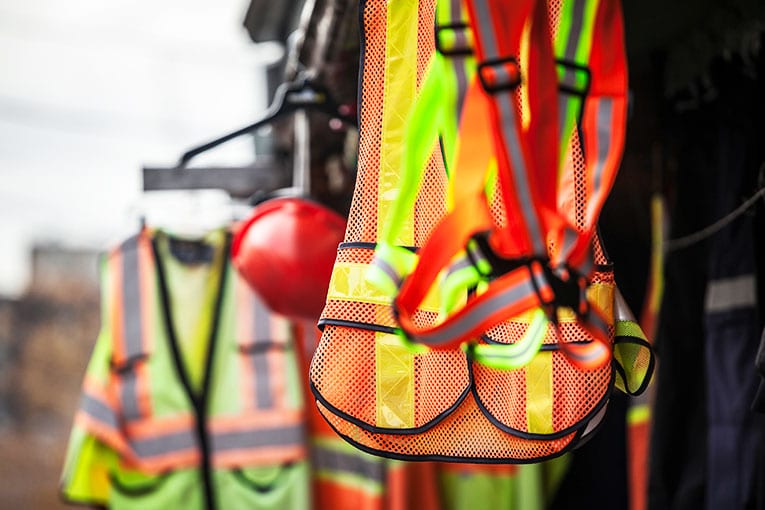
From standard coveralls, gloves and aprons, to specialised fire-resistant or high-visibility clothing, PPE workwear and clothing items are an essential part of everyday life for many organisations.
These garments act as a robust barrier against harmful chemicals, biohazards, and other potentially hazardous substances.
Eye Protection
Safety goggles, face shields, and safety glasses are important PPE items that shield the eyes from dust, debris, chemicals, and intense light.
The right PPE has to fit for purpose for the right job
These protective gear options are especially important in the construction, manufacturing, and healthcare industries.
Respiratory Protection
Respiratory protection is essential for workers who could be exposed to airborne contaminants like dust, fumes, or gases.
Respirators, masks, and filters ensure that the air the wearer breathes in is free from harmful particles, safeguarding their respiratory health.
Hearing Protection
Hearing protection, such as earplugs and earmuffs, is vital for employees working in noisy environments, as prolonged exposure to high levels of noise can lead to hearing damage or loss.
Head Protection
Head protection, most often hard hats, serves as a primary defence against head injuries resulting from falling objects or accidental collisions on construction sites or other hazardous workplaces.
Why is PPE Important in the Workplace?
PPE is an individual’s first line of defence against a wide range of workplace accidents, injuries and illnesses.
Wearing and utilising the correct PPE significantly reduces the risk of severe injuries and long-term health issues caused by exposure to various hazards.
PPE provides an additional layer of safety, offering protection even in circumstances where other safety measures might fall short.
The proper use of PPE can give workers confidence, empowering them to carry out their duties effectively, knowing they have reliable protection against potential harm.
This sense of security fosters a safer work culture, and can even boost employee morale and motivation.
As well as this, strict adherence to PPE guidelines showcases an employer’s commitment to their employees’ well-being and safety.
PPE is vital for safety in the workplace
As such, a proactive approach to safety can enhance the company’s reputation and contribute to improved employee loyalty and retention.
PPE is especially important in high-risk industries such as construction, manufacturing, healthcare, and laboratories, where exposure to hazardous substances and potential accidents is much more prevalent.
The use of PPE ensures the continuity of business operations by minimising work disruptions due to accidents or illnesses.
When workers remain safe and healthy, absenteeism decreases, leading to enhanced productivity and reduced downtime.
What are the Benefits of Wearing PPE?
Using PPE offers a multitude of benefits for both employers and employees alike.
Reduces Risk of Injury or Illness
Using the correct PPE significantly lowers the risk of injury or illness, and prevents a wide range of accidents, from minor incidents to life-altering mishaps.
For instance, using appropriate gloves when handling hazardous chemicals can prevent skin irritation or burns.
Enhances Overall Workplace Safety
PPE can enhance overall workplace safety, and lead to fewer accidents and injuries.
A safe work environment instils a sense of confidence and well-being in employees, leading to improved job satisfaction and reduced stress.
Reduces Medical Expenses & Insurance Costs
By preventing accidents and illnesses, PPE can lead to reduced medical expenses and insurance costs for businesses.
Fewer accidents result in fewer worker compensation claims, saving both time and financial resources.
Fosters Positive Work Environment
Prioritising creating a safe workplace fosters a positive work environment, promoting teamwork and trust among employees.
As a result, workers are more likely to feel valued and loyal to their employer, contributing to higher employee retention rates and increased productivity.
Enhances Compliance
In addition to the immediate benefits of PPE, employers also benefit from enhanced compliance with safety regulations and standards when they supply their workers with the correct PPE.
Adherence to safety guidelines helps businesses avoid penalties and fines from regulatory bodies and creates a more positive image for the company.
Attracts Potential Clients & Investors
A good safety record can also attract potential clients and investors, who recognise the company’s commitment to responsible business practices.
A positive reputation for safety can give a competitive edge to the business, making it an attractive choice for clients and investors.
Longer Term Financial Savings
By investing in PPE and prioritising safety, companies can reduce the costs associated with accidents and injuries, leading to long-term financial savings and increased profitability.
Ensuring the proper use of PPE requires a comprehensive approach that involves employees, employers, and the organisational culture.
Training and education are the cornerstones of proper PPE implementation.
All employees must be trained on the potential hazards in their workplace, the appropriate PPE for each task, as well as the correct way to wear and maintain their equipment.
Here are some ways you can ensure that PPE is used correctly within your organisation:
Provide Easy Access to the Correct PPE
Ensure that it fits well and is comfortable for the workers.
One-size-fits-all approaches may not be suitable for all employees, so it is vital to offer a range of sizes and styles to accommodate individual needs.
Regularly Inspect PPE
Identify any defects or signs of wear and tear, so that damaged or outdated equipment can be replaced.
Get Supervisors to Enforce PPE Usage
Management should lead by example, consistently wearing PPE, and address any non-compliance promptly.
Recognising and rewarding employees who consistently use PPE can also boost compliance.
Create an Open Communication Culture
Encourage open dialogue to foster compliance with PPE guidelines.
Employees should feel comfortable expressing their safety concerns and providing feedback on PPE usage and any challenges they may face.
Host Regular Safety Meetings
Organise regular huddles and staff meetings where PPE usage is discussed.
This provides an opportunity to address any issues and find practical solutions collaboratively.
Promote the Importance of PPE
Create and display safety campaigns and posters as reminders in prominent areas of the workplace.
Periodic PPE Policy & Practice Evaluation
This ensures they remain up-to-date and effective.
As workplaces evolve, so do the potential hazards, and adjustments to PPE guidelines may be necessary to keep workers protected.
Conclusion
Personal Protective Equipment (PPE) plays a pivotal role in safeguarding employee from workplace hazards.
Hopefully from this article you have gained an answer to the question of why is PPE important.
The diverse range of PPE options, from protective clothing to eye, respiratory, hearing, and head protection, ensures a comprehensive defence against potential accidents and illnesses when implemented and used correctly.
Using PPE is not only vital for protecting individual workers but it can also contribute to a safer work environment overall.
The benefits of proper PPE implementation are manifold, ranging from reduced injury rates and medical expenses to improved employee morale and enhanced productivity.
The key to effective PPE usage lies in comprehensive training, easy access to equipment, regular inspections, and a culture that prioritises safety.
Employers, employees, and organisational leaders must work together to foster a safety-first mindset.
The story of how the Puyallup Extrication Team found its fit with Fire-Dex
From tight spaces and twisted metal to shattered glass and oily spills, the dangers faced by first responders extracting people from motor vehicle accidents are significant.
Be it intense engine heat, fumes hissing from a ruptured fuel tank or airbags still containing explosive charges, these everyday heroes must take extra precautions to aid crash victims while ensuring their own safety.
Even the latest vehicles equipped with advanced safety features such as high-strength materials, or unfamiliar componentry including electric or hybrid powertrains, can add complexity to the extrication process and require specialised knowledge and tools.
The foremost consideration for vehicle extrication teams is to make certain they are equipped with the right personal protective equipment (PPE) for these unpredictable rescue operations.
Traditional firefighting gear naturally emphasises thermal protection to safeguard wearers in dangerous environments.
Designing PPE that prioritises the mobility and performance required for vehicle extrications is a different challenge, however, that requires garment manufacturers to rethink the way ensembles respond to wearers’ movements in the most critical moments.
For Washington-based Puyallup Extrication Team (PXT)—a group of fire industry specialists that teach special skills for removing people trapped in severe auto accidents—lighter, lithely alternatives to the bulky garments often worn by roadside responders are imperative to their mission.
It is risky work negotiating vehicular wreckage and that is why this team leaves nothing to chance starting with their gear.
Teaching lifesaving techniques
Comprised of 17 professional firefighters specialising in the latest auto extrication methods, PXT (Puyallup, Washington) is a nonprofit organisation that has instructed thousands of rescuers from Alaska to Argentina since 2000.
With a cache of equipment and a stable of qualified instructors, the team travels thousands of miles annually to bring quality education to firefighters where they work.
Classes range from basic to advanced and cover auto extrication, technical heavy extrication and new vehicle/hybrid extrication techniques.
These interactions have a compounding effect on the way PXT performs rescues in its own communities and its teachings.
This includes PPE considerations, and for Puyallup instructors, alternative firefighting gear is the preferred choice for both work and instructional activities.
“We’ve had the good fortune to try many types of PPE over our 23 years in extrication—helmets, gloves, eyewear, boots, fatigues,” says Jeff Pugh, PXT president and 34-year fire industry veteran.
“When we’ve made a switch it’s because it works better for us, and that’s why we no longer wear standard bunker gear when performing our duties as instructors or when we’re competing against other rescue teams.”
Pugh describes how structural firefighting gear, while providing exceptional physical and thermal protection, tends to lack the freedom of movement necessary to access awkward positions during the extrication process.
The considerable weight of bunker gear can also be problematic and increase the risk of heat stress during prolonged periods of intense physical activity.
Pursuing optimal performance
Seeking a better fit for its rescue team, PXT began to explore alternative PPE garments that could facilitate greater manoeuvrability when disentangling accident victims, while also standing up to the hazards posed by jagged objects, scorching-hot surfaces and harmful substances.
After consulting with peers and conducting research, the team developed a list of criteria for its new gear that specifies the ideal garment will:
Utilise lightweight yet durable materials to help minimise fatigue and enable wearers to move more freely and swiftly during missions.
Be ergonomically designed to fit the body’s contours and allow a full range of motion, with articulated joints and gusseted panels that facilitate easier bending, crouching and reaching.
Incorporate stretchable material to improve ease of movement, as well as adjustable features like straps and closures allowing wearers to customise the fit.
Reduce bulkiness and unnecessary features that can be a hindrance in rescue scenarios.
Incorporate proper ventilation and moisture-wicking properties to help regulate body temperature and minimise heat stress and discomfort.
Offer strategic placement of protective padding and reinforced high-wear areas such as knees, elbows and shoulders without obstructing movements.
Incorporate reflective elements to improve visibility.
Be designed to accommodate the integration of necessary tools, communication devices and wearable technologies, such as harnesses, radio systems and personal lighting devices.
Remain easy to don and doff to help save valuable time during emergencies.
Meet NFPA requirements for technical rescue.
A better alternative
For most fire departments, the majority of responses including vehicle extrications are non-structural in nature—up to 90% of calls in some cases. This presents the opportunity to wear lighter weight, single-layer garments opposed to full bunker gear on every call.
Following a survey of the market, PXT chose Fire-Dex, a leading manufacturer of firefighting PPE, to outfit its instructors in garments befitting an extrication scenario.
Fire-Dex showed the team sets of TECGEN51 Fatigues made from a twill-weave fabric having a pattern of diagonal parallel ribs for sturdiness but that is breathable and minimally burdening while providing the necessary flame-resistant (FR) rating protection.
Consisting of a high-density carbon shell encasing a viscoelastic core, the fabric’s special backing exhibits both elastic and viscous behaviour when deformed.
This makes it possible to offer the equivalent thermal protection of a carbon fibre without the traditional drawbacks of compromised strength, meaning the fibre bends and stretches without breaking.
At the same time, DuPont Kevlar and Nomex fibres on the face of the fabric provide strength to complement the thermal protection and elasticity of the backing.
Kevlar was introduced to the fire industry in 1971 and has since been a material that firefighters depend on, as it exhibits an extremely high tensile strength-to-weight ratio that is claimed to be five times greater than steel.
Nomex, on the other hand, is inherently strong, flame resistant and flexible. According to DuPont™, garments made with Nomex last an average of two to three times longer than most other protective fabrics.
This design, further incorporating ultralight thermal liners used in many types of fire suits, achieved the significant accomplishment of passing the NFPA minimum Thermal Protective Performance (TPP) requirement of 35 for thermal liners.
It also carries the highest Total Heat Loss (THL) rating on the market per NFPA testing and provides optimum radiant protective (RPP) performance.
Importantly for PXT, the design contributes to increased flexibility, durability and comfort while meeting rigorous NFPA safety standards.
As alternative firefighting apparel combining fabric tensile strength, thermal protection and ergonomic needs into lighter, closer fitting garments, the fatigues are certified to both NFPA 1951 (technical rescue) and NFPA 1977 (wildland rescue).
Since adopting Fire-Dex’s TECGEN51 Fatigues, PXT instructors have shed pounds compared to wearing traditional bunker gear and found the ideal jacket and pant combination for their unusual line of work.
“We’re pretty mobile in our teachings and competitions, so if you don’t have the right fit it can be hard to get around,” Pugh adds.
“It might be 12 hours or more we’re geared up so if the inseam is off, or you’ve got sagging pants, or there’s shrinkage at the elbows and sleeves, well it’s going to be a long day.
To the rescue
The dangers faced by auto accident responders require them to be prepared for any eventuality.
As PXT competes and shares knowledge with firefighters from across the world, it does so with confidence its instructors are wearing fatigues offering an improved fit and maximum protection that also incorporate the latest materials and technologies to provide optimum strength and mobility.
Today the team wears one of the lightest ensembles around and has felt the immediate impact of its ergonomic design and noticeable reduction in weight, empowering instructors to perform their duties with greater agility and less physical exertion.
These thoughtfully designed features solidify the importance of choosing the right PPE for maximising the effectiveness of extrication teams during their critical missions.
Moreover, fire departments that invest in alternative PPE for non-structural calls can demonstrate a commitment to the modernisation of firefighting practices and a dedication to the well-being of their personnel.
For any mission that demands quick and precise actions, the advantages of these lighter protective ensembles are evident.
This article was originally published in the October 2023 issue of International Fire & Safety Journal. To read your FREE digital copy, click here.
In a recent development, Fire-Dex, a leading manufacturer of protective equipment for first responders, has renewed its exclusive partnership with Fire Dept. Coffee, a popular coffee brand established by veterans and managed by firefighters.
Fire-Dex will be the official protective gear sponsor for Fire Dept. Coffee over the next three years.
Fire Dept. Coffee’s entertaining presence
As a part of this continued collaboration, Fire Dept. Coffee’s team will wear Fire-Dex’s protective clothing, such as the TECGEN51 and TECGEN71 apparel, when creating content for their channels.
This includes their renowned Fire Department Chronicles YouTube channel, which is nearing a 2 million subscriber count.
Jenny Surovey, the Vice President of Marketing for Fire-Dex, remarked: “These high-quality garments not only advocate for safety but also enhance the professional image of the Fire Dept. Coffee team.
“We are delighted to further support them in their endeavour to celebrate first responders and provide a humorous insight into station life.”
Enhancing the safety message
Fire Dept. Coffee, recognised for its diverse coffee varieties and vast social media engagement, will also be instrumental in augmenting Fire-Dex’s safety outreach to departments keen on the latest PPE advancements.
Founder of Fire Dept. Coffee, Luke Schneider, said: “Similar to how Fire-Dex provides firefighters with premier gear, we aspire to invigorate their spirit with exceptional coffee.
“Through this alliance, we strive to collectively offer the necessary assistance and resources to ensure everyone’s safety.”
A partnership that matters:
Since its founding in 1983, Fire-Dex has been at the forefront, introducing reliable and groundbreaking gear.
In 2022, they officially became the gear sponsors for Fire Dept. Coffee, initiating a fruitful collaboration.
Over the last year, they have combined their expertise to uplift the firefighting community through various endeavours such as gear donations, mental health awareness articles, and active industry event participation.
Their shared vision is to educate, initiate pivotal discussions, and reinforce the support network for first responders.
Looking to the future
Surovey shared her optimism: “We’re eager to solidify our relationship further and create a more profound impact.
“From increasing product giveaways to introducing new gear that’s bound to catch attention, we’re thrilled about our combined efforts.”
IFSJ Comment
The continued collaboration between Fire-Dex and Fire Dept. Coffee signifies an enduring commitment to the well-being and upliftment of first responders.
Fire-Dex’s dedication to producing innovative gear combined with Fire Dept. Coffee’s engaging outreach creates a synergy that not only prioritises the safety and morale of the firefighting community but also broadens the conversations surrounding it.
This partnership serves as a testament to the value of inter-industry collaboration, leading to beneficial outcomes for those on the front lines.