Johnson Controls has been named to the FT Climate Leaders in Europe list for a second consecutive year.
Europe’s 2022 Climate Leaders list recognizes companies across Europe that have shown the highest reduction of their emissions intensity between 2015 and 2020, which is measured by greenhouse gas emissions relative to revenue. Johnson Controls was one of only 400 companies selected from more than 4,000 across Europe.
“Being recognized by the Financial Times for a second consecutive year as a climate leader in Europe is a particularly meaningful and illustrious honor for us,” said Tomas Brannemo, vice president and president, Building Solutions Europe, Middle East, Africa and Latin America, Johnson Controls. “Sustainability has always been one of our key strategic pillars and as the critical climate change battle continues, it is important for Johnson Controls to keep leading the way in cutting emissions and delivering clean, smart and sustainable solutions for our customers and communities around the world.”
For the second time, FT and research firm Statista compiled a list of European invited companies that have achieved the greatest reduction in emissions intensity. Additionally, Statista analyzed publicly available data from financial and non-financial reports to determine Europe’s climate leaders.
Among the earliest industrial companies to report emissions and pledge emission reductions, Johnson Controls has made tremendous progress – reducing carbon emissions and energy intensity by more than 70 percent since 2002. It was recently named #1 in its industry group and #12 overall as one of the 100 Most Sustainable Corporations in the World and is one of just 45 corporations awarded the Terra Carta Seal which recognizes private sector companies who are creating genuinely sustainable markets.
While Johnson Controls reports their emissions in all three scopes, the ranking accounts for scope 1 and scope 2 emissions only since not all companies named to the list publish their scope 3 emissions. Since 2017, Johnson Controls has achieved a 38% reduction of scope 1 and 2 emissions, eliminating more than 415,000 metric tons of CO2e.
Research shows that almost 40% of greenhouse gases come from buildings, and as the EU seeks to become carbon neutral by 2050, Johnson Controls remains at the forefront of effectively turning the ambition into a reality through the decarbonization of buildings. Last year, the European Commission committed to cut greenhouse gas emissions from their 1990 levels by at least 55% by 2030 under the European Green Deal. The European Energy Performance of Buildings Directive will be an important pathway on how to drive down carbon emissions from buildings.
Through the deployment of its OpenBlue digital platform, Johnson Controls utilizes digitalization as a key enabler for the building renovation wave in Europe and the rest of the world. OpenBlue net zero solutions allow for the sustainable optimization of buildings, and Johnson Controls has seen a significant improvement in environmental impact by helping customers consume less energy, conserve resources, and identify pathways to achieving healthy, net zero carbon communities.
“Our Sustainability efforts boost our customers’ bottom line and help protect the planet by enhancing efficiency and cutting waste. We put the best technology to work so that buildings become flexible assets that are part of the smart, clean infrastructure needed to meet carbon reduction goals,” said Katie McGinty, vice president & chief sustainability and external relations officer at Johnson Controls. “Being at the forefront helping to drive efforts to tackle global climate change is part of our DNA, and we are dedicated to supporting a healthy planet, healthy people and healthy places.”
Johnson Controls continues to take significant steps to further improve its environmental impact and has committed to achieving net zero Scope 1 and 2 carbon emissions by 2040 – ten years ahead of the Paris Climate Agreement goal. By 2030, the company aims to cut its Scope 1 and 2 emissions by 55 percent and Scope 3 emissions by 16 percent. These ambitious 2030 emissions reduction targets have been approved by the Science Based Targets initiative.
Johnson Controls has acquired Xcell Misting Ltd, an expert fire protection company that designs and installs fire suppression and detection systems. Xcell Misting Ltd specializes in water mist technologies.
The acquisition will benefit Johnson Controls’ customers from Xcell’s expertise within fire protection and security, with access to the latest fire suppression technologies. Xcell Misting operates in a multitude of different sectors that include food, technology, data centers, high-hazard and gas turbines, car plants, residential, and waste management.
Xcell is headquartered in Norfolk, UK and employs fire professionals, engineers, installers and managers to design and deploy fire protection systems across the UK, along with providing support 24/7.
Sarah Dixon, general manager fire suppression UK and Ireland, Johnson Controls said: “Xcell Misting’s specialist watermist capabilities will allow us to maximise on our watermist opportunities, and in turn expand our current suppression offering to our customers.
“With a well-deserved reputation for the strong levels of customer care and expertise, we look forward to working with Xcell Misting Ltd’s talented team and welcoming them to the Johnson Controls family.”
In addition, Xcell Misting’s owners Kevin Musk, Andy Cooke and Deborah Bingham said: “This is a fantastic moment for all, including our employees who will to be part of a larger group with its associated opportunities and our customers who will continue to benefit from the best quality products and the best service at the best price. Xcell Misting will continue to thrive within Johnson Controls and the envisaged growth will be one that we can all be proud of as we move forward together.”
The Department of Emergency Services in the Westchester County has released a fire safety video following multiple major fires in the county.
In the wake of major fires that caused loss of life or significant property damage, Westchester County Executive George Latimer and the Department of Emergency Services are providing residents with practical tips on how to prevent fires and increase the odds of survival if one occurs.
Latimer said: “In recent months, our County has experienced several major fires, including several that resulted in loss of life. We extend our deepest condolences to those who lost loved ones. The staff at the Department of Emergency Services has prepared an important fire prevention and safety video. It provides practical, valuable information on how you can prevent fires and how to protect yourself and your family should one occur.”
In a newly released safety video, personnel in the DES Fire Services Division focused on three critical safety messages:
Get Out, Stay Out, Call 911 immediately. Do not re-enter a burning home or apartment once you are out safely. Fires can double in size every 30 seconds. Stay outside and let responding firefighters know if any persons or pets are still inside. Report any fire, no matter its size, immediately so help is on the way promptly.
Close the Door. The simple act of closing the door to a room where a fire has broken out can save lives and significantly reduce property damage. A closed door limits the supply of oxygen to a fire and prevents the rapid spread of deadly smoke and flames. If you must flee from a fire, close the door as you leave. In apartment buildings or office settings, this includes closing the door from a hallway to a stairwell.
Handle Lithium-Ion Batteries Properly. Lithium-Ion batteries that power cellphones, laptops and other devices are an increasing source of fire in Westchester and elsewhere. When these batteries are not charged, stored or handled properly, they can overheat and cause a fire. Do not leave lithium ion-powered devices on fabric surfaces such as pillows, beds or couches.
Entering the Darley stand at Intersec 2022, we are greeted by a wide smile, and a warm handshake. It’s Ryan Darley. It was his great grandfather who founded the company 114 years ago. Darley is there to greet the International Fire and Safety Journal team. We sit at a table, and engage in conversation about the grey Dubai skies, an anomaly for the Gulf state. Just then he is visited by another gentleman. “They are one of our customers from Saudi Arabia,” Ryan says to me after they leave. The Kingdom is one of the 100-odd countries Darley operates in.
Ryan has been heading the international sales unit for more than 11 years. Business is in his blood; Ryan has been connected to Darley since he was a young boy playing baseball in the parks. “My father would pick me up from a ball game and we would drive to the office where he continued work late into the night. I would mow the lawn, sweep the floors, or do other odd jobs around the factory,” he recalls.
Through his college years, Ryan spent his summer breaks assembling pumps and working in different parts of the business. “From assembly to crating, I spent a lot of time in the factory and understood what it took to make fire pumps.”
As a company policy, a Darley family member usually spends some time outside of the company, to gain valuable work experience in different working environments before they begin working at Darley. For Ryan, it was a three-year stint after finishing his education before he returned to the family business.
The roots
“My great grandfather was an inventor. He developed quite a few products which he sold to the fire and the oil and gas industry. He then went on to build fire trucks and fire pumps, 100 years later we are still owned and operated by the Darley family.”
The Darley family is in its fourth generation of business.
Now in its fourth generation, Ryan says the family has done a lot of due diligence and created a company culture that has kept them successful. The company is part of different family business groups, and works closely with a university in Chicago, Illinois that is dedicated to studying family-run businesses.
“We are involved in, and constantly looking into succession planning, equipping the next generation to take the business to the next level. If you are not growing, you are dying. We want to make sure we are ready (for changes in the market). It’s important to gauge whether the next generation can take over the business. It’s a constant process of looking inwards and aligning with best practices, and what can be done to improve.
Corporate governance and IPO
The company has been operating under an outside board of directors for over 25 years. “One member has been on the board for almost 20 years.”
As the company grew, Darley has incorporated different board structures within the company that have helped it scale – fire advisory board, military division board, and the latest is a cyber security unit. “These boards have industry experts from their fields. They advise us on best practices and future trends. The board helps us better serve different industries.”
I naturally had to ask Darley whether an IPO has crossed their minds.
From the outside looking in, it seems like a natural progression. Right? “No,” Darley says, as he smiles and explains the group’s rationale.
“We take pride in being family owned and operated. It (an IPO) doesn’t even come up. We have seen how things can dramatically change when family businesses go public. We like the family ownership model; it’s what we take forward as a philosophy. The Darley family is not just the bloodline; it’s our employees and our customers. We have no plans for an IPO, that’s for sure.”
Ryan Darley, International Sales Manager, Darley
Investment and market segment diversification
“We invest almost all our profits back into the company. If we have a good year, they have a good year, and so does our research and development division. We need to diversify, change, and be the leader or we will be the dinosaur that goes extinct,” he says.
Over the last 20 years, a major share of Darley’s business came from the fire market. Today fire accounts for 20% or less of its total business. “The military division has taken over as the largest in our company. In addition, we are experimenting with different technologies and trialing them in the market.
“Kyle Darley is currently working on an electrification project where our fire pumps will be driven with electric motors,” Darley notes. “Around 12 years ago, we introduced drones to the fire service industry and showcased it to the industry at our stand in a tradeshow. People laughed at us for having a helicopter in our stand. ‘There is no place for drones in the fire service,’ was the popular myth then. Today, every major fire service has a drone in their armory.”
Darley also introduced a water purification system to the fire service market which has been integrated into fire trucks. “The fire pump enables a fire truck to have an on-board water purification system. If there is a natural disaster, for example, and people are scarce of drinking water these trucks can plug the gap. Alternately, it is also capable of drawing groundwater, purify it, and supply it to the public,” he informs.
The innovations do not end there, Darley says. Ten years ago, the company offered decontamination units using reverse osmosis and ozone technology. “We were way ahead of our time… Today, there are different systems that have come up to clean fire trucks, gear, and cabins. Cancer within the fire industry has also gained widespread attention, everyone is looking at decontamination and proper hygiene methods. It used to be cool to have a dirty helmet and coat, but that’s simply not acceptable today.”
“Software and technology will dictate the future of the fire industry. We are not too far from running a fire truck via our smartphones that will be able to control pumps, aerial devices, and so forth. We are already looking at those technologies to stay ahead of the curve.”
Robotics and future technology
Darley started making its own drones a decade ago before it realized that the task was best left to specialized companies. “We decided to partner with drone specialists while adding fire technologies on its framework, like a thermal imagining camera that could help in search and rescue operations. The goal is to use their expertise, research, and development in drone technology, and kit it out with our products. There isn’t a purpose-built drone for the fire industry just yet,” he notes.
Darley is pioneering new technologies, and pushing boundaries of the norms within the fire and rescue service industry.
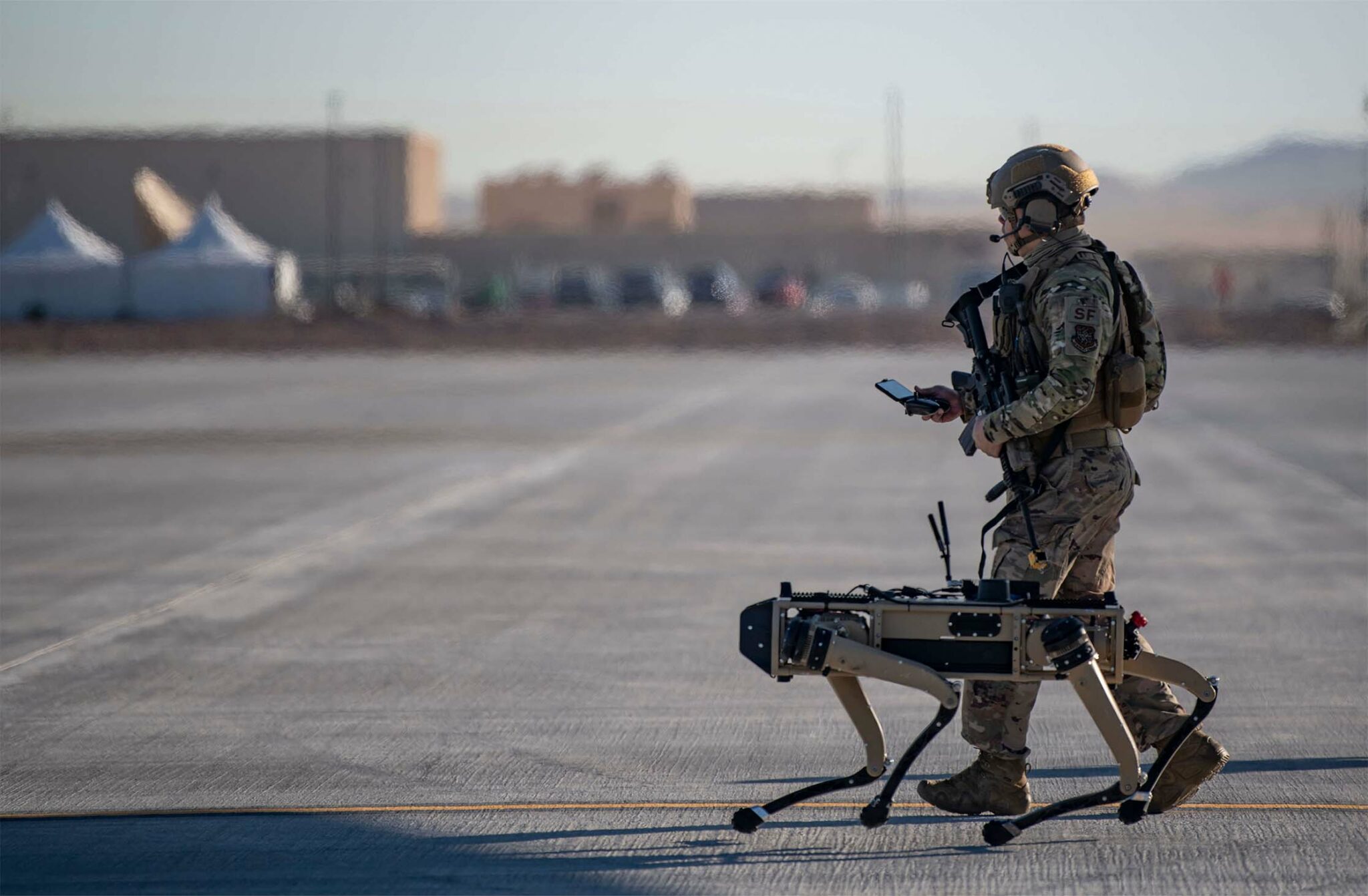
The company is also testing the waters with decontamination robots which will substitute fire fighters to go into hot zones to decontaminate other fire fighters. “It’s better to expose a mechanical robot to the carcinogens.”
All these developments are tied into Darley’s new division that will investigate future technologies. “This division is set to play a crucial role in the future of Darley… drones and UAVs are going to be part of everyday life.
“We are researching electric car fires as well. A typical gasoline vehicle that catches fire is easy to put out, however, it’s not the same with electric vehicles. We are currently researching whether the addition of a chemical to car battery packs can help put out the fire sooner. Our R&D team is also constantly researching with different materials and components across all our business divisions. We are working on driving efficiencies, increasing safety, and improving the lifecycle of our products.
Markets
In terms of markets and global presence the company is well stacked. Ryan says the United States accounts for 90% of its business “including the work we do with the US military”. Although it has been difficult to crack into foreign militaries, it remains a key focus for the future.
“40% of our fire business comes from export sales. Following the Second World War a market opportunity developed to service pumps that were left behind by the US military. Back then, we used to get contacted from France or Germany asking for parts and service support. That’s how it started”
Ryan Darley, International Sales Manager, Darley
Business took a slight dip during the pandemic, sales were down 20%, whereas profits fell below that, Ryan tells IFSJ poignantly. “2021 was a difficult year but we improvised and sold Covid-related equipment such as gloves, face masks, and trailers to the military.
“We will bounce back but we must remember that budgets were re-allocated to make room to fight the virus. Medical equipment was prioritized over fire, emergency response, military. We are on track to make up for last year’s dip. We had plenty of momentum going into the pandemic, and it seems to be returning. Prior to the pandemic, we kept registering record sales and profits every year.
Although an IPO is not on the cards Ryan says the company is constantly assessing the possibilities of mergers, acquisitions, and partnerships. The group currently manufactures 10% of its sales volumes, a number it wants to significantly improve.
“We look at four or five different companies every week, but there aren’t any immediate acquisition plans. We bought Fire Boy seven years ago but sold it last year because we weren’t adding as much value as we envisaged. The company grew under our ownership, and we found some suitable partners who we were comfortable selling it to. We knew the buyers, they were going to sustain the staff, which reassured us,” Darley says stating that the welfare and security of all its employees is of paramount importance, all 270 of them.
Looking ahead, the groundwork to keep the business successful for the next 100 years is being put in place today. “If the fire market goes away, we have the military market. Maybe a few decades down the line we will be known as a major player in robotics or drones. We are a forward-thinking family business, and we want to keep pushing the envelope of innovation just as our founder did over 100 years ago,” Ryan concludes.
In a major development, German truck manufacturer Magirus has announced it will not participate in this year’s Intershutz.
The firm said it made careful considerations, not to take part at the Interschutz 2022 exhibition and “allocate part of the planned investment to charitable initiatives in support of firefighters in the Ukrainian conflict”.
After two long years marked by the global pandemic, which has deeply depressed the business environment, the brand was already focusing its resources on the development of its “Next Generation Firefighting” portfolio.
A statement from Magirus added: “Now, the unexpected war in Ukraine is further impacting the whole automotive and firefighting industry. Issues ranging from chassis supply to logistics challenges and very significant cost increase acceleration require Magirus to take an even more decisive step in focusing on core activities: developing the best firefighting products and services to ‘serve heroes‘.”
The brand will continue its marketing efforts for the entire product portfolio through plans to conduct an roadshow, to participate at the September IAA Transportation event in Hannover, and to host an in-house Magirus fair in the latter part of the year on its home turf in Ulm, Germany.
Additionally, in light of the ongoing crisis, Magirus has donated two turntable ladders to firefighters in Ukraine and has decided to use part of the planned Interschutz investment where it can make an immediate positive impact, contributing to the German Fire Services Association’s charitable initiative in support of Ukraine. “Magirus remains more committed than ever to its clients, dealers, suppliers, and all its stakeholders and will start planning right away to find new direct and effective ways to engage with them on an ongoing basis,” the firm added.
A large fire broke out on Monday afternoon, in East London on the 17th floor of a block of flats. London’s fire service said it sent 15 engines and 125 firefighters to the high-rise at Whitechapel High Street.
Eye-witnesses described large panels of glass falling hundreds of metres to the ground and smoke bellowing out of the windows. Three commercial units underneath the railway arches were completely alight, and four cars and a telephone box were also on fire.
At one point, flames began to spread to a balcony on the 18th floor before fire crews put them out. Fire could later be seen through a window on the 19th floor.
A resident in the 10th floor of the building, who was visiting her friend from Nottingham, said no alarms went off. The fire severely disturbed several victims who were in the building. London Mayor Sadiq Khan said he was in “close contact” with London Fire Brigade’s commissioner Andy Roe, Sky News reported.
According to property developer Hondo Enterprises, which sold the building in 2018, it is a 22-storey mixed use development consisting of more than 7,000 square feet of retail area, 97,000 square feet of commercial office space and 207 residential apartments.
It is located over Aldgate East Tube station between the City, the financial heart of London, and neighbourhoods Aldgate and Spitalfields.
A large fire has broken out on the 17th floor of a block of flats in London.
A total of 125 firefighters are at the scene and nearby residents are being asked to keep windows and doors closed.
A fire engineering degree apprenticeship – the first of its kind in the UK – is growing its student and employer base to meet national demand for fire engineers and in line with new Government legislation.
The part-time Higher-Level Degree Apprenticeship in Fire Engineering, offered by Birmingham City University and developed in partnership between the National Fire Chiefs Council and the UK’s commercial fire engineering industrial sector, is a response to new Government legislation and recommendations and requirements for a workforce to address the shortfall.
The public inquiry and the investigations into the dreadful loss of life at Grenfell in 2017 identified a massive competency gap and an opportunity for people to acquire new skills in fire engineering across the UK, with the Government currently progressing a new Fire Safety Bill and Building Safety Bill through Parliament.
One of the UK’s first fire engineering apprentices received a boost to his studies after being invited to join a recent virtual call with Minister of State for Building Safety and Fire Lord Stephen Greenhalgh. David Cooper, a firefighter based at West Midlands Fire Service’s Northfield station in South Birmingham discussed his career journey so far. He said: “It has been a brilliant journey for me so far, and to speak with the Minister early in the course was a great experience. We’re grateful that he gave his time to find out more about our work and to share encouragement. As with any challenge, I’d say to anyone considering this apprenticeship to grasp the opportunity with both hands.
The degree course is ideally suited to those currently working in the Fire and Rescue Service and in Fire Engineering consultancies, works to a national standard and employers can use the Apprentice Levy Fund to pay for the course, with students combining full-time employment with four years of part-time study to achieve a formal qualification.
Area Commander Steve Ball, of West Midlands Fire Service, said: “We’re proud to be partnering with Birmingham City University for this apprenticeship degree opportunity. West Midlands Fire Service is committed to reducing risk across our communities, and this includes a focus on the built environment. We wish Firefighter Cooper and his fellow students every success on their fire engineering journeys.”
Mike Leonard, visiting professor of Manufacturing and Construction at Birmingham City University said: “Birmingham City University has recognised the need to close the competence gap by becoming the first UK university to offer the Fire Engineering Degree Apprenticeship, allowing new entrants and experienced professionals to future develop their skills.
The majority of the first intake are mature students, who can often draw on in-depth experience and overlay this with the learning from the course to become more rounded and qualified professionals.
The global fire protection materials for the construction market is expected to grow from $3.81 bn in 2021 to $4.32 bn in 2022 at a compound annual growth rate (CAGR) of 13.4%. These projections are based on a reportpublished on Reportlinker.com titled ‘Fire Protection Materials For Construction Global Market Report 2022’.
The growth is mainly due to the companies resuming their operations and adapting to the new normal while recovering from the Covid-19 impact, which had earlier led to restrictive containment measures involving social distancing, remote working, and the closure of commercial activities that resulted in operational challenges. The market is expected to reach $6.04 billion in 2026 at a CAGR of 8.7%.
The fire protection materials for the construction market consist of sales of fire protection materials by entities (organisation, partnership, sole traders) that are used to protect the construction sites from fire and other safety situations. Fire-resistant building materials are any materials that resist fire and do not melt for a long time, that is, they can withstand heat long enough for the residents of the structure to safely leave the premises. Fire protection materials include concrete, reinforcement steel, gypsum, cast iron, bricks, asbestos cement, timber, stone, glass, among others.
The main types of fire protection materials for construction are coatings, mortar, sealants and fillers, sheets or boards, spray, preformed devices, putty, cast-in devices, and others. Mortar is a substance used to fill the gaps between bricks and blocks in masonry construction.
The growing regulations on the mandatory use of fire safety materials are likely to have a positive impact on the growth of fire protection materials for the construction market. Fire safety standards generally aim to reduce the fire-response of products and materials used in various living environments, such as domestic dwellings, household equipment, furnishings and electronics, buildings, and various modes of transportation.
Globally, fire safety standards aim to prevent fires from starting by establishing performance-based norms that, if followed, will improve the fire safety of materials and products. For instance, in March 2020, to improve fire safety in buildings in England and Wales, the Home Office introduced the new Fire Safety Bill.
Key manufacturers in the fire materials for construction market are constantly focusing on cutting-edge research and technological advancements to create improved fire protection materials that can withstand fire for a longer period and emit less smoke when burned. In September 2020, CIN, a Portugal-based company developed two new products C-THERM S110 and C-THERM S111 FD, to protect steel structures from fire.
The UK Met office has issued two amber warnings for two separate storms that are set to lash the country. Authorities have said Story Dudley and Storm Eunice will commence from Wednesday and last up until the weekend.
Various UK authorities have reinforced the warning about Storm Dudley and Storm Eunice. The storm could lead to damage such as uprooted trees, damage to properties, and automobiles.
#StormDudley will bring strong wind, storm surge and large waves on Wednesday.
🌊 This coincides with high spring tides bringing a greater risk of wave overtopping and sea spray along exposed coastlines.
— Scottish Environment Protection Agency (SEPA) (@ScottishEPA) February 15, 2022
The Met Office said: “Strong winds will cross western Scotland and Northern Ireland on Wednesday afternoon, pushing eastward to northern England by evening. 80-90 mph wind gusts are possible on exposed coasts and hills of Scotland with 60-70 mph possible further inland. The worst of the winds are expected to ease through Thursday morning. A yellow warning for wind has been issued for much of central and northern areas of the UK, including Northern Ireland. Embedded within that is an amber warning for southern and western Scotland, the north coast of Northern Ireland and northern England, where the strongest and most disruptive winds are expected.”
Meanwhile, Storm Eunice will cause the next low-pressure system, which is likely to track across central areas of the UK on Friday. Further impacts are expected from disruptive gale force winds with 60–70 mph winds expected inland.
Jeremy Phillips, head of road safety, National Highways said: “We’re encouraging drivers to check the latest weather and travel conditions before setting off on journeys and consider if their journey is necessary and can be delayed until conditions improve. If you do intend to travel, then plan your journey and take extra care, allowing more time for your journey.”
There have been more than 15,000 fires in Brazil’s Pantanal wetlands so far this year, causing widespread devastation. That is triple the number recorded in the same period in 2019, according to data collected by Brazil’s National Institute for Space Research (Inpe).
Since the middle of July, a fire has been burning in the wetlands of west-central Brazil, leaving a burned area that is larger than New York City.
The wetlands, known as the Pantanal, are smaller and less-known than the Amazon jungle. But the area attracts many different animals because of where it is in South America. It is between the rainforest, Brazil’s grasslands and Paraguay’s dry forests.
The fires are now threatening one of the most diverse environments on the planet, biologists say. The Pantanal is about 150,000 square kilometers in size. The wetland is home to 1,200 vertebrate animal species. Thirty-six of those species are close to dying off completely.
Fire is not new there, but the current fires are historic. The biggest ones in the Pantanal this year are four times the size of the largest fire in Brazil’s Amazon rainforest, NASA satellites show.
A record 23,490 square kilometers have burned through September 6. A study by the Federal University of Rio de Janeiro said that represents nearly 16 percent of the Brazilian Pantanal.
The Pantanal is known for being wet, not dry. The world’s largest floodplain normally fills with water during the rainy season, which lasts from November to April.
This year, the floods never came. The Paraguay River, which crosses the Pantanal, fell to its lowest level since 1973. That estimate comes from Julia Arieira, a climate researcher at Brazil’s Federal University of Espirito Santo.
Scientists blame the dry weather on warming in the Atlantic Ocean. That warming takes moisture away from South America and sends it north where it can form hurricanes.
Doug Morton is a scientist with the U.S. space agency NASA. He said this process is caused by changes in ocean temperatures. These changes are known as the Atlantic Multidecadal Oscillation.
This weather event is to the Atlantic Ocean what El Niño is to the Pacific Ocean. Unlike El Niño, however, which usually happens every two to seven years, the oscillation changes between hot and cold every 30 to 40 years.
Changing ocean temperatures are “a likely driver of the dry conditions we’ve seen so far this year in the Pantanal,” said NASA’s Morton.
Morton is concerned global warming could change the Oscillation and leave it permanently warm – possibly leading to more fires.
Even if that does not happen, scientists fear global temperature increases could make large fires more common.
Philip Fearnside is an ecologist at Brazil’s National Institute of Amazonian Research. He said destruction of the Amazon rainforest is worsening dry conditions in the Pantanal over the long-term. He said jungle trees take rain and push the moisture back into the air. This moisture is then carried by winds to nearby areas.
Amazon deforestation – the act of cutting down forests – has increased 34.5 percent in the 12 months through July, compared to the same period a year earlier. That increase comes from early estimates released by the government space research agency Inpe.