Fire safety training qualifications consultation opens
A stakeholder consultation has launched to support a review of the fire safety suite of qualifications that form the basis of fire safety training for fire safety regulators.
SFJ Awards said the consultation follows an initial review phase led by SFJ Awards in collaboration with the Home Office, the National Fire Chiefs Council (NFCC), the London Fire Brigade and others.
The suite includes a Level 3 Certificate, a Level 4 Certificate and a Level 4 Diploma.
The initial phase updated the qualifications’ content.
What the review covers and why input is being sought
The consultation aims to capture views from a wider pool of experts and practitioners as the review process is finalised.
Adreena Parkin-Coates of the NFCC was part of the expert working group that carried out the initial phase of the review.
Parkin-Coates said: “Fire safety roles are central to minimising and mitigating the risk of harm to people, property and the environment from fire.
“Ensuring the workforce is fully prepared for the rigours and challenges of the role requires a robust set of qualifications suitable for all different learners.
“The suite was reviewed in its entirety to promote consistent regulation and fire safety standards across fire and rescue services and reduce content duplication for learners.
“Following this initial evaluation, we now invite input from a wider group of stakeholders as we finalise the review process.”
David Higham, Managing Director at SFJ Awards, said: “The fire safety suite of qualifications offers a structured development pathway for fire safety regulators, providing a platform for developing the dedicated workforce to keep people, property and the environment safe from fire.
“The Level 3 Certificate in Fire Safety and the Level 4 Certificate and Diploma in Fire Safety have each been reviewed by the expert working group to ensure alignment with current best practices and now the consultation stage seeks the views of stakeholders to ensure that practical considerations are fully accounted for.
“Following the Grenfell Tower fire disaster in 2017, it is widely recognised that qualifications which support the training and development of fire safety personnel must be fit for purpose and I encourage stakeholders to submit their valued representations.”
The consultation covering the Level 3 Certificate in Fire Safety, the Level 4 Certificate in Fire Safety and the Level 4 Diploma in Fire Safety is now live.
L-R_Jim Pauley, NFPA President & CEO and His Excellency Brigadier Yousif Obaid Al Shamsi, Director General of Sharjah Civil Defence Authority
Intersec Dubai 2026 hosts Sharjah and NFPA MoU signing
Sharjah Civil Defence Authority (SCDA) and the National Fire Protection Association (NFPA) have signed a Memorandum of Understanding to form a strategic alliance aimed at improving fire and life safety in the Emirate of Sharjah.
The agreement was signed by His Excellency Brigadier Yousif Obaid Al Shamsi, Director General of Sharjah Civil Defence Authority, and Jim Pauley, president and CEO at the NFPA.
The alliance is intended to prioritise education and training programmes for fire and life safety professionals across the Emirate.
The collaboration will draw on the NFPA’s training resources and certification programmes, its more than 300 fire codes and standards, and the NFPA Fire and Life Safety Ecosystem.
These elements are expected to support the creation and refinement of safety standards tailored to Sharjah’s requirements.
Training programmes and high rise building risk
Al Shamsi said: “At Sharjah Civil Defence Authority, fire and life safety are paramount, and we remain committed to safeguarding the well-being of our people.
“By collaborating with NFPA, we aim to leverage their 130 years of expertise in managing fire and electrical risks, ensuring that fire safety professionals across Sharjah are equipped with the latest knowledge and tools in line with global standards.
“This alliance reflects our dedication to continuous improvement and proactive measures to protect lives and property,”
Pauley said: “In the urban landscape, fire presents a constant threat, and with ongoing development across Sharjah, including numerous high-rise buildings, it is essential that robust fire and life safety systems are in place to protect the public.
“At NFPA, we look forward to working alongside the Sharjah Civil Defence Authority to enhance the training and education of fire and life safety professionals across the Emirate.
“Our aim is to strengthen awareness and implementation of relevant codes, standards, and regulations, supporting Sharjah’s efforts to align safety practices with global benchmarks.”
The announcement follows efforts in Sharjah focused on fire safety risks in high-rise buildings.
In 2024, under the directive of His Highness Dr. Sheikh Sultan bin Mohammed Al Qasimi, Supreme Council Member and Ruler of Sharjah, the Emirate launched an initiative to replace hazardous cladding materials with fire-resistant alternatives, funded by the government and valued at AED 100 million.
The organisations said the alliance is intended to complement such initiatives through technical expertise and global best practices.
The MoU sets out the collaboration as focused on training, education, and the use of codes, standards, and regulations to support fire and life safety.
Fire Aware has brought together safety specialists as Fire Aware Educators to support organisations across the supply chain as they respond to recent and upcoming fire safety legislation.
The organisation said these educators are drawn from members with expertise across different aspects of fire safety practice.
They are intended to help those with duties under fire safety law understand their responsibilities in a period of extensive regulatory change.
According to Fire Aware, the new educator role is aimed at designers, main contractors, domestic trades, material suppliers, building management, hotel and leisure operators, commercial and private landlords and local authorities.
Gavin Skelly, Fire Aware CEO, said: “At a time of increasing concern for the safety of the public who use our buildings and spaces, the fire safety industry is under increasing scrutiny and those with a duty of care should understand this is more than a job, it is a vocation.
“We believe there is enough legislation to ensure safety if they are understood and followed.
“We have specialists who can help guide anyone in the supply chain around some of this new legislation because it can be challenging given its complexity and scale.”
Legislative changes driving demand for guidance
Fire Aware highlighted that key changes under the Building Safety Act require data collection for information at defined stages of construction projects.
The organisation also noted recent amendments to Approved Document B.
It pointed to new regulations for Residential Evacuation Plans that are due to come into effect in 2026.
Fire Aware said its specialist members act as technical guidance experts for organisations needing support with these requirements.
The educators are expected to provide training on fire safety and management tailored to the roles and contexts of different duty holders.
Training is designed to reflect the needs of those working in design, construction, product supply, building management and property ownership.
Moral responsibility and culture in the supply chain
Fire Aware described itself as an expanding fire safety industry body with a focus on the moral responsibilities of those working in the fire safety supply chain.
The organisation said this focus covers designers, developers, asset owners, managers and other stakeholders involved in building projects and occupied premises.
It aims to influence culture in the built environment by linking technical compliance with a declared duty of care towards building users.
Fire Aware plans to do this through a series of charters that set out how member companies commit to behave in their work.
The charters are intended to frame how members approach safety decisions, interactions with partners and service delivery.
Fire Aware described itself as a recognised membership body serving the built environment and related sectors with a shared aim of working and trading to best practice standards in the interests of public safety.
Practical relevance for duty holders and specifiers
The introduction of Fire Aware Educators is directly aimed at designers, main contractors, domestic trades and material suppliers who need support in interpreting current fire safety legislation.
These educators may provide training and technical guidance at key points in the design and construction process, helping duty holders understand data collection duties under the Building Safety Act and changes to Approved Document B.
Building management teams, hotel and leisure operators and commercial and private landlords are identified as further groups that can access guidance on Residential Evacuation Plans ahead of the new regulations taking effect in 2026.
Asset owners and managers within the built environment can use the Fire Aware charters as a framework when commissioning work or selecting partners, aligning contractual expectations with declared duty of care commitments.
Local authorities and other public bodies engaging with Fire Aware members will be able to reference the same charters when assessing how suppliers intend to meet best practice standards.
Fire, as a natural phenomenon, has been intertwined with human history for millennia.
It has served as a steadfast companion, offering warmth on cold nights, providing protection from predators, and allowing us to cook our food for sustenance.
The mastery of fire was one of the defining moments of human evolution, enabling our ancestors to forge tools, tame the wilderness, and build thriving civilizations.
However, fire’s dual nature must not be overlooked.
As much as it has been our friend, it can also be a formidable foe.
When fire becomes unbridled and uncontrollable, it can wreak havoc, causing devastating consequences to lives, homes, and natural landscapes.
The destructive power of wildfires, building fires, and industrial accidents reminds us of the need for vigilance and preparedness in the face of this primal force.
To navigate the complexities of fire and its potential dangers, understanding how many types of fire there are, as well the differences between them is of paramount importance.
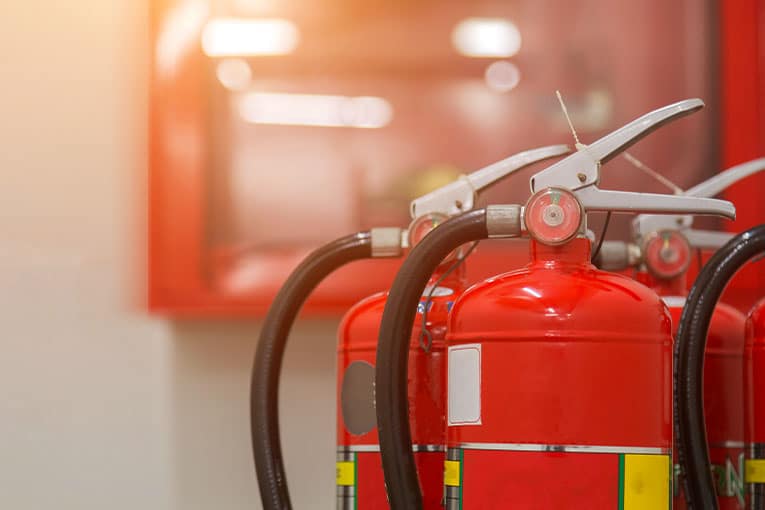
Knowing the right fire extinguisher for the right fire type is vital
Different types of fires arise from a diverse range of materials, each requiring an evolution of fire safety and a tailored approach for effective extinguishing.
From the common Class A fires involving ordinary combustible materials to the specialised challenges of Class D fires involving combustible metals, a comprehensive knowledge of fire classifications empowers us to respond confidently and responsibly to fire emergencies.
How Many Types of Fire Are There?
There are six main classes of fires, each involving different materials and posing unique challenges for firefighting:
1. Class A – Solids
2. Class B – Liquids
3. Class C – Gasses
4. Class D – Metals
5. Class F – Oils and Fats
6. Electrical Fires – These are not given their own class, as they can fall into any of the above categories, however due to the different requirements of electrical fires we will be covering them here.
What are Class A Fires?
Class A fires are the most common type of fire encountered in various settings, ranging from residential homes to commercial offices and public spaces.
These fires are characterised by their ignition of ordinary combustible materials, which are readily available in our everyday surroundings.
Understanding the nature of Class A fires and how to handle them is crucial for effective fire safety and prevention.
The fuel sources that feed Class A fires include materials such as wood, paper, cloth, cardboard, and common plastics.
These materials are typically found in abundance in residential and commercial spaces, making Class A fires a significant concern for fire safety.
How Do You Extinguish a Class A Fire?
The primary method for extinguishing Class A fires is to use water or water-based extinguishers.
Water is a versatile and readily available firefighting agent that cools down the burning material, reducing the heat and ultimately smothering the flames.
By removing the heat element of the fire triangle (heat, fuel, and oxygen), water effectively puts out the fire and prevents re-ignition.
When using water to extinguish Class A fires, it is essential to apply the water directly to the base of the flames.
This ensures that the water reaches the burning material and cools it down, preventing the fire from spreading further.
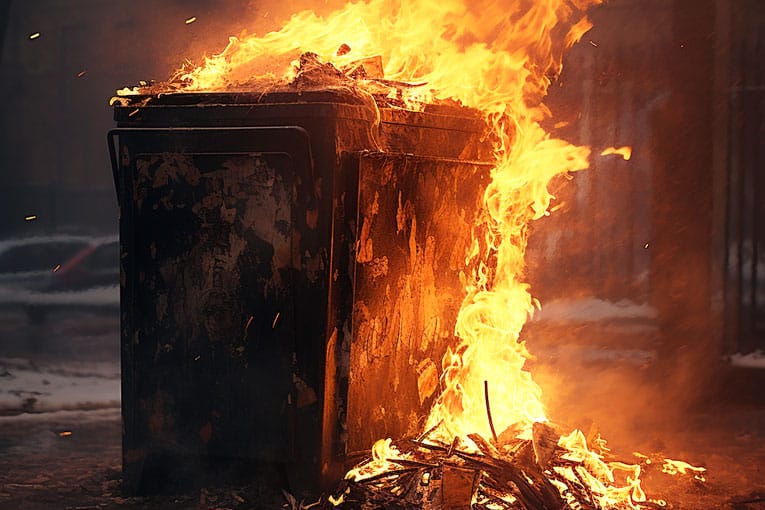
Class A fires are one of the most common types of fire
If possible, avoid spraying water directly onto electrical equipment or live electrical wires to prevent electric shock and potential electrocution hazards.
Another effective method to combat small Class A fires is by using fire blankets.
Fire blankets are made of fire-resistant materials and can be quickly deployed to smother flames.
They work by cutting off the oxygen supply to the fire, suffocating it and extinguishing the flames.
Fire blankets are particularly useful for smothering fires on clothing, curtains, or small household items.
What are Class B Fires?
Class B fires pose a unique set of challenges due to the involvement of flammable liquids such as gasoline, oil, grease, and alcohol.
These fires can occur in various settings, including kitchens, garages, workshops, industrial facilities, and places where flammable liquids are stored or used.
Understanding how to handle Class B fires is crucial for effective fire safety and prevention.
Flammable liquids are highly volatile and can ignite easily, making Class B fires more intense and difficult to control compared to Class A fires.
When a flammable liquid catches fire, it can quickly spread and produce intense flames, creating a dangerous and rapidly evolving situation.
Additionally, flammable liquid fires can re-ignite if not fully extinguished, making them particularly challenging to manage.
How Do You Extinguish a Class B Fire?
To effectively control and extinguish Class B fires, it is crucial to use the appropriate firefighting agent.
Water is generally not recommended for Class B fires as it can cause the flammable liquid to spread, potentially making the fire more dangerous.
Instead, foam-based extinguishers or dry chemical extinguishers are the preferred choices for combating Class B fires.
Foam-based extinguishers work by covering the flammable liquid with a layer of foam, creating a barrier that prevents the release of flammable vapours and cutting off the oxygen supply to the fire.
This smothers the flames and cools down the burning liquid, eventually extinguishing the fire.
Dry chemical extinguishers, on the other hand, are effective for Class B fires because they disrupt the chemical reaction of the fire.
These extinguishers release a fine powder that separates the fuel from the oxygen, extinguishing the flames.
They also work well on Class A fires, making them versatile and useful in various fire situations.
It is important to remember that when dealing with Class B fires, safety is paramount.
Before attempting to extinguish a fire, assess the situation and ensure you have an escape route in case the fire becomes uncontrollable.
If the fire continues to spread or becomes too intense, evacuate the area immediately and call the emergency services for professional assistance.
What are Class C Fires?
Class C fires involve flammable gases, which can create a hazardous and potentially explosive atmosphere.
These fires present unique challenges and require specific precautions to ensure safety and prevent accidents.
Class C fires pose a significant threat to locations like manufacturing and industrial warehouses, chemical plants, and facilities storing substantial quantities of flammable gases. These settings are particularly vulnerable to these types of fires.
Understanding the risks associated with flammable gases and implementing proper safety measures is crucial in managing Class C fires.
How Do You Extinguish a Class C Fire?
Extinguishing a Class C fire requires a methodical and cautious approach due to the volatile nature of flammable gases involved.
When facing such a fire, two crucial steps come into play: shutting off the gas supply and utilising a dry powder extinguisher.
The first and most crucial step is to quickly shut off the gas supply at its source.
This action prevents the continuous flow of fuel to the fire, thereby hindering its ability to grow and spread.
Cutting off the gas supply is paramount to prevent the fire from intensifying and posing a greater threat to individuals attempting to extinguish it and those nearby.
After successfully shutting off the gas supply, the use of a dry powder extinguisher is recommended for extinguishing the Class C fire.
Dry powder extinguishers are specifically designed to combat fires involving flammable gases effectively.
The dry powder agent works by smothering the flames, cutting off their oxygen supply, and interrupting the fire’s chemical chain reaction, which leads to its rapid extinguishment.
It is important to note that while dry powder extinguishers are effective for Class C fires, water-based extinguishers should never be used in this scenario.
Water-based extinguishers may cause the fire to spread or result in an explosion due to the reactive nature of certain flammable gases.
Additionally, individuals attempting to extinguish a Class C fire should prioritise their safety at all times.
If the fire is beyond their control or if they are unsure about the gas source, it is best to evacuate the area immediately and call for professional help.
The handling of Class C fires requires a level of expertise and knowledge to ensure the safety of both individuals and property
What are Class D Fires?
Class D fires present a unique and highly hazardous situation, involving combustible metals such as magnesium, titanium, potassium, sodium, and lithium.
These fires can be particularly dangerous due to the reactive properties of these metals, which make them prone to violent and rapid combustion when exposed to air or water.
The presence of combustible metals in specific industrial settings or laboratories increases the risk of Class D fires, and proper precautions must be taken to handle and store these materials safely.
One of the critical challenges in dealing with Class D fires is the limited effectiveness of conventional firefighting methods.
Water, commonly used to extinguish other types of fires, can exacerbate Class D fires.
When water comes into contact with burning combustible metals, it reacts vigorously, releasing hydrogen gas, intensifying the fire, and causing potential explosions.
How Do You Extinguish a Class D Fire?
To extinguish Class D fires safely and effectively, specialised dry powder extinguishing agents must be used.
These agents, typically made of sodium chloride or graphite-based compounds, form a smothering layer over the burning metal, cutting off the supply of oxygen and heat.
This action disrupts the combustion process and gradually cools the metal, leading to the fire’s suppression.
Due to the specialised nature of Class D fires and the need for specific extinguishing agents, it is essential to have personnel trained in handling such emergencies.
Firefighters and other responders must be equipped with the appropriate dry powder extinguishers and knowledgeable about the risks and characteristics of combustible metal fires.
These fires can be unpredictable and require careful planning and coordinated efforts to control and eliminate them safely.
What are Class F Fires?
Class F fires, also known as cooking oil fires or fat fires, are a specific type of fire that commonly occurs in commercial kitchens, restaurants, and other food preparation areas.
These fires involve cooking oils and fats and can quickly escalate into intense and challenging situations to control.
The high temperatures used in cooking, especially deep frying, can cause cooking oils and fats to reach their autoignition point, leading to spontaneous combustion.
Once ignited, the flames can rapidly spread and generate intense heat, posing a severe threat to kitchen staff, customers, and the entire building.
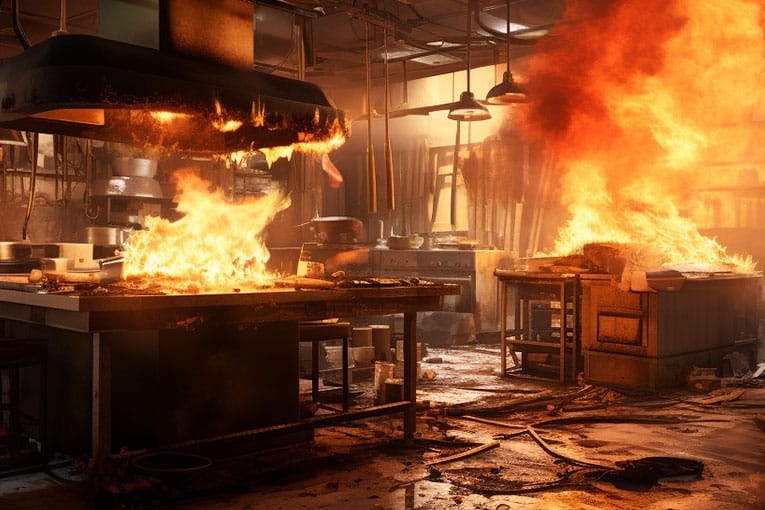
Class F fires can be incredibly dangerous due to the oil involved
One of the primary reasons Class F fires are so dangerous is that water, a common extinguishing agent used for other types of fires, is ineffective and dangerous when applied to cooking oil fires.
When water comes into contact with hot oil, it instantly vaporises and expands, splattering the burning oil and spreading the fire further.
This reaction can cause severe burns and injuries to anyone nearby.
The most effective method to extinguish Class F fires is to smother the flames with a fire blanket or use a wet chemical extinguisher specifically designed for cooking oil fires.
Wet chemical extinguishers contain a special solution that creates a thick, soapy foam, which cools the burning oil, forms a barrier, and prevents the release of flammable vapours.
This action starves the fire of oxygen, extinguishing it safely and effectively.
Preventing Class F fires involves implementing several safety measures in commercial kitchens and food preparation areas.
Regular cleaning and maintenance of cooking equipment, ventilation systems, and hoods help reduce the buildup of grease and oil residues that could fuel a fire.
Additionally, kitchen staff should be properly trained in fire safety, including the proper use of fire extinguishers and the importance of using fire blankets when dealing with cooking oil fires.
Commercial kitchens should have well-maintained fire suppression systems, such as automatic fire suppression systems installed in hoods above cooking areas.
These systems can quickly detect and suppress cooking oil fires, minimising the risk of fire spreading to other parts of the kitchen.
What are Electrical Fires?
Electrical fires are a prevalent and concerning type of fire that poses a significant risk in modern life.
Unlike other classes of fire (Class A, B, C, etc.), electrical fires are not categorised under a specific class.
Instead, they are a distinct category of fires caused by electrical faults and malfunctions.
These fires can result from various factors, such as faulty wiring, overloaded circuits, damaged appliances, or improper use of electrical equipment.
Over time, electrical wires can deteriorate, become frayed, or develop loose connections. These issues create resistance and generate heat, which can ignite nearby combustible materials.
Similarly, overloaded circuits, often caused by plugging too many electrical devices into a single outlet or circuit, can lead to overheating and ultimately trigger an electrical fire.
Another common cause of electrical fires is damaged appliances and electrical equipment.
Ageing or poorly maintained appliances can develop electrical faults, leading to short circuits and fires.
Electrical fires can also be triggered by the misuse of electrical equipment, such as using extension cords or power strips inappropriately or using appliances with damaged cords or plugs.
How Do You Extinguish an Electrical Fire?
In the event of an electrical fire, using water to extinguish the flames is extremely dangerous due to the risk of electrical shock.
Instead, it is best to de-energize the electrical source by shutting off power at the circuit breaker or main electrical panel, if safe to do so.
For smaller electrical fires, a Class C fire extinguisher or a dry powder extinguisher can be used.
However, it is essential to prioritise personal safety and evacuate the area if the fire becomes uncontrollable.
To prevent electrical fires, regular electrical inspections and maintenance are essential.
Homeowners and businesses should have their electrical systems inspected by qualified electricians to identify and address any potential issues.
It is crucial to avoid overloading circuits, use proper wattage bulbs in light fixtures, and refrain from using damaged electrical equipment.
Conclusion
Understanding how many types of fire there are, and the appropriate methods to extinguish them is vital for everyone’s safety.
In case of an emergency, knowing how to act quickly and effectively can make a significant difference in protecting lives and property.
Fire safety training, having the right fire extinguishers, and staying informed about potential hazards are all crucial steps towards ensuring a safer environment for ourselves and those around us.
With the current shift to electric cars, and the rise in the usage of lithium-ion batteries, it is now more important than ever to understand the difference in fire types and how to safely deal with them, with lithium-ion battery fires costing the UK £158 million a year alone.
Let us all be proactive in fire prevention and response to mitigate the risks of fire-related incidents and create a safer world for everyone.
Martin Joosen, Managing Director of LION speaks about creating an effective fire training proposal for the business sector
Did you know that you only have 3 minutes to decide what to do when a fire breaks? Are you ready to react? Do you know what to do? Where do you start? Do you first call the fire department or grab the extinguisher right away?
Martin Joosen, Managing Director of LION, says it is only adequate fire training will warrant a safe outcome to these fire emergency situations. Martin joined LION in 2018 as managing director and is responsible for Europe, Asia, the Middle East, and the Pacific. He has more than 20 years of experience in International Business, 17 of which are in the Fire Rescue Market.
We sat down with Martin to talk through the company’s new market approach for business and industry sectors in EMEA, focusing on healthcare, the first sector where LION is implementing this new approach.
What kind of emergency scenarios require fire safety training?
Imagine: An electrical shortcut in a patient room, a fire in the kitchen, or a leaking oxygen hose within a medical centre. Those possible fire scenarios can easily create damages, reaching millions of euros and potentially mean human loss.
Fire safety training is not only a legal requirement but also saves lives and protects businesses. Setting up the right training environment is vital.
What does LION propose with product market combination?
All-in-one package to train staff directly on their work location. No team’s transfer to other buildings or premises with LION digital technology. Essential training can now be given where they work using the right combination of products. We have created four training packages to ensure that anyone on the scene knows how to react during the crucial first minutes, deal with fires if appropriate, and escape safely in the event of a fire. Those packages are based on different scenarios that could occur in the healthcare industry.
Why did you created these packages?
Protecting life, property protection, and operation continuity are the most common fire safety objectives. Being able to recognise fire hazards can help prevent fires from happening. The number of fires in the healthcare sector is increasing yearly worldwide due to the growing number of mobile devices constantly charging. Due to the lack of regular training and healthcare personnel being overly busy, people’s behaviour can’t be predicted easily, and panic will take over.
All patients can’t be evacuated that easily. The best to do then is to contain the fire until the fire department arrives.
For which training scenario are these product combinations packages applicable?
Various procedures can be trained, such as handling fire extinguishers, tactical training for first intervention teams, incidents involving hazardous materials, and evacuation exercises.
The healthcare sector is a critical part of the economy, and emergency training is essential to ensuring that hospitals can function effectively at all times. However, the needs of healthcare facilities can vary significantly, and it can be challenging to create a training proposal that meets all the different requirements.
There are several ways to create a highly effective training proposal. One approach is to create a proposal tailored to the sector’s specific needs. Another method is to create a proposal tailored to the particular needs of businesses within the industry. The best approach will depend on the sector’s specific needs and the companies it targets. However, both techniques can be highly effective in meeting the needs of the business and industry sectors.
LION is an innovative technology company that delivers smart technology to develop life-saving products. Our mission is to use ground-breaking technology, to improve fire emergency situations training and understanding. For a few months, we collaborated and worked on feedback and requirements from fire safety professionals within healthcare structures. How have you developed your training solutions over the years?
LION’s Training Products are reliable, high-quality, and practical. We develop training tools to prepare any intervention team for emergencies.
We have worked closely with fire rescue services for more than 20 years and we can propose a training solution for almost all types of training. However, addressing the business and industry sector implied that we needed to adjust our approach and portfolio proposal. The requirements, thinking process and situation to consider can be very different, and each sector should have a training product proposal that matches their expectations.
When looking at those markets, we saw that our proposed products are compatible. Still, we should propose them in combination, answering a precise training scenario instead of loose from context.
How do you decide which training products to combine?
To create fire training product market combinations, we looked at several steps. The first step is to define the training objectives that our customers want to reach and their target audience. What is the goal of their training? Who will be attending their training? What is their budget? Once we had defined the training objectives and target audience, it was time to create a detailed training outline. This outline should include the topics that will be covered, the activities that will be conducted, and the training products that should be used.
We put together four product market combinations from the most standard (fire extinguisher training) to the more complex and sophisticated (complete fire training program). Each package answers a particular set of training requirements and provides the trainer with the opportunity to create the corresponding scenario. We privileged an escalating approach. As every healthcare facility can have its own unique guidelines, the trainer needs to be able to adapt as much as possible. So nothing is final; those are only suggestions based on facts and sales data.
With digital and evacuations fire simulators, smoke generators, and rescue manikins training products, we propose a solution for healthcare teams to perform versatile, realistic evacuation exercises and procedures within any space or room directly on the spot. No need to move rooms or locations. The practical training will have the most minor impact on the personal schedule.
What are the biggest challenges you see around training staff?
“Train them right here – right now, during their shift.” This is the motto we kept in mind when putting together our product-market combinations. One of the biggest obstacles our customers are facing and that we needed to help them with was to propose training scenarios within their own environment and a cost-efficient and time-saving solution. The goal is to train the people faster and often enough that fire safety becomes a reflex. The course can be planned efficiently: the employees are trained in their working environment while care can continue.
Training within your own work environment is crucial. This is even more true within the healthcare industry. So within our product combination, we propose our digital fire training extinguisher system, the BullsEye™. With it, it is possible to train in practice real-life situations based on the specific circumstances and tasks that apply in a hospital. It combines digital flames, sound, and smoke to create various fire scenarios.
With the extension of the R.A.C.E station, laser extinguishers, misty blind mask, rescue and fire manikins, our customers can combine all the products suggested and make the training complete and very challenging. The training products meet all the technical requirements in hospitals, so they can train safely in places that are not usually possible. Even in an operating room or a laboratory, the quality of our LION Training Products ensures that it is safe to use in the most sensitive conditions.
What is the best way to ensure fire safety training is effective?
We also concluded while conducting our market research that product combination suggestions make it easier for the trainer to set a training environment that teaches the facility’s safety standards to prevent fires and to learn how to best respond to this type of emergency. Immersing the trainees within a good training scenario starts with choosing the right product combinations.
Do you evacuate, or do you apply a stay-put policy? Quick and effective decisions and actions must be taken when a fire starts. Is it clear where the fire extinguisher is located in your department? Do you know the escape plan, and do you know where the closest emergency exit is? Do your staff know how to react in case of fire?
This new approach lets us see more opportunities than ever. Product combinations can be endless; with a portfolio of 80 products and most of those products able to communicate with each other, LION sees a bright future for those tailored training product scenario suggestions.
The key is understanding the sector, the customer and what they want to achieve. Only then can we put together the proper product-market combination.
This article was originally published in the January edition of IFSJ. To read your FREE digital copy, click here.
IFSEC and FIREX International are set to host, for the first time, in-person training sessions for installers, integrators, and engineers.
These focused training sessions will ensure professionals remain on top of the latest best practices in security and fire, and secure CPD points to keep up with the growing push for competency requirements.
The ‘skills gap’ is one of the most pressing challenges in the UK’s fire and security technical installation sector at present. While not a new issue, it is one that has continued over the course of the Covid-19 pandemic – in a survey undertaken by IFSEC in 2021, 93% of installers answered CPD or professional qualifications would aid them in their work.
Furthermore, following Dame Judith Hackitt’s report into the failings at Grenfell Tower in 2017, installer competency in fire, emergency and security systems has been put under the spotlight, with a renewed push from government and the wider industry to ensure appropriate standards of quality are met. The ECS (Electrotechnical Certification Scheme) requirements for cards in the fire and security sector in England are changing as a result, with updated requirements to achieve both the Systems Technician (also known as the Gold Card) Level 3 cards and the Level 2 Operative Card, where work can be carried out and signed off unsupervised.
In line with the push for improved competency standards and updated CPD requirements that come with the ECS changes, and to support those looking to develop their expertise, IFSEC and FIREX International will be hosting a programme of CPD-accredited in-person training sessions dedicated to the installer and integrator fire and security community.
Gerry Dunphy, event director of IFSEC and FIREX International, said: “Skills and competency are now at the forefront of the security and fire safety professions, so we’re delighted to be able to introduce focused and relevant training sessions into the shows. IFSEC & FIREX Training is an important addition as visiting customers can not only view and experience the latest technology and speak to market leading vendors, they can now partake in high calibre CPD training sessions to ensure they’re keeping up with current trends, standards and innovations. It means the shows truly become fully rounded experiences for installers and engineers”.
Trevor Jenks, training manager at the SSAIB, is working with IFSEC and FIREX to ensure the training sessions are relevant and provide genuine value to attendees. Trevor adds: “I’m thrilled to be working with the IFSEC and FIREX team on this initiative. The skillset required in the industry is constantly evolving, and attending high quality training from knowledgeable trainers is more important than ever.”
What will IFSEC & FIREX Training offer?
The prospectus of available courses on offer at the event will cover a variety of key topics that were selected by installers as areas of interest in a survey undertaken by IFSEC & FIREX in 2021.
Courses will be delivered in two distinct manners, both of which were highlighted as important methods of training for fire and security installers in the same survey:
Courses delivered by independent security and fire training organisations
Courses delivered by manufacturers – these will be vetted by an independent consultant to ensure the quality of training is of a high standard and isn’t a ‘sales pitch’. The sessions will also look at technological innovations which meet new industry codes and standards that installers should be aware of.
Topics being covered include:
ECS Systems Operative – Fire, Emergency and Security Systems (FESS) by Skills for Security
Introduction to Fire Detection & Alarms by Fire Industry Association (FIA)
Cyber Security by Hikvision
Digital Service Masterclass by Texecom
Optical Fibre Overview and Fusion Splicing Workshop by Tavcom Training
Introduction to fire doors and fire protection in buildings by Warringtonfire
A small fee will be charged per session to encourage attendance, though heavily subsidised from the original costs as part of IFSEC and FIREX’s ongoing support in helping to address the skills gap. To ensure sessions remain focused, there are a limited number of spaces available on each. Welcome refreshments, as well as lunch vouchers for all delegates will also be included in the price.
Each course will start in the morning or around midday and last anywhere between 4-6 hours, to ensure delegates receive an appropriate level of training, while also allowing for plenty of time to speak to suppliers and catch up with likeminded professionals on the show floor. Courses will be hosted away from the show floor in the gallery suites at London’s ExCeL on the same days as IFSEC and FIREX, taking place between 17-19 May.
Crucially, all delegates will receive proof of attendance for CPD (Continuing Professional Development) records – a key requirement of the updated ECS cards renewal scheme.
The initiative has received wide-ranging backing from across the sector, with support coming from the British Security Industry Association (BSIA), Fire Industry Association (FIA), Security Systems Alarms Inspection Board (SSAIB), National Security Inspectorate (NSI), Skills for Security and the Association for Specialist Fire Protection (ASFP).
Dräger, a medical and safety technology company, has partnered with Fire Service College (FSC). Together furthering technical innovation through the optimisation of SCBA product development, firefighter training and communications.
The FSC, owned by Capita, delivers training to all UK fire and rescue teams, as well as defence, national resilience and critical national infrastructure, and is recognised as an international leader with delegates from across the globe regularly utilising its expertise and facilities. Located on a 320-acre former Royal Air Force airfield, more than 7,000 delegates a year train using every scenario imaginable across domestic and industrial buildings, a ship, aircraft, motorway, train set/station and high-rise buildings – all of which are used for real fire and rescue scenarios on a daily basis. The FSC puts a strong emphasis on interoperability and large-scale exercises.
Dräger’s relationship with the FSC spans more than three decades, and includes the provision of SCBA sets supported by bespoke training. FSC instructors are in an ideal position to provide feedback that supports product development, and to act as product ambassadors to demonstrate the manufacturer’s commitment to firefighter safety.
As part of the new partnership, Dräger will provide the new PSS AirBoss Connect SCBA kits including telemetry, face masks, communications, and cylinders. And in reinvigorating the relationship there will be further joint activities to ensure delegates are provided with the latest developments and industry insight.
Dominik Wellmann, MD, of the FSC, said the partnership supports the college’s goal to use market leading, technical innovation. He said: “A key part of our responsibilities as a world-leading provider of emergency services training is investing in state-of-the-art kit that delivers optimum safety to all of our delegates. As the global leader in fire safety equipment, we recognise Dräger as the ideal partner to support this goal.”
Matthew Bedford, managing director sales and service added: “We’re very pleased to see the new AirBoss SCBA being utilised at the FSC and look forward to receiving feedback. The partnership enables us to support our industry and learn from it. It’s an invaluable long-standing relationship from which everyone wins.”