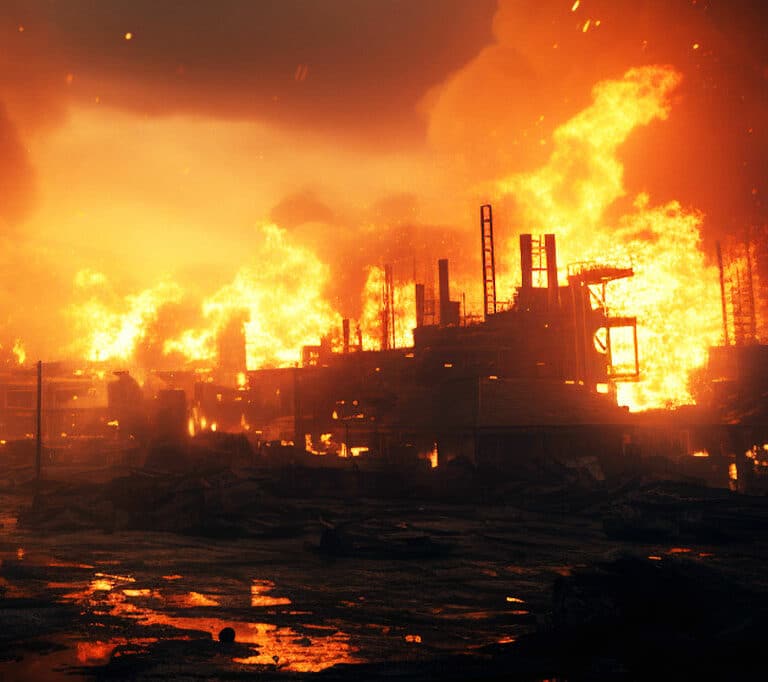
Global growth driven by shift towards environmentally safe products and rising fire-related incidents
The global firefighting foam market is expected to grow from $756 million in 2021 to $913 million by 2026, according to a recent study from MarketsandMarkets.
This translates to a compound annual growth rate (CAGR) of 3.8% during the forecast period.
Firefighting foams are extensively used across several industries including aerospace & defence, oil & gas, pharmaceuticals, marine, industrial, mining, and others.
The substantial impact on market growth is expected to be driven by an increasing shift towards environmentally safe products and a rise in fire-related accidents resulting in casualties and property loss.
Covid-19 impact on the firefighting foam market
The Covid-19 pandemic has had significant impacts on the value chain of the firefighting foam market, especially in 2020.
The pandemic caused severe effects on the global economy and the oil & gas industry, leading to a steep decline in revenues during the lockdown period.
The shutdown of manufacturing units, an acute shortage of raw materials and lack of potential manpower contributed to this decline.
It is inferred from the current pandemic-induced situations that the production and supply chain activities have faced considerable challenges.
Increased investment in fire protection fuels the firefighting foam market
According to the report, the rise in investments by global firms in fire protection for their facilities has increased the installation of fire protection systems.
These systems utilise automatic suppression systems due to the presence of stringent regulations.
The NFPA is extending the use of its standards beyond the US, which is expected to have global applicability.
This initiative educates facility managers, business leaders, and fire professionals on the NFPA standards and other best practices in diverse locations such as the Middle East, China, and countries in the European Union (EU), and South.
In recent years, traditional AFFF foam concentrates and older fluoro-protein foams are being replaced with SOLBERG RE-HEALING foam concentrates.
These concentrates use a tested and authorised high-performance synthetic foam technology.
Additionally, ACAF Systems have partnered with the LASTFIRE group to understand new generation foams and demonstrate their efficiency in CAF applications.
Existing lawsuits and litigations pose a challenge for the firefighting foam market
Several manufacturers face lawsuits and litigations, posing a challenge for the industry.
For instance, in January 2019, Ohio, US, filed a lawsuit against manufacturers, including affiliates of the 3M company, over PFOS and PFOA contamination allegedly caused by the use of firefighting foams at various locations throughout Ohio.
Firefighting foam market segmentation
By type, the market is divided into AFFF, AR-AFFF, PF, synthetic detergent foam, and others.
Due to its extensive use by the oil & gas industry, the demand for AFFF was the highest in 2020.
Based on the end-use industry, the market is classified into oil & gas, aviation, marine, mining, and others.
The oil & gas industry, being a major consumer of firefighting foam, was the largest market in 2020.
The high demand can be attributed to the high risk of fire accidents and the efficiency of firefighting foam in combatting such fires.
By region, the market is segregated into APAC, Europe, North America, South America, and the Middle East & Africa.
APAC was the largest market for firefighting foam in 2020.
Key findings and future trends in the firefighting foam market
Key findings from the study suggest that synthetic detergent foam is expected to grow at the highest CAGR during the forecast period.
The marine segment, under end-use, is also predicted to experience the highest growth during the same period.
Furthermore, research and development activities by manufacturers to develop innovative firefighting foams are expected to contribute to the growth of the market.
The measures to reduce longer chain, like C8 or greater, perfluorinated chemicals and PFOA emissions provide opportunities for the market.
IFSJ Comment
Understanding the projected growth of the firefighting foam market offers invaluable insight into future safety standards and practices.
As an industry, we can use this information to anticipate needs, align with environmentally-friendly products, and ensure the best protection systems are in place across all sectors.
Todd Short and Adam Levine recognised for their tireless commitment to fire safety
The American Fire Sprinkler Association has announced the recipients of its 2023 Fire Sprinkler Advocate of the Year and Young Professional of the Year awards.
Redmond Fire Department Fire Marshal, Todd Short, has been bestowed the Fire Sprinkler Advocate of the Year award.
This recognition comes for his lifelong dedication to fire safety and his efforts in educating the public on the benefits of fire sprinklers.
As assistant fire marshal for the Redmond, Washington, Fire Department, Short played a crucial role in the adoption of the city’s residential fire sprinkler ordinance.
This ordinance mandates the installation of fire sprinklers in all newly built single- and multi-family homes.
He also contributed significantly to the creation of the Best Practices Forum. This forum facilitates industry collaboration on fire sprinkler best practices, from permit application to final inspection.
Industry professionals and fire sprinkler advocates unite
Short’s commitment extends beyond his local jurisdiction. He’s an active participant in the Washington State Association of Fire Marshals, International Residential Code Technical Advisory Group, and currently leads the Washington State Fire Marshal Coalition.
The American Fire Sprinkler Association developed the Fire Sprinkler Advocate of the Year award to commend individuals not directly in the fire sprinkler industry but have made significant contributions towards advancing the sector.
Adam Levine named AFSA’s Young Professional of the Year
Meanwhile, Adam Levine, P.E., president of Capitol Fire Sprinkler, Woodside, New York, has earned the accolade of Young Professional of the Year for 2023.
Levine is celebrated for his technical prowess, professionalism, and leadership skills, both in his business and at the national level.
After graduating with a degree in fire protection engineering from the University of Maryland, Levine joined Capitol Sprinkler full-time in 2009. Later, he secured his MBA in entrepreneurship in 2011 from Baruch College.
Levine is also a respected member of the NFPA 14 Technical Committee and volunteers his time to maintain the standards set by NFPA.
Fire sprinkler industry celebrates upcoming talent
Kevin Hall, senior manager of engineering and technical services for AFSA, commended Levine: “Adam volunteers a significant amount of time to the industry and has facilitated AFSA’s involvement with the New York Fire Sprinkler Contractor’s Association.”
Both Short and Levine will receive their respective awards during the general session at the AFSA42 Convention, Exhibition & Apprentice Competition, scheduled for September 6-9 at Signia by Hilton Orlando Bonnet Creek.
For more information about the event and to register, visit the AFSA42 website.
About the American Fire Sprinkler Association
The American Fire Sprinkler Association is an organisation that aims to promote the adoption and proper use of fire sprinklers. Through advocacy, education and awareness, the association works to ensure that fire sprinkler systems are more widely understood and utilised to save lives and property.
IFSJ Comment
Awards such as these are crucial in recognising the contributions of those working tirelessly to advance fire safety.
The honourees, Todd Short and Adam Levine, demonstrate the vast impact individuals can make towards fire safety, from local ordinance change to national-level influence.
We congratulate both recipients on their well-deserved accolades.
Their accomplishments remind us of the significant role fire sprinklers play in protecting lives and property.
Lessons from the North Sea Tragedy: Understanding fire risks in the era of electric vehicle transportation and essential strategies for prevention and suppression
A recent disaster involving a major fire onboard a cargo ship, the Fremantle Highway, off the coast of the Netherlands has underscored the risks and challenges associated with shipping.
The ship, loaded with around 3,000 cars, including 25 electric vehicles (EVs), was en route from the German port of Bremen to Port Said in Egypt when a fire broke out.
The incident led to one fatality and several injuries, highlighting the necessity of enhanced fire safety measures in maritime transportation.
The Perils of EV Transportation at Sea
Electric Vehicles (EVs), powered by lithium-ion batteries, have emerged as an innovative solution to curb greenhouse gas emissions.
However, while their adoption in terrestrial transportation has been substantial, their carriage in maritime transport introduces a set of unique fire safety challenges.
One of the most significant risks associated with EVs on ships is the propensity of lithium-ion batteries to ignite under certain conditions, a phenomenon known as ‘thermal runaway‘.
This typically occurs when a battery overheats, causing a reaction that further increases the temperature and can lead to the battery catching fire.
The likelihood of thermal runaway increases if batteries are damaged, defective, or improperly handled or stored.
What makes these fires particularly dangerous is that they are notoriously difficult to extinguish.
When a lithium-ion battery ignites, it can produce its own oxygen, meaning a fire can continue even in the absence of ambient oxygen.
This makes traditional fire suppression methods, like smothering, less effective.
Further complicating matters is the issue of ‘stranded energy’.
After an initial fire involving a lithium-ion battery is extinguished, the battery can reignite.
This can occur hours, or even days, after the original fire, which presents a unique hazard not typically encountered with traditional vehicle fires.
To add to the risk, a fire originating from a lithium-ion battery produces toxic gases such as hydrogen fluoride and phosphorus pentafluoride, posing both a health risk to those in the immediate vicinity and a potential environmental hazard.
Moreover, the high energy density of lithium-ion batteries can lead to fires that are far hotter than typical combustible material fires.
The intensity of such fires can make them difficult to control and suppress, while also increasing the risk of the fire spreading.
Finally, the sheer volume of EVs transported on some vessels can exacerbate these risks.
With larger numbers of EVs in close proximity, a fire that starts in one vehicle can quickly spread to others, leading to a much larger and more dangerous situation.
This makes early detection, isolation, and suppression of fires critical in scenarios involving the transportation of EVs at sea.
Best Practices for Fire Suppression and Prevention Onboard
Fire safety in shipping, particularly concerning EVs, requires proactive measures for prevention, early detection, and effective suppression.
Leading Survival Technology solutions provider Survitec emphasises the importance of early fire detection systems, specially designed to monitor lithium-ion battery conditions.
Indicators like heat, smoke, popping sounds, and toxic gas emissions from batteries can serve as early warnings.
Current safety innovations focus on monitoring car decks for these early-stage fire conditions.
Survitec is investing in developing new solutions capable of pre-ignition monitoring, highlighting the importance of the type and location of sensors for effective detection.
New solutions are also emerging in the field of fire suppression.
An integrated graphical monitoring system, currently under development, aims to provide real-time status of all the fire-protected zones onboard.
It aims to link all the detection systems and sensors onboard for remote or local activation of a compartment’s fire suppression system.
Fire Suppression Techniques and Challenges
While tackling a fire onboard, understanding the unique nature of EV battery fires is crucial.
Such fires generate explosive and toxic gases, increasing the fire’s intensity and size, and can potentially reignite until the battery is completely burnt down.
This presents a real challenge for traditional gas-based fire systems.
Water-based solutions provide the best cooling effect.
However, they also introduce the risk of impacting ship stability due to the volume of water needed.
Therefore, an effective drainage system is a must.
Research suggests that a water mist system is the most effective for this type of fire, and numerous research and development initiatives are looking into the best water spraying method for EV fires.
The Path Ahead: Prevention and Early Detection
“Prevention is certainly better than the cure,” says Rafal Kolodziejski from Survitec.
Early monitoring and detection are increasingly important safety factors for ship operators and crew.
With an EV cargo, the earlier the crew can detect pre-fire conditions, the better. For instance, ship operators are being urged to increase the space between each vehicle or reduce the number of units transported.
As the maritime industry continues to grapple with these challenges, the recent North Sea incident serves as a tragic reminder of the importance of fire prevention and early detection in shipping, especially in the era of EV transportation.
Striking the balance between the efficient transportation of goods and the safety of crew and cargo will be pivotal in the shipping industry’s future.
Complimentary training sessions initiated to enhance understanding and efficient use of firefighting foam
Perimeter Solutions, a globally renowned producer of firefighting products and lubricant additives, has embarked on a mission to train fire departments and various other fire management organisations across the United States on the use of Class A and Class B firefighting foam.
The ‘Know Your Foam’ course, provided free of charge, spans four hours and delivers both theoretical and practical training to firefighters on the correct usage of firefighting foam.
Bridging the foam knowledge gap
According to Norbe Puroll, the ‘Know Your Foam’ program leader at Perimeter Solutions: “Right now, there is a knowledge gap among firefighters about the use of foam and the advantages it introduces to firefighting when compared with exclusively using water to battle a fire.”
During the session, participants are shown how to correctly apply firefighting foam, a resource that enhances the overall efficacy of water in firefighting by hastening heat reduction and minimising the probability of a fire reigniting.
Puroll further elucidated: “Quicker extinguishment time helps lower the chance of a firefighter injury, creates less water damage, and improves the chance of saving any potentially trapped residents.
“This also reduces fuel cost and decreases the wear and tear on trucks that are no longer required to remain onsite as long.”
Highlighting foam’s effectiveness and resource conservation
Perimeter Solutions uses the Los Angeles County Fire Department Palmdale Study to illustrate foam’s superior performance.
The study found that the water needed to extinguish a specific Class A fire fell from 73 gallons to 44 gallons with the addition of foam.
Incorporation of compressed air foam further cut down the requirement to just 16 gallons.
Additionally, using foam reduced the cooling time of a fire from 600° F to 200° F from six minutes to a mere one minute and 45 seconds, significantly increasing survivable space for both firefighters and occupants.
Practical benefits of ‘Know Your Foam’ sessions
Attendees of the ‘Know Your Foam’ session receive instructions on using manual eductors and foam injection systems and gain knowledge on how foam can be employed with their existing equipment.
Furthermore, they receive tips on in-house maintenance for ensuring their equipment is always ready, and insights derived from years of experience using firefighting foam.
The training also covers the proper usage of different suppressant agents including Class A and B, wet water, air/ground applied retardants, and gels.
A special focus is laid on the usage of newer fluorine-free Class B foams, a subject of growing interest among fire management organisations required to use MIL-SPEC products.
“We need to reinforce good foam application tactics as the way you suppress flames with Class B fluorine-free foams when used on flammable liquids. Firefighters who completed foam training even as recently as two years ago will learn something new by attending a ‘Know Your Foam’ session,” Puroll added.
IFSJ Comment
This move by Perimeter Solutions is significant news in the firefighting community. Improving the understanding and application of foam can drastically enhance firefighting efficiency, reduce the resources required, and contribute to the safety of firefighters and the public.
This initiative aligns with our commitment to promote knowledge sharing and the use of advanced technologies for improving firefighting outcomes.
About Perimeter Solutions
Perimeter Solutions is a leading global manufacturer of high-quality firefighting products and lubricant additives. Headquartered in St. Louis, Missouri, the company operates as an industry leader, providing advanced chemical solutions that drive performance and protection capabilities for customers across the globe.
Pablo Boj, fire department consultant for STB, gives a brief review on gas cooling and surface cooling
My professional career in the field of firefighting, since I joined the fire department in 2002, has been fundamentally driven by the gas cooling technique and the doctrine of efficient use of water whose fundamental premise was to make the most of the cooling capacity of water.
However, in recent years, this doctrine has started to raise certain doubts for me. Through my investigations of incidents that occurred during firefighting, I have observed problems with the application of the technique.
These problems stem from the lack of sufficient training and the limitations inherent to the training settings.
The training is usually conducted under very specific conditions, without enough variation, which often fails to mimic the diversity of real fire scenarios, both in terms of the fire load and the geometry of enclosures.
Europe vs America
At the end of 2021 I had the opportunity to participate in a meeting between European and American instructors promoted by Elkhart Brass in Pensacola (USA) under the motto “There is nothing foreign in flowing water”, coinciding with the High-Rise Operation Conference organized by County Fire Tactics.
The main idea was to share experiences and knowledge, starting from the different approaches used in firefighting on both sides of the Atlantic.
An equivalent meeting was held on the European side at the end of 2022 coinciding with the High-Rise Operation Tactics in which we also had the opportunity to put into practice the different techniques in live fire scenarios over several days.
Europeans used an approach based on a reading of the conditions, door control and progression through pulsations on the gas layer with flow rates between 230 and 500 Lpm with pressure nozzles with a 6-bar reference.
In this way, the gas layer is controlled, allowing a safe progression until reaching a position that allows us to attack the base of the fire.
On the other side, Americans, once the door was open, progressed by projecting a flow rate between 550 and 800 Lpm, at a pressure of 3.5 bar, with an O pattern of solid and uninterrupted jet (“move and flow” variant) in order to reach the largest possible surface (walls and ceiling) and generating hydraulic ventilation in the lower plane towards the fire accompanying the firefighters and forcing hot gases to exit through the upper plane to the outside towards the available outlets.
Steam generation
The basis of the gas cooling methodology is the application of very short pulses with an open cone, with relatively low flow rates, whose objective is to expose the maximum volume of water to the heat transfer in the gas layer so that the contraction due to cooling compensates steam generation.
In the case of the surface cooling methodology, the idea is to apply large amounts of water to all surfaces, so that hot gases from the base of a fire cool down when they come in contact with the entirely cold surface.
In gas cooling, pulsations are directed to cool the gas layer, and if they reach walls, they vaporise easily without having a very significant impact on the energy accumulated in the total mass of the facing, since the volume of water is reduced, so that the surface can easily recover a high temperature.
However, in the surface cooling technique, through a water application with high flow rates over large areas, there is more mass of water through which transferring the energy from the facing, achieving a greater reduction in the energy level and surface temperature, and consequently, a lower relative steam generation.
Another interesting point is the cooling effect of gases that occurs when a solid jet hits the ceiling and breaks up, causing a movement of fluids.
On the other hand, by leaving the door open and forcing the hydraulic ventilation in the lower plane with the nozzle, excess of steam and hot gases has a guaranteed exit through the upper plane, with a lower risk for the firefighter.
In the live fire exercises, my personal impression is that thermal stress was significantly lower by using this technique.
From my point of view, one of the weak points lies in the open door, since in the case of residential buildings the products of combustion can affect floors and occupants that are above the fire, when these gases do not have another better way out, although being a very aggressive and forceful technique, it quickly reduces the temperature and toxicity of the gases and the extinction time is shortened.
Training
One of the most interesting conclusions I obtained is that the surface cooling technique is simpler, and therefore, safer for the firefighter.
The gas cooling technique requires a relatively high level of training, the firefighter must carry out regular practices in handling of the nozzle, since a bad application can cause water to reach the walls and generate steam excesses and pressure and caudal requirements are more specific.
In addition, range and penetration capacity of the pulsations are limited, as well as its use in large volumes.
Unfortunately, firefighters do not always have the necessary training hours, or they have to distribute them among the wide range of disciplines that we currently require them.
In contrast, the surface cooling technique is less demanding from the point of view of handling the nozzle, the projection of water is as deep as the enclosure, which keeps sources of heat away from the firefighters and it is also relatively easy for water to reach the base of the fire by hitting door frames, even when out of sight in an adjacent room.
My intention with this article is not to suggest whether one technique is better than another, but rather to assume that there are other valid firefighting approaches, and that the mere fact of understanding how they work is already useful in itself and serves as exercise to examine the strengths and weaknesses of the techniques and variants that each one uses in their interventions.
This exclusive article was originally published in the June 2023 issue of International Fire & Safety Journal. To read your FREE digital copy, click here.
Understanding the most common causes of fire is essential for prevention and safety.
By being aware of these causes, we can take proactive measures to minimise the risk of fire incidents.
This article aims to provide an overview of 23 of the most common causes of fire, ranging from everyday activities to potential hazards within our surroundings.
By exploring some of the main causes, we can enhance our knowledge and promote fire safety in our homes, workplaces, and communities.
Knowing the causes of fire can help firefighters
Cooking Equipment
Cooking equipment is one of the leading causes of residential fires.
Unattended cooking, grease buildup, and flammable objects left too close to heat sources can ignite fires.
It’s crucial to maintain a high standard of cooking safety, use timers as reminders, and keep a safe distance between flammable materials and heat sources.
Heating Equipment
Heating equipment, including space heaters and furnaces, can pose a fire hazard if not used correctly.
Overheating, lack of maintenance, and placing flammable items near heat sources can lead to fires.
Regular inspection and maintenance of heating systems, proper ventilation, and keeping flammable items away from heaters are vital safety measures.
Electrical Equipment
Electrical equipment, such as faulty wiring, overloaded circuits, and malfunctioning appliances, is one of the leading causes of fire, as well as one of the most dangerous fires to put out.
Electrical sparks, short circuits, and overheating due to loose connections or damaged cords can ignite fires.
Ensuring proper installation, regular inspection, and prompt repair of electrical systems and appliances are crucial for fire prevention.
Cigarettes, Cigars & E-Cigarettes
Careless handling and improper disposal of cigarettes, cigars, and e-cigarettes are common causes of fires.
Discarding lit cigarettes improperly or not fully extinguishing them can ignite flammable materials.
Smokers should use designated ashtrays, never smoke in bed, and ensure proper disposal of smoking materials in fire-safe containers.
Candles
Candles, while creating a pleasant ambiance, can also be a fire hazard if left unattended.
Accidental knocks, proximity to flammable objects, or forgetting to extinguish candles can result in fires.
It’s important to place candles on stable surfaces, away from flammable materials, and never leave them burning when unattended.
Children Playing with Matches
Children playing with matches or lighters out of curiosity can lead to fire incidents.
Educating children about the dangers of matches and lighters and keeping them out of their reach are essential preventive measures.
Parents should store matches and lighters in secure locations to prevent access by children.
Faulty Electrical Wiring
Electrical faults can be especially dangerous in cars
Faulty electrical wiring, due to age, poor installation, or rodent damage, can cause electrical fires.
Overheating wires, short circuits, and electrical arcing are common signs of faulty wiring.
Regular electrical inspections, prompt repairs, and the use of licensed electricians can help prevent electrical fires.
Christmas Decorations
Christmas decorations, such as lights and candles, can pose fire risks if not used safely and are a serious cause of fire around the holiday season.
Overloaded electrical sockets, damaged lights, and placing flammable decorations near heat sources can ignite fires.
Following manufacturer’s instructions, using LED lights, and keeping decorations away from flammable materials are essential for fire safety during the holiday season.
BBQs
Disposable BBQ misuse can lead to dangerous wildfires
Barbecue grills, if used incorrectly, can be some of the main causes of fire.
Improper placement near flammable structures, grease buildup, and failing to extinguish coals properly can result in fires.
Safe barbecue practices, regular cleaning of grills, and maintaining a safe distance from flammable materials are crucial for preventing accidents.
Bonfires
Bonfires, while enjoyable, require caution to prevent accidents.
Inadequate containment, excessive size, and proximity to flammable materials can lead to uncontrolled fires.
Ensuring proper construction, maintaining a safe distance from structures and vegetation, and having firefighting equipment nearby are important safety measures.
Remote Controls
Neglected or damaged remote controls can cause fires.
Malfunctioning batteries, short circuits, and overheating can lead to remote control fires.
Regularly checking and replacing batteries, keeping remote controls away from heat sources, and avoiding excessive pressure on buttons can prevent such incidents.
Batteries
Improper handling of batteries can be one of the causes of fire.
Safely storing batteries, using the correct battery type, and recycling old batteries properly are essential for fire prevention.
Tumble Dryers
Tumble dryers with clogged lint filters and vents pose a fire hazard.
Accumulated lint can ignite from the dryer’s heat, leading to fires.
Regularly cleaning lint filters, ensuring proper venting, and professional dryer maintenance can prevent such incidents.
Aerosol Cans
Aerosol cans, if exposed to heat or punctured, can explode and ignite fires.
Leaving aerosol cans near heat sources or disposing of them improperly can lead to dangerous fire situations.
Storing aerosol cans in cool, well-ventilated areas and following proper disposal guidelines are crucial for fire safety.
Arson
Arson attacks can ruin entire families
Intentional acts of arson, where fires are set deliberately, can cause significant damage.
Arson can occur due to various reasons, including vandalism, revenge, or insurance fraud.
Community awareness, neighbourhood watch programs, and reporting suspicious activities can help deter arson incidents.
Construction Materials
Construction materials, such as flammable insulation, paint, or chemicals, can contribute to causes of fire during building projects.
Mishandling, improper storage, and inadequate fire safety measures can lead to construction site fires.
Implementing proper fire prevention strategies, following safety regulations, and having fire extinguishers readily available are vital during construction activities.
Clutter
Accumulated clutter can increase the risk of fires by obstructing escape routes and providing fuel for flames.
Cluttered spaces make it challenging to control or escape fires quickly.
Regular decluttering, proper storage of items, and maintaining clear pathways can help minimise fire hazards.
Flammable Liquids, Gases & Materials
Factory fires can be absolutely devastating, especially to the environment
Improper handling, storage, or use of flammable liquids, gases, and materials can lead to fires.
Ignition sources near flammable substances, improper ventilation, and failure to follow safety guidelines are significant fire risk factors.
Proper storage, using suitable containers, and adhering to safety protocols when working with flammable materials are essential for fire prevention.
Human Error
Human error, such as forgetfulness or negligence, can contribute to fire incidents.
Leaving appliances unattended, forgetting to extinguish flames, or improperly handling flammable substances are examples of human error leading to fires.
Being vigilant, practising fire safety habits, and staying aware of potential fire hazards are crucial for preventing accidents.
Outdated Fire Risk Assessments
Outdated or inadequate fire risk assessments can fail to address emerging fire hazards, increasing the risk of fire incidents.
Regularly reviewing and updating fire risk assessments, considering changes in the environment or operations, and implementing appropriate fire safety measures are essential for effective fire prevention.
Mechanical Friction
Mechanical friction, such as faulty vehicles, machinery or equipment, can generate heat and sparks that ignite fires.
Lack of lubrication, loose parts, or worn-out components can contribute to friction-related fires.
Regular maintenance, inspection, and prompt repair of machinery are vital for preventing such incidents.
Negligence
Negligence, including careless behaviour, disregard for fire safety practices, or failure to follow regulations, can lead to fires.
Ignoring safety protocols, misusing electrical equipment, or bypassing safety measures are examples of negligent actions that increase the risk of fire incidents.
Cultivating a culture of safety, providing adequate fire prevention training, and enforcing compliance with fire safety standards can help mitigate the effects of negligence.
The low winter sunlight refracted by the jar, which was used to collect loom bands, caused the rays to be magnified and ignited blinds, resulting in the devastating fire.
This incident serves as a reminder to keep glass items away from windows and direct sunlight to prevent similar accidents.
Conclusion
Understanding the common causes of fire is crucial for promoting fire safety in our daily lives.
By being aware of the potential fire hazards associated with cooking equipment, heating devices, electrical equipment, smoking materials, candles, and various other sources, we can take preventive measures to minimise the risk of fire incidents.
Practising safe habits, ensuring regular maintenance, and adhering to fire safety guidelines can significantly reduce the likelihood of fires.
It is important to educate ourselves and others about fire prevention, promote fire safety awareness, and create a culture of responsibility and vigilance. By taking these steps, we can protect our homes, workplaces, and communities from some of the main causes of fire and its devastating effects.
Fire chiefs in the US can choose to protect their communities with firefighting foam. There are no regulations that require a fire department to use foams containing PFAS. Many US fire departments are changing to F3 products.
Fire chiefs realise they should not call airports for assistance because their apparatus still contains PFAS which are persistent, bioaccumulating and biomagnifying. The public has now been well informed due to impressive media attention.
According to the Spring 2021 issue of Groundwater Monitoring & Remediation: “Although Australia and European countries have used F3 alternatives for nearly a decade in certain sectors, adoption in the United States has been slowed by industry’s reliance on NFPA Standard 11 and UL 162, which address AFFF use for Class B fires…”
Two notable incidents in the US emphasise issues with short-chain C6 PFAS foams.
Chemtool Explosion & Fire, June 2021
Lubrizol’s Chemtool plant had an industrial fire involving grease, lubricating oil and fluids in Rockton, Illinois. Rockton Fire Chief Kirk Wilson declined nearby airport assistance right away because he knew the AFFF contained PFAS which would contaminate his community.
A private firefighting crew hired by the company came in and used 3,200 gallons of PFAS-containing foam concentrate. A report in the Chicago Times said: “The problem, according to state and federal environmental officials, is that the private company, Louisiana-based US Fire Pump, sprayed a foam containing perfluorooctanoic acid, part of a class of chemicals known as PFAS. Nationally, there is a push to ban these chemicals for fear that they are harmful to humans, potentially causing organ damage and cancer.”
The Chemtool / Lubrizol contractor US Fire Pump confirmed the foam used was Signature Series 1X3% C6AR-AFFF, according to the Illinois EPA. The foam is a fluorinated surfactant and may contain Perfluorooctanoic acid (PFOA) as an unintended by-product, and the foam can break down into Perfluorohexanoic acid (PFHxA) and potentially others.
EPA reported: “The fire chief had not been previously informed that the foam contained PFAS. He directed that operations be stopped while the company implemented steps recommended by U.S. EPA and IEPA to contain runoff.” The Chicago Sun-Times reported that “US Fire Pump used PFAS-containing foam for about three hours on Tuesday, even though state and federal officials had warned against doing so.”
According to reports, the team switched to another foam without the chemicals on orders of the fire chief. Foam not containing PFAS became available and was then used.
Former National Institute for Environmental Health (NIEHS) director and toxicologist, Dr. Linda Birnbaum, said it was ‘amazing’ that the company would use PFAS-containing foam when alternatives were available.
The Madison, Wisconsin PFAS Transformer Fires
In July 2019, Madison, Wisconsin experienced transformer fires where firefighting foam, potentially containing harmful per- and polyfluoroalkyl substances (PFAS), was used. Amid growing concern, the city affirmed the foam used, FireAde 2000, did contain a lesser-known PFAS compound, PFHxA, contradicting the manufacturer’s claims. This revelation led to testing for 34 PFAS compounds.
The city then undertook the cleanup of the transformer site. Lab tests detected high concentrations of 6:2 Fluorotelomer Sulfonate (6:2 FTS), a “more environmentally friendly” PFAS, despite its unknown long-term impacts. By late September, PFAS was found in Lake Monona, with groundwater under the transformer site having PFAS levels triple the safety limit. The city faced criticism for labeling PFHxA and 6:2 FTS as “environmentally friendly”, considering their demonstrated toxicity and mobility.
A report confirmed PFAS migration from the fire site to Lake Monona, where 6:2 FTS exceeded safety thresholds in most sampled locations. The city’s failure to disclose high PFAS levels led to public outcry. The levels in storm sewer outlets reached up to 92 ppt, inclusive of PFAS compounds beyond proposed regulations. Subsequent critique argued initial PFAS reports were “incomplete and misleading”, given PFAS levels post-fire were substantially higher than first stated.
In December, the Madison Fire Department switched to PFAS-free foam, a significant move towards reducing environmental and health hazards. Despite validation of the new foam’s PFAS-free status, it contained chemicals listed as carcinogenic under California Prop 65, underlining the urgency for safer firefighting alternatives. This saga encapsulated the environmental risks associated with firefighting foams and highlighted the need for heightened vigilance.
The never-ending transition of firefighting foams
In May 2023, the European Environmental Bureau (EEB) issued a statement: “Restrictions are designed to control an unacceptable risk from the manufacture, use, or placing of a substance on the market.” Such restrictions on PFAS have been missing worldwide for decades.
On May 12, 2022, ChemSec reported: “But surprise, surprise – the C6 substances have turned out to be just as hazardous as the C8 ones, leading to a plethora of so-called regrettable substitution, which is when you swap one harmful chemical for an equally problematic one. So now, the C6 substances are subject to proposals called the PFHxA and PFHxS restrictions. As in previous PFAS restrictions, chemicals that degrade into C6 substances are included, and an indicative list of substances has been provided.”
Firefighting foams with C6 contain 2 to 3 times more PFAS than the older AFFF products. This fact was confirmed in the Foam Exposure Committee’s testing of active firefighting foam samples taken from fire departments.
The shorter chain PFAS are: more difficult to filter from water, more mobile and fast and just as difficult to clean and remediate as others. If you currently use C6 foam products or if your department chooses a C6 firefighting foam, you can certainly plan on another transition.
Some state-level environmental entities are making the firefighting foam product choice with decisions made solely based upon manufacturers’ direct marketing materials. This has created an issue. A western state is collecting PFAS foams presently in a take-back program while replacing them with another PFAS foam product.
Several New England state level environmental offices list foams on the state firefighting foam contract lists that are fluorine-free but contain carcinogens. There are certainly fire-tested F3 products available that do not contain carcinogens.
It is now being fully acknowledged that F3 foam blankets last longer than AFFF even though this has always been the case. F3 foams do not need to be re-applied as frequently as an AFFF. Slower drain time is considered a good thing. This fact means the foam requires less re-application and less product.
In a recent webinar, Jerry Back of Jensen Hughes, Inc. noted that fluorine-free foams: are “consistent over a range of concentration levels, showed no difference at all from AFFF, and were still adequate across the board.
The fire service should be aware that some manufacturers utilise multiple labels to market the same products. You should not be replacing a fluorinated foam with another fluorinated foam at this point unless your intent is to continue exposing your firefighters and citizens unnecessarily.
This exclusive article was originally published in the June 2023 issue of International Fire & Safety Journal. To read your FREE digital copy, click here.
Luciano Nigro, Jensen Hughes Italy and Member of the IWMA Board evaluates the tools assisting fire engineers and authorities in system selection and approval
Water mist technology can now be considered a mature fire suppression technology as it has entered the third decade of installation both in marine and in land-based applications. Initiated more than 30 years ago to support the Halon replacement on board of ships, the technology grew rapidly achieving almost 100% of the marine fire protection market on board passenger ships, protecting all the hazards from the machinery spaces to the accommodation and public spaces.
By the end of millennium, water mist applications for land-based occupancies were developed, based on several fire test protocols published by international organisations including Factory Mutual Approvals, UL, VdS, LPCB and others. Nevertheless, in the land based market the technology has not yet achieved the diffusion that could reach, for various reasons one of which, it is the opinion of the writer, remains the difficulties that fire engineers, designing and/or reviewing water mist system for acceptance, find in the process of selecting the system appropriate for each application and in verifying the adequacy of the design parameters that have been used per each system.
To support the fire engineers in this commitment, the IWMA (International Water Mist Association) has developed, in recent years, a descriptive document called the “Project Water Mist – an Alternate Solution to Sprinkler Protection in Building Fire Protection” published in 2014 and a working tool called THE MATRIX – both available on the IWMA website.
The document is a complete list of all the fire test protocols available on the market at the date of its publication with the description of the occupancies to which they apply and the indication of the organisations that developed and published them.
The MATRIX was then studied and developed by the IWMA Scientific Council, with advice from association members, to become a real working tool for the fire engineers, having a structure more attuned to the design and review activity a fire engineer undertakes, and being updated on a constant basis to be representative of what is state-of-the-art – this is a key focus when designing and installing an advanced technology fire suppression system.
A partial view of the summary of the MATRIX outcome for the Land Based Applications is summarised by the table here below; The complete MATRIX is published both for Marine and Land Based applications which can be accessed at: https://iwma.net/the-matrix/land-based-applications.
The MATRIX
The MATRIX for Land Based Applications serves as a guideline for fire engineers to understand the complexity and nuances involved in water mist fire suppression systems across various business segments and contains five columns of information.
The first column refers to the business segment of the case under consideration, divided into Residential, Commercial and Industrial. The second column is the most important for the fire engineer – it is the column dedicated to the Applications and is the key point for the correct interpretation of the MATRIX. The selection of the application that more accurately represents the fire hazard related to the “formal” applications for which a test protocol exists, requires considerable judgment from the fire engineer.
Of course, the real world is not so simple, because the applications listed in the Application column of the MATRIX are not easily related to the actual application under consideration; paragraph 4.1.3.2 of the EN 14972-1 states: “Test protocols: one of the greatest challenges to engineering of water mist fire suppression systems lies in determining whether the conditions of a particular and recognised test protocol are representative of the actual conditions in a given application based on an understanding of the dynamics of the interaction of water mist with fire.”
Upon closer examination, certain applications have clear and well-defined relationships, for example the “car garages/parking garages”, but there are also several applications that are not so well defined as for example “residential occupancies” or “data halls”. In all these cases additional information is needed to relate the applications listed in the MATRIX and the real world.
The third column of the MATRIX is the Test Protocol column; third and fourth columns fully identify the test protocol(s) existing for a given application. The list is updated regularly by the Association therefore it can be considered as the most updated list of water mist fire test protocols presently available worldwide.
As mentioned, there are many applications for which more than one protocol is available; how to select the protocol that best fit the actual application under consideration remains with the responsibility of the fire engineer.
The last column identifies the type approval that can be obtained by ‘positively passing’ each test protocol mentioned in the previous columns. This column differentiates between test protocols that result in a formal approval, indicating the organization granting the approval, and protocols that are not intended for formal approval but are instead provided to the market as reference protocols. These reference protocols are intended for use by authorities having jurisdiction, laboratories, verification agencies, manufacturers, and other relevant entities.
For those that are not so much familiar with the type approval process, it is possible to say that the fire test protocols are the procedures issued by the organisations involved in the water mist fire suppression technology to run each of the mentioned test. They list the materials to be used, the procedure to run the tests, and the pass-fail criteria to determine the outcome of the tests.
Approval and Standardisation
To complete these considerations, it should be noted that the organisations issuing fire test protocols for water mist applications are few and can be divided in two groups: the Approval Bodies and the Standardisation Bodies.
Approval Bodies for water mist applications include FM Approvals1, UL2 and VdS3; the Standardisation Bodies include the CEN4 committee on water mist system and the BSI5. As it is possible to see on the MATRIX table, the Approval Bodies always grant a type-approval for the system passing the test protocol for the specific application; the Standardisation Bodies normally do not, except for the residential applications tested according to BS standard 8458 that are approved by the LPCB6.
The approval issued by an Approval Body is a very useful information document also for the above-mentioned matter concerning the correlation between the test protocol and the actual application under consideration. An example is the chapter 1.2 of the FM standard 55607 where all the 16 applications for which FM Approvals has issued a test protocol are described in detail with all the applicable limitations and/or extensions.
The same does not apply to the test protocols issued by the Standardisation Bodies that also include a paragraph per each protocol describing the scenarios to which the protocol can be applied, but this information is “embedded” in the test protocol text and is not easily available to the fire engineer.
The above is a complete description of the MATRIX content. All the information included in the MATRIX is carefully verified and checked by the IWMA Scientific Council that includes some of the most relevant professionals dealing with water mist technology world widely.
However, there are some comments and recommendations that need to be considered in order to improve the content and make it even more useful for fire engineers.
Considerations for fire engineers
The correlation between the fire test protocol and the actual application under consideration poses challenges for fire engineers. Test protocols issued by Approval Bodies are expected to provide all the necessary information for their correct use and hold liability for their indications. However, achieving a clear correlation is less straightforward when dealing with Standardisation Body protocols.
The second and most important comment is related to the real availability of the system on the market. With the MATRIX it is only possible to say that, for a given application, one or more test protocols exist and whether they lead to a type approval or not, but no information is given about the availability of one or more manufacturers that can provide a water mist system designed and installed in accordance to the test protocol under consideration.
The identification of the manufacturer(s) holding an approval or having carried out a fire test according to one of the test procedures issued by the Standardisation bodies remains a responsibility of the fire engineer in charge for the design of the system.
Future steps
Ensuring the continuous update and maintenance of the MATRIX is of utmost importance for both the tool itself and the IWMA. This commitment aims to provide tangible support to fire engineers engaged in the design, installation, or verification of water mist systems in land-based applications. By keeping the MATRIX up to date, it serves as a valuable resource for professionals in this field.
Two possible enhancements could significantly aid in selecting the correct protocol for a given application. Firstly, adding a new column alongside the existing ones to provide a detailed description of the specific application to which the protocol is applicable would offer valuable assistance. Alternatively, introducing a supplementary page in the summary section where each protocol line is accompanied by a comprehensive description of the applicable scenarios mentioned within the protocol itself would also prove beneficial in facilitating protocol selection.
Finally, the availability of water mist systems on the market: this is an issue going above the scope of the Association.
The MATRIX provides the list of occupancies and protocols, but the demonstration that a company has successfully passed a protocol remains with the fire engineer responsibility to ascertain. As stated in the last sentence of the introduction to EN 14972-1: Water mist is a specific application solution which needs to be proven for each individual application and/or occupancy.
Bibliography
This article was informed by a range of resources, including the SFPE Handbook of Fire Protection Engineering, FM Approvals, UL’s water mist system testing, VdS’s fire protection content, and CEN/TC191/WG10’s material on Water Mist Fire Fighting Systems. Also referenced are the EN 14972 series, standards by BS, the LPCB’s Red Book, and the FM Class Number 5560’s January 2021 edition on Water Mist Systems.
This exclusive article was originally published in the June 2023 issue of International Fire & Safety Journal. To read your FREE digital copy, click here.
Unpacking the ground-breaking innovations of Fire Lion in fire-fighting foam technology under Director Aaron Johnson’s stewardship
From firefighter to foam expert to Director of Fire Lion, Aaron Johnson is a global leader in fire-fighting foam technology. His journey began in the industrial heartland of Marinette, Wisconsin with Ansul, a company rooted deep within his family tree since 1951.
Johnson tells: “I was at Ansul for about 14 years. I started in research and development, testing the performance of new foam agents and hardware. There was a lot of trial and error in those early days, plenty that didn’t work, but it also paved the way for innovation and advancement.” The mix of research, technical services, training, and sales engineering roles equipped him with an industry-wide perspective, providing him with an invaluable understanding of the fire industry landscape.
In 2021, Fire Lion spotted the fire industry veteran and brough him as Global Business Development Sales Manager. A year later, he ascended to the role of Director, taking over from Tom Reser.
“Fire Lion is not merely a manufacturer of positive displacement gear pumps. We provide the very backbone for the foam industry used in firefighting,” says Johnson. Fire Lion’s gear pumps are found in a diverse range of applications from petroleum, oil and gas industries to industrial fire apparatus in global companies like Shell and Valero, and across the Middle East.
Fire Lion’s expertise extends to creating a range of foam pumps that can function via an electric motor, a diesel engine, or even a water turbine, depending on the end user’s requirements. “We can drive the pump using Pelton wheels if we don’t have an electric supply or if the end user does not want a diesel engine on site. If there’s water, we can use a Pelton wheel.”
Fire Lion’s Herringbone Rotor
Johnson proudly notes: “We offer a wide array of pumps, ranging from five or 10 gallons a minute, all the way up to a listed pump of 425 to 450 gallons a minute. With non-listed pumps, we can go up to 700 to 750 gallons a minute. This capacity and flexibility have positioned us as a vital player in the foam market.”
Beyond firefighting, Fire Lion also caters to the water mist market. “If there’s a water mist application and someone needs an FM approved pump to drive their water supply for a low-pressure water mist system, Fire Lion can supply that as well. Our FM approval extends to water too.”
Expanding footprints
“We’re not just a small company, we’re a global force with a wide-reaching footprint,” Johnson declares, reflecting on the company’s standing in the market. Fire Lion collaborates with major foam agent Original Equipment Manufacturers (OEMs) worldwide, reinforcing the comprehensive spectrum of their full foam systems.
Fire Lion’s versatility is underlined by its ability to comply with a plethora of international standards: UL listed, FM approved, CE marking for Europe, and even Civil Defense approvals in Dubai and Abu Dhabi. “We’re well entrenched into the Middle East,” Johnson asserts. “Our reach is global and our commitment is absolute.”
Their vast distribution network extends from North America to Africa, Asia, and Europe, to the Middle East and South America. Antarctica remains the only untouched continent, a challenge Johnson approaches with a good-natured determination: “I haven’t been to Antarctica. I’m not sure I want to go, but I will if there’s a big enough project.”
This global reach has roots in Fire Lion’s past, specifically the tenacity and vision of previous owner, Tom Reser. “He was vital in establishing those global relationships when he created Fire Lion. Today, we maintain and hope to grow these relationships,” explains Johnson.
Regarding prospective growth, Johnson identifies Latin America as a region where Fire Lion currently lacks a strong presence, and the sub-Saharan Africa, rich in petroleum oil and gas, as another promising market. The Middle East, where the company is already deeply entrenched, also offers further potential. “We always want to grow the market. It’s one of our primary goals,” Johnson says.
Johnson also mentions Australia as a key market, acknowledging the country’s transition to fluorine-free foam and the ensuing opportunities. “We know that there’s a foam market in Australia. With the ban on AFFFs, we foresee projects emerging, and a deeper involvement in Australia would be great.
“Across the globe, we’re always looking to grow the business, expand market share, and provide a solution for the end users that they’re going to need.”
Pioneering a sustainable future
“At Fire Lion, we’re always investigating how we can improve the efficiency of our pumps,” Johnson tells. The company’s ethos of continuous improvement, fuelled by a restless curiosity for emerging technologies, has been a significant factor in their market success.
“Improving the product you sell is something every company should strive to do. There are always opportunities for improvement; the challenge lies in discovering them,” he stated. With the advancement in composites and technology in the fire industry, Johnson believes that breakthroughs might be right around the corner.
Fire Lion also remains cognisant of the latest trends in the industry, such as the growing interest in remote monitoring and testing of pumps. This area, Johnson shares, is currently a hot topic in the NFPA 20 Committee, of which he is a member.
He reveals: “Tom Reser sold the company to a Netherlands-based company called WB Fire Packs, a major fire pump supplier for the European market. They have developed a product called Fire Coach, a tool for remote monitoring and testing of fire pumps. It’s a new technology entering the marketplace.”
Another innovative offering from Fire Lion is an electronic foam proportioner that allows testing of foam systems without discharging foam solution. Johnson explained, “The end users are getting pressured not to discharge foam solution for testing purposes. We have an FM-approved product that enables testing according to NFPA guidelines while allowing the foam concentrate to be recirculated back to the foam tank, which means no more disposal and replenishment costs.”
Such innovations could lead to significant cost savings for end users. “Installing this component means you can test the system by recirculating back to the tank. You no longer have to discharge anything for testing, and you can easily gain your ROI back in a very short timeframe.”
Advocating for a safer industry
“Fire Lion’s current focus is assisting with the transition from PFAS Foam agents, AFFFs, ARFFFs to SFFF (Synthetic Fluorine Free Foam),” Johnson says when discussing the company’s priority in the short term.
This transition is not without its challenges, as system design must be carefully reviewed to ensure compatibility with new foam types. “There is no drop-in replacement these days, you have to do a full design review,” Johnson warns. He also added that this process often involves revisiting details such as piping dimensions and friction loss calculations.
“We are trying to help them understand those differences and realise what needs to get done. That way, we can provide a solution for the end user that they’re going to be happy with,” Johnson affirmed. He emphasises the importance of ensuring that the systems are not just satisfactory to the customer, but also offer the highest level of protection. This, after all, is the central ethos of a company operating in the life safety industry.
He praises the relationships Fire Lion has built with foam OEMs: “They’re the ones who make the foam agents; they’ve got a lot of that background information. It has helped out to have that relationship and use them as a resource.”
Looking to the future, Johnson hinted at exciting developments for Fire Lion. “We’re getting back to improving our pump and design. There’s going to be some significant news coming up, and we’re hoping to make a big splash into the marketplace.”
While he remains tight-lipped on specifics, he stresses the company’s commitment to constant improvement and efficiency enhancement. “We really want to showcase our commitment to making our product better, more efficient. That way, end users and customers get the best product available on the marketplace.” He adds.
This exclusive article was originally published in the June 2023 issue of International Fire & Safety Journal. To read your FREE digital copy, click here.
Introduction of fire sprinklers in new builds over 11 metres
The Northern Ireland government has initiated a public consultation on the proposed changes to local Building Regulations, with a specific emphasis on fire safety measures.
The consultation, which was launched on 3 July 2023 and is set to conclude on 25 September 2023, is aimed at elevating fire safety protocols in buildings.
The proposed amendments will primarily focus on residential buildings, particularly multi-residential ones.
An overview of the fire safety measures proposed
The intended effect of the proposed changes is to mitigate the consequences of fires by saving lives and preventing injuries.
The Department is planning to revise Part E (Fire safety) of the Building Regulations and the accompanying Technical Booklet E (Fire safety).
Under the new proposed amendments, a fresh functional regulation in Part E is to be introduced.
This regulation will necessitate those carrying out the work to provide sufficient fire safety information to the relevant party who has fire safety duties.
This requirement will apply to buildings with flats more than 11m above the ground level.
The role of fire sprinklers in enhancing safety
The new prescriptive regulation in Part E will mandate the installation of suitable automatic fire suppression systems, such as fire sprinklers, in specific types of buildings.
These will encompass buildings containing flats and purpose-built student accommodations with a floor more than 11m above the ground level.
Additionally, all residential care premises will also need to have these systems, regardless of their height.
Several changes to the Technical Booklet E (Fire safety) are also proposed. These will provide guidance on new requirements for fire safety information and the installation of automatic fire suppression systems.
They also aim to increase smoke alarm coverage in all new dwellings and clarify the measures required for adequate smoke ventilation from common escape routes in buildings with flats.
The guidelines will also enhance facilities and access for the Fire and Rescue Service, aiding firefighters in search and rescue operations and firefighting.
An online information event will be held on Tuesday 18 July where the Department will present these proposals.
Those unable to attend can access an anonymised Q&A summary and a voiced-over video presentation on the official consultation page.
Responses to the consultation will be accepted until the closing date, Monday 25 September 2023.
IFSJ Comment
This represents a proactive step towards enhancing fire safety in buildings, particularly residential ones.
The introduction of fire sprinklers and other fire suppression systems in high-rise buildings could significantly reduce the risk of fire-related fatalities and injuries, thus promoting safer living conditions for residents.