Members of the International Water Mist Association (IWMA) have made the decision to rename the “IWMA Young Talent Award”.
The award is now known as the “Ragnar Wighus Award”. This accolade, as previously, will be awarded to the individual responsible for the best master or Ph.D. thesis relating to water mist.
Ragnar Wighus, who passed away in 2021, served as the IWMA president from 2002 to 2018.
It was then that he handed over the leadership to Are Wendelborg Brandt from the Norwegian University of Science and Technology.
Ragnar Wighus Award 2024 details revealed by IWMA
In 2024, the award will be presented to the author of the standout Ph.D. thesis.
The recipient of this award will be given an opportunity to attend the 23rd International Water Mist Conference.
Here, they will be provided a speaker slot to present their thesis. This event is set to be held in Antwerp, Belgium, on the 18th and 19th of September 2024.
Furthermore, the award comprises a prize of 1,000.00 Euro and a complimentary one-year IWMA membership.
All thesis submissions will undergo evaluation by the IWMA Scientific Council.
This council is currently chaired by Max Lakkonen from IFAB.
Potential candidates need to ensure their applications are submitted by 29th March 2024.
For those interested in the application process, further details have been made available on the IWMA webpage.
A brief look into the history of the IWMA award
This award was first introduced in 2016. Since its inception, five budding scientists have been honoured with this recognition.
Those keen to learn about the previous awardees can find this information on the IWMA webpage.
IFSJ Comment
The renaming of the IWMA Young Talent Award to the “Ragnar Wighus Award” signifies the association’s appreciation and respect for Ragnar Wighus’s contributions.
As IWMA’s president for over a decade, his influence was paramount. By linking the award to his name, the IWMA ensures his legacy continues, inspiring young scientists to excel in their research about water mist technology.
Such recognitions play a pivotal role in fuelling innovation and encouraging in-depth research in the fire and safety sector.
Contrary to certain assumptions, not every fire is the same.
Indeed, there are different types of fire, each with varying hazards.
As a result, it’s prudent to be aware of the different classes of fires to avoid using the wrong type of fire extinguisher if an incident were to occur.
There are six classes of fire, as we explore further hereunder.
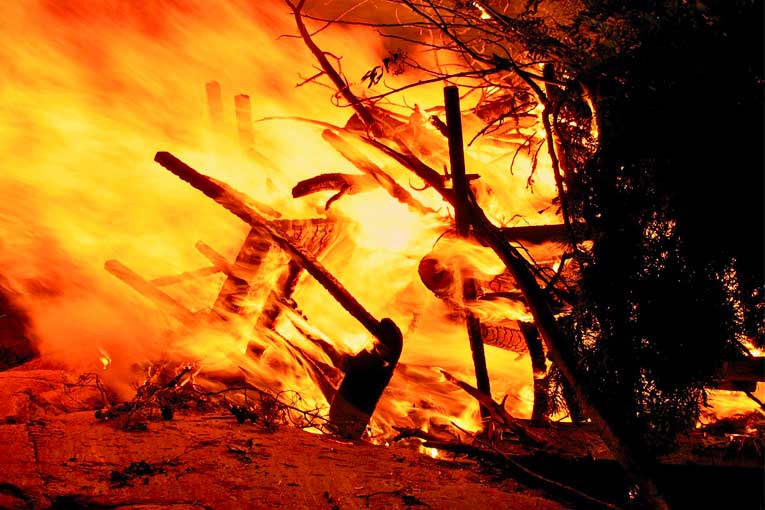
Class A: Combustible Materials
Class A Fire combustible material. Image credit: Pixabay
Class A fires are those which involve solid combustibles.
It could be anything from furniture to fixtures and fittings, paper, cardboard, or even the structure of a building.
If any type of solid material is burning, it’s said to be a Class A fire.
It’s one of the most common types of fires, as well as one which is relatively hard to extinguish.
How to Extinguish Class A Fires
In order to put out a Class A fire, you should ideally use water and foam extinguishers.
Water is the most common type of fire extinguisher as it can handle most fires that involve solids.
However it’s critical to bear in mind that since water is a conductor, it should not be used near any electrical equipment.
One may also use power and wet chemical fire extinguishers for a Class A fire, however the former are more suited.
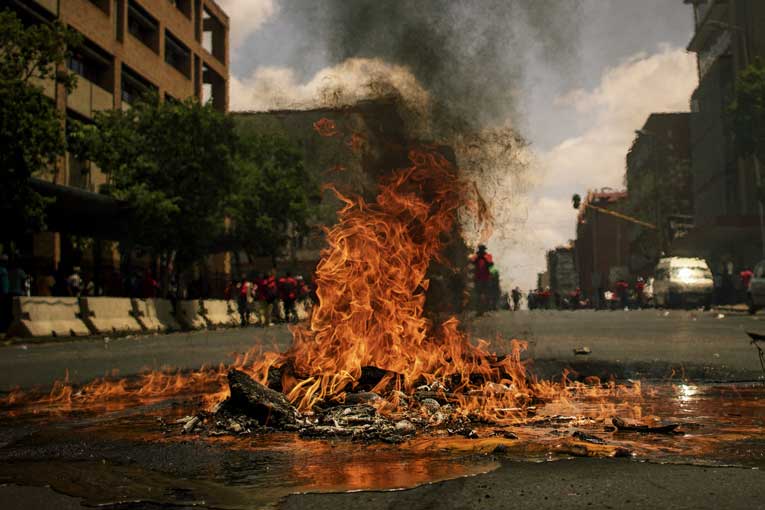
Class B: Flammable Liquids
Class B Fire combustible material. Image credit: Unsplash
Class B fires are those which involve liquid combustibles.
Unfortunately there’s all kinds of liquids as well as chemicals used in buildings, warehouses and workplaces, and a high number of them are flammable or explosive.
Some examples include paints, adhesives, inks, fuels and solvents.
As a result, many Class B fires tend to occur in workplaces and they can be extremely dangerous.
It’s imperative to be aware of the types of flammable liquids that are present or used, and ideally carry out a COSHH assessment.
Such assessments are legally required when there are hazardous substances.
Safe storage of such substances is critical, and they should be placed as far away as possible from any sources of ignition.
They should also be stored in suitable containers and be clearly labeled.
How to Extinguish Class B Fires
Class B fires should be put out by means of foam or powder extinguishers.
These are the best types of extinguishers in the case of such fires, but CO2 extinguishers can also be used even though they have limited suitability.
Class C: Flammable Gasses
Class C Fire combustible material. Image credit: Unsplash
Natural gas and LPG are examples of flammable gasses.
Fires involving such gasses are classified as Class C fires.
It’s crucial to keep gasses in sealed containers in a storage area which is safe.
How to Extinguish Class C Fires
In the case of a Class C fire, it’s first of paramount importance to shut off the gas supply.
Then, one should use a dry powder fire extinguisher to put out the fire.
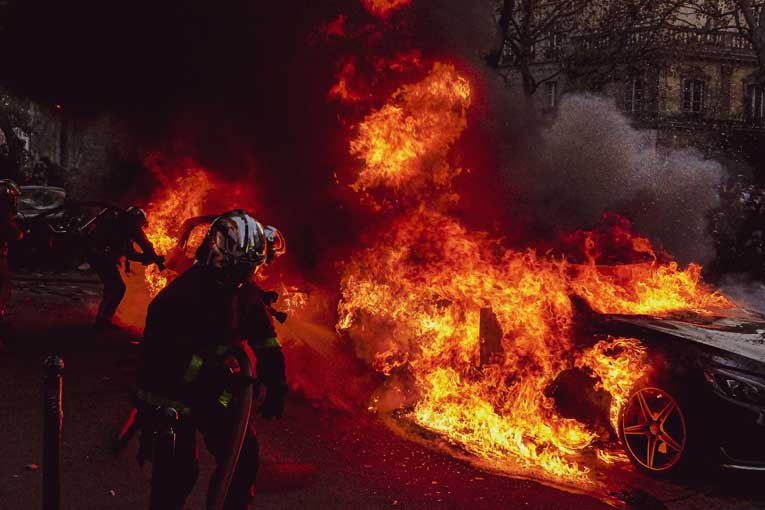
Class D: Metals
Class D Fire combustible material. Image credit: Pexels
Some types of metal, like sodium for example, are combustible.
Metals help fires to spread as they are good conductors.
And since metals will soften up and start melting when exposed to high temperatures, metal joists and columns could lead to a building to collapse when there’s a fire.
How to Extinguish Class D Fires
First of all, it’s important to point out that water can act as an accelerant on fires involving metals.
Hence it’s crucial to avoid using a common water extinguisher if you’re dealing with a Class D fire.
It’s recommended to use dry powder extinguishers in such cases.
In the case of a small fire, one can also use sand or dry earth to smother it.
Class E: Electrical
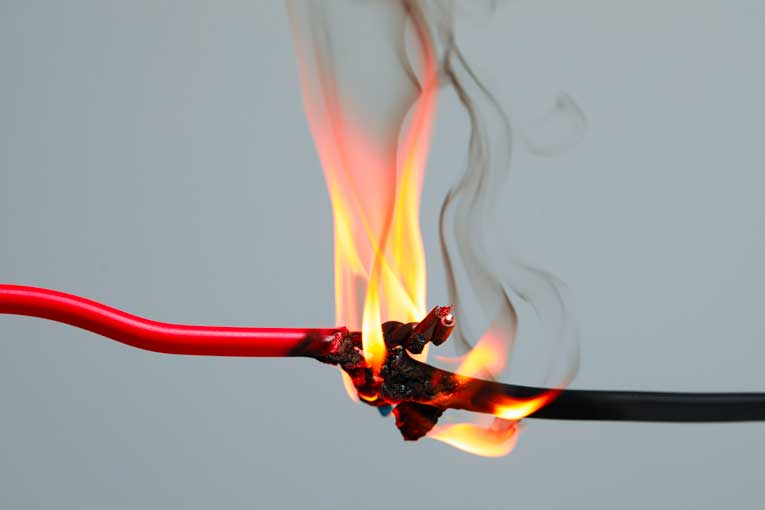
Class E Fires are started by electrical faults. Image source: Shutterstock
Electrical fires are not assigned a full class since they can fall into different classifications.
Hence Class E is not strictly a class as electricity is essentially a source of ignition.
How to Extinguish Class E Fires
In the case of electrical fires, it’s crucial not to use any water.
The best type of fire extinguisher to use on such a fire is the CO2 extinguisher.
One may also use dry powder extinguishers which may still be effective in the case of low voltage.
If possible, always turn off the power supply when tackling such a fire.
Class F: Cooking Oil & Fats
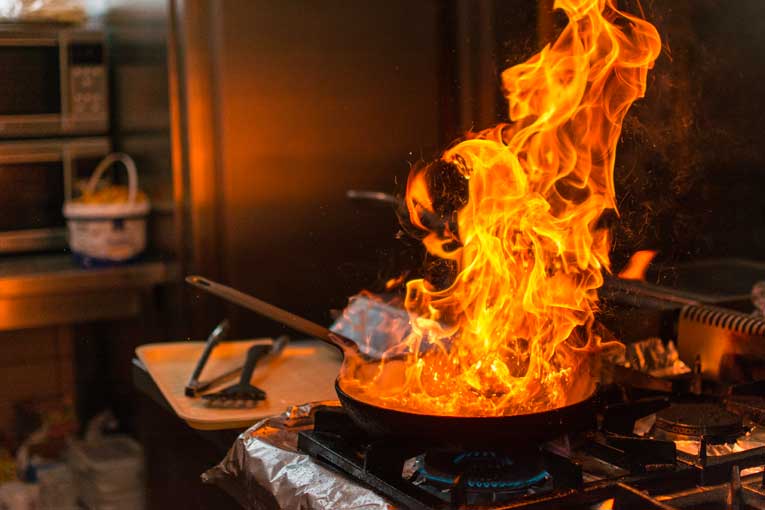
Class F Fire combustible material. Image source: Shutterstock
When cooking oil, deep fat frying and spills of flammable oils are close to heat sources a Class F fire can arise.
This is a fire which is common in commercial kitchens, but it can also occur in residential homes.
It’s important to avoid leaving any frying equipment unattended while it’s being used.
Class F fires are quite hard to extinguish due to the heat from the oil.
Also, should the wrong type of extinguisher be used, it can lead to the fire spreading easily.
How to Extinguish Class F Fires
Class F fires should be put out using wet chemical extinguishers.
This is the only type of extinguisher that is approved for use on cooking oils and fats.
A fire blanket can be effective if the fire is small.
Different Types of Fire Extinguishers
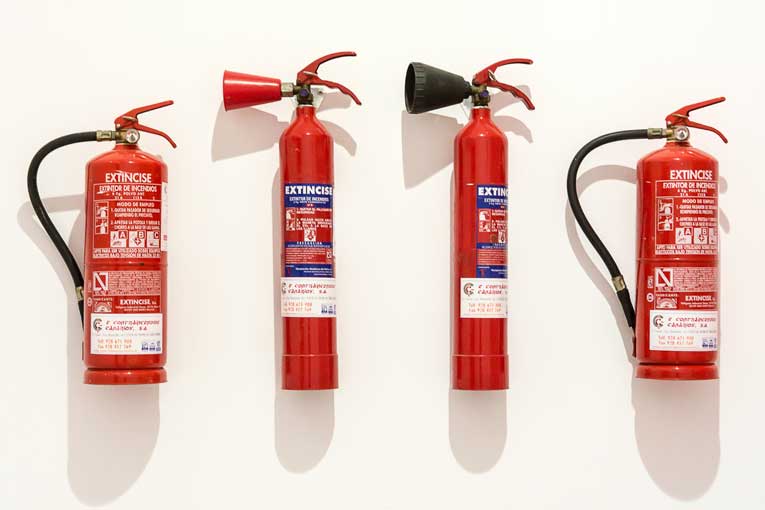
Wall Mounted Fire Extinguishers. Image credit: Pexels
By now you should have a better understanding of the different classes of fires that require certain fire extinguishers to be extinguished.
The following is a complete list of the various fire extinguishers that exist.
Water (Class A)
A water based fire extinguisher is used when there are Class A fires involving combustible materials.
Most premises are required to have this type of fire extinguisher and hence you will typically find it in offices, hospitals and schools.
Foam (Class A & B)
In the case of a Class A or B fire, a foam fire extinguisher is recommended.
This type of extinguisher will perform a cooling function, thereby smothering the burning materials.
The foam will then help to prevent the fire from reigniting.
This type of extinguisher should never be used when there is an electrical source or a kitchen fire.
Powder (Class A, B, C & E)
Dry powder fire extinguishers are very versatile and suitable for different classes of fires, including those involving combustible materials, flammable liquids and gasses.
In fact they are sometimes referred to as ABC extinguishers.
A powder extinguisher will smother the fire by producing a thick barrier which will stop the fuel from being exposed to oxygen.
Such an extinguisher should not be used in confined spaces since the powder can be inhaled.
It also leaves a residue which is quite difficult to clean up.
These types of extinguishers are often found in commercial workspaces, especially those where welding is involved, and boiler rooms.
CO2 (Class B & E)
A CO2 extinguisher contains carbon dioxide.
It suffocates the fire as it transfers the oxygen which would otherwise be used for burning.
This type of extinguisher is suitable for Class B and E fires, that is those involving flammable liquids or electrical fires.
L2 (Class D)
L2 Dry powder fire extinguishers are ideal for Class D fires, that is those involving metals.
Wet Chemical (Class A & F)
Wet chemical fire extinguishers are to be used in the case of Class F fires where cooking oils and fats are present.
They can also be used for Class A fires.
They are thus a must have in commercial kitchens and canteens.
This fire extinguisher will create a layer of foam on the oil or fat that is burning, and so no more oxygen can reach the fire, thereby extinguishing it.
MultiCHEM (Class A, B & F)
MultiCHEM fire extinguishers are ABF-rated.
They are ideal for fires involving flammable liquids, even in cases when there are large quantities of fuel, or a large surface area.
It’s also suitable for deep fat fryer fires
Water Mist (Class A & F)
Water mist extinguishers are suitable for Class A and F fires, and so they are commonly found in various settings.
They work by producing a mist, which cools down the fire and also cuts off the oxygen supply.
Conclusion
A basic understanding of different classes of fires and the most suitable fire suppression to be used is important for fire safety.
We hope that now you have a clearer understanding of the various classes of fires and which fire extinguisher/s to invest in to be well prepared in case a fire broke out.
Vicki Quint from the Foam Exposure Committee highlights the impacts of PFAS-containing foam from two incidents in Illinois
Laws and regulations are being enacted worldwide on aqueous film-forming foam (AFFF).
USEPA voluntary stewardship PFAS programs have not proven effective for protecting firefighters or public health.
Individual states are taking initiative.
As firefighters and citizens are becoming more aware, the change to F3 foams is occurring.
Fire chiefs should be aware of the PFAS issues that will be created in their communities if AFFF is used.
Morris Illinois lithium battery warehouse
In June 2021, a major fire erupted at a lithium battery warehouse in Morris, Illinois.
Despite officials and first responders initially being unaware, the building contained 180,000 pounds of lithium-ion batteries, contrary to the belief that it had been unoccupied for 35 years.
The old paper mill warehouse’s cause of fire remained unidentified.
Chief Steffes stated that early firefighting efforts with water led to significant explosions.
Within a short time, a company employee alerted first responders about the lithium batteries inside.
The Morris Fire Department, having never tackled a lithium battery fire previously, ordered the evacuation of roughly 4,000 out of the town’s 13,000 residents due to toxic fumes, smoke, and the risk of explosions.
One of the dangerous byproducts of the burning lithium is fluorine gas.
According to a USEPA report, on 30 June, around 2pm, the fire department accessed a fire by removing a building wall, uncovering a 30-by 40-foot area of burning batteries.
They attempted to put out the fire using Purple K at 3:30pm, but it was ineffective.
By 6pm., they began applying Portland cement to the battery area and other hot spots.
By 11pm, cement application was complete with no further smoke observed from the batteries.
The Morris Fire Department led the response, with guidance from the US EPA, while the Illinois EPA monitored water runoff.
Chief Steffes remarked that 1,000 pounds of Purple K barely impacted the fire, but 28 tons of dry Portland cement ultimately smothered the burning lithium-ion batteries, extinguishing the active fires.
OSHA and EPA have both clarified that the article exemption does not apply to lithium-ion batteries which are subject to OSHA HazCom regulations.
Some believe: “The cause of the fire—and what was inside—has potentially profound ramifications for our clean energy future.”
This fire occurred less than one month after the Chemtool industrial fire in Rockton, Illinois.
According to a news source: “Special resources still in the area from that fire are now being utilised in Morris.” But, those resources obviously did not include using the same firefighting foams from the Chemtool incident.
An attorney involved in the case later made the statement that sand should have been used at the incident instead of cement.
However, a retired fire chief of the Foam Exposure Committee responded by noting that the attorney: “Should better focus on his own profession.”
It appears the incident commander made the proper decision based on his experience and best knowledge.
Sugar Camp Coal Mine
A significant fire broke out at Sugar Camp Coal Mine in Southern Illinois, where Foresight Energy utilised PFAS-laden foams.
This happened just two months after regulators instructed a Louisiana-based contractor to employ safer firefighting foams at another site, the Chemtool facility.
Foresight Energy dispensed 46,415 gallons of PFAS foam concentrate into their mines.
One of the company’s lawyers assured state officials that the foam was biodegradable and wouldn’t harm aquatic life.
However, subsequent inspections pointed to potential contamination risks for nearby private wells and drinking water sources.
A comprehensive report revealed that the total firefighting foam used was 50,390 gallons.
According to a local fire chief, no municipal or district fire departments were involved in the coal mine fire.
The private fire and responses remained secret until a local environmental activist’s photographs showed that foam had drifted to above-ground ditches and farm fields near the mine entrance.
E-mails from 1 September showed that Illinois EPA did not begin looking into potential harm to people and wildlife until three weeks after the mine was evacuated.
According to Illinois EPA, they: “Received an incident report from the National Response Center on September 1, 2021, that firefighting foam possibly containing PFAS was seen in surface water in an unnamed creek near the mine.”
WMIX94 radio reported: “Records show that company officials also hired contractors to drill boreholes illegally into the mine without a permit.
One of those boreholes is close to a creek that was found this month to have high levels of PFAS.”
A 2016 National Pollutant Discharge Elimination System (NPDES) permit that authorised Sugar Camp to discharge wastewater at the mining facility did not authorise the discharge of PFAS.
Efforts were unsuccessful in extinguishing the fire which continued for months.
In January 2022, portions of the mine were still smouldering.
During January 2022, Illinois Attorney General Raoul filed a lawsuit because of the firefighting foams used: “Including at least 660 gallons of concentrated PFAS-based foam, deep into the underground coal mine.”
Further, according to Attorney General Raoul: “Sugar Camp jeopardised public safety and irresponsibly violated both state environmental and the constraints of its permit by misusing dangerous ‘forever chemicals.’”
At this time, the Illinois Attorney General has filed lawsuits in all three cases: Chemtool fire in Rockton, Lithium Battery Warehouse fire in Morris and Sugar Camp coal mine fire in Southern Illinois.
Despite growing concerns, AFFF is still actively being sold by distributors.
There are existing stocks of PFAS foams on hand at various establishments including fire departments, airports, and industrial operations.
Notably, state governments are showing a quicker response to the AFFF and PFAS issue than the federal government.
This rapid state action is probably because, as there are delays in transitioning to F3 foams, there’s an increased involvement from other parties, such as state legislators and legal entities.
For 70 years, the fire service remained unaware of the toxic nature of PFAS in AFFF, putting Incident Commanders at a disadvantage during emergency decision-making.
AFFF utilised in an emergency incident will create another emergency incident.
Awareness of PFAS in foams must be based upon more than just marketing materials.
Fire departments cannot make a successful transition to F3 foams without correct information.
This article was originally published in the October 2023 issue of International Fire & Safety Journal. To read your FREE digital copy, click here.
As the fire suppression sector undergoes rapid changes, Fomtec sets a new benchmark with its International Foam School
In the ever-evolving landscape of fire safety, leading foam solutions provider Fomtec is pioneering change not just in products, but in knowledge sharing and education.
Established in 2001, the company has made its mark with a customer-centric approach, a relentless pursuit of innovation, and a strong commitment to sustainable alternatives to traditional fire suppression systems.
Now, they are taking a bold leap forward, launching their inaugural International Foam School programme in Helsingborg, Sweden.
This initiative represents a significant step towards collective advancement in the industry, underscoring Fomtec’s commitment to equipping professionals with the knowledge and tools needed to face the future of fire safety.
In this exclusive interview with John Ottesen, Owner of Fomtec, IFSJ delves into the genesis of the programme, its curriculum, participant experiences, and the learnings gleaned from its inaugural run, and how the International Foam School is set to shape Fomtec’s future growth and the fire safety industry at large.
What inspired Fomtec to create the International Foam School programme?
The inspiration for creating the International Foam School programme stemmed from my personal experience.
Early in my career, I attended a foam school that deeply influenced me.
This experience not only shaped my professional journey but also played a crucial role in founding Fomtec.
Much of what we teach in our programme has been influenced by what I learned in that school.
We integrated many elements from the materials provided there into our own manual, refining and expanding upon them.
The significance of foam schools in my personal growth inspired me to establish something similar, but uniquely tailored by Fomtec.
The knowledge and tools I acquired from that school stayed with me for decades.
The manual I received during that training remained on my desk for 30 years until we crafted our own.
Now, our comprehensive manual has taken its place, embodying our extensive research and expertise.
At Fomtec, we firmly believe in a fact-based approach when it comes to firefighting and designing fire suppression systems.
Without an in-depth understanding of the foams, the guiding standards for system design, and the diverse applications of foam systems, it is challenging to effectively utilise data.
Our Foam School aims to provide that solid foundation for professionals in this field.
What is on the curriculum at Fomtec’s International Foam School?
Foam School allowed me to realise an ambition I’ve held for many years: creating a comprehensive Foam Manual.
We’ve produced a 500-page manual which delves deep into topics ranging from foam concentrates, hardware, and design standards to pertinent applications, inclusive of calculation examples and design data.
Our Foam School curriculum is structured around this manual, which we’ve aptly named “The Foam Manual.”
The manual I had from earlier served as an inspiration or a template for what I aimed to create.
While the fundamental issues in the world and the applications remain unchanged, the ways we address these issues and the products we use have evolved, especially on the chemistry side.
On the hardware end, much of the old equipment persists, but there’s new technology now as well.
There’s been an evolution in both equipment and foam over the years.
The applications we aim to safeguard remain consistent.
My approach in crafting this manual was to focus on these applications.
We constructed the manual systematically, chapter by chapter, discussing protection strategies for each specific application.
I drew a lot from the older manual’s essence, updating it to be relevant to 2023, including aspects like fluorine-free foam.
The manual is a substantial binder.
Inside, there are chapters dedicated to foam concentrate and hardware.
It delves into specific applications, offering readers clear guidance.
For instance, if a student wishes to design a sprinkler system, they’ll find a step-by-step guide on the process and references to the relevant standards to make their design appropriate and effective.
Our main goal with Foam School is comprehensive education.
We’re aware there’s a vast amount of information to grasp.
While we don’t expect students to remember everything immediately, we aim to equip them with the tools to facilitate continuous learning.
Through our program, they learn to execute relevant calculations and are pointed towards pivotal resources like NFPA standards to navigate further.
What are your aspirations for foam school attendees?
Foam School aims to provide comprehensive training in a relatively short period – three days, to be precise.
While this is undoubtedly a brief duration, our role is to guide students in the right direction.
We conduct in-depth presentations, working alongside students through each application, engaging in hands-on calculations to ensure they grasp the core concepts.
The methodology we employ is similar to that which I experienced in my training 30 years ago.
Although one doesn’t master everything immediately, it’s the consistent revisitation of materials, particularly the manual and industry standards, that fosters deepened understanding.
This repetitive process, which I found invaluable in my own learning, is something we hope our students will adopt.
Foam School is not simply about experimenting with foam in a simulated environment.
It’s centred on imparting knowledge on designing real-world foam systems, both portable and fixed, strictly based on established design standards.
Our curriculum offers a holistic exploration of firefighting with foam.
It begins with an introduction to foam concentrates, covering their varied properties, delving into environmental considerations, discussing PFAS transition topics, and explaining system design standards.
The course goes into detailed examinations of all primary applications, incorporating design exercises, and culminating in an examination.
Our aspiration is for students to leave Foam School proficient in using The Foam Manual and industry standards to execute impeccable system designs.
Can you share some key insights or takeaways from the first iteration of the programme?
One of the primary realisations was the sheer volume of content to be addressed within the span of 3 days.
Despite this, the overwhelming feedback was that students left with an enriched understanding, irrespective of their initial expertise.
It’s noteworthy that the Foam School immerses students into the latest data, with SFFF being the principal product demonstrated across our calculation examples.
We extensively leverage the findings from the Fomtec Enviro Programme, encompassing over 2000 fire tests and the subsequent approvals we’ve garnered.
While the learning trajectory proved steep for some participants, we confidently met our core objective: guiding students towards a data-driven comprehension of foam and its associated systems.
How have participants responded to the International Foam School programme?
The feedback has been overwhelmingly positive from every student.
While it might be premature to make extensive assessments, my strong perception is that Foam School has reshaped many students’ perspectives on the subject and will influence their future professional approaches.
As a supplementary initiative, Fomtec plans to host follow-up webinars targeting specific areas of interest for the cohort.
Was Fomtec’s “data not opinion” mindset influential in developing the programme?
At the heart of Foam School’s curriculum lie the NFPA standards and FM Data pages, serving as the foundational pillars for our foam systems design approach.
What’s advantageous about this framework is the alignment in thinking between NFPA, FM, and us at Fomtec – the shared belief in a fact-driven, holistically approved methodology.
We then apply our products to practical examples spanning all pertinent applications, ensuring their utilisation remains within documented and approved limits.
For many participants, it’s a revelation to see how intricately everything interlinks and how even minor data omissions can compromise an entire design.
Does the school tackle to the industry transition away from PFAS-containing foam?
Foam School plays a pivotal role in this transitional phase.
While there’s a widespread desire for direct drop-in replacements, the reality is such replacements aren’t feasible.
With our new SFFF products not having the same leniency as traditional PFAS-based foams, the necessity for comprehensive knowledge becomes paramount to ensure a safe shift away from PFAS-laden solutions.
Relying on data and practices that are several decades old is untenable.
This is where Foam School becomes invaluable in the PFAS transition journey.
Ignoring this reality poses a grave risk, with potential consequences for both life and property.
How does the International Foam School fit into the future of Fomtec?
The Foam School is set to be a cornerstone in our future endeavors, with plans to introduce new classes approximately every six months.
As we progress and engage with diverse batches of students, we intend to tailor the curriculum to cater to specific audiences, such as Distributors, Contractors, End Users, Consultants, and Insurers, among others.
Our overarching goal is to unify everyone under a common vernacular concerning foam, emphasising a discourse rooted in data, not opinion.
In many ways, this is a language school, and we want as many people in the industry as possible to speak Fomtec.
This article was originally published in the October 2023 issue of International Fire & Safety Journal. To read your FREE digital copy, click here.
The Foam Exposure Committee (FEC) has released its latest bulletin, Bulletin #81, that offers new insight into the Finished Foam PFAS amounts contained in various AFFF (Aqueous Film Forming Foam) delivery systems.
Vicki Quint of the FEC has emphasised that the finished foam PFAS amount is a significant concern, as this is the actual PFAS amount contained in the delivery system.
According to the FEC, the PFAS level in the container remains consistent upon release into the environment.
To illustrate, if a 5-gallon pail of AFFF were to be discharged into a large body of water, that water would measure the same PFAS level present in the pail.
Bulletin #81 Highlights
5 Gallon Pail: Contains 5 gallons of AFFF, resulting in 166 gallons of Finished Foam.
Fire Apparatus: Contains 30 gallons of AFFF, resulting in 1,000 gallons of Finished Foam.
Tote (53 5 Gallon pails): Contains 265 gallons of AFFF, resulting in 8,833 gallons of Finished Foam.
Foam trailer: Contains 500 gallons of AFFF, resulting in 16,666 gallons of Finished Foam.
ARFF (Class 4): Contains 630 gallons of AFFF, resulting in 21,000 gallons of Finished Foam.
Aircraft Hangar: Contains 1,200 gallons of AFFF, resulting in 41,200 gallons of Finished Foam.
Foam capacities
The FEC has also recently included data concerning aircraft hangars, which have large foam capacities.
This decision followed constructive dialogue with hangar employees on Linkedin.
Bulletin #79 had been instrumental in educating a state fire marshal in the US about these significant foam capacities in aircraft hangars.
For detailed information on past bulletins and to learn more about the FEC’s continuous efforts to monitor and report on foam exposures contact: Vicki Quint of the Foam Exposure Committee.
23rd International gathering focuses on evolving water mist technology
Key dates announced for participants and sponsors
Antwerp is set to host the 23rd International Water Mist Conference (IWMC) in September 2024.
This announcement was made by outgoing President of the International Water Mist Association (IWMA), Are Wendelborg Brandt, in Copenhagen on 18th October 2023.
The two-day event, scheduled for 18th and 19th September 2024, will be held at the Radisson Blu Astrid Hotel in Antwerp, Belgium.
For further details and information on this upcoming conference, please visit the IWMA website.
Booking opportunities and timelines
Sponsors eager to participate can start booking their tabletops for the accompanying exhibition from 15th January 2024, the same date when the call for papers will be published.
Potential speakers should take note: the final date to submit abstracts for a speaker slot is 15th May 2024.
On this day, the official conference webpage will also be activated and ticket sales will commence.
Conference themes and young talent recognition
The first day of the conference will primarily discuss systems in practice, while the second day will delve into the scientific aspects of water mist technology.
Moreover, the deadline for the IWMA Young Talent Award submissions is 28th March 2024.
This year, the accolade will recognise the best master thesis related to water mist.
IWMA General Manager Bettina McDowell said: “The IWMA scientific council will evaluate the submissions and decide who the winner will be. This is the 8th year in which IWMA bestows this prize.”
The winner will have the privilege to present their thesis at the event.
IFSJ Comment
The annual International Water Mist Conference serves as a crucial platform for experts, stakeholders, and young talents to discuss, learn, and share advancements in the water mist domain.
As the technology continues to evolve, the IWMC’s role in facilitating these discussions becomes even more pivotal.
By focusing on both practical systems and the scientific underpinnings of the technology, the conference offers a comprehensive overview of current trends and future prospects.
This year’s addition of recognising young talent underscores the importance of fostering new ideas and innovations in the sector.
IFSJ Editor Iain Hoey sits down with International Water Mist Association outgoing President Are Wendelborg
The year 2023 is a crucial year for the International Water Mist Association (IWMA) For one, the organisation celebrates its 25th anniversary.
Furthermore, the current IWMA president Are Wendelborg Brandt will close the annual International Water Mist Conference for the last time.
His second and final term as IWMA president will come to an end in 2024.
IWMA has now started looking for a successor to follow into his footsteps.
In this interview Are Wendelborg takes a look back at 25 years of IWMA, his time as IWMA president and also talks about the achievements regarding the water mist technology.
How did you become interested in water mist technology?
I started my academic education with a B.S. in electrical engineering in Norway, after a year as trainee at Fire Hazards and Quantitative Risk Assessment Group at Shell Research Limited (Thornton, England) I went on to the University of Leeds, where I finished a Master of Science in Combustion and Energy in 1997.
I then moved back to Norway where I was offered a job as research scientist at the Norwegian fire research laboratory (SINTEF NBL).
At that time the focus on water mist had increased due to the ban of halon and several large incidents like the one on the Scandinavian Star on 7th April 1990.
158 people were killed in a fire onboard the ferry – nearly 50 per cent of people on board.
It was therefore natural that a lot of work went into the development of the water mist technology and the standard for documenting the extinguishing effect.
The main focus in the early phase was towards the maritime market but it has since also included many land-based applications.
What unique facets of water mist technology fascinated you?
Water is a fascinating extinguishing media with unique properties.
In addition to being a clean environmentally friendly extinguishing media it has the ability to attack all three sides of the fire triangle.
With the right application of water mist, you can get an inerting effect just like with a gas extinguishing system, wetting of the surfaces as a traditional sprinkler system in addition to cooling of the atmosphere.
This makes water mist extremely versatile.
What inspired you to run for IWMA president?
I was recruited in to the IWMA by Ragnar Wighus, who was my colleague and mentor at the Norwegian Fire Research Laboratory (now RISE Fire Research AS) and were accepted into the Scientific Council in 2009.
When Ragnar announced his retirement in 2018, he encouraged me to run for the IWMA presidency.
I think the best pieces of advice he has given me was to look for opportunities, to further develop the technology and to avoid focussing on the problems.
How would you sum up your tenure as IWMA president?
It is difficult to single out one highlight, but I have to admit that I have really enjoyed the privilege of participating in hosting the annual conferences.
It is always a great pleasure to meet all the people in the community, both new and old, and see things have developed during the years.
In regard to a key achievement, I think the establishing of the new land-based water mist standard (EN 14972) must be singled out as the most important event for IWMA the last few years.
A lot of people have devoted a lot of time and effort during the last 20 years into achieving this and I believe it has done a lot for the acceptance of the water mist technology.
The most challenging period for us was – as for so many others – the Covid year when we had to cancel the conference.
That period was challenging both socially and financially for IWMA.
How has water mist technology evolved?
There is a rapid development within electronics, and this has now started to be integrated into water mist systems.
Evolving from that are more intelligent systems that can utilise and optimise the use of water.
How can global adoption of water mist technology be increased?
In my personal view I think that working together with the traditional sprinkler industry to promote water as the best extinguishing medium can possibly open up new markets that both the water mist industry and the sprinkler industry can benefit from.
In addition, the work on extending the EN 14972 is important to get a more general recognition.
Which areas have shown significant growth in water mist system use?
The most significant gain is within land-based applications with the new EN 14972 standard.
A lot of effort has also been made towards the challenges with new environmentally friendly buildings technics and the new energy carriers for transport.
Are there any situations where you would advise against the use of water mist systems?
I believe that all types of extinguishing systems have their strength and weaknesses, water mist included.
The important thing is that the people that make the decision have enough knowledge to choose the best extinguishing system for their application and do not just choose the one they are most familiar with.
For water mist there are some challenges with outdoor applications and large open spaces, but these are areas that the industry is working on.
What do you believe are the main advantages of water mist technology?
There are many advantages with using water mist, maybe one of the most important ones is the environmental aspect.
Since water mist systems use significantly less water than traditional sprinkler systems it produces less wastewater from the extinguishing process, it needs thinner pipes hence less materials and it can be used in regions where water is less available.
Will you reman involved with the IWMA and the water mist field post-presidency?
Hopefully, I can still be a resource for IWMA even after I step down as president.
I no longer work at RISE Fire Research, so I will not be as involved in the field of fire extinguishing as I used to be.
However, in addition to my position at the Norwegian University of Science and Technology I have started my own company, A Brandt Consulting, so hopefully I will still be involved with some projects and stay in touch with the community.
Reflecting on IWMA’s 25-year history, what association achievement in promoting water mist technology makes you most proud?
I believe that the International Water Mist Association has played a crucial role in getting water mist to where it is today.
Maybe the most important contribution was that IWMA has brought together all stakeholders which are interested and involved in the technology.
The result was the formation of a community that has been and is working together to promote the technology and to make people aware of its benefits – eco-friendliness and all the others.
It has also contributed to making sure that the water mist community is working seriously towards proper use and documentation for the applications where water mist can be used.
Many people are very dedicated when it comes to water mist and I am happy to say that most of them are members of IWMA.
This article was originally published in the October 2023 issue of International Fire & Safety Journal. To read your FREE digital copy, click here.
The latest Fire Dept Service Announcement (FDSA) bulletins have highlighted the standardised amounts of Aqueous Film Forming Foam (AFFF) delivery systems and the Federal Aviation Administration’s (FAA) latest guidelines allowing dual agent use.
Airports will be using AFFF and F3 foams as they convert fully to F3s.
Bulletin #79 provided clarity on AFFF container capacities:
5 Gallon Pails are standardized to hold 5 gallons of AFFF.
Fire apparatuses are equipped with 30 gallons.
Foam trailers, vital for rapid responses, carry 500 gallons.
Specialized ARFFs (Aircraft Rescue and Firefighting vehicles) contain 600 to 1,500 gallons based on their class.
Aircraft hangars are prepped with a massive 1,200 gallons of AFFF.
Bulletin #80 highlighted the different foam tank cell sizes for ARFF delivery systems, with capacities ranging from 100 gallons for Class 1 ARFFs to between 3,000 and 4,000 gallons for Class 5 ARFFs.
Significantly, five years ago the International Association of Fire Fighters (IAFF) had announced back in September 2018 the move toward fluorine-free foams at airport fire departments would be occurring soon.
The FAA, following up on that sentiment, issued a new Cert 139 on firefighting foam in September 2023, which announced one PFAS-free product on the new Qualified Products List (QPL).
Despite these advancements, the current Cert 139 stipulates that dual-agent use will persist at airports, posing ongoing risks of PFAS water contamination in nearby communities.
Highlighting the urgency of this matter, the Department of Defense recently decreed the cessation of fluorinated AFFF procurement containing PFAS concentrations over one part per billion after October 1, 2023.
Contrastingly, US fire departments remain unregulated in their use of AFFF and can change to F3 foams at any time.
These bulletins underscore the ongoing endeavours to balance effective fire suppression with the paramount need for environmental conservation.
The Scottish Government has announced the establishment of an expert working group to evaluate the necessity of installing sprinkler systems in historic buildings that undergo transformation into hotels.
The motivation behind the sprinklers decision
This move follows the tragic Cameron House Hotel fire at Loch Lomond in December 2017.
Two individuals lost their lives in this catastrophe.
An inquiry into these deaths revealed that sprinklers might have “significantly slow the spread of flame and would extend the margin of safety for available escape time”.
The investigation further stated: “It was a real or likely possibility that if sprinklers had been installed and had worked to inhibit the extent and spread of the fire and smoke, Mr Midgley and Mr Dyson would have been able safely to escape the building”.
Subsequent to this inquiry, the Scottish Government initiated a preliminary group to assess the proposed measures.
They have now endorsed the formation of an expert group “to review the mandating of automatic fire suppression systems where historic buildings are being converted into hotels”.
BAFSA’s involvement and perspective on sprinklers
Ali Perry, the Chief Executive of the British Automatic Fire Sprinkler Assocaition (BAFSA), commented on the development: “BAFSA has been engaging with Scottish Building Standards on this issue and we hope to be involved in further discussions going forward”.
Further insights regarding this topic are to be revealed in an upcoming case study titled ‘The Cameron House Hotel Fire – Lessons Learnt’ authored by BAFSA’s Stewart Kidd.
Kidd is also set to present his findings to BAFSA members at their AGM afternoon seminar, scheduled for Thursday, 9th November at The Liverpool Marriott City Centre Hotel.
IFSJ Comment
The devastating Cameron House Hotel fire shed light on a critical gap in fire safety for historic buildings repurposed as hotels.
Ensuring these structures, with their unique architectures and histories, are equipped with modern fire suppression systems like sprinklers can significantly enhance safety margins.
The Scottish Government’s move to convene an expert group for reviewing this is a positive stride towards safeguarding not just the rich heritage these buildings carry, but more importantly, the lives that reside within them.
The discussions and outcomes of this group will likely set a precedent for similar architectural treasures across the globe.
One of the most common questions with regards to fire safety is where are fire doors required?
Fire safety is of paramount importance in any building or structure, and fire doors are an integral part of ensuring the safety and protection of occupants and property during a fire emergency.
These specialised doors are meticulously engineered to serve as barriers against the rapid spread of fire, smoke, and toxic gases, effectively compartmentalising the building and providing valuable time for evacuation and firefighting efforts.
In this article we will answer questions such as where are fire doors required, why fire doors are needed, what materials are used in their construction, what regulations that govern their installation, what safety checks are needed to maintain their functionality and what their cost implications are.
Where are Fire Doors Required?
Where fire doors are required is one of the most common questions raised by new business owners.
They are required by law in all properties that are for business or non-domestic usage.
Fire doors are vital for fire safety
Fire doors play an essential role in various settings to enhance fire safety and protect occupants from the dangers of fire incidents.
They are strategically installed in a wide range of locations, including commercial buildings, residential buildings, industrial facilities, educational institutions, and healthcare facilities.
Commercial Buildings
Fire doors serve a critical role in securing escape routes during a fire emergency, providing occupants with a clear and safe path to evacuate the building.
In various commercial settings, such as offices, hotels, restaurants, and shops, fire doors are essential for ensuring the safety of employees, customers, and visitors.
These doors compartmentalise the building, containing the fire and allowing occupants to safely exit.
Similarly, in multi-occupancy residential buildings like apartments and care homes, fire doors play a crucial role in safeguarding residents.
By preventing the rapid spread of fire between units, fire doors provide precious time for evacuation and help minimise the impact of the fire on the entire building.
Industrial Facilities
Industrial facilities, including manufacturing plants, warehouses, and storage areas, require fire doors to protect both employees and valuable assets.
In these settings, the risk of fire can be significant due to the presence of flammable materials and machinery.
Fire doors play a crucial role in such environments by sectioning the building.
In the event of a fire, the fire doors act as barriers, containing the fire to a specific area and preventing its rapid spread.
This containment allows employees to safely evacuate the affected area and seek refuge in other fire-resistant compartments until help arrives.
By containing the fire, fire doors help to minimise damage to the facility, its contents, and the surrounding areas.
They also provide additional time for emergency responders to arrive and mitigate the situation.
This is vital in industrial settings where a rapid and uncontrolled fire could have catastrophic consequences for both human lives and business operations.
To achieve this, fire doors are strategically installed throughout the buildings.
In educational settings, fire doors are commonly found in corridors, classrooms, and assembly areas.
Healthcare Facilities
Healthcare facilities, including hospitals and clinics, must maintain a safe environment to protect patients and staff.
Fire doors are a critical component of fire safety in healthcare settings, ensuring that patients can be evacuated safely and that critical areas, such as operating rooms and patient wards, remain protected.
Where are Fire Doors Required in a House?
In most residential properties, fire doors are not required by law, however there are exceptions to this rule.
If the property is 3 stories or more, for example a block of flats, then a fire door is needed on every floor where a room connects onto the stairwell.
Also, if a garage connects directly to a property with access via a door, then the door must comply with fire safety regulations.
Some property owners install fire doors where not required by law, just to increase fire safety in the property.
If fire doors are installed in a house, then they are strategically placed in key areas to prevent fire spread:
Kitchen: Fire doors in the kitchen separate it from living spaces, containing potential fires.
Garage: Fire doors are crucial if the garage has direct access to living areas.
Basement: Fire doors may be necessary in the basement to protect escape routes and contain fires.
What Do Fire Doors Do?
Fire doors serve as essential components of passive fire protection measures, providing critical barriers to contain flames, smoke, and toxic gases in the event of a fire.
When a fire occurs, the proper functioning of fire doors can significantly impact the safety of building occupants and the overall integrity of the structure.
Fire doors can help stop fire spreading to other parts of buildings
One of the primary functions of fire doors is their ability to compartmentalise a building.
When closed, fire doors form a seal between different areas of the building, preventing the rapid spread of fire and smoke to other parts of the structure.
By containing the fire to its point of origin, fire doors effectively limit the extent of damage and provide occupants with valuable time to evacuate the building safely.
What are Fire Doors Made From?
Fire doors are made from various materials with excellent fire-resistant properties, ensuring that they can withstand high temperatures and intense heat.
Timber
Timber is a commonly used material for fire doors, valued for its aesthetic appeal and reliable fire protection.
Solid timber fire doors offer a classic and natural look, making them a popular choice for residential and commercial buildings alike.
Timber fire doors are available in various finishes and can be customised to complement the overall interior design of a space.
The thickness and quality of the timber used in the door’s construction determine its fire-resistant capabilities.
Steel
Steel fire doors are another widely used type of fire door, particularly in commercial and industrial settings.
Steel doors offer exceptional strength and durability, making them suitable for high-traffic areas and locations with more stringent security requirements.
Steel fire doors are commonly found in industrial and commercial properties
Steel fire doors can be coated with fire-resistant materials to enhance their fire resistance, and they are often used in facilities where protection against fire and potential break-ins is paramount.
Composite
Composite fire doors are a versatile option that combines various materials to provide enhanced fire resistance and durability.
These doors typically feature a core made from fire-resistant materials, such as mineral wool or vermiculite boards, sandwiched between layers of other materials like timber, steel, or laminate.
The combination of different materials in composite fire doors creates a door that is both robust and capable of withstanding the effects of fire for an extended period.
These standards are designed to test and assess the fire resistance and integrity of fire doors, ensuring that they can withstand the impact of a fire and provide adequate protection to occupants and property.
Fire Rating
One of the essential aspects of fire door regulations is the fire rating.
Fire doors are rated based on their ability to withstand fire for a specific duration, usually indicated as 30, 60, or 90 minutes.
This fire rating determines how long the door can effectively contain the spread of fire, smoke, and heat, providing occupants with valuable time to evacuate safely and emergency responders to take action.
Integrity
In addition to fire resistance, fire doors must also maintain their structural integrity during a fire.
This means that they should prevent the passage of flames and smoke, forming a barrier that can effectively contain the fire to a specific area of the building.
The ability of fire doors to maintain their integrity is critical in preventing the rapid spread of fire, protecting other parts of the building and allowing a more controlled response to the emergency.
Self-Closing Mechanism
Another essential feature of fire doors is the self-closing mechanism.
Fire doors should automatically close and latch when not in use, ensuring that they are ready to act as a barrier in case of a fire.
This self-closing mechanism helps prevent the accidental propping open of fire doors, which could compromise their effectiveness during an emergency.
Labelling
To provide clear and easily accessible information, fire doors should have appropriate labelling.
The label on a fire door typically indicates its fire rating and compliance with safety standards.
This labelling helps building occupants and emergency responders quickly identify fire doors and understand their fire resistance capabilities.
How are Safety Checks on Fire Doors Carried Out?
A proper safety check on fire doors is essential to ensure their functionality during an emergency, and has to be done by someone trained in fire door inspections.
Here are some key steps to include in a fire door safety inspection:
Check Closers
Verify that the door closes smoothly and latches securely without any obstructions.
Proper functioning closers are crucial to ensure that the door can effectively close and seal off the area in case of a fire.
Inspect Seals
Ensure that intumescent seals around the door frame and perimeter are intact.
These seals expand when exposed to heat, creating a barrier against the spread of flames and smoke.
Examine Hinges
Check for loose or damaged hinges that could affect the door’s performance.
Hinges should be in good condition and securely attached to the door and frame.
Look for Damage
Check for any cracks, holes, or damage that may compromise the door’s integrity.
Any damage to the door can weaken its ability to withstand fire and limit its effectiveness in containing flames and smoke.
Test Latching
Confirm that the latch engages correctly with the strike plate when the door is closed.
A properly functioning latch ensures that the door remains closed and prevents the passage of smoke and flames.
Evaluate Gap Sizes
Ensure that the gaps around the door are within the specified limits.
Properly sized gaps are essential for the door’s fire resistance, as excessive gaps can allow the passage of smoke and flames.
Regular fire door inspections are critical to maintaining their effectiveness in fire safety.
If any issues are identified during the safety check, prompt repairs or replacements should be made to ensure that the fire doors are ready to perform their vital role in protecting lives and property during a fire emergency.
Previously, inspections were conducted every six months to ensure compliance with fire door rules and regulations.
However, with the new regulations in place, there are updated inspection frequencies for different types of fire doors:
Communal Fire Doors
These will now be expected to undergo inspection every 3 months.
This increased frequency aims to enhance safety and ensure that communal areas are adequately protected.
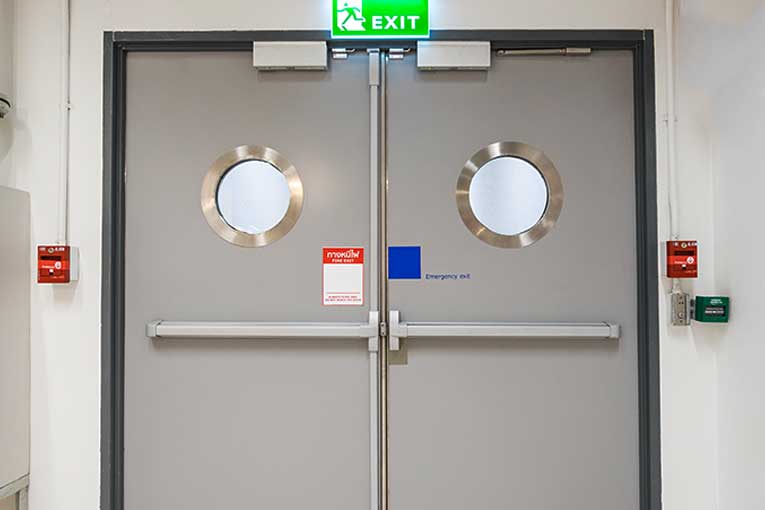
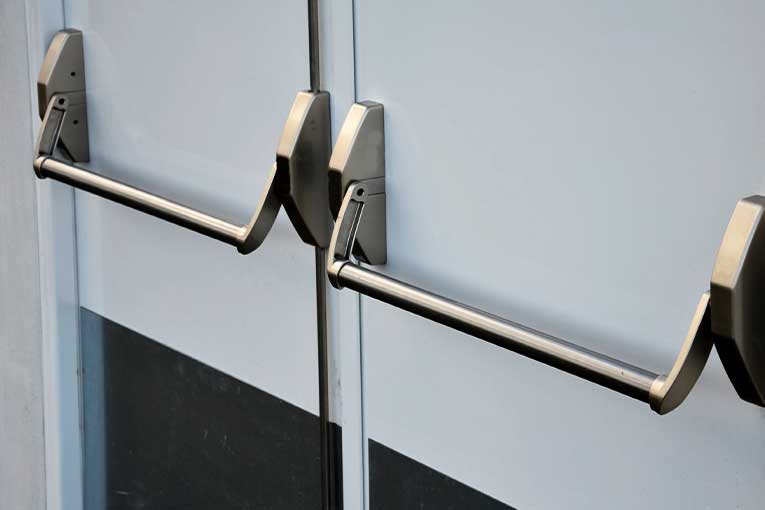
Fire & Escape Doors (FEDs)
FEDs will be subject to inspection at least once a year.
This measure aims to maintain the integrity of escape routes and vital access points in buildings.
Fire and Escape doors need regular inspections to ensure maximum protection against fire
These changes reflect a more proactive approach to fire safety, ensuring that fire doors are regularly checked and maintained to meet the highest safety standards.
Can Fire Doors Have Windows?
Fire doors are designed with the option of including vision panels that are equipped with fire-resistant glazing.
These vision panels offer the advantage of visibility between different areas, allowing natural light to pass through while maintaining fire safety regulations.
High-quality fire-rated glass can withstand temperatures of up to 900 degrees Celsius, over seven times that of normal glass.
Moreover, it can maintain its integrity for over 60 minutes, effectively preventing the fire from spreading and providing ample time for evacuation and fire personnel to respond.
By following these regulations, property owners can strike a balance between safety and functionality, providing occupants with both fire protection and the convenience of visual communication within the building.
How Much Do Fire Doors Cost?
The cost of fire doors can vary significantly depending on several factors.
The primary determinants of the price include the material used, the fire rating of the door, its size, and any additional features it may have.
Here are some key factors that influence the cost of fire doors:
Material
Fire doors can be made from various materials, including timber, steel, and composite materials.
Each material has different characteristics and price points, with steel doors generally being more expensive than timber doors.
Fire Rating
Fire doors are assigned specific fire ratings, indicating the duration they can withstand exposure to fire.
Doors with higher fire ratings tend to be more expensive due to their increased fire resistance capabilities.
Size
The size of the fire door is another important factor in determining its cost.
Larger doors may require more materials and hardware, resulting in a higher price.
Additional Features
Some fire doors come with additional features, such as vision panels, glazing, or special hardware.
These features can add to the overall cost of the door.
The cost of a standard fire door can vary because of these factors, with a low-end fire door being rather low cost, to the upper end coming in with a price tag in the thousands.
However, it is essential to consider that investing in high-quality fire doors is a crucial aspect of ensuring fire safety in any building.
Fire doors play a critical role in preventing the spread of fire and protecting lives and property.
Therefore, it is recommended to prioritise the quality and compliance of fire doors over cost considerations to ensure the utmost safety and security in the event of a fire emergency.
Conclusion
Fire doors are indispensable components of fire safety measures, protecting lives and properties during emergencies.
Having an answer to the question of where are fire doors required, as well as their functions, materials, regulations, and safety checks is essential for creating a secure environment.
Whether in commercial buildings, residential properties, or industrial facilities, the proper installation and maintenance of fire doors contribute significantly to fire prevention and enhanced safety for occupants.