Rosenbauer deliver 100th RTE Robot to Munich

Rosenbauer handed over the 100th RTE Robot to the district of Munich, alongside its regional sales partner BAS.

The anniversary vehicle will go to the Gräfelfing Volunteer Fire Department. The RTE Robot is based on the 800 chassis (payload: 625 kg) and is equipped with a T5 remote control including video transmission, an RM15 thrower module (1,600 l/min) and a positive pressure fan that can be operated together with the thrower. The fire department will install a larger fan on another empty base module.

Before placing the order, a comprehensive market survey was conducted, during which all candidates underwent practical testing. The RTE Robot was chosen for its compact design (pallet size), off-road capability, modularity, and versatility, leading to Rosenbauer being awarded the contract.

Munich District Fire Inspection’s statement

Munich District Fire Inspection spoke on the arrival of the RTE Robot saying: “With the delivery of the third RTE Robot to the Gräfelfing Fire Department, the Munich district now has excellent area coverage in case of emergencies.

“This location was the missing piece identified during the evaluation of applications from fire departments two years ago, ensuring efficient coverage of the western and southwestern parts of the district,”

Features of the robot

The Munich District acquired three fully equipped RTE Robots. Heimstetten, Hohenbrunn, and Gräfelfing were chosen as bases. The first two devices were ordered in 2023 and delivered in March 2024. In June 2024, the district placed the order for the third RTE Robot, stationed in Gräfelfing.

Each RTE Robot order included the chassis with thrower module, ventilation module, and a module for transporting roll containers, including roll containers from Rosenbauer. These RTE Robots can function as fire-fighting robots, ventilators, smoke extractors, and for transporting heavy equipment in difficult terrain. The modules can be quickly and easily swapped at the site without tools or effort.

During the procurement phase, the specific needs of the fire departments were taken into account, and practical experience was incorporated into the design. After delivery, a development partnership was established with the Heimstetten and Hohenbrunn fire departments to test new accessories in practice and implement feedback into technical improvements.

Area Sales Manager Equipment/ Firefighting Systems, Rosenbauer Germany, Martin Lazar’s statement

Martin Lazar, Area Sales Manager/ Firefighting Systems at Rosenbauer Germany said: “The 100th RTE Robot for the Munich District represents our ongoing innovation and close collaboration with fire departments.

“It is a great honor to be part of this development and to see how our technologies make a real difference in action.”

Over 100 RTE Robots have now been produced, more than half of which were assembled in 2024. The roll containers are manufactured in Neidling, while the assembly of the tracked vehicles and superstructure modules takes place in Leonding.

In addition to Germany, the RTE Robots are already in use by fire departments in Austria, Denmark, Singapore, the Philippines, Taiwan, Saudi Arabia and the USA.

Munich District has recieved the 100th RTE Robot from Rosenbauer: Summary

Rosenbauer has delivered the 100th RTE Robot to the district of Munich, a moment that has been recognised by Rosenbauer as being a great honour and a chance to see the impact of their technology in action.

Preparing for tomorrow’s rescue challenges with WEBER Rescue Systems

Reda Nouhzani, Middle East and South Asia Area Sales Manager at WEBER SYSTEMS Group, discusses sustainable solutions, e-mobility challenges, and what’s coming at Intersec 2025

Can you tell us about WEBER SYSTEMS Group and your role in the company?

For decades, WEBER SYSTEMS Group has remained a family-owned enterprise where decisions happen close to home and direct communication remains possible.

The organisation started out producing hydraulic equipment and later formed a dedicated division focused on rescue tools, WEBER RESCUE SYSTEMS.

With roots tracing back to the late 1960s, it has developed into a recognisable name for emergency responders who work to free individuals trapped in vehicles, trains and even aircraft.

My role as Area Sales Manager involves guiding regional partners and end-users as they select, implement and maintain our tools.

This ranges from helping them choose equipment that fits their specific requirements to providing product orientations and advice on application techniques.

I also handle inquiries that appear after the initial sale, ensuring that each solution continues to serve responders effectively.

These professional relationships feel more like a network of trusted allies who share practical knowledge.

By maintaining regular communication, offering thorough training and addressing real concerns, we encourage dependable connections that last beyond any single project.

What tools and services does WEBER RESCUE SYSTEMS provide for fire and safety?

WEBER RESCUE SYSTEMS offers a broad range of specialised equipment built to support emergency responders.

The core products include hydraulic cutters, spreaders and rams designed for vehicle extrication.

These tools enable rescuers to free trapped individuals under difficult conditions, whether involving cars, trains, or other transportation systems that require careful and controlled intervention.

In addition to cutting and spreading gear, WEBER RESCUE SYSTEMS provides stabilisation devices like rescue jacks.

These keep vehicles or structures secure, limiting risky shifts during operations.

Teams also have access to entry tools that help break through barriers, granting responders a safer path to trapped individuals.

For lifting heavy objects, there are airbags and other lifting systems that assist in navigating collapsed areas.

Beyond hardware, WEBER RESCUE SYSTEMS supports emergency services with digital solutions.

Online platforms and training resources help manage inventories, document operations and even send alarms.

By integrating training modules and maintenance guidance, these digital tools allow first responders to refine their methods and enhance overall readiness.

How is WEBER RESCUE SYSTEMS addressing the challenges of e-mobility vehicles?

WEBER RESCUE SYSTEMS understands that electric and hybrid vehicles bring unique hazards.

To prepare, the company works closely with vehicle manufacturers to anticipate changing designs and power systems.

This informed approach shapes training programs that show responders how to handle complex electrical components, lithium-ion batteries and chemical risks, ensuring everyone knows the correct steps when faced with unfamiliar conditions.

On the equipment side, WEBER RESCUE SYSTEMS integrates safety features into its tools.

Many devices use insulated materials or non-conductive components, protecting crews from accidental contact with high-voltage lines.

These design choices help maintain a safer working environment during rescues involving electric cars or other e-mobility solutions.

The company also introduces practical containment measures.

For instance, recovery bags offer a manageable option to isolate damaged e-vehicles, avoiding cumbersome and costly containers.

Alongside specialised training and ongoing guidance, these solutions support responders as they navigate the evolving challenges posed by e-mobility incidents.

How does WEBER RESCUE SYSTEMS integrate sustainability into its products and operations?

Over the past several years, WEBER RESCUE SYSTEMS has taken direct action to lessen its environmental footprint.

For example, the Austrian headquarters relies on solar panels that help power the facility.

The company also includes electric vehicles in its fleet and carefully selects natural energy sources, all part of a conscious effort to reduce emissions and shrink its resource use.

Achieving certifications like ISO 50001 and ISO 14001 formalises these measures and ensures continuous improvement.

Staff members receive guidance on cutting down waste, recycling materials and minimising single-use items, weaving practical environmental steps into everyday work processes.

This commitment extends to the tools themselves.

Some devices feature automatic shut-off modes that save power during downtime.

Others rely on battery systems that can be sourced locally, cutting transport costs and unnecessary shipping.

By blending energy-efficient operations, thoughtful resource management and practical tool design, WEBER RESCUE SYSTEMS encourages solutions that last longer and make better use of available materials.

What environmental challenges do rescue teams face and how is WEBER addressing them?

Modern rescue work often involves intricate equipment needs and more complex scenarios.

Responders must deal with alternative fuel sources, unusual materials and changing vehicle structures, which can complicate their efforts.

Finding ways to handle delicate conditions while maintaining safety is an ongoing hurdle.

WEBER RESCUE SYSTEMS supports teams by creating hands-on training events that bring participants from different regions together.

During these gatherings, responders exchange techniques, test various devices and work through realistic scenarios.

Whether facing battery fires or structural collapse simulations, these exercises allow everyone to learn from each other’s practical experiences.

By seeing how others manage new conditions, responders adapt more readily to emerging situations.

In addition to training, WEBER RESCUE SYSTEMS refines its tools to reduce material waste.

Certain cutters, for example, now have replaceable inserts instead of requiring a full blade swap.

This small adjustment extends the equipment’s life and conserves resources.

Overall, these efforts promote a more sustainable approach within the rescue community.

What future trends will shape rescue operations and how is WEBER preparing?

Several new technologies are influencing how rescue units handle their tasks.

Battery-powered vehicles, for instance, continue to introduce conditions that differ from traditional scenarios.

At the same time, drones and advanced data processing tools begin to enter the field, offering responders a better grasp of their surroundings and helping them proceed more confidently.

WEBER RESCUE SYSTEMS addresses these developments by building digital capabilities into its platforms and equipment.

Tools now feature LTE connectivity, enabling teams to share information quickly and track their assets.

This added dimension helps responders make well-informed decisions when circumstances are fluid and time is short.

Looking ahead, artificial intelligence may help analyse data, guide rescue methods and improve overall safety.

WEBER RESCUE SYSTEMS’s existing digital infrastructure sets the stage for integrating such technologies once they prove practical.

As conditions change, the company plans to adjust its devices, training methods and support systems so that emergency teams remain prepared, efficient and ready to handle whatever they encounter.

This article was originally published in the January 2025 issue of International Fire & Safety Journal – to read your FREE digital copy, click here.

Firefighter Ranks in Order (Low to High)

Firefighting is a noble profession that requires bravery, dedication, and skill. 

Firefighters play a crucial role in protecting lives and property from fire hazards. 

The firefighting profession in the U.S. is organised with a clear hierarchy of ranks. 

But what are the firefighter ranks in the U.S.?

Firefighter ranks indicate a firefighter’s experience, responsibilities, and leadership within the department. 

Understanding the different firefighter ranks helps to clarify the structure and functioning of fire departments across the country.

The History of Firefighting in the US

history of firefighting

The Beginning of Firefighting the in US

Firefighting in the United States has a rich history that dates back to the colonial era

The first organised firefighting efforts began in the early 1600s, with bucket brigades made up of volunteers. 

These early firefighters would form lines to pass buckets of water from the nearest source to the fire. 

In 1736, Benjamin Franklin assisted in the creation of the Union Fire Company in Philadelphia, the first formal firefighting company in the colonies. 

This marked the beginning of organised fire departments.

The Evolution of Firefighting

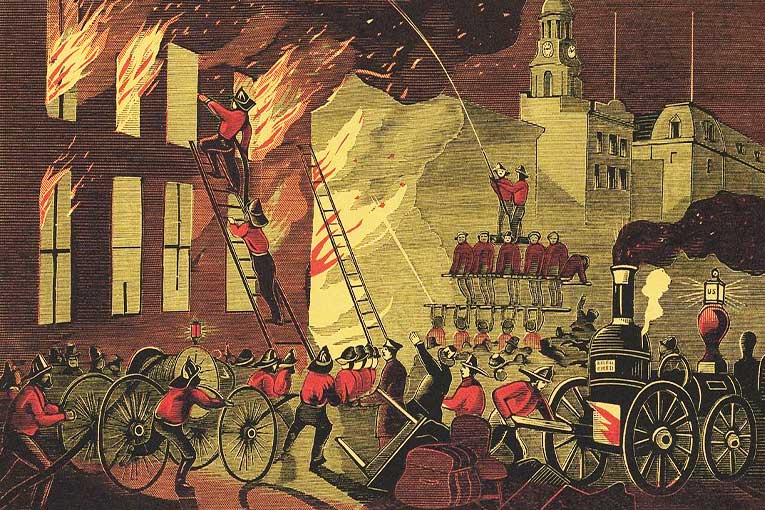
Throughout the 19th century, fire suppression evolved with the introduction of hand-pumped fire engines, steam-powered engines, and, eventually, motorised fire trucks. 

The development of better firefighting equipment and techniques significantly improved the effectiveness of fire departments. 

The formation of paid, professional fire departments in major cities further enhanced the ability to respond quickly and efficiently to fires.

Modern Firefighting

In the 20th century, advancements in technology and communication, along with improved building codes and fire detection and prevention measures, contributed to a significant reduction in fire-related deaths and property damage. 

Today, firefighting is a highly professionalised field, with rigorous firefighter training and a clear rank structure that ensures the efficient operation of fire departments across the country.

Firefighter Ranks in the US

The U.S. fire service is organised into several ranks, each with specific roles and responsibilities. 

The firefighter ranks, listed from lowest to highest, reflect a firefighter’s level of experience, training, and leadership within the department.

Probationary Firefighter

The probationary firefighter is the entry-level of firefighter ranks in the fire service. 

After completing initial training at a fire academy, probationary firefighters are assigned to a fire station, where they gain practical experience under the supervision of senior firefighters.

During the probationary period, which typically lasts six months to a year, new firefighters must demonstrate their ability to perform the duties required of them. 

This includes responding to emergencies, maintaining equipment, and participating in ongoing training. 

Successful completion of the probationary period is required to be promoted to the next rank.

Firefighter

Once the probationary period is successfully completed, the firefighter becomes a full-fledged member of the department. 

Firefighters are responsible for responding to emergency calls, including fires, medical emergencies, and hazardous material incidents. 

They work as part of a team to extinguish fires, rescue victims, and provide emergency medical care. 

Firefighters also participate in ongoing training to maintain their skills and stay updated on the latest firefighting techniques. 

The role of a firefighter is physically demanding and requires a strong commitment to public service.

Driver Engineer

The driver engineer, also known as a fire apparatus operator, is responsible for driving the fire truck to and from emergency scenes. 

In addition to operating the vehicles, driver engineers are responsible for maintaining and operating the pumps, hoses, and other equipment on the fire truck. 

This role requires a thorough understanding of the mechanical aspects of fire apparatus and the ability to operate the equipment under high-pressure situations. 

Driver engineers also assist with firefighting and rescue operations when not engaged in driving duties. 

This rank is typically achieved after several years of experience as a firefighter and requires additional training in vehicle operation and equipment maintenance.

Lieutenant

firefighter ranks lieutenant

A lieutenant is the first level of officer in the firefighter ranks.

Lieutenants are responsible for leading a small team of firefighters during emergency operations and daily activities. 

They are in charge of directing the team’s efforts at the scene of a fire or other emergency, making critical decisions, and ensuring that all safety protocols are followed. 

In addition to their leadership duties, lieutenants are responsible for training and mentoring junior firefighters. 

The role of a lieutenant requires strong leadership skills, decision-making ability, and a thorough understanding of firefighting tactics.

Captain

firefighter ranks captain

The captain is a higher-ranking officer who oversees a larger team of firefighters and often manages an entire fire station. 

Captains are responsible for coordinating emergency response efforts, developing operational plans, and ensuring that all equipment is properly maintained and ready for use. 

They also play a key role in the training and development of their team members, ensuring that they are prepared to handle a wide range of emergency situations. 

Captains are often involved in administrative tasks, such as scheduling shifts, managing budgets, and conducting performance evaluations. 

This rank requires extensive experience, strong leadership skills, and the ability to manage complex operations.

Battalion Chief

firefighter ranks battalion chief

A battalion chief is a senior officer responsible for overseeing multiple fire stations or a specific geographic area within a fire department. 

They manage several teams of firefighters, including lieutenants and captains, and coordinate their efforts during large-scale emergencies. 

Battalion chiefs are responsible for making high-level strategic decisions, allocating resources, and ensuring that all operations are conducted safely and efficiently. 

They also serve as the primary point of contact between the fire department and other emergency services, such as police and medical teams, during major incidents. 

The role of a battalion chief requires extensive experience in the fire service, strong leadership abilities, and the capacity to manage complex, high-pressure situations.

Assistant Chief

firefighter ranks assistant chief

The assistant chief is a top-level officer who assists the fire chief in managing the entire fire department. 

Assistant chiefs oversee major divisions within the department, such as operations, training, or administration. 

They are responsible for developing and implementing department-wide policies, managing budgets, and ensuring that all personnel and resources are effectively utilised. 

Assistant chiefs also play a key role in strategic planning, working closely with the fire chief to set long-term goals and priorities for the department. 

This rank requires extensive experience in leadership and management, as well as a deep understanding of all aspects of fire department operations.

Fire Chief

firefighter ranks fire chief

The fire chief is the highest-ranking officer for firefighter ranks. 

The chief is responsible for the overall leadership and administration of the department, including setting the vision and direction for the organisation. 

Fire chiefs manage all aspects of the department’s operations, from emergency response and training to budgeting and public relations. 

They work closely with city or county officials, other emergency services, and the community to ensure that the department meets its public safety objectives. 

The fire chief is ultimately responsible for the department’s performance and plays a key role in shaping its future. 

This rank requires extensive experience, strong leadership skills, and the ability to manage a large, complex organisation.

How do you get Promoted as a Firefighter?

firefighter promotion

Promotion within the fire service is based on a combination of experience, training, and performance. 

To be considered for promotion, firefighters must meet specific criteria set by their department. 

This often includes a minimum number of years in service, completion of advanced training courses, and demonstrated leadership ability.

Promotions are typically awarded through a competitive process that may include written exams, practical assessments, and interviews. 

The process is designed to ensure that only the most qualified and capable individuals are selected for higher ranks.

In addition to technical skills, leadership and communication skills are crucial for promotion, as higher-ranking officers are responsible for managing teams and making critical decisions during emergencies. 

Continuous learning and professional development are also important, as firefighting techniques and technologies are constantly evolving.

How do you Become a Firefighter?

how to become firefighter

Becoming a firefighter requires a combination of education, training, and physical fitness. 

The first step is to obtain a high school diploma or equivalent, followed by completing a firefighter training program at a fire academy. 

These programs provide the necessary skills and knowledge to perform the duties of a firefighter, including fire suppression, rescue techniques, and emergency medical care.

In addition to formal training, aspiring firefighters must pass a series of physical fitness tests to demonstrate their ability to perform the physically demanding tasks required in the field. 

These tests may include endurance exercises, strength assessments, and obstacle courses.

After completing training and passing the required tests, candidates must apply to a fire department. 

The application process may include additional testing, background checks, and interviews. 

Once hired, new firefighters typically undergo a probationary period, during which they receive on-the-job training and evaluation before becoming full members of the department

Conclusion

You should now have more of an understanding of firefighter ranks. 

Firefighting is a challenging and rewarding profession with a well-defined rank structure. 

Each of the firefighter ranks carry specific responsibilities and reflects a firefighter’s experience and leadership within the department. 

From the entry-level probationary firefighter to the top-ranking fire chief, each position plays a vital role in ensuring public safety and protecting lives and property. 

Becoming a firefighter requires dedication, physical fitness, and a commitment to continuous learning, but it offers the opportunity to serve the community and make a real difference in people’s lives.

How Performance Advantage Company is meeting the needs of modern tools

Greg Young, Senior VP at Performance Advantage Company (PAC), shares insights into challenges in the tool mounting industry and their vision for future growth and innovation

Greg Young is the Senior Vice President at PAC, a US-based manufacturer specialising in innovative tool mounting systems and brackets.

With a legacy rooted in fire truck manufacturing, PAC has grown into an international company, serving sectors such as the fire service, US Navy, and other industries in need of advanced tool organization solutions.

In this exclusive interview with IFSJ Managing Editor Duncan J. White, Greg discusses the evolving landscape of tool mounting solutions, PAC’s innovative approach to addressing industry challenges, and the company’s expansion into new markets.

For those unfamiliar, can you provide an overview of PAC?

PAC is a manufacturer of specialty products of our own design. Our entire product line encompasses tool mounting solutions.

These are special products to hold and organize tools used in various settings and industries.

Born out of the fire industry, PAC has evolved over 30+ years to design and manufacture products for all industries.

The goal of PAC is to provide robust tool, mounting solutions that exceed the needs our customers regardless of industry.

We believe in our staff which has experience across multiple industries.

When we receive a request for support, PAC always has and always will apply the same philosophy: we always provide the best guidance we can.

We are here to support truck manufacturers, equipment resellers, as well as end users through their challenges around tool mounting.

There is another big thing to mention regarding what the PAC company does to serve all the industries. That is distribution and warehousing.

We go above and beyond, keeping levels of inventory that ensure our customers’ needs are met.

In addition to prompt customer service (with real people answering the phone) we’re widely known in the industry for having both extremely fast shipping and very rarely having back orders.

PAC dealers trust us for prompt drop ship orders directly to their customers.

The tool mounting sector has seen significant changes recently. In your view, what are the main challenges driving these changes?

Without question, we’re seeing the largest number of changes surrounding EV’s as well as the electrification of what were historically, pneumatic and hydraulic powered tools.

The suppression and control of EV and battery fires is still evolving. Those tools in that field are still evolving.

We’re seeing many new products come online to help firefighters extinguish, and control battery fires for example.

We’re still watching the industry evolve, knowing it will get to a place where tools and training provide a safe community.

Because these tools are relatively new in the marketplace and various manufacturers continue to bring new concepts, we haven’t yet defined a solution for some of these new tools.

PAC is known for its innovative approach. Can you share how the company identifies and response to emerging needs in the market?

As we talked about before, we often have a tool mounting kit that will work for a brand-new type of tool that just came on the market.

Our team just doesn’t have the knowledge yet to say this kit will work with this new battery cooling nozzle, for example.

So we’re not afraid to work with manufacturers directly. We’re not afraid to work with equipment dealers.

Often times tool manufacturers and dealers approach us for answers. Many of our staff members are end users in various industries. In that way, the PAC staff is excited to identify and innovate as necessary.

We respond to emerging needs in the market as both partners and participants; making careful decisions that impact the well-being and safety of people around the world as well as our own staff.

Can you tell us about any of PAC’s recent products or innovations and their intended impact on the fire service?

Over the last several years, we’ve been asked to look at fire extinguisher mounts for various reasons.

So, a few years ago we developed two products, a 3 pound and a 5 pound extinguisher holder.

These could be mounted to any vehicle or stationary surface and feature our rugged design with easy to release straps.

Building on that, we found customers asking for larger mount for 10-pound extinguishers.

We noted these requests to look at extinguisher mounts correlate to an increasing presence of smaller attack vehicles, which have nontraditional compartments.

Additionally, to fight fires – regardless of how or where they may erupt – law enforcement, landscaping and garbage trucks are carrying extinguishers.

Our new 10 pound extinguisher mount provides an additional solution for mounting oxygen bottles.

Oxygen storage has been lacking from our product line until now! We’re very excited to support our customers around the world that provide critical life saving measures.

With the complexity of tools and vehicles how does PAC ensure its mounting solutions remain relevant and effective?

We understand our products represent an investment by our customers.

For those who use our products, the feedback we receive is that the customer service, product quality and product versatility surpass other solutions.

Additionally, we stand behind our products with a limited lifetime warranty.

So, we believe PAC will continue to be effective partners of the fire industry by providing the promptest service and incredible value.

Can you share an example when PAC adapted its products based on customer input?

We listen to our customers; whether they come to us directly or we come to them at tradeshows or site visits.

For this reason, several products come to mind.

For example, a military truck manufacturer came to us requesting tool mount brackets moulded in camouflage schemed colours.

Other military customers have approached us for products to meet specific military testing requirements outside of the requirements of the fire industry.

We have created and tested several military products that are used in various scenarios around the world.

As PAC expands into new markets, such as marine and industrial sectors, what specific adaptations or innovations are being introduced to meet the unique demands of these environments?

Earlier I mentioned our new 10-pound extinguisher mount, K5046. The requests for this product came from outside of the traditional fire industry.

The design of it, and the size of it are tailored with different environments in mind.

Storage compartments as well as the access an operator has to the tools are much different between a fire truck and a fireboat, for example.

The mounting surfaces outside a utility truck are much different than what are available on a boat hull, or an agriculture roll bar.

So we’re innovating with this knowledge. Tool mounting is needed across sectors.

We’re investigating what our products need to look like for the widest adaptation across industries.

Looking ahead, what trends or technological advancements do you believe will most influence the future of tooling solutions?

We will certainly continue to look at the diversity of our products. Meaning we develop products for from the standpoint of its usefulness across industries.

An example of this is a recently modified kit K5030, Universal Saw Kit. This was originally a kit that we developed for the fire industry that has seen an introduction of electric chainsaws from all types of manufacturers.

So our kit needed to be redeveloped to accommodate all the different chainsaw platforms.

We’ve always look to develop products that have a grip range that accommodates a variety of tools, not so much a line to line fit.

There are dozens of axe manufactures, for example, and they each have different dimensions for the handle and the head, respectively.

It would be easy to design a mount for one brand and one size, but this wouldn’t build customer’s satisfaction.

The right thing to do is build for the long-haul; build for the bigger picture. That’s what we do with all of our products.

But I think the clearest trend ahead of us is the electrification of tools as well as vehicles.

The types of tools carried on a fire truck is certainly undergoing changes and that trend will likely continue for decades.

PAC has a strong presence internationally – are there any plans for further global expansion?

We’re looking for the right partners who can help us bring our high-quality tool mounting solutions to markets outside of North and South America.

This is an exciting opportunity for PAC as we continue to grow globally, ensuring that more first responders worldwide have access to the best equipment to keep their communities safe.

By building strong distributor relationships, we can maintain our commitment to fast delivery, excellent customer service, and support on a much larger scale.

Finally what are PAC’s strategic goals for the coming years, and how do you plan to continue leading in the tool mounting industry?

Well, you know that I don’t like giving away any secrets, but what I can tell you are three things.

Even as we continue to grow, we MUST do what our customers need most:  When you call PAC for service or help, you always get a real person.

As challenging as the labour market is right now, or continuing to promote from within to ensure our customer service needs are met with knowledgeable and prompt service.

When a new fire truck is nearing completion at the factory; it’s time to install tool mounts into the fresh, open compartments.

PAC customers rely on our stock levels and fast shipping to moves that truck from production into service quickly.

So we continue to serve our customers with our on-site warehouse and top notch inventory control.

Finally, we will continue to share knowledge with our customers. We will continue to do in person trade shows and on site customer visits.

We will continue to expand our reach with new technologies, such as our website and email marketing.

Above all else, our mission will remain to do our part, keeping the communities around the world protected.

We’re going to do this by provide our customers the help they need when they need it most.

This article was originally published in the September 2024 issue of International Fire & Safety Journal. To read your FREE digital copy, click here.

FLIR presents latest thermal imaging cameras at firefighter congress in France

FLIR to exhibit at national congress of French firefighters

From 25 to 28 September 2024, FLIR will be participating in the National Congress of French Firefighters in Mâcon, France.

As reported by FLIR, the company will showcase its extensive range of thermal imaging products at Stand C36 during the four-day event.

This annual congress brings together 350 exhibitors and 2,500 participants, attracting tens of thousands of visitors.

FLIR’s Condition Monitoring and Fire team will highlight the latest technologies designed for firefighting and law enforcement professionals.

FLIR firefighting cameras improve visibility in hazardous conditions

FLIR will showcase its range of firefighting cameras, including the FLIR K1, K2, K33, K45, K53, K55, and K65 models.

These cameras are designed to enhance visibility and situational awareness in smoke-filled or dark environments, providing critical support for firefighters.

These cameras use advanced thermal imaging to reveal structural and textural details even in harsh conditions.

The cameras are built to be rugged and user-friendly, ensuring reliability in demanding scenarios.

FLIR’s thermal imaging solutions for law enforcement

FLIR’s stand will also feature products built for law enforcement, including the FLIR Breach® PTQ136 and Scion® models.

The Breach PTQ136 offers high-performance thermal imaging, enabling officers to spot heat signatures in complete darkness.

Additionally, FLIR’s Scion OTM, PTM366, and PTM466 models provide superior thermal surveillance capabilities.

The pocket-sized Scout TKx thermal vision monocular will also be on display, capable of detecting people and objects up to 90 meters away in total darkness.

Condition monitoring technology on display

FLIR will introduce its condition monitoring products, such as the FLIR C5 and Cx5.

The C5 is a portable thermal imaging device that helps identify issues such as hot fuses and air leaks.

The Cx5, certified for use in explosive environments, is designed to reduce the need for permits during T-Class surveys.

Additionally, the FLIR Si2-Pro and Si2-PD models will be on display, both of which offer cost-saving solutions for detecting mechanical and electrical issues.

The FLIR FC-625 AI-R, designed to detect hot spots and combustion risks in outdoor environments, will also be featured.

FLIR presents latest thermal imaging cameras at firefighter congress in France: Summary

Teledyne FLIR will showcase its advanced thermal imaging products at the national congress of French firefighters in Mâcon from 25 to 28 September 2024.

The event will feature FLIR’s latest firefighting cameras, including models like the K1 and K65, which enhance visibility in smoke-filled environments.

Additionally, FLIR will present thermal imaging solutions for law enforcement, such as the Breach PTQ136 and Scion models.

Condition monitoring devices, including the FLIR C5, Cx5, and Si2-Pro, will also be on display, offering cost-saving solutions for detecting equipment issues.

The FLIR FC-625 AI-R, built for detecting combustion risks in harsh outdoor environments, will be another highlight of the exhibit.

Advanced fire hose maintenance with Hosemaster

Exploring Hosemaster’s role in enhancing fire hose durability, streamlining maintenance processes, and ensuring firefighter safety during and after operations

Fire hose maintenance is one of the most demanding post-operation tasks.

Hoses must be washed, pressure-tested, and dried before the next emergency call.

Besides, dirt and carcinogens on fire hoses and other equipment pose significant health risks.

Hosemaster™ offers an advanced and automated solution to fire hose maintenance.

Before the hose can be ready for the next emergency, it needs to undergo a series of essential processes from pressure testing to washing and drying.

This complex maintenance routine is crucial not just for operational readiness but also for ensuring the health and safety of the firefighters.

The dirt and carcinogens that accumulate on fire hoses during operations are a major health concern.

Ideally, these contaminants should be contained at the scene of the fire, rather than being brought back to the station.

Fire hoses, due to their extensive contact with contaminated firefighting water, often carry the largest concentration of harmful particles.

Traditionally, washing a fire hose by hand could achieve the desired cleanliness but at a significant cost to the operator.

Manual washing exposes the firefighter to harmful contaminants repeatedly, as they must handle the hose multiple times during the cleaning process.

This is where the Hosemaster™ system makes a significant difference.

With the necessary protective gear in place, the operator can safely load the hose into the machine, minimizing direct exposure to hazardous substances.

The challenge of drying and testing

Large fire hoses can take weeks to dry thoroughly and finding punctures in a 40-meter hose can be a time-consuming task.

Moreover, testing a hose for punctures brings another set of challenges.

It’s crucial to remember that fire hoses, even though they don’t have an official expiration date, should be regularly inspected for safety.

Using a 20-year-old hose in a high-risk environment without certainty about its condition can be a serious safety hazard.

There is also no standard for patching hoses.

Hoses that have already been patched should be inspected with particular care to ensure that the old patch does not leak or tear during use.

The fibers of the hose stretch under pressure, and the patched area is never as elastic as the intact hose material.

That is why a patched hose is no longer the same as an intact one, and at some point, the patched hose just should be declared unfit for use.

Fire hoses come in various types, each with specific maintenance requirements.

However, the fundamental role of the hose remains the same across the board: ensuring water reaches the fire.

Especially in long-distance water transfers, the condition and durability of the hoses are paramount.

The condition of hose couplings should also be checked during every maintenance cycle, and any damaged parts should be replaced.

Additionally, gaskets in hoses should be replaced periodically because dirt wears them down.

Hose bindings are rarely given attention, but regardless of whether the hose is bound with thread or a collar, the binding should be inspected during every maintenance.

The Hosemaster™ solution

To tackle these challenges, Hosemaster™ offers an innovative solution.

It is an advanced machine that automatically washes, dries and pressure-tests fire hoses and ensures that any weak spots or leaks are immediately identified.

By applying pressure within a controlled environment, the Hosemaster™ highlights the need for repairs or replacements, which, in turn, ensures the longevity and reliability of the equipment.

The machine accommodates both textile and nitrile rubber hoses, ranging from 25 mm (about 0.98 in) to 110 mm (about 4.33 in) in diameter, with customizable pressure settings up to 30 bars.

Hosemaster™ offers significant savings in labor and energy, while improving the work environment through better ergonomics and health considerations.

With its advanced water recycling system, real-time monitoring, and low power consumption, Hosemaster™ is a state-of-the-art solution in fire hose maintenance.

Portability and field use: The Hosemaster Mobile

For those who need flexibility, the Hosemaster Mobile Unit brings the same advanced fire hose maintenance to the field.

Lightweight and easily transportable, this unit is designed for effective hose maintenance under various conditions.

Whether in remote locations or at the fire station, the Hosemaster Mobile ensures that hoses are maintained to the highest standards, reducing secondary exposure to harmful substances.

The mobile unit is mounted on a hook lift flatbed and is ready for immediate use upon arrival.

Its protective container allows for easy access to the machine, making it a reliable tool in the field.

Case study: practical application in New Zealand

The Hosemaster™ unit has demonstrated its effectiveness in real-world settings, such as in New Zealand.

Representatives of Esteri Group installed the latest maintenance unit there, ensuring that local fire services benefit from advanced hose care technology.

The feedback from New Zealand’s firefighters highlights the significant improvements in ergonomics and health safety, emphasizing the importance in daily operations.

New Zealanders have been satisfied with the investment in Hosemaster™.

Units are now preventing health hazards to rescuers, with ergonomic benefits and reduced exposure to carcinogens being significant reliefs for workers.

Additionally, the eco-friendly aspects of Hosemaster™ align with New Zealand’s serious focus on environmental conservation, such as water consumption.

A holistic approach to maintenance

Hosemaster™ represents a holistic approach to fire hose maintenance, combining advanced technology with a commitment to firefighter health and safety.

In addition to its ergonomic and environmental benefits, the Hosemaster™ system is an essential component in ensuring the readiness and reliability of fire and rescue operations.

It is a welcomed example of how proactive and preventive fire equipment maintenance should be approached.

Hosemaster™ is used in all Nordic countries and in Europe, it can be found, for example, at Schiphol Airport. For more detailed information, go to: www.hosemaster.fi

This article was originally published in the September 2024 issue of International Fire & Safety Journal. To read your FREE digital copy, click here.

Lighten your load with Nightstick

Nightstick’s Marketing Manager, Fire & Rescue Division, Jonathan Gordon, reveals how modern, lightweight LED portable lighting eases the mental and physical load carried by firefighters

Any firefighter who’s ever bunked out knows the weight of their equipment can be a burden.

Although vital, this heavy load can impact their mobility and effectiveness during calls.

The sheer weight of tools, protective gear, and portable lighting can slow down their response time and increase the risk of fatigue.

A firefighter typically carries 45 to 75 pounds of gear, including turnout gear, SCBA air tank, plus additional equipment.

Among these tools, LED portable lighting is historically heavy and typically single functioning, such as solely a spotlight.

This added weight and size complicates the already challenging task of managing multiple pieces of equipment while staying locked in on dangerous tasks and missions.

These unwieldy, clunky flashlights can hinder movement and make it more challenging to navigate through complex, hazardous environments.

The necessity to carry multiple lights for different functions exacerbates the issue, increasing the equipment load for the responder.

Strain and consequences

The physical burden from carrying heavy gear can lead to quicker fatigue and reduced operational success in the field, compounding the risk for injury.

Firefighters need to be agile and responsive, with excess equipment possibly hindering their performance.

Additionally, the cognitive load of managing dense gear distracts firefighters from their primary tasks, reducing their alertness and focus in critical moments.

This distraction can have serious consequences, negatively impacting firefighting efforts and outcomes.

Studies have shown that emergency responders are at a higher risk of musculoskeletal disorders due to the continuous strain of their gear.

Chronic back pain, joint issues, and other physical ailments are common among firefighters, highlighting the need for lighter gear to protect longevity and overall health.

The recurring nature of these challenges emphasises the gravity of the situation.

In many instances, firefighters have reported delayed response times and decreased efficiency due to the weight of their gear.

For example, in a high-rise structure fire, hauling heavy lighting tools up multiple flights of stairs not only exhausts the responders but also delays critical interventions.

This delay can be the difference between a contained fire and a catastrophic spread.

The lightweight solution

Lightweight LED lighting from Nightstick provides a practical solution to the issue of heavy equipment, offering significant reductions in weight while maintaining crucial functionality.

These LED fire safety lights enhance mobility and reduce burnout while dishing incredible performance, allowing firefighters to perform their duties more effectively.

As the inventors of Dual-Light, Nightstick has pioneered the path with a focused, intense spotlight LED with a simultaneous unfocused 45º downward-angled LED floodlight.

Separate switches allow the responder to easily operate the flood and spot independently and conveniently.

Avoid wasting time on calls—Nightstick’s separate switches let you easily toggle between flood, spotlight, or purposeful Dual-Light.

Modern LED lights must be reliable and ready for use at all times, designed to be durable and quick to deploy in various emergency scenarios.

Nightstick’s scene light, NSR-1516, is designed with ultimate portability in mind, easily carried with one hand at a mere 1.8 kilograms (4 lbs), while typical scene lights in the market require an apparatus to deploy.

For EMS calls or extrication scenes, being able to easily carry a portable light that spreads unfocused light around the vicinity is key.

NSR-1516.

puts out 2500 lumens for 5 hours and uses powerful rare earth magnets to attach to metal for exact positioning.

It’s also available in kit version for elevated light and extended versatility.

Nightstick fire safety lights are often made from glass-filled nylon polymers, an extremely lightweight material that is highly durable.

Despite their light weight, flashlights made with this material are shockingly tough, with tensile strength integrity on par with aluminum.

This innovative fusion of materials and smart design yields robust, lightweight, and hazard-certified lighting.

Meeting ATEX Zone 0/20 standards, these lights offer industry-leading performance and staggering battery runtimes.

Performance and specifications

Compared to existing LED lighting, Nightstick LED lights demonstrate superior technical specs and performance metrics.

For instance, consider the Nightstick Viribus® 81 XPR-5581 lantern, weighing just 1.1 kilograms (2.5 lbs), featuring a rechargeable 1100 lumen spotlight and a 550 lumen downward-facing floodlight.

The innovative Dual-Light mode (spot & flood together) allows for maximum visibility and clarity without the need for additional lights to fill in the gap.

In comparison, other rechargeable lanterns in the market today are generally 20% heavier and are not designed with the secondary LED floodlight, requiring emergency responders to work on alternate solutions for ground-level illumination.

Similarly, the Nightstick INTRANT® DUO XPP-5564 stands out as a compact, lightweight Dual-Light right angle light, measuring just 15 centimeters and weighing 311 grams (6.25 inches and 11 ounces).

The 320 lumen ATEX certified workhorse serves as a testament to the importance of lightening your load by reducing size and weight without sacrificing functionality.

The angle light standard in today’s market is both larger and heavier, while Nightstick’s design advocates less strain for emergency responders.

Carrying less weight attached to turnout gear results in greater ease of movement and reduced tiredness, ultimately leading to better performance.

The benefits of lightweight LED lighting extend beyond mere convenience.

These lights also offer superior performance in various emergency scenarios.

For instance, the ability to quickly rotate the angle light head or to swivel a helmet light 360º in any direction, make a significant difference in dynamic situations, such as structural fires or search and rescue missions.

Nightstick’s Dual-Light LED lights provide high lumen output and intense candela beams supercharged with a unfocused, soft floodlight.

Dual-Light properly equips firefighters with ideal illumination for any task—whether navigating smoke-filled rooms or performing an extrication from a Volkswagen Golf in the early morning.

Firefighters need lighting solutions that are not only reliable but enhance their overall efforts rather than hinder them.

Nightstick combines multifunctional lights into a single device and prioritises manufacturing lightweight products as a prerequisite.

Light is a necessity, not a goal, and it should always support the firefighter’s efforts without becoming an additional burden.

Enhancing firefighter safety and efficiency

The introduction of lightweight LED lighting solutions by Nightstick significantly enhances firefighter protection and productivity.

These advanced tools are lighter yet more potent than what the market currently offers, reducing the physical and mental strain caused by typical heavy, single-function lighting gear.

By combining multiple functions into one lightweight device, Nightstick lights pave the road toward better mobility and less fatigue.

Made from durable materials and certified safe for hazardous environments, they improve the ability to navigate dangerous situations and perform critical tasks effectively.

Lighten your load with Nightstick’s innovative lighting solutions and experience the benefits of increased visibility and a reduced burden, easing both the physical strain and mental stress.

By embracing these advancements, we protect our emergency responders and enhance their ability to save lives and secure public safety, making our communities safer and more resilient.

This article was originally published in the September 2024 issue of International Fire & Safety Journal. To read your FREE digital copy, click here.

ZIEGLER showcases vehicles and equipment at Florian 2024

ZIEGLER displays advanced firefighting vehicles and equipment

ZIEGLER will showcase a range of firefighting vehicles and equipment at the Florian trade fair, which takes place this year.

As reported by ZIEGLER, visitors will find the company at stand F30 in the outdoor area 3, where several key vehicles will be displayed.

These include the HLF 20, the MLF, and the GW-L 2, all built on MAN and Iveco chassis.

In addition to these vehicles, ZIEGLER will highlight its newly developed rolling containers, designed for various deployment scenarios such as firefighting, technical assistance, and disaster control.

The company emphasises the containers’ functionality and flexibility, ensuring that they are optimal for transporting and storing equipment safely during operations.

Z-Connect and Z-Remote digital systems on display

ZIEGLER will also present its digital products, Z-Connect and Z-Remote, which are integrated into all vehicle exhibits at Florian.

These systems offer real-time vehicle data and provide interfaces compatible with all standard industry platforms.

ZIEGLER’s latest series-ready system supports operation management with enhanced functions that can be continuously expanded in collaboration with their industry partners.

As a founding member of IMBOS e.V., ZIEGLER will be available at the trade fair for further discussions on digital innovations and integration within the industry.

This aims to foster industry-wide cooperation in adopting digital technologies in emergency services.

The return of ZIEGLER Ultra Power

ZIEGLER is also reintroducing its proven Ultra Power, a powerful solution used extensively in firefighting operations.

According to Heiko Riek, Head of Sales Equipment and Components at ZIEGLER, the Ultra Power is a reliable product that has “demonstrated its strength in practice” and is expected to be delivered in larger quantities soon.

Riek emphasised that customer trust and product reliability remain the company’s primary focus.

Visitors attending the Florian trade fair can get a closer look at the Ultra Power and learn more about its capabilities.

A wide selection of emergency vehicles available

ZIEGLER will also present a selection of emergency vehicles at the trade fair, including both customer vehicles and demonstration models.

The featured HLF 20 is particularly suited for firefighting and technical assistance, with its extensive equipment making it a vital part of emergency operations.

The MLF, with its compact design, is ideal for manoeuvring through narrow lanes, while the GW-L 2 offers generous storage space, perfect for varied deployment scenarios.

Additionally, a TLF 4000 will be displayed at the Unimog partner booth, giving visitors insights into the range of applications for ZIEGLER vehicles in forest fires.

The comprehensive ZIEGLER portfolio will be available for visitors to explore, with staff on hand to provide technical advice and answer questions.

ZIEGLER presents emergency vehicles and equipment at Florian 2024: Summary

ZIEGLER will showcase a variety of firefighting vehicles and equipment at the 2024 Florian trade fair.

Key exhibits include the HLF 20, MLF, and GW-L 2 vehicles, alongside newly developed Z-roll containers.

ZIEGLER’s digital products, Z-Connect and Z-Remote, will also be on display, offering real-time vehicle data and integration with industry platforms.

The Ultra Power firefighting solution, known for its reliability, is being reintroduced.

In addition to these displays, a TLF 4000 will be featured at the Unimog partner booth.

Visitors will have the opportunity to explore nearly the entire ZIEGLER portfolio and speak with experts at the event.

Lighting the Path to Safety with Streamlight

Streamlight‘s Director of Sales, Industrial and Fire Divisions, Aaron Freund, delves into the importance of durable and dependable lighting tools for firefighter safety

Portable lighting is an essential tool in the fire sector, providing critical visibility and safety for firefighters in the most challenging environments.

Streamlight, a leader in the field of portable lighting solutions, has consistently delivered products that meet the rigorous demands of emergency services.

Aaron Freund, the Director of Sales for the Industrial and Fire Divisions, has been instrumental in this effort.

In this interview, IFSJ Editor Iain Hoey sat down with Freund to explore the role of lighting technology in fire safety and emergency response.

What advancements in lighting technology for the fire sector have you observed over the past decade?

When I first started, we were still discussing the need for incandescent bulbs because some end users believed they cut through smoke better than LED bulbs.

The lighting industry has evolved incredibly, as we have long since demonstrated that LEDs perform just as well, if not better, in smoky atmospheres.

Battery technology has also advanced significantly.

Our lights have become more efficient, using less energy while providing brighter and more consistent illumination.

The weight of our products has decreased dramatically by using newer lightweight batteries; example, the weight of our Survivor® X light has dropped considerably by 164 grams.

We recently relaunched our E-Spot® LiteBox® with a lithium-ion battery, reducing its weight by almost 3.6 kg.

This weight reduction is crucial for firefighters, given the amount of gear they must carry.

These advancements have been incremental but substantial over my time with Streamlight.

We’ve made steady improvements.

One such improvement is the addition of battery indicators on top of Survivor® X lights.

This allows users to see a green indicator for a full battery and a red one when it’s time to change or charge batteries.

What are the critical challenges firefighters face in low-visibility environments?

I think the obvious challenge is visibility.

At its simplest, a flashlight makes a dark area brighter, but there’s more to it.

It’s also about having the right type of light and ensuring it’s focused correctly.

For instance, in a low-visibility, smoke-filled room, using a floodlight is like driving through fog with your high beams on – the light will reflect back at you, making it harder to see.

A focused light that cuts through the smoke is crucial.

Another major aspect is visibility for others.

Sometimes, you might only see as far as your arm’s length because of the dense smoke, but someone else across the room can spot your light and locate you, which is incredibly important in fire scenarios.

Marking points of entry and exit with light also helps in navigating and identifying potential hazards.

Having the right light greatly enhances safety by allowing firefighters to see and be seen in hazardous environments.

How has the trend of hands-free operation evolved, and what innovations are emerging?

Whether it’s forcible entry, pulling hose, or handling an extrication call, the need for firefighters to keep their hands available is crucial.

We are seeing a continuous increase in the demand for hands-free lighting solutions.

This includes traditional headlamps and our helmet-mounted firefighting lights.

There has been significant growth in this category, and we are dedicating more time and innovation to developing products that allow for hands-free operation.

For example, our Vantage® 180 X light can be mounted on a helmet but also removed and used as a handheld light in a 90-degree angle.

 As demands grow for hands-free lighting, it continues to be essential for us to create advancements in this area allowing for user versatility.

Why is durability and reliability, supported by standards, important for Streamlight?

Whenever you walk into a firehouse and talk about any tool they use, they often mention whether it’s “firefighter-proof” or not.

Firefighters take pride in being tough on their products and tools.

You cannot introduce a product to the fire service that isn’t durable and made of highly resilient materials.

In the design process, durability is a key focus for Streamlight.

We ensure our products can withstand being dropped or exposed to extreme conditions, such as 500 degrees for five minutes as per the NFPA 1971-8.6 (2018).

Testing to these and other standards is critical.

We drop test our products, test for IP ratings, ensure they don’t interfere with other radio waves, as well as a magnitude of other tests, making them reliable in all situations.

Our products are tested both in-house and by third-party agencies.

This includes various laboratories to ensure we meet standards set by agencies like NFPA, UL, ATEX, and INMETRO.

Our products consistently exceed these standards, which is crucial for those in the fire safety industry.

How should fire departments select lighting tools to best meet their unique needs?

We aim to be as involved as possible in this process by meeting with departments to discuss their needs.

Flashlights are a hands-on product; you need to touch and feel them.

I always joke with our customers that they have to shine the light in their eyes to understand its brightness and have that “aha” moment of realisation about how they’ll use it.

No two fire departments are the same, and each has different applications and responses based on their unique communities.

It’s important to understand this aspect, and I believe it holds true in Europe as well.

Engaging with the department, learning about their specific needs, and then making tailored recommendations is crucial.

Additionally, we have a testing and evaluation programme where we put the product in the hands of the users at a departmental level.

This allows them to touch, feel, and test the product to ensure it meets their needs and applications before making a purchase.

How can advancements in portable scene lighting improve emergency response effectiveness and safety?

The faster you can light up a scene, the quicker you can assess the situation and respond accordingly.

Scene lighting has become vital to our product line.

We now have multiple products, including the Portable Scene Light, Portable Scene Light EXT, and Portable Scene Light II.

These products are quick to deploy, battery-operated, and fully waterproof.

This combination of features is unique to us and allows for rapid illumination of an area.

We are continually advancing in this area, creating more products within the scene lighting category because it is so essential.

On the fire ground, you don’t want cords everywhere creating trip hazards.

There’s also a growing demand from fire departments for sustainable solutions.

What emerging trends and technologies do you think will shape the future of emergency response?

I believe we will continue to see flashlights becoming brighter, running longer, and weighing less while maintaining durability and functionality.

The focus will remain on creating tools that allow firefighters to do their jobs efficiently and safely.

I foresee continued innovation in scene lighting and helmet lighting for the fire service.

We are also developing more versatile lights.

For instance, we recently launched the Survivor Pivot®, which has a head that pivots up and uses the same universal battery platform as our Survivor® X.

 This means multiple lights can run off the same battery platform.

I believe the future will bring more efficient products with diverse applications, allowing users to meet their needs in various ways.

What innovations or developments can we expect from Streamlight

As previously mentioned, our newest innovation is the Survivor Pivot®, with both spot and flood beams in the same pivoting head.

The feedback from the fire service has been tremendous.

The ability to have a light attached to your gear that can rotate and direct light where you need it is incredible.

Additionally, it can be removed from your bunker gear and attached to the side of a vehicle with its powerful magnet, illuminating areas during extrication calls.

Major departments are buying the Survivor® X for all their rigs.

The ability to now add the Survivor Pivot® with its shared battery platform as an additional lighting tool has been very well received.

We are excited about this product and believe it will be very successful.

We’ve also made improvements to our legacy product, the LiteBox®, which has been in our product line for over 40 years.

Enhancing this tried-and-true technology to make it lighter, brighter, and more efficient has been a significant achievement.

The response to these improvements has been very positive.

Streamlight will continue to innovate.

Innovation drives us, and we are constantly listening to feedback from departments around the world.

This feedback is an integral part in understanding the type of products we need to manufacture and develop for various market applications.

This article was originally published in the August 2024 issue of International Fire & Safety Journal. To read your FREE digital copy, click here.

How to Prevent Fires in the Home

Preventing fires in the home is crucial for safety. 

Fires can cause injury, property damage, and even death. 

Understanding fire causes and how to prevent fires in the home can significantly reduce the risk. 

This article explains the main causes of home fires and provides practical prevention tips, as well as what to do in the event of a fire in the home. 

The Main Causes of Fires in the Home

causes of fires home

Fires in the home can have several causes, these are the 6 most common:

Electrical Equipment

Electrical equipment is a common cause of home fires. 

Faulty wiring, damaged cords, and overloaded circuits can ignite flames. 

Older homes may have outdated wiring that isn’t up to current safety standards, increasing the risk. 

Misusing electrical appliances, such as running them for too long or using them with improper outlets, can also lead to fires. 

Power strips and extension cords should be used cautiously, avoiding overloads. 

Cooking

Cooking is a leading cause of home fires, often due to unattended cooking. 

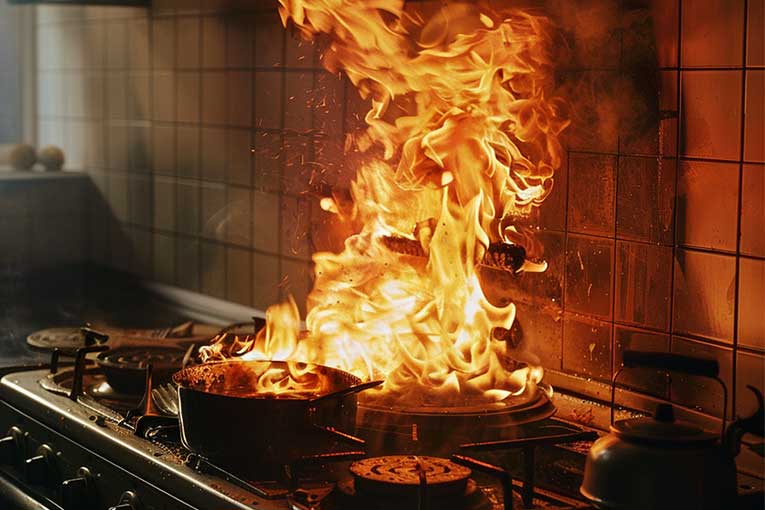
Grease fires are particularly dangerous because they can spread quickly and are difficult to extinguish with water. 

Other common cooking-related fire causes include leaving flammable items near the stove, overheating cooking oil, and using faulty cooking appliances. 

Distractions in the kitchen, such as leaving the stove unattended to answer a phone call or watching TV, significantly increase the risk of a cooking fire. 

Appliances

Household appliances like dryers, washers, and refrigerators can also be fire hazards. 

Dryers, for example, can catch fire if lint builds up and obstructs airflow, causing overheating. 

Washers and refrigerators may have electrical malfunctions that can spark a fire. 

Over time, the wear and tear on appliances can lead to electrical shorts or overheating. 

Heating Equipment

Heating equipment, including space heaters, furnaces, and fireplaces, is another major cause of home fires. 

Space heaters can ignite nearby flammable materials if placed too close. 

Faulty or poorly maintained furnaces can develop issues that lead to fires. 

Fireplaces can cause fires if they are not properly cleaned or if embers escape. 

Smoking

Smoking indoors poses a significant fire risk. 

Cigarettes, cigars, and pipes can easily ignite flammable materials such as furniture, bedding, and carpets. 

Falling asleep while smoking is particularly dangerous, as the burning embers can ignite bedding or upholstery.

Candles

Candles add ambiance but also present a fire hazard. 

Unattended candles, candles placed near flammable objects, or those knocked over by pets or children can start fires. 

Even a small flame can quickly ignite nearby materials like curtains, papers, or decorations. 

How to Prevent Fires in the Home

how to prevent fires home

There are many ways to help reduce the risks of fire in the home: 

Install Smoke Alarms

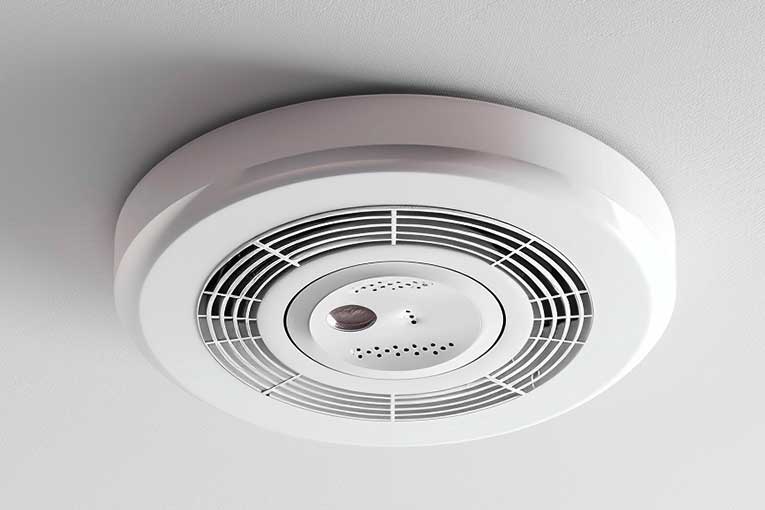
Fire detection is a necessity to staying safe in the home, so install smoke alarms on every level of your home, inside bedrooms, and outside sleeping areas. 

Smoke alarms provide early warning in case of a fire, giving you and your family more time to escape. 

Test smoke detectors monthly and replace batteries at least once a year. 

Replace the entire smoke alarm unit every ten years to ensure it functions correctly.

Maintain Electrical Equipment

To protect yourself from electrical fires, you should regularly inspect electrical cords for damage, such as fraying or exposed wires. 

Avoid overloading outlets and use surge protectors to prevent electrical fires. 

Unplug appliances when not in use and ensure that all electrical work in your home is done by a licensed electrician. 

If your home is older, consider having the wiring inspected and updated to meet current safety standards.

Practice Safe Cooking

Never leave cooking food unattended. Stay in the kitchen, especially when using high heat or cooking with oil. 

Keep flammable items like dish towels, paper towels, and pot holders away from the stove. 

Have a fire extinguisher in the kitchen and know how to use it. 

Avoid wearing loose clothing while cooking, as it can catch fire easily. 

Maintain Appliances

Clean the lint filter in your dryer after every use, and ensure the vent is clear and unobstructed. 

Keep the area around appliances free of clutter. 

Follow the manufacturer’s instructions for maintenance and repairs to prevent electrical malfunctions. 

Unplug small appliances like toasters and coffee makers when not in use.

Use Heating Equipment Safely

Keep space heaters at least three feet away from anything flammable, such as curtains, furniture, or bedding. 

Never leave space heaters unattended or use them while sleeping. 

Ensure your furnace is inspected and maintained annually by a professional. 

Use a fireplace screen to prevent embers from escaping, and only burn seasoned wood

Have your chimney cleaned regularly to prevent creosote buildup, which can cause chimney fires.

Smoke Outside

If you smoke, do so outside. 

Use deep, sturdy ashtrays and ensure cigarettes are fully extinguished before disposing of them. 

Never smoke in bed or when you are drowsy, as falling asleep with a lit cigarette is a major fire risk.

Use Candles Responsibly

Place candles in sturdy holders and keep them away from flammable items like curtains or paper. 

Never leave candles unattended, and extinguish them before leaving the room or going to sleep. 

Consider using battery-operated, flameless candles as a safer alternative.

Plan Fire Drills

Create a fire escape plan for your home and practise it with your family. 

Know two ways out of every room and establish a meeting place outside the home. 

Practise your escape plan regularly to ensure everyone knows what to do in case of a fire.

Keep Flammable Materials Away

Store flammable materials such as gasoline, paint, and solvents in proper containers and away from heat sources. 

Keep matches and lighters out of reach of children.

What to do if There is a Fire in the Home

what to do if fire

If there is a fire in the home, these are the steps you should take to stay safe: 

Stay Calm and Act Quickly

If a fire breaks out in your home, it’s essential to stay calm and act quickly. 

Panic can hinder your ability to make sound decisions and escape safely. 

Alert Everyone

Shout “Fire!” to alert everyone in the home. 

Make sure everyone knows to evacuate immediately. 

Ensure that children, the elderly, and anyone with mobility issues get help to evacuate.

Evacuate Immediately

Leave the house immediately. 

Do not stop to gather valuables or pets. 

Every second counts, and delaying your exit can be deadly. 

Follow your predetermined escape routes and avoid using elevators if you live in an apartment building.

Check Doors for Heat

Before opening any door, check it for heat by using the back of your hand. 

If the door is hot, do not open it; there may be fire on the other side. 

If it is cool, open it slowly and proceed with caution.

Crawl Low Under Smoke

Smoke and toxic gases rise during a fire. 

If you encounter smoke, get low to the ground and crawl under it to avoid inhaling dangerous fumes. 

Keep your nose and mouth covered with a cloth if possible.

Use an Alternative Exit

If your primary escape route is blocked by fire or smoke, use your alternative route. 

This might involve exiting through a window or using a fire escape ladder. 

Ensure you have a safe way to reach the ground from upper floors.

Close Doors Behind You

Close doors as you leave to help contain the fire and slow its spread. 

This can buy you more time to escape and reduce damage to your home.

Call the Emergency Services

Once you are safely outside, call the emergency services. 

Provide the dispatcher with your location and details about the fire. 

Do not assume someone else has already called. 

Wait for emergency responders at a safe distance from the fire.

Do Not Re-enter the Home

Never go back inside a burning building for any reason. 

Wait for firefighters to handle the situation. Your safety and the safety of your family come first.

Conclusion

You should now have a better understanding of how to prevent fires in the home. 

Preventing home fires requires awareness and proactive measures. 

By understanding the main causes of fires and following safety tips, you can protect your home and loved ones. 

Install smoke alarms, maintain electrical equipment, and practise safe habits in the kitchen and with heating devices. 

Create a fire escape plan and practise it regularly. 

Stay vigilant and prepared to reduce the risk of fires and keep your home safe.