Rosenbauer and Miba collaborate on electric airport fire trucks in Austria

Partnership to support electric special-purpose vehicles

Rosenbauer has formed a long-term partnership with Miba Battery Systems to drive the development of advanced battery solutions for electric special-purpose vehicles.

As reported by Rosenbauer, this collaboration aims to enhance energy efficiency and reduce the weight of battery systems in vehicles like the new PANTHER electric airport fire truck, supporting high-performance requirements in emergency response.

Battery production will be based at Miba’s facility in Bad Leonfelden, Upper Austria, where both companies seek to contribute to regional job stability in technology and promote Austria’s role in e-mobility.

Sebastian Wolf, CEO of Rosenbauer, noted the significance of a dependable partnership for specialized vehicle production.

He stated: “As a manufacturer of special-purpose vehicles, it is particularly important for us to have long-term and reliable partners by our side, with whom we can meet the specific requirements in terms of performance and reliability of our products in the firefighting sector.

“I am delighted that we have succeeded in this with Miba Battery Systems.”

Battery solution improves efficiency for electric fire trucks

Miba Battery Systems has developed a specialised battery solution tailored to the needs of Rosenbauer’s PANTHER electric fire truck.

This new battery system enables a reduction in vehicle weight while providing enhanced acceleration and performance, addressing the demanding requirements of emergency operations.

Stefan Gaigg, Managing Director of Miba Battery Systems, explained: “With our specially developed battery solution, we have managed to significantly increase the efficiency of special-purpose vehicles like the PANTHER electric.

“Thanks to the lighter construction, we reduce vehicle weight, enabling faster acceleration.

“This provides more performance with less weight, a decisive advantage in emergency operations.”

The battery packs designed by Miba Battery Systems span a range of voltages, from 48 to 800 volts, and integrate cutting-edge cell technology initially developed for automotive applications.

New PANTHER electric fire truck sets performance benchmarks

The new PANTHER electric fire truck represents a strategic advancement in Rosenbauer’s electrification efforts, offering improved efficiency and power while maintaining essential operational capabilities.

By employing Miba’s battery technology, this electric vehicle is positioned as a performance benchmark within the airport fire truck category.

Rosenbauer has indicated that this partnership not only enhances product performance but also aligns with the company’s goals for sustainable vehicle technology in emergency response.

Austria strengthens position in e-mobility with new battery production

The partnership between Rosenbauer and Miba Battery Systems also secures technology-related jobs within Upper Austria, promoting regional economic growth through the production of advanced battery systems for electric vehicles.

Miba’s facility in Bad Leonfelden is set to play a central role in manufacturing these batteries, contributing to Austria’s standing in the e-mobility sector.

The initiative highlights the capabilities of Austrian companies in developing technology-driven solutions for firefighting and emergency response.

The collaboration between Rosenbauer and Miba reflects a commitment to supporting the evolution of emergency response vehicles while fostering local job opportunities within the technology sector.

Rosenbauer and Miba collaborate on electric airport fire trucks in Austria: Summary

Rosenbauer and Miba Battery Systems have entered a long-term partnership aimed at advancing battery technology for electric airport fire trucks.

The collaboration focuses on developing lighter, high-performance batteries for vehicles such as Rosenbauer’s new PANTHER electric fire truck, manufactured at Miba’s Upper Austrian plant in Bad Leonfelden.

Rosenbauer’s CEO, Sebastian Wolf, highlighted the importance of reliable partnerships in meeting performance demands for specialised vehicles.

Miba’s Managing Director, Stefan Gaigg, noted that the battery solution enhances vehicle efficiency, reducing weight while improving acceleration.

The initiative not only supports local job creation in technology but also reinforces Austria’s position in e-mobility solutions for emergency response vehicles.

How Long Do Fire Extinguishers Last?

Fire extinguishers are crucial tools for swiftly combating small fires, but do they last forever? 

Understanding their lifespan and exactly how long do fire extinguishers last is vital for ensuring their effectiveness in emergencies. 

In this article, we’ll explore how long different types of fire extinguishers last, when to replace them, and the importance of regular servicing.

How Long Do Fire Extinguishers Last?

how long do fire extinguishers last image

Fire extinguishers are crucial for rapid response in emergencies, but their effectiveness diminishes over time. 

Understanding how long fire extinguishers last is essential for maintaining a safe environment.

Disposable

Disposable fire extinguishers typically have a lifespan of around 10 to 12 years. 

Once they reach this limit or display signs of wear, they should be replaced to ensure optimal performance. 

These extinguishers are designed for single use, emphasising the importance of timely replacements.

Rechargeable

Rechargeable fire extinguishers, designed for multiple uses, have a service life of approximately 6 years. 

After this period, a thorough professional inspection and maintenance are necessary to ensure their continued reliability. 

If any issues are identified during servicing or if the extinguisher reaches the end of its recommended life, it should be replaced promptly.

How Often Should Fire Extinguishers be Serviced?

how often fire extinguishers serviced

Routine maintenance is key to ensuring the reliability of fire extinguishers. 

Different types require distinct servicing intervals to guarantee optimal functionality when facing a fire emergency.

Water, Powder, or Foam

Fire extinguishers containing water, powder, or foam should undergo professional servicing every 5 years. 

This process involves a thorough inspection, testing, and refilling, if necessary. 

Regular servicing helps identify any issues and ensures the extinguisher is fully operational.

CO2

CO2 fire extinguishers, commonly used for electrical fires, have a longer service interval of 10 years. 

These extinguishers should undergo a comprehensive professional service to inspect and maintain their components. 

This ensures that the extinguisher remains effective in suppressing electrical fires.

Where to Find the Fire Extinguisher Manufacture Date?

fire extinguishers manufacture date

Knowing the manufacture date of a fire extinguisher is crucial for determining its lifespan and understanding how long your fire extinguisher will last. 

The location of this information varies based on the type of extinguisher.

Steel Fire Extinguishers

Stamped into the Cylinder

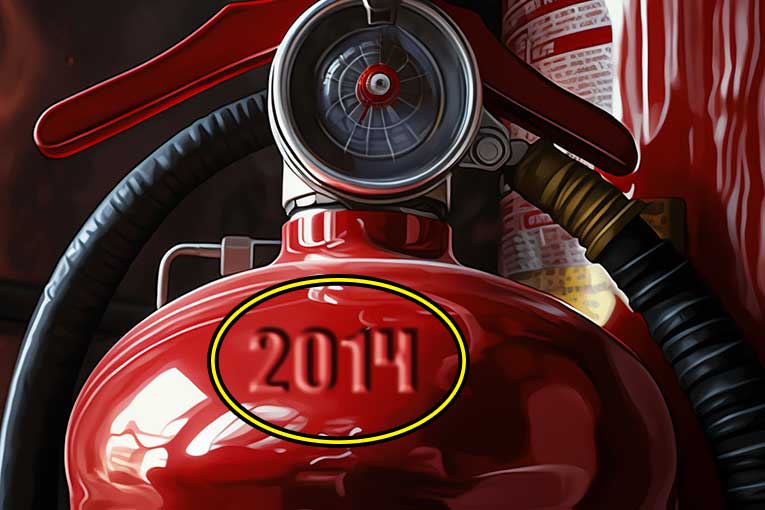
The manufacture date may be physically stamped onto the cylinder of the steel fire extinguisher. 

This stamp provides a clear and permanent indication of when the extinguisher was produced.

On the Label

Alternatively, the manufacture date might be included on the label affixed to the extinguisher. 

This label provides essential information about the extinguisher’s specifications and usage guidelines.

P50 Service-Free Extinguishers

Older Models 

For older P50 fire extinguisher models, the manufacture date is typically printed on the base of the unit.

Newer Models 

Newer P50 models use a coloured pin that correlates to a table printed on the label. 

The pin colour corresponds to the month and year of manufacture, providing a quick reference.

When Should you Replace a Fire Extinguisher Early?

replace fire extinguishers early

While fire extinguishers have defined lifespans, certain circumstances may warrant early replacement to ensure optimal performance in emergencies. 

Here are key indicators that suggest an extinguisher should be replaced ahead of schedule:

Cracked Nozzle or Hose

Issue

Physical damage like cracks compromises the structural integrity of the nozzle or hose.

Effect

The crack can lead to leaks or difficulties in delivering the extinguishing agent during a fire, rendering the extinguisher less effective.

Blocked Nozzle or Hose

Issue

Obstructions in the nozzle or hose can hinder the discharge of the extinguishing agent.

Effect

A blocked nozzle or hose reduces the extinguisher’s ability to control a fire, diminishing its overall performance.

Broken Handle

Issue

A broken handle makes it challenging to operate the extinguisher efficiently.

Effect

In an emergency, a broken handle may impede the user from effectively using the extinguisher, delaying response time.

Missing Locking Pin

Issue

The locking pin is crucial for preventing accidental discharges and maintaining the extinguisher’s readiness.

Effect

Without the locking pin, there’s a risk of unintentional discharges, and the extinguisher may not be securely stored or easily accessible.

Missing Inspection Sticker

Issue

An extinguisher without an updated inspection sticker may not have undergone required maintenance.

Effect

Missing inspection documentation indicates a lack of regular checks, raising concerns about the extinguisher’s reliability and adherence to safety standards.

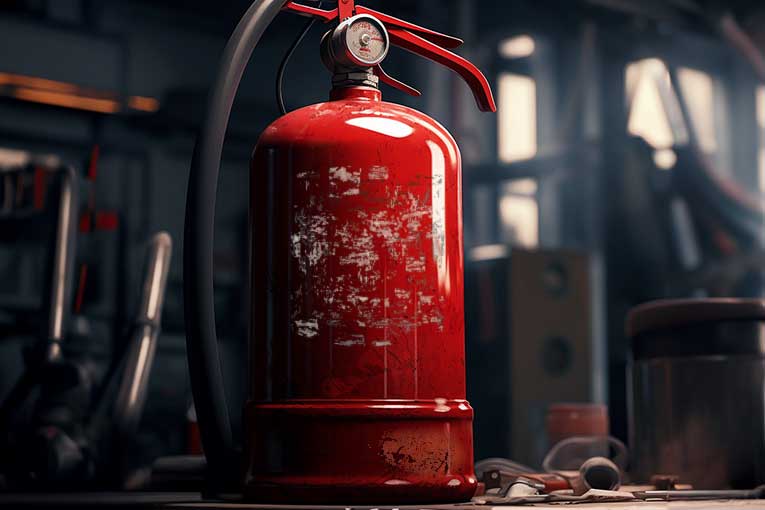
Corrosion

Issue

Corrosion on the cylinder or other parts compromises the structural integrity of the extinguisher.

Effect

Corrosion weakens the extinguisher, making it more susceptible to damage and reducing its ability to withstand the pressure needed for proper discharge.

Suspected of Leaking

Issue 

Evidence of leaking substances suggests a loss of pressure and potential malfunction.

Effect

A leaking extinguisher may fail to discharge its contents effectively during a fire, necessitating immediate replacement to ensure reliability in an emergency.

How Often Should Fire Extinguishers be Inspected?

how often fire extinguishers inspected

Routine inspections are crucial to maintaining the reliability of fire extinguishers, ensuring they function correctly when needed. 

The inspection frequency can be categorised into two intervals:

Monthly Checks

Regular, brief checks by designated personnel.

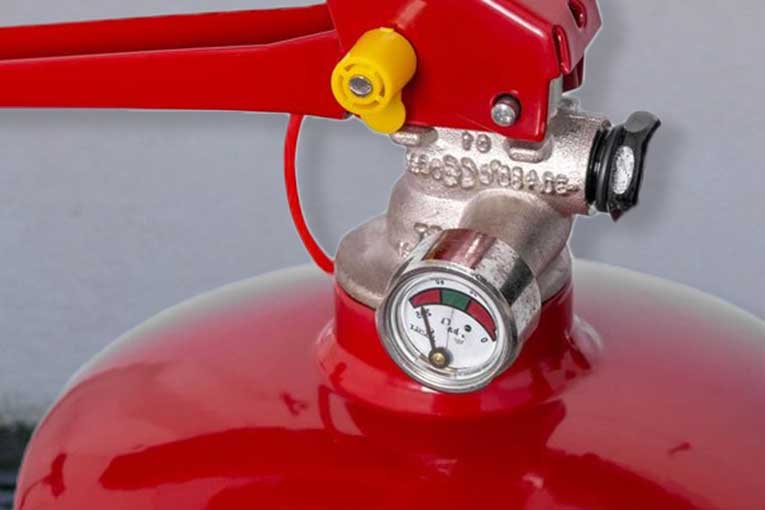
This is to verify that the extinguisher is in its designated place, the pressure gauge shows adequate pressure, and there is no visible damage or tampering.

Monthly checks help identify immediate issues and ensure that the extinguisher is accessible and operational.

Yearly Inspections by a Fire Extinguisher Engineer

In-depth inspections conducted by a certified fire extinguisher engineer, for example those found in the Institution of Fire Engineers.

This will be a comprehensive examination of the extinguisher’s internal and external components, including pressure tests, to ensure it meets safety standards.

Yearly inspections are critical for identifying potential internal issues, such as corrosion or leaks, which might not be evident during routine checks.

What are the Risks of Using an Older Fire Extinguisher?

older fire extinguishers risks

Using an older fire extinguisher poses various risks, potentially compromising its effectiveness when faced with a fire emergency. 

Here are the key risks associated with relying on an aged fire extinguisher:

Decreased Pressure

Over time, fire extinguishers may experience a gradual loss of pressure, reducing their ability to discharge the extinguishing agent effectively. 

This decline can result from factors like gas leakage or gradual deterioration of internal components.

Corrosion

The internal components of a fire extinguisher, especially the cylinder, are susceptible to corrosion over an extended period. 

Corrosion weakens the structural integrity, making the extinguisher more prone to failure or rupture during use.

Deterioration of Seals and Valves

Seals and valves play a crucial role in maintaining the pressure and integrity of the extinguishing agent. 

As a fire extinguisher ages, these seals and valves can deteriorate, leading to potential leaks and a loss of pressure.

Reduced Extinguishing Agent Efficiency

The extinguishing agent within the fire extinguisher can degrade over time, diminishing its effectiveness. 

This reduction in efficiency may result from factors like exposure to temperature variations or chemical changes within the agent.

Outdated Technology

Older fire extinguishers may use outdated technology compared to more modern counterparts. 

Advances in fire safety technology have led to the development of extinguishers with enhanced features and improved extinguishing agents, providing better protection against various fire types.

Non-compliance with Standards

Fire safety standards and regulations evolve over time, introducing new requirements for equipment.

Older fire extinguishers may not comply with the latest standards, potentially leading to regulatory non-compliance and inadequate fire protection.

How to Dispose of a Fire Extinguisher?

dispose of fire extinguishers

Disposing of a fire extinguisher requires careful consideration to ensure the safe handling of potentially hazardous materials. 

Here’s a guide on how to appropriately dispose of a fire extinguisher:

Check the Extinguisher Type

Identify the type of fire extinguisher, as different extinguishing agents have specific disposal methods. 

Common types include water, powder, foam and CO2.

Contact Local Authorities

Check with your local fire department or waste disposal facility regarding their specific regulations for fire extinguisher disposal. 

Some municipalities organise special collection events or have designated drop-off locations.

Recycling Centres

Certain recycling centres may accept fire extinguishers, as many of the components are fully recyclable. 

Remember to follow local guidelines.

Professional Disposal Services

In some cases, professional hazardous waste disposal services may be necessary for extinguishers containing certain chemicals, such as older foam fire extinguishers. 

Contact local environmental agencies for advice on proper disposal methods.

Conclusion

Knowing how long fire extinguishers last and understanding when to replace them is vital for maintaining a safe environment. 

Regular inspections, proper servicing, and early replacement when necessary ensure that these essential firefighting tools remain effective when needed most. 

Prioritising the longevity and functionality of fire extinguishers is a proactive step towards enhancing overall safety and preparedness in various settings.
Airport firefighting: Too hot to handle?

Mike Willson, firefighting foam and foam systems specialist, investigates whether airport firefighting foams fit is for purpose under increasingly hot summers

The world is experiencing more frequent and severe summer heat waves, impacting our safety.  Soaring 40-47oC temperatures across much of Europe, North America, India and Pakistan across to China, Korea, Australia and Japan were experienced during summers 2021 and 2022. Usually restricted to Saharan Africa, Middle East, Mexico, even Central Asia, July 2022 saw Arctic Norway glow in 30.8oC, while London’s Heathrow sizzled in record breaking 40.2oC. Heat stress and increased fire volatility are both outcomes facing firefighters.

We rely heavily on firefighting foam fire test approvals like ICAO (International Civil Aviation Organisation) and European Norm EN1568-3 to verify acceptable fire performance under all major credible event conditions being faced during fire emergencies, including hot summers. Such fire testing is routinely conducted in cool 15±5oC conditions. US MilSpecrequires 23±5oC but most choose the lower temperatures, gaining a cooling advantage – never elevated around realistic ≥40oC.levels. Do all foams still work under such elevated conditions? How do we know? It is becoming a significant life safety issue.

Ignitable vapours hover above pooled fuel when Jet A1’s 38oC flashpoint is exceeded. These vapours are easily lit by burning embers or incandescent materials, potentially causing rapid re-escalation. Rising temperatures increase extinguishment difficulty, with fuel vapours more easily penetrating foam blankets, reducing effectiveness and causing premature collapse, particularly when fuel repelling or vapour sealing additives are absent. Where does this leave passenger safety?

Foam quality

Foundation research by US FAA (Federal Aviation Administration) established that Fluorine-free or PFAS-free foams (F3s) (i.e. without aqueous film formation) showed: “The predominant factor defining firefighting effectiveness is foam quality, which is indicated to rapidly deteriorate through the loss of liquid as it drains from the foam body at elevated solution temperatures.” It concluded: “As the foam viscosity increases, the fluidity decreases, and the foam may become more difficult and time-consuming to distribute uniformly over a burning fuel surface. Therefore, excessively high or low water temperatures are to be avoided.”

Investigations by US Naval Research laboratory in 2015 confirmed that: “Fuel surface cooling by the foam and the resulting reduction in fuel vapor pressure, which depends exponentially on the surface temperature. … the interface cools because the two layers are at different temperatures”. Consequently, higher foam solution temperatures have an exponentially reduced ‘cooling’ effect, making fires harder and slower to control and extinguish. Maximising rapid cooling could be delivering ‘easier approval passes’ – but how does this affect hot summer performances?

NRL extended their work in 2017 finding: “As the fuel temperature is raised, there is a higher concentration of fuel vapours beneath the foam than at lower temperatures. This increased concentration at the foam interface can increase the amount of fuel transport through the foam, increasing the rate of foam degradation … For all experiments F3 degraded much faster than AFFF. …The effect of surfactant formulation is a close second relative to the temperature effect.”

2012 FAA research cautioned against the impact of aircraft composite materials like carbon fibre: “There is also potential for re-ignition of a fuel fire from smouldering fuselage composites.” It referenced US Military graphite/epoxy/carbon fibre composite testing, finding that: “This composite would self-sustain combustion in as little as 2.5 minutes of exposure to an external pool-type fire. … The pool fire was easily extinguished in all tests. However, extinguishment of the composite combustion was not as easy. The surface flames were readily extinguished, but smouldering composite combustion was already established. To extinguish … fire fighters applied a continuous stream of AFFF directly on the composite material. After applying AFFF for 3 minutes or more, the smouldering composite combustion was extinguished.” Do such re-ignition sources further expose F3 vulnerabilities, without vapour sealing additives?

Protocol deficiencies

These findings highlight potential deficiencies in our existing fire test protocols. FAA’s Oct. 2021 Cert Alert raised public safety concerns with Fluorine Free Foams (F3s) due to delayed extinguishment times; failure to maintain fire suppression; incompatibilities with dry chemical and other foam agents, plus firefighter training strategies. FAA’s rigorous testing of nineteen F3s (nine commercially available, ten developmental) at room temperature (around 20oC) concluded: “Approximately 400 fire tests have been conducted; none passed MilSpec or ICAO Level C”.

Consequently, FAA: “Conducted ICAO Level C tests both outside and inside because of test results.” All F3s tested failed ICAO Level C and MilSpec fire tests indoors (~20oC) in FAA’s latest USD $5 million ‘state-of-the-art’ fire test facility. They also all failed ICAO Level C protocol when re-tested outdoors under similar conditions. Surprisingly analysis showed these leading F3s had Fluorine levels from 10-87ppm, which could exceed some residual PFAS expectations. 

62% of F3s also failed to extinguish within Level C’s 2-minute requirement, with two failing to extinguish completely. Burn back testing was also failed by 66% F3s tested. All F3s similarly failed MilSpec’s 30sec extinguishment outdoors, only one achieving 38secs, the rest up to 2mins 23secs (also ~20oC). FAA concluded: “Overall, none of the tested FFF candidates can be considered a direct replacement for AFFF without compromising the efficacy of fire extinguishment.”

FAA and NRL are undergoing extensive scientific research and rigorous fire testing to find adequately effective F3 alternatives to meet these demands, but so far unsuccessfully. So, what happens during hot summers, when conditions make fires even harder to extinguish?

ICAO requires Aircraft Rescue and Firefighting Services (ARFFS) to operationally use 5.5L/min/square metrewhen firefighting with AFFFs, delivering adequate safety under wide ranging operational conditions during credible major fire events, based on a safety factor double the Level B fire application rate of 2.5L/min/square metre(1.56L/min/sq metre for tougher Level C).Is this safety factor adequate for F3s without fuel-repelling or vapour-sealing additives? Reluctance to conduct realistic high temperature F3 competency testing to ICAO Level B, means we still don’t know, potentially placing travellers’ lives under increased risks.

Unnecessary risks

This safety factor covers a range of practical ‘contingencies’ across often unforeseen, diverse prevailing conditions associated with major credible aircraft fires, including: Foam destruction factors like wind, rain, snow, ice, high/low temperatures, updrafts/vortexing; Fuel re-exposure by wind increasing re-ignition risk and sudden flashbacks; Some foam blankets (particularly PFAS-free) are attacked by co-incident dry chemical powder usage; Premature reduction in foam blanket fluidity/effectiveness from low humidity; longer pre-burn times increasing fire intensity; and lower foam blanket quality and greater plunging effects (from non-aspirating/lower expansion nozzles), potentially exacerbated by pressure fluctuations.

Additionally: Temperatures exceeding fuel flashpoints increase vapourisation rates, fire intensity, particularly when pooled on hot concrete runways or tarmac; Under or over-rich proportioning with resultant under-performance (‘too watery’ or ‘over-stiff’ if rich), potentially reducing foam quality or duration; Poor mixing of viscous concentrates, forming inadequately dissolved ‘globules’; Reduced effectiveness from delayed foam activation/response and composite materials; Stability changing with water quality (hard/soft/bore/seawater); and insufficient/inadequate training on foam type; operator errors; exposing foam vulnerabilities (not strengths), eroding effectiveness when insufficiently conservative tactics used.

Shouldn’t these safety considerations be incorporated into ICAO Level B/C fire tests? US MilSpec (2020) includes most considerations, which now risk exclusion in the draft land forces alternative F3 MilSpec, seemingly with ‘watered down’ performance levels potentially exposing not safeguarding lives – it’s key objective. Worrying evidence from a 2016 Dubai Boeing 777 crash in 48oC conditions, saw the aircraft ‘burned out’ after 16 hours, despite several failed attempts to extinguish using F3s.

So our Regulators, EPA’s, Standard approvals, FAA, Defense ARFFS and the travelling public are left with a major dilemma: Either we ‘force through’ weaker F3 specifications, without providing equivalent current fire protections to save lives in future major fire incidents, or we continue using proven, effective, life protections even when severe conditions prevail (eg. Syria, Afghanistan) or like civilian heat waves of 2021-22, by continue using high purity, short-chain C6AFFFs.

Evidence suggests it’s time for a re-think before exposing many lives to unacceptably increased risk of harm – or do we choose to continue risking the loss of plane-loads of precious lives unnecessarily? The real question that needs to be asked: it that even ethical?

About the author

Mike Willson BSc Hons, MCIM, is a firefighting foam and foam systems specialist with over 35 years’ experience of developing, testing, comparing and reviewing fire performance and environmental impacts of both fluorinated and fluorine free foams, their delivery devices and integrated fixed systems performances. An active member of Fire Protection Association Australia’s Special Hazards Technical Advisory Committee, he provides technical advice to a diverse range of stakeholders to better protect Class B flammable liquids with potentially suitable C6 and PFAS-free (F3) alternatives.

This article was originally published in the January edition of IFSJ. To read your FREE digital copy, click here.

Investigation into Overland Airways plane fire launched

The Accident Investigation Bureau – Nigeria (AIB-N) has launched an investigation into the Overland Airways flight that caught fire on its descent on Wednesday evening.

The Lagos-bound aircraft experienced an engine issue on approach to Lagos airport and was forced to make an emergency landing on the international runway.

The aircraft’s 33 passengers and four crew all disembarked unscathed by the incident.

Spokesperson for AIB-N, Tunji Oketumbi, yesterday, said the bureau AIB was notified of the serious incident, adding that investigators had been dispatched to conduct an investigation into the occurrence.

According to the Overland Airways management, at around 7.50pm on the day of the incident the plan experienced high-turbine temperatures on one of its engines.

The airline’s statement said: “This occurred in the approach phase of flight and the aircraft landed very safely as the Crew skilfully implemented their standard procedures for such abnormal situations.

“All 33 passengers remained calm through the process and safely disembarked row by row in accordance with post COVID-19 procedures after the Aircraft came to a halt on the Murtala Muhammed International Airport Lagos runway 18 Right. No passenger was hurt in any way.

“Overland Airways salutes the professional interventions of the Federal Airports Authority of Nigeria (FAAN), Nigerian Airspace Management Agency (NAMA), Nigerian Civil Aviation Authority (NCAA) and the Accident Investigation Bureau Nigeria (AIB-N) which were very prompt and reassuring.

“Overland Airways regrets any inconvenience to its passengers and assures the travelling public of its full commitment to safety of its services and passengers.”

Exclusive: Considerations for outsourcing aviation fire and rescue services

Chris Thain, Business Development Manager for Fire & Rescue Service at G3 Systems Ltd, talks outsourcing aviation fire and rescue services

When it comes to outsourcing a process to an outside organisation there is always a lot to consider in terms of how it will affect the business as it could affect staff numbers and impact existing management systems and processes.

To find out about the ins and outs outsourcing aviation fire and rescue services, International Fire and Safety Journal caught up with Chris Thain, Business Development Manager for Fire & Rescue Service at G3 Systems Ltd, a supplier of bespoke operational delivery of Aircraft Rescue and Firefighting (ARFF) and Industrial Rescue and Firefighting Services (RFFS) to airports and high-risk industrial facilities around the world.

Why should businesses consider outsourcing their ARFF and RFSS services?

Outsourcing fire and rescue services can enable organisations to concentrate on their core business, while continuing to maintain and improve safety, resilience, and regulatory compliance. It enables companies to focus on their own customers’ needs while delegating essential but non-core requirements to external specialist providers. This releases internal resources that can be put to more effective use for other purposes, leading to greater overall efficiency and competitiveness.

It is unrealistic for airport operators to be experts in every business function, process, and discipline required to manage a modern airport, it is simply far too expensive to maintain this level of knowledge and expertise internally. By utilising outsourced service providers, airport operators can leverage a global knowledge base and resource centre, accessing world class capabilities, skills, and expertise that they may have been precluded from previously.

What are some of the key benefits of outsourcing?

Managed ARFF service providers often have access to a wider, more highly skilled, and diverse talent pool than the client themselves and will already have in place the requisite interview and selection processes designed to select only the strongest, most appropriately qualified, and experienced staff.

Training and competence management can reflect global best practice, with industry and/or site-specific risks recognised, evaluated, and reflected in the ongoing training provided to the ARFF staff members.

Shared experiences gained from a variety of different airports or industrial operations, coupled with specialist skill sets, ongoing education, learning and professional development and best working practices also enable the outsourced service provider to add value and resilience to and further reduce risk within the client’s operation.

As specialists in their field, outsourced ARFF service providers are generally much better at deciding how to cost effectively avoid risk in their areas of expertise without compromising safety and response, than perhaps a fully employed on-site team might be.

What are the biggest concerns around outsourcing?

Firstly, there is issue of compliance. If we assume that the vehicles and equipment provided by or for the ARFF meet the ICAO standards for the airport Category and that they are well maintained and fit for purpose, then the only other variable affecting the service delivery and compliance standards is the ARFF officers and staff that are engaged on the contract.

The second issue often stems from concerns around management control and responsibility for delivery. Relinquishing a degree of authority and responsibility can be difficult but By delegating and working as partners, communicating openly, honestly and in a timely manner, and through building close working relationships, we quickly overcome any feelings of doubt or concern.

Thirdly, the issue of cost versus benefit must always be addressed. While airport ARFF services may be seen by some as an expensive mandatory cost, in most cases the provision of an outsourced ARFF service can deliver cost savings in other areas of airport maintenance and management.

Finally, a common misconception is that outsourcing an existing airport ARFF service to a third-party provider will result in firefighters losing their jobs. This is simply not the case. In most situations, it makes sense for the outsourced provider to retain as many of the incumbent staff as possible on the contract.

What are the cost considerations involved in outsourcing?

People and equipment form the largest elements of cost for any ARFF service. Labour costs, including the costs of employment, vary from country to country and from role to role within the ARFF itself. The mix of officers to firefighters, the availability and recruitment of ex-pat staff versus local staff and the contractual conditions of work all influence the final cost of labour for the end customer. It is also very important to consider local employment terms and conditions and to ensure that costs such as social insurance, pensions and contractual stipends are captured and included.

Similarly, emergency vehicles and the technical equipment required to effectively fight fires and rescue people in modern aircraft and airport incidents can be very expensive. For example, a typical airport crash rescue tender can range in price from $500,000 to more than $1.2 million depending upon the age, technical specification, and the category of airport the vehicle is required to protect. Given that a CAT 10 airport requires a minimum of three such vehicles fully loaded with PPE and safety equipment, you can quickly see how the costs to deliver the ARFF service can mount up.

Other ancillary costs for the ARFF service will include staff travel, training and certification costs, communications, IT and data costs, licenses, and permit costs, insurances, medical support and, in some extreme cases, security and life support costs.

What should businesses consider when deciding to outsource when it comes to selecting a partner organisation?

The first consideration should be around timing – when is the new service required to be at full operating capacity and is there enough time work through the tendering and selection process to ensure a successful outcome? The earlier that engagement can begin with potential partner organisations, the better for all parties.

The next consideration is to know what ARFF services you require – being clear on the full scope of requirement early in the process will ensure clarity for all parties and will deliver a smoother, more cost-efficient service in the longer term.

Finally, be realistic about the budget for delivering a fully compliant ARFF service for your aerodrome – manage the expectations of those responsible for allocating and approving the budget and ensure that the safety of travellers, airport staff and firefighters always remains the highest priority.

What are the main services you offer for customers looking to outsource their aviation fire and rescue services?

G3 systems offer the following main services for our customers:

  • Structural & industrial rescue & fire fighting service
  • Aviation crash/rescue & fire fighting services
  • Emergency dispatch & control
  • Incident command & control
  • On-site fire safety, fire inspection & service
  • Emergency vehicle management & maintenance
  • Fire & rescue equipment and facilities management & maintenance
  • Fire & rescue training
  • Emergency medical services

How do you analyse the needs and requirements of potential clients?

Assessing the needs of a potential client begins with a conversation to determine what kind of airport they are operating (Civilian, Military or both, or Heliport/Seaplane Airport etc.) and what the ICAO Category for the airport is or will be. This immediately helps determine the number and type of emergency vehicles that are required to meet the regulations (ICAO Annex 14 Document 9137 Part 1: Rescue and Fire Fighting) and therefore the minimum number of staff that will be required to effectively deliver the ARFF service.

We determine if the airport is already operational, with an incumbent ARFF service, or if the airport is a new development requiring a first time ARFF presence. The geographic location of the airport is also important as we need to understand the local operating conditions, both physically and environmentally as well as commercially. We also need to understand the timing requirements for the airport and the process that the customer will undertake for competitive tendering.

A task resource analysis is conducted, and mobilisation and project management plans created to understand exactly how the new ARFF service will be implemented. We then also have our strict risk based internal process to navigate, ensuring that any responsibilities and liabilities that we take on are manageable and viable for us as an organisation.

What are you focused on at the moment?

We have some exciting prospects on the horizon and are currently working on new projects in the Middle East, Africa, and the Indian Subcontinent, which we hope will result in long term ARFF contracts taking us into the 2030’s.

In the meantime, we are also actively engaged with trade organisations such as the Airport Fire Officers Association and attending events such as Interschutz 2022, to continue to meet with our clients and colleagues across the aviation industry and to support the sector as much as possible.

This article was originally published in the June edition of IFSJ. To read your FREE digital copy, click here.

Swiss Air Force teams up with Rosenbauer for aircraft firefighting training

The Swiss Air Force has teamed up with fire service vehicle and equipment manufacturer Rosenbauer to implement its PANTHER training system to enable training for the tactical handling of ARFF vehicles as well as handling the extinguishing and control panels.

The PANTHER training system will be installed in the fire training center of CFR Campus PHÈNIX at Payerne Airport.

The simulator landscape consists of two PANTHER tactical simulators – 8×8 and 6×6 S, as well as two simulators that can be configured bot as ARFF vehicles and command or logistics vehicles.

The two PANTHER simulators are equipped with identical PANTHER cockpits, while the other two have generic cockpits on which all functions can be operated the same way as in the respective original vehicle.

Everything that happens outside the vehicles is displayed on large LED screens in Ultra-HD (4 times HDTV) resolution. Each screen is controlled by its own computer; a total of 18 computers with powerful graphics cards are installed in the training system.

The system also includes a control panel on which the virtual training sessions are planned, programmed, and documented. There are five airport layouts and numerous aircraft types to choose from, the time of day or night, and the weather and runway conditions can be modified in order to make the operational action as realistic as possible.

All firefighting operations from leaking jet fuel to an undercarriage catching fire or burning jet engines can be trained on, whereby the control of the firefighting equipment is just as sensitive as in the real-life counterparts.

“The Swiss Air Force is building a competence center for aircraft firefighting here, where the members of the aircraft incident squads will receive their complete training in future and be able to complete regular drills under real conditions,” saod Hans Schmid, Head of Crash and Fire Rescue Swiss Air Force.

“In the future, each and every member will train on the simulators for at least two days a year. Their integration into an overall system allows us to systematically and efficiently structure the training. In addition, three liquid gas-fired fire simulators (dummy aircraft) are available for “hot” drills on the approximately 26,000 m2 site.”

Markus Zellinger, Managing Director of Rosenbauer Switzerland added: “The Swiss Air Force’s aircraft incident squads can train for every operational scenario imaginable in a resource-saving, safe, and controlled manner. That’s the great advantage of simulator training.”

Global fire extinguishers market to reach $7.1bn by 2026

The fire extinguisher market is set to reach US$7.1bn by 2026, according to a new study published by Global Industry Analysts Inc., (GIA). The report, titled “Fire Extinguishers – Global Market Trajectory & Analytics, presents fresh perspectives on opportunities and challenges in a significantly transformed post Covid-19 marketplace.

Improving global GDP, resurgence in remodeling and renovation activity in developed economies, steady rise in new constructions in emerging markets, and stricter law enforcements are driving growth in the market.

Along with their expiration date, the existence of international, national, or local building regulations, laws, and codes implies that some of the fire extinguishers must be replaced annually, which generates enough demand to ensure the industry’s stability.

Additional opportunities generated by the demand for fire suppression technologies and other proactive fire management systems, hold potential for the industry’s growth. Although the construction industry remains the primary end-use sector for fire extinguishers, growth is forecast to improve from expanding applications in automobiles, military vehicles, and aircrafts. Growing emphasis on safety is fueling demand for automotive fire extinguishers and poised to benefit against this backdrop are small, portable and lightweight fire protection systems. The growing base of military vehicles, especially army ground combat vehicles, is forecast to benefit demand for fast-opening hand-held fire extinguishers (HFE) to safeguard against combat-induced fires.

Amid the coronavirus pandemic, the global market for Fire Extinguishers is estimated at $5.2bn in 2022, is projected to reach a revised size of $7.1bn by 2026, growing at a CAGR of 7.5% over the analysis period.

Dry Chemical & Dry Powder, one of the segments analyzed in the report, is projected to grow at a 7.4% CAGR to reach $5.1bn by the end of the analysis period. After a thorough analysis of the business implications of the pandemic and its induced economic crisis, growth in the Carbon Dioxide segment is readjusted to a revised 9% CAGR for the next seven-year period. This segment currently accounts for a 14% share of the global Fire Extinguishers market.

Currently, the extensively used fire extinguisher type is the multiple use dry chemical, which is most efficient on class A, class B and class C fires. CO2 fire extinguishers, which can be deployed on Class A fires, put out fire by removing oxygen component from the fire triangle as well as eliminating the heat through an extremely cold release. These black colored fire extinguishers are ideal for electrical fires

The U.S. Market is Estimated at $1.4bn in 2022, While China is Forecast to Reach $1.2bn by 2026
The Fire Extinguishers market in the U.S. is estimated at $1.4bn in the year 2022. The country currently accounts for a 27.9% share in the global market. China, the world’s second largest economy, is forecast to reach an estimated market size of $1.2bn in the year 2026 trailing a CAGR of 9.2% through the analysis period. Among the other noteworthy geographic markets are Japan and Canada, each forecast to grow at 5.3% and 7.5% respectively over the analysis period.

Within Europe, Germany is forecast to grow at approximately 5.5% CAGR while Rest of European market (as defined in the study) will reach $422m by the end of the analysis period. Market growth is primarily led by change in standard building codes and mandating necessary deployment of fire extinguishers coupled with strong construction sector in developing markets such as Asia-Pacific, Latin America, Middle East and Eastern European markets. Both China and India have been investing significantly in expanding their infrastructure in order to gain competitive advantage and support burgeoning economy and population. The recovery in the construction industry in the US, coupled with steady gains in construction spending in developing countries including BRICs and CIVETs, is expected to drive the demand for fire extinguishers in the next few years.

Meanwhile, the foam-based segment is set to Reach $658.5m by 2026. Foam-Based and Water-Based Extinguishers put out fire by eliminating the heat component from the fire triangle, while foam agents remove oxygen component from additional components.

Foam extinguishers are expensive, and suitable for diverse use except for Class C fires due to shock risk. There are Aqueous Film Forming Foam (AFFF) based and Alcohol Resistant Aqueous Film Forming Foam (ARAFFF) based extinguishers, known as Class A and B fire extinguishers for fighting chemical fires, which involve alcohol. In the global Foam-based segment, USA, Canada, Japan, China and Europe will drive the 6.8% CAGR estimated for this segment.

These regional markets accounting for a combined market size of $355m will reach a projected size of $559.3m by the close of the analysis period. China will remain among the fastest growing in this cluster of regional markets. Led by countries such as Australia, India, and South Korea, the market in Asia-Pacific is forecast to reach $94.6m by the year 2026, while Latin America will expand at a 7.9% CAGR through the analysis period.

Pegasus Aviación taps up LiveU to improve airborne firefighting services

Spanish firm Pegasus Aviación has tied up LiveU to help its firefighting services, using the company’s mission-critical IP bonding solutions to provide live streamed images and internet sourcing coverage from difficult environments where connectivity is scarce.

Pegasus Aviación, also operates in Portugal, Italy, Chile and Uruguay, is the parent company of Pegasus Aero Group, a 100% Spanish-owned aeronautical group with over 50 years of experience in the aeronautical field, providing a wide range of services to public and private clients.

Currently, a key objective within the company’s strategic plan is the technological modernisation of the fleet. José Antonio Rodríguez, head of projects, planning and support at Pegasus said: “Our expertise is founded on the provision of training, maintenance and operation of aircraft in emergency environments – mainly forest fires – and the rescue of people on land and at sea. Today, we face the challenge of optimising these operations using on-board technology, for which we were looking for options that could provide us with greater connectivity in environments with poor coverage. That’s where our journey with LiveU began.”

LiveU’s technology, widely used in the broadcast and video streaming sector for all types of live image capture and transmission, is based on IP bonding, a technology that LiveU pioneered and is a market leader in the industry.

This underlying technology facilitates the bonding of bandwidth from multiple cellular networks, the main examples being mobile and WiFi, to create real-time broadband connectivity. This means that connectivity can be achieved in remote locations, and on the move, where other technologies would normally fail, enabling not only high-quality live video streaming but also internet connectivity for other data services. Individual field units, containing the multiple modems required, can be carried in a backpack, or installed in an aircraft, subject to the approved specifications of the relevant aeronautical authorities.

Pegasus Aviation is currently using many LiveU’s LU300 compact field units in its helicopters to enhance its imaging services in Chile and Spain. These can be controlled by Pegasus Aviación through LiveU’s cloud-based management system, LiveU Central. It also uses LiveU’s DataBridge technology to access high-speed internet while the aircraft are in flight.

Rodríguez added: “This technology greatly enhances the information we can obtain from our operations, allowing us to capture live video images from places where it was previously unfeasible. These real-time images play an important role for our customers, allowing emergency managers to make decisions with fresh information from the field. LiveU is an important technological step forward for us and we are looking to expand its use in the other countries we serve through our fleet of over 130 aircraft.”

Jean-Christophe Albou, Sales Director, France and Southern Europe, LiveU, said: “We have always known that our technology has great potential beyond its use in broadcast and streaming verticals and we’re now seeing its use grow in emergency services and first responder sectors. This is a prime example and we’re very proud to see it helping in such a vital industry.”

G3 Systems supports Helicopter Search and Rescue services in the Falkland Islands

G3 Systems has recently completed its first field service visit to British International Helicopters (BIH) at Mount Pleasant Airfield in the Falkland Islands. The purpose of the visit was to provide condition assessment surveys and servicing of essential Ground Support Equipment (GSE) for two Search and Rescue (SAR) Helicopters based on the Islands.

BIH, the largest UK-owned helicopter operator, works on behalf of the UK MOD’s Defence Equipment and Support department to provide search and rescue support to the British Forces South Atlantic Islands operations. BIH operates two AW189s in the Search and Rescue role and two S61N Support Helicopters on the Islands.

The SAR service is operational 24 hours a day, 365 days a year and carries out all-weather search and rescue, helicopter emergency medical services, rescue hoist operations, passenger and cargo transfers and night vision imaging, in extremely challenging environmental conditions. The Support Helicopter Service provides the military garrison with helicopter transportation of both personnel and equipment throughout the Islands.

Maintenance, logistics and operations for the Helicopters are managed by BIH, who contracted G3 Systems to provide on-site field-based maintenance and servicing support for the GSE. G3 Systems conducted a condition assessment of each piece of equipment before undertaking a full service as part of the equipment maintenance scheduling.

Tools and necessary spare parts were shipped to the Falkland Islands prior to the departure of the G3 Systems Field Service Engineer. Upon arrival and after completing a mandatory CV-19 quarantine, the G3 Systems Engineer set about locating, assessing, and servicing the equipment in accordance with the OEM’s approved technical manuals. The GSE includes three New Holland tractors, towbars, Ground Power Units and testing systems, hydraulic jacks and pumps, pressure washers, diesel generators, air compressors, and hangar floor scrubbers.

A servicing schedule has now been developed and agreed with BIH, and further visits are planned to maintain the operational effectiveness and safety of the GSE in the future.

Fire Protection for Aircraft Hangars Adopted in NFPA 409 2022 Edition

Safespill, a leader in environmentally safe fire protection systems, has announced that the company’s core technology — the Safespill flooring system, also known as an ignitable liquid drainage floor assembly — will be added to National Fire Protection Association (NFPA) 409, the industry’s Standard on Aircraft Hangars, 2022 Edition as an equivalent to traditional foam-based systems in hangars.

For the first time in more than 30 years, military and airport operators now have a new, environmentally friendly option for hangars at risk of liquid fuel fires. Until now, the industry has relied on two fire suppression systems — aqueous film forming foam (AFFF) and high expansion foam (HEF).

AFFF, while providing effective fire suppression, contains PFAS chemicals proven to be dangerous to the environment and human health, and a source of drinking water contamination at military bases and in communities nationwide. Additionally, HEF poses significant risks, damaging aircraft and creating unsafe situations for personnel during accidental discharges, which engulf hangars with large quantities of foam.

The NFPA 409 Technical Committee voted in July 2021 to add Ignitable Liquid Drainage Floor Assemblies (ILDFAs) to the standard following years of fire tests, including performance demonstrations at Safespill’s test facility in Houston, TX.

In the ILDFA’s basics, it is a hollow aluminum extruded floor with a perforated top surface and underlying channels, connected to a trench system to remove any spilled liquid to an acceptable location (i.e., oil/water separator, containment system, or as directed by the local authority). If a spill is ignited, the ILDFA will rapidly control and extinguish the flammable or combustible liquid fire.

“It’s our mission to transition the world to environmentally safe fire protection,” notes Safespill founder and CEO Tristan Mackintosh. “We have been on a journey to introduce our new approach to aircraft hangar fire protection to the NFPA 409 committee and the public as well. Now that Safespill’s system will be included as an option in the NFPA standard, airport and hangar operators now have an environmentally safe alternative to the chemical-based systems they have been required to use for the past 60 years.”  

In a recent article by John Frank, leader of AXA XL Insurance’s Loss Prevention Center of Excellence and a member of the NFPA 409 Technical Committee, he describes the new ILDFA system. Compared to foam-based fire suppression systems, Frank notes, “The ILDFA technology eliminates all concerns about engulfment while delivering equal or better fire suppression performance. This is a multi-win technology that meets the needs of hangar operators, aircraft owners, insurers of all types, and local authorities.”

Frank adds, “If you are considering building a new hangar — and the NFPA agrees to adopt this new technology [now adopted] — the ILDFA should be your first consideration. It solves everyone’s concerns.”