Why are Firetrucks Red?

Firetrucks, with their distinctive red hue, stand out as symbols of rapid response to emergencies, commanding attention on roads and streets worldwide. 

But why are firetrucks red?

The vibrant red colour has become synonymous with the urgency and gravity of firefighting efforts. 

While the sight of red firetrucks is deeply ingrained in our collective consciousness, the origins of this colour choice remain shrouded in curiosity and speculation.

In this article, we will delve into the mystery behind the enduring tradition of painting firetrucks red.

Why are Firetrucks Red?
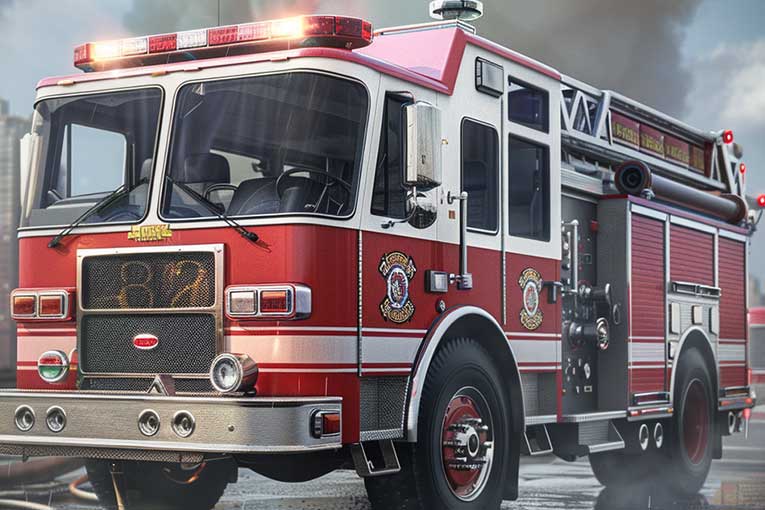
why are firetrucks red image

Firetrucks, with their bold and unmistakable red hue, have become iconic symbols of emergency response. 

The choice of this vibrant colour is deeply rooted in tradition. 

As to why firetrucks are red, the short answer is nobody knows for sure.

However there are numerous theories as to why, with some of the most common being:

Cheapest Colour of Paint

firetrucks red cheapest paint

One widely circulated theory suggests that red became the colour of choice for firetrucks due to its historical status as the least expensive colour of paint. 

In the early days of fire departments, when budgets were tight and they were mostly volunteers, the cost-effectiveness of red paint made it an economical choice. 

This theory reflects a pragmatic approach, where fire departments aimed for a uniform and easily recognizable colour without straining their limited resources.

Most Expensive Colour of Paint

firetrucks red most expensive paint

Contrary to the cost-effectiveness theory, another perspective argues that red was intentionally chosen as the most expensive colour of paint. 

In this view, fire departments sought high-quality, durable paint to protect their vehicles from the elements and enhance their visibility. 

While this theory challenges the notion of frugality, it underscores the importance of investing in materials that ensure the longevity and effectiveness of firefighting equipment.

Farmers
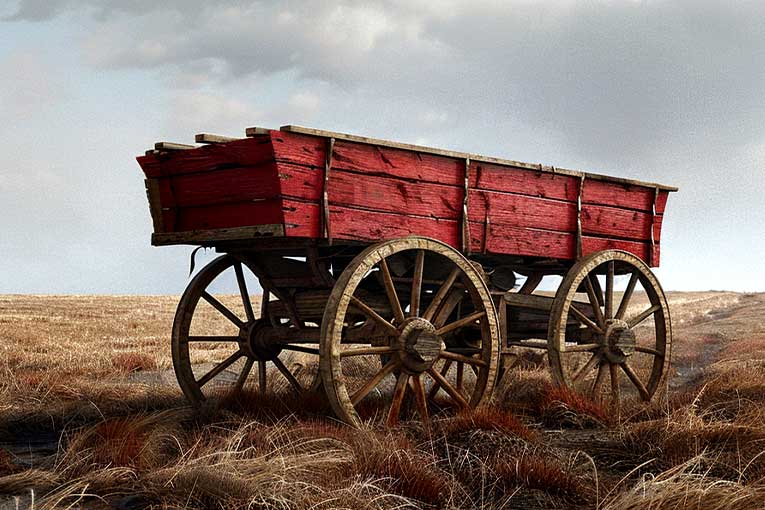
firetrucks red farmers carts

An interesting historical twist connects the colour choice of firetrucks to the practices of farmers. 

During the early days of fire departments, when acquiring vehicles for their fleets, departments often obtained used trucks from farmers. 

Farmers, who commonly painted their carts red to hide dirt and grime, unintentionally contributed to a surplus of red-painted carts that fire departments adopted. 

This theory highlights the influence of practicality and resourcefulness in shaping the colour palette of firefighting fleets.

Displaying Urgency
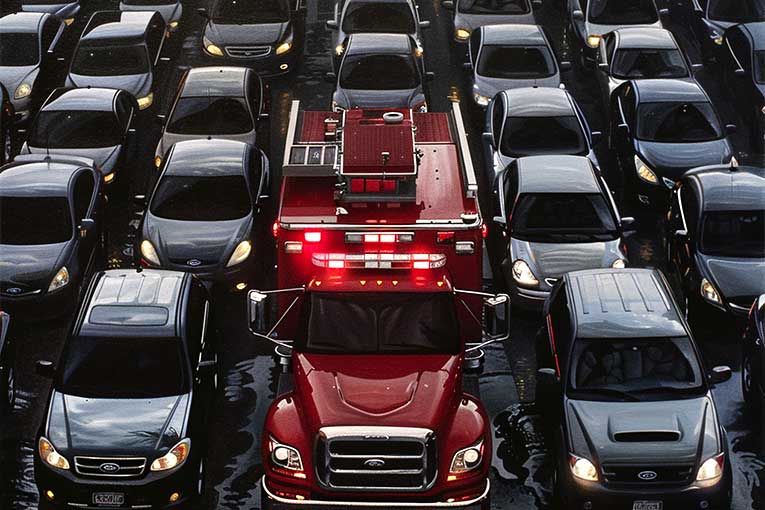
firetrucks red urgency

The early 20th century, marked by the dominance of black-coloured Ford cars, introduced another theory regarding the choice of red for firetrucks. 

In an era where many vehicles were black, fire departments opted for red to stand out and convey a sense of urgency. 

The stark contrast between the red firetrucks and the sea of black vehicles on the road facilitated quick identification and emphasised the critical nature of their mission.

An Old Joke
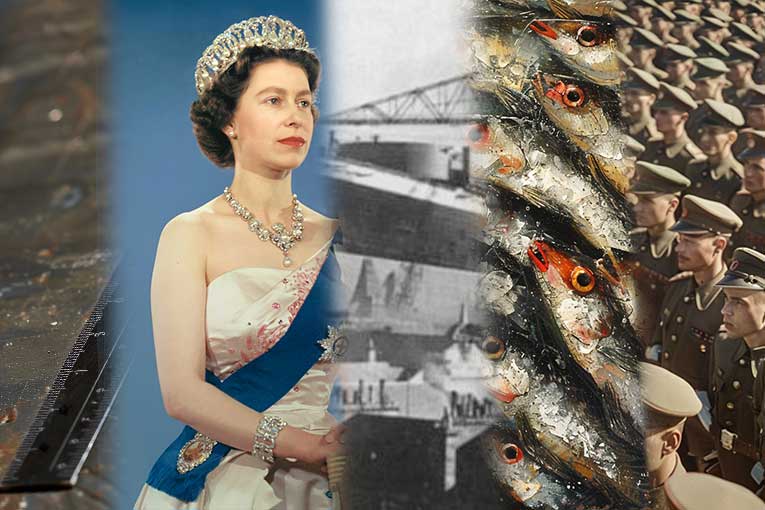
firetrucks red old joke

“Because they have 8 wheels and 4 people on them, and 4 plus 8 makes 12, and there are 12 inches in a foot, and 1 foot is a ruler, and Queen Elizabeth was a ruler, and Queen Elizabeth was also a ship, and the ship sailed the seas, and there were fish in the seas, and fish have fins, and the Finns fought the Russians, and the Russians are red, and fire trucks are always ‘Russian’ around, so that’s why fire trucks are red!”

Adding a humorous twist to the discussion is a centuries-old joke that offers a playful explanation for why firetrucks are red. 

According to this whimsical theory, the colour choice is a result of a convoluted chain of associations involving wheels, rulers, ships, fish, and even geopolitical references. 

While clearly a jest, this theory highlights the lighthearted and imaginative interpretations that have woven their way into the lore surrounding firetruck colours.

Can Firetrucks be Other Colours?

While red remains the traditional and widely recognized colour for firetrucks, fire departments around the world have occasionally deviated from this norm, experimenting with different colours for various practical and strategic reasons. 

These alternative colour choices not only break with tradition but also serve specific purposes in enhancing safety, visibility, and aesthetic appeal during emergency responses.

Yellow
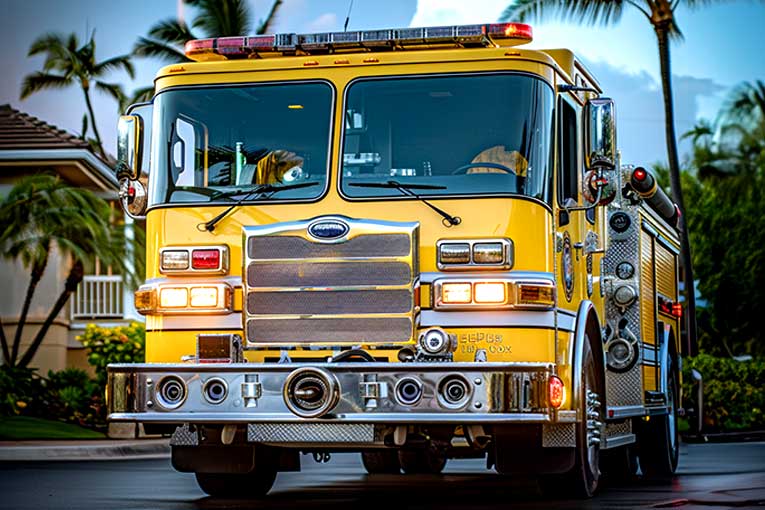
yellow firetruck

Yellow firetrucks are occasionally employed to address specific challenges posed by rural environments. 

The vibrant and contrasting colour of yellow enhances visibility, making the trucks more noticeable, especially in expansive rural landscapes. 

This increased visibility is crucial for navigating challenging terrains and locating emergency sites efficiently. 

A notable example is the use of yellow firetrucks in Australia, in regions where the topography and vegetation necessitate heightened visibility for effective emergency response.

Lime Green
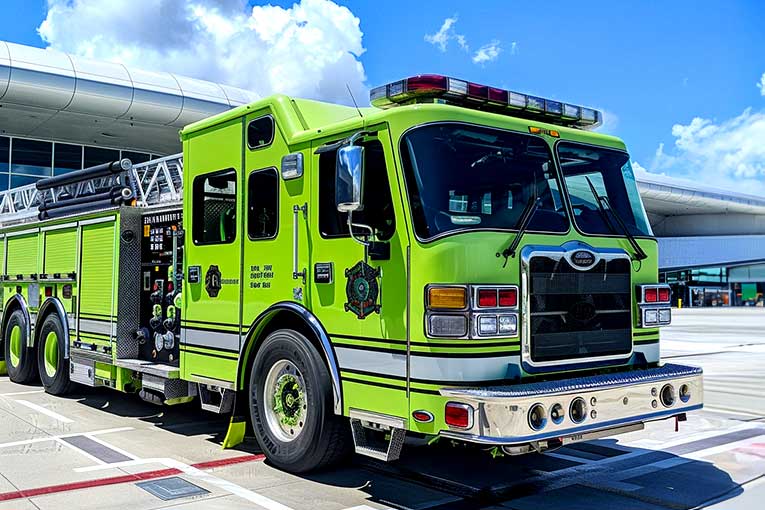
lime green firetruck

Lime green has emerged as a colour choice motivated by a desire to maximise visibility both during the day and at night. 

This highly visible hue stands out in various lighting conditions, ensuring that firetrucks are easily spotted by motorists and pedestrians alike. 

Fire departments adopting lime green firetrucks prioritise safety and awareness during emergency responses. 

This choice is particularly evident in urban areas where diverse lighting scenarios demand enhanced visibility. 

Several examples showcase fire departments incorporating lime green firetrucks into their fleets to bolster their visibility during critical operations.

White
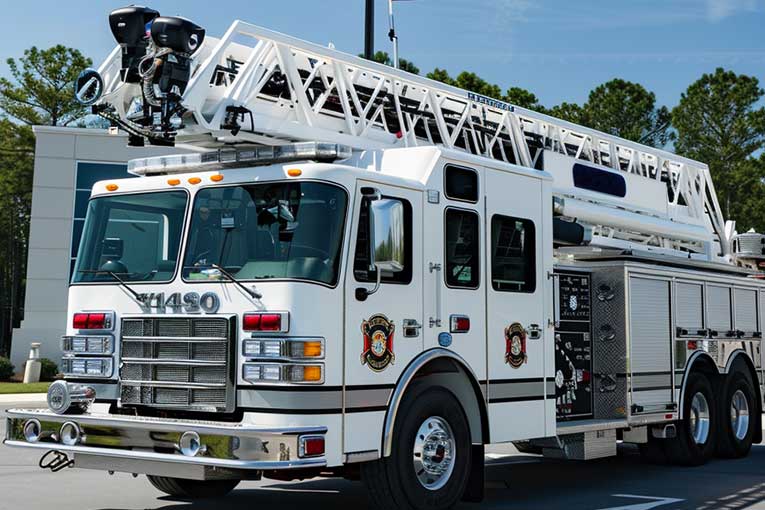
white firetruck

White firetrucks represent a departure from the traditional red, chosen by certain fire departments for their clean and modern aesthetic. 

The use of white not only imparts a contemporary look but also serves practical purposes. 

White is a reflective colour, aiding visibility, especially in low-light conditions. 

This choice aligns with the evolving design preferences of fire departments seeking a fresh and modern image while maintaining functionality. 

Examples of fire departments incorporating white firetrucks into their fleets can be found in urban settings where aesthetics and visibility converge as crucial considerations.

Blue
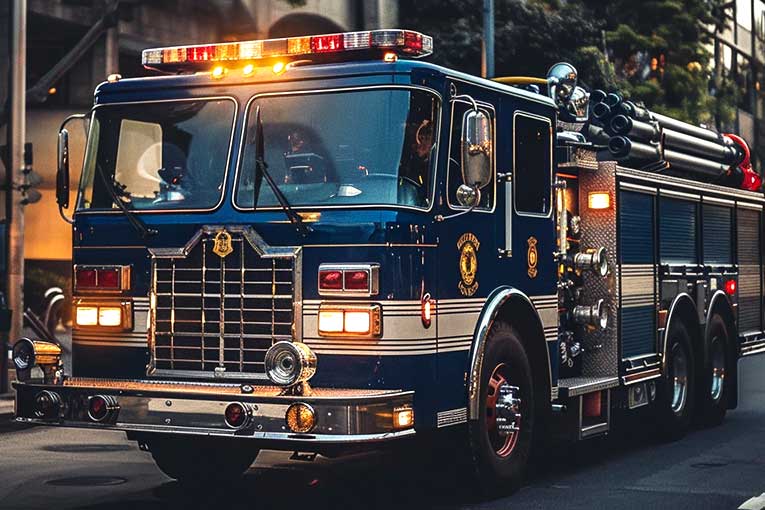
blue firetruck

While less common, blue firetrucks are occasionally employed for special purposes or to distinguish specific types of emergency vehicles. 

Blue may be reserved for specialised units within a fire department, signifying distinct functions or equipment. 

This colour choice can aid in rapidly identifying the purpose of a particular vehicle during multi-agency responses. 

Real-world instances include fire departments utilising blue firetrucks for hazardous materials response teams or specialised rescue units, where differentiation in colour supports quick and efficient coordination during emergencies.

Orange
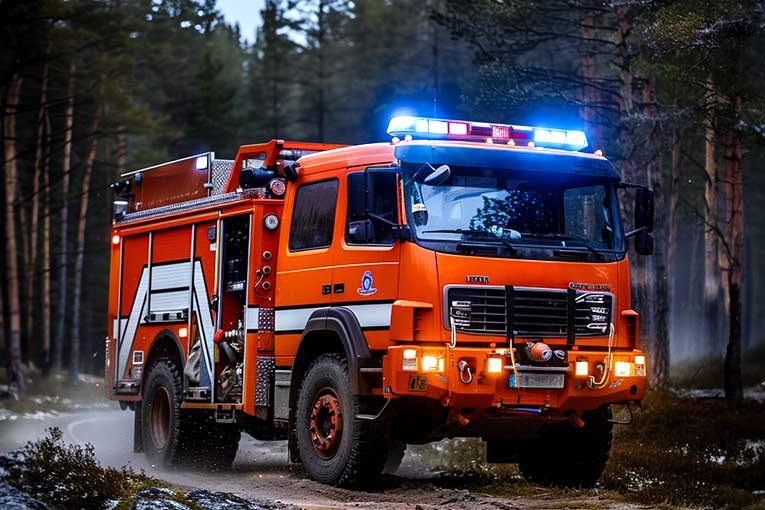
orange firetruck

In Finland, the use of orange firetrucks adds a distinctive touch to the country’s emergency response vehicles. 

The choice of orange as a colour for firetrucks is not only a departure from the traditional red but also serves specific purposes tailored to the unique challenges of Finland’s environment.

The vibrant orange hue enhances visibility, especially in the country’s varied landscapes, including forests and lakes. 

Finland’s terrain, characterised by vast expanses of nature, demands vehicles that can stand out against diverse backgrounds. 

Orange firetrucks address this need by providing increased visibility during emergency responses, ensuring that they can be easily spotted in both urban and rural setting

Conclusion

Hopefully this should answer your question of why are firetrucks red?

While red remains the predominant colour for firetrucks, the choice is not solely based on tradition or aesthetics. 

Practical considerations, historical influences, and attempts to increase visibility and safety have all played a role in shaping the colour choices for these vital emergency response vehicles. 

As fire departments continue to evolve and adapt to new technologies and safety standards, we may see further experimentation with colours in the future. 

Regardless of the colour, the primary goal remains the same – to ensure that firetrucks are easily recognizable and effective in responding to emergencies.

Groupe ADP embraces Oshkosh electric firefighting technology for Paris-Le Bourget Airport

Introduction of the Striker Volterra electric vehicles

Groupe ADP, renowned for its global leadership in airport development and management, has secured a significant contract for four Striker Volterra 6×6 electric aircraft rescue and fire fighting (ARFF) vehicles.

These cutting-edge vehicles will replace the entire fleet at Paris-Le Bourget Airport, located just eight kilometres northeast of Paris, France.

The environmentally advanced fire apparatus mark a notable advancement in airport safety and sustainability initiatives.

The electric vehicles chosen by Groupe ADP are celebrated not only for their safety features but also for their green capabilities.

They are designed to handle all daily operational tasks required at the airport efficiently.

Features include exceptional acceleration, a custom chassis and suspension, and a fully electric range, setting new standards for vehicle performance in emergency response scenarios.

Advanced features and design of the new fleet

Each of the four Striker Volterra electric ARFF vehicles boasts an industry-leading modular cab design and TAK-4 all-wheel independent suspension.

These vehicles are equipped with a 10,500-litre water tank, an 800-litre foam tank, a 7,570 LPM water pump, and a 250 kg dry chemical powder system.

They also feature the Oshkosh Eco EFP foam system, which minimizes environmental impact by eliminating ground foam during testing.

Sebastien Couturier, Paris-Le Bourget managing director, highlighted the strategic investment: “By investing in the cutting-edge Oshkosh Striker Volterra electric ARFF vehicles, Paris–Le Bourget Airport is setting a new standard for low-carbon operations.

“This initiative demonstrates our unwavering commitment to crew safety and environmental responsibility as we lead the way in the electrification of airport vehicles in Europe.

“We are excited about this partnership with Oshkosh Airport Products and look forward to a future where sustainable solutions pave the way for a cleaner and brighter aviation industry.”

Paris-Le Bourget Airport, the largest for business aviation and medical flights in Europe, is stepping up as a leader in renewable energy and sustainability.

This purchase signifies the first sale of electric ARFF trucks in Europe, establishing a new benchmark for low-carbon aviation operations.

Oshkosh’s commitment to sustainable aviation solutions

Jim Johnson, executive vice president of Oshkosh Corporation and president of Oshkosh Vocational, discussed the extensive efforts behind this achievement: “Our Oshkosh Europe sales and marketing team worked diligently to provide the extensive information and testing protocols needed to establish the trust and confidence of Groupe ADP in their purchasing decision.

“We are proud to offer a solution that exceeds international standards for performance and safety and supports the evolution of green aviation.

“We look forward to building a long-lasting relationship with Groupe ADP and customers worldwide as we collectively navigate the path towards more sustainable and innovative ARFF vehicle solutions.”

IFSJ Comment

The commitment of Groupe ADP and Oshkosh Airport Products to advancing sustainable aviation technology through the adoption of electric ARFF vehicles at Paris-Le Bourget Airport represents a forward-thinking approach to environmental stewardship and operational safety in the aviation sector.

As the industry continues to evolve, such innovations are crucial for reducing the carbon footprint of airport operations worldwide, demonstrating a proactive approach to integrating eco-friendly technologies in critical response scenarios.

Sutphen Corporation celebrates grand opening of expansive manufacturing site in Urbana, Ohio

Overview of the new Sutphen Corporation facility

Sutphen Corporation, recognised as one of Americas’ foremost family-owned and operated fire apparatus manufacturer, has held a grand opening for its latest manufacturing facility in Urbana, Ohio.

Spanning 185,000 square feet, this state-of-the-art site integrates three former operations into a single, comprehensive manufacturing hub.

Located at 935 S. Edgewood Avenue, the new facility significantly enhances Sutphen’s manufacturing capacity within the Urbana community.

Impact and objectives of the new site

“This new facility increases our workforce, manufacturing efficiency, production capacity, and so much more,” stated Drew Sutphen, President of Sutphen Corporation.

He emphasised the investment’s role in continuing the company’s legacy, projecting it as a foundation for future generations of the Sutphen family to expand the business.

Since moving into the facility in late 2023, Sutphen has created over 25 new jobs, with further positions available as part of its expansion plans.

Community and economic contributions

Julie Sutphen Phelps, Vice President of Sutphen Corporation, highlighted the company’s long-standing relationship with the Urbana community, emphasizing the mutual growth and benefits derived from this partnership.

Rich Ebert, Director of the Champaign Economic Partnership, echoed this sentiment, expressing pride in hosting such a prestigious manufacturer in Urbana and anticipating further contributions to the local economy.

A commitment to innovation and growth

The Urbana site, covering 25 of the 55 acres acquired by Sutphen in 2021, showcases the company’s dedication to innovation and responsible growth.

By housing Sutphen’s extreme-duty custom chassis line, the corporate service and technical centre, and the Ohio custom pumper line, the facility is poised to meet the increasing demands of fire safety and emergency response equipment.

IFSJ Comment

The inauguration of Sutphen Corporation’s new manufacturing facility in Urbana, Ohio, represents a strategic advancement in the fire and safety industry, reflecting both a commitment to innovation and community engagement.

This facility underscores Sutphen’s dedication to enhancing its manufacturing capabilities and efficiency, highlighting its role in fostering job creation and economic development within the Urbana area.

By consolidating operations and focusing on expansion, Sutphen sets a precedent for future growth, emphasising the importance of building a sustainable business that can adapt and thrive through generations.

As the fire and safety sector continues to evolve, investments like these are crucial for advancing technology, improving response capabilities, and ensuring the wellbeing of communities across the nation.

Iveco Group transfers ownership of Magirus to investment holding Mutares

Announcement of ownership transfer

Iveco Group, traded on EXM as IVG, together with Mutares SE & Co. KGaA, a specialist in special situations transactions, has announced the definitive agreement to transfer ownership of Magirus GmbH and its firefighting business affiliates.

This renowned manufacturer, with more than 1,300 employees across Germany, Italy, France, and Austria, is recognised for its production and sale of firefighting vehicles and equipment.

In 2023, Magirus accounted for roughly 2% of Iveco Group’s revenue, despite recording an adjusted EBIT loss of €35 million.

Details of the transaction

The completion of this transaction, subject to regulatory approvals, is slated for no later than January 2025.

This timeline is designed to ensure a smooth transition, beneficial to all stakeholders involved.

The first quarter of 2024 will see Iveco Group’s results impacted by approximately €115 million due to this transaction, a one-off negative earnings effect that will be excluded from all adjusted metrics.

Future prospects for Magirus

Under new ownership, Magirus is set to gain full independence from Iveco Group, paving the way for a future in the firefighting business that is both independent and forward-looking.

This change is expected to bring enhanced flexibility and agility, allowing MAGIRUS to seize market opportunities more efficiently and effectively.

About Mutares and Magirus

Mutares, a listed private equity holding with a global presence, focuses on acquiring medium-sized companies in special situations, showing considerable operational improvement potential.

Since its inception in 1864, MAGIRUS has blended innovation with tradition, making it one of the largest and most technologically advanced providers of firefighting and disaster control technology globally.

Thomas Hilse, President Firefighting and CEO of Magirus, expressed optimism about this development: “A new chapter in the 160 years long-standing and proud history of our company has started today.

“The Iveco Group just announced the signing of a definite agreement with MUTARES to transfer the ownership of Magirus.

“Subject to regulatory approval, the transaction is expected to be completed no later than January 2025.

“MUTARES is a German-based international private equity investor specializing in the automotive and mobility sector and listed in the S-DAX.

“This transaction will provide Magirus with full independence from Iveco Group and enable a standalone pathway into the future of the firefighting business.

“Needless to say, all sales, service, and production operations will continue as usual.

“Since 1864! The year 2024 will be furthermore remarkable for Magirus as the start of this transition coincides with the 200th birthday of our founder Conrad Dietrich Magirus.

“On September 26, we will invite the world to Ulm to celebrate his legacy and will also present a revamped product portfolio, the most competitive that Magirus ever had.

“Stay tuned!”

IFSJ Comment

The decision by Iveco Group to transfer ownership of Magirus to Mutares marks a strategic shift in the firefighting industry.

This move promises to bolster Magirus’s independence, enhancing its capacity to navigate the future of firefighting business with greater agility and responsiveness.

It reflects a forward-thinking approach, ensuring the legacy of a brand with a 160-year history continues to evolve and adapt in a dynamic market.

As Magirus embarks on this new journey, the potential for innovation and growth in the firefighting sector is evident, underlining the importance of strategic partnerships and transitions in shaping the future of specialised industries.

Landesfeuerwehrschule Baden-Württemberg modernises firefighting fleet with Allison Transmissions

The Landesfeuerwehrschule Baden-Württemberg (LFS), a prominent training facility for fire department managers, has recently upgraded its fleet by incorporating vehicles equipped with Allison fully automatic transmissions.

This marks the first instance of LFS utilising such technology in its fleet.

Integration of Allison 3000 Series Transmissions in Ziegler Vehicles

Following a comprehensive tender process spanning Europe, the LFS selected Ziegler fire engines, mounted on Mercedes Atego 1527F 4 x 2 chassis and outfitted with the Allison 3000 Series™ fully automatic transmission.

Notably, these vehicles feature Power Take-Off and Retarder (PR), diverging from the standard automated manual transmission (AMT) typically found in this model.

Kersten Wachter, responsible for technology and vehicle procurement at LFS, shed light on this transition: “The trend is moving away from manual transmissions, and we at the Landesfeuerwehrschule Baden-Württemberg also recommend automatic transmissions for firefighting vehicles.”

High-Demand Training and Robust Vehicle Requirements

The training vehicles at LFS are subject to intense usage, each participating in approximately 800 training sessions annually.

This constant demand places significant stress on the vehicles and their driveline components, leading to a cycle of replacement roughly every 10 years.

“We need extremely robust vehicles for our purposes. When the participants are on site, the vehicles have to be ready for action,” said Wachter.

“We can’t afford any downtime, as this would disrupt our entire training schedule.”

Enhancing Training Fleet Diversity and Uniformity

The LFS currently boasts a diverse training fleet of around 40 vehicles.

To enhance the quality of their team leader courses, the LFS has now opted for the procurement of six identical firefighting vehicles.

This decision marks a departure from the previous practice of using various models from different manufacturers, which posed challenges in uniform instruction across different vehicles.

LFS Training and Facilities

The State Firefighting School in Bruchsal serves as an educational hub for managers of industrial and public fire departments, catering to both volunteer and professional personnel.

The school’s mission is to thoroughly prepare fire services for complex tasks and emergencies.

Annually, approximately 6,500 participants receive training at the LFS, utilising their extensive facilities which include realistic training environments.

Specialised Allison 3000 PR Transmission for Firefighting

The Allison 3000 PR transmission, tailored for demanding firefighting applications, features intelligent transmission logic and a patented torque converter.

This technology enhances start-up acceleration by up to 35%, ensuring seamless power transfer and optimal engine and transmission efficiency.

Peter Brecht, OEM Account Manager at Allison Transmission, elaborated on the benefits: “Allison transmissions also differ from other technologies due to their special firefighting performance calibration.

“A fully automatic transmission only really takes the strain off the driver on emergency drives if the shift strategy is precisely calibrated for these vehicles and the transmission virtually works together with the driver.

“Furthermore, Allison transmissions are equipped with two engine-speed-dependent Power Take-Offs for simultaneous operation of various auxiliary units.

“The Pump & Roll function allows the water pump to be operated via the Power Take-Off even when the vehicle is moving. An automated manual transmission cannot offer that.”

Allison’s fully automatic transmissions are renowned for their exceptional acceleration, reliability, and robustness, making them a preferred choice for fire fleets globally.

IFSJ Comment

The Landesfeuerwehrschule Baden-Württemberg’s move to modernise its fleet with Allison fully automatic transmissions reflects a strategic approach to enhancing training efficiency and operational readiness.

This decision, driven by the need for robust and reliable vehicles capable of withstanding rigorous training demands, highlights the evolving needs of fire service training facilities.

Over 300 multipurpose Rosenbauer firefighting vehicles ordered by German fire departments

Rosenbauer secures large order for firefighting and technical assistance vehicles

Rosenbauer, the renowned manufacturer of firefighting vehicles, has received a substantial order from German fire departments and disaster protection organizations, totalling over 350 portable pump vehicles with water tanks (TSF-W).

This multipurpose vehicle is designed for rapid initial attacks during firefighting operations and technical assistance, making it a key asset for emergency services.

The order comes as a testament to the vehicle’s versatility and effectiveness in a wide range of operational scenarios.

Over 200 units have already been manufactured at the Rosenbauer competence centre for compact vehicles in Neidling, near St. Pölten in Lower Austria, and delivered to various organizations in Germany.

The State Office for Internal Administration of Mecklenburg-Western Pomerania initially signed a supply contract for 265 TSF-W vehicles at the end of 2021, with the total number of orders now exceeding 350.

The vehicle’s concept, part of Rosenbauer’s “Compact-Technology Profile” product line, has garnered attention from numerous fire departments across the country, leading to additional orders for identical vehicles.

Innovative design and features of the TSF-W vehicles

The TSF-W vehicles are built on an Iveco Daily 72C18 chassis, with a total vehicle weight of 7.2 tons and equipped in accordance with DIN 14530-17.

This includes a FOX 4 portable fire pump, which is a central feature of the vehicle’s large capacity superstructure, including a 1,000-litre water tank.

The pump can be operated both from within the vehicle and remotely, enhancing operational flexibility.

The vehicle also accommodates a crew of six, including a driver, and is equipped with SCBA holders facing the direction of travel and helmet holders on each seat.

Additional features such as LED strips, a pneumatically extendable LED light mast, a pull-out hygiene wall with water connection, and a reversing camera, contribute to the vehicle’s functionality and safety.

Rosenbauer’s innovative online vehicle training

In addition to manufacturing the vehicles, Rosenbauer is innovating in the area of vehicle training by offering online courses.

Through personalized access to the Rosenbauer e-learning platform, vehicle crews can familiarise themselves with the TSF-W vehicles without the need for physical travel.

The platform provides detailed videos on all functions of the vehicle, facilitating practical use upon receipt.

Ronald Reisinger, CEO of Rosenbauer Germany, expressed his satisfaction with the major order: “We see this as confirmation of our many years of good cooperation.”

The high demand from other customers also underscores the vehicle’s ability to meet the diverse needs of fire departments.

As a “product of preference,” the TSF-W from the CT Profile body module series is now available to interested customers with significantly shorter delivery times, further demonstrating Rosenbauer’s commitment to serving the needs of emergency services effectively.

IFSJ Comment

The recent large-scale order of over 300 TSF-W vehicles by German fire departments and disaster protection organizations highlights a strategic move towards enhancing operational efficiency and responsiveness.

These vehicles, designed for rapid initial attacks and technical assistance, embody the evolution of firefighting equipment towards multifunctionality and adaptability.

Rosenbauer’s approach, including the provision of online training, exemplifies the integration of technology in preparing crews for the challenges of modern firefighting and disaster response operations.

Porsche Italia partners with EmiControls for innovative fire safety solutions

In a pioneering move to enhance fire safety for electric vehicles (EVs), Porsche Italia has collaborated with EmiControls to introduce the Q-Container concept, a novel approach towards mitigating risks associated with EV batteries.

Since its inception in 2011, EmiControls has been at the forefront of developing cutting-edge fire protection technologies, with a keen focus on utilising water mist to achieve superior cooling effects while conserving water.

This partnership marks a significant step in addressing the unique challenges posed by the e-mobility sector, particularly in managing the hazards of lithium-ion batteries in mid to high-end cars.

Addressing the risks of lithium-ion batteries

Lithium-ion batteries, favoured for their high energy density and reduced charging times, pose a risk of self-ignition through thermal runaway following accidents.

This has necessitated a dual approach to safety: optimising battery chemistry and construction, and incorporating preventative measures from the design stage to safeguard users.

“Self-ignition: the risk is there and must be addressed,” stated a spokesperson from EmiControls, highlighting the importance of proactive risk management in the use of lithium-ion technology.

EmiControls’ innovative quarantine solutions for electric vehicles

Recognising the need for technical quarantine areas (TQAs) to monitor potentially compromised EVs, Porsche Italia has been instrumental in developing spaces that can be safely situated close to existing structures.

These areas allow for the containment and monitoring of vehicles for durations ranging from five to fifteen days, depending on the assessed risk level.

The collaboration has led to the establishment of a fully automatic emergency management system, ensuring round-the-clock safety and environmental protection.

Guaranteed safety 24/7 with Q-Container

The Q-Container system, developed by EmiControls and extensively installed across the Official Porsche Italia Network, incorporates advanced sensors and fire-fighting technologies.

These include water mist technology for smoke abatement and an automatic flooding system to cool the battery pack swiftly, mitigating thermal event impacts.

“Through sprinklers with ‘water mist’ technology for smoke abatement and an automatic flooding system, electronically managed, allows the rapid cooling of the battery pack to mitigate the effects of the thermal escape and, eventually, stop it,” explained a representative from Porsche Italia.

IFSJ comment

The collaboration between Porsche Italia and EmiControls represents a forward-thinking approach to fire safety in the burgeoning field of e-mobility.

By introducing the Q-Container concept, the partners have addressed a critical safety concern related to the management of electric vehicles and their batteries.

The adoption of such advanced safety measures is essential in promoting wider acceptance and confidence in electric vehicle technology, ensuring that both structures and the environment are protected against potential hazards.

North Fire unveils firefighting vehicles manufacturing factory in Mytholmroyd

North Fire , a renowned firefighting vehicle manufacturer, has recently launched its new 12,000 square feet manufacturing facility in Mytholmroyd, Calder Valley.

The facility, which was commissioned over the Christmas period, marks the beginning of a new era for the company following its rebranding.

History of North Fire

North Fire, previously part of the Venari Group, has a notable history in the UK fire market.

The company, under the leadership of Oliver North, operated in the UK from 2008 to 2014 before being acquired by a major firefighting truck manufacturer.

Oliver North, the founder and managing director of North Fire, played a pivotal role in the acquisition and separation of the firefighting division from the Venari Group, leading to the revival of the North Fire brand.

Oliver North’s vision for North Fire

Oliver North expressed his enthusiasm for the new facility: “We’re absolutely thrilled to shine a spotlight on our hard work over the past few months in completing the acquisition, rebranding and setting up our new long-term home.

The team that came with me alongside the acquisition have been supporting me as part of our journey in the industry for the past 17 years.

And every piece of learning from our many accomplishments in that time will be harnessed at this stunning new factory – unrivalled engineering, produced at speed.”

Impact on the industry and local community

The opening of the new factory is expected to significantly impact the British emergency vehicle production space by adding capacity and competition.

Situated in the Calder Valley village of Mytholmroyd, West Yorkshire, the facility will drive employment and revenue generation in the area, utilizing local supply chains and strengthening the existing business community.

Specialisation and workforce excellence

Rory Wilde, the factory foreman at North Fire, who has been working with Oliver North since 2008, highlighted the focus and expertise of the team.

He stated: “Activation of North Fire Engineering allows us to stay focused solely on our speciality – firefighting and rescue technology – without distractions from other fields.

We have been able to hand pick the best and most passionate skilled workers in the industry, and our new state-of-the-art factory enables us to do it to the highest possible standards.”

IFSJ Comment

The inauguration of North Fire’s new manufacturing facility in Mytholmroyd represents a significant step in the UK’s firefighting and rescue technology industry.

The facility’s launch not only reinstates North Fire’s presence in the market but also promises advancements in firefighting vehicle technology.

With an experienced team led by Oliver North and the strategic location in Mytholmroyd, the facility is poised to enhance the local economy and contribute to the UK’s emergency response capabilities.

This development underscores the ongoing evolution and dedication within the firefighting industry to innovate and provide efficient, high-quality solutions.

Venari Group reveals plans to sell firefighting division to former CEO Oliver North

Deal confirmed for Yorkshire-based Venari Group’s firefighting sector

Venari Group, a Yorkshire emergency services vehicle manufacturer, has confirmed its intention to sell its firefighting division to its former chief executive, Oliver North.

After thorough due diligence and consultation with employees, the carve out deal has been reportedly been agreed.

Once the deal is completed, Oliver North will begin vehicle production and equipment distribution for the firefighting industry, operating under the brand name North Fire.

The headquarters and manufacturing facility of North Fire will be strategically situated in Huddersfield.

Venari Group focuses on enhancing NHS production and safety standards

On the other side of this transition, Venari is gearing up to notably augment its production for both the NHS and its supporting private fleet operators.

This boost in production is anchored on a rigorous emphasis on safety standards in the ambulance market.

The acquisition of Venari’s firefighting division by North Fire was identified as crucial. It will empower its team of specialist firefighting production engineers to spearhead innovation in the fire sector independently.

A journey back to roots: Oliver North’s vision for North Fire

Oliver North, the managing director of North Fire, commented: “I’m thrilled to announce the intention to acquire the firefighting division, alongside my world-class team, being in the industry we have the most passion for.”

He added: “In 2008, I launched North Fire Limited, which was hugely successful and ultimately acquired by one of the world’s largest firefighting technology manufacturers – which remains a success to this day.

“North Fire Engineering plans to launch with more experience, knowledge and hunger to drive competition and innovation as our Fire Services continue to answer ever evolving challenges..”

Commenting on his time at Venari, North said: “

“For the past few years, Venari has consistently punched above its weight in the sector. During Covid, Venari was one of the only manufacturers in the industry to stay open to support the NHS, and over the past 18 months it has provided over 100 armoured ambulances for combat medic teams in Ukraine.

“I will therefore look back at my time leading Venari with huge pride – the production workers there are the best in their industry, without question.

He added: “My passion has always been in the firefighting sector, so this planned acquisition and the inception of North Fire feels like a return to my roots.”

IFSJ Comment

The decision by Venari Group to carve out its firefighting division is a significant move in the emergency services vehicle manufacturing landscape.

With Oliver North, a veteran in the sector, taking the reins, it indicates a renewed focus and potential growth for the firefighting vehicle and equipment production.

The strategic shift by both Venari Group and North Fire also suggests a conscious effort to streamline and enhance their respective areas of expertise.

For the firefighting community and its stakeholders, this move could usher in a new era of innovation, quality, and service.

Spartan Fire and Emergency Apparatus marks 50th anniversary and reveals plans for growth

Spartan Fire and Emergency Apparatus, the esteemed fire and emergency service brand, is set to usher in its next phase with expansion plans.

This decision follows the commemoration of a 50-year-long association with Pierce Manufacturing.

To get a more detailed account of the celebration, click here.

Half a century of service: A journey through time with Spartan Fire

During the 2023 South Carolina Fire Conference, Spartan Fire made a notable effort to revisit its heritage.

They curated a collection of customer photographs that spanned from the 1970s to today.

Robby Fore, president of Spartan Fire and Emergency Apparatus, expressed: “This effort symbolises the depth of our commitment over the past half-century.”

Additionally, Pierce Manufacturing presented a pencil sketch portraying three epochs of Spartan Fire’s proprietorship.

Spartan Fire: A testament to growth and dedication

A heartwarming revelation was made when Spartan Fire showcased vehicles from its early days at the South Carolina Fire Conference.

The display included trucks from the company’s inception and a 1991 model which was the first truck sold by Fore.

Fore said: “I was deeply touched by the team’s surprise tribute.”

From starting with merely three employees in 1991, Spartan Fire now boasts a team of 40 professionals covering South Carolina.

The company’s expansion is not just limited to Pierce apparatus sales, but also includes products from brands such as DBC and Holmatro in both Carolinas.

Spartan Fire’s future: Expansion and evolution

Future plans for Spartan Fire include the establishment of a third service facility in 2023 and a new headquarters set to commence in 2024.

Mary Elise Fore Greenway, General Manager, remarked: “The success and growth of Spartan Fire stem from our incredible team.”

Their vision aligns with gradual growth, targeting customers’ needs with enhanced offerings.

Over the years, the company has been recognised multiple times for their exceptional service. R.E. Fore, Sales Administrator at Spartan Fire, summed it up: “Our customers often cite our service after the sale as the reason they continue to trust our business.”

As the year progresses, the team anticipates further festivities marking their 50-year landmark.

For a comprehensive look into both Pierce Manufacturing and Spartan Fire and Emergency Apparatus, one can visit www.piercemfg.com.

IFSJ Comment

The journey of Spartan Fire and Emergency Apparatus over the last 50 years underscores the ever-evolving nature of the fire and emergency industry.

Celebrating such a significant milestone not only emphasises the brand’s commitment to service but also highlights its adaptability in an ever-changing sector.

Their dedication to offering top-tier post-sale services, alongside their consistent growth strategy, showcases a model for other businesses in the industry to emulate.

Moreover, the longstanding partnership with Pierce Manufacturing reinforces the trust and mutual respect between both entities.

As we follow Spartan Fire’s journey, it becomes evident that its focus on customer-centricity has been a driving force in its success story.