What is COSHH?

Keeping your business safe for everyone in your workplace is vitally important. 

This is where COSHH comes in, but exactly what is COSHH?

COSHH is a crucial regulation for workplace safety. 

This article explains what COSHH is, what it covers, how to comply with it, and everyone’s responsibilities.

What is COSHH?

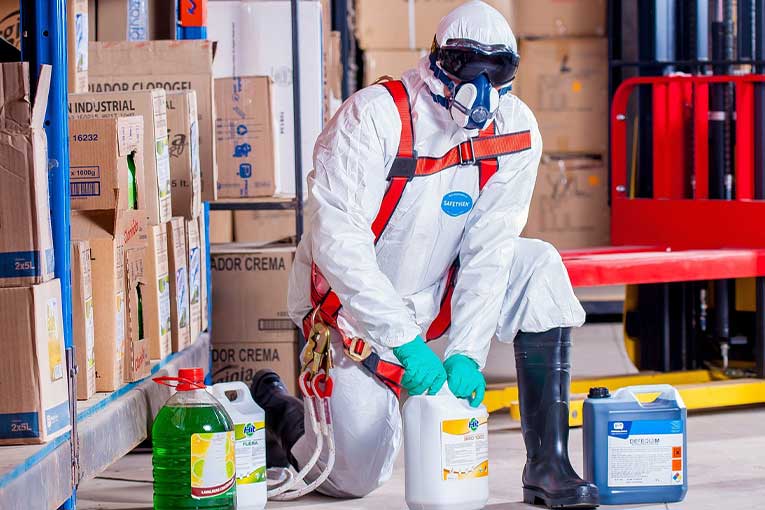
what is coshh image

COSHH stands for Control of Substances Hazardous to Health. 

It is a set of regulations in the United Kingdom designed to protect workers from health risks associated with hazardous substances. 

COSHH requires employers to manage and control risks associated with these substances to ensure the safety and health of their employees. 

This involves several key activities, including identifying hazardous substances, assessing their potential risks, and implementing control measures to minimise exposure.

The regulations mandate that employers must conduct a thorough risk assessment to evaluate how these substances might affect employees. 

Based on this assessment, they must implement control measures, which may include ventilation systems, protective equipment, and safe handling procedures. 

Employers are also required to provide adequate training for employees on the safe use of hazardous substances and ensure that safety data sheets are available for all chemicals used.

Additionally, COSHH requires regular monitoring and review of the control measures to ensure they are effective and up-to-date. 

Employers must also keep records of risk assessments and any incidents related to hazardous substances.

What Does COSHH Cover?

what does coshh cover

COSHH is a regulation that addresses a wide range of hazardous substances found in various workplaces. 

Understanding what COSHH covers is crucial for managing health risks effectively.

Chemicals

COSHH covers chemicals used in industrial processes, laboratories, and cleaning. 

These include solvents, acids, and detergents. 

Chemicals can pose risks such as toxicity, flammability, or corrosivity. 

COSHH requires employers to identify these risks and implement control measures.

Fumes and Vapours

Workplaces that involve high-temperature processes, such as welding or metalworking, often produce fumes and vapours. 

These can be harmful if inhaled over time. COSHH regulations require proper ventilation and air filtration systems to control exposure.

Dusts

Dusts from materials like wood, flour, or minerals can cause respiratory issues and other health problems. 

COSHH requires measures such as dust extraction systems and regular cleaning to minimise dust levels and protect workers.

Biological Agents

Biological agents include bacteria, viruses, and fungi that can pose health risks. 

For instance, healthcare settings or laboratories may deal with potentially infectious materials. 

COSHH covers the handling, storage, and disposal of these agents, requiring proper hygiene and protective equipment.

Nanomaterials

Nanomaterials are substances with particles smaller than 100 nanometers. 

They can have unique and potentially hazardous properties. 

COSHH regulations apply to the handling and safety of these materials, including risk assessments and protective measures.

Carcinogens

Substances that can cause cancer are covered by COSHH. 

Employers must implement stringent controls to limit exposure, such as using less hazardous alternatives or providing personal protective equipment.

Explosives

COSHH also applies to substances that are explosive or flammable. 

Proper storage, handling, and emergency procedures are required to prevent accidents.

Who Must Comply with COSHH?

who comply coshh

COSHH applies to all employers and self-employed individuals who handle hazardous substances in the workplace. 

This includes a wide range of industries and sectors where hazardous materials are used, stored, or produced.

Employers

Employers are responsible for ensuring compliance with COSHH regulations. 

This means they must:

  • Identify and assess risks associated with hazardous substances.
  • Implement control measures to minimise exposure.
  • Provide training and information to employees about handling these substances.
  • Ensure that safety data sheets are available for all hazardous chemicals.
  • Regularly review and update safety procedures and risk assessments.

Self-Employed Individuals

Self-employed individuals who work with hazardous substances are also required to comply with COSHH. 

They must:

  • Conduct their own risk assessments.
  • Implement appropriate control measures.
  • Use personal protective equipment (PPE) as needed.
  • Keep records of safety procedures and risk assessments.

Contractors and Visitors

Contractors and visitors may need to comply with COSHH if they work with hazardous substances while on site. 

Employers must ensure that they are informed of the risks and safety procedures.

What do the COSHH Symbols Mean?

COSHH symbols are essential for understanding the hazards associated with various substances. 

Each symbol indicates a specific type of risk and helps in handling materials safely. 

Here’s a guide to what each COSHH symbol means:

Compressed Gas

compressed gas coshh symbol

The compressed gas symbol looks like a cylinder and indicates that the substance is stored under pressure. 

This can be dangerous if the gas is released suddenly. 

Compressed gases can cause explosions or injuries if not handled correctly. 

Safety measures include proper storage and handling procedures.

Corrosive

corrosive coshh symbol

The corrosive symbol, represented by a container pouring liquid onto a hand and a metal surface, signifies that the substance can cause severe damage to skin, eyes, or materials. 

Corrosive substances can cause burns or corrosion, so proper protective equipment and careful handling are required.

Environmentally Hazardous

environmentally hazardous coshh symbol

An environmentally hazardous symbol features a dead tree and fish. 

This indicates that the substance can cause significant harm to the environment. 

It may be toxic to aquatic life or contribute to long-term ecological damage. 

Safe disposal and spill containment are essential.

Explosive

explosive coshh symbol

The explosive symbol shows an exploding bomb and warns that the substance can explode under certain conditions. 

Explosive materials can pose a severe risk of blast and fire. 

Proper storage, handling, and safety precautions are necessary to prevent accidents.

Flammable

flammable coshh symbol

The flammable symbol, a flame, indicates that the substance can easily catch fire. 

Flammable materials pose risks of fire and explosion. 

Avoid exposure to sources of ignition and store them away from heat sources.

Health Hazard

health hazard coshh symbol

The health hazard symbol features a human silhouette with a star. 

It denotes substances that may cause serious health effects such as cancer, respiratory issues, or reproductive harm. 

Using personal protective equipment and proper handling procedures is crucial.

Irritant

irritant coshh symbol

The irritant symbol, showing an exclamation mark, represents substances that can cause irritation to skin, eyes, or respiratory tract. 

While not as severe as corrosive substances, irritants can cause discomfort and long-term health effects if not handled properly.

Oxidiser

oxidiser coshh symbol

An oxidiser symbol looks like a flame over a circle and indicates that the substance can cause or enhance a fire. 

Oxidisers can make other materials burn more intensely. 

Store them carefully and away from flammable substances.

Toxic

toxic coshh symbol

The toxic symbol, with a skull and crossbones, signifies that the substance can cause severe health effects or death if ingested, inhaled, or absorbed. 

Extreme caution is needed when handling toxic substances, including using appropriate protective gear and ensuring proper storage.

What are COSHH Employer Responsibilities?

coshh employer responsibilities

Under COSHH regulations, employers have several key responsibilities to ensure the safety and health of their employees when dealing with hazardous substances:

Risk Assessment

Employers must conduct thorough risk assessments to identify hazardous substances and evaluate the risks they pose. 

This includes assessing how substances are used, handled, and stored, and determining the potential impact on employees’ health.

Control Measures

Based on the risk assessment, employers must implement control measures to minimise exposure. 

This can include engineering controls like ventilation systems, administrative controls such as safe working procedures, and personal protective equipment (PPE) like gloves and masks.

Training and Information

Employers are required to provide training for employees on how to handle hazardous substances safely. 

This includes understanding COSHH symbols, following safety procedures, and using PPE correctly. 

Employers must also ensure that employees have access to Safety Data Sheets (SDS) for all hazardous substances used.

Health Surveillance

Employers must monitor employees’ health if they are exposed to hazardous substances. 

This may involve regular health checks to detect any adverse effects early and take corrective actions.

Record Keeping

Employers must keep records of risk assessments, safety procedures, and any incidents involving hazardous substances. 

These records help ensure compliance and provide documentation for regulatory purposes.

What are COSHH Employee Responsibilities?

coshh employee responsibilities

Under COSHH regulations, employees also have important responsibilities to ensure their own safety and the safety of others when working with hazardous substances. 

These responsibilities include:

Following Procedures

Employees must adhere to all safety procedures and instructions provided by their employer. 

This includes using hazardous substances according to the guidelines and following established protocols for handling and storage.

Using Personal Protective Equipment (PPE)

Employees are required to wear and use PPE as specified by their employer. 

This includes items like gloves, masks, and goggles designed to protect against exposure to hazardous substances.

Reporting Hazards and Incidents

Employees must report any unsafe conditions, spills, or incidents involving hazardous substances to their employer immediately. 

Prompt reporting helps to address and mitigate potential risks and prevents accidents.

Attending Training

Employees should attend all training sessions provided by their employer. 

This training covers safe handling practices, understanding COSHH symbols, and emergency procedures related to hazardous substances.

Using Equipment Properly

Employees must use all equipment and tools as instructed and ensure they are in good working condition. 

Proper use of equipment helps to prevent accidents and reduce exposure to hazards.

Conclusion

You should now have more of an understanding of exactly what is COSHH.

COSHH is essential for protecting workers from health risks related to hazardous substances. 

By understanding COSHH regulations, symbols, and responsibilities, employers and employees can work together to create a safer workplace. 

Proper risk assessment, control measures, and training are key to managing hazardous substances effectively.

MSA Safety launches V-Gard H2 safety helmet with Mips protection system

MSA Safety unveils V-Gard H2 helmet

MSA Safety has announced its latest head protection innovation, the V-Gard H2 Safety Helmet.

This new addition to the V-Gard line integrates the Mips brain protection system, enhancing safety for industrial workers.

Greg Martin, Senior Vice President and Chief Product and Technology Officer at MSA Safety, highlighted the helmet’s features: “The V-Gard H2 Safety Helmet extends MSA Safety’s position as the leader in industrial head protection with new innovations and added lateral protection for particular applications.”

The helmet is designed to meet ANSI Z89.1 Type II certification, protecting against various head impacts, including lateral and side impacts.

Mips brain protection system integrated in new helmet

The V-Gard H2 Safety Helmet offers the option to include the Mips brain protection system.

This system is a low-friction layer inside the helmet that moves slightly upon impact, redirecting rotational energies and reducing the risk of brain trauma.

Max Strandwitz, CEO of Mips, emphasised the importance of this partnership: “Mips is proud to partner with MSA, a global PPE leader, to further amplify our mission to lead the world to safer helmets.”

MSA Safety’s new helmet aims to address the dangers of traumatic brain injuries (TBIs) in industrial settings.

The Mips system adds a layer of protection against angled or lateral impacts, such as those from slips, trips, and falls.

Versatile features of the V-Gard H2 Safety Helmet

The V-Gard H2 Safety Helmet comes with various features to enhance its utility in different industrial applications.

These include an integrated 4-point chinstrap and compatibility with most V-Gard H1 and V-Gard accessories.

The helmet is available in both vented and non-vented options, offering a wide range of colors and customisation choices, including logo options.

Greg Martin noted the versatility of the helmet: “We’re offering customers highly customizable and versatile helmet options for use across a wide variety of industrial areas and applications.”

MSA Safety’s commitment to worker protection

The V-Gard H2 Safety Helmet is part of MSA Safety’s broader mission to keep people safe at work.

By partnering with Mips, MSA Safety aims to enhance the protective capabilities of its helmets, ensuring they meet the diverse needs of industrial workers.

Max Strandwitz of Mips further emphasised the significance of addressing TBIs in the industry, noting that the collaboration with MSA Safety is a milestone in improving industrial safety.

Queensland underground coal mine fire continues for five days

Fire at Grosvenor Coal Mine in Queensland

Queensland’s largest underground coal mine, Grosvenor Coal Mine, has been burning for five days, as reported by ABC News Australia.

The fire, ignited by a spark that triggered methane gas, forced the safe evacuation of workers on Saturday morning.

The mine, located near Moranbah in Central Queensland, employs approximately 1,400 people.

Efforts to control the fire involve sealing the mine to cut off oxygen.

Remote control bulldozers are pushing dirt towards the shafts, as it is too dangerous for humans to be present.

The fire, burning up to half a kilometre underground, is fuelled by methane gas and coal.

This incident follows a 2020 explosion at the same mine that injured five workers and led to its closure until February 2022.

Sealing operations and technology

The sealing process is critical to extinguishing the fire, according to ABC News Australia.

Three remote-controlled bulldozers are currently assisting in sealing the mine shafts with dirt and rocks.

Anglo American, the mine’s owner, emphasised the importance of remote control technology in their response.

Industrial-level expanding foam and a steel plate covered with dirt are used to form a plug in the shaft.

Additionally, a GAG unit, a 12-metre-long apparatus mounted on a truck, is pumping carbon dioxide, nitrogen, and water vapour into the mine to reduce oxygen levels.

GAG stands for Górniczy Agregat Gaśniczy, a Polish term meaning “mine fire suppression apparatus”.

This equipment is vital in managing the fire without human presence in hazardous areas.

Safety and historical context

Queensland has a history of coal mine fires leading to fatalities. In 1975, an explosion at the Kianga No. 1 mine killed 13 men.

The Box Flat Mine fire in Ipswich in 1972 resulted in 17 deaths, with three more fatalities during sealing attempts.

These tragedies led to advancements in safety and gas detection systems.

Stephen Smyth from the Mining and Energy Union expressed confidence in the current re-sealing plan, citing the expertise of the personnel involved: “There’s no doubt some of the best-trained people in the world are on site”.

The recent experience with similar incidents at North Goonyella in 2018 and Grosvenor in 2020 has prepared the team for this challenge.

Air quality monitoring and community impact

Anglo American reported that sealing efforts have significantly reduced the amount of oxygen available to the underground fire.

The QMRS mobile extinguisher unit (GAG) continues to aid in this effort, with a noticeable reduction in smoke levels.

Air quality monitoring around Moranbah, a town with a population of about 9,500, indicates that all readings are within acceptable limits.

“All monitors are reporting readings within acceptable limits, indicating no impact on community health from smoke or airborne contaminants,” the company stated.

5 Fire Extinguisher Types Explained

Fire extinguishers are essential safety devices designed to help control or extinguish small fires. 

However, not all fires are the same, which is why there are different types of fire extinguishers available. 

There are 5 fire extinguisher types for different types of fires. 

In this article, we’ll explore the five main types of fire extinguishers and explain when each should be used.

Why Are There Different Types of Fire Extinguishers? 

fire extinguisher different types

Different types of fires require different approaches to extinguish them safely and effectively.

Type of Fire

Fires are classified into different classes of fires based on the type of fuel involved. 

Class A fires involve solid materials like wood and paper, Class B fires involve flammable liquids, Class C fires involve electrical equipment, Class D fires involve flammable metals, and Class F fires involve cooking oils and fats.

Different Methods of Extinguishing Fires

Each type of fire extinguisher is designed to combat a specific type of fire using different methods. 

For example, water extinguishers cool the fire, foam extinguishers create a barrier between the fuel and the oxygen, and CO2 extinguishers displace oxygen, smothering the fire.

Safety and Effectiveness

Using the wrong type of fire extinguisher can actually make a fire worse or put you at risk. 

Therefore, it’s crucial to understand the different types of fire extinguishers and when to use them.

5 Fire Extinguisher Types Explained

Water

water fire extinguisher types
Source: Amazon

How Does a Water Fire Extinguisher Work?

Water fire extinguishers are the most common type and are used to extinguish Class A fires, which involve solid materials like wood, paper, and textiles.

They work by cooling the fire, reducing the temperature below its ignition point

When water is applied to the fire, it absorbs heat from the fire, lowering the temperature and extinguishing the flames.

When to Use a Water Fire Extinguisher

Water fire extinguishers are suitable for fires involving solid materials such as wood, paper, and textiles.

They are effective for extinguishing fires in offices, schools, warehouses, and other environments where Class A fires are most likely to occur.

When Not to Use a Water Fire Extinguisher

Water fire extinguishers should not be used on fires involving flammable liquids, electrical equipment, or cooking oils and fats.

Using a water extinguisher on these types of fires can actually make the fire worse and increase the risk of electric shock or spreading the fire.

Where Are Water Fire Extinguishers Normally Found?

Water fire extinguishers are commonly found in offices, schools, warehouses, and other commercial and industrial environments.

They are usually mounted on walls in easily accessible locations and are identified by their red label colour..

CO2

co2 fire extinguisher types
Source: Amazon

How Does a CO2 Fire Extinguisher Work?

CO2 (Carbon Dioxide) fire extinguishers are used for Class B and Class C fires, which involve flammable liquids and electrical fires.

They work by displacing oxygen, smothering the fire and preventing it from spreading.

When CO2 is discharged from the extinguisher, it turns into a gas, depriving the fire of the oxygen it needs to continue burning.

When to Use a CO2 Fire Extinguisher

CO2 fire extinguishers are suitable for fires involving flammable liquids such as petrol, oil, and paint, as well as electrical fires.

They are commonly used in areas where there is a risk of electrical fires, such as offices, server rooms, and workshops.

When Not to Use a CO2 Fire Extinguisher

CO2 fire extinguishers should not be used on fires involving Class A materials such as wood, paper, and textiles.

They are also not effective for fires involving cooking oils and fats.

Additionally, CO2 extinguishers should not be used in confined spaces, as the gas can displace oxygen and cause suffocation.

Where Are CO2 Fire Extinguishers Normally Found?

CO2 fire extinguishers are commonly found in offices, server rooms, workshops, and other environments where there is a risk of electrical fires.

They are usually mounted on walls in easily accessible locations and are identified by their black label colour..

Foam

foam fire extinguisher types
Source: Amazon

How Does a Foam Fire Extinguisher Work?

Foam fire extinguishers are versatile and can be used for Class A and Class B fires.

They work by creating a blanket of foam that seals the fire’s surface, preventing re-ignition.

The foam also cools the fire, reducing the temperature and smothering the flames.

When to Use a Foam Fire Extinguisher

Foam fire extinguishers are suitable for fires involving solid materials such as wood, paper, and textiles (Class A fires), as well as flammable liquids such as petrol, oil, and paint (Class B fires).

They are commonly used in offices, workshops, garages, and other environments where there is a risk of both Class A and Class B fires.

When Not to Use a Foam Fire Extinguisher

Foam fire extinguishers should not be used on fires involving electrical equipment (Class C fires) or cooking oils and fats (Class F fires).

Using a foam extinguisher on these types of fires can actually make the fire worse and increase the risk of electric shock or spreading the fire.

Where Are Foam Fire Extinguishers Normally Found?

Foam fire extinguishers are commonly found in offices, workshops, garages, and other commercial and industrial environments.

They are usually mounted on walls in easily accessible locations and are identified by their cream label colour..

Dry Powder

dry powder fire extinguisher types
Source: Amazon

How Does a Dry Powder Fire Extinguisher Work?

Dry powder fire extinguishers are suitable for Class A, B, and C fires, as well as fires involving flammable gases and metals.

They work by forming a barrier between the fuel and the oxygen, smothering the fire and interrupting the chemical reaction.

Dry powder extinguishers contain a fine powder composed of sodium bicarbonate or potassium bicarbonate, which chemically inhibits the combustion process.

When to Use a Dry Powder Fire Extinguisher

Dry powder fire extinguishers are versatile and can be used for a wide range of fires, including fires involving solid materials (Class A), flammable liquids (Class B), and electrical equipment (Class C).

They are also effective for fires involving flammable gases such as propane and butane, as well as fires involving flammable metals such as magnesium and titanium.

When Not to Use a Dry Powder Fire Extinguisher

Dry powder fire extinguishers should not be used on fires involving cooking oils and fats, such as grease fires (Class F fires).

Using a dry powder extinguisher on these types of fires can actually make the fire worse and increase the risk of spreading the fire.

Where Are Dry Powder Fire Extinguishers Normally Found?

Dry powder fire extinguishers are commonly found in industrial environments, laboratories, workshops, and garages.

They are usually mounted on walls in easily accessible locations and are identified by their blue label colour.

Wet Chemical 

wet chemical fire extinguisher types
Source: Amazon

How Does a Wet Chemical Fire Extinguisher Work?

Wet chemical fire extinguishers are designed for Class F fires, which involve cooking oils and fats.

They work by cooling the fire and creating a barrier between the fuel and the oxygen.

Wet chemical extinguishers contain a special solution that reacts with the cooking oil or fat, forming a thick, soapy layer on the surface of the fire. 

This layer cools the fire and prevents it from re-igniting.

When to Use a Wet Chemical Fire Extinguisher

Wet chemical fire extinguishers are specifically designed for fires involving cooking oils and fats, such as deep fat fryers and commercial kitchens.

They are highly effective for extinguishing these types of fires and preventing them from spreading.

When Not to Use a Wet Chemical Fire Extinguisher

Wet chemical fire extinguishers should not be used on fires involving solid materials (Class A fires), flammable liquids (Class B fires), electrical equipment (Class C fires), or flammable metals (Class D fires).

Where Are Wet Chemical Fire Extinguishers Normally Found?

Wet chemical fire extinguishers are commonly found in commercial kitchens, restaurants, cafes, and other environments where there is a risk of fires involving cooking oils and fats.

They are usually mounted on walls in easily accessible locations and are identified by their yellow label colour.

Conclusion

That was a detailed breakdown of the 5 fire extinguisher types.

Each type of fire extinguisher is designed for specific types of fires, so it’s important to choose the right one for your needs.

By understanding the different types of fire extinguishers and their uses, you can be better prepared to respond effectively in the event of a fire emergency.

Remember to regularly inspect and maintain your fire extinguishers to ensure they are in good working condition and ready for use in case of an emergency.

In addition to having the right fire extinguishers, it’s also important to have a well-thought-out fire safety plan in place and to regularly train employees on fire safety procedures.

By taking these steps, you can help protect yourself, your employees, and your property from the devastating effects of fire.

How Long Do Fire Extinguishers Last?

Fire extinguishers are crucial tools for swiftly combating small fires, but do they last forever? 

Understanding their lifespan and exactly how long do fire extinguishers last is vital for ensuring their effectiveness in emergencies. 

In this article, we’ll explore how long different types of fire extinguishers last, when to replace them, and the importance of regular servicing.

How Long Do Fire Extinguishers Last?

how long do fire extinguishers last image

Fire extinguishers are crucial for rapid response in emergencies, but their effectiveness diminishes over time. 

Understanding how long fire extinguishers last is essential for maintaining a safe environment.

Disposable

Disposable fire extinguishers typically have a lifespan of around 10 to 12 years. 

Once they reach this limit or display signs of wear, they should be replaced to ensure optimal performance. 

These extinguishers are designed for single use, emphasising the importance of timely replacements.

Rechargeable

Rechargeable fire extinguishers, designed for multiple uses, have a service life of approximately 6 years. 

After this period, a thorough professional inspection and maintenance are necessary to ensure their continued reliability. 

If any issues are identified during servicing or if the extinguisher reaches the end of its recommended life, it should be replaced promptly.

How Often Should Fire Extinguishers be Serviced?

how often fire extinguishers serviced

Routine maintenance is key to ensuring the reliability of fire extinguishers. 

Different types require distinct servicing intervals to guarantee optimal functionality when facing a fire emergency.

Water, Powder, or Foam

Fire extinguishers containing water, powder, or foam should undergo professional servicing every 5 years. 

This process involves a thorough inspection, testing, and refilling, if necessary. 

Regular servicing helps identify any issues and ensures the extinguisher is fully operational.

CO2

CO2 fire extinguishers, commonly used for electrical fires, have a longer service interval of 10 years. 

These extinguishers should undergo a comprehensive professional service to inspect and maintain their components. 

This ensures that the extinguisher remains effective in suppressing electrical fires.

Where to Find the Fire Extinguisher Manufacture Date?

fire extinguishers manufacture date

Knowing the manufacture date of a fire extinguisher is crucial for determining its lifespan and understanding how long your fire extinguisher will last. 

The location of this information varies based on the type of extinguisher.

Steel Fire Extinguishers

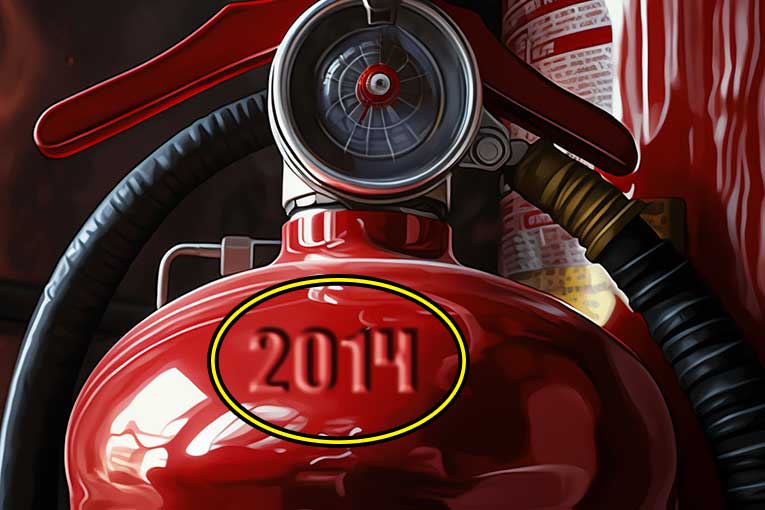
Stamped into the Cylinder

The manufacture date may be physically stamped onto the cylinder of the steel fire extinguisher. 

This stamp provides a clear and permanent indication of when the extinguisher was produced.

On the Label

Alternatively, the manufacture date might be included on the label affixed to the extinguisher. 

This label provides essential information about the extinguisher’s specifications and usage guidelines.

P50 Service-Free Extinguishers

Older Models 

For older P50 fire extinguisher models, the manufacture date is typically printed on the base of the unit.

Newer Models 

Newer P50 models use a coloured pin that correlates to a table printed on the label. 

The pin colour corresponds to the month and year of manufacture, providing a quick reference.

When Should you Replace a Fire Extinguisher Early?

replace fire extinguishers early

While fire extinguishers have defined lifespans, certain circumstances may warrant early replacement to ensure optimal performance in emergencies. 

Here are key indicators that suggest an extinguisher should be replaced ahead of schedule:

Cracked Nozzle or Hose

Issue

Physical damage like cracks compromises the structural integrity of the nozzle or hose.

Effect

The crack can lead to leaks or difficulties in delivering the extinguishing agent during a fire, rendering the extinguisher less effective.

Blocked Nozzle or Hose

Issue

Obstructions in the nozzle or hose can hinder the discharge of the extinguishing agent.

Effect

A blocked nozzle or hose reduces the extinguisher’s ability to control a fire, diminishing its overall performance.

Broken Handle

Issue

A broken handle makes it challenging to operate the extinguisher efficiently.

Effect

In an emergency, a broken handle may impede the user from effectively using the extinguisher, delaying response time.

Missing Locking Pin

Issue

The locking pin is crucial for preventing accidental discharges and maintaining the extinguisher’s readiness.

Effect

Without the locking pin, there’s a risk of unintentional discharges, and the extinguisher may not be securely stored or easily accessible.

Missing Inspection Sticker

Issue

An extinguisher without an updated inspection sticker may not have undergone required maintenance.

Effect

Missing inspection documentation indicates a lack of regular checks, raising concerns about the extinguisher’s reliability and adherence to safety standards.

Corrosion

Issue

Corrosion on the cylinder or other parts compromises the structural integrity of the extinguisher.

Effect

Corrosion weakens the extinguisher, making it more susceptible to damage and reducing its ability to withstand the pressure needed for proper discharge.

Suspected of Leaking

Issue 

Evidence of leaking substances suggests a loss of pressure and potential malfunction.

Effect

A leaking extinguisher may fail to discharge its contents effectively during a fire, necessitating immediate replacement to ensure reliability in an emergency.

How Often Should Fire Extinguishers be Inspected?

how often fire extinguishers inspected

Routine inspections are crucial to maintaining the reliability of fire extinguishers, ensuring they function correctly when needed. 

The inspection frequency can be categorised into two intervals:

Monthly Checks

Regular, brief checks by designated personnel.

This is to verify that the extinguisher is in its designated place, the pressure gauge shows adequate pressure, and there is no visible damage or tampering.

Monthly checks help identify immediate issues and ensure that the extinguisher is accessible and operational.

Yearly Inspections by a Fire Extinguisher Engineer

In-depth inspections conducted by a certified fire extinguisher engineer, for example those found in the Institution of Fire Engineers.

This will be a comprehensive examination of the extinguisher’s internal and external components, including pressure tests, to ensure it meets safety standards.

Yearly inspections are critical for identifying potential internal issues, such as corrosion or leaks, which might not be evident during routine checks.

What are the Risks of Using an Older Fire Extinguisher?

older fire extinguishers risks

Using an older fire extinguisher poses various risks, potentially compromising its effectiveness when faced with a fire emergency. 

Here are the key risks associated with relying on an aged fire extinguisher:

Decreased Pressure

Over time, fire extinguishers may experience a gradual loss of pressure, reducing their ability to discharge the extinguishing agent effectively. 

This decline can result from factors like gas leakage or gradual deterioration of internal components.

Corrosion

The internal components of a fire extinguisher, especially the cylinder, are susceptible to corrosion over an extended period. 

Corrosion weakens the structural integrity, making the extinguisher more prone to failure or rupture during use.

Deterioration of Seals and Valves

Seals and valves play a crucial role in maintaining the pressure and integrity of the extinguishing agent. 

As a fire extinguisher ages, these seals and valves can deteriorate, leading to potential leaks and a loss of pressure.

Reduced Extinguishing Agent Efficiency

The extinguishing agent within the fire extinguisher can degrade over time, diminishing its effectiveness. 

This reduction in efficiency may result from factors like exposure to temperature variations or chemical changes within the agent.

Outdated Technology

Older fire extinguishers may use outdated technology compared to more modern counterparts. 

Advances in fire safety technology have led to the development of extinguishers with enhanced features and improved extinguishing agents, providing better protection against various fire types.

Non-compliance with Standards

Fire safety standards and regulations evolve over time, introducing new requirements for equipment.

Older fire extinguishers may not comply with the latest standards, potentially leading to regulatory non-compliance and inadequate fire protection.

How to Dispose of a Fire Extinguisher?

dispose of fire extinguishers

Disposing of a fire extinguisher requires careful consideration to ensure the safe handling of potentially hazardous materials. 

Here’s a guide on how to appropriately dispose of a fire extinguisher:

Check the Extinguisher Type

Identify the type of fire extinguisher, as different extinguishing agents have specific disposal methods. 

Common types include water, powder, foam and CO2.

Contact Local Authorities

Check with your local fire department or waste disposal facility regarding their specific regulations for fire extinguisher disposal. 

Some municipalities organise special collection events or have designated drop-off locations.

Recycling Centres

Certain recycling centres may accept fire extinguishers, as many of the components are fully recyclable. 

Remember to follow local guidelines.

Professional Disposal Services

In some cases, professional hazardous waste disposal services may be necessary for extinguishers containing certain chemicals, such as older foam fire extinguishers. 

Contact local environmental agencies for advice on proper disposal methods.

Conclusion

Knowing how long fire extinguishers last and understanding when to replace them is vital for maintaining a safe environment. 

Regular inspections, proper servicing, and early replacement when necessary ensure that these essential firefighting tools remain effective when needed most. 

Prioritising the longevity and functionality of fire extinguishers is a proactive step towards enhancing overall safety and preparedness in various settings.

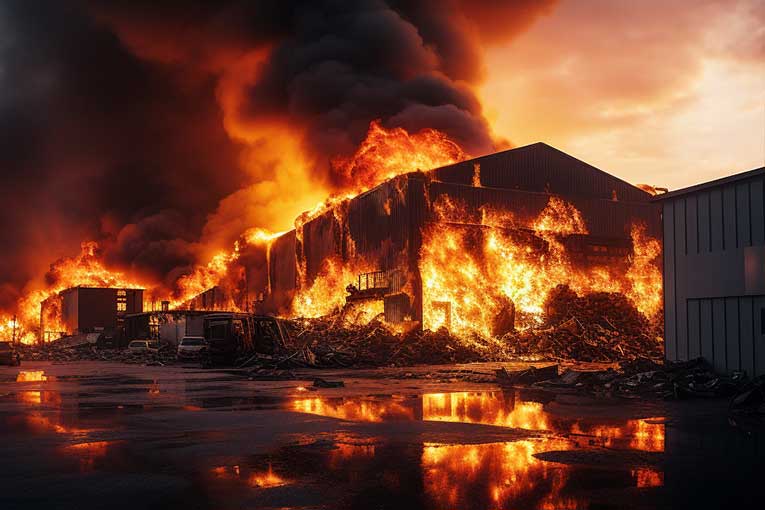
7 Common Causes of Warehouse Fires

Warehouses play a crucial role in supply chain management, but they are not immune to the threat of fires. 

Warehouse fires can cause business losses in the hundreds of millions every year.

The stakes are high when it comes to warehouse fires, and understanding their common causes and prevention strategies is vital for safeguarding both goods and personnel.

In this article we’ll delve into 7 of the most common causes of warehouse fires, why warehouse fires are so dangerous and ways to help prevent them.

7 Common Causes of Warehouse Fires

Warehouses, crucial parts of supply chain management, have various risks, and fires are a significant concern. 

To strengthen these logistical centres against fire risks, it’s essential to know the common causes thoroughly.

Arson

warehouse fires causes arson

Arson, the deliberate act of setting fires, ranks among the common causes of warehouse fires, with 15% of all warehouse fires being deliberate

Intentional and malicious, arson poses a severe threat, leading to extensive property damage and endangering lives within the facility. 

The deliberate ignition of flames in warehouses underscores the need for heightened security measures and vigilance to thwart potential acts of arson, protecting both assets and personnel.

Electrical Equipment

warehouse fires causes electrical equipment

Faulty electrical equipment poses a common threat, leading to warehouse fires. 

Overloaded circuits, damaged wiring, or neglected maintenance can turn these systems into ignition sources. 

Preventing electrical malfunctions through regular checks is vital to ensure the safety of warehouses and protect against the potential devastation caused by fires.

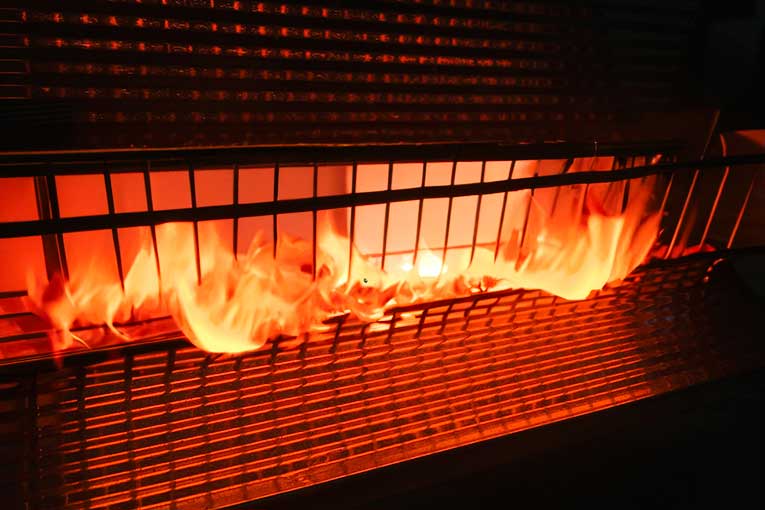
Heating Equipment

warehouse fires causes heating equipment

Poorly maintained heating systems present a common risk for warehouse fires, especially during the winter months. 

Malfunctions or improper usage of industrial heaters can turn them into sources of ignition. 

Regular maintenance and proper handling are crucial to mitigate these risks, ensuring the safety of both the warehouse environment and its occupants.

Combustible Materials

warehouse fires causes combustible materials

Warehouses storing combustible materials face an elevated risk of fires. 

Flammable substances, when not handled or stored properly, become potential ignition sources. 

The proximity of these materials to potential heat sources increases the likelihood of accidental fires. 

To mitigate this risk, proper storage protocols, adherence to safety guidelines, and regular inspections are essential, creating a safer environment within the warehouse and reducing the potential for devastating fires.

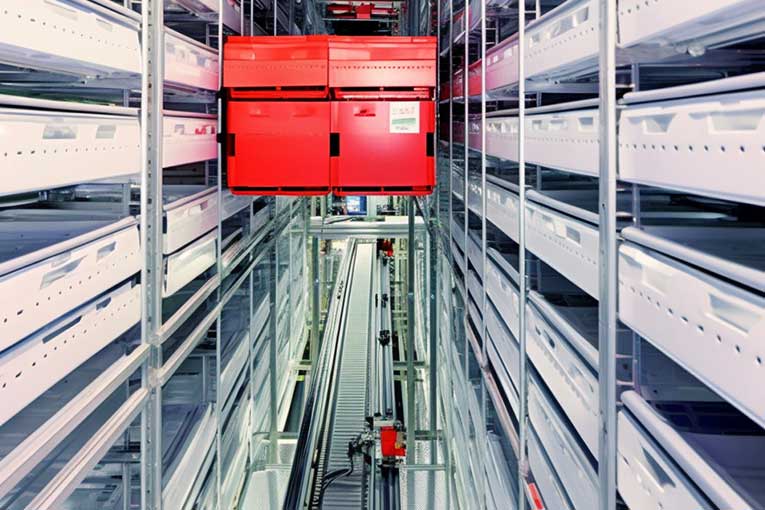
Automatic Storage Retrieval Systems (ASRS)

warehouse fires causes asrs

Automated Storage Retrieval Systems, while enhancing efficiency, can pose fire hazards in warehouses. 

Relying on intricate electrical components, these systems may experience malfunctions leading to fires. 

Ensuring the proper maintenance and functioning of ASRS is crucial to prevent potential fire incidents. 

Vigilance in monitoring these automated systems helps minimise the risk, contributing to the overall safety of the warehouse environment.

Smoking

warehouse fires causes smoking

Smoking near warehouses introduces a significant fire hazard. 

Igniting cigarettes in restricted areas or improper disposal of cigarette butts can lead to accidental fires, particularly in environments with combustible materials. 

The combination of open flames and flammable surroundings heightens the risk. 

Implementing strict no-smoking policies, designated smoking areas, and proper disposal measures are essential preventive measures to reduce the likelihood of fires caused by smoking within the warehouse premises.

Human Error

warehouse fires causes human error

Human error is a prevalent factor contributing to warehouse fires. 

Mistakes in equipment handling, incorrect storage of flammable materials, or neglecting safety protocols can result in unintentional fires. 

Awareness, proper training, and adherence to safety guidelines are crucial to mitigate the risks associated with human error. 

Implementing robust training programs and fostering a safety-conscious culture within the warehouse environment play pivotal roles in reducing the potential for fires caused by human mistakes.

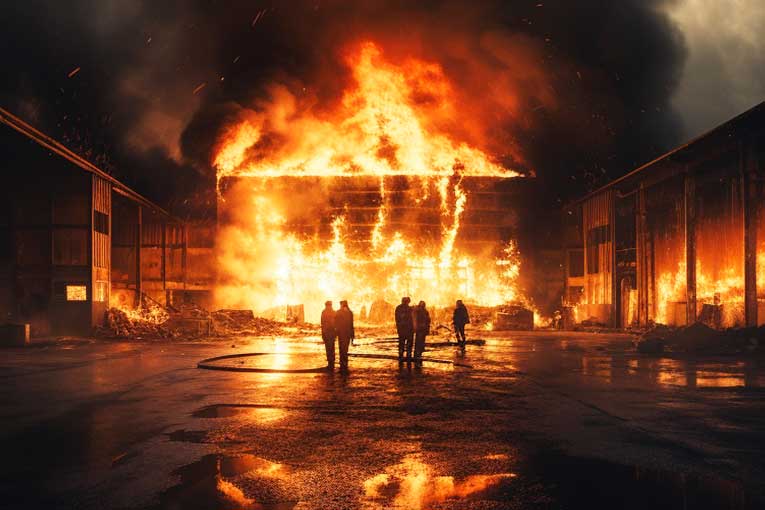
Why are Warehouse Fires so Dangerous?

Warehouse fires pose significant dangers due to their potential for rapid escalation and severe consequences. 

Several factors contribute to the high risk associated with these incidents:

Extensive Property Damage

warehouse fires dangerous

Warehouse facilities often house valuable inventory, machinery, and equipment. 

Fires can lead to substantial financial losses, impacting the business’s operations and long-term viability.

Risk to Human Lives

The safety of personnel working within warehouses is paramount. 

Fires can lead to injuries or fatalities, especially if evacuation procedures are not efficiently executed or if there are delays in emergency response.

Disruption of Supply Chains

Warehouse fires can disrupt the entire supply chain, affecting the timely delivery of goods and services. 

This disruption can have cascading effects on businesses, customers, and interconnected industries.

Environmental Impact

Depending on the nature of stored materials, warehouse fires can result in environmental hazards. 

The release of pollutants, toxins, or hazardous substances can contaminate air, soil, and water, posing long-term environmental risks.

Structural Damage

warehouse fires structural damage

Intense heat and flames can cause structural damage to the warehouse itself, compromising its integrity. 

Collapses or structural failures during a fire can exacerbate the dangers and hinder firefighting efforts.

Challenges for Firefighters

Warehouses are often expensive structures, presenting challenges for firefighting efforts. 

The sheer size and the potential for limited access points can make it difficult for firefighters to quickly contain and extinguish the blaze.

Smoke Inhalation Risks

In addition to flames, the smoke generated during warehouse fires poses serious health risks. 

Smoke inhalation can lead to respiratory issues, and the toxic byproducts of combustion can have immediate and long-term health consequences.

Potential for Explosions

Depending on the nature of the materials stored, warehouses may contain combustible or explosive substances. 

Fires can trigger explosions, further intensifying the danger and complicating firefighting strategies.

How Can Warehouse Fires be Prevented?

Preventing warehouse fires involves a comprehensive approach that addresses potential risks and incorporates effective preventive measures:

Fire Risk Assessments

prevent warehouse fires fire risk assessment

Conducting regular fire risk assessments is a fundamental step in warehouse fire prevention. 

Identifying potential fire hazards and evaluating the effectiveness of existing preventive measures allow for the implementation of targeted strategies to mitigate risks.

Smoke Detectors

Installing smoke detectors strategically throughout the warehouse is crucial for early fire detection. 

These alarms provide timely alerts, enabling a swift response to potential fires and increasing the likelihood of containing the blaze before it escalates.

Fire Extinguishers

Strategically placing fire extinguishers within the warehouse and ensuring that staff are well-trained in their use is essential for controlling small fires. 

Quick and effective intervention with fire extinguishers can prevent the spread of flames and minimise damage.

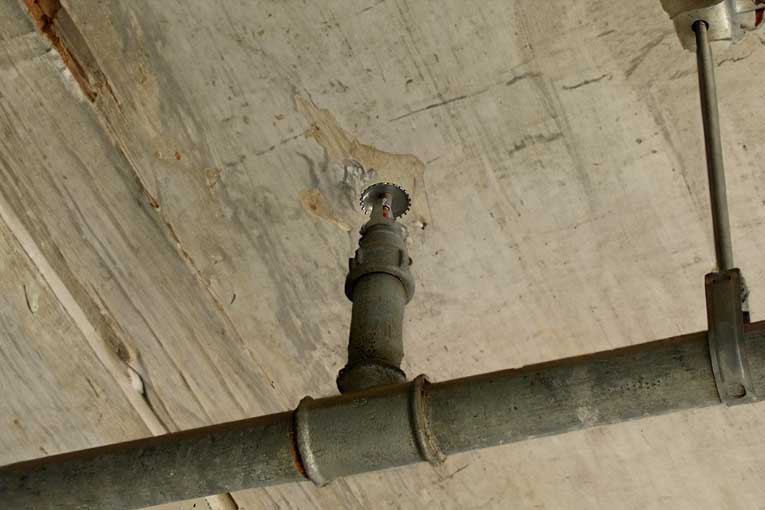
Sprinkler Systems

prevent warehouse fires sprinklers

Automatic sprinkler systems play a pivotal role in warehouse fire prevention. 

These systems can suppress fires in their early stages by releasing water or fire-retardant chemicals, limiting the extent of the blaze and providing valuable time for evacuation.

Staff Training

A well-trained workforce is a key component of effective fire prevention. 

Staff training should encompass various aspects, including the proper use of firefighting equipment, understanding evacuation procedures, and adherence to fire safety protocols. 

Educating employees on fire prevention measures fosters a collective responsibility for maintaining a safe warehouse environment.

Fire Drills

Regular fire drills are essential for ensuring that employees are familiar with evacuation procedures. 

Conducting drills periodically helps reduce panic in the event of a real fire, ensuring that staff can respond swiftly and efficiently. 

Familiarity with evacuation routes and assembly points enhances overall preparedness and contributes to a safer working environment.

What to do During a Warehouse Fire?

During a warehouse fire, swift and organised actions are crucial to ensure the safety of personnel and mitigate the potential impact of the blaze. 

Here are essential steps to follow:

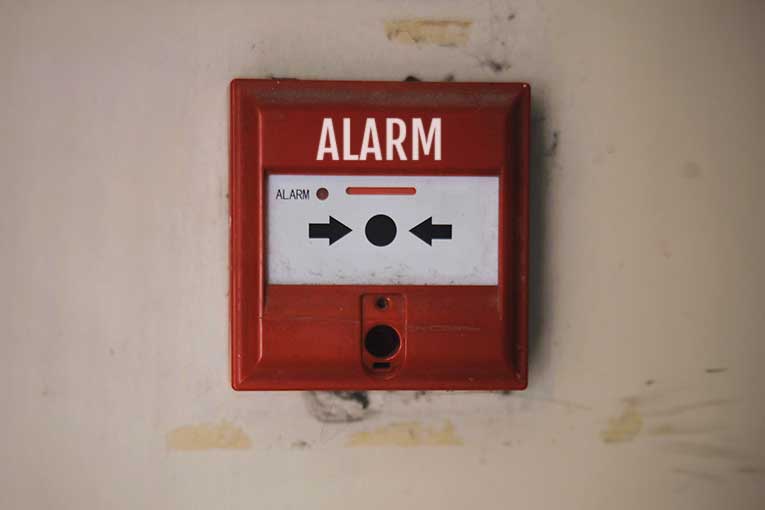
Activate Fire Alarm

warehouse fires activate fire alarm

Immediately activate the fire alarm to alert all personnel to the emergency. 

The alarm signals the initiation of evacuation procedures.

Notify Emergency Services

Promptly call emergency services, providing them with accurate information about the location and nature of the fire. 

The sooner professional firefighting assistance arrives, the better the chances of containing the blaze.

Evacuation Procedures

Follow established evacuation procedures. 

Ensure that all personnel are aware of evacuation routes, assembly points, and procedures for assisting individuals with mobility challenges.

Do Not Use Elevators or Lifts

Avoid using elevators or lifts during a fire. 

Elevators and lifts can malfunction during emergencies, potentially trapping individuals or exacerbating the situation.

Stay Low if Smoke is Present

If smoke is present, stay low to the ground where the air is generally clearer. 

Cover the nose and mouth with a cloth to reduce smoke inhalation.

Close Doors

Close doors behind you as you evacuate to slow down the spread of fire and smoke.

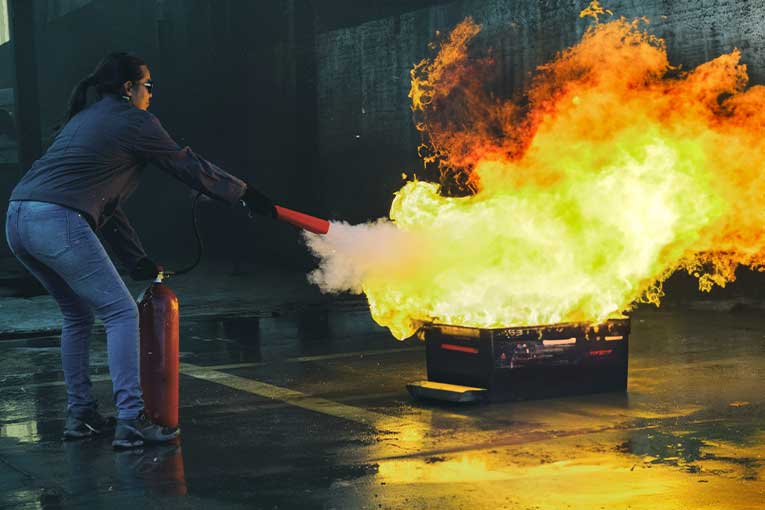
Use Fire Extinguishers (if Safe)

warehouse fires use fire extinguishers

If the fire is small and contained, and it is safe to do so, use available fire extinguishers to suppress the flames. 

However, prioritising personal safety and evacuation is paramount.

Assist Others

Assist colleagues who may need help evacuating, especially those with mobility challenges. 

Ensure that everyone is accounted for at the designated assembly point.

Do Not Return for Belongings

Once safely evacuated, do not return to the building for personal belongings. 

Emergency services will manage the situation, and personal safety takes precedence.

Follow Instructions

Adhere to instructions from emergency services and designated personnel. 

Cooperate with their guidance for a coordinated and effective response.

Conclusion

You should now have an understanding of common causes of warehouse fires.

The gravity of warehouse fires cannot be overstated, given their potential for catastrophic consequences. 

Safeguarding these vital hubs of commerce requires a multifaceted approach encompassing awareness, prevention, and preparedness. 

By comprehending the common causes of warehouse fires, businesses can proactively address vulnerabilities and fortify their facilities against potential risks. 

The implementation of rigorous preventive measures, including regular fire risk assessments, strategic placement of safety equipment, and comprehensive staff training, forms a robust defence against flames.

Moreover, fostering a culture of fire safety within warehouse operations is paramount. 

Continuous education and training initiatives instil a sense of responsibility among personnel, empowering them to contribute actively to fire prevention and response efforts. 

Regular fire drills, along with the proper utilisation of firefighting equipment, further enhance the collective ability to handle emergencies.

Kent Fire and Rescue Service to conclude contract with Eurotunnel in 2025

KFRS to terminate long-standing fire cover contract with Eurotunnel

After nearly three decades of providing dedicated fire and rescue services to the Channel Tunnel, Kent Fire and Rescue Service (KFRS) has announced its decision to end its private contract with Eurotunnel by next year.

This exclusive arrangement, which has ensured round-the-clock fire cover at the critical crossing, is distinct from the public services offered by KFRS across Kent.

KFRS Chief Executive, Ann Millington, highlighted the evolution of the service’s commitments: “While the operation is no longer viable for Kent Fire and Rescue Service, fire cover and safety will not be compromised – there will still be a fire station at the tunnel with a full fire and rescue team.”

Continued commitment to safety

Despite the forthcoming conclusion of this longstanding contract, the commitment to safety at the Channel Tunnel remains unwavering.

KFRS assures that the protective measures in place for the tunnel will not see a decline.

The service plans to maintain a fully staffed fire station at the Eurotunnel site, ensuring that expert fire and rescue teams are always on hand.

“KFRS’ strong working relationship with Eurotunnel will continue, and firefighters at stations nearest to the crossing, such as Dover, Folkestone, and Ashford, will continue to respond to emergencies at the site when called out via 999, in the usual way,” Millington added, reinforcing the service’s dedication to emergency response and safety for the Channel Tunnel.

The search for alternative solutions

As the current phase of the partnership between KFRS and Eurotunnel approaches its end, Eurotunnel is set to explore alternative options for maintaining 24/7 onsite fire and rescue services.

This proactive approach ensures that the high safety standards and swift emergency responses that have characterised the Eurotunnel for nearly 30 years will continue without interruption.

IFSJ Comment

The announcement of the end of Kent Fire and Rescue Service’s exclusive contract with Eurotunnel marks a significant transition in the provision of fire and rescue services at one of the UK’s most critical transport links.

This change opens a new chapter in ensuring the safety and security of the Channel Tunnel, reflecting both organisations’ adaptability and commitment to public safety.

As Eurotunnel seeks new solutions for round-the-clock fire cover, the continued collaboration with KFRS and local fire stations will remain a cornerstone of emergency response at the crossing.

What is a COSHH Assessment & Who Needs Them?

Workplace safety is of the utmost importance and understanding and implementing proper risk assessments is paramount. 

One such essential assessment is COSHH, short for Control of Substances Hazardous to Health. 

The COSHH assessment aims to safeguard employees and others from potential harm due to exposure to hazardous substances in the workplace.

What is a COSHH Assessment?

COSHH assessment employee exposed to chemicals
A COSHH assessment is needed for any employee exposed to chemicals

A COSHH assessment is a crucial process designed to systematically manage and mitigate the risks linked to hazardous substances within a workplace. 

The fundamental objective is to safeguard the health and well-being of individuals exposed to these substances during various work activities.

The assessment encompasses a broad spectrum of materials, not just limited to traditional chemicals. 

It includes biological agents, dust, fumes, and other substances that have the potential to pose health risks. 

This systematic evaluation ensures that any potential harm associated with these substances is identified and effectively controlled.

COSHH assessments play a pivotal role in fostering a secure work environment. 

By scrutinising all substances within the workplace that could be considered hazardous, this process enables organisations to take proactive measures to minimise risks and adhere to regulatory standards.

The systematic steps involved in a COSHH assessment, from identifying hazardous substances to evaluating control measures, contribute to the creation of a detailed and effective risk management plan. 

Through documentation, communication, and training, a COSHH assessment becomes a cornerstone in promoting awareness and understanding among personnel about the potential risks associated with hazardous substances and the measures in place to mitigate them. 

Overall, it is an indispensable tool for organisations committed to maintaining a safe and healthy workplace.

Who Needs to have a COSHH Assessment?

COSHH assessment healthcare
A COSHH assessment happens in several industries, including healthcare

Any business where employees are exposed to hazardous substances requires a COSHH assessment. 

This includes but is not limited to:

Manufacturing and Industry

Industries that involve the use of chemicals, solvents, or other hazardous substances in processes or production.

Healthcare

Hospitals, clinics, and other healthcare settings where various substances, including cleaning chemicals and pharmaceuticals, are utilised.

Laboratories

Research facilities and testing laboratories dealing with chemicals and biological agents.

Construction

Sites where workers may encounter substances like dust, adhesives, or paints.

Cleaning Services

Companies involved in cleaning, janitorial, or sanitation services using various cleaning agents.

Agriculture

Farms and agricultural settings where pesticides, fertilisers, and other chemicals are employed.

Retail

Businesses that sell products containing hazardous substances, such as paints, adhesives, or cleaning supplies.

Office Environments

Even seemingly low-risk environments may have substances like cleaning chemicals that require assessment.

Educational Institutions

Schools, colleges, and universities where laboratories and workshops involve the use of various chemicals.

How Often Should a COSHH Assessment be Done?

According to COSHH Regulations, there is no set frequency specified for how often a COSHH assessment should be conducted. 

Instead, it is a dynamic process that depends on the nature of the work, the substances involved, and any changes in the workplace that may affect exposure.

The law requires that COSHH assessments be carried out systematically and be reviewed regularly. 

The Health and Safety Executive (HSE) advises that assessments should be reviewed if there is any reason to suspect they are no longer valid or if there has been a significant change in the workplace or work processes.

For example, if new substances are introduced into the workplace, processes change, or if there is evidence that control measures are not effective, a review of the COSHH assessment is necessary. 

This flexible approach allows for the adaptation of safety measures to the evolving nature of work environments.

It’s crucial for employers to stay vigilant and ensure that COSHH assessments are not treated as a one-off task but rather as an ongoing process that reflects the dynamic nature of workplaces. 

Regular reviews help in identifying emerging risks and adjusting control measures accordingly. 

Failure to regularly review COSHH assessments can lead to a workplace being ill-prepared to manage new risks, potentially endangering the health and safety of employees.

What Happens in a COSHH Assessment?

What happens COSHH assessment
What exactly happens in a COSHH assessment?

Here’s an in-depth look at what happens during a COSHH assessment:

Identification of Hazardous Substances

The process begins with identifying all the hazardous substances used, stored, or generated in the workplace. 

This includes any substances that could pose a risk to health.

Assessment of Risks

Once identified, the next step is to assess the risks associated with these substances. 

This involves evaluating how employees might be exposed, the potential harm it could cause, and the likelihood of that harm occurring.

Evaluation of Control Measures

The effectiveness of existing control measures is examined. 

This includes ventilation systems, personal protective equipment (PPE), safe work procedures, and any other measures in place to minimise exposure. 

The assessment considers whether these measures are sufficient or if additional controls are needed.

Recording and Documentation

All findings are recorded, and a written assessment is created. 

This document outlines the identified hazards, the risks associated, and the control measures in place. 

This serves as a reference for employees, management, and regulatory bodies.

Review and Update

The assessment is not a one-time task. It needs to be regularly reviewed and updated, especially when there are changes in work processes, substances used, or if control measures prove ineffective. 

This ensures that the assessment remains relevant and effective over time.

Communication and Training

Employees need to be informed about the hazards associated with the substances they work with and the measures in place to protect them. 

Training is essential for ensuring that everyone understands the risks and knows how to use control measures effectively.
Emergency Planning

In the event of an emergency, such as a spill or exposure, there should be clear plans and procedures in place. 

This could include evacuation plans, first aid procedures, and emergency contact information.

Consultation with Employees

Employees should be actively involved in the assessment process. 

They are often the ones with valuable insights into the practical aspects of their work, and their input can contribute to a more comprehensive and effective assessment.

How can you Minimise Risks in a COSHH Assessment?

Here are strategic approaches to minimise these risks:

Robust Employee Training

Ensuring that employees are well-versed in handling hazardous substances is paramount. 

Training should cover the proper usage of personal protective equipment (PPE), safe handling procedures, and emergency response protocols. 

An educated workforce is a critical line of defence against potential risks.

Effective Ventilation Systems

Investing in and maintaining effective ventilation systems is pivotal. 

Adequate ventilation minimises the concentration of hazardous substances in the air, reducing the risk of inhalation and airborne contamination.

Stringent Control Measures

Implementing stringent control measures, such as engineering controls and administrative procedures, is essential. 

This could include enclosure systems, fume hoods, or designated work practices that limit exposure.

Regular Health Surveillance

Conducting regular health surveillance of employees exposed to hazardous substances is a proactive measure. 

Monitoring their health allows for early detection of adverse effects and the adjustment of control measures as needed.

Substitution of Hazardous Substances

Exploring less hazardous alternatives or substitutes for substances in use is a powerful risk reduction strategy. 

Where feasible, replacing hazardous substances with safer alternatives minimises potential harm.

Adequate Storage and Handling Protocols

Establishing and enforcing proper storage and handling protocols is critical. 

This involves secure storage, clearly labelled containers, and meticulous procedures to prevent spills or accidental exposure.

Emergency Response Planning

Having a robust emergency response plan is non-negotiable. 

This includes clear procedures for spills, leaks, or unintended exposures. 

Employees should be well-trained on emergency protocols, including evacuation routes and first aid procedures.

Regular Audits and Inspections

Frequent audits and inspections ensure that control measures are consistently implemented and effective. 

Identifying and rectifying any lapses promptly enhances the overall safety of the workplace.

Conclusion

COSHH assessments are not just regulatory requirements; they are fundamental tools for ensuring workplace safety. 

Whether you are in a chemical manufacturing plant or a bakery, identifying and controlling hazards is critical. 

By understanding the significance of COSHH assessments and actively implementing their findings, businesses can create safer environments for their workforce, promoting health, well-being, and overall productivity.

NFU publishes fire safety guide for farmers: practical steps to prevent fires

NFU releases fire prevention tips for agricultural settings

In a recent publication, the National Farmers Union (NFU) has shared a guide titled “Fire safety – 5 practical tips for preventing fires on farm.”

This guide aims to address the persistent risk of fires in agricultural settings, highlighting the potential for significant losses including farm buildings, produce, and livestock, not to mention the risk of injuries or fatalities.

Securing flammable substances: a key preventive measure

The first tip emphasises the importance of securely storing flammable substances away from public access.

The guide specifically mentions fuels, fertilisers, hay and straw bales, and chemicals as potential fire hazards.

“In particular, bales can be a target for arson; try to keep them away from any areas of public access,” the guide advises.

Where avoiding public access isn’t feasible, it suggests implementing measures like fencing to restrict entry.

Importance of a fire emergency procedure plan

Another critical recommendation is the development of a comprehensive fire emergency procedure plan.

This plan should be easily accessible and include details such as responsible personnel on the farm, muster points, evacuation routes, locations of flammable substances and potential ignition sources, and where fire extinguishers and water sources are located.

Advocating for separate storage units

The guide also advises keeping flammable materials and ignition sources in separate storage units, ideally at least 10 metres away from livestock.

Special attention is drawn to lithium-powered equipment and machines due to their potential for self-ignition.

Regular checks on electrical equipment

Ensuring that all electrical systems and equipment are in proper working order and do not pose a fire risk is another vital step.

Regular inspections and maintenance can help prevent electrical fires, which are a common cause of farm fires.

Utilising local resources for fire safety

Finally, the NFU suggests collaboration with local fire services to assess the suitability and practicality of existing fire prevention and emergency measures.

Additionally, it highlights the value of local WhatsApp groups for sharing information about arson incidents, enabling farmers to respond and manage risks more effectively.
IFSJ Comment

The NFU’s publication of practical fire safety tips for farms reflects a proactive approach to managing the inherent risks in agricultural environments.

By outlining key steps such as secure storage of flammable materials, establishing a fire emergency procedure plan, and regular checks on electrical equipment, the guide provides farmers with essential information to minimise fire risks.

Collaboration with local fire services and utilising community resources like WhatsApp groups for information sharing further enhance this safety initiative.

Such measures are crucial in safeguarding not only valuable farm assets but also the lives and wellbeing of those working in and around these environments.

Blast at illegal Nigerian oil refinery results in 37 fatalities

Illegal refining activities in the Niger Delta region lead to tragic incidents

An explosion at an unauthorised oil refinery in southern Nigeria has tragically claimed the lives of 37 people.

Among the casualties were two expectant mothers.

This news was confirmed by both a local security official and a community leader on Tuesday.

The prevalence of illegal refineries in Nigeria

The Niger Delta region of Nigeria, rich in oil, often sees such illegal refining activities. Locals, living in impoverished conditions, frequently tap into pipelines.

Their aim is to produce fuel which they can then sell for a profit. The procedures they use can sometimes be rudimentary, like boiling crude oil in drums to separate fuel.

Tragically, this can lead to deadly consequences.

The most recent episode unfolded during the early hours of Monday in the Ibaa community of Rivers State.

This was disclosed by Rufus Welekem, who oversees security in the region.

A witness from Reuters reported seeing 15 scorched bodies at a location marked by singed palm trees and a damaged motorbike.

Welekem recounted: “Thirty five people were caught in the fire. Two people who were lucky to escape also died this morning in hospital.”

He further mentioned that some of the victims had already been identified by their families and taken for burial.

Oil majors reassess their presence amidst challenges

Persistent challenges like illegal crude oil refineries have plagued Nigeria for years.

Efforts to curtail these have largely been unsuccessful.

Local environmental groups point out that influential politicians and security personnel are often involved, making the clampdown even harder.

Alongside this, issues like crude oil theft, vandalism of pipelines, and legal confrontations over oil spills are compelling oil majors in Nigeria to rethink their strategy.

Many are now considering selling their onshore and shallow water assets, focusing instead on deep-water operations.

IFSJ Comment

The tragic event in Nigeria highlights the grave safety risks associated with illegal oil refining activities.

The crude methods employed, combined with lack of safety standards, not only endanger the environment but also pose severe threats to human life.

This incident underscores the urgent need for governments and stakeholders to address the root causes driving locals towards such perilous endeavours.

Moreover, the potential shift of oil majors from onshore to deep-water operations can have broader implications for the industry and the region’s socio-economic fabric.